Graciosa Island
Graciosa Island, Portugal
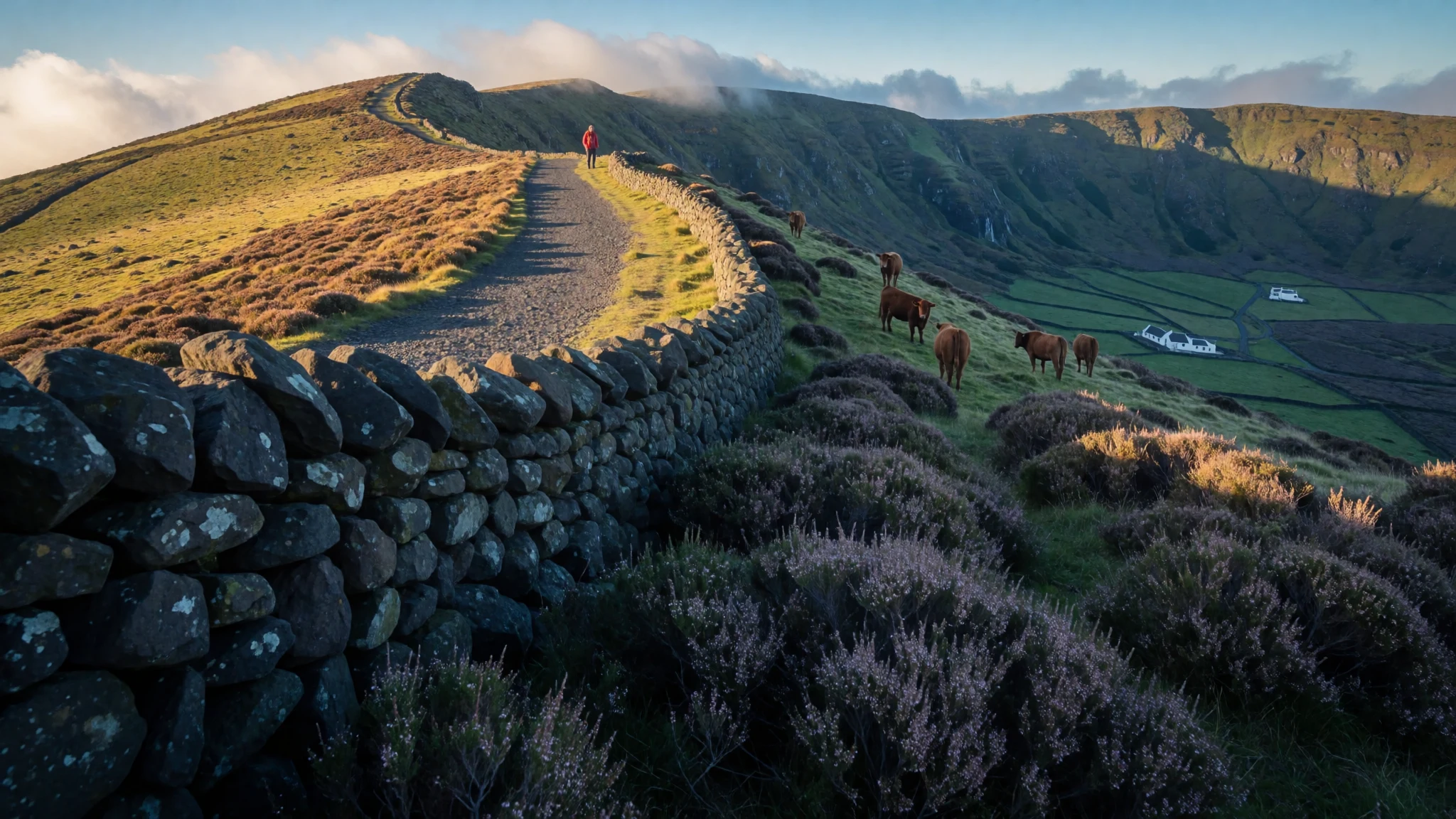
Graciosa Island is a small, quiet Azorean volcano of farms, white villages and a crater you can walk into, far from any crowd.
The place
Graciosa Island lies in the Atlantic as the northernmost of the Central Group of the Azores, and it is nothing like the dramatic, steep islands around it. It is low, oval and mostly farmed, with about 4,090 people living across a single municipality, Santa Cruz da Graciosa. The island is sometimes called the White Island, and the name suits its whitewashed villages.
The landscape is dominated by the Caldeira, a crater in the southeast that is roughly 1.6 km wide. The highest point on the island is 402 metres, so walking here means gentle slopes, stone-walled fields and sudden views of the sea rather than hard climbing. The coast is rocky and mostly low, with taller cliffs along the Serra Branca in the northwest, and two shallow bays hold the fishing harbours of Vila da Praia and Folga.
Santa Cruz, on the eastern coast, is the main town. Guadalupe is the chief rural parish, São Mateus da Praia is an old village that once held municipal status, and Luz, known locally as Sul, sits along the southern shore. Cattle, dairy, cheese, fruit and wine shape daily life, so the pace is slow and rural.
The climate is mild, and Graciosa is among the drier islands of the archipelago because its land is so low. That means less of the cloud that sits on the higher Azores. Do not expect nightlife or big resorts: the first hotel only opened relatively recently, and visitors are few.
Its story
Graciosa Island was reached by Portuguese navigators early in the fifteenth century, although no record survives of who first sighted it. A date in the middle of that century is often quoted for its discovery, but nothing documents it. What is clearer is that cattle and pigs were landed here on the orders of Prince Henry the Navigator, to prepare the ground for settlement.
The names of the earliest settlers are also uncertain, because formal registers did not yet exist. The first group historians single out was led by Vasco Gil Sodré, a man from Montemor-o-Velho who came from Terceira with his family and servants. His arrival marks the start of continuous settlement on the island.
The first village grew at Carapacho, in the southeast, probably where the newcomers came ashore. The soil there was poor and the coast offered no shelter from the sea, so the settlers moved inland to better land. That pattern, of farmers drawn to the sheltered interior and a few harbours on the coast, still explains where people live today.
The volcanic origin of the island is the other half of its story. Graciosa sits on the Terceira Rift, a tectonic fault running southeast to northwest, in line with the whole archipelago, and that stretching of the crust has pulled the island into its long oval shape and left the great crater at its southern end.
What to see
- Caldeira da Graciosa — Southeast Graciosa
The crater in the southeast is the island's defining feature, about 1.6 km across, and a signposted trail climbs to the island's highest point at 402 metres. Go on a clear morning for views over farmland and the sea. The path is easy underfoot, but wind can be strong.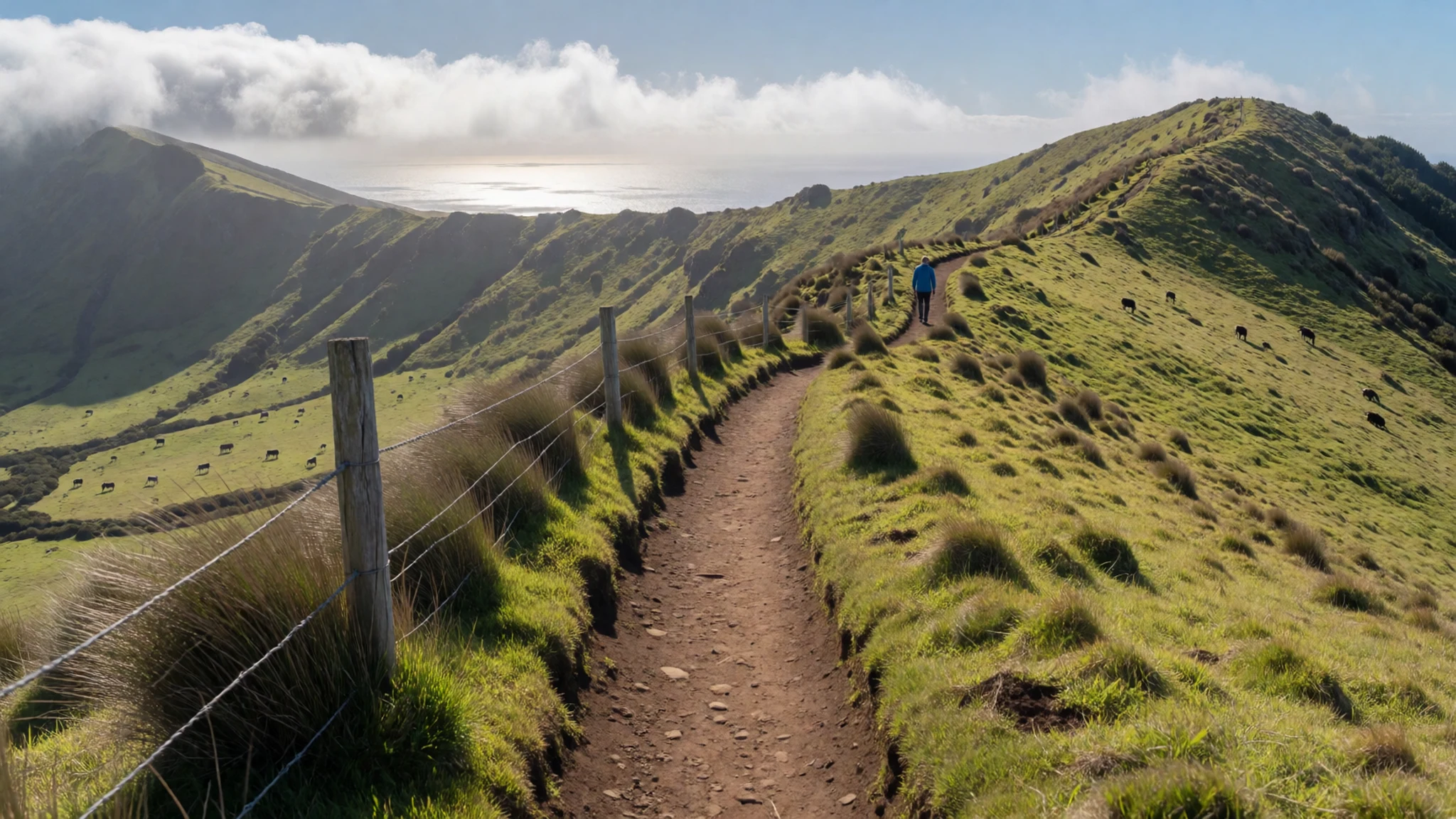
- Furna do Enxofre — Caldeira, near Santa Cruz
This volcanic cave sits inside the crater area and is reached by a path from Santa Cruz da Graciosa. It is a real piece of the island's geology, and a good stop for anyone curious about how Graciosa was made. Check locally before going, as access and opening arrangements can change.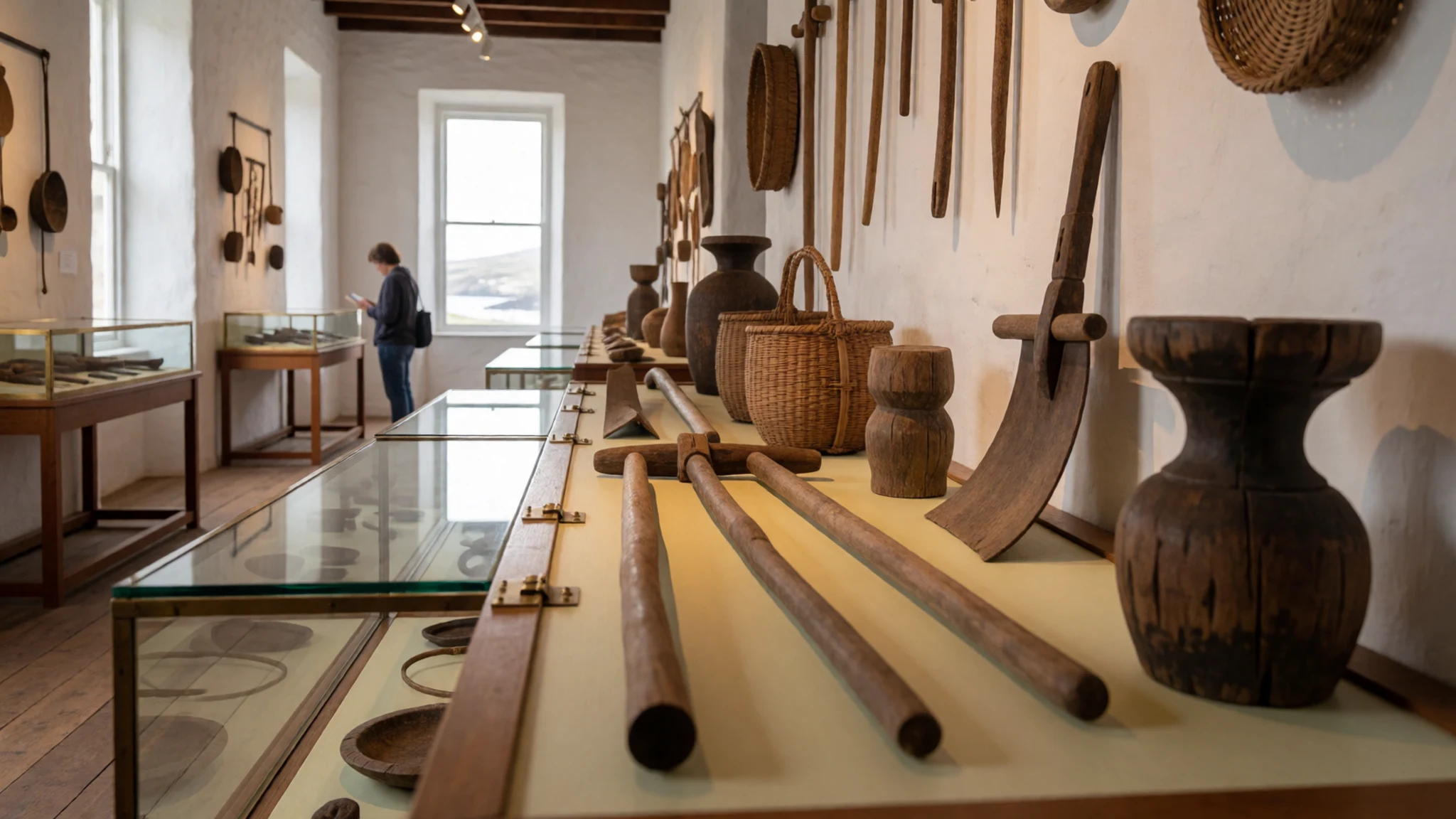
- Santa Cruz da Graciosa — East coast
The island's main town is compact and easy to walk. Its parish church has a handsome façade, and the Casa dos Capitães-mores recalls the old administrators. The Museu da Graciosa covers local history, ethnography and culture, and is a sensible first stop for context.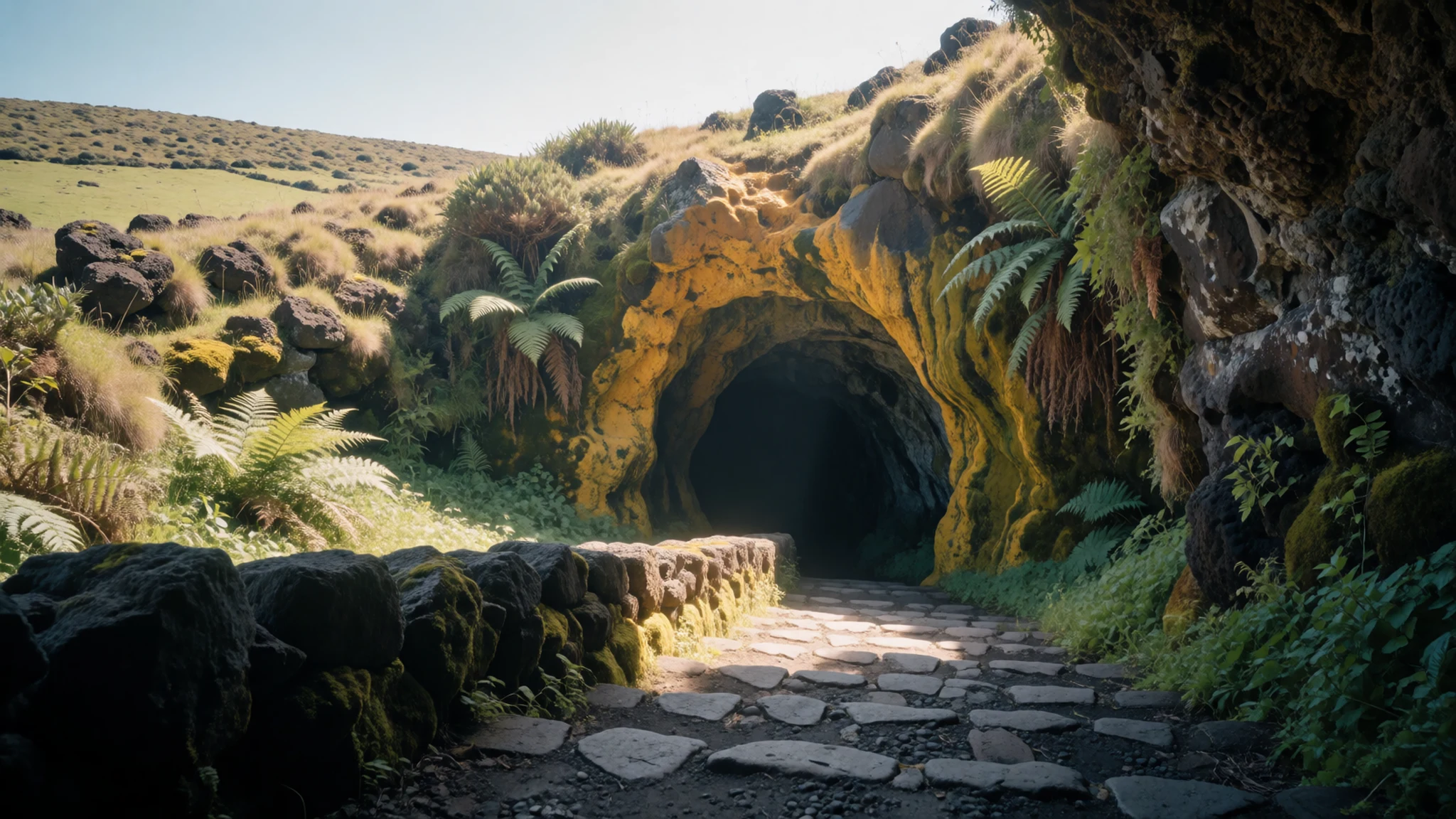
- Forte da Barra and Ponta da Barca lighthouse — Near Santa Cruz
Near Santa Cruz, the small fortress of Forte da Barra looks out over the harbour approaches, and the Ponta da Barca lighthouse stands along the same stretch of coast. Together they make a short, flat wander with sea views, best in the soft light of late afternoon.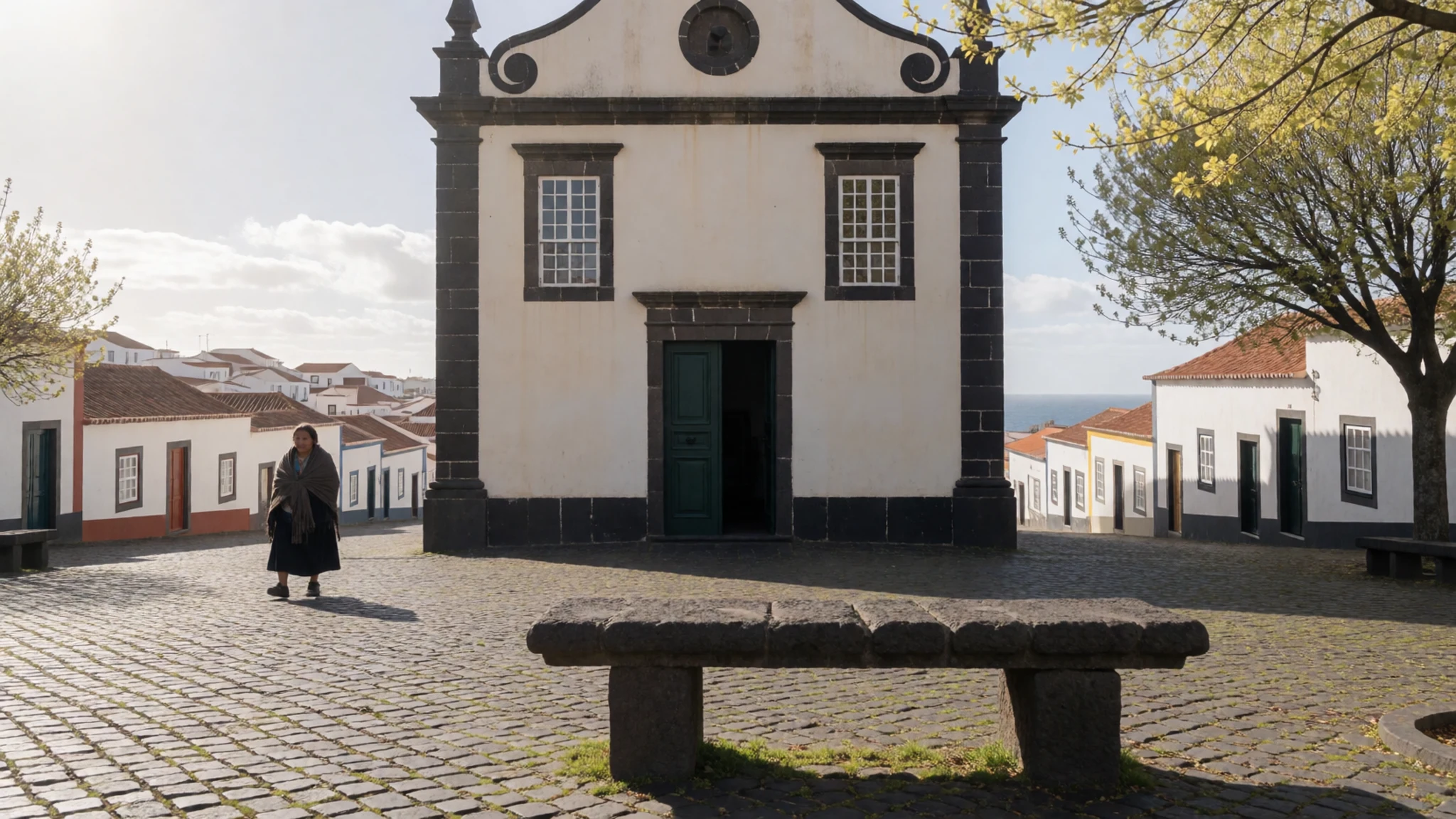
- Farol do Carapacho — Carapacho, southeast
A signposted viewing point sits by this lighthouse, a plain concrete tower in the style of the late 1950s. It is close to Carapacho, the site of the island's earliest settlement. The tower can be visited on guided tours held on Wednesdays, so plan around that day.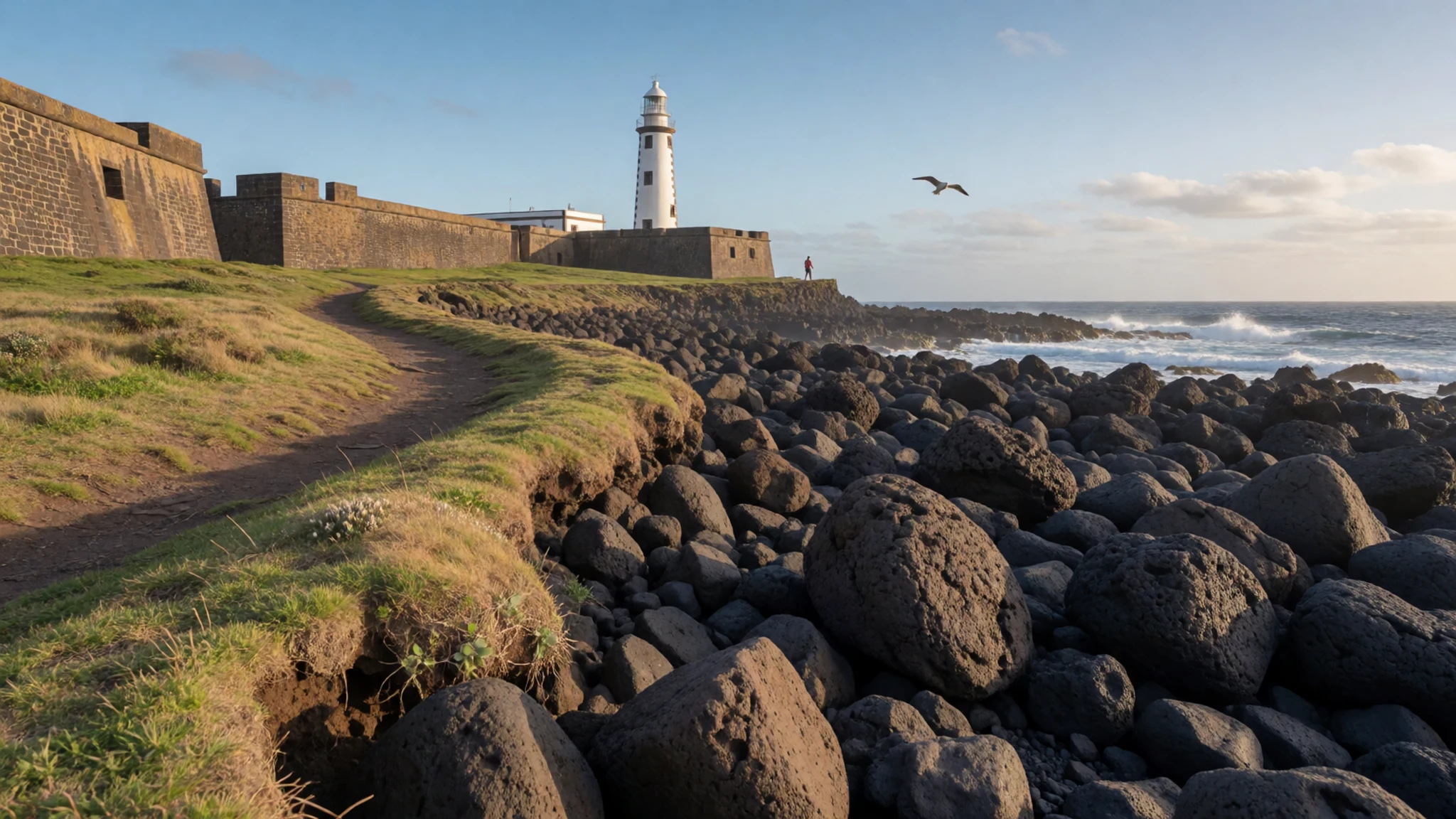
- Ermida de Nossa Senhora da Ajuda — Near Santa Cruz
This small hermitage stands on a volcanic cone close to Santa Cruz, and the short climb rewards you with a wide view over the town and fields. Two other chapels lie nearby. It is a quiet spot, good for a slow half hour.
Culture
Graciosa Island has the unhurried, devout and close-knit culture of a small Azorean farming community. Life turns around the parish, the church calendar and the land. Villages gather for religious festivals in summer, with processions, brass bands and shared meals, and the churches, some of them built slowly after tremors interrupted construction, remain the centre of each settlement.
People here are friendly but reserved, and a greeting in Portuguese, even a simple bom dia, is warmly received. Families have farmed the same fields for generations, and cattle, dairy and wine are part of local identity as much as of the economy. The island's volcanic heritage also shapes belief and daily habit, from the thermal waters at Carapacho, long used for health, to the stone walls that shelter crops from Atlantic wind.
Because tourism is small, visitors are noticed and often welcomed with curiosity. Shops close for lunch and on Sundays, evenings are quiet, and the best way to meet people is in a village café or at a local festival. Slow down and the island rewards it.
When you step into a village church, keep your voice low, cover bare shoulders if services are on, and never photograph worshippers without asking.
What to wear
Graciosa Island has no single famous costume the way some regions do, but the Azores have a long tradition of working dress made from local wool and linen, with knitted jumpers, woollen capes and cloth caps suited to wind and rain. Embroidery and lace were household crafts, and on festival days some groups still wear regional costume with white blouses, dark skirts and headscarves, though this is for performances rather than daily life.
Today people dress simply and practically. Farmers wear boots and work clothes, townspeople favour casual cotton and light jackets, and older residents often dress a little more formally for church and market days. Nothing here is flashy, and beachwear stays at the beach or pool.
For a visitor, the key is layers. The climate is mild, but wind off the Atlantic can be sharp even on sunny days, so bring a windproof jacket and a light waterproof. Comfortable walking shoes or trail shoes suit the crater paths, which can be damp and uneven. A sun hat and sunscreen matter in summer, and swimwear is wanted for the sea and the thermal baths. For churches, cover shoulders and knees, as locals do. Smart casual is enough for any restaurant on the island.
What to eat
- Local cheese — Village shops and eateries in Santa Cruz
Graciosa's dairy farms supply cheese that is usually served as a starter or snack with bread. Expect it fresh to semi-cured and rather mild. Look for it in village shops, small supermarkets in Santa Cruz and on the menu in family-run eateries.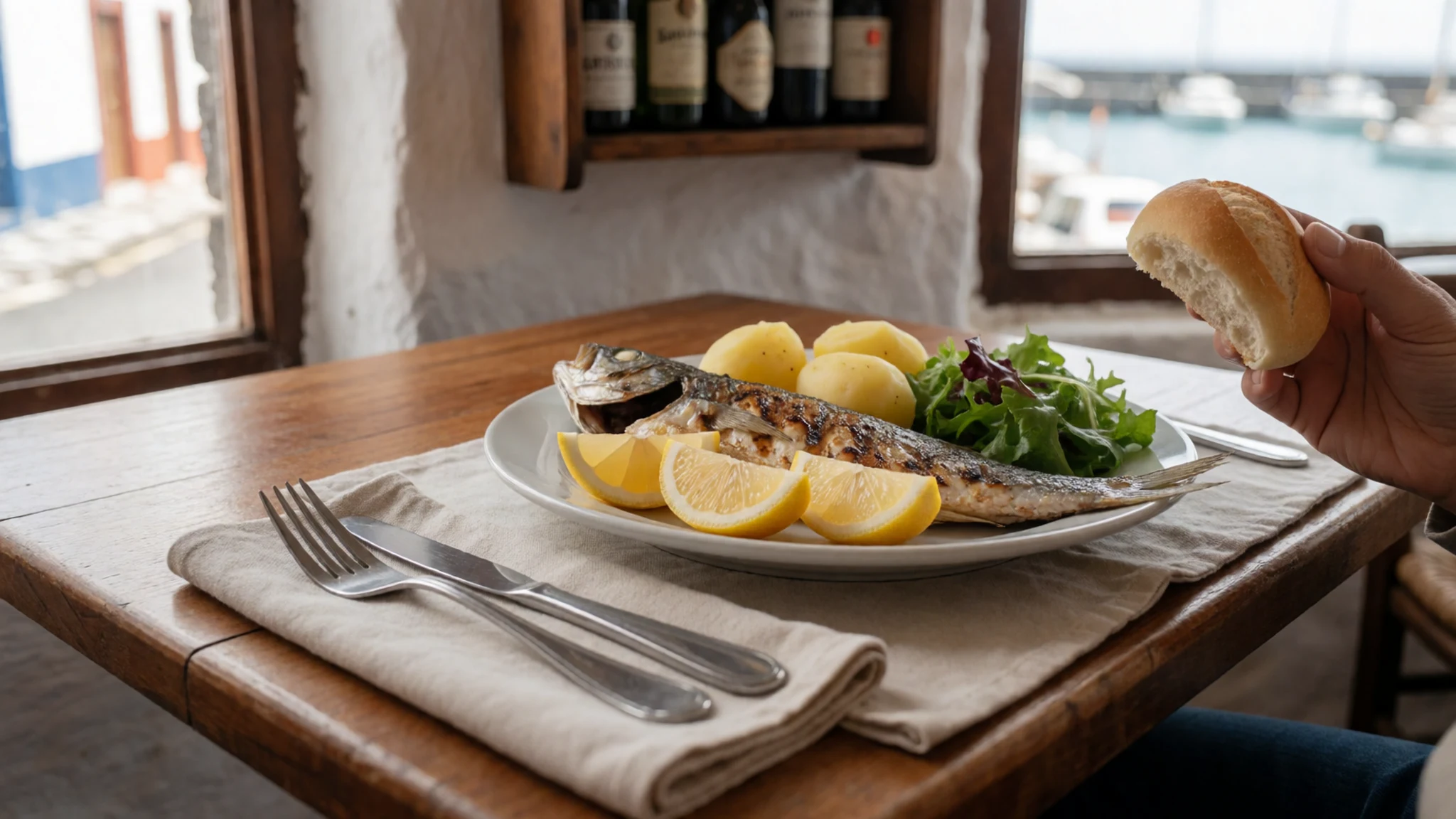
- Grass-fed beef — Restaurants in Santa Cruz and Luz
Cattle graze the island's green fields, and beef is a staple of local menus, often grilled or served as a steak with potatoes and a simple sauce. It tastes clean and robust. Try it at a restaurant in Santa Cruz or a village eatery on the south coast.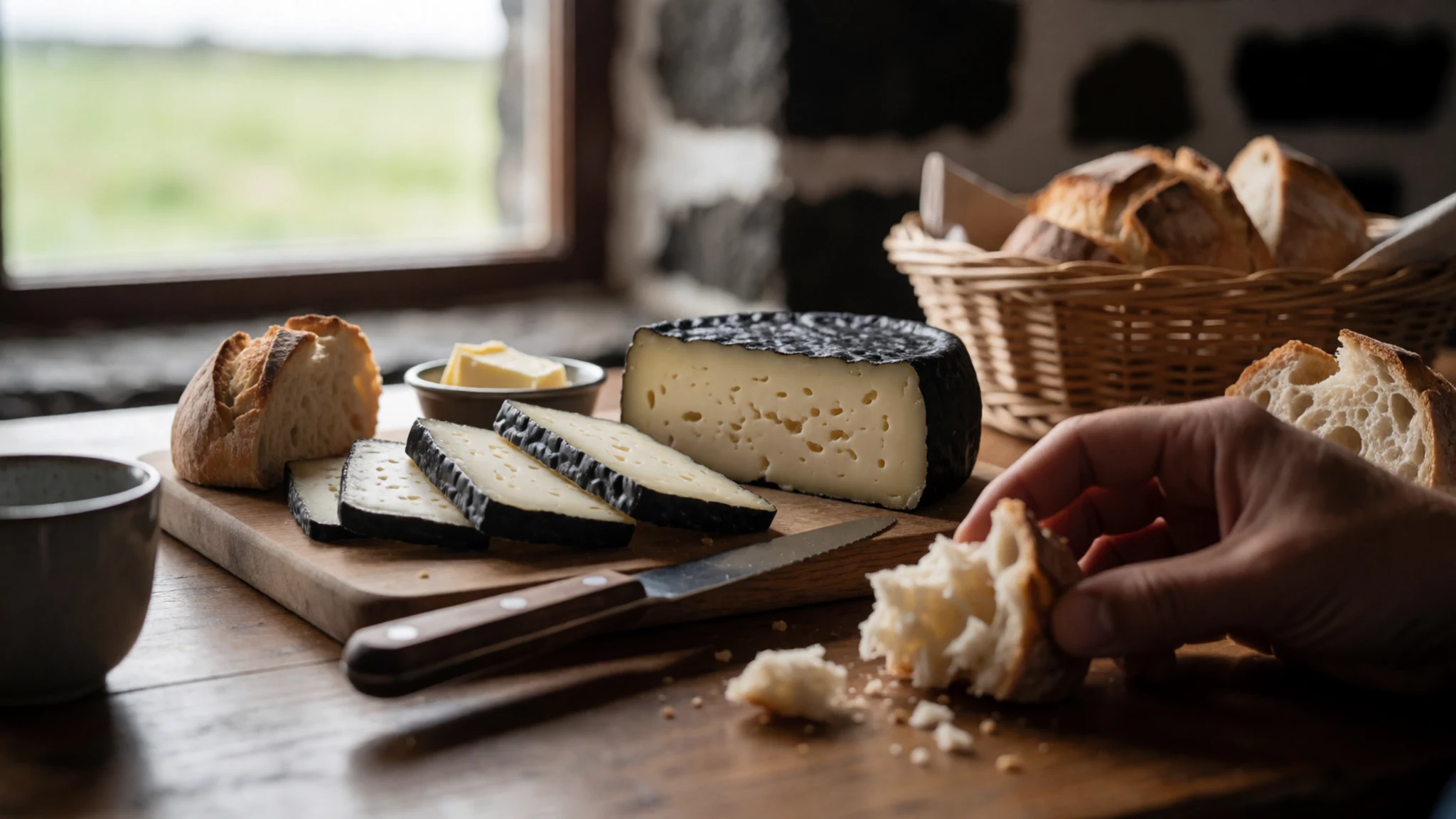
- Fresh fish and seafood — Seafront eateries near the harbours
The fishing harbours at Vila da Praia and Folga land the day's catch, which appears grilled, in stews or with boiled potatoes. Ask what came in that morning, since the choice changes with the sea. Seafront eateries near the harbours and in Carapacho are the best bets. - Island wine — Eateries and shops in Santa Cruz
Graciosa grows grapes and makes wine, mostly white, with a crisp, mineral edge that comes from the volcanic soil. It pairs well with seafood and cheese. Ask for local wine by the glass at an eatery in Santa Cruz or buy a bottle at a village shop. - Fruit and sweet pastries — Bakeries and cafés in Santa Cruz
Island orchards produce seasonal fruit, and local bakeries turn out simple sweet pastries and cakes, often with eggs and sugar. They go well with strong coffee in the morning. Look in bakeries and cafés in Santa Cruz, especially around the main square.
Plan it
Best time. May to September is the best window, when it is warm, relatively dry and the sea is swimmable. Graciosa is one of the drier Azores, but winter can be windy, wet and rough at sea, and some services run reduced schedules.
How long. 2–3
Getting there. Fly to Graciosa Aerodrome from Terceira or São Miguel, or take the inter-island ferry in summer, then rent a car or taxi for the final stretch, as the island is small. Terceira is 72 km away. Check schedules before booking, as flights and sailings change by season.
Budget. mid
Tips
- Book flights, ferries and rental cars well ahead in July and August, as capacity is small
- Carry some cash for village cafés and small shops
- Bring a windproof layer even in summer
- Check the Wednesday lighthouse tour and museum opening times locally before you go
- Use the official municipality site, http://www.cm-graciosa.pt, for current information
Etiquette
- Greet shopkeepers and neighbours with bom dia or boa tarde
- Keep to marked paths and close farm gates behind you
- Ask before photographing people or private farmland
Nearby
Sources
- Wikidata Q592315 (CC0)
- Wikipedia (rev 1380240505) (CC BY-SA 4.0)
- Wikivoyage (rev 5402974) (CC BY-SA 4.0)
- Photo 01 Graciosa Azores SW (Public domain)
- Photo 02 Caldeira da Graciosa (Public domain)
- Photo 03 Graciosa position (Public domain)
- Photo 04 Igreja Matriz de Santa Cruz (Public domain)
- Photo 05 Ilha Graciosa from Toledo (Public domain)
- Photo 06 Caldeira Massif (CC BY-SA 4.0)
- Photo 07 Whale Islet (CC BY-SA 4.0)
- Photo 08 Furna do Enxofre (Public domain)


