Phnom Chisor
Phnom Chisor, Cambodia
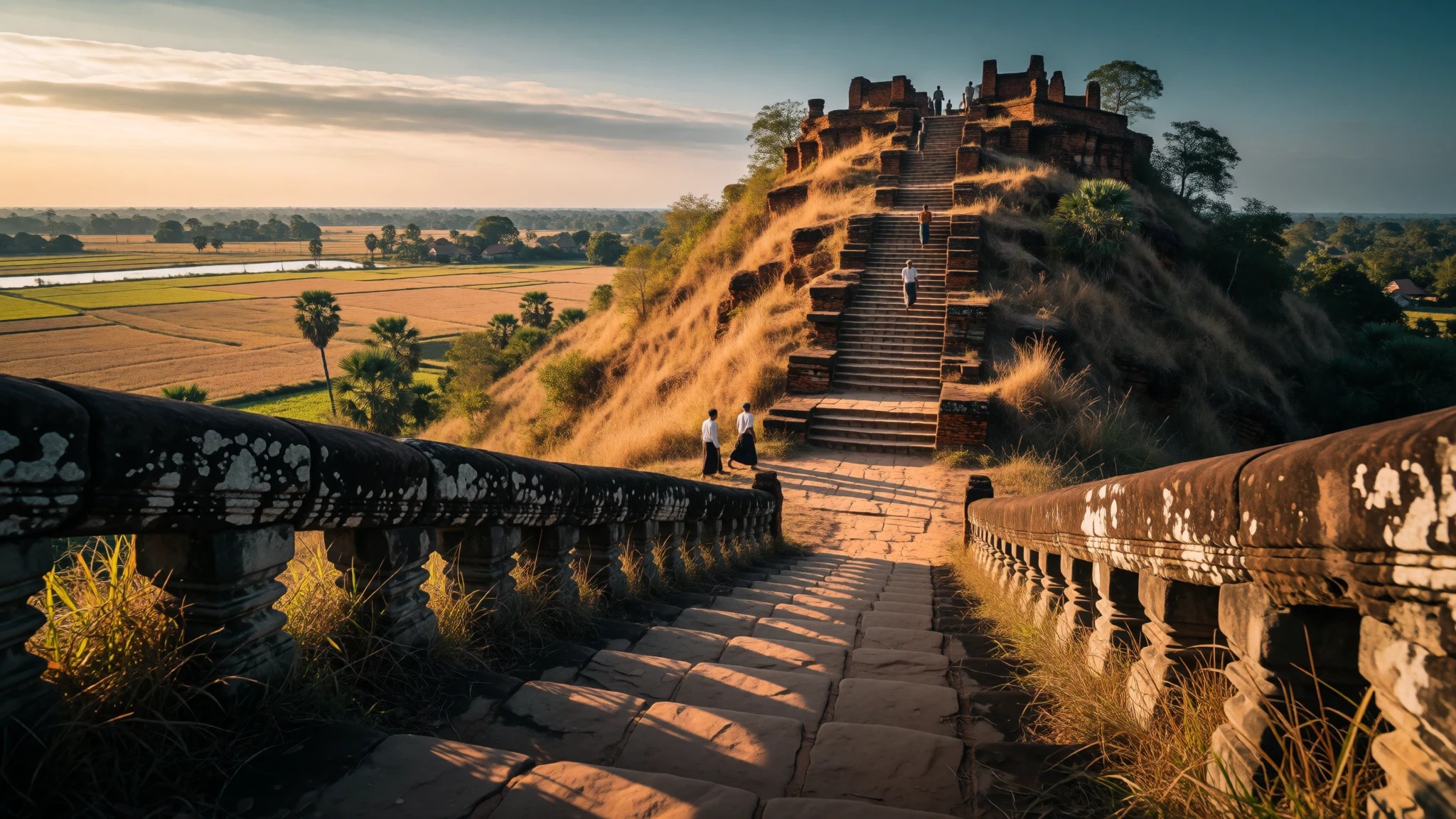
Phnom Chisor is a quiet hilltop of Angkorian brick sanctuaries and a working pagoda, an easy day out from Phnom Penh with wide views over the rice plain.
The place
Phnom Chisor is a single hill of about 133 metres rising out of the flat rice country of Takéo Province, in Samraŏng District, roughly 42 km south of Phnom Penh and 27 km north of Takeo town. The village at its foot is Dok Por. The height sounds modest, and it is, but nothing else nearby stands up, so the hill reads as a landmark from far across the paddy. On top sits an old complex of brick and laterite sanctuaries from the Angkorian period, with a working Buddhist monastery alongside. The Khmer name is ភ្នំជីសូរ, and older books often spell it Cisor. Wikidata classes it as an archaeological site. Cambodia's culture ministry is putting together a case for World Heritage listing, but the hill has no such status today. That shapes the experience: this is a calm place with few facilities, a scattering of Cambodian families and the odd foreign traveller, rather than a stop on a coach circuit. It suits a half-day outing from the capital, often combined with other halts in Takéo. The climb is the main event, then the summit platform, where the view runs flat in every direction over rice fields, sugar palms, ponds and dusty tracks. Heat is the main hazard for most of the year, and the lower stairs offer little shade, so an early start pays off.
Its story
Phnom Chisor belongs to the Angkorian world, the age when Khmer rulers raised temples of brick and laterite across the plains and hills of what is now Cambodia. A Khmer inscription from the hill was copied by pressing damp paper over the carved stone, and French scholars of the colonial period published the resulting squeeze in their series on the country's inscriptions. It is one of the records that tie this summit to the older kingdom. After Angkor fell in 1431, the realm lost ground to its neighbours and many old sanctuaries were left to monks, villagers and the weather. Phnom Chisor fared better than some because it stayed a place of worship: Buddhist monks keep a pagoda on the summit, right beside the earlier shrines. The country's later history was harsh. French rule in the 19th century, a short-lived independence in 1953, civil war from 1970, the Khmer Rouge years and a long, uneven recovery, for which the United Nations-run elections of 1993 are the usual marker, all pushed rural heritage sites far down any list of priorities. Conservation here is therefore patchy: some stonework is carefully tended, some is propped up or overgrown. Visiting today means seeing both the work of the old Khmer builders and the long gap in care that followed.
What to see
- The old stairway — Eastern foot of the hill, Dok Por
The long stone stairway up the hill is the traditional approach and the best way to feel the site's scale. The steps are worn and uneven, with little shade on the lower flights. Go slowly, pause at the landings, and look back over the rice fields as the plain opens out below.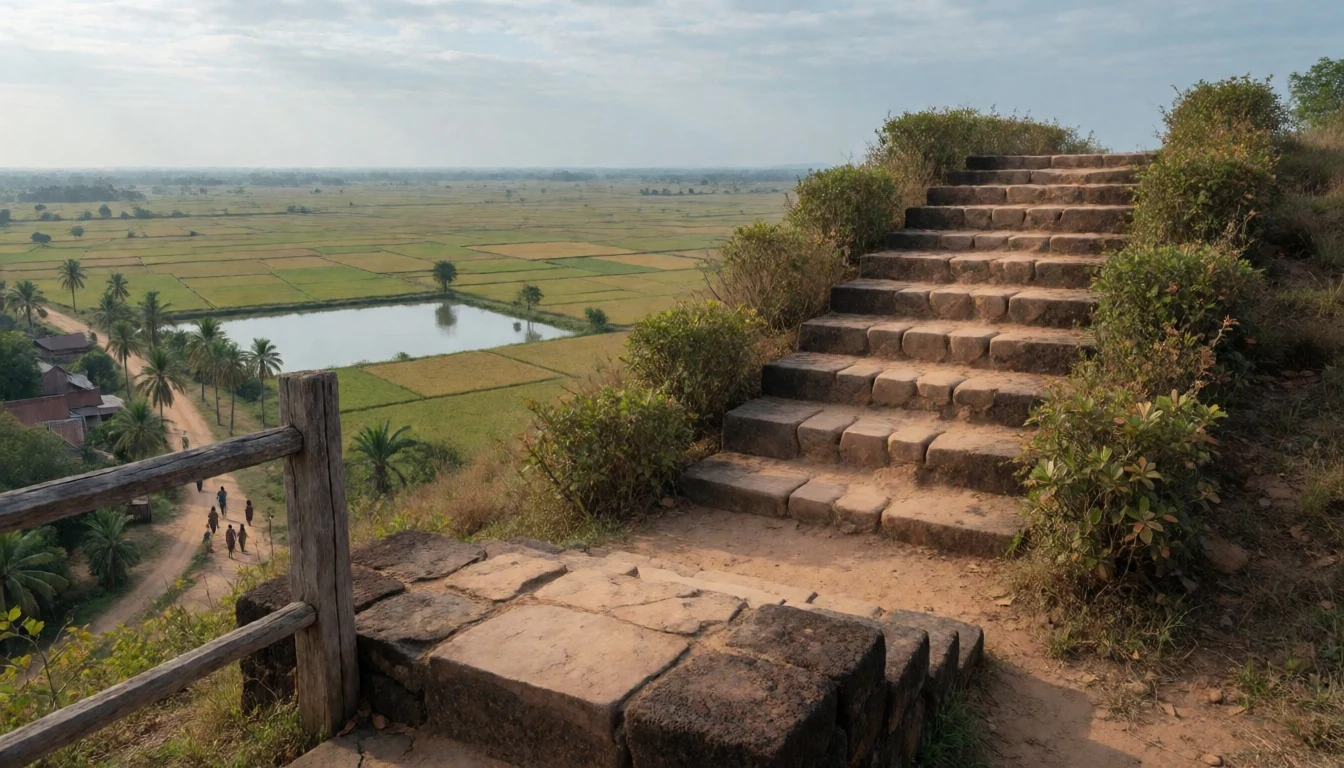
- The Angkorian sanctuaries — Summit
At the top stand the old temple structures in brick and laterite, their doorways framed in heavy stone. They are modest beside the great temples of Angkor, but that is their appeal: you can walk around them without queues, study the masonry up close, and see where later repairs meet original work.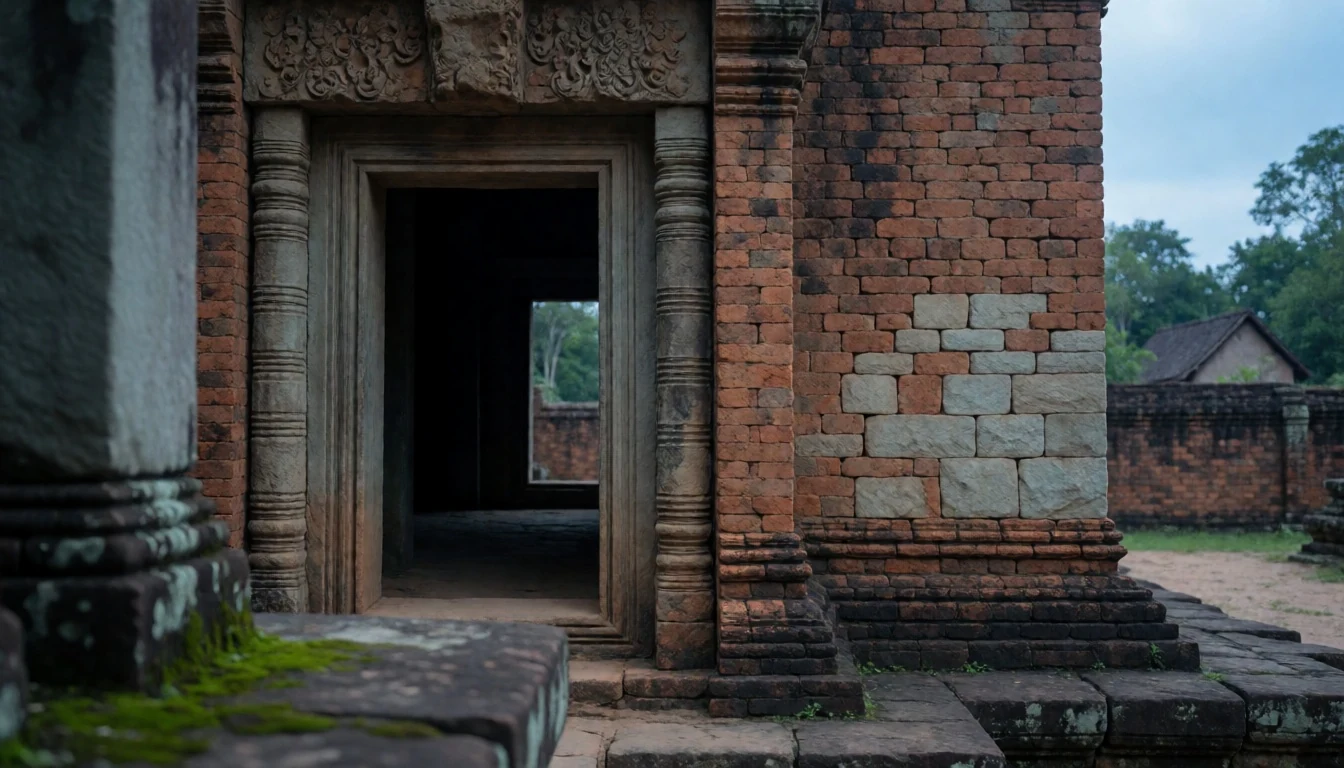
- The summit pagoda — Summit
Beside the ruins is a living Buddhist monastery, with a pagoda used by local worshippers. It is a useful reminder that the hill is not only an archaeological site. Visit quietly, remove shoes where others do, and expect to hear chanting or see families making offerings, especially around festival days.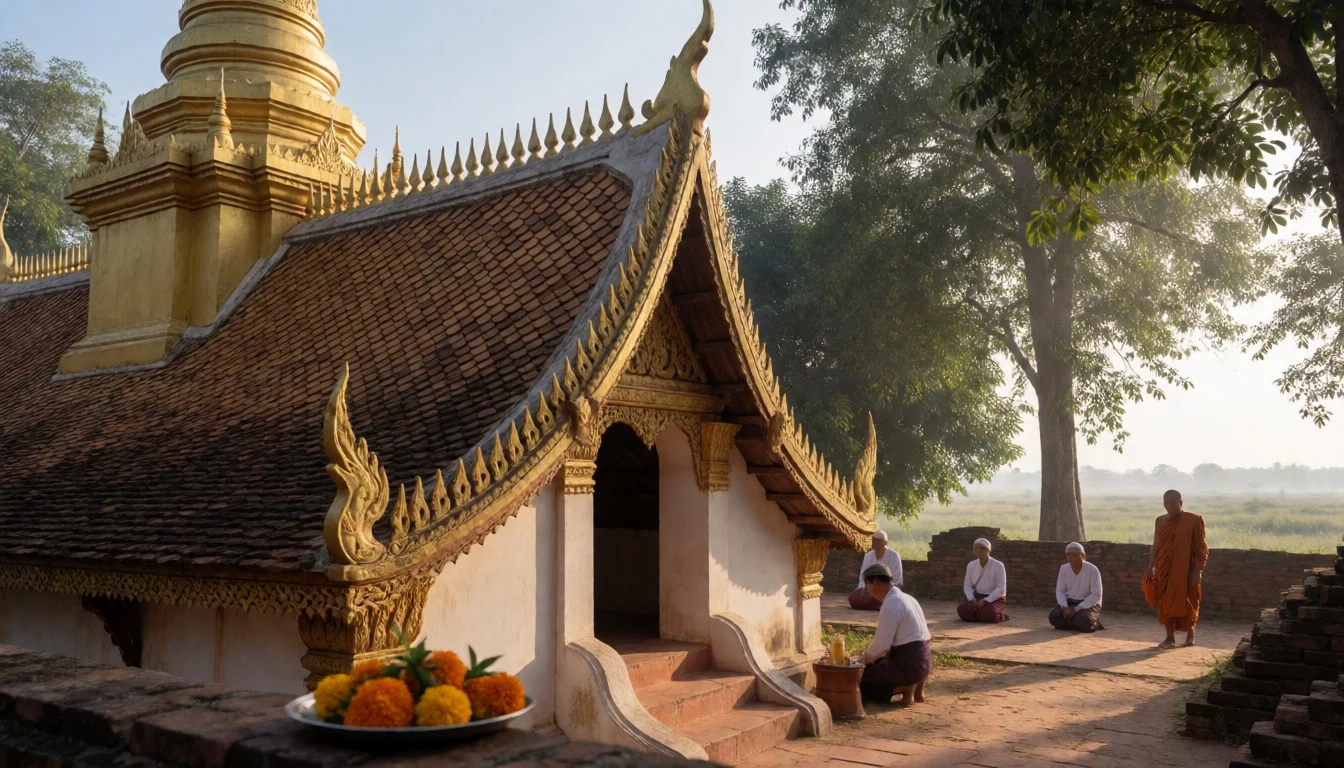
- The view over Takéo — Summit viewpoint
From the platform the land spreads out like a map: rice fields in a patchwork, lines of palms, village ponds and the faint haze toward Phnom Penh. Morning light gives the clearest view and the coolest air. In the wet season the paddy is bright green, while in the dry months it turns gold and brown.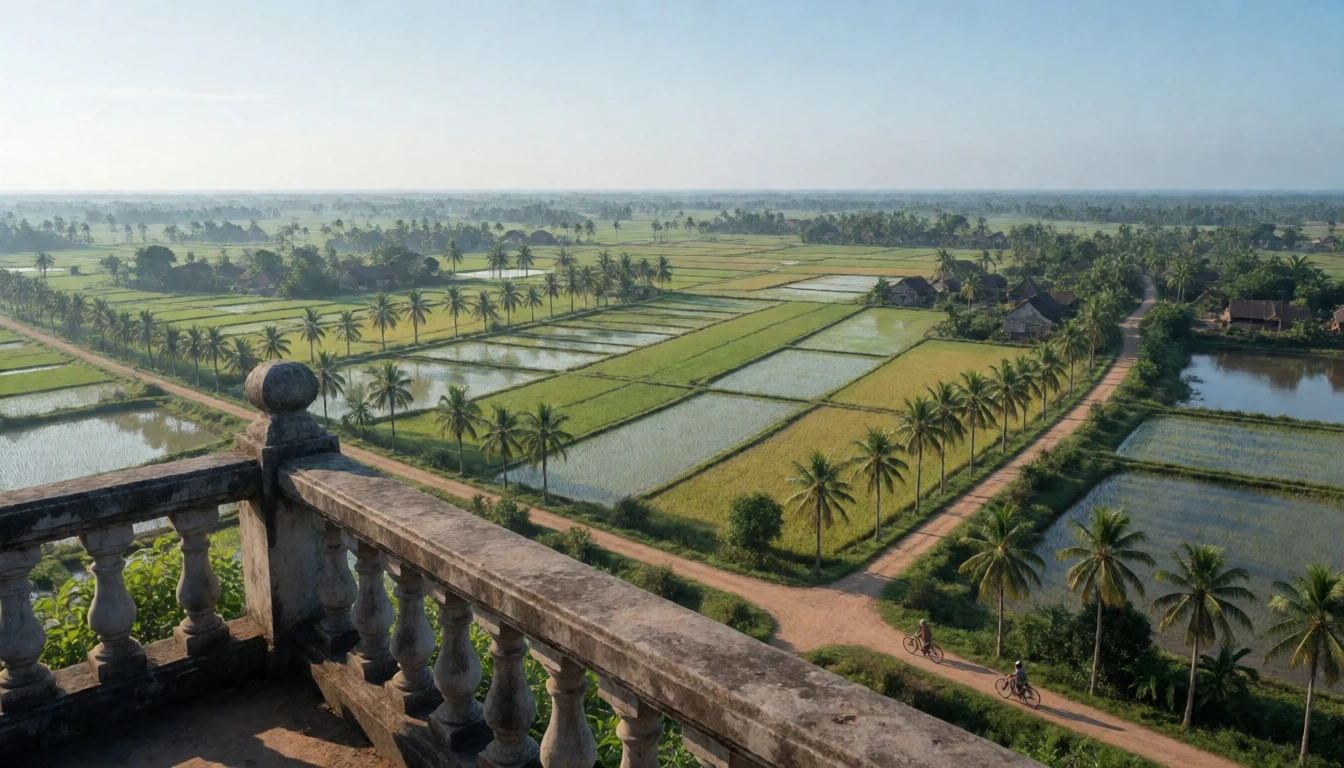
- The Khmer inscription — Reproduced from archive; original context at the hill
The carved Khmer inscription from this hill is known mainly through a paper squeeze reproduced in a French scholarly series, rather than as something to see on site. It is worth knowing about because it shows that the hill carried written records, and that scholars were studying it well before modern tourism arrived.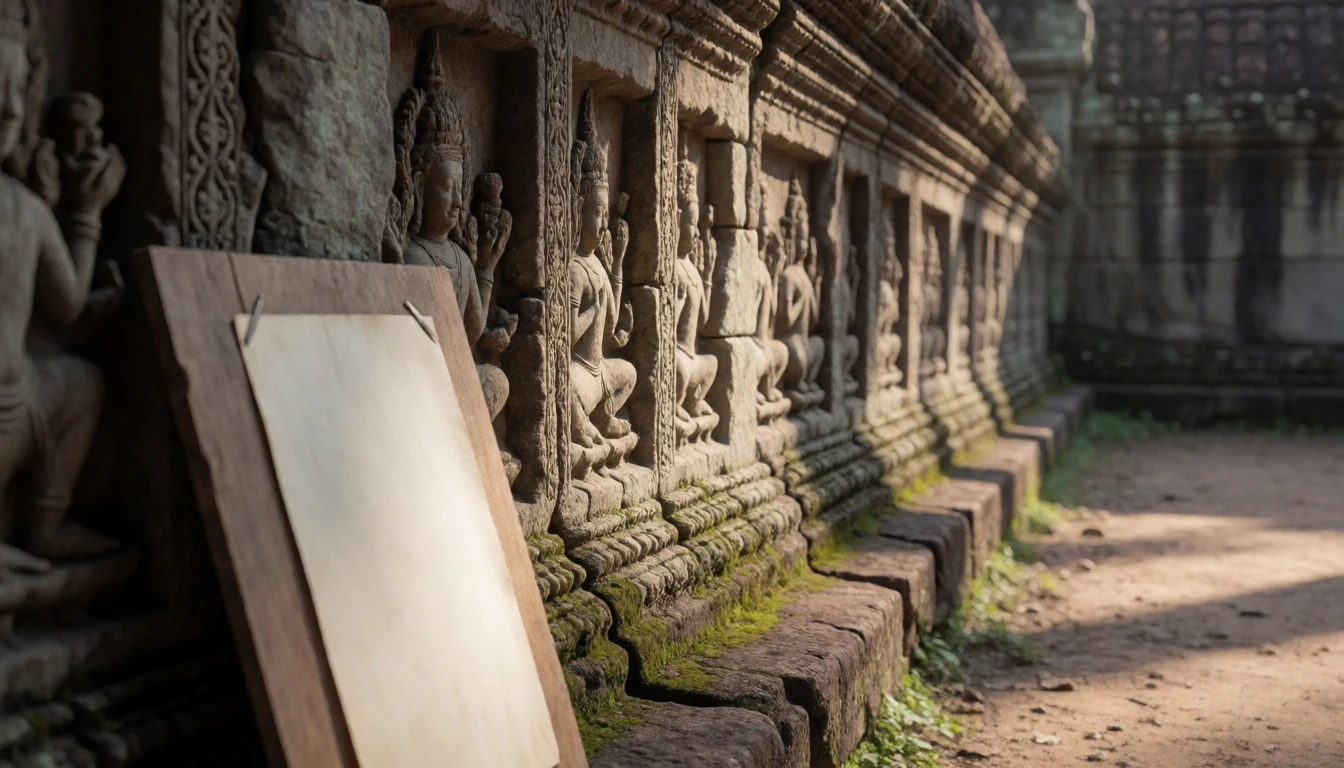
Culture
Phnom Chisor is both a monument and a place where people still pray, so the mood on the hill is shaped by Theravada Buddhism, which most Cambodians follow. Families climb the steps on holy days and public holidays to make offerings, light incense and bring food for the monks. Merit-making is central to this: giving, however small, is thought to improve one's standing in this life and the next. Monks are treated with deep respect, and visitors will see people lowering their heads and joining their palms in the gesture called sampeah when they greet an elder or pass a shrine. Visitors can copy it with a small nod and palms together, and it is always appreciated. Rural Cambodia is more traditional than Phnom Penh, and attitudes to being photographed vary; some people are happy to pose, others prefer not to be filmed, and a few may ask for payment. The Khmer Rouge period still shapes family histories in villages like Dok Por, so questions about the past are best left for when an acquaintance raises them. Voices tend to stay low on the summit, and the monastery has a daily rhythm of its own, with early mornings and a quiet midday. Take your shoes off before entering the pagoda or any sanctuary with a shrine, and ask before photographing monks or worshippers.
What to wear
Traditional Khmer dress centres on the sampot, a length of cloth wrapped around the waist and legs, and on the krama, a checked cotton scarf that is part of everyday life. The finest sampot are silk, woven with ikat patterns in which the thread is dyed before weaving; these are worn for weddings, temple festivals and ceremonies, while plainer cotton versions suit daily use. The krama serves as a head covering, sun shield, towel, baby carrier and sometimes a face mask against dust. On the roads around Phnom Chisor, people mostly wear modern clothes: T-shirts, trousers, long skirts, and in the countryside a krama knotted around the neck or head. Women often cover up in daytime to keep out of the sun. At the pagoda on holy days, older women may wear white tops and dark skirts. Visitors should dress for heat and for a religious site at once. Choose light, loose clothing that covers shoulders and knees, and bring a hat and sunglasses. Shoes need a good grip for worn, uneven steps, but slip-ons or sandals with a strap are easiest where shoes come off at the pagoda. Carry a thin scarf or a krama, which is cheap to buy locally, for sun and for covering up near the shrine. Long sleeves also help against sun and insects.
What to eat
- Amok — Eateries in Takéo town and restaurants in Phnom Penh
A mild steamed fish curry made with coconut milk and a fragrant spice paste, served in a banana-leaf cup or a hollowed coconut. Chicken versions exist. It is soft and creamy rather than hot, and works well with plain rice at lunch.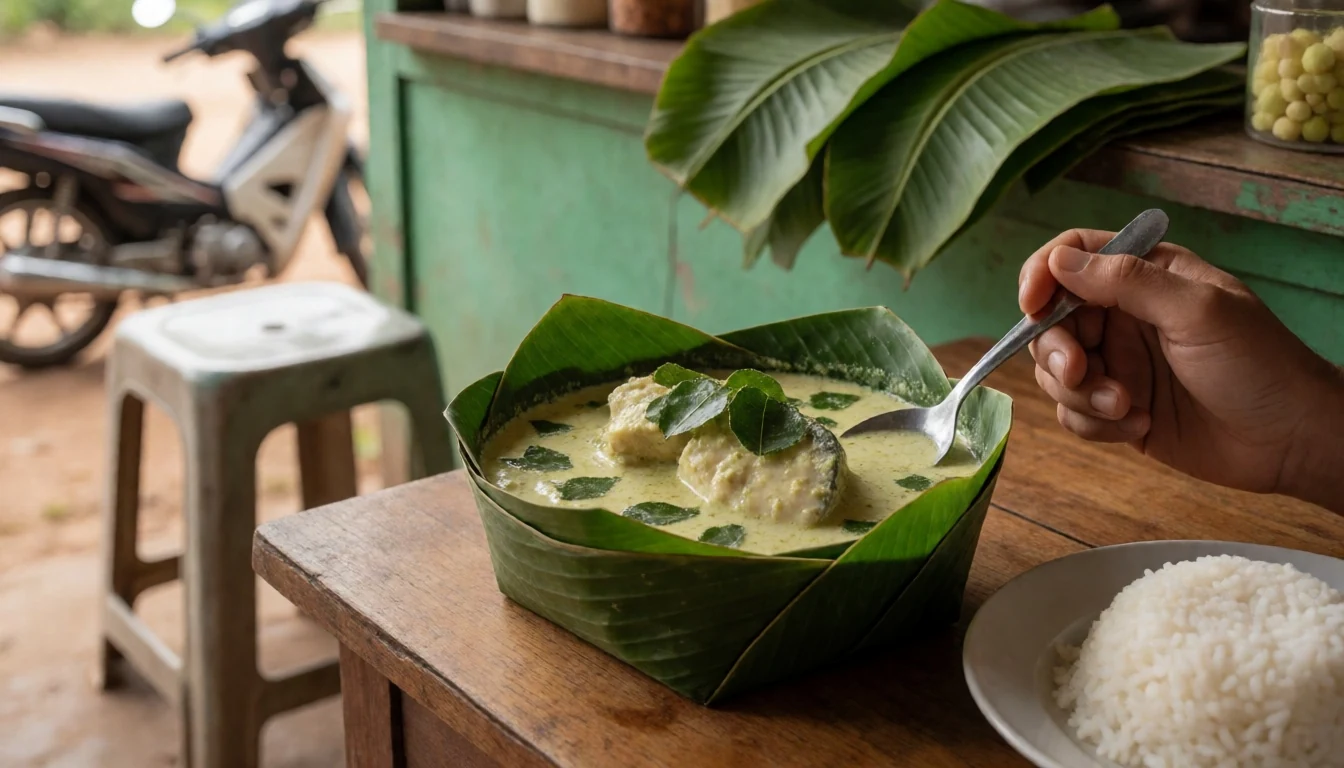
- Lok lak — Roadside eateries and family restaurants along the road from Phnom Penh
Cubes of stir-fried beef, seared until browned outside, served on lettuce and tomato with rice and a dipping sauce of lime juice and black pepper. It is a reliable, filling dish for travellers who prefer something not too sour or fermented.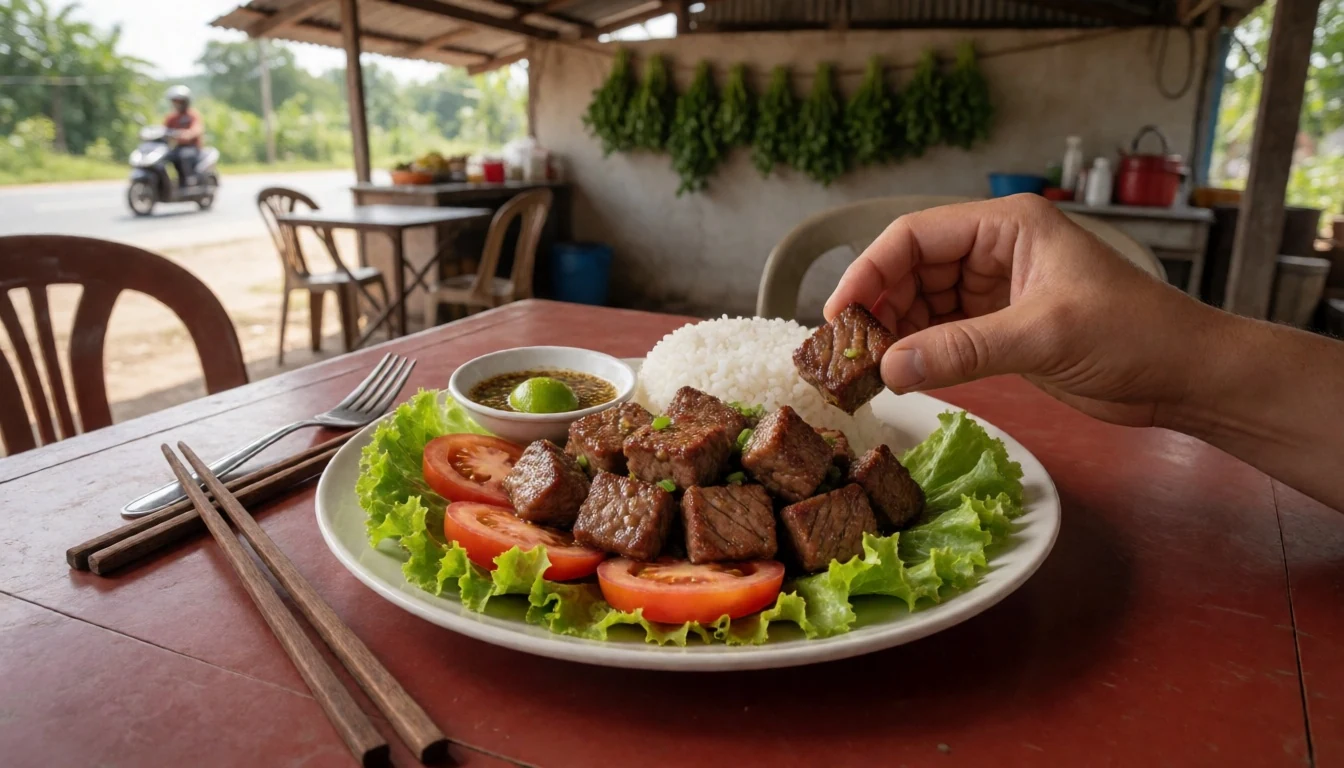
- Prahok — Village homes and market stalls around Takéo
A fermented fish paste, salty, pungent and central to much Khmer cooking. It turns up in dips served with raw vegetables and in stews. The smell is strong, so try a small spoonful first, and ask for a milder version if you are unsure. - Num banh chok — Morning market stalls in Takéo town and nearby villages
Fresh rice noodles topped with a green fish gravy made from lemongrass and turmeric, then piled with herbs, banana blossom and cucumber. It is mainly a breakfast dish, eaten early, and sells out by mid-morning in many places. - Kuy teav — Roadside breakfast stalls and market food counters
A clear pork or beef noodle soup, brightened with lime, fried garlic and fresh herbs, with chilli served on the side so you control the heat. It is a typical breakfast and a good fuel before the climb up the hill.
Plan it
Best time. November to February, when the air is cooler and drier and the climb is easier. March to May is very hot, with little shade on the stairs, and the rainy months bring muddy tracks and slippery steps, though the paddy is at its greenest.
How long. 1
Getting there. Phnom Penh is the usual gateway, with its international airport about 42 km north of the hill. Take a taxi, hired car or tuk-tuk south toward Takéo, then follow village roads to Dok Por and the foot of the stairs. Allow time for traffic leaving the capital.
Budget. low
Tips
- Start early, ideally by 7 am, to climb before the heat and to catch the clearest views
- Carry plenty of water and a hat, as shade on the lower flights is limited
- Bring small notes in cash, since cards are rarely accepted around the village
- Agree a return time with your driver, and combine the hill with other stops in Takéo
- Check with your driver or hotel before setting out for any entry arrangements, as these can change
Etiquette
- Remove shoes before entering the pagoda or any sanctuary with a shrine
- Dress modestly, with shoulders and knees covered, and keep voices low on the summit
- Ask before photographing monks, worshippers or villagers
Nearby
Sources
- Wikidata Q1628273 (CC0)
- Wikipedia: Phnom Chisor (rev 1373083063) (CC BY-SA 4.0)
- Wikivoyage: Cambodia (rev 5395048) (CC BY-SA 4.0)
- L1030498 — Christina Andrada, via Wikimedia Commons (CC BY 2.5)
- Chisor Mountain (Phnom Chisor), near Phnom Penh — Colin W, via Wikimedia Commons (CC BY 3.0)
- Estampage of a Khmer inscription from Phnom Chisor, Inscriptions du Cambodge II (Public domain)
- Old stairs to the summit of Phnom Chisor — Stefan Fussan, via Wikimedia Commons (CC BY-SA 2.0)
- Buddhist building on the summit of Phnom Chisor — Stefan Fussan, via Wikimedia Commons (CC BY-SA 2.0)
- Ancient Angkor temple on the summit of Phnom Chisor — Stefan Fussan, via Wikimedia Commons (CC BY-SA 2.0)
- Ancient Angkor temple on the summit of Phnom Chisor (second view) — Stefan Fussan, via Wikimedia Commons (CC BY-SA 2.0)
- Ancient Angkor on the summit of Phnom Chisor — Stefan Fussan, via Wikimedia Commons (CC BY-SA 2.0)


