Phillip Island
Phillip Island, Australia
Go to Phillip Island for world-class wildlife encounters, from the evening penguin parade to koalas in the gum trees.
The place
Phillip Island is a coastal sanctuary located south-southeast of Melbourne in Victoria. Connected to the mainland town of San Remo by a concrete bridge, the island serves as a natural breakwater for Western Port. The landscape is a blend of rugged coastline and pastoral greenery, with a large portion of the land dedicated to sheep and cattle grazing. While the permanent population is modest, the island transforms during the summer months, when thousands of holidaymakers flock to its beaches and cafes.
Cowes serves as the primary hub for visitors, offering a concentration of restaurants and shops, while smaller villages like Rhyll and Newhaven provide a quieter pace. The island is a paradoxical place where serene nature meets high-octane energy; it is globally renowned for its wildlife preserves but also holds a deep connection to motorsport. The local circuit is known for international motorcycle racing, though the MotoGP Championship will move to Adelaide in 2027. For the casual visitor, the appeal lies in the slow rhythm of the coast, the salt spray of the Southern Ocean, and the opportunity to see rare animals in a protected environment. Whether exploring the windswept cliffs of the south-west or the peaceful inlets of the north-east, the island offers a sense of escape from the urban rush of the mainland.
Its story
Phillip Island was originally the territory of the Yalloc Bulluk clan of the Bunurong people. Due to the sheltered nature of the bays, these indigenous groups were among the first in Victoria to encounter European mariners. The island's recorded colonial history began in 1798 when George Bass and Matthew Flinders explored the area, leading to a period of frequent visits by sealers from Van Diemen's Land, which often resulted in conflict with the local Bunurong people.
In the early 19th century, the island became a point of geopolitical tension between Britain and France. British authorities grew concerned that the French might establish a colony in Western Port following the voyage of Dumont d'Urville. This led to the dispatch of British ships and the construction of a fort near Rhyll, named Dumaresq. Early explorers noted the abundance of timber and the presence of coal at Cape Woolamai, though the lack of sufficient fresh water eventually forced the settlement to move to the mainland. The island's early colonial attempts were marked by a struggle against the elements and a lack of reliable water sources, a fact documented by the crew of the HMS Beagle during their third voyage. Over time, the focus shifted from strategic military outposts and resource extraction to agriculture and, eventually, the thriving tourism industry that defines the island today.
What to see
- Penguin Parade — Summerland Beach
The island's most famous attraction allows visitors to watch hundreds of little penguins emerge from the surf at sunset to return to their burrows. To protect the colony, viewing is strictly managed via boardwalks, and photography is banned during the parade. - The Nobbies and Seal Rocks — South-west coast
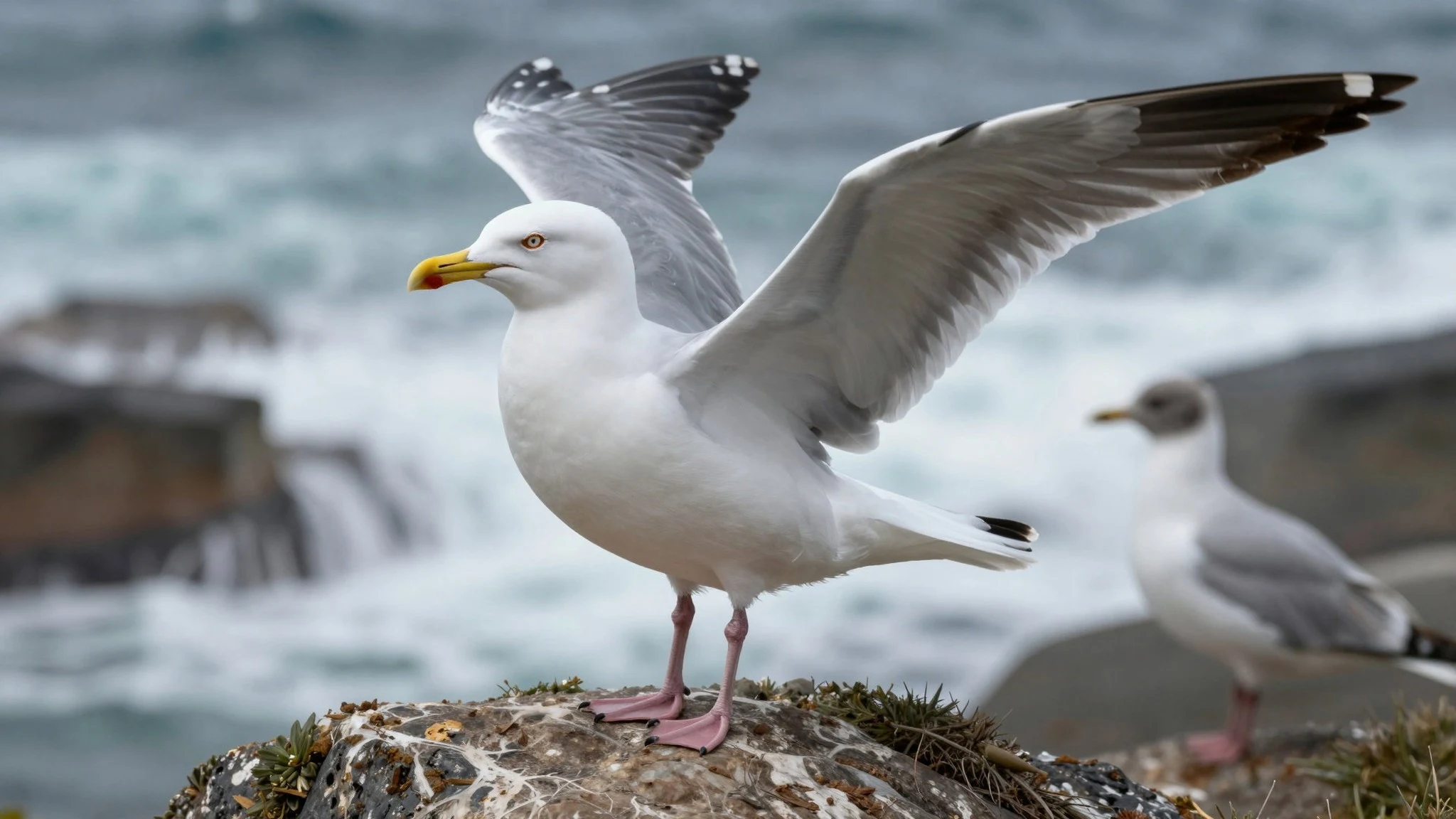
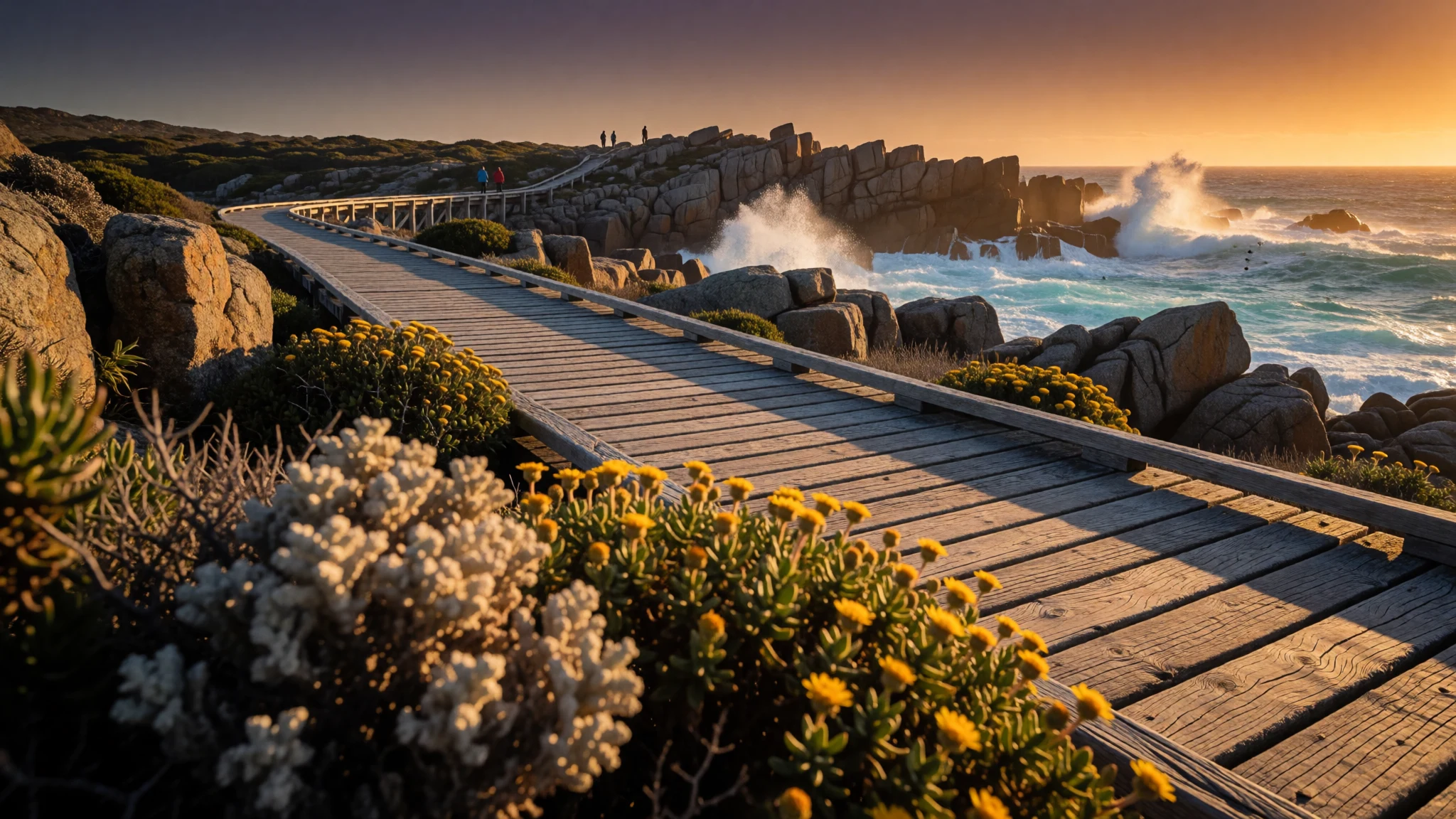
A windswept boardwalk at the south-west tip of the island leads to dramatic rock formations and educational displays. It is a prime spot for observing seal colonies and gull rookeries against the backdrop of the crashing Southern Ocean. - Koala Conservation Centre — Cowes area
Visitors can walk along tree-top boardwalks to see koalas in their natural gum tree habitat. The centre focuses on conservation and provides a scenic stroll through the Australian bushland where other native wildlife may be spotted. - Churchill Island — Eastern side
This 57-hectare island offers a glimpse into early European farming life. Originally inhabited by the Bunurong people, it now functions as a heritage farm where visitors can learn about traditional agriculture and the island's early settlement history. - National Vietnam Veterans Museum — Eastern side
A volunteer-run complex that preserves the memory of Australia's involvement in the Vietnam War. The site houses over 5,000 items of memorabilia, including full-sized military hardware like helicopters and tanks in a basic shed setting.
Culture
Culture on Phillip Island is a blend of rural Australian tenacity and a modern commitment to environmental stewardship. The community is deeply tied to the land and sea, with a strong legacy of farming and fishing. This is balanced by a passionate conservationist spirit, driven by the island's role as a UNESCO Biosphere Reserve. The local identity is also shaped by a fierce love for motorsport; during the Grand Prix, the quiet coastal atmosphere is replaced by the roar of engines and a massive influx of 'petrolheads' from across the globe.
Life here moves at a slower pace than in Melbourne, with a social culture centred around the local pub, the beach, and community events. There is a visible respect for the indigenous heritage of the Bunurong people, whose ancestral connection to the coastline is increasingly recognised in local storytelling and education. This balance of high-speed excitement and slow-living serenity creates a unique coastal character. Please remain on the designated boardwalks and avoid using flash photography when observing wildlife to ensure the animals remain undisturbed.
What to wear
Traditional dress on Phillip Island is rooted in the practical requirements of the Kulin nation's Bunurong people, who used natural materials and skins suited for the temperate coastal climate. In the colonial era, this shifted to the sturdy woollen attire of farmers and sealers, designed to withstand the damp, salty air of the Bass Strait.
Today, the local style is overwhelmingly casual and outdoorsy. Residents and visitors alike typically wear comfortable linens, cotton t-shirts, and sturdy walking shoes. During the motorsport events, you will see a surge in branded racing gear, leather jackets, and team colours. For a visitor, the key is layering. The weather can change rapidly from sunny to freezing within an hour. A windproof jacket and a warm fleece are essential, especially for the evening Penguin Parade where the wind off the ocean is biting. Sturdy, closed-toe footwear is recommended for the coastal boardwalks and bush trails, as the terrain can be uneven and damp.
What to eat
- Handcrafted Ales — Brewery restaurants in Cowes
Freshly brewed craft beers, particularly the local ales, are a staple of the island's social scene and are best enjoyed in a brewery setting. - Fresh Southern Ocean Seafood — Fishing villages like Rhyll
Given its location, the island offers exceptional fresh fish and shellfish, often caught locally in the surrounding cold waters. - Artisan Chocolates — The island chocolate factory
Handmade chocolates and confectionery created on-site, ranging from classic truffles to creative local flavours. - Modern European Fare — Cowes waterfront eateries
Contemporary dishes focusing on seasonal produce, often paired with local wines and craft brews for a relaxed dining experience.
Plan it
Best time. January, February, and March are the hottest months, while August is the wettest; spring and autumn offer the most comfortable temperatures.
How long. 2–3
Getting there. Drive from Melbourne (about 2 hours via the Monash Freeway and Bass Highway) or take a V/Line coach from Southern Cross Station to Cowes via Koo Wee Rup.
Budget. mid
Tips
- Book Penguin Parade tickets well in advance as they sell out quickly
- Dress in warm layers for the evening parade, regardless of the daytime temperature
- Avoid driving on unpaved roads at night to prevent collisions with kangaroos
- Visit Cowes early in the day to secure parking during peak summer months
Etiquette
- Strictly follow the no-photography rule during the Penguin Parade
- Stick to marked trails to protect fragile dune ecosystems
- Keep a respectful distance from all wild animals
Nearby
Sources
- Wikidata Q785760 (CC0)
- Wikipedia (CC BY-SA 4.0)
- Wikivoyage (CC BY-SA 4.0)
Wildlife
- Little penguin (animal)
The little penguin is the smallest penguin in the world, a tiny bird in slate-blue feathers, sometimes called the fairy penguin. On Phillip Island it is the star of the island's most famous attraction. At sunset, hundreds of them come up out of the surf and waddle home to their burrows. They spend the day diving for food, so the evening is the moment to be there. Arrive before the light fades and watch them come ashore.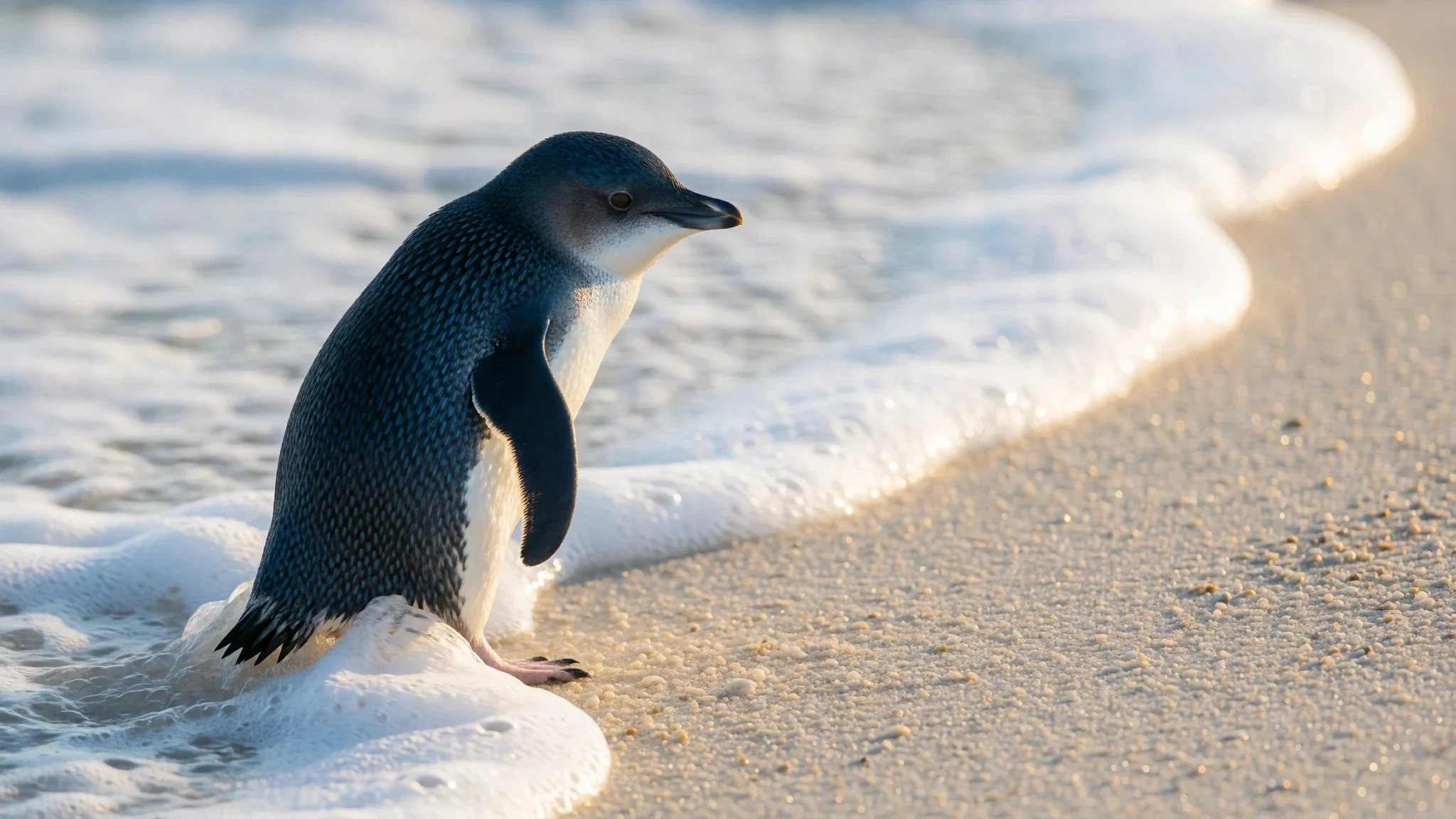
- Koala (animal)
The koala is a sleepy, fluffy marsupial with round ears and a big dark nose, and it is not really a bear. It lives in trees and eats only plants, and its nearest relatives are wombats. On Phillip Island, look up into the gum trees to spot one dozing among the branches. Wherever you find one, enjoy it from the ground and let it rest undisturbed.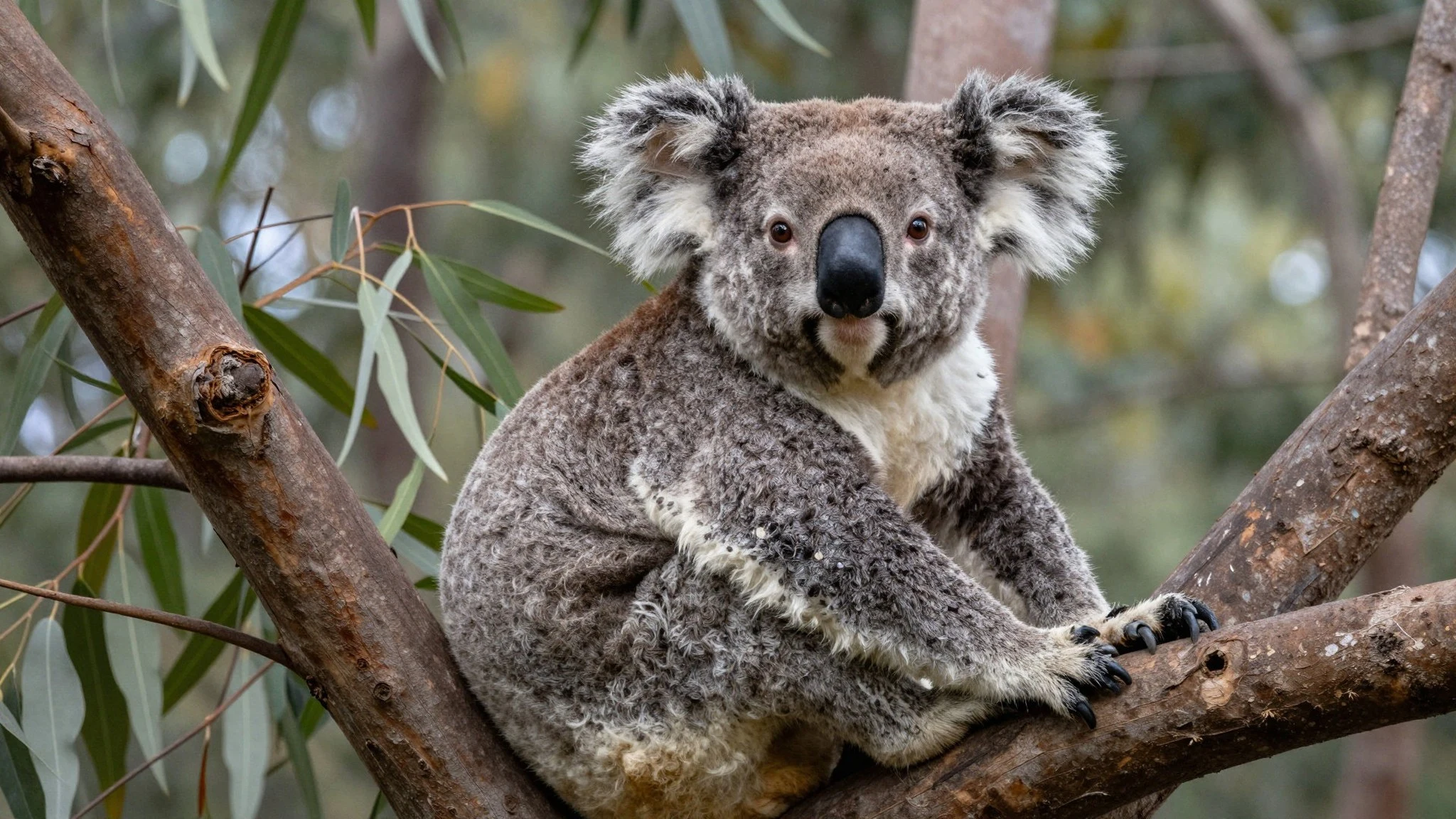
- Little penguin (bird)
Imagine a penguin small enough to be called a fairy: that is the little blue penguin, the tiniest of all penguins. Its feathers hold special pigment that keeps water out and gives it that lovely blue colour. On Phillip Island, watch at sunset as hundreds of them rise from the waves and return to their burrows after a day of fishing at sea. Settle in before dusk and let them arrive. - Gull (bird)
The herring gull is a big seabird with a big appetite. It eats fish, crustaceans and some plants, and it will happily take scraps that people leave behind or that it can snatch from them. On Phillip Island, gull rookeries sit along the wild coast beside seal colonies, where the Southern Ocean crashes in. Because gulls love human food, keep your snacks to yourself and never share them.