Periyar National Park
Periyar National Park, India
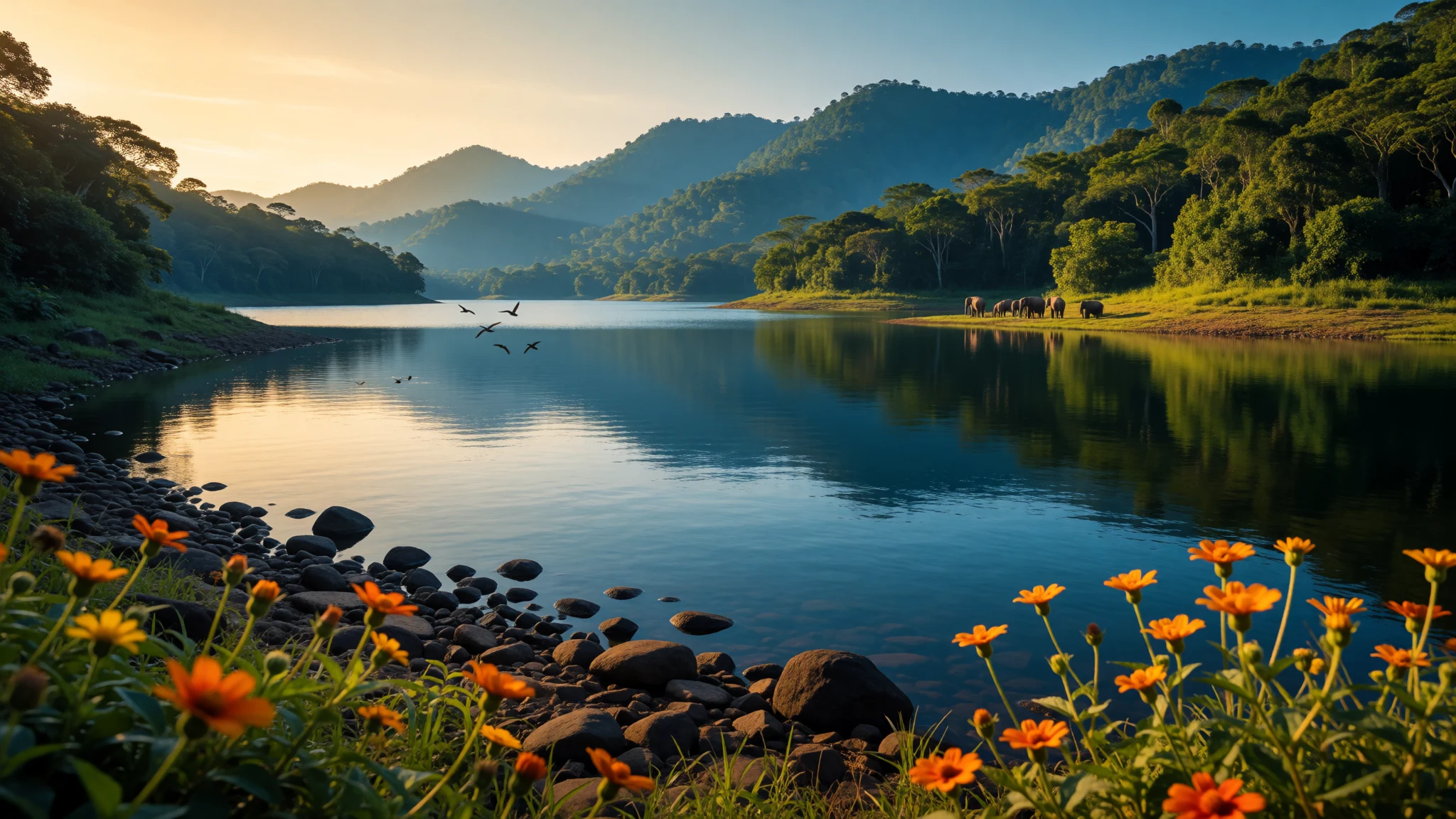
Experience an immersive wilderness encounter where elephants and tigers roam the mist-covered hills of Kerala's Western Ghats.
The place
Periyar National Park is a sprawling sanctuary carved into the Cardamom and Pandalam Hills of the Western Ghats. It functions as a vital watershed for the Pamba and Periyar rivers, creating a landscape of steep valleys and high plateaus. The park is most famous for its artificial lake, which provides a unique vantage point for spotting wildlife without disturbing the dense forest interior. Here, the forest meets the water, making it one of the most reliable places in India to see herds of wild elephants coming down to drink.
The terrain is rugged and humid, with a climate that shifts from cool winter mornings to warm, damp summers. While tigers are the flagship species of the reserve, they are elusive and prefer the deep cover of the jungle, leaving the lake shores to gaur, sambar deer, and a variety of endemic birds. The air is often thick with mist, especially in the early hours, adding a sense of mystery to the emerald-green canopy. Visiting requires a bit of patience and a willingness to embrace the heat, as the humidity can be quite oppressive during the monsoon months. However, the reward is a concrete sense of being in a truly wild place, where the natural rhythms of the animals dictate the pace of the day.
Its story
The story of Periyar National Park is one of early foresight and shifting conservation goals. Long before the current national park was established in 1982, the Maharaja of Travancore took action in 1934 to protect the region. He declared the forests surrounding the lake as a private reserve, known as the Nellikkampatty Reserve, specifically to prevent the expansion of tea plantations which were consuming the natural habitat. This move saved the biodiversity of the Cardamom Hills from the agricultural boom of the era.
Following India's political integration, the area was consolidated as a wildlife sanctuary in 1950. As the global understanding of endangered species grew, the focus shifted toward the tiger. In 1978, the area became part of the central government's Project Tiger and was renamed the Periyar Tiger Reserve. This transition marked a change from simple forest preservation to active wildlife management. Today, the park represents a balance between protecting rare, endemic species and allowing controlled tourism. The legacy of the Maharaja's early intervention is visible in the old-growth forests that still stand, providing a sanctuary for animals that have been pushed out of other parts of the south.
What to see
- Periyar Lake Boating — Thekkady tourism zone
The most popular way to see the park is via boat or bamboo raft. Floating on the water allows for quiet observation of elephants and bison grazing along the shoreline without the noise of vehicles, offering a peaceful perspective of the reserve's edges.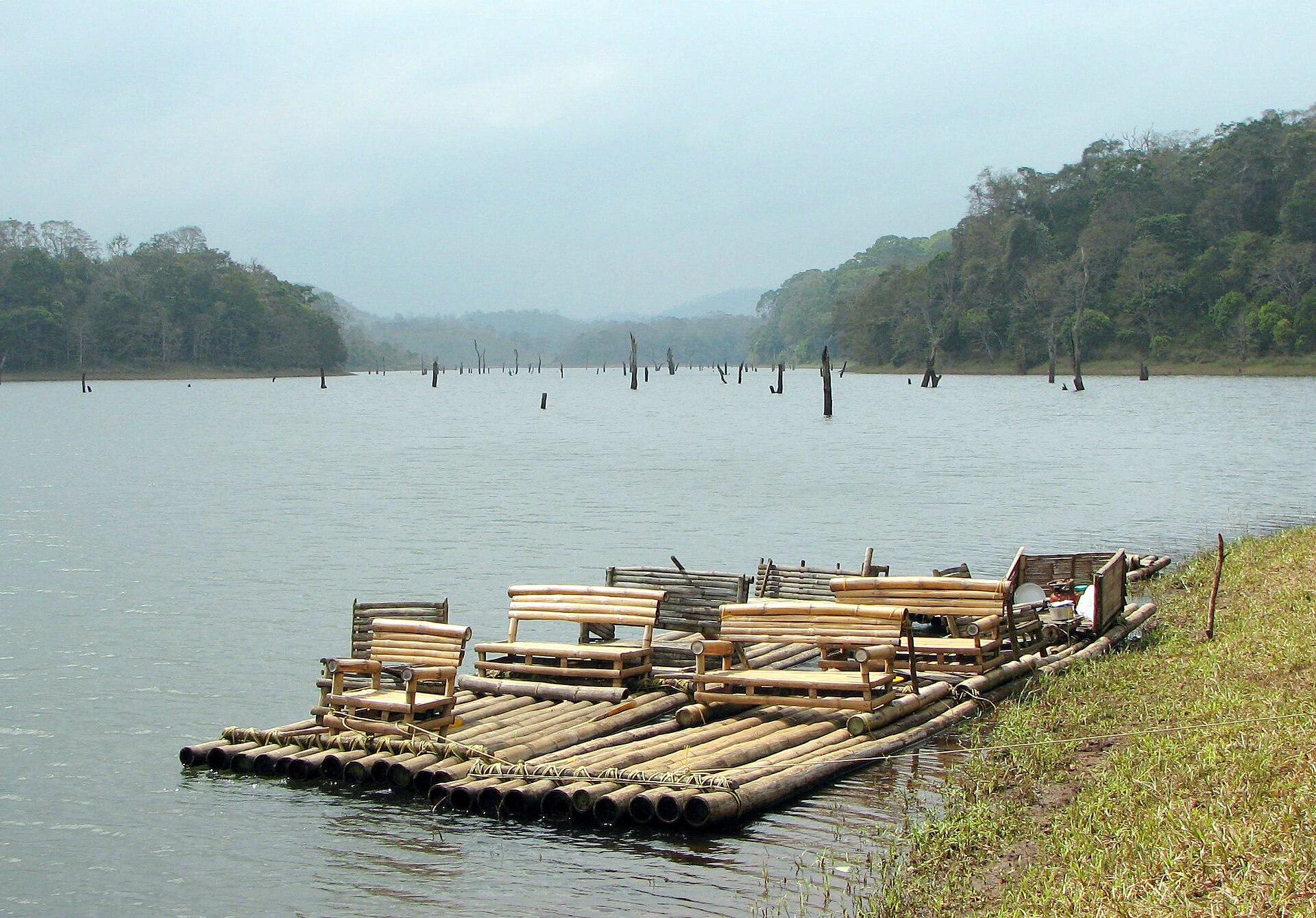
- Nature Walks — Main forest zone
Guided day treks take visitors into the interior of the forest. These walks are led by experienced trackers who point out rare flora and animal signs, providing a deeper understanding of the complex ecosystem of the Western Ghats than a boat ride can offer. - Bamboo Rafting — Periyar lake
For a more primitive experience, bamboo rafting offers a slow-paced journey through the lake's narrower channels. It is an excellent way to spot birds and smaller mammals while experiencing the stillness of the jungle at dawn or dusk. - Tiger Trail — Interior reserve areas
This is an adventure-focused experience involving trekking and camping. It allows visitors to spend more time in the wilderness, moving away from the tourist hubs to experience the raw beauty of the tiger reserve under the stars. - Tribal Heritage Tours — Buffer zone villages
These excursions offer a glimpse into the lives of the local indigenous communities. Visitors learn about traditional forest knowledge and the historical relationship between the human inhabitants and the wild animals of the Periyar region.
Culture
Culture around Periyar National Park is deeply intertwined with the agrarian rhythms of Kerala and the heritage of the Western Ghats. The region is famous for its spice plantations, particularly pepper, cardamom, and cinnamon, which have shaped the local economy for generations. This 'spice culture' is evident in the local markets and the aromatic scent that hangs in the air throughout Thekkady. There is a strong tradition of coexistence here, as the local people have lived alongside wild elephants and tigers for centuries, developing a profound respect for the forest's boundaries. The influence of the Travancore royalty still lingers in the historical approach to conservation, blending a sense of aristocratic guardianship with modern ecological science. Visitors will find the locals to be warm and knowledgeable about the land, often sharing stories of animal sightings and forest lore. Please keep your voice low and avoid feeding any animals when visiting the reserve.
What to wear
Traditional dress in the Periyar region follows Kerala's broader customs, featuring the mundu—a white cotton garment wrapped around the waist—worn by men. Women often wear the saree or the set-mundu, typically made from breathable cotton to cope with the tropical humidity. These textiles are chosen for their lightness and ability to keep the wearer cool in the damp heat of the hills.
Nowadays, people in Thekkady and Kumily wear a mix of traditional and modern clothing. You will see many locals in casual trousers and shirts, though traditional attire remains common for festivals and religious visits. For visitors, the key is practicality. Lightweight, breathable fabrics in neutral or earth tones (khaki, olive, brown) are best for blending into the forest and avoiding attracting insects. Sturdy, closed-toe walking shoes or hiking boots are essential for the uneven, often muddy terrain of the nature walks. Since the park is a natural reserve, modest dress is appreciated, and a light jacket or fleece is recommended for the cooler mornings of December and January.
What to eat
- Pepper-Infused Omelette — Small eateries in Kumily
A local favourite using the region's famous fresh peppercorns. The result is a spicy, aromatic egg dish that highlights the pungent quality of locally grown black pepper. - Kerala Sadya — Local restaurants in Thekkady
A traditional vegetarian feast served on a banana leaf, featuring a variety of curries, pickles, and rice, reflecting the rich agricultural produce of the state. - Appam with Vegetable Stew — Breakfast cafes in Kumily
Lacy, fermented rice pancakes served with a creamy coconut-based stew of mixed vegetables, providing a mild and comforting breakfast typical of the region. - Malabar Parotta with Curry — Evening street stalls
Flaky, layered flatbreads served with a spicy meat or vegetable curry, a staple of Kerala's hearty and flavourful street food scene. - Cardamom Tea — Tea shops throughout Thekkady
Strong tea brewed with fresh cardamom pods sourced from the surrounding hills, offering a fragrant and warming drink during the misty mornings.
Plan it
Best time. December to March for the coolest temperatures and lowest rainfall; April and May are warm, while June to September is the heavy monsoon season.
How long. 2–3
Getting there. Fly into Kochi airport, then take a taxi or bus to Thekkady (about 5–6 hours). Alternatively, arrive via Madurai in Tamil Nadu.
Budget. mid
Tips
- Book the treehouse well in advance as they are limited
- Arrive at the ticket booth in Kumily early to beat the boat queues
- Carry a waterproof bag or dry-sack for your electronics during the monsoon
- Use the official shuttle buses from Kumily as private cars are banned in the park
- Bring binoculars for better wildlife spotting from the boats
Etiquette
- Stay on marked trails during nature walks to protect the flora
- Do not use plastic bags or litter inside the sanctuary
- Follow the ranger's instructions strictly during wildlife encounters
Nearby
Sources
- Wikidata Q548153 (CC0)
- Wikipedia (CC BY-SA 4.0)
- Wikivoyage (CC BY-SA 4.0)
Wildlife
- Asian elephant (animal)
The Asian elephant is the biggest land animal in Asia, a grey giant with wrinkled skin, a long trunk and broad folded ears, clever enough to show grief and to greet its friends. In Periyar, look where the forest meets the water, because herds of wild elephants come down there to drink, and it is among the most dependable places in India to see them. Keep a respectful distance, stay quiet, go with a guide, and never feed them.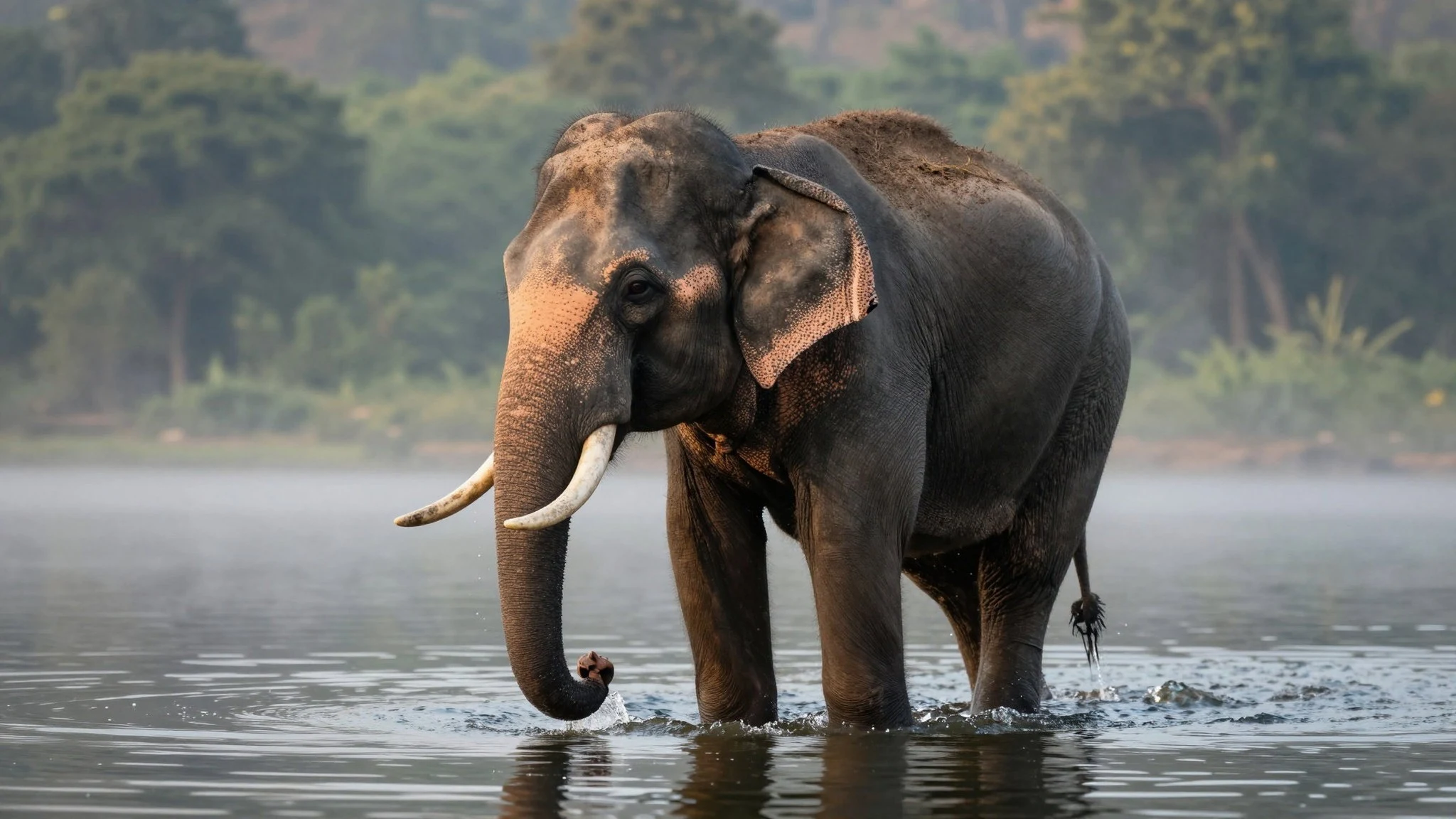
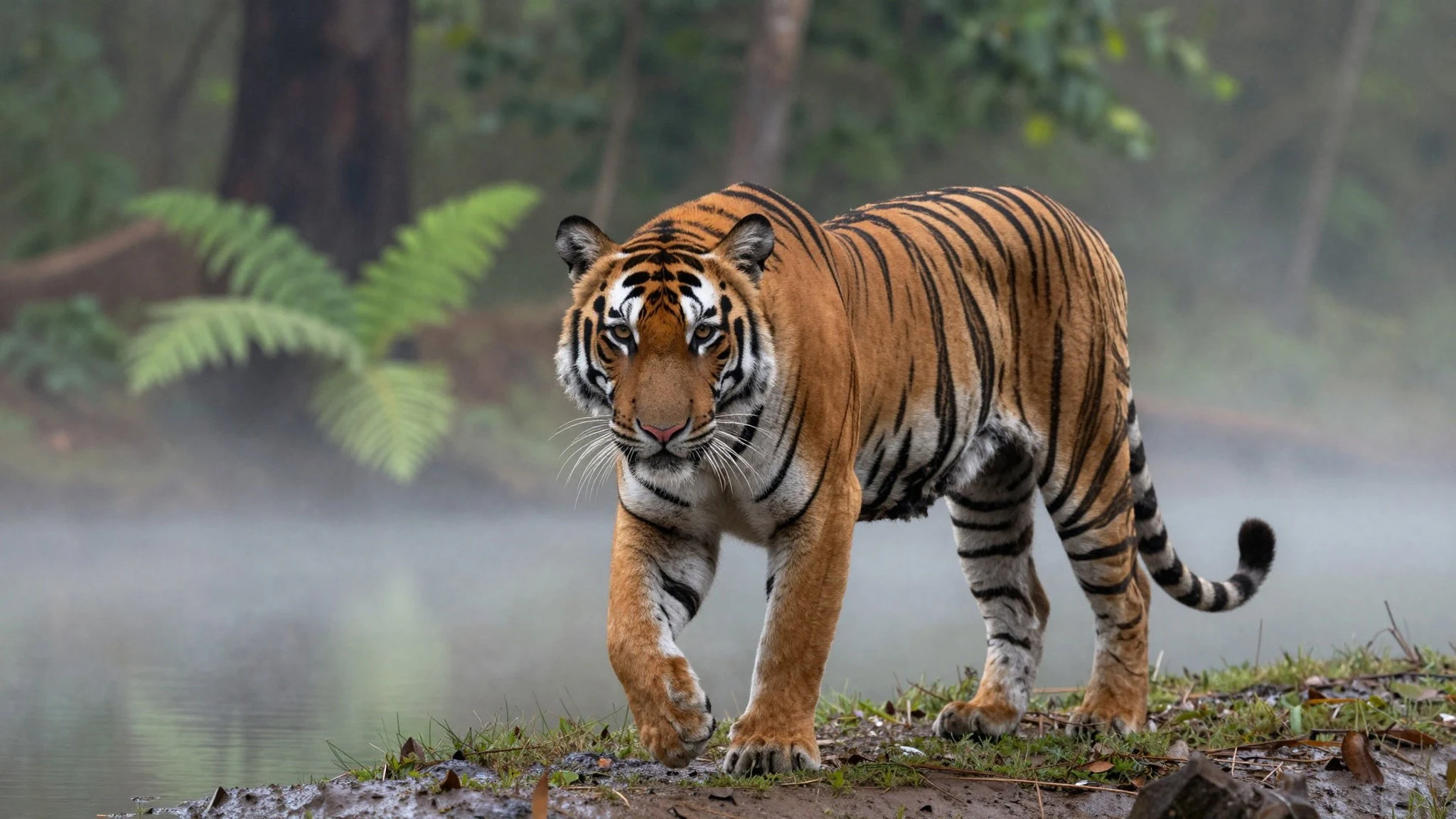
- Tiger (animal)
The tiger is a great striped cat, with orange fur, white patches, black stripes, and a powerful body with a big head and paws. Though it is the star of the reserve, it is shy and keeps to the deep jungle, so do not expect it on the lake shores, which belong to gaur, sambar deer and special local birds. Treat any sighting as a gift: stay with your guide, keep well back, speak softly, and never try to feed it.