Perfume Pagoda
Perfume Pagoda, Vietnam
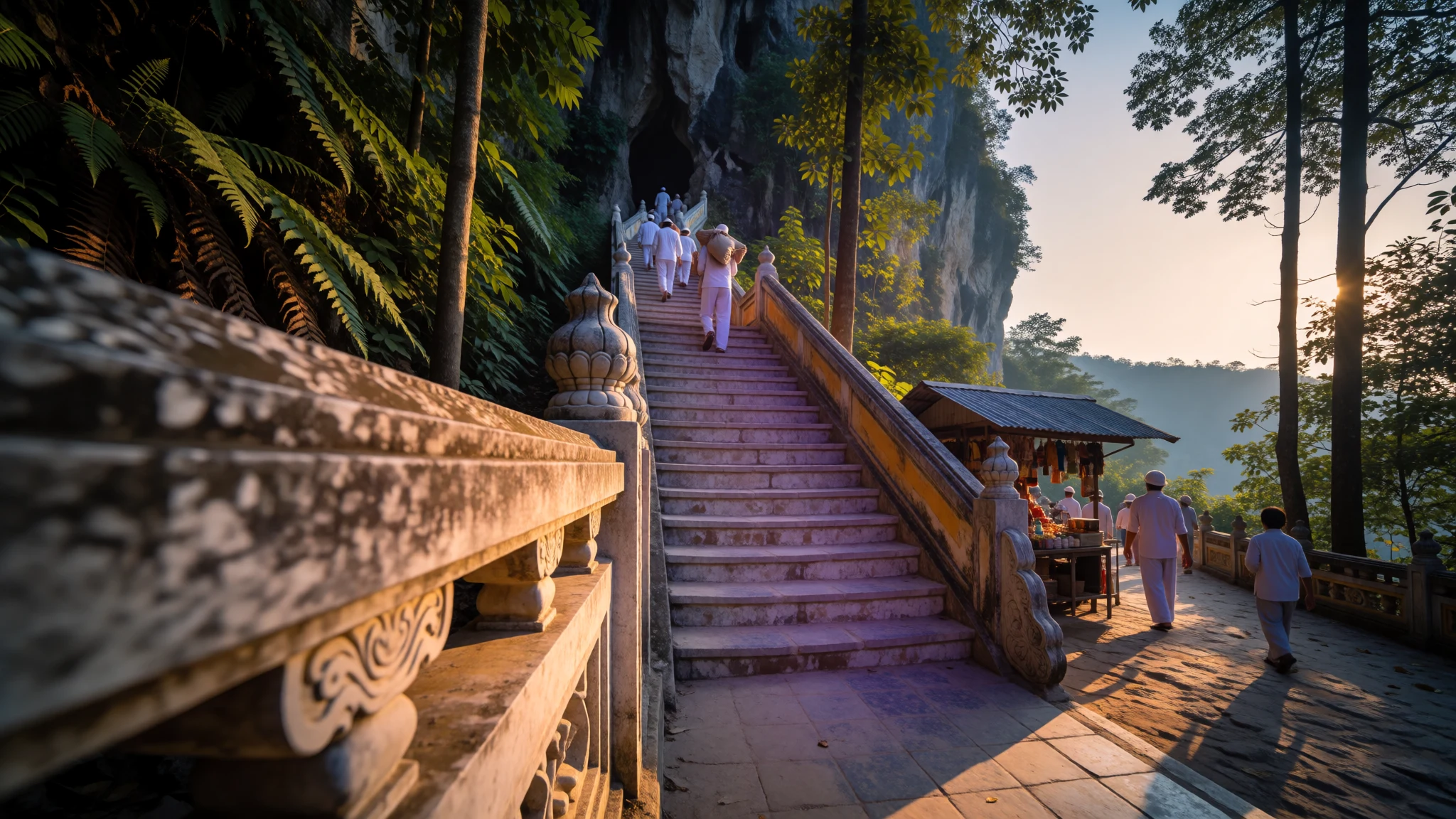
Perfume Pagoda is a pilgrimage by rowing boat and stone steps to a cave temple in the limestone hills south-west of Hanoi.
The place
Perfume Pagoda, known in Vietnamese as Chùa Hương (香寺), is not one building but a scatter of Buddhist temples and shrines set into the limestone Hương Tích mountains. It lies in Hương Sơn commune, Mỹ Đức district, on the south-western side of Hanoi; the former Hà Tây province that once held it is now part of the capital. The heart of the complex is the Inner Temple, Chùa Trong, which sits inside Hương Tích Cave, so the main sanctuary is a cavern rather than a built hall. Around it, lower temples and shrines are strung along a valley and up the slopes, linked by a stream, boat landings and stone steps. The usual approach is by small rowing boat along the Yến stream (suối Yến), between karst hills and flooded fields, followed by a walk or climb. The journey is as much the point as the destination. This is a pilgrimage landscape: people come to pray, to ask for luck, health and children, and to spend a day outdoors with family. The great gathering is the annual festival, which draws pilgrims from across Vietnam. At those times the paths are packed, boats queue at the landings and the mood is closer to a country fair than a quiet retreat. Outside festival weeks the valley is calmer, though weekends still bring crowds from the city. Summer is hot and humid, and the stone steps turn slippery in rain. Mist on the hills in cooler months gives the best light, but it also means damp footing. Anyone wanting quiet should pick a weekday outside the festival and start early.
Its story
The story of Perfume Pagoda mixes documented building with legend. Tradition says a monk meditating in these hills found the site over 2000 years ago and named it after a Tibetan mountain where the Buddha practised asceticism. The firmer evidence is much later. The first temple is thought to have been a small structure on the spot now occupied by Thiên Trù, during the reign of Lê Thánh Tông in the 15th century. A stele at Thiên Trù records that a terrace, stone steps and the Kim Dung shrine were built in 1686, under Lê Hy Tông, at about the time the Inner Temple in the cave was being constructed. Bronze statues of the Buddha and Quan Âm were cast in 1767 and replaced with the present ones in 1793. Over the centuries, buildings were damaged and replaced. Both the French war and the American war left their mark on the complex, and at Thiên Trù the gateway and bell tower were destroyed. The bell tower was rebuilt in 1986 and the gateway was completed in 1994. What a visitor sees today is therefore layered: older foundations and stone work, later replacements, and rebuilding from the late twentieth century. The pilgrimage itself carried on through all of this, which is why the place feels like a living practice rather than a preserved monument. Legend and the stele give very different ages for the site, and it is fair to enjoy the first while trusting the second.
What to see
- Boat ride on the Yến stream — Yến stream, Hương Sơn commune
The approach to Perfume Pagoda is a ride along the Yến stream (suối Yến) in a small rowing boat, usually steered by a local oarswoman or oarsman. The water runs between karst hills and flooded fields, and the sounds are mostly oars and pilgrims chatting. Mornings are cooler and calmer; at festival time boats queue at the landing.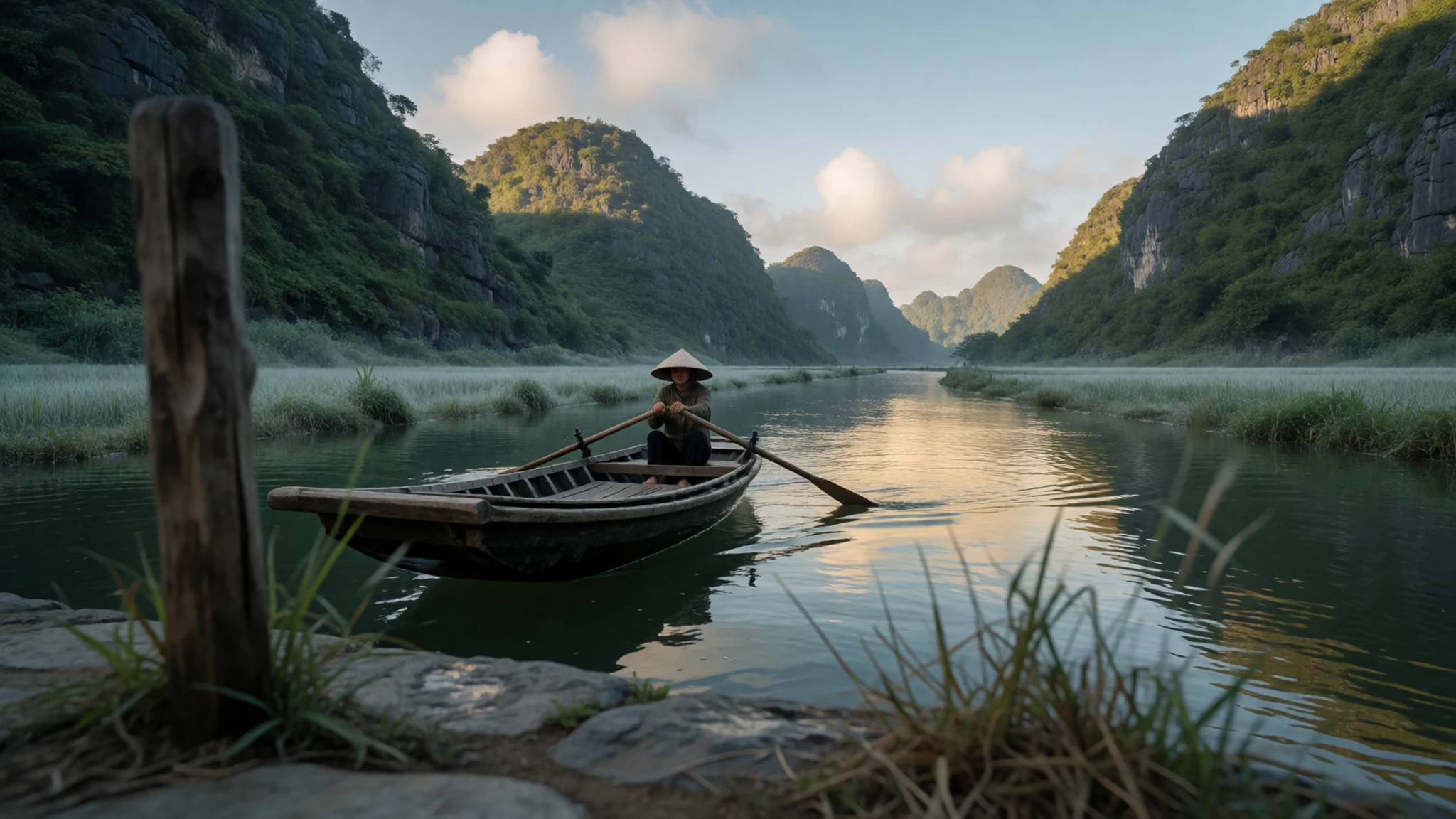
- Thiên Trù Pagoda — Hương Sơn commune, below the cave
Thiên Trù is the usual first stop above the landing and is thought to stand where the earliest small temple was built in the 15th century. Its bell tower was rebuilt in 1986 and its gateway finished in 1994 after war damage. A stele here dates the terrace and stone steps to 1686.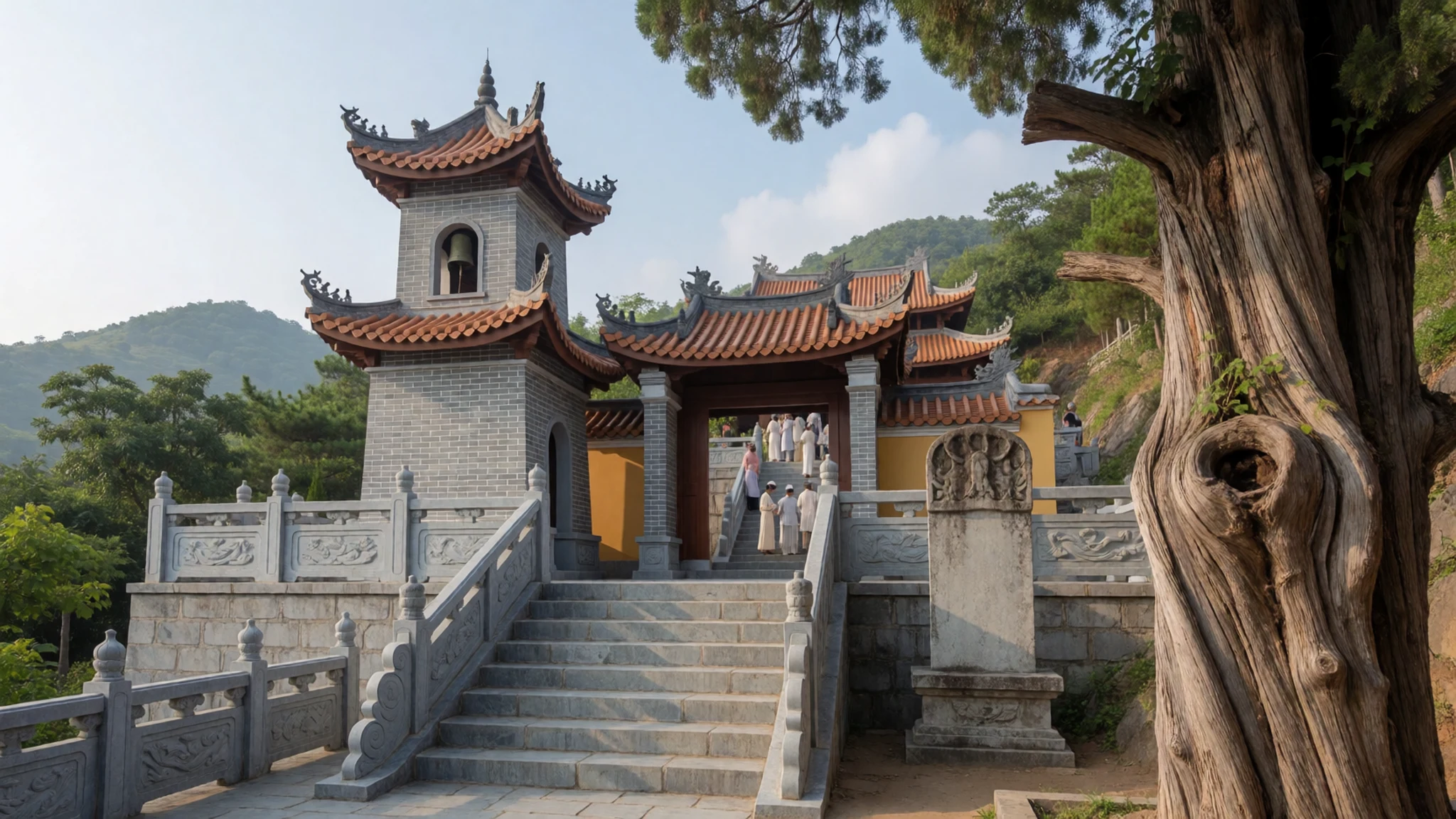
- Hương Tích Cave and the Inner Temple — Hương Tích mountain, Hương Sơn commune
Chùa Trong, the Inner Temple, is the spiritual centre of Perfume Pagoda and sits inside Hương Tích Cave. Pilgrims go down into the cavern, where incense smoke hangs in the damp air and shrines are set among the rock. The steps are steep and can be slick, so go slowly.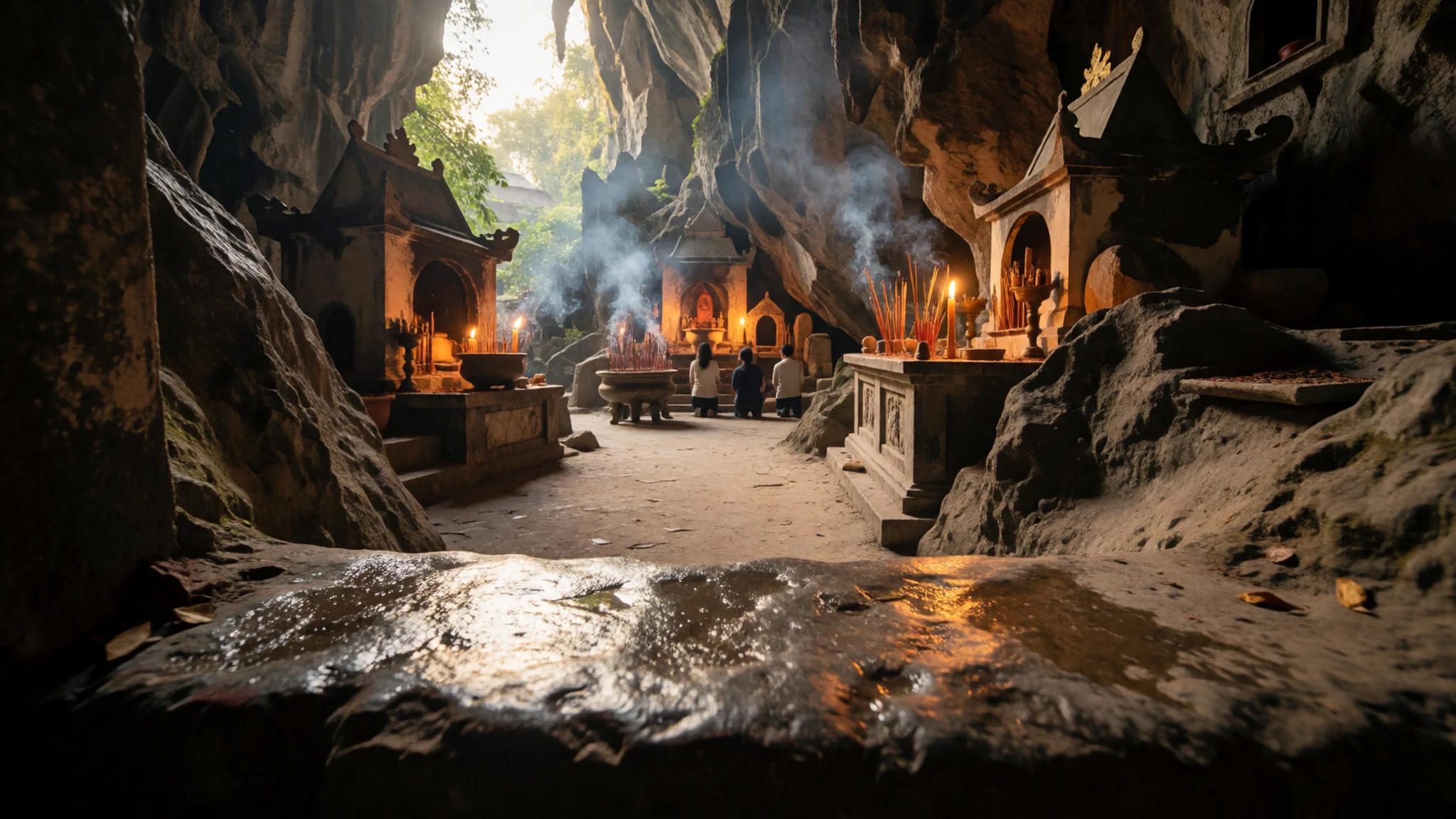
- The stone stairway — Path between Thiên Trù and the cave
The climb to the cave is a long stone stairway through trees and rock, and for many pilgrims it is the act of devotion itself. Stalls and resting places line the lower sections. It is tiring in heat and crowded in festival season, so carry water and take breaks rather than rushing.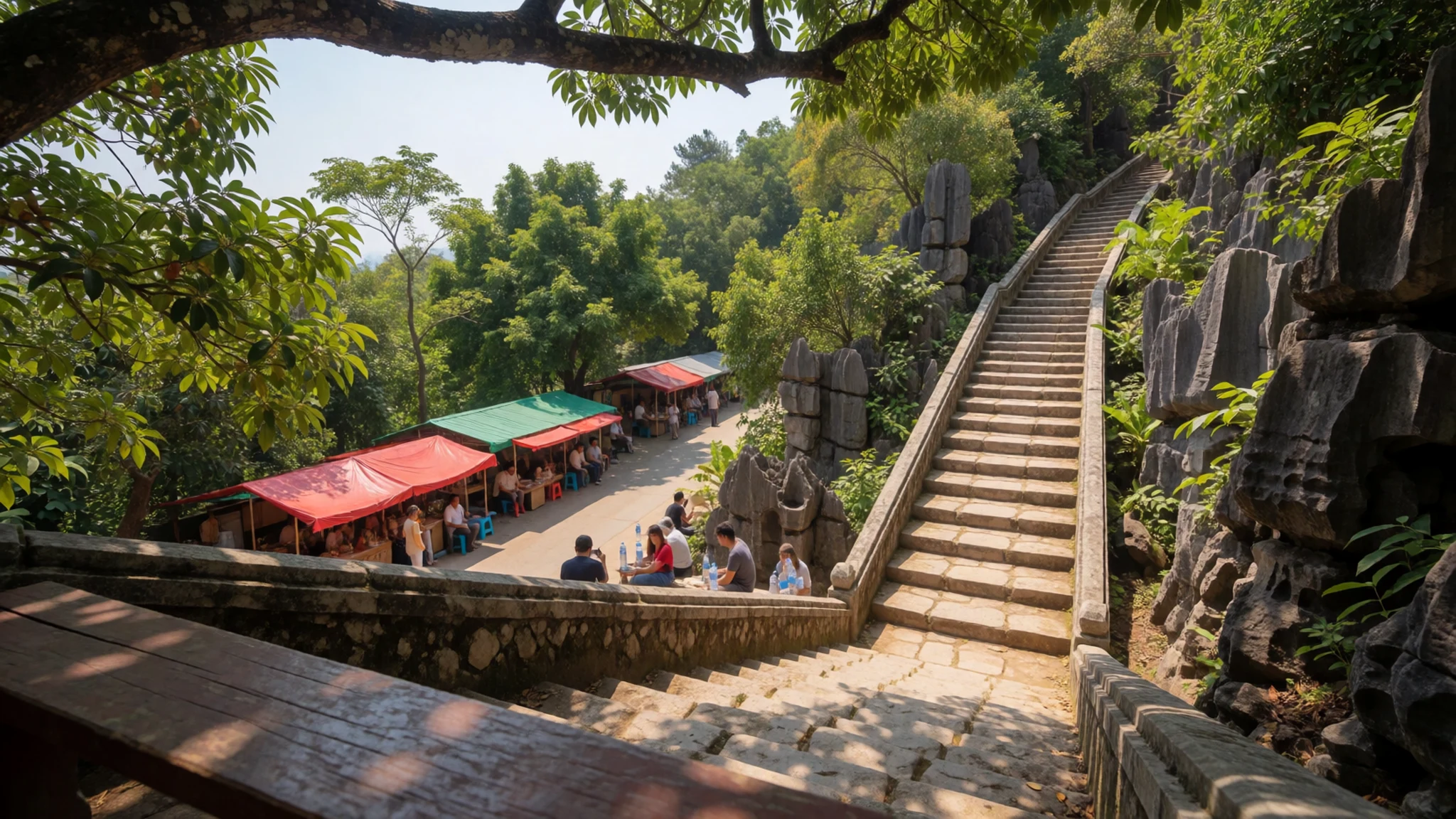
- Đền Trình — Near the boat landing, Hương Sơn commune
Đền Trình is a shrine near the start of the pilgrimage route, where many visitors stop to announce their arrival and make a first offering before going on. It shows the local mix of folk belief and Buddhism. Look at how families arrange fruit, flowers and incense, and follow their lead on where to stand.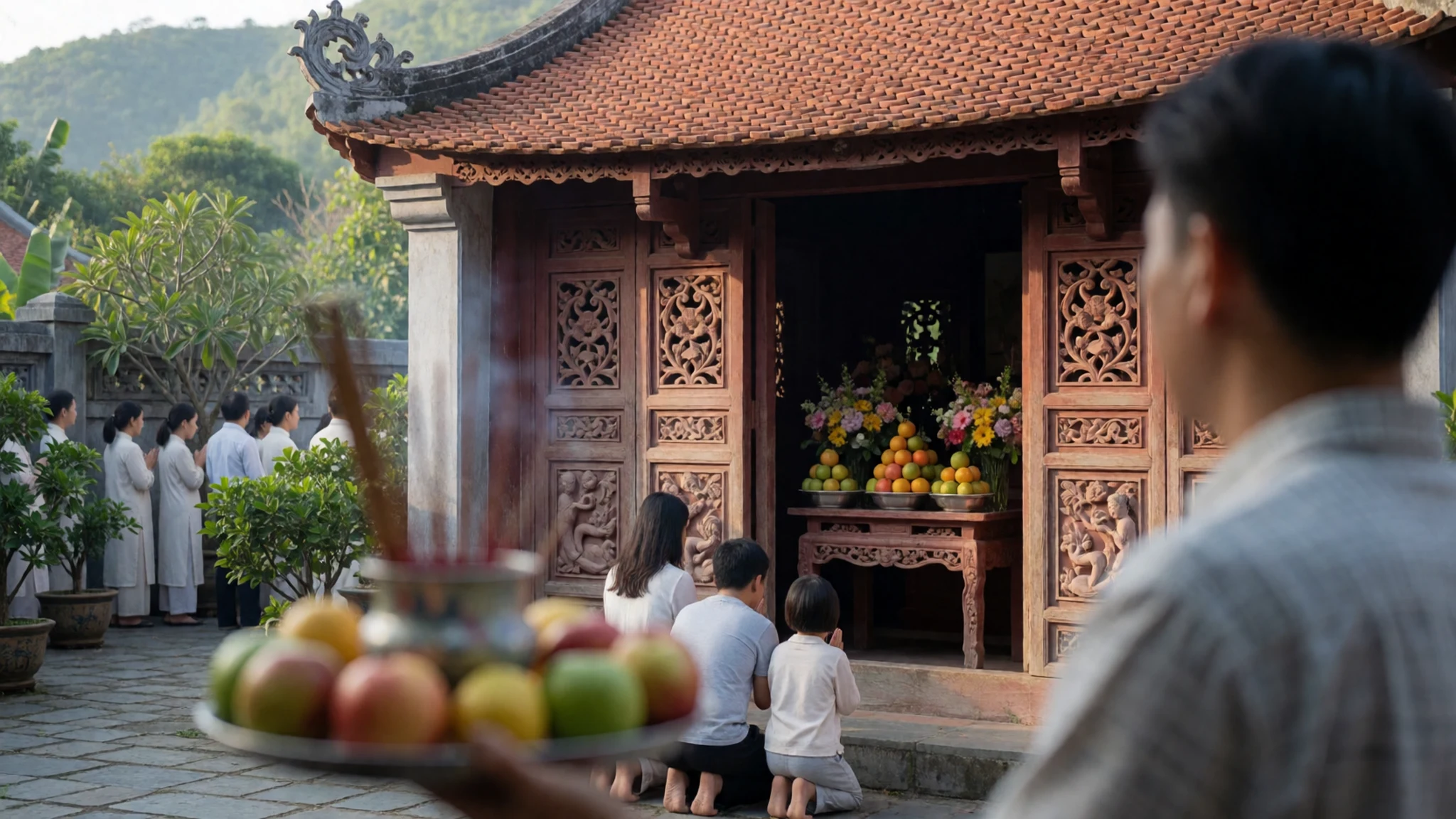
- Hổ Khê stream temples — Hổ Khê stream, Hương Sơn commune
A quieter side of the complex lies along the Hổ Khê stream, where smaller monasteries and shrines sit among trees and rock beside the water. These are less visited than the main route. They suit a slow wander on a weekday, and they are a good place to see temple life without the festival crush.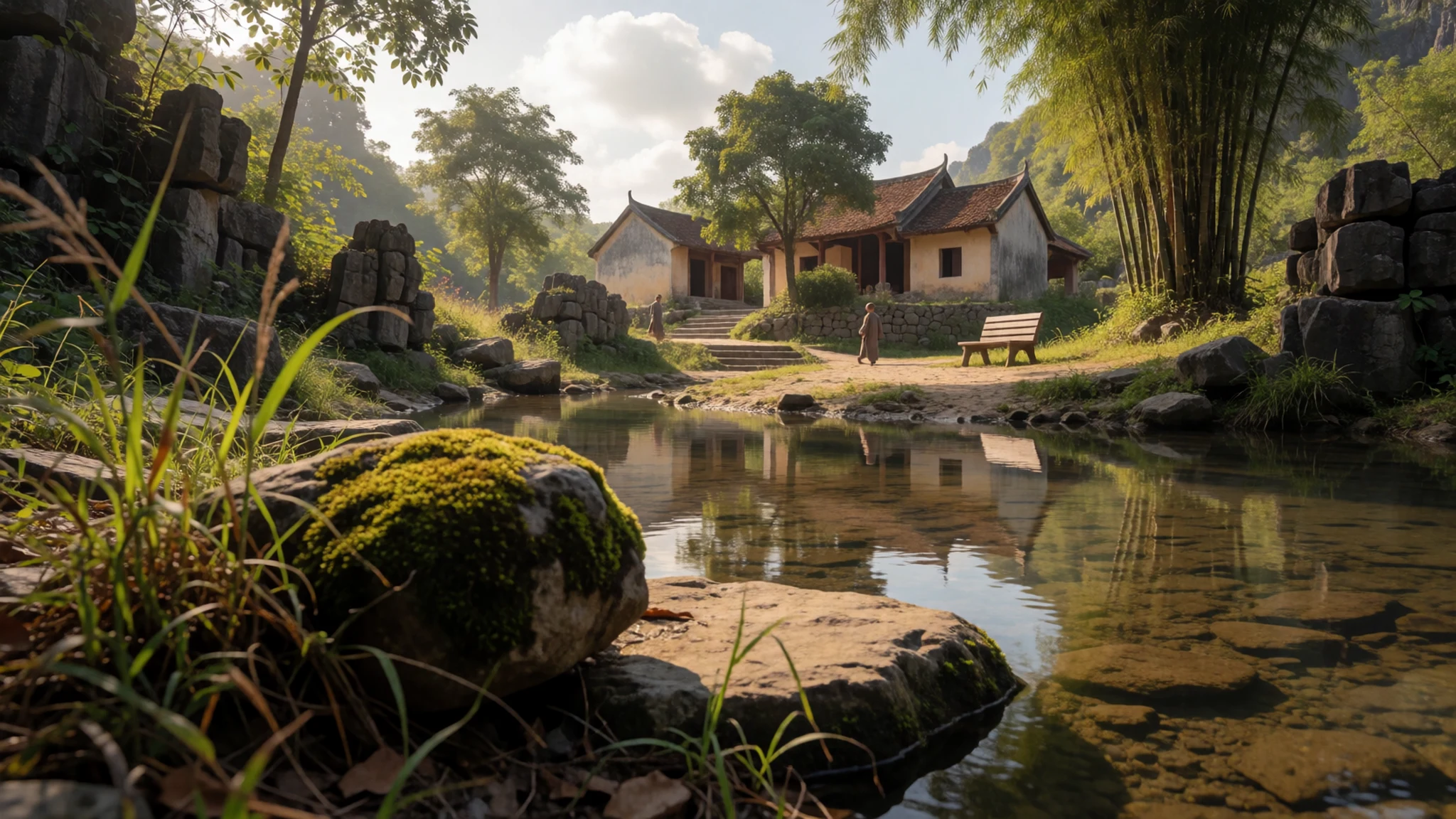
Culture
Perfume Pagoda is above all a place of Vietnamese Buddhist pilgrimage, and its culture is shaped by the habit of travelling by boat and on foot to pray. People come to ask for health, luck, a child or a safe year, and many make the trip as an annual outing with relatives and neighbours. The Inner Temple in Hương Tích Cave is the goal, but pilgrims also stop at the smaller shrines along the way, lighting incense, leaving flowers or fruit, and bowing before the statues of the Buddha and Quan Âm, the bodhisattva of compassion. The festival season gives the complex its social side: groups travel together, chant and share food, and local families earn a living from rowing, stalls and lodging. The mood moves between devotion and a day out, and both are genuine. Monks and nuns look after the temples, and some halls close for ceremonies. Folk belief mixes with Buddhism, as it does across northern Vietnam, so spirit shrines such as Đền Trình stand alongside the pagodas. Visitors are welcome, but they are entering other people's religious practice, not a stage set. Dress modestly with shoulders and knees covered, take off your shoes where others have left theirs, and keep your voice low and your camera away from people who are praying.
What to wear
Perfume Pagoda sits in northern Vietnam, where traditional festival dress is the áo tứ thân, a long open-fronted gown of silk or cotton worn over a bodice and skirt, topped with a wide palm-leaf hat, the nón quai thao, trimmed with silk tassels. The áo dài, a fitted tunic split at the sides and worn over loose trousers, is the more familiar formal dress and turns up at weddings, school ceremonies and some festival days, usually in silk or a lightweight synthetic. Lay Buddhist devotees often choose plain brown or grey clothes for the temple, and monks and nuns wear robes in similar tones. Today most pilgrims dress for practicality: shirts, trousers or long skirts, trainers and rain jackets, with older visitors in neat plain clothes and some families in matching outfits for the festival. Visitors should wear light, breathable layers that cover shoulders and knees, since temple halls expect modesty, and bring a hat and a rain layer. Footwear matters most. The stone steps are uneven and slick when wet, so closed shoes with good grip beat flip-flops. A light scarf helps against sun and for covering up, and a small bag keeps hands free for the climb. Shoes come off at hall doors, so socks are handy in cooler months.
What to eat
- Rau sắng soup — Eateries and stalls near the boat landing
Rau sắng is a leafy forest vegetable that eateries around Hương Sơn cook into a light, faintly sweet soup. It is tied to the pilgrimage season and often served vegetarian; ask for no fish sauce if avoiding animal products.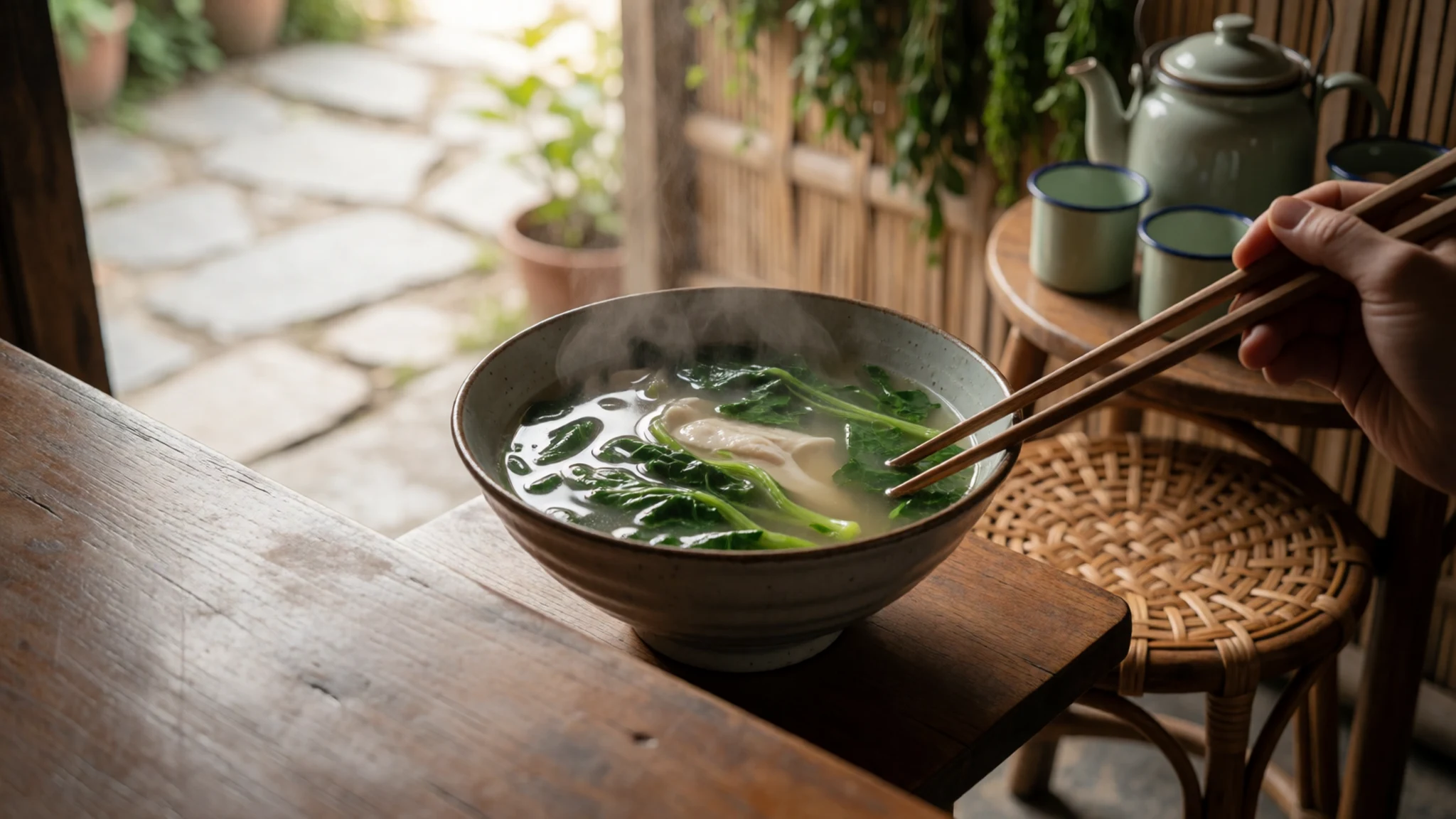
- Ô mai mơ — Stalls along the path and at the boat landing
Ô mai mơ are salted or sweetened dried apricots, a snack closely linked with Hương Sơn. Stalls along the path to the temples and at the boat landing sell them in bags, and many pilgrims take some home as gifts for family.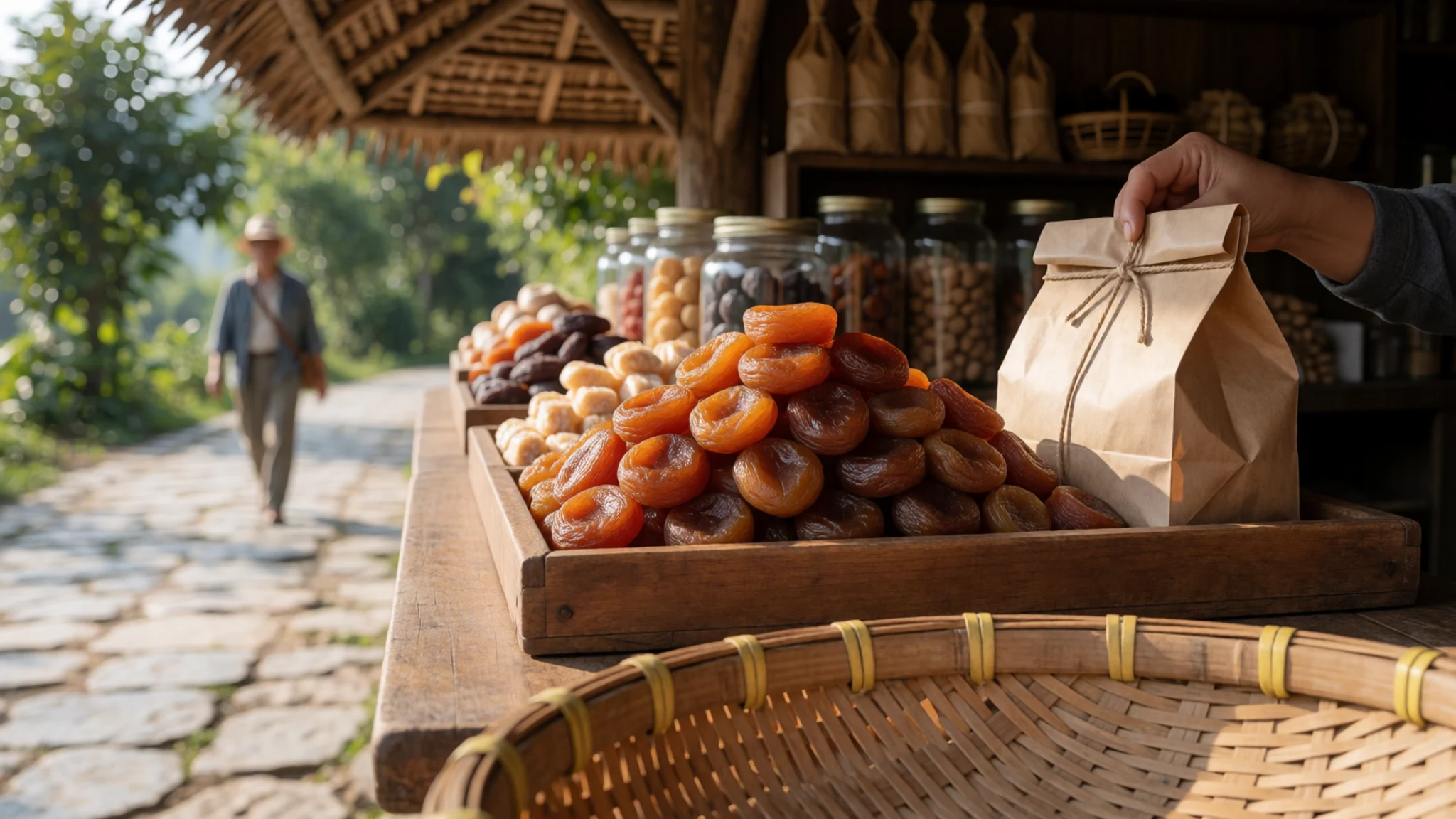
- Thịt dê — Roadside restaurants near the landing
Goat meat, often called mountain goat, is a regional treat in the hills around the temples, usually grilled, steamed with ginger or cooked in a hotpot. Roadside restaurants near the landing serve it; it is not for vegetarians and is heavy in hot weather. - Bánh dày — Footpath vendors and landing stalls
Bánh dày is a round, dense cake of pounded glutinous rice, soft and chewy. Vendors sell it by the footpaths and landing stalls, often with slices of giò lụa, the smooth Vietnamese pork sausage, or a pinch of sesame salt, as a filling snack for the climb. - Xôi (sticky rice) — Stalls at the landing and along the temple path
Xôi is sticky rice steamed in a basket, sold by the portion with toppings such as mung bean, peanuts, fried shallots or sesame. Stalls at the landing and along the path to the temples offer it early, making it a cheap, portable breakfast before the climb.
Plan it
Best time. January to March for the festival season, cool misty weather and the liveliest pilgrimage atmosphere, though dates move with the lunar calendar and crowds are heavy; October and November are quieter with milder weather. Summer is hot, humid and wet, with slippery steps.
How long. 1
Getting there. Fly to Nội Bài International Airport in Hanoi, then travel by road south-west to Mỹ Đức district and the boat landing at Hương Sơn; taxis, hired cars and organised day trips from Hanoi all run this route. The last leg is by rowing boat along the Yến stream, then on foot.
Budget. low
Tips
- Go on a weekday and start early to avoid the boat queues and the midday heat
- Carry cash for boats, snacks and small offerings, and check current ticket arrangements locally before you set out
- Bring water, a hat and a rain layer, as the climb is exposed in places
- Wear closed shoes with grip because the stone steps are uneven and slick when wet
- Avoid weekends and the festival weeks if you want a quiet visit
Etiquette
- Take off your shoes where others have left theirs before entering a hall
- Cover shoulders and knees and keep your voice low in the cave sanctuary
- Ask before photographing people who are praying
Nearby
Sources
- Wikidata Q7168306 (CC0)
- Wikipedia — Hương Temple (rev 1367830204) (CC BY-SA 4.0)
- Wikivoyage — Perfume Pagoda (CC BY-SA 4.0)
- Jack French — Thiên Trù Pagoda (CC BY 2.5)
- Everjean — Perfume Pagoda, Hatay, Vietnam (CC BY 2.5)
- Tango7174 — Perfume Pagoda, Hanoi, Vietnam. Pilgrimage on Yen River (CC BY-SA 1.0)
- Hoàng Việt — Đi thuyền trên suối Yến, chùa Hương (Public domain)
- Hoàng Việt — Đền Trình - Hương sơn (Public domain)
- Hoàng Việt — Thiên Trù (Public domain)
- Bùi Thụy Đào Nguyên — Một tự viện bên suối Hổ Khê (CC BY-SA 4.0)
- lumoplank — Visitors climbing the stone stairway leading to Huong Pagoda (CC0 1.0)


