Peñíscola
Peñíscola, Spain
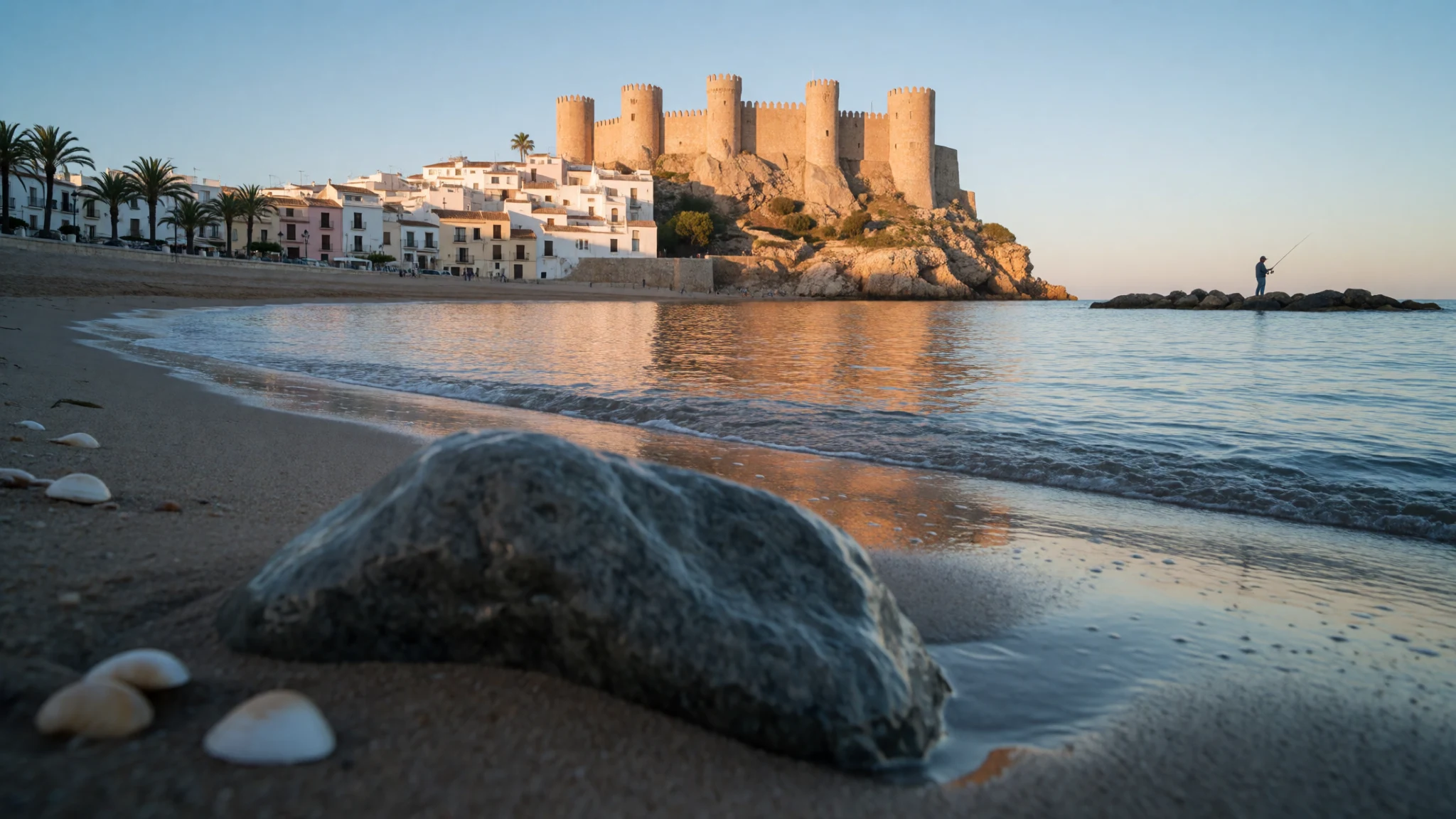
Peñíscola is a castle-topped rock joined to the Mediterranean shore by a thin strip of sand, with whitewashed lanes, a long beach and good rice.
The place
Peñíscola sits on the Costa del Azahar, the orange-blossom coast of the Valencian Community, in the province of Castellón. A rocky headland pushes out into the Mediterranean, crowned by a castle, and a low strip of sand ties it to the mainland. Locals use both the Valencian spelling, Peníscola, and the Spanish one, and signs often show them side by side. Valencian is heard more along the coast and Spanish more inland, so a few words of either go down well. The town has two faces. The old quarter on the rock is a tight tangle of whitewashed lanes, steps and small squares, wrapped in sea walls and best explored on foot. Across the isthmus the modern resort runs along a long beach, lined with apartment blocks, ice-cream stands and seafront cafés. To the south the Serra d'Irta rises behind the coast, a hill range that gives the shoreline a wilder backdrop. The province around is among Spain's more mountainous, with a sparsely inhabited interior, so quiet inland villages and hill roads are an easy half-day away from the sand. Summer brings families from across Spain and further afield, and the promenade and lanes fill from late morning until after dark. Spring and early autumn are calmer, with warm days for walking and a sea that only the brave will swim in. Peñíscola suits slow wandering, sea air and a good plate of rice better than a long checklist of sights.
Its story
Peñíscola takes its name from the Latin word for peninsula, and the rock has been settled for a very long time, going back to the Iberians. Later occupants gave it new names: Tyreche under the Phoenicians, and Chersonesos under the Greeks, again a word meaning peninsula. Carthage came next under Hamilcar Barca, and a local legend places here the scene where he made his young son Hannibal swear lifelong enmity to Rome. That is tradition rather than documented fact, but it suits the setting. The castle that dominates the town today was raised by the Knights Templar at the turn of the fourteenth century. The Order of Montesa garrisoned it afterwards, until it passed back to the Crown of Aragon. In the early fifteenth century it became the refuge of Pedro de Luna, the Avignon pope who styled himself Benedict XIII and was cut off from the mainstream church of his day. His Spanish name, Papa Luna, now labels the castle and a sea cavern beneath the walls, the Bufador, where waves force water up through a landward opening in bursts of spray. The headland rises about 67 m above the sea and is joined to the shore only by a narrow tombolo, a natural bar of sand. That geography earned it nicknames, 'the city in the sea' among locals and 'the Gibraltar of Valencia' in guidebooks, and it explains why the place was so easy to defend.
What to see
- Castell del Papa Luna — Top of the old town
Peñíscola's castle was built by the Templars and later sheltered the Avignon pope Benedict XIII, whose Spanish name it carries. Its halls, courtyards and ramparts stay cool even in summer, and the terraces give views along the coast in both directions. Opening hours and ticket rules change, so check with the local tourist office before climbing. - The old town lanes and sea walls — The walled quarter on the rock
The walled old quarter is a small maze of steep whitewashed lanes, stairways and sea-facing bastions, with craft shops, bars and a parish church among the houses. Wander it early in the morning or late in the evening, when day-trippers thin out and the stone and shutters look their best. Steps are uneven, so wear proper shoes. - Bufador del Papa Luna — Foot of the rock, seaward side
The Bufador is a sea cave below the walls, with an opening on the landward side. When waves are strong, water surges inside and escapes upward in spray with a booming sound. It depends on the swell, so calm days can be underwhelming and rough days can mean a soaking. - The town beaches — North of the rock, along the promenade
North of the rock, the long town beach curves toward the mainland, with fine sand, shallow water and a promenade behind. It suits families and slow swimmers. Summer weekends are crowded, with parasols packed tight, so arrive early or come in the shoulder months. The photo shows these beaches with the old town on its headland.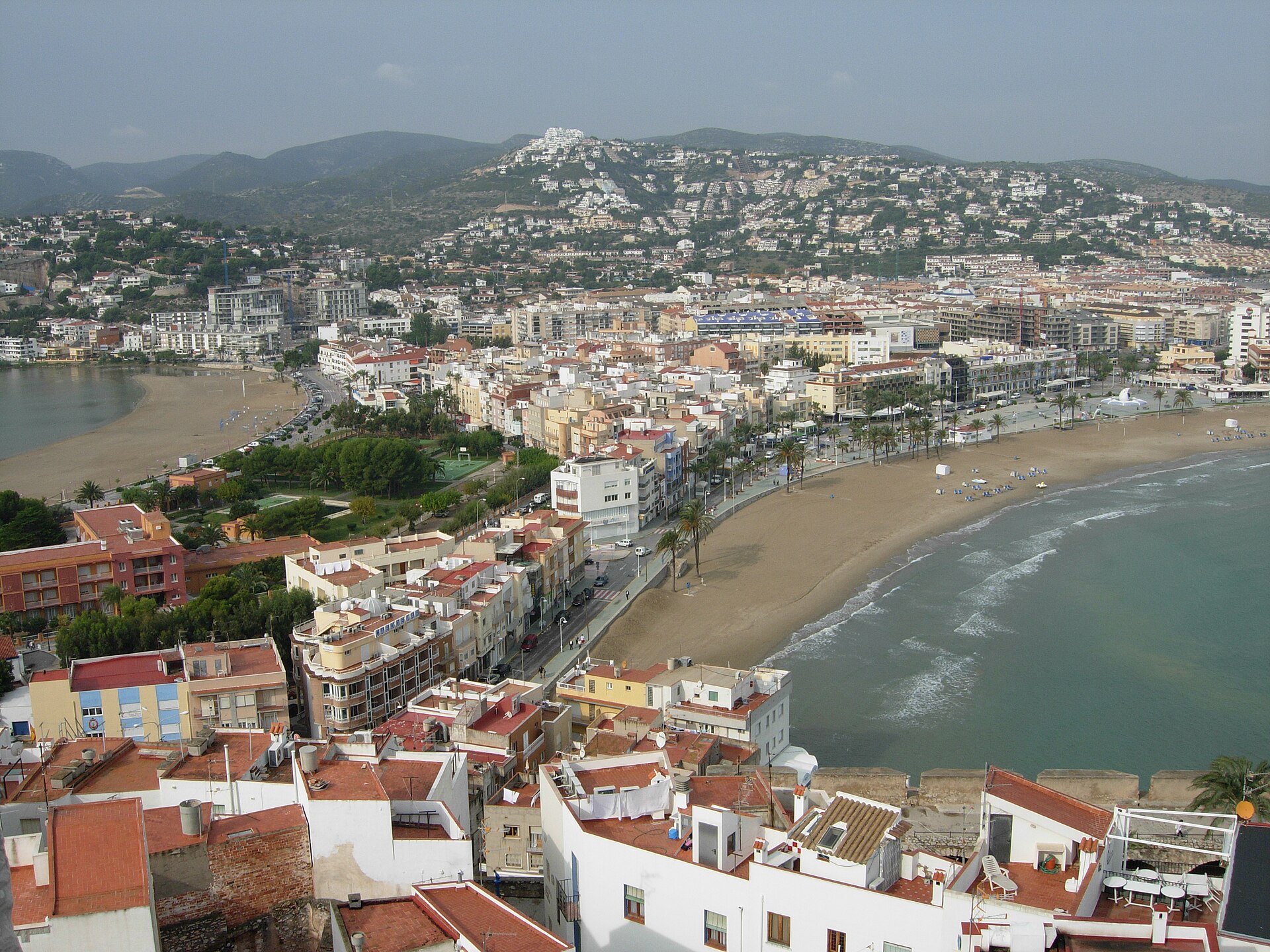
- Serra d'Irta — Coast and hills south of the town
Behind the coast south of Peñíscola, the Serra d'Irta is a range of scrubby hills and quiet coves reached by tracks and footpaths. It suits walking and cycling in the cooler months, with views over the sea. Carry water, sun protection and a map, because shade is scarce and mobile signal can be patchy.
Culture
Peñíscola lives between two languages. Valencian is the everyday voice along the coast, Spanish is more common inland, and both appear on signs, menus and street names, which is why the town carries two spellings. Daily rhythm follows the wider Spanish pattern: a long lunch, a quiet stretch in the afternoon heat, and dinner late in the evening, often after the beaches empty. Fishing and the sea shaped the old quarter, and boats still matter to the local table, even though tourism is now the main business. The town wears its past openly: Templar stonework, a medieval pope's name on the castle, and the nickname 'the city in the sea' appear on souvenirs and street signs alike. Festivals and processions fill the lanes at times through the year, with music, fireworks and plenty of neighbourliness. Ask at the tourist office for current dates rather than trusting an old guidebook. Locals are generally patient with visitors who try a greeting in Valencian, such as 'bon dia', and who accept that some shops close for part of the afternoon. In the old town, where people live above the bars and shops, keep your voice low late at night and carry your rubbish to a bin rather than leaving it on the steps.
What to wear
Peñíscola follows Valencian tradition for formal dress, known as indumentaria valenciana. Women's festive outfits are built around espolín, a heavy silk brocade woven in floral patterns, worn with a fitted bodice, a full skirt, lace and an elaborate hairstyle held with combs. Men wear white linen or cotton breeches (zaragüelles), a sash (faja), a waistcoat and a silk headscarf. These outfits appear at festivals and processions, not on ordinary days. Everyday dress in town is plain coastal summer wear: linen shirts, light dresses, shorts, sandals and rope-soled espadrilles (alpargatas), with a jumper or jacket for breezy evenings in spring and autumn. Swimwear stays near the beach, and locals usually dress a little smarter for dinner than for the sand. Visitors should pack light cotton or linen, a sun hat, sunglasses and high-factor sunscreen for summer, plus a thin layer for the wind on the castle ramparts. Shoes matter more than clothes: the old-town lanes are steep, stepped and polished smooth by feet, so choose sandals with grip or trainers rather than flip-flops. For churches, cover shoulders and avoid beachwear. Winter is mild but can be damp and windy, so bring a waterproof.
What to eat
- Arroz a banda — Seafront restaurants that specialise in rice
Rice cooked in a rich fish stock, with the fish served alongside and garlic mayonnaise on the side. It is a coastal Valencian staple and a good test of a kitchen. Order it where rice is cooked to order, and expect a wait. - Paella valenciana — Family-run restaurants in the new town, at lunch
The inland classic: short-grain rice with chicken, rabbit and flat green beans, cooked over flame with saffron and paprika. The crisp base is the prize. Locals eat it at midday, so look for paella on lunchtime menus rather than after dark. - Fideuà — Seafood restaurants along the promenade
A close cousin of paella made with short noodles instead of rice, simmered in fish stock and served with garlic mayonnaise. The noodles toast at the edges and soak up the seafood flavour. A good pick for anyone tired of rice. - Suquet de peix — Traditional eateries in the old quarter
A fisherman's stew of white fish and potatoes in a tomato and garlic base, often thickened with ground almonds. It tastes of the Mediterranean without being heavy. Best eaten with plenty of bread to mop up the sauce, especially on a cooler day. - Grilled prawns and fresh fish — Eateries near the fishing harbour
Prawns, red mullet, sea bream or whatever came in that morning, grilled with coarse salt and a squeeze of lemon. Simple, and at its best when the fish is local. Ask what was landed today and how it is priced before ordering.
Plan it
Best time. May–June and September–October for warm days, a swimmable sea and thinner crowds; July and August are hot, busy and expensive, while winter is mild but quiet, with many seaside places shut.
How long. 1–2
Getting there. Valencia and Barcelona airports are the usual gateways, and Castellón's airport has a limited set of routes, so check current ones. Trains from Barcelona and Valencia stop at Benicarló–Peñíscola station, and a taxi or local bus covers the last few kilometres to the town.
Budget. mid
Tips
- Book summer accommodation well ahead, especially for July and August weekends and Spanish holiday periods
- Visit the castle and old lanes early in the morning, before day-trippers arrive
- Carry some cash for kiosks and small bars, although most restaurants take cards
- Drink water often, as the sun on the rock is strong and shade is scarce
- Look at the sea before heading to the Bufador, since rough swell makes the show
Etiquette
- Keep noise down late at night in the old town, where residents live above the bars
- Cover shoulders and knees when entering churches
- Keep towels and swimwear to the beach, not the lanes
Nearby
Sources
- Wikidata Q23993731 (CC0)
- Wikipedia: Peñíscola (rev 1383188544) (CC BY-SA 4.0)
- Wikivoyage: Castellón (province) (rev 4395060) (CC BY-SA 4.0)
- Peñiscola - playas, Fagairolles 34, via Wikimedia Commons (CC BY-SA 4.0)
