Penang Hill
Penang Hill, Malaysia
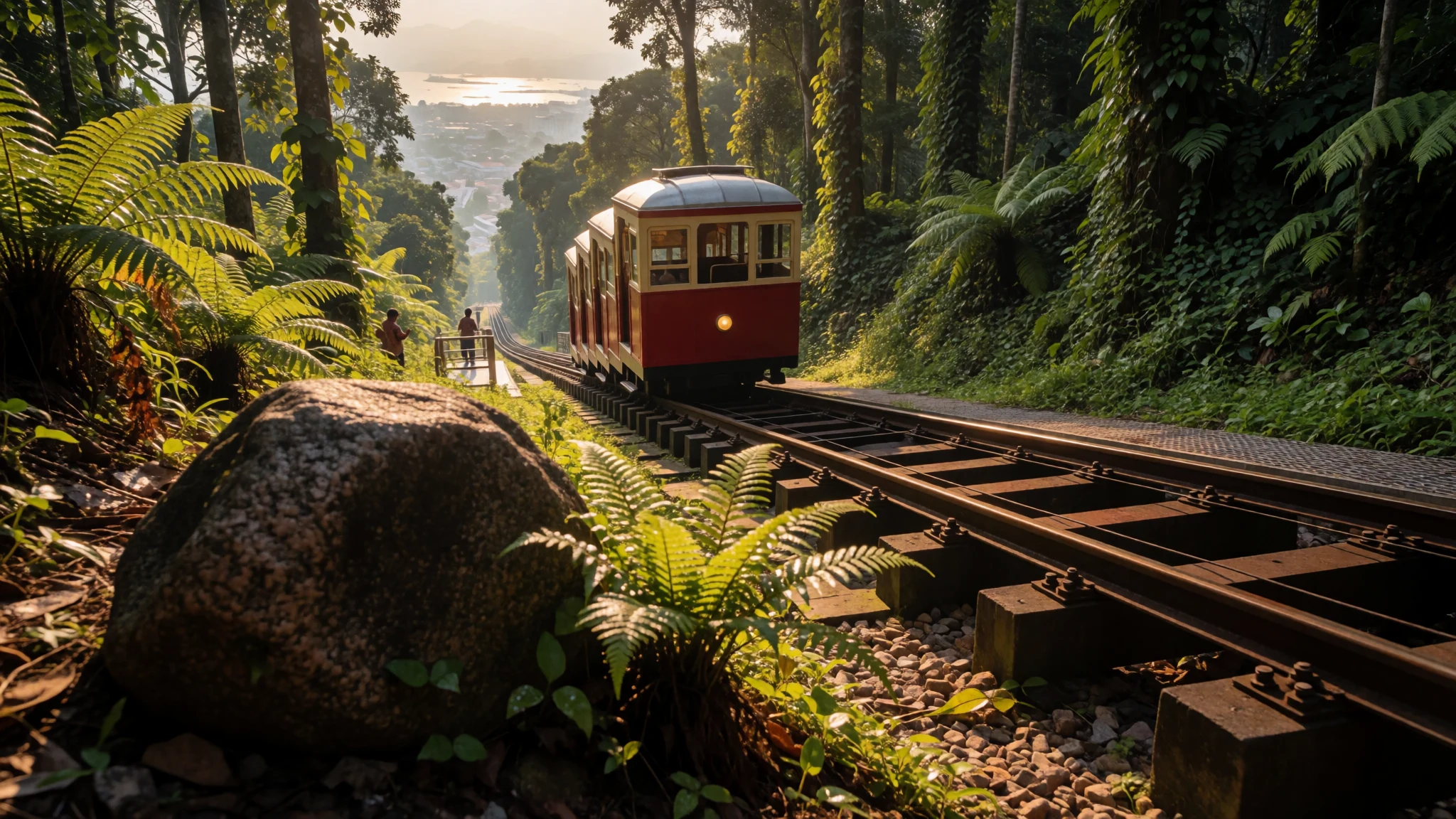
Penang Hill is the cool, green escape above George Town, reached by a short funicular ride and worth staying on for the night view.
The place
Penang Hill is a cluster of forested granite peaks in the middle of Penang Island, Malaysia, with the summit area at 735 metres. It lies west of George Town, and the journey up is as much a change of climate as of view. Locals call it Bukit Bendera, Malay for Flag Hill, although that name strictly belongs to Flagstaff Hill, the most developed peak. This is where the railway ends and the restaurants, lookouts, a mosque and a small Hindu temple sit close together. Other summits keep their own names, and Strawberry Hill is among them. Away from that busy top, the slopes are mostly woodland, a green mass that stands apart from the built-up lowlands around it. The main reason people climb is the air. The summit is usually a few degrees cooler than the city, which is why the British treated it as a place to recover from lowland heat. The warmest months are December to April, and the coolest run from June to October, though midday sun on the viewing platforms can still feel strong. Most visitors ride the funicular from the base station near Air Itam, and queues build at weekends and public holidays. Walking trails also lead up through the trees for those who want the effort, and the descent on foot is easier on the knees than it looks. The top is compact: a few hours covers the viewpoints, a meal and the places of worship, and the night view over the lights of George Town and the strait rewards anyone who stays for dusk.
Its story
Penang Hill entered the colonial record in 1788, when Francis Light, who founded the British settlement on Penang, marked out a horse track from the waterfall near today's Botanic Gardens to the summit. He cleared ground there to grow strawberries, and the name Strawberry Hill stuck to that peak. Light's own residence, Bel Retiro, had a flagstaff outside, and that gave the hill its official colonial name, Flagstaff Hill, still echoed in the Malay Bukit Bendera. Over time the label Penang Hill came to cover the whole group of peaks. The appeal for the administration was practical. The lowlands were hot and malaria was a real threat, so officials and army officers retreated upward, and bungalows spread across the summit; a convalescent bungalow went up in 1803. Details of the early building are disputed. One account credits David Brown with the house on Strawberry Hill, on land granted by Light, while the Australian historian Marcus Langdon argues it was built by William Edward Phillips, who also owned Suffolk House. Whoever started it, the house burned down, was rebuilt in the nineteenth century and later became a restaurant. The pattern of the hill, a cool refuge reached first by effort and later by rail, has barely changed. It has simply moved from a governor's privilege to a day out for families, and the colonial buildings now serve tea instead of shelter.
What to see
- Penang Hill Railway — Air Itam, base station on Hill Railway Station Road
The funicular is the usual way up Penang Hill, climbing from the base station near Air Itam to Flagstaff Hill in cars that rise steeply through forest. The ride is short, but queues form at weekends and on holidays, so an early start helps. Check the official operator's site for current running details, since maintenance closures do happen.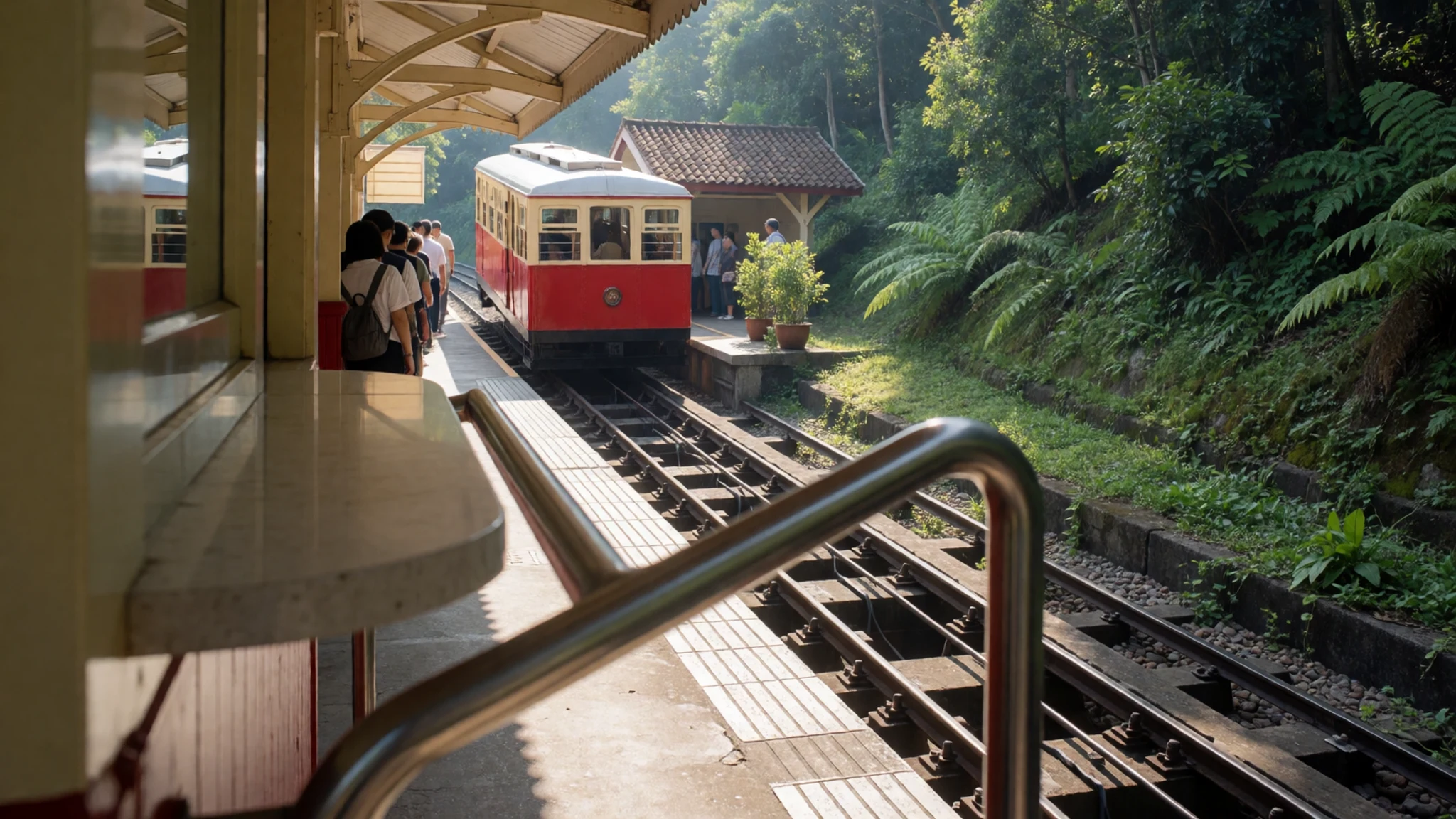
- Summit viewpoints on Flagstaff Hill — Summit of Penang Hill
The top of Flagstaff Hill gathers its viewing platforms, a hawker centre and a colonial tea house within a short stroll. On clear days the outlook runs across George Town to the Malacca Strait, and after dark the city becomes a spread of lights. Haze can flatten the view, so mornings after rain tend to look sharpest.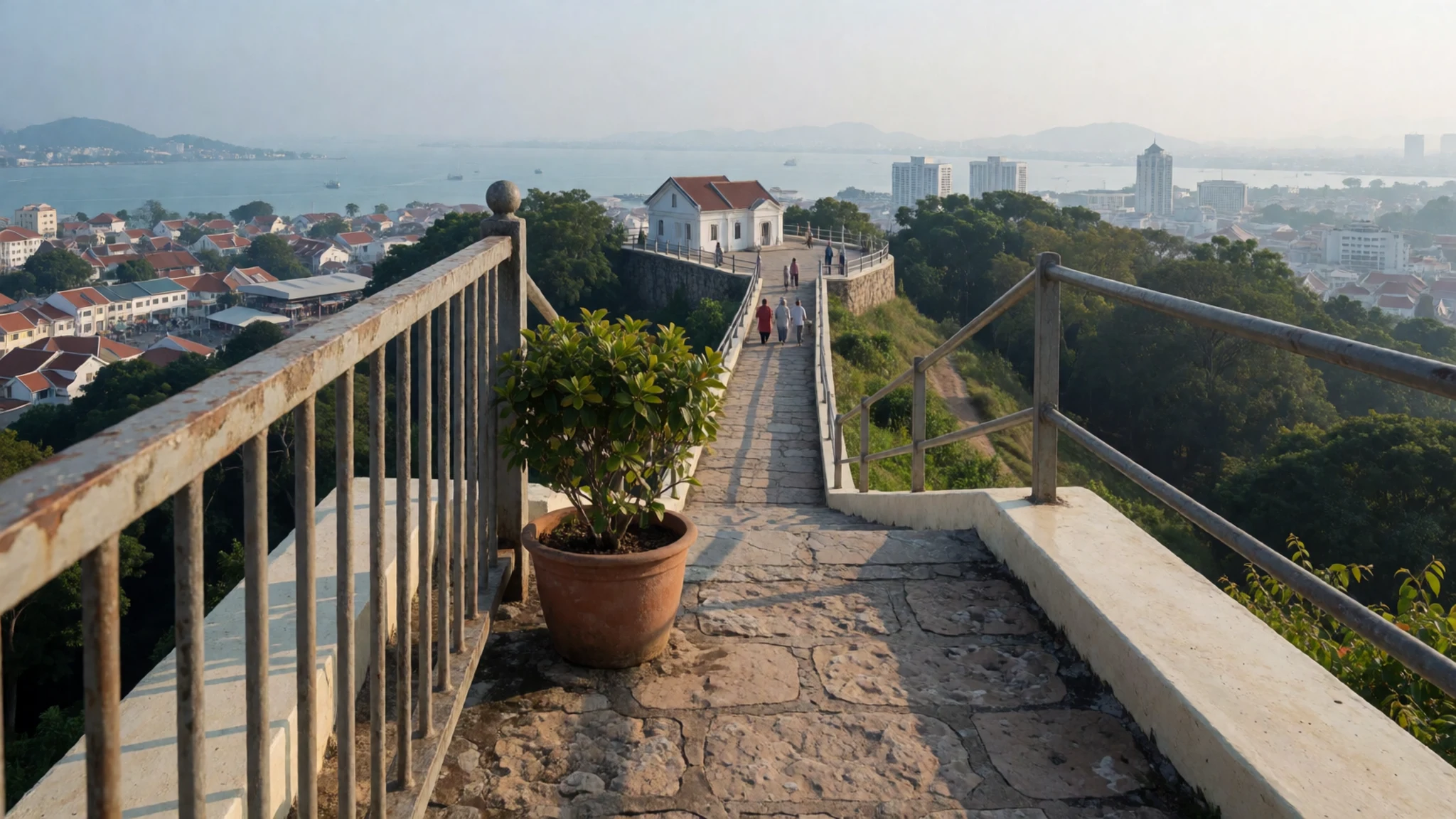
- Penang Hill Mosque and Sri Aruloli Thirumurugan Temple — Summit of Penang Hill
A short walk from the funicular terminus, the Penang Hill Mosque and the Sri Aruloli Thirumurugan Temple stand almost side by side: an ornate but modest mosque and a small Hindu temple with a long history on the island. Both are working places of worship, so a quiet look from the entrance suits best.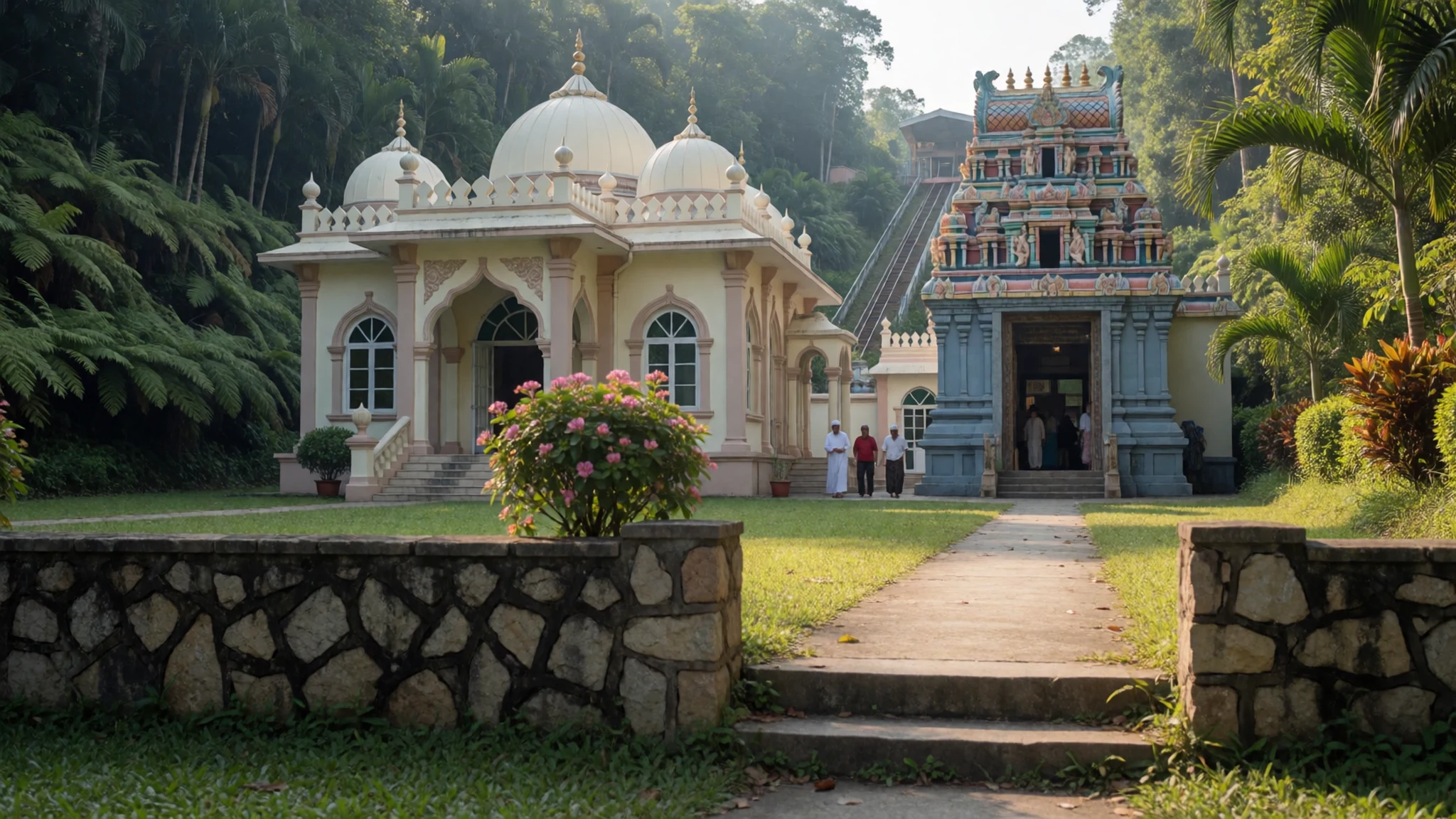
- Kek Lok Si Temple — Air Itam
At the foot of the hill in Air Itam, Kek Lok Si is a sprawling Buddhist temple complex stepped up a slope, with halls, shrines and terraces. Much of it can be entered without a ticket, and a few hours is enough to wander the main levels. It pairs easily with a hill trip, since both share the same approach.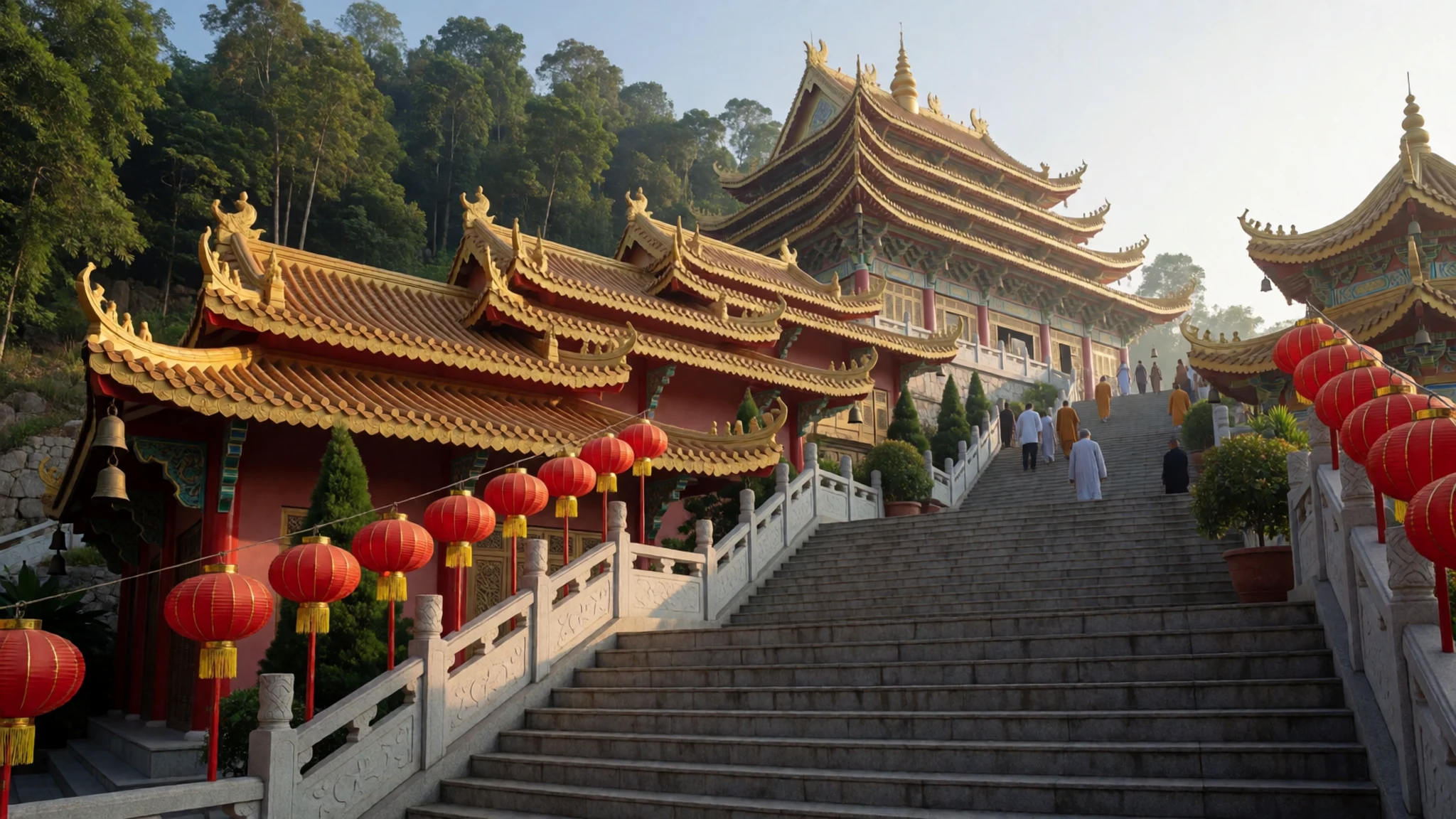
- Air Itam Dam — Air Itam
Air Itam Dam, near the foot of the hill, was the first dam built on the island and is a local favourite for picnics and jogging. From the crest, George Town spreads across the plain, a view locals happily compare with the one from the hill. It suits an easy late-afternoon stop when the summit crowds are heavy.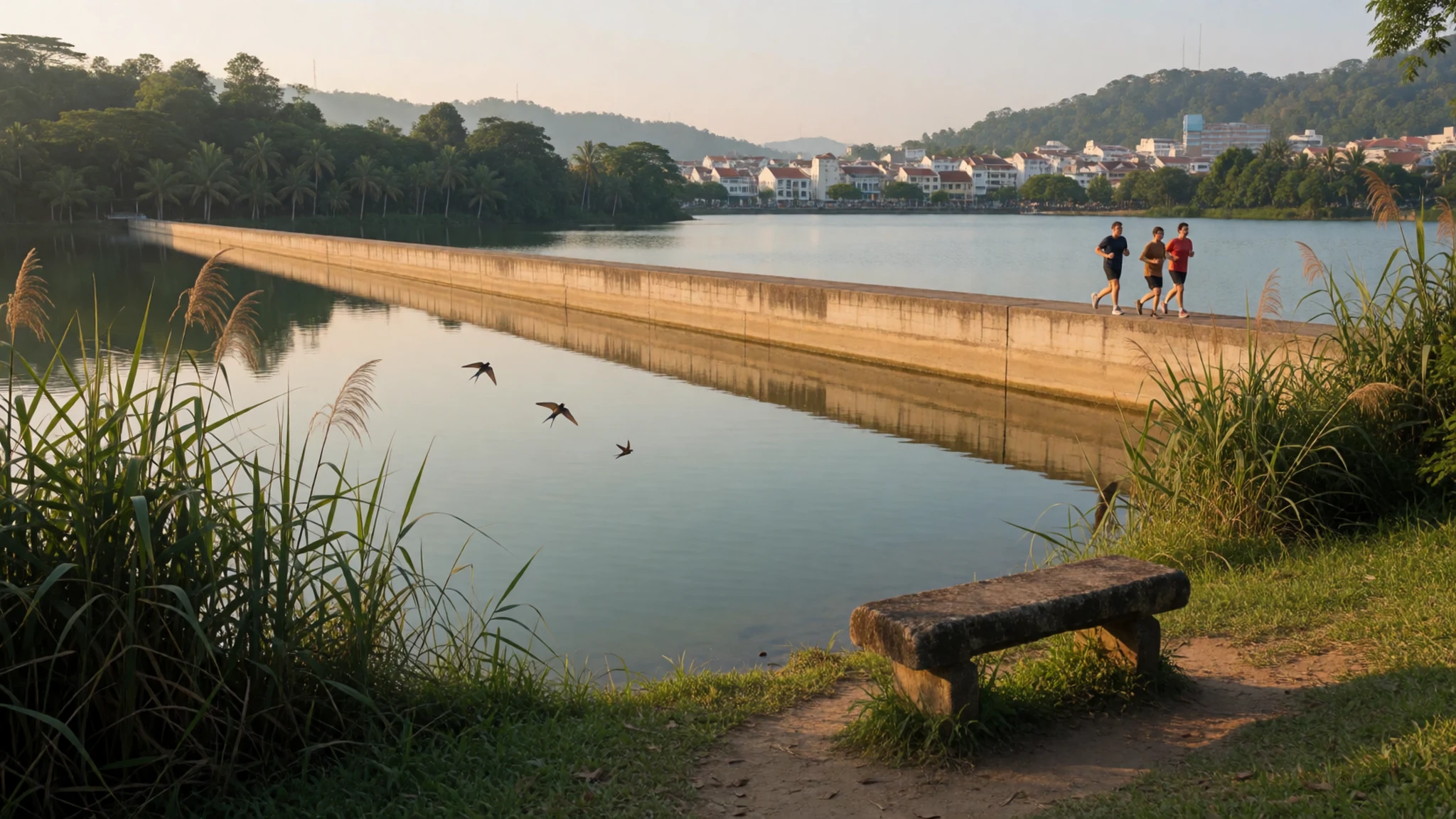
Culture
Penang Hill reflects the mixed character of Penang island, where Malay, Chinese and Indian communities live side by side and share the same streets, markets and hill. At the top, a mosque and a Hindu temple stand a few steps apart, while near the foot, Taoist and Buddhist temples such as the Jade Emperor's Pavilion and Kek Lok Si draw worshippers and sightseers alike. Festival days bring extra crowds, incense and offerings, and local families treat the hill as a weekend outing as much as a landmark. Colonial history remains visible in the old bungalows and the tea-terrace tradition, a reminder that the hill began as a retreat for British officials. Eating is central to local life here: the Air Itam market area is known among residents for its noodle stalls, and kopitiams (traditional coffee shops) and hawker centres set the rhythm of the day. Muslim-run places do not serve alcohol, while some other eateries and kopitiams do, so choices vary from stall to stall. Visitors who treat the hill as a living neighbourhood rather than a theme park will get far more from it. Remove your shoes before entering the mosque or any temple hall, and cover your shoulders and knees before you go in.
What to wear
Penang Hill sits in a multi-ethnic part of Malaysia, so traditional dress comes in several forms. Malay women wear the baju kurung, a long loose tunic over a matching skirt, often in batik (wax-resist printed cotton) or songket (silk woven with gold or silver thread); men wear the baju Melayu with a wrapped sampin at the waist. Chinese families may wear cheongsam or samfu for festivals, Tamil women wear saris, and the Peranakan tradition adds the embroidered nyonya kebaya. These are mostly worn at weddings, religious days and national holidays. Day to day, people on the hill wear what suits a humid climate: light cotton shirts, shorts, leggings and trainers, with joggers and walkers out early. Many Muslim women wear a tudung headscarf as part of everyday dress. Visitors should pack breathable, quick-drying clothes, a light rain layer, and shoes with real grip, since forest paths and wet steps get slippery. The summit is cooler than the city but still warm, so a hat and sun protection matter. For the mosque, temples and the Hindu shrine, carry something to cover shoulders and knees, and wear shoes that slip off easily, as footwear comes off at most doors.
What to eat
- Assam laksa — Air Itam market, at the foot of the hill
A sour, fish-based noodle soup with tamarind, mint and shredded pineapple, and a signature of Penang. Air Itam is known for it, and the local market there has stalls that sell little else. Expect a tangy, spicy bowl rather than a creamy one.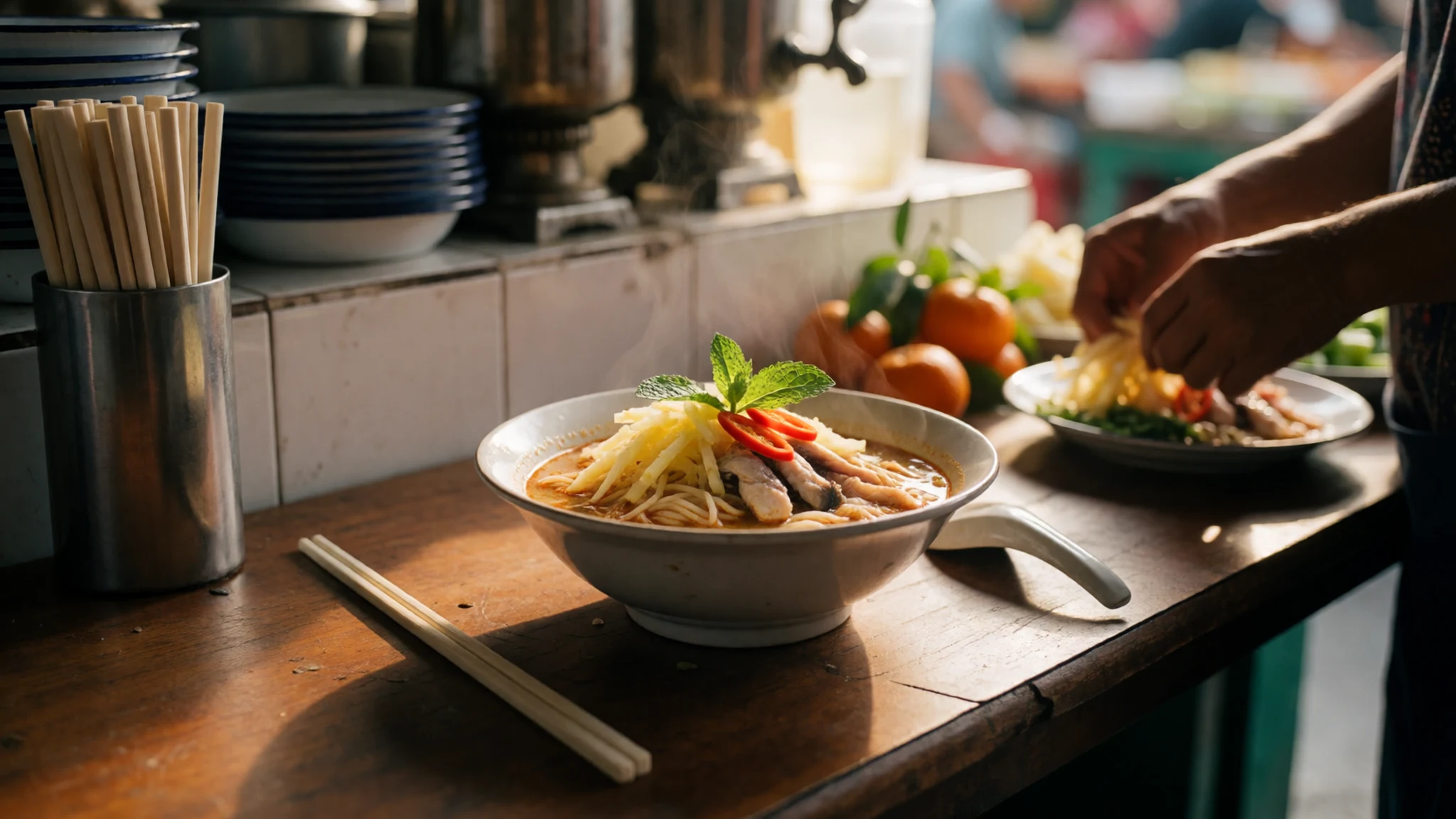
- Curry mee — Hawker stalls around Air Itam town centre
Noodles in a spicy coconut-based curry broth, usually with toppings such as cockles, tofu puffs and chilli paste. Small family-run hawker stalls around Air Itam serve it, and locals queue for the better-known ones, especially at breakfast and lunch.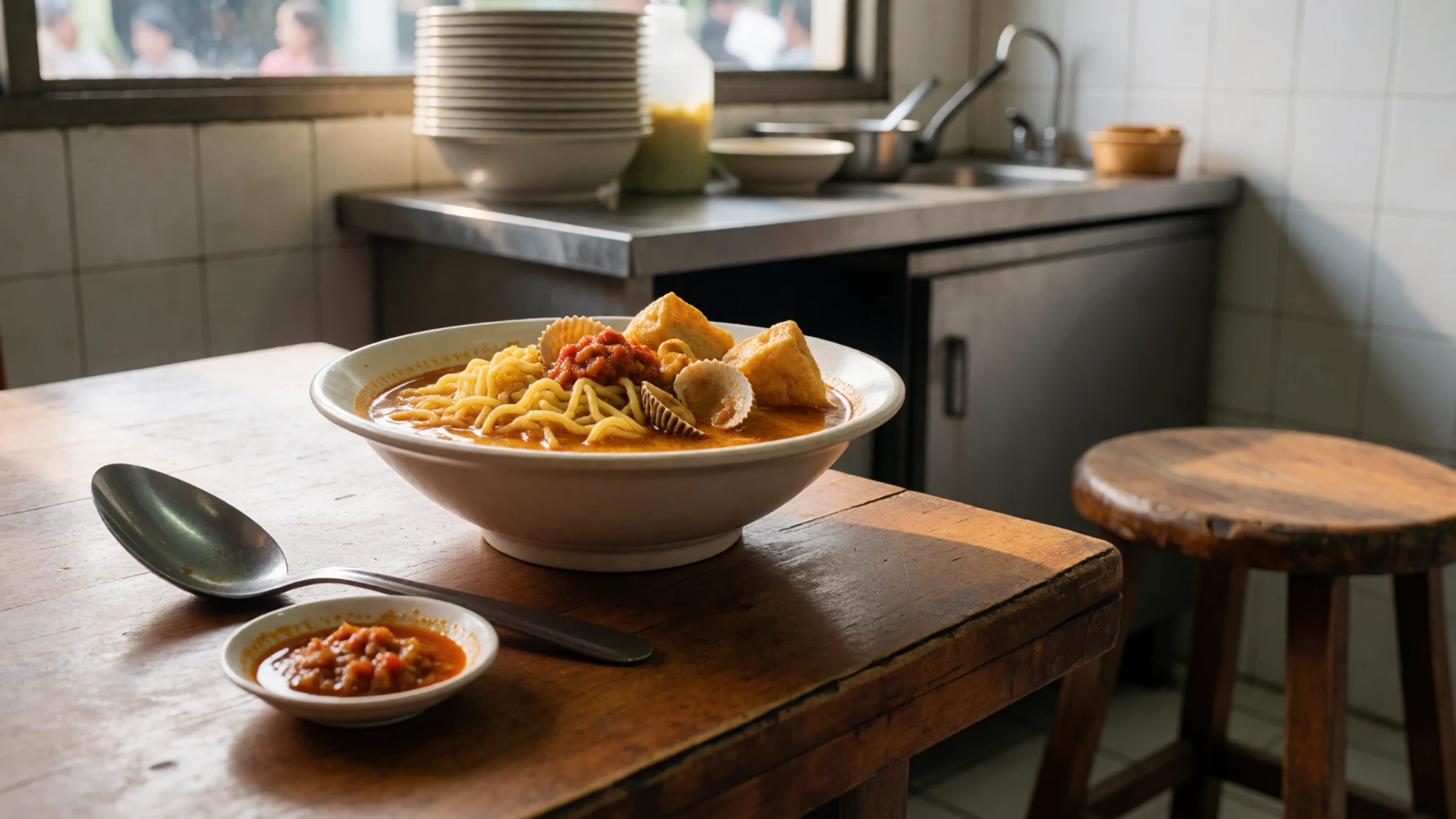
- Local hawker staples — The multi-storey hawker centre at the top of Penang Hill
The hawker centre at the summit sells the usual Penang repertoire, so noodle dishes, rice plates and snacks are all on offer. Quality varies by stall, but it is the practical option for a quick lunch without leaving the hilltop. - Colonial-style afternoon tea — Colonial building at the peak of Penang Hill
A tea terrace in a British-era building at the summit serves tea, scones and Western dishes in period-style surroundings. It is more about the setting and the cool air than the food, and suits a slow break after the viewpoints.
Plan it
Best time. June to September is the best window, since June to October is the coolest stretch on the hill and the summit stays pleasant. December to April is the hottest period, so go early in the day if travelling then. Clear mornings give the best views.
How long. 1
Getting there. Fly into Penang International Airport at Bayan Lepas, then take a taxi or a Rapid Penang bus towards Air Itam, the town at the foot of the hill. From George Town, several local bus routes run to Air Itam, and some end at the base of the hill. The last leg is the funicular from the base station on Hill Railway Station Road. Taxis suit late-night returns, though a surcharge applies after midnight.
Budget. low
Tips
- Go early on weekdays to avoid the longest funicular queues, which build at weekends and on public holidays
- Check the official operator's site for current railway running times and any maintenance closures before travelling
- Carry some cash for hawker stalls and small shops, and bring a refillable water bottle
- Stay for dusk if the sky is clear, as the lights over George Town are the best of the visit
- Combine the hill with Kek Lok Si and Air Itam's noodle stalls to make a full day
Etiquette
- Remove shoes before entering the mosque, temples and prayer halls
- Cover shoulders and knees at places of worship
- Ask before photographing worshippers or people at prayer
Nearby
Sources
- Wikidata Q1094967 (CC0)
- Wikipedia: Penang Hill (rev 1369596464) (CC BY-SA 4.0)
- Wikivoyage: Penang Hill (rev 5348021) (CC BY-SA 4.0)
- Photo: Funicular approaching top of Penang Hill (Hzh) (CC BY-SA 4.0)
- Photo: Penang Hill, George Town, Penang 2023 (HundenvonPenang) (CC BY-SA 4.0)
- Photo: Penang Museum historical painting 448 (Penang State Museum and Art Gallery) (Public domain)
- Photo: Penang Hill funicular railway (HundenvonPenang) (CC BY-SA 4.0)
- Photo: Penang Hill (Marufish) (CC BY-SA 2.0)
- Photo: Penang Harbour HMS Magpie 1884 George Town map (Foley Charles Prendergast Vereker) (Public domain)
- Photo: Penang Hill funicular ride entrance (Hzh) (CC BY-SA 4.0)
- Photo: Penang Hill funicular railway 2 (Ouishoebean) (CC BY-SA 2.5)


