Palm Springs
Palm Springs, United States
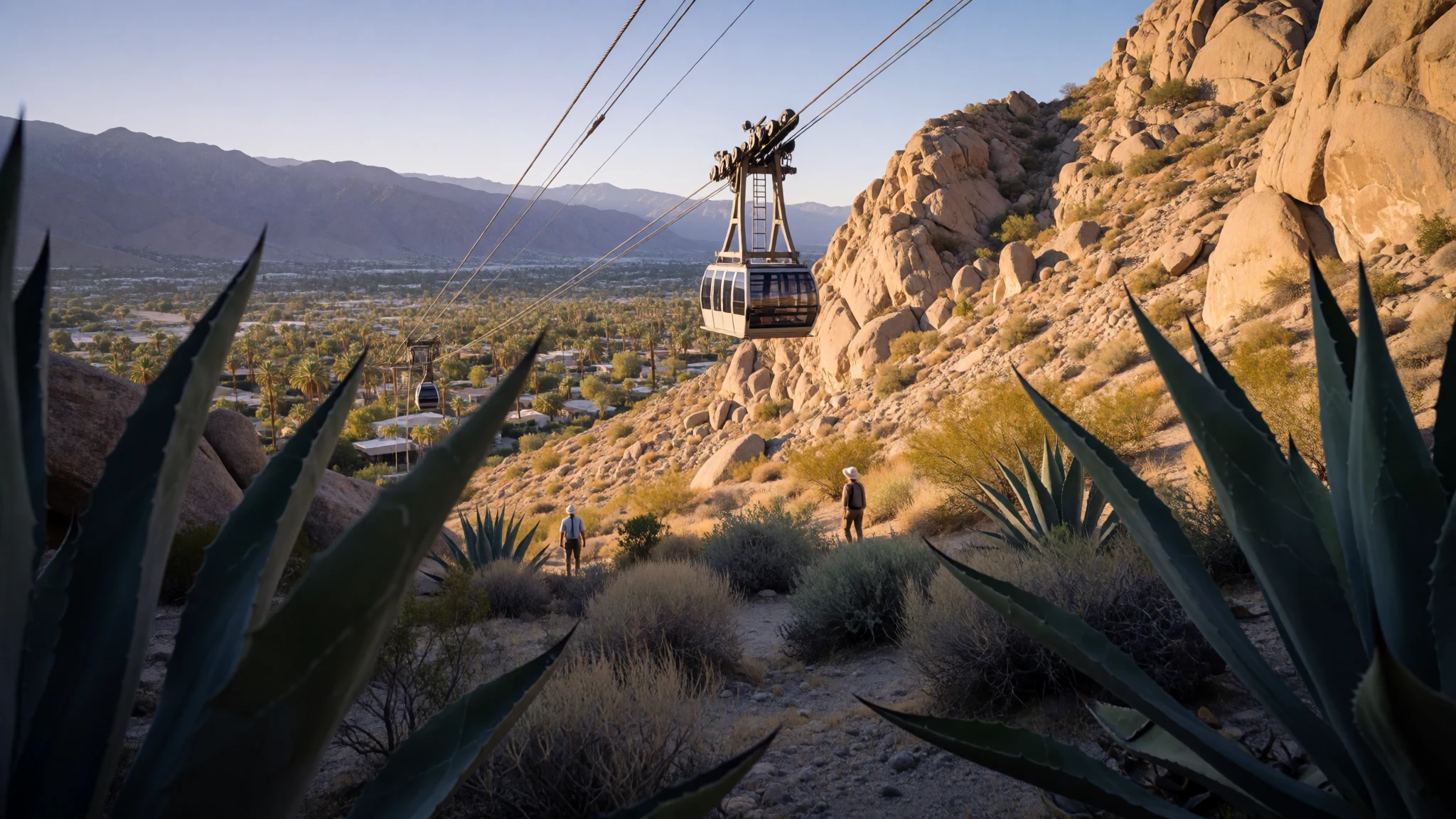
Palm Springs offers desert sunshine, mid-century modern houses and Cahuilla canyons, all within easy reach of a cool mountain tram ride.
The place
Palm Springs sits in the Coachella Valley, part of California's Colorado Desert, at an elevation of 146 m. It is a resort city of 44,575 people at the 2020 census, but the population roughly triples between November and March, when winter visitors arrive to escape colder climates. Many of these snowbirds are Canadians. The city is a patchwork in a literal sense: a good share of the land is reservation land of the Agua Caliente Band of Cahuilla Indians, laid out in a checkerboard with ordinary city parcels, and the tribe's administrative seat is here. Palm Canyon Drive is the main downtown spine, lined with shops, cafés and galleries, with dry mountains close behind. The feel is low-rise and horizontal: flat-roofed houses, pools, palms and sunshine on most days. The city is known for mid-century modern architecture, and much of its visitor life revolves around design, film, art, golf and lounging by water. It is also a long-established gay village, with a busy social calendar. Heat is the honest catch. Summer afternoons are punishing and many people stay indoors, so the town is quieter then, while winter and spring bring crowds, full diaries and higher costs. Hiking, canyon walks and the tram are best done early in the day. The overall character is a mix of Native desert homeland, Hollywood-era leisure and retirement comfort.
Its story
Palm Springs was a Cahuilla homeland long before it became a resort. The Cahuilla spoke Ivilyuat, a Uto-Aztecan language, and lived here for many centuries in relative isolation before Europeans arrived. Their name for the place was Séx'i. Settlements clustered in the canyons, where streams and palm groves gave water and shade. Families used Palm Canyon in winter and moved to cooler Chino Canyon for summer. The hot springs in what is now downtown were prized in the cold months, and the same spot later held a spa resort. Food came from many sources: men hunted rabbit, quail and mountain goat, women gathered berries, acorns and seeds, and mesquite seeds were turned into a kind of tortilla. Fish were trapped in nearby lakes and rivers. Leaders such as Cahuilla Lion, also known as Chief Juan Antonio, came from this area. Traces of that life survive on the ground. Desert canyons around town hold ancient traces: petroglyphs in Tahquitz, Chino and Indian Canyons sit near old irrigation ditches, dams and house pits, while Andreas Canyon features pictographs and the mortar holes used to pound seeds. This is the older layer beneath the city's film-star reputation. It also continues today, because the Agua Caliente Band still holds land across the city and runs a cultural museum in the centre of town.
What to see
- Indian Canyons — South of downtown
South of downtown, these canyons were Cahuilla homes and are now walking trails through palm groves, streams and rocky gorges. Petroglyphs and mortar holes can be found, and Andreas Canyon has pictographs. Go early, carry plenty of water, and check the Agua Caliente tribal website for access and opening times. - Palm Springs Art Museum — Downtown
The museum in downtown Palm Springs holds Californian art, including work by Ed Ruscha and Robert Arneson, along with Native American and Mesoamerican collections. It makes a sensible cool-down stop in the afternoon heat. Exhibitions change, so check the museum's official site for what is on and when it opens. - Agua Caliente Cultural Museum — Downtown
This small museum tells the history and culture of the Agua Caliente Band of Cahuilla Indians, in their own city. It is a good first stop before walking the canyons, because it explains who lived here and how. Check current admission and hours before visiting. - Palm Springs Aerial Tramway — Northern edge of the city
A cable car carries visitors from the desert floor to the cooler mountain air above, which is a real relief in summer. Views are wide by day and by night, and there can be snow up top in winter. Book ahead for busy weekends and carry a jacket. - Palm Springs Air Museum — Near the airport
Restored Second World War aircraft fill the hangars here, many of them in very good condition. It suits aviation fans and families, and half a day is about right. The dry desert air helps preservation, and the hangars offer some shade. Check the official site for opening days. - Mid-century modern houses — Old Las Palmas and across the city
The city's modernist homes, with flat roofs, glass walls and desert gardens, can be admired from the street, including the Kaufman and Koerner houses and the former Sinatra residence. Organised tours and open days cluster around Modernism Week. Respect privacy, because most are lived in.
Culture
Palm Springs has a culture layered between Cahuilla heritage, Hollywood leisure and design. The Agua Caliente Band remains a major landholder, and its cultural museum hosts an annual Festival of Native Film & Culture at a cinema in the centre of town. The calendar is dominated by themed events. The Palm Springs International Film Festival brings red-carpet evenings in January, and the short-film festival, known as ShortFest, follows in June. Modernism Week in February celebrates mid-century architecture through films, lectures, house tours and a show and sale, with a smaller preview in mid-October. February also brings a Black History Month parade and town fair. In March the Dinah Shore Weekend, known as The Dinah, draws a large LGBT crowd, and a circuit party weekend has been held in April. The city's identity as a gay village is part of daily life, with relaxed, open social spaces. Retirees, winter visitors and younger weekenders share the same pools and patios. Evenings are late for a desert town, with dining and drinks outdoors when the temperature drops. Pace is slow by design: lunch lingers, shade matters, and people schedule outdoor activity around the heat. During event weekends rooms fill early and prices rise, so quieter months suit those who prefer calm. Stay on marked trails in the canyons, never touch or mark the petroglyphs, and ask before photographing people.
What to wear
Palm Springs has no single costume, but Cahuilla tradition is part of the story. Historically, clothing and baskets were made from local plant fibres and animal skins, and ceremonial regalia still appears at tribal events and cultural festivals, so treat it as living culture, not costume. What people wear day to day is resort casual: linen shirts, light cotton dresses, shorts, sunglasses and wide-brimmed hats. The mid-century image lives on in vintage-style prints, bold colours and retro swimwear, and many visitors dress up for Modernism Week or film festival evenings, when cocktail wear and even black tie appear. Evenings in the desert can be cool, especially in winter, so a light jacket or wrap is useful. For visitors, the priorities are sun and terrain. Choose breathable, loose, light-coloured fabrics, a hat, sunscreen and sunglasses. Hiking in the canyons calls for closed shoes with grip, because paths are rocky and sandy, and sandals are fine in town. Carry a warmer layer if riding the tram, as the top is much cooler than the valley floor. Swimwear is for the pool, so cover up when walking around town or entering shops and restaurants. There are no special modesty rules in the city itself, though it is courteous to dress simply and respectfully in cultural museums and tribal spaces.
What to eat
- Lunchtime sliders — Small burger counters in downtown Palm Springs
Small burgers are a local habit, and a few compact downtown burger counters have loyal followings, some open only at midday. Order a couple of sliders with fries and eat them outside in the sun. - Steak and seafood on a patio — Patio restaurants along Palm Canyon Drive
Classic American grills serve steaks and seafood, and patio tables facing the street are the draw in cooler months. It is an easy, unhurried dinner after a day of walking. - Classic French dinner — Streets off South Palm Canyon Drive
A few polished, old-world restaurants serve French cooking in quiet streets just off the main road. Expect a formal, higher-cost evening, so book ahead in winter and spring. - Mexican plates — Family-run Mexican eateries south of the main downtown strip
Mexican food is a regional staple across the desert, from tacos and enchiladas to rich sauces and fresh salsas. Local readers regularly vote for their favourites, so ask around for the current choice. - Mesquite seed flatbread — Agua Caliente cultural events and museum programmes
Cahuilla cooks historically ground mesquite seeds into a flour for flat breads. It is not a standard menu item, so look for it, or for talk of it, at Native cultural events and museum programmes.
Plan it
Best time. November to April are the most comfortable, with warm days, cool nights and clear skies, though winter is also the crowded, expensive season. Summer is extremely hot, so only come then for the quiet, low prices and early-morning outdoor plans.
How long. 2–3
Getting there. Palm Springs airport is the easiest option, and rental cars are available there. Amtrak's Sunset Limited stops at an open platform on North Indian Canyon Drive, but there is no public transport or car-rental shuttle from it, so most rail travellers use the Amtrak Thruway bus station on East Taquitz Canyon Road. By road, the interstate connects the city with Los Angeles.
Budget. mid
Tips
- Book rooms early for January to April and for festival weekends such as Modernism Week
- Hike and visit the canyons in the early morning, and carry more water than seems necessary
- Take a jacket for the tram and for desert evenings
- A car makes sightseeing far easier, as sights are spread out and public transport is limited
- Check official sites for opening times, as museums and canyons change their hours by season
Etiquette
- Stay on marked paths in the canyons and leave petroglyphs and plants untouched
- Respect residents' privacy when viewing private modernist houses from the street
- Ask before photographing people, especially at cultural events
Nearby
Sources
- Wikidata Q488004 (CC0)
- Wikipedia: Palm Springs, California (rev 1386156136) (CC BY-SA 4.0)
- Wikivoyage: Palm Springs (rev 5413752) (CC BY-SA 4.0)
- Patrick Pelster, Downtown Palm Springs CA (CC BY 3.0)
- Visitor7, Palm Springs from the Museum Trail (CC BY 3.0)
- Visitor7, The Plaza Theatre-1 (CC BY 3.0)
- Pmeulbroek, Kaufman Desert Home (CC BY-SA 4.0)
- Farragutful, Koerner House 01 (CC BY-SA 4.0)
- Farragutful, Frank Sinatra House - Palm Springs 02 (CC BY-SA 4.0)
- SchoolOfNight, Villa Hermosa Palm Springs (CC BY-SA 4.0)
- Uwe Dedering, Usa edcp relief location map (CC BY 3.0)


