Apostle Islands
Apostle Islands, United States
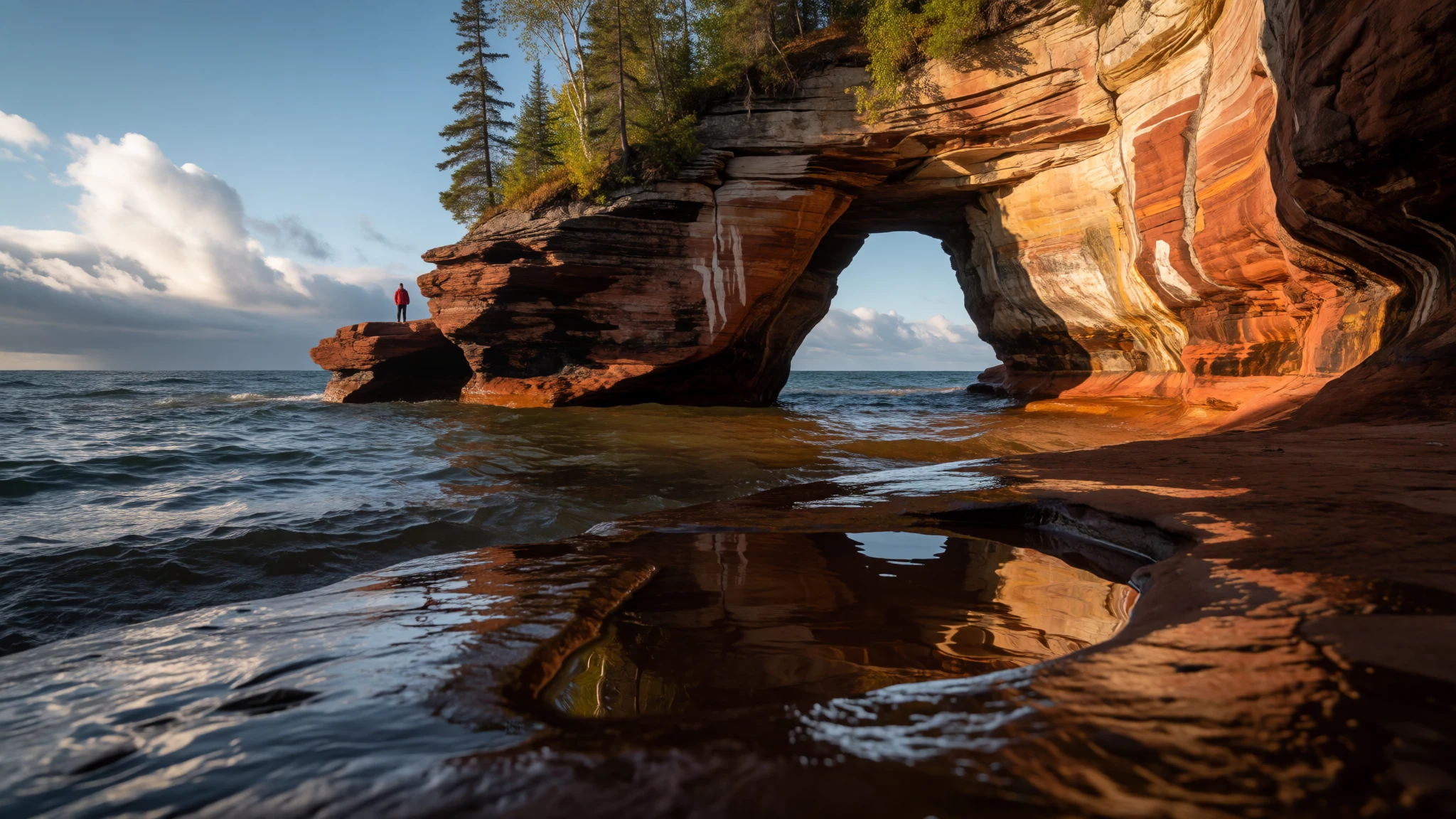
Apostle Islands offers sandstone sea caves, island lighthouses and cold, clear Lake Superior water, best explored slowly by boat or kayak.
The place
The Apostle Islands are a cluster of 22 islands in Lake Superior, lying off the Bayfield Peninsula at the top of Wisconsin. All but one belong to the Apostle Islands National Lakeshore. The exception is Madeline Island, which has a village, a ferry and year-round residents. The rest are wooded and largely empty, reached by tour boat, water taxi, private boat or sea kayak.
The rock is red-brown sandstone, laid down by ancient rivers more than 500 million years ago. The islands are what remains of the peninsula after ice, meltwater and storms cut it into pieces. That work continues along the cliffs, where waves keep hollowing arches and caves.
Lake Superior sets the mood. The water stays cold through summer, the lake makes its own weather, and a calm morning can turn choppy by afternoon. Fog, wind and sudden swells are ordinary here, which is why paddlers watch forecasts closely and often stay close to shore. Pine, birch and maple cover most islands, and the shoreline switches between sand beaches, low bluffs and ledges of layered rock.
Bayfield, a small town on the mainland, is the usual base. The Madeline Island ferry leaves from there, and so do many of the boat trips. Phone signal fades out on the water, so plans and tide of light matter more than gadgets. Summer is the easiest season for access and also the busiest, though the island trails still feel quiet once boats have dropped their passengers and moved on.
Its story
Apostle Islands has been used by people for thousands of years, long before any European map named it. Archaeologists have found traces of Archaic and Woodland communities along the southern shore of Lake Superior, people who fished, hunted and travelled seasonally by water and portage. Shifting lake levels and eroding shorelines have swallowed or buried some early camps, but what survives points to repeated, long-term use of both the islands and the nearby mainland.
French missionaries and traders reached the western end of the lake in the seventeenth century and found a crowded, unsettled region. Huron and Ottawa groups were living around Chequamegon Bay or passing through it, many pushed west by the violence of the Iroquois Wars. Over time those communities moved on or merged with others, and the Ojibwe (Anishinaabe) became the main Indigenous presence on the south shore. Ojibwe tradition recalls a long migration from a homeland in the east, near the Atlantic coast or the Gulf of St Lawrence.
Later centuries brought other industries. Lighthouses went up on several islands to guide ships through narrow, rocky channels. Sandstone was cut from island quarries for buildings, and loggers stripped much of the forest, floating and towing timber across the lake. Those forests have since grown back, and the old quarries and lighthouse stations now work as small historic sites. Protection as a National Lakeshore, covering every island except Madeline, has kept the archipelago mostly wild, with the human story left as layers rather than a single date.
What to see
- Sand Island Lighthouse — Sand Island, western Apostles
Sand Island Lighthouse stands on the western edge of the archipelago, among forest and sandstone shoreline. It is reached by boat and a walk from the landing. The keeper's buildings and tower give a sense of how isolated lighthouse life was, and the water views are wide and cold.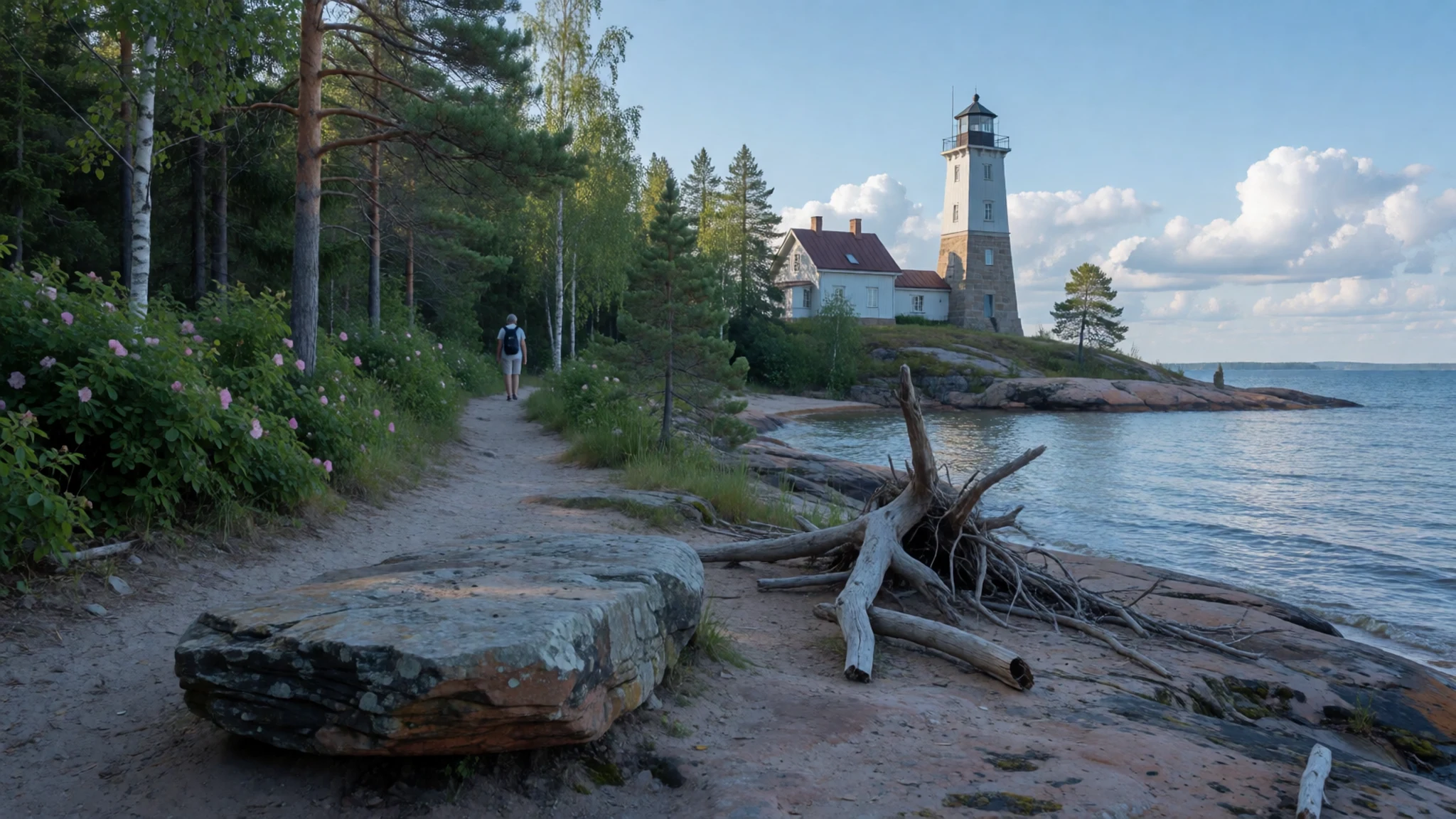
- Devils Island sea caves — Devils Island, northern tip of the group
Devils Island has some of the most photographed sea caves in the archipelago, where red sandstone has been carved into arches, grottoes and narrow passages. The best way in is by kayak on a calm day or on a boat tour. Swell can close the caves quickly, so local guidance matters.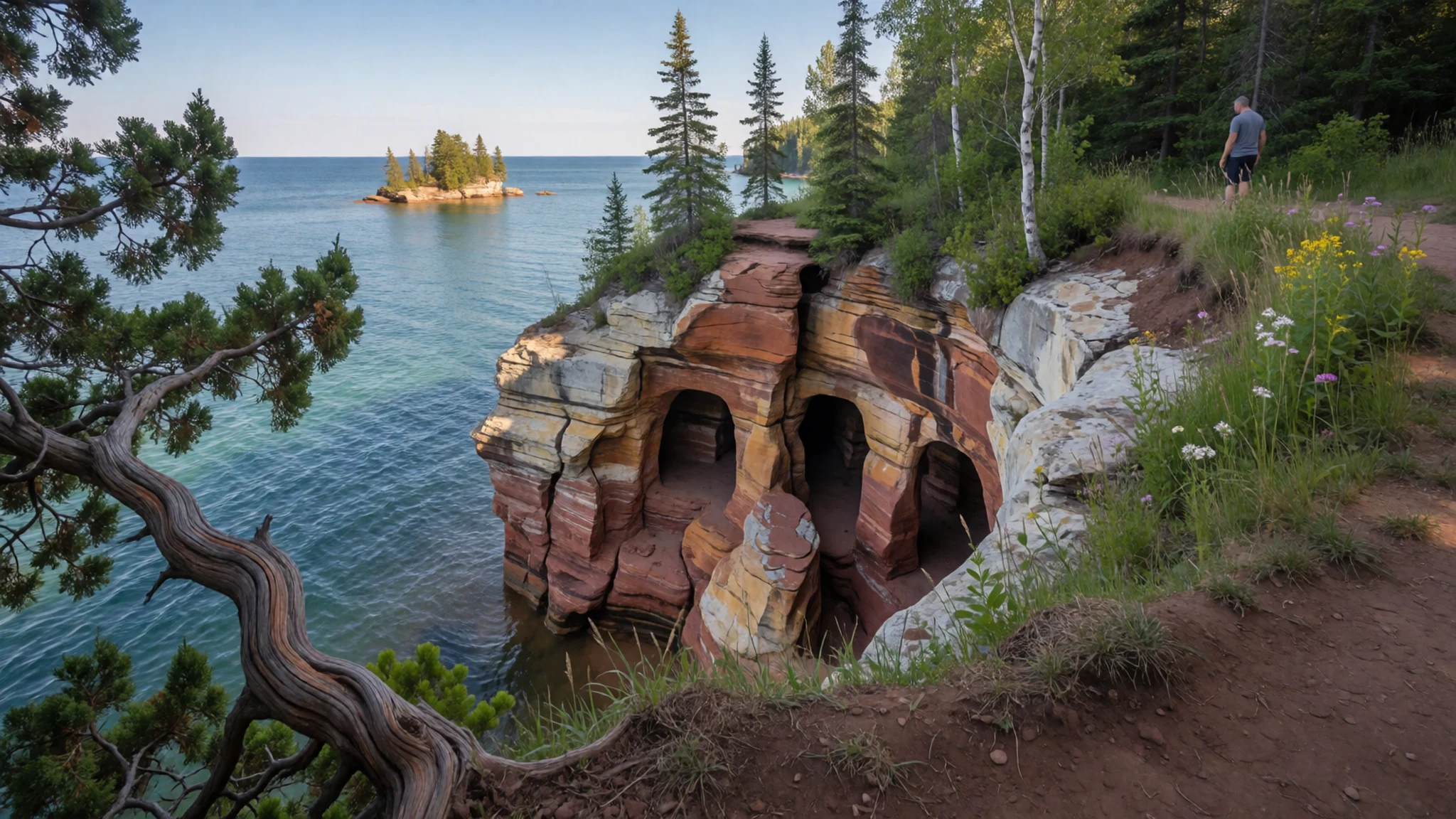
- Mainland sea caves at Meyer's Beach — Mainland shore near Cornucopia
Shallow caves in the sandstone cliffs east of Meyer's Beach can be visited from the mainland by paddle, without crossing open water to an island. In some winters the lake freezes enough for people to walk out to the ice-coated caves, but conditions change, so check with the park first.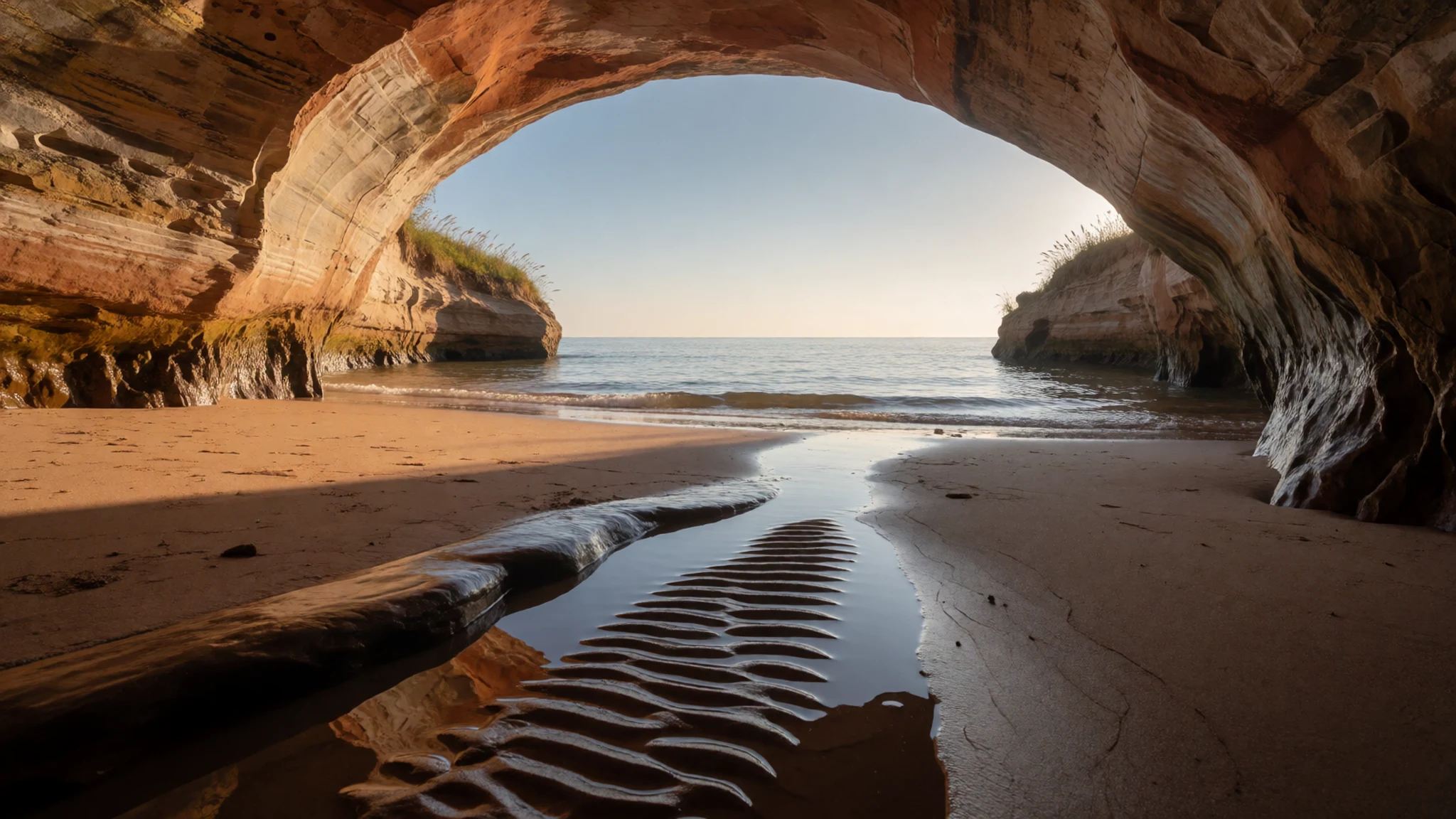
- Madeline Island and La Pointe — La Pointe, Madeline Island
Madeline Island is the only island of the group outside the National Lakeshore, and the only one with a proper village. The ferry from Bayfield is part of the experience. Cafés, a small museum, quiet roads and beaches make it a gentler day than the wilder islands.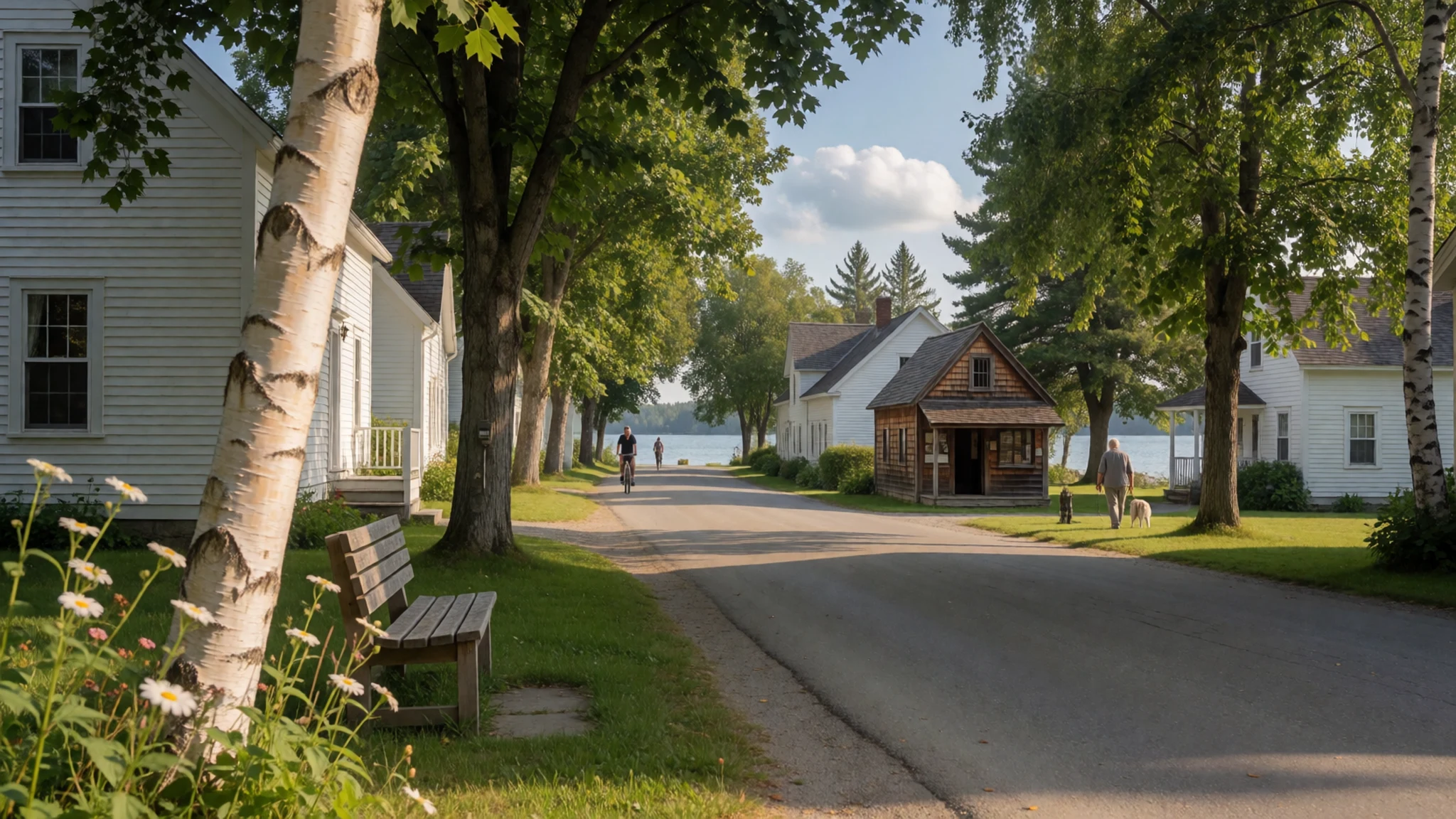
- Bayfield waterfront — Bayfield, mainland
Bayfield is a small mainland town with a harbour, a tour-boat dock and old frame houses climbing a hill above the lake. It works as a base for boat trips, kayak outfitters and the ferry. Evenings are pleasant for walking the shore and watching light change over the water.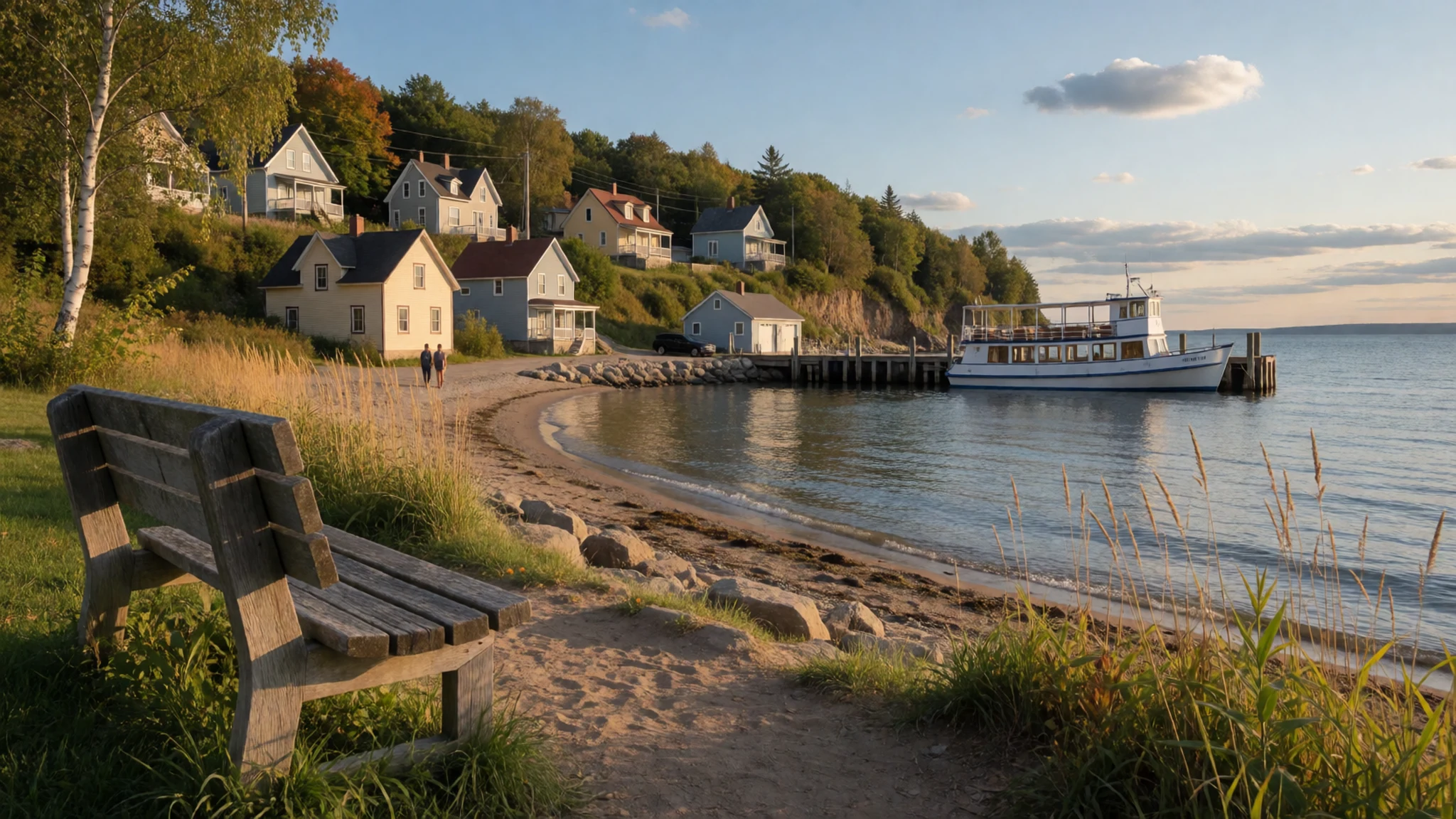
Culture
Apostle Islands sits in Ojibwe country, and that history is still visible. The Red Cliff Band of Lake Superior Chippewa has its community near Bayfield, and Anishinaabe names, stories and connections to the lake are part of how the region understands itself. Visitors who want to learn more can look for exhibits, local events and Indigenous-run businesses on the mainland.
The wider culture of northern Wisconsin is outdoorsy and unhurried. People fish, paddle, sail and hike, and a day on the lake is a normal weekend plan rather than a special occasion. Small-town life in Bayfield revolves around the harbour, orchards, farm stands and summer events, and many businesses are seasonal, so opening patterns shift between summer and winter.
Wisconsin is also proud of its sport. Friendly rivalry with neighbouring Minnesota is a standard topic, especially around college football, and it is usually good-natured banter rather than hostility. Locals tend to be direct, polite and relaxed, and a short chat in a shop or on a boat is common.
Because the lakeshore is protected, the rules are practical rather than ceremonial: weather and safety come first. Kayakers are expected to respect closures when swell rises, and campers follow strict fire and waste rules to keep the islands intact.
Leave no trace: carry out all rubbish, stay on marked trails and do not take stones, driftwood or any artefacts from the protected islands.
What to wear
Apostle Islands lies in Ojibwe homeland, where traditional dress is closely tied to ceremony and community events. Ojibwe clothing is known for floral beadwork, ribbon work and appliqué on cloth, often made into ribbon shirts, skirts, leggings, bags and moccasins. Materials have included hide, wool trade cloth, glass beads and silk ribbon, and this dress is mainly worn at powwows, ceremonies and important gatherings rather than daily life. It is made and worn by community members, not sold as costume, so treat it with respect.
Everyday dress around Bayfield and Madeline Island is practical and unfussy. Fleeces, flannel shirts, waterproof jackets, jeans, boots and baseball caps are normal, and locals mix them with plain summer cottons when the weather turns warm. Nobody dresses up much, even for dinner in town.
For visitors, layers matter most. Lake Superior keeps the air cool, particularly on the water, so bring a windproof, waterproof outer layer even in July, plus a warm mid-layer and a hat. Quick-drying trousers or shorts suit trails and boats. Sturdy trail shoes or light boots handle muddy paths and rocky landings, while sandals or water shoes help on beach landings and kayak launches. Sun protection and insect repellent are useful in summer, and a spare dry top is worth packing for paddling days. In winter, add insulated boots, thermal layers, gloves and a face covering, especially if heading onto ice.
What to eat
- Lake Superior whitefish — Bayfield harbour restaurants and local fish shops
Whitefish is the local lake fish, served pan-fried, smoked or in sandwiches. It is mild, flaky and easy to like. Look for it at lakeside restaurants and fish shops in Bayfield and along the Chequamegon Bay shore.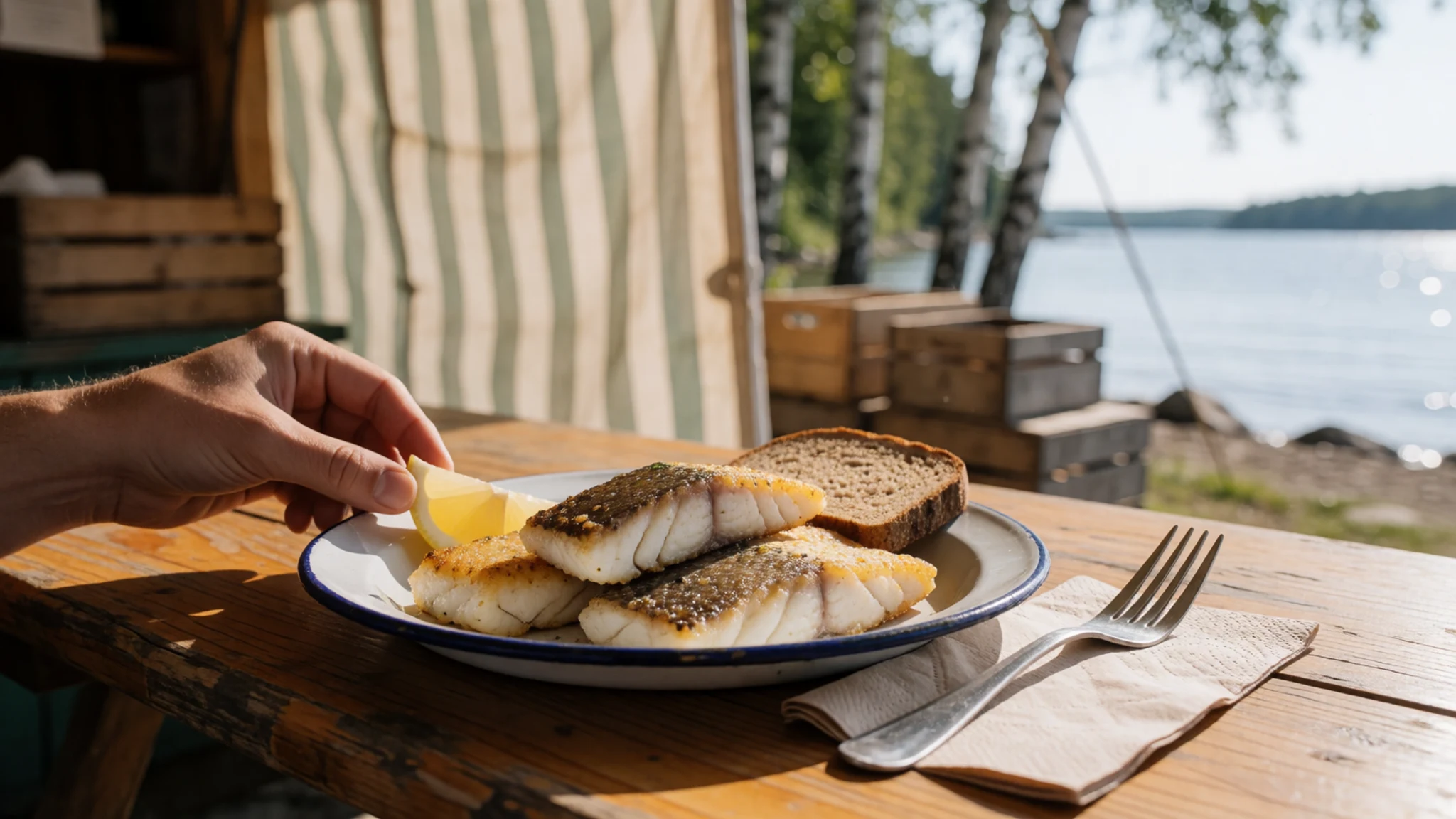
- Smoked fish — Smokehouses and fish markets near the harbour
Smoked whitefish or trout is a classic picnic item, eaten with crackers or bread. It travels well in a daypack for a boat trip. Small smokehouses and fishmongers around the harbour sell it fresh.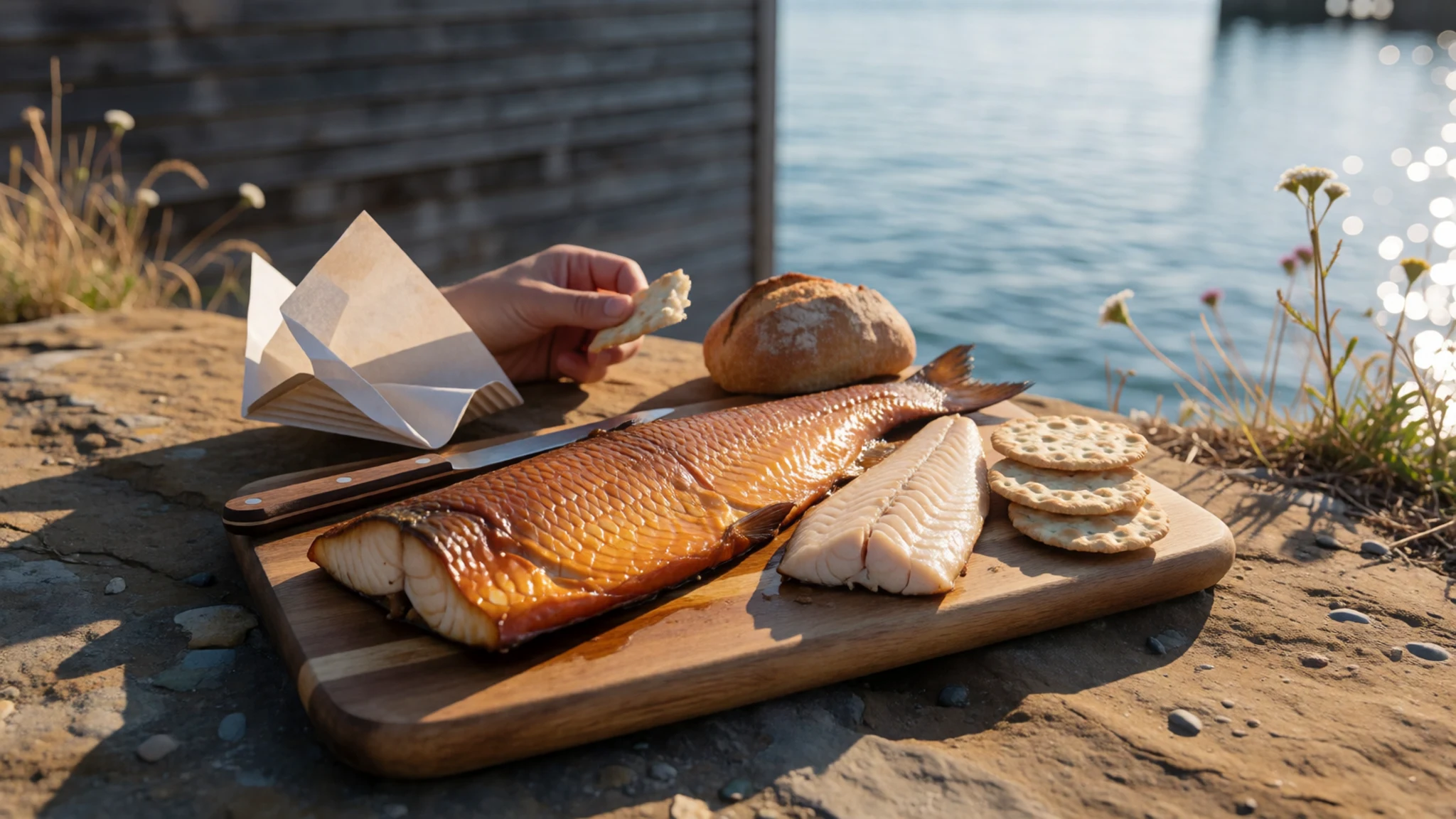
- Orchard apples and cider — Orchards and farm stands around Bayfield, mainly late summer and autumn
The cool lake climate suits apples, and the Bayfield area has orchards that sell fruit, cider and baked goods in season. Autumn visits often include fresh cider and warm apple treats straight from farm stands. - Cheese curds — Local pubs, cafés and dairy shops in northern Wisconsin
Fresh cheese curds are a Wisconsin staple. They squeak when fresh and are eaten plain or fried in batter. Many bars, cafés and shops across the region offer them as a snack. - Bratwurst — Pubs, festivals and cookouts in lakeside towns
German immigrants brought bratwurst to Wisconsin, and it is still the summer cookout favourite, often simmered in beer and then grilled. Expect it on pub menus, at town events and in roadside stands. - Frozen custard — Local custard stands in Bayfield and nearby towns
Frozen custard is richer and smoother than ice cream because it contains egg and has less air whipped in. It makes a good reward after a cold day on the lake. Independent local shops are worth seeking out over chains.
Plan it
Best time. June to September, when boat services run, the lake is at its warmest and trails are dry; July and August are the busiest, while early September is quieter. Services are only available from late spring to early autumn. Winter ice caves form only in some years, depending on how far the lake freezes.
How long. 3–4
Getting there. Fly to Duluth or to Minneapolis–St Paul, then drive to Bayfield, the usual mainland departure point for boats and the Madeline Island ferry. Check the National Park Service website for current boat and ferry schedules.
Budget. mid
Tips
- Book boat tours, kayak guides and campsites well ahead for July and August
- Check the marine forecast daily, as wind and swell can cancel trips or close sea caves
- Carry water, snacks and a waterproof layer, as there are few services on the islands
- Bring cash and cards, since small island and farm-stand sellers may prefer one or the other
- Allow a buffer day in the plan for fog or storms
Etiquette
- Pack out all rubbish and keep to marked trails
- Do not remove stones, driftwood or historic objects
- Respect closures and weather advice from park staff
Nearby
Sources
- Wikidata Q3593572 (CC0)
- Wikipedia: Apostle Islands (rev 1370873955) (CC BY-SA 4.0)
- Wikivoyage: Wisconsin (rev 5434485) (CC BY-SA 4.0)
- Steve Mercer, Apostle Islands Lighthouses (CC BY 3.0)
- Devils Island Seacaves Lake Superior (CC BY 3.0)
- Jeff the quiet, Apostle Island Sea Cave in Winter (CC0 1.0)
- DataThread, Apostle Islands Sea Caves (CC BY 4.0)
- Rjphaneuf, Sailing in the Apostle Islands 1970 (CC BY-SA 4.0)
- Sharon Mollerus, Apostle Islands (27846691213) (CC BY 2.5)
- Sharon Mollerus, Apostle Islands (28358043732) (CC BY 2.5)
- Sharon Mollerus, Apostle Islands (28384141981) (CC BY 2.5)


