Yosemite
Yosemite, United States
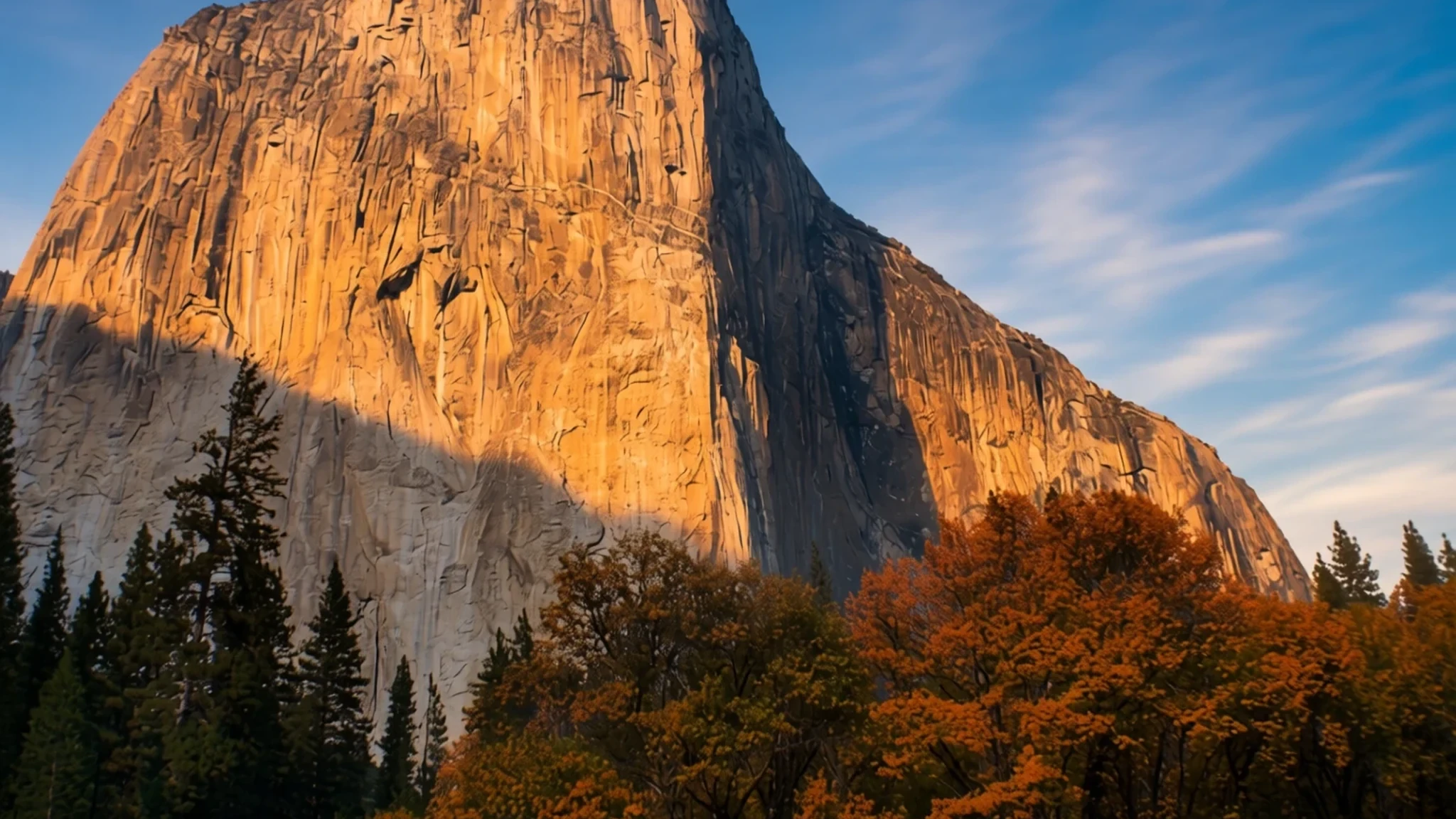
Yosemite offers colossal granite monoliths, roaring waterfalls and ancient sequoia groves carved deep into the Sierra Nevada range.
The place
Yosemite National Park sits in California, cradled by the Sierra National Forest to the southeast and Stanislaus National Forest to the northwest. The protected landscape spans across multiple counties, with its heart centred in Tuolumne and Mariposa, while stretching north and east towards Mono and south into Madera. Nearly all of the park is set aside as official wilderness, preserving an immense and intact ecosystem within the mountains. The dramatic topography stems from ancient tectonic forces and glacial carving. Millions of years ago, the region underwent uplift, tilting the terrain and forcing rivers to cut steep, narrow gorges through the stone. Later, massive glaciers advanced through the high country, scouring the bedrock to form the iconic, sheer-walled valley. Visitors today encounter a dramatic interplay of pale granite domes, cascading waterfalls, clear alpine streams and quiet meadows ringed by towering pine forests. Weather shifts dramatically with elevation, meaning snow can linger on high mountain passes while the valley floor remains warm and sunlit. The sheer scale of the landscape humbles every traveller who steps onto the valley trails, where light shifts across the granite walls from dawn until dusk, painting the stone in shades of gold, rose and slate.
Its story
Long before European expansion reached the mountains, Indigenous peoples flourished across the valley floor and surrounding high country. The Ahwahneechee, whose name translates as dwellers in Ahwahnee, made this valley their permanent home, sustained by abundant acorns, deer and river fish. Neighbouring groups, including the Southern Sierra Miwok, Northern Paiute and Mono tribes, regularly crossed mountain passes to trade, intermarry and share resources, creating a rich cultural network across the region. The California Gold Rush of the mid-nineteenth century brought a sudden and devastating influx of prospectors into the foothills, displacing native communities and triggering fierce conflicts over land and sustenance. As mineral exploration surged, settler militias and state forces pushed into the sacred valleys, leading to the forced removal of the Ahwahneechee and the rapid decline of the indigenous population across the broader Sierra Nevada. In the wake of these displacements, early naturalists and landscape photographers recognised the profound ecological and aesthetic value of the region. Their documentation captured the imagination of the public and policymakers, culminating in federal protection that helped shield the towering monoliths and giant trees from unchecked commercial exploitation. Today, the park serves as a living testament to both its ancient indigenous stewards and the early conservation movement that forever changed how humanity values wilderness.
What to see
- Lower Yosemite Fall — Yosemite Valley
This flat, easy, paved loop trail leads straight to the base of the lower cascade, offering close-up perspectives of the roaring water and surrounding pine trees.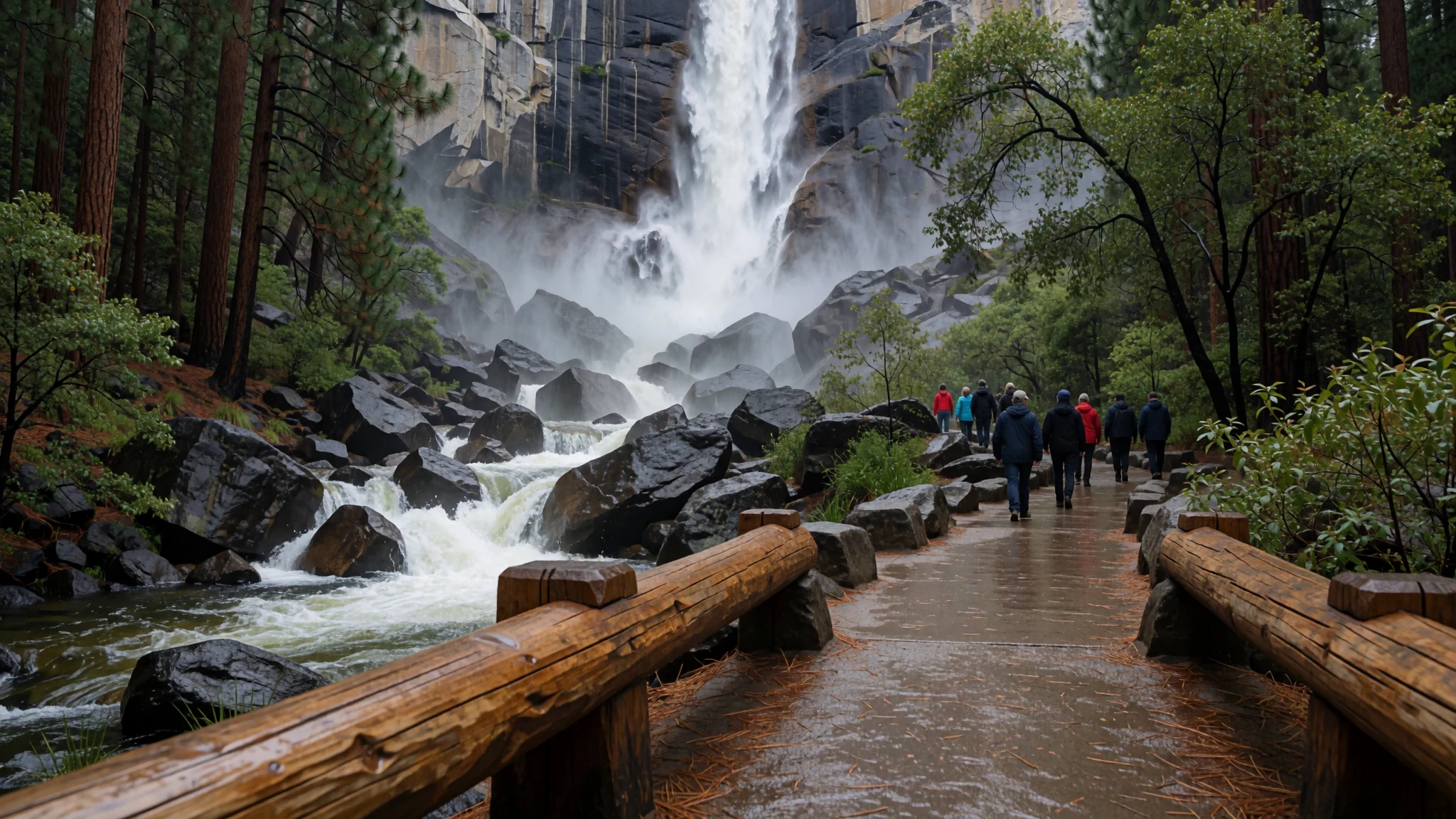
- Bridalveil Fall — Western Yosemite Valley
An accessible, paved path leads visitors right to the bottom of this iconic mist-shrouded waterfall as it plunges over the dark rock face.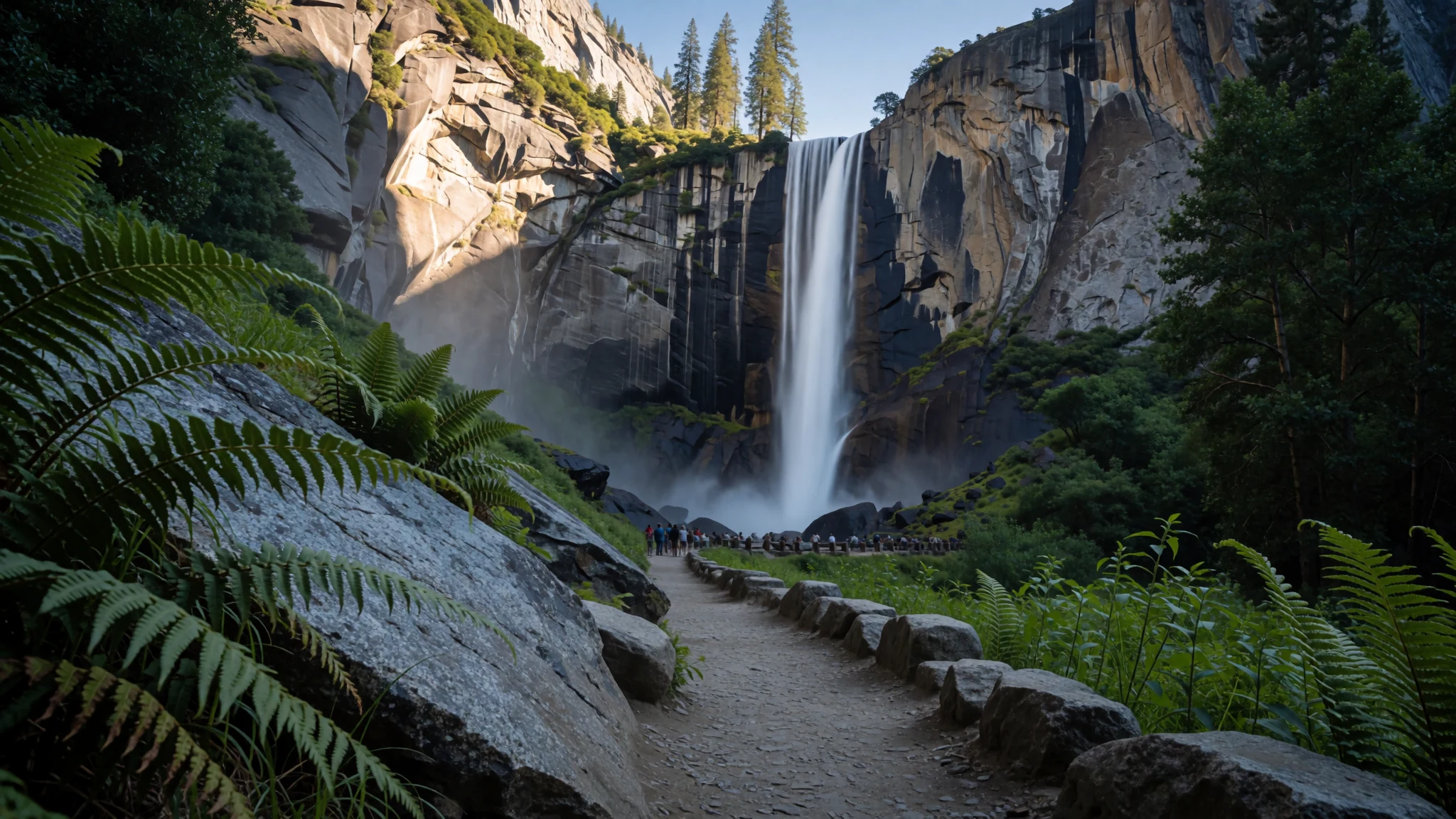
- Cook's Meadow Loop — Central Yosemite Valley
A gentle path meanders across the central meadow near the visitor hub, framing wide-angle views of Half Dome, Yosemite Fall and Glacier Point.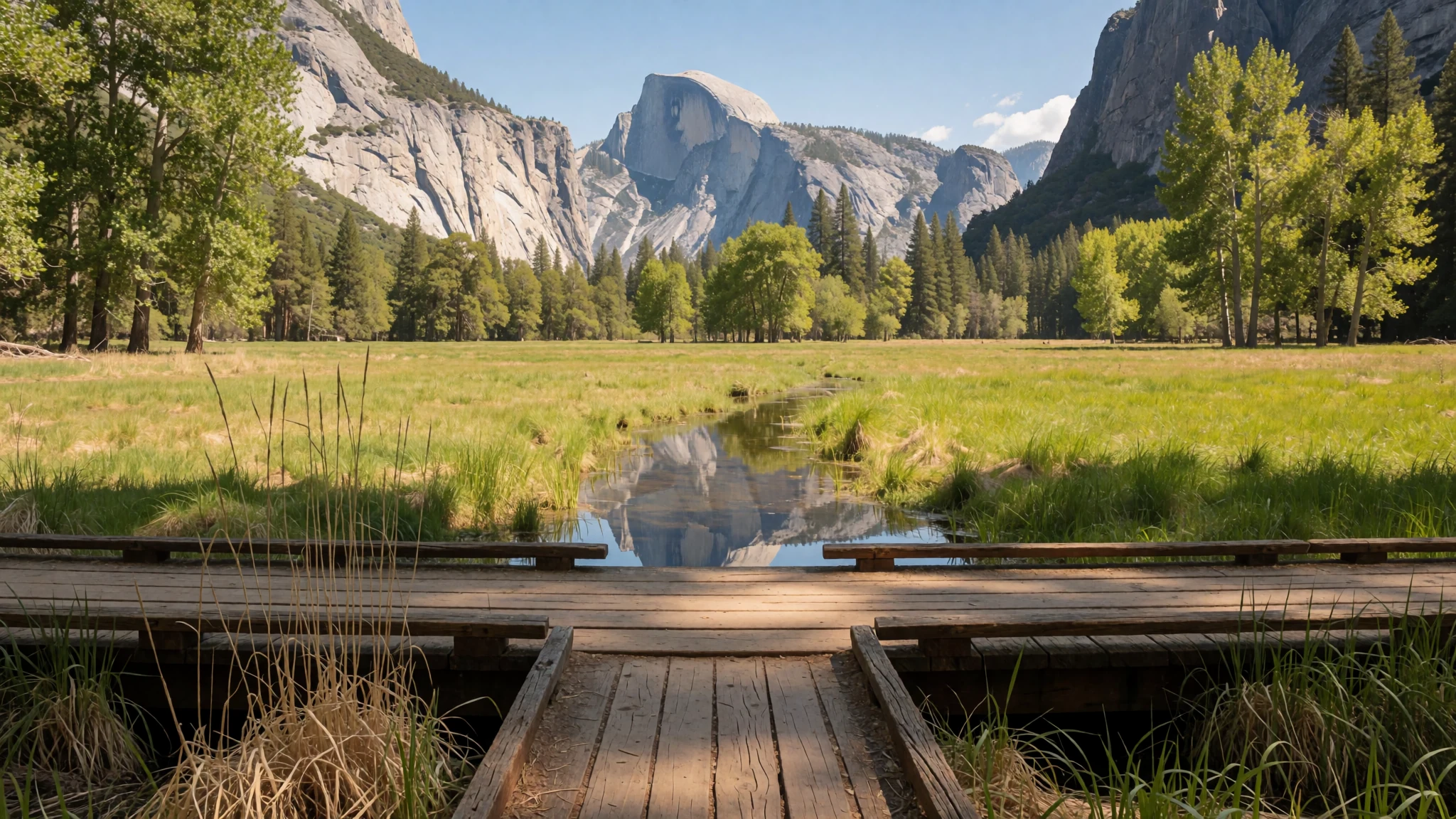
- Mirror Lake and Meadow — Eastern Yosemite Valley
Following a quiet service track, this route brings travellers to a tranquil seasonal pond that reflects the towering stone walls above in spring.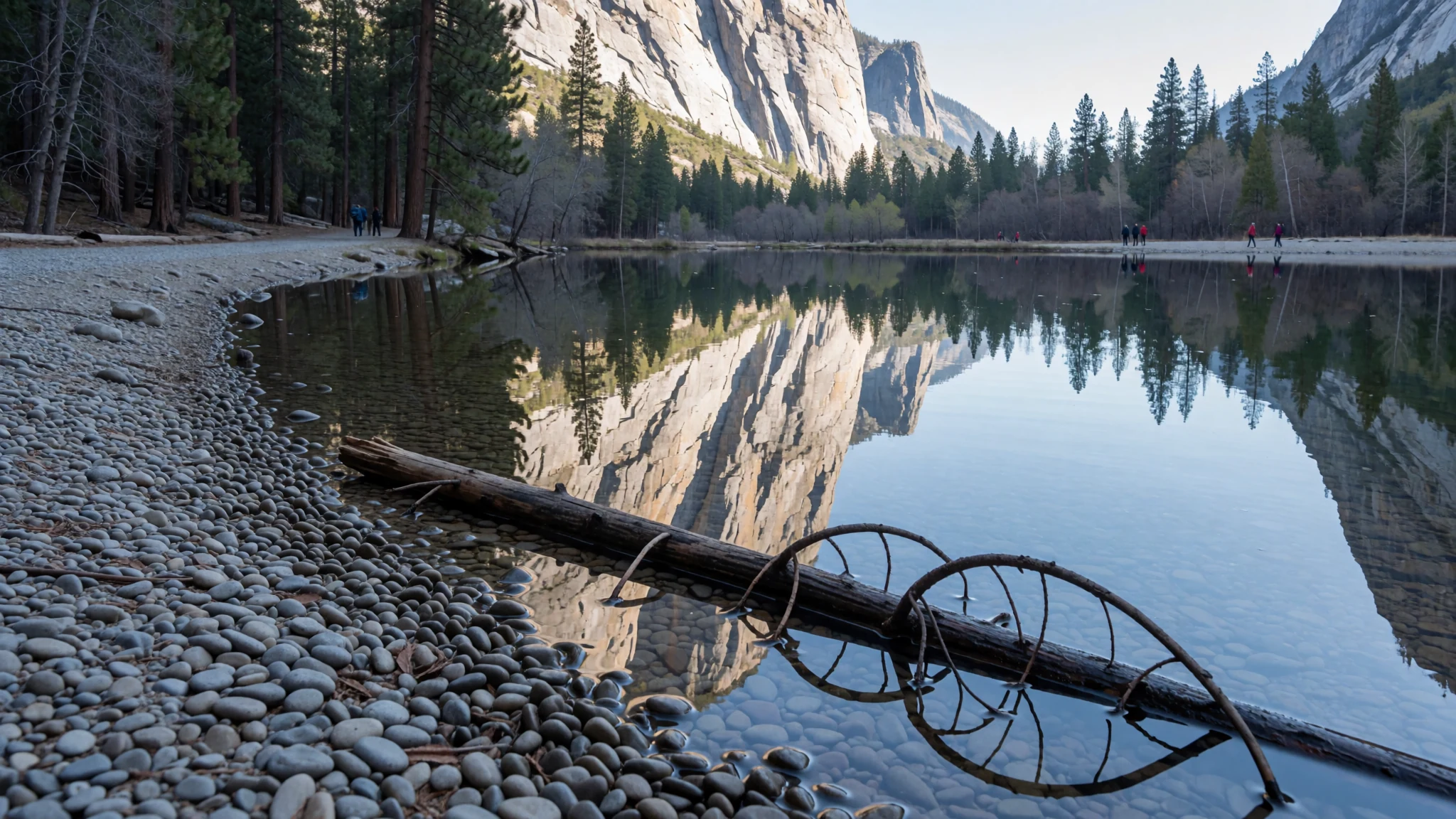
- Mist Trail to Vernal and Nevada Falls — Happy Isles area
Stone staircases climb steeply alongside the rushing Merced River, treating hikers to heavy spray from Vernal Fall before pressing onward to Nevada Fall.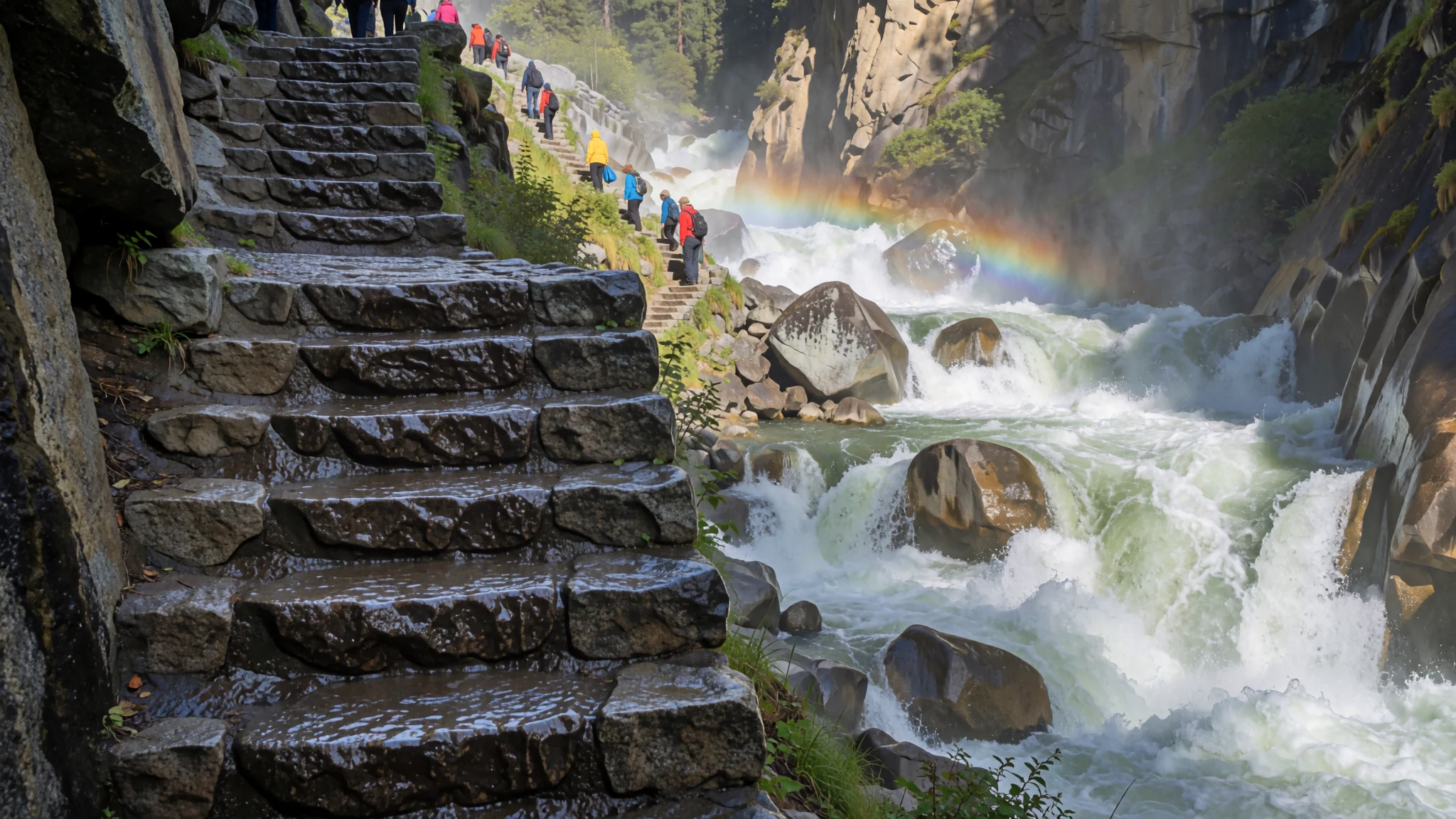
Culture
The cultural fabric of the region is deeply rooted in the heritage of the Ahwahneechee, Southern Sierra Miwok, Mono and Northern Paiute nations, whose descendants continue to maintain deep spiritual ties to the mountains, rivers and groves. Traditional basketry, crafted with intricate geometric patterns from local sedge and willow, represents an enduring artistic mastery passed down through generations. While modern park staff and visitors from across the globe now populate the trails, indigenous voices remain vital in interpreting the true history of the land beyond colonial narratives. Respect for the natural and cultural environment is paramount, especially given the heavy foot traffic the park receives during peak holiday periods. Travellers are encouraged to learn about the original stewards of the soil and to support indigenous artisan exhibitions and cultural demonstrations when available. Always pack out every scrap of waste and adhere strictly to leave-no-trace principles to protect both wildlife and sacred ancestral grounds.
What to wear
Traditional regalia and artistic output historically centred on utilitarian yet beautiful garments and woven wares, such as finely coiled baskets designed to gather acorns and store provisions. Contemporary visitors and park residents dress for rugged outdoor activity, favouring durable denim, moisture-wicking layers, fleece jackets and sturdy hiking boots suitable for uneven granite trails and unpredictable weather. Because mountain temperatures fluctuate wildly between bright midday sun and chilly alpine nights, layering is essential regardless of the season. Visitors should pack breathable fabrics for summer heat, a waterproof shell for sudden mountain storms, and warm thermal layers if visiting the park during autumn or spring. Closed-toe footwear with reliable grip is non-negotiable for exploring rocky paths and sandy riverbanks.
What to eat
- The Ahwahnee Hotel Dining Room — Yosemite Valley
An upscale dining hall in Yosemite Valley known for its grand architectural timber beams, serving seasonal breakfast, lunch, dinner and a traditional Sunday Grand Buffet.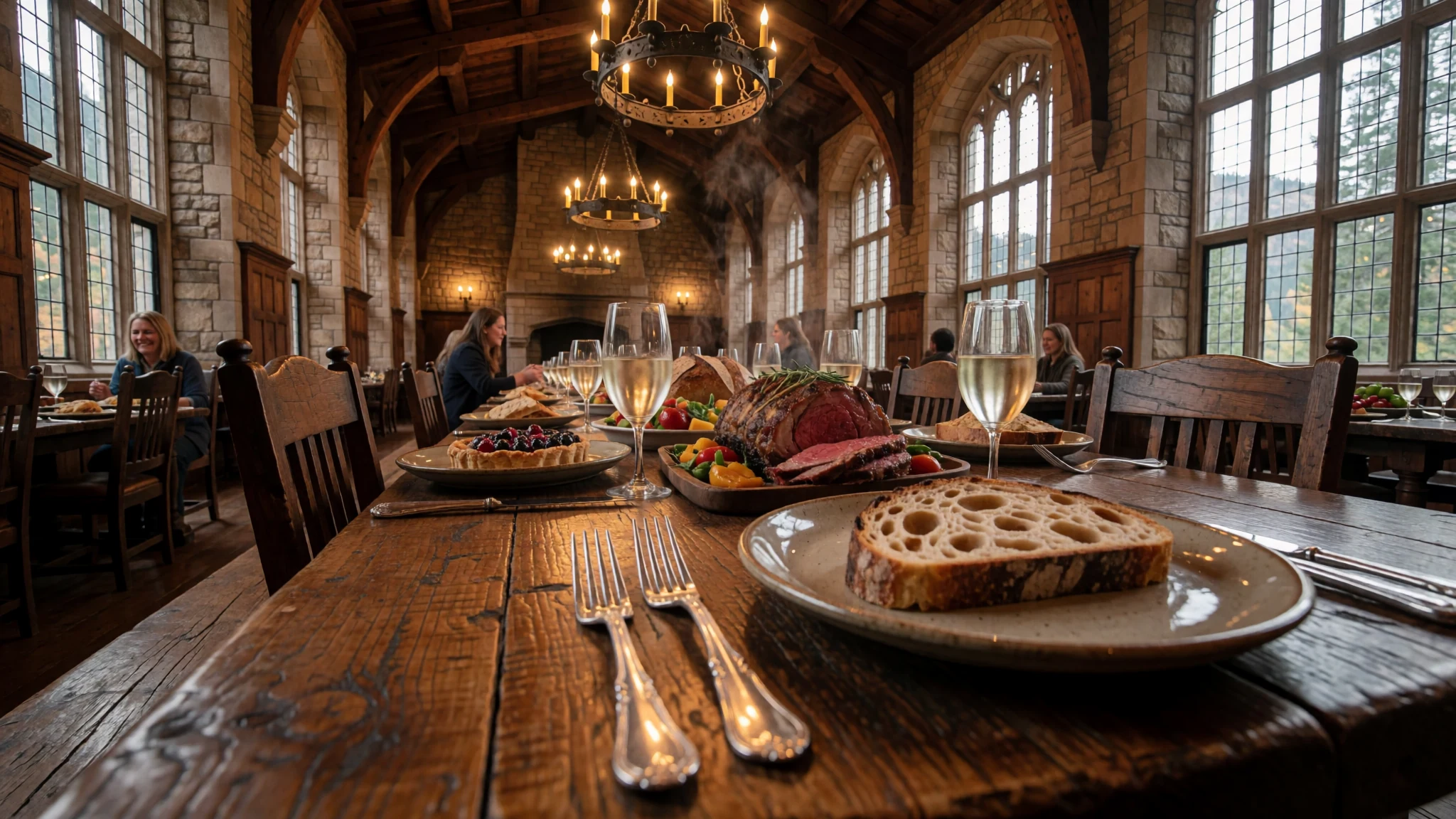
- The Mountain Room — Yosemite Valley Lodge
A popular evening dining venue inside Yosemite Valley Lodge offering hearty American mains paired with large windows framing views of nearby waterfalls.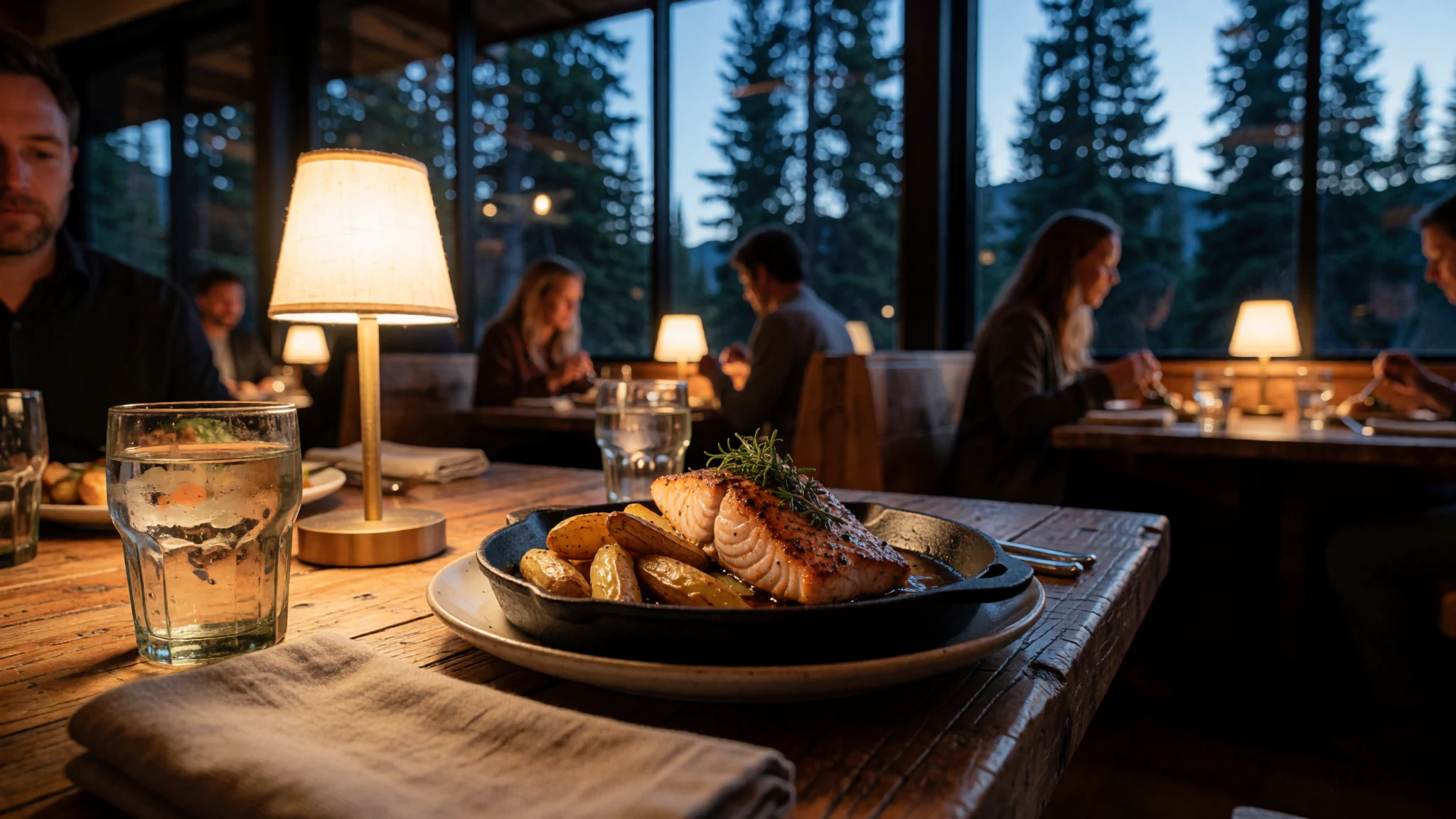
- Yosemite Valley Lodge Food Court — Yosemite Valley Lodge
A casual cafeteria-style eatery providing convenient breakfast, lunch and dinner options throughout the year for hungry hikers on the move. - Degnan's Deli — Yosemite Village
A village staple offering classic sandwich selections, soups and quick provisions for visitors looking to pack a midday picnic. - Degnan's Loft — Yosemite Village
A seasonal eatery open through the warmer months serving wood-fired pizzas, fresh salads and warming soups in a relaxed setting.
Plan it
Best time. May to June for peak waterfall flow and blooming meadows, or September to October for cooler hiking weather and autumn foliage.
How long. 3–4
Getting there. Fly into major California airports such as San Francisco or Fresno, then rent a car to drive mountain routes like State Route 140 or 120 into the park.
Budget. mid
Tips
- Book lodging and vehicle reservations months in advance as summer slots fill instantly
- Arrive before 8 am to secure parking in the main valley lots
- Note that there are no petrol stations inside Yosemite Valley, so fill your tank before entering
- Carry plenty of drinking water and electrolyte packets for strenuous canyon hikes
- Store all food in steel lockers provided at trailheads to deter bears
Etiquette
- Never feed or approach wildlife, including deer and bears
- Stay strictly on designated trails to protect fragile alpine meadows from erosion
Nearby
Sources
- Wikidata Q180402 (CC0)
- Wikipedia (rev 1382737388) (CC BY-SA 4.0)
- Wikivoyage (rev 5361599) (CC BY-SA 4.0)