Adirondack Mountains
Adirondack Mountains, United States
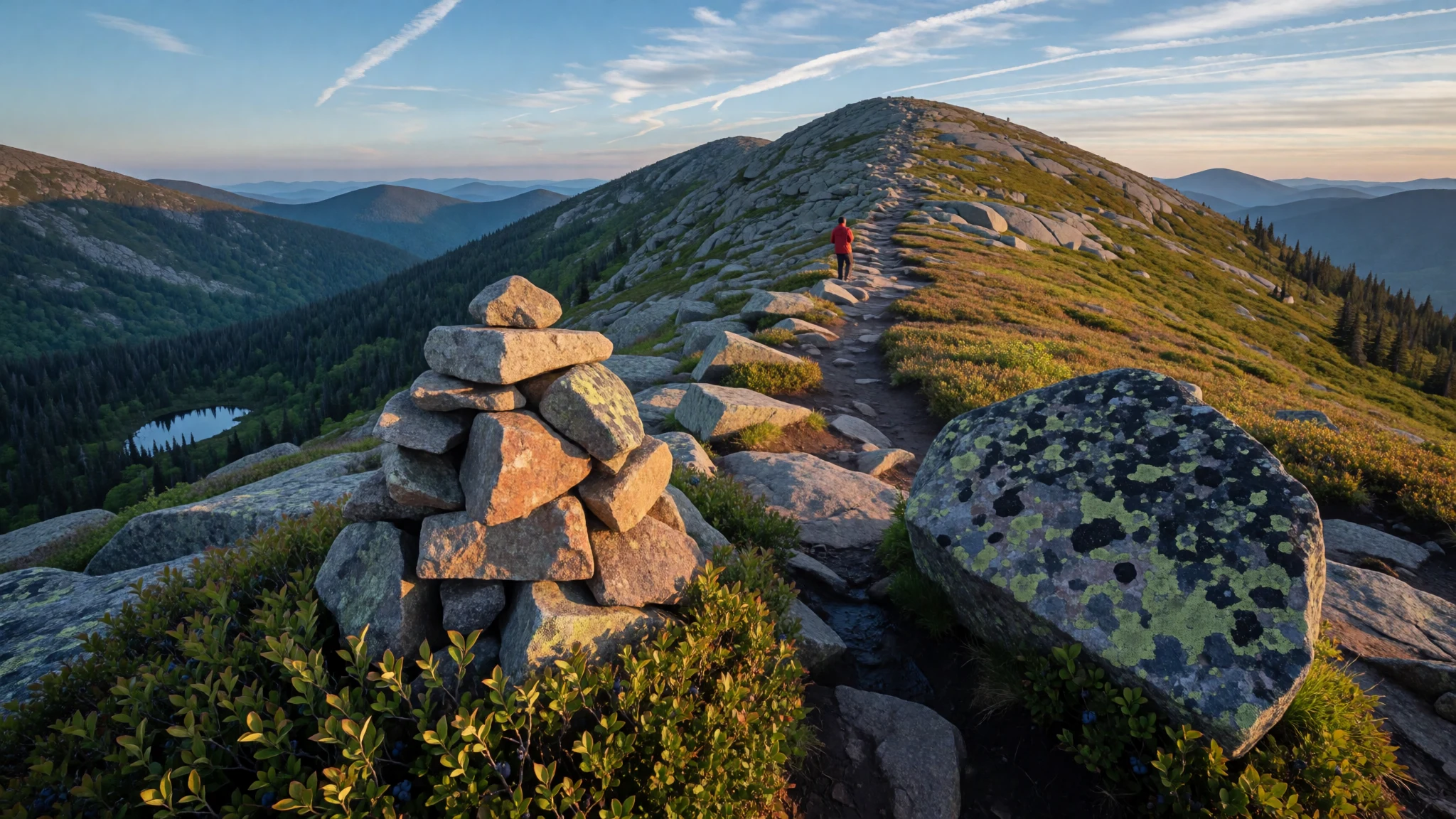
Adirondack Mountains offer forested ridges, countless lakes and big skies within reach of New York City, with walking and paddling for every season.
The place
The Adirondack Mountains rise in the north-east of New York State as a rounded dome rather than a single chain, roughly 260 km across. Mount Marcy, at 1,629 m, is the high point of the state, and it stands among more than 100 peaks. Hikers talk about the 46 High Peaks, a traditional checklist of summits above about 1,200 m, and ticking them off is a rite of passage for many New Yorkers. Between the summits lies a patchwork of water: over 200 named lakes, thousands of smaller ponds, and rivers whose combined length runs to about 1,900 km. Lake George, Lake Placid and the tiny Lake Tear of the Clouds are the names most visitors meet first. Boreal forest covers much of the land, which is why the air feels northern even though New York City lies several hours' drive to the south. The rock itself is more than a billion years old, yet the shape of the range is surprisingly recent, scoured and carved by glaciers. Geologists even suspect a hotspot below is still pushing the dome up by a few millimetres a year. The landscape differs so much from the land around it that it is classed as a separate province of the Appalachian Highlands. Towns are small and scattered, so distances feel longer than the map suggests, and mobile signal can vanish in the valleys.
Its story
The Adirondack Mountains were empty of people until the glaciers withdrew. Paleo-Indian groups began to arrive around the 14th millennium BC, probably working south from the St Lawrence valley and camping beside the Champlain Sea, a body of water that then lay across the lowlands. Later Archaic hunter-gatherers, grouped by archaeologists as the Laurentian culture, moved seasonally through the hills. A reddish chert spear point found beside Tupper Lake in 2007 is a small, tangible trace of them. Over the following millennia the climate warmed and forest slowly took the place of tundra, so the animals and plants changed, and so did the people. A series of later cultures, among them Point Peninsula and Owasco, succeeded one another through the Woodland period. By about the first century AD, people in the Owasco tradition were growing maize and beans on upland ground, which surprises visitors who picture only wilderness. Later still, the Mohawk and the Oneida, two of the eastern Haudenosaunee nations, entered the region, somewhere between 1,200 and 4,000 years ago by current estimates. Both treated the mountains as hunting country rather than a place for permanent towns. Everything a modern walker sees on a trail sits on that long, layered human history, which began well before the first road or guidebook.
What to see
- The High Peaks and Mount Marcy — High Peaks region
The Adirondack High Peaks form the core of the walking country, with Mount Marcy, at 1,629 m, the high point of New York State. Marcy is a full day on rocky trail, so start early and carry layers, because weather near the bare summit changes quickly. Many walkers spread the climb over two days.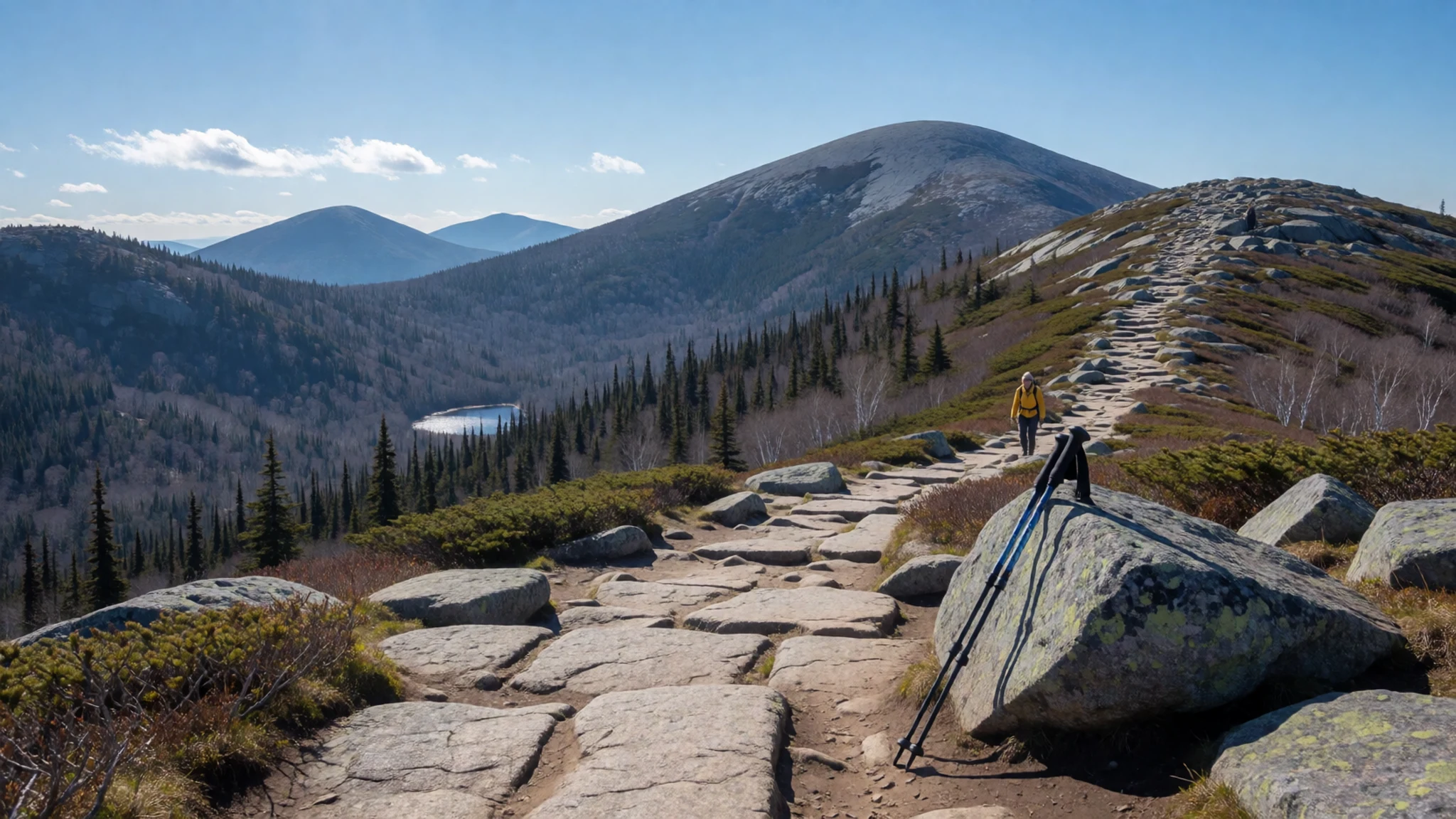
- Lake Tear of the Clouds — Slope of Mount Marcy
A small pond on the south-west slope of Mount Marcy, reached only on foot as part of a longer hike. Its name suits it, since mist often hangs over the water. Treat it as a pause on the way to or from the summit, and a good place for a snack and a photograph.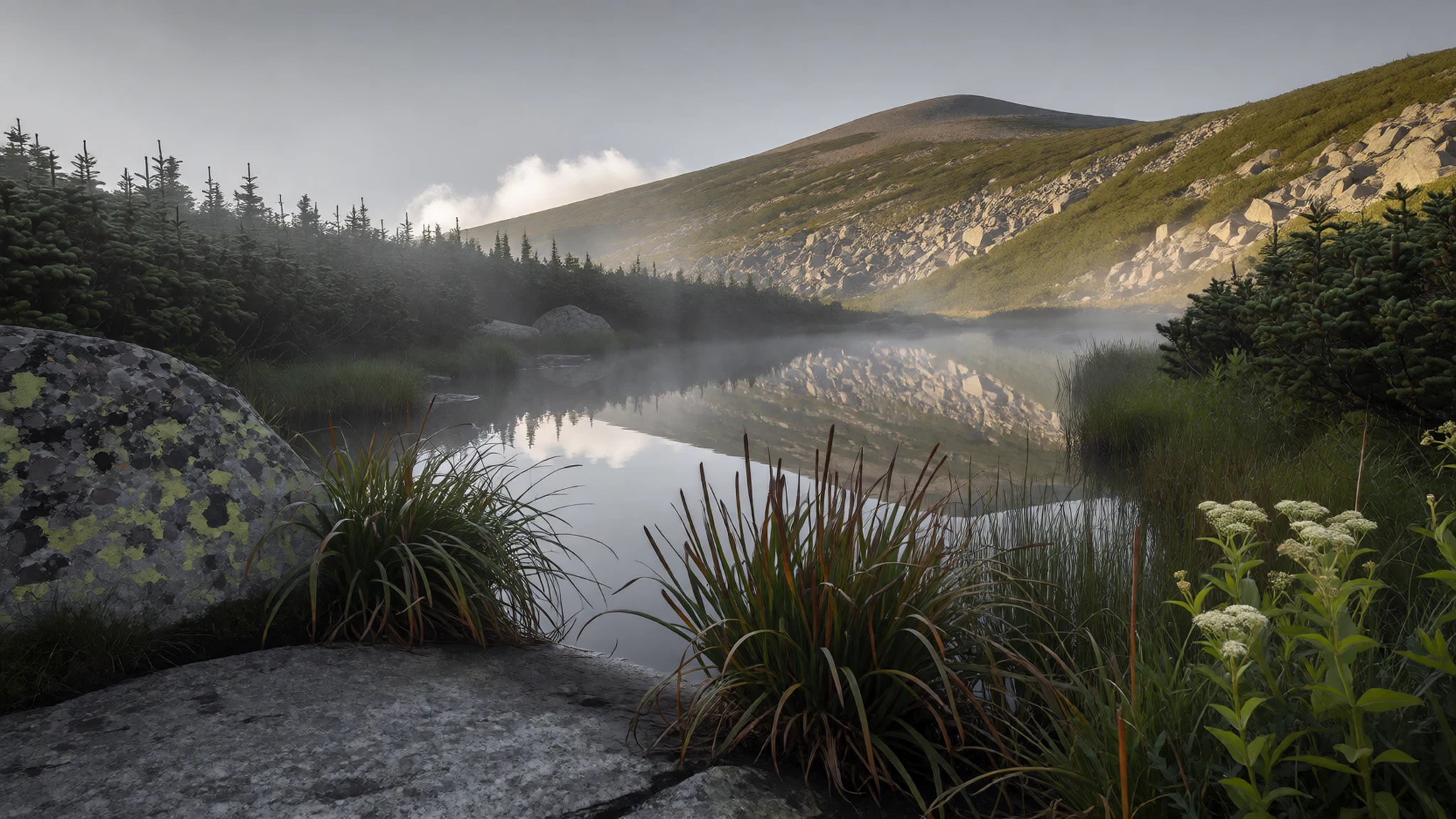
- Whiteface Mountain and Lake Placid — Lake Placid area
Whiteface Mountain stands above the resort village of Lake Placid and gives wide views across ridges, forest and lakes, with a clear day showing how much of the region is still wooded. Ways to reach the top and the opening seasons change, so check the official operator's site before planning.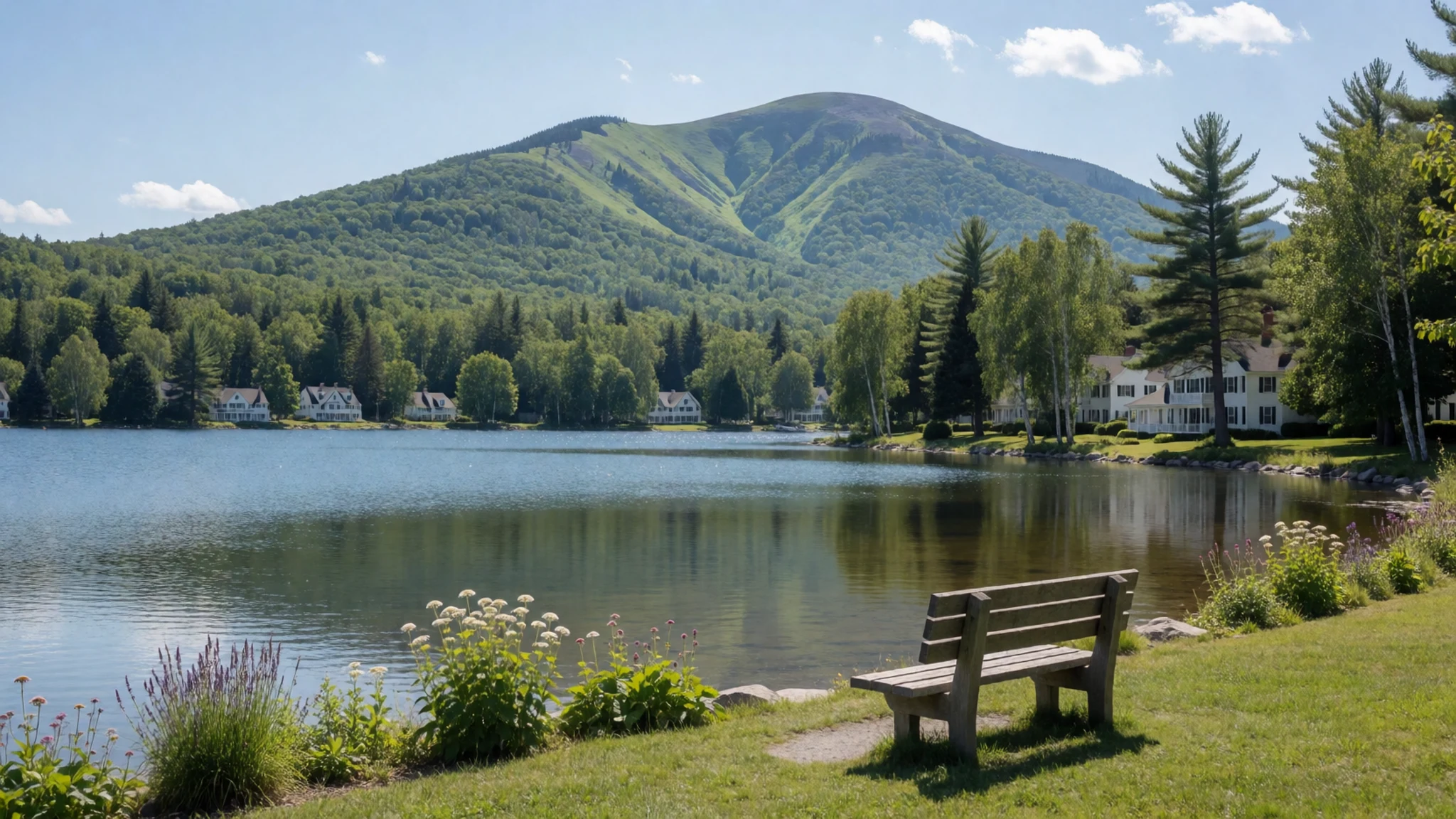
- Lake George — Southern Adirondacks
Lake George is the long lake at the southern edge of the mountains, with a village beach at its south end and wooded hills such as Shelving Rock and Buck Mountain across the water. It suits easy swimming, boat trips and short lakeside walks, and it is busy in high summer.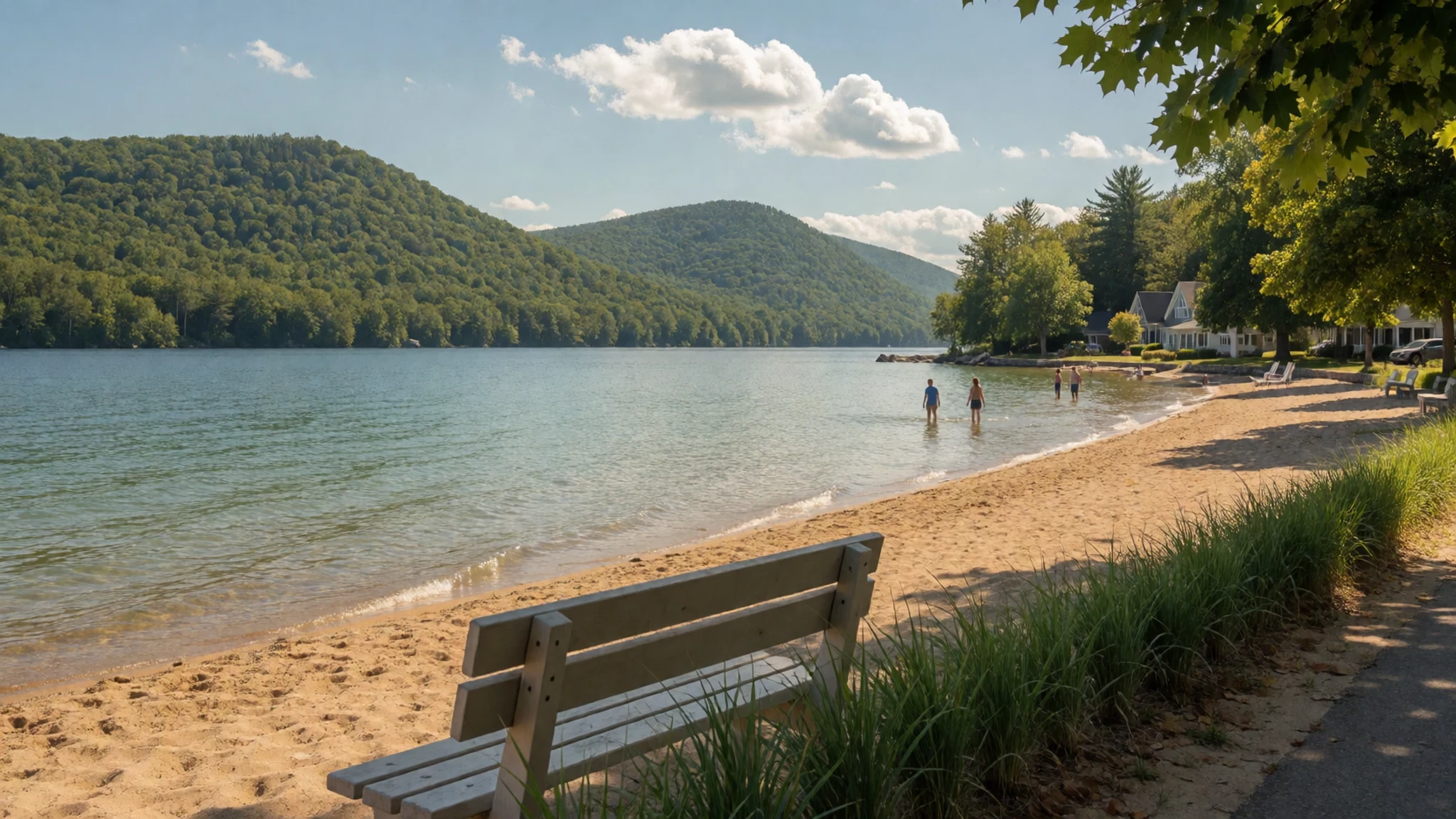
- Tupper Lake's natural history museum — Tupper Lake
Tupper Lake, in the western part of the park, has a natural history museum with indoor and outdoor exhibits on local wildlife, including turtles, and on how people and the landscape shape each other. It makes a good rainy-day stop between hikes, especially for families. Check the official site for opening times.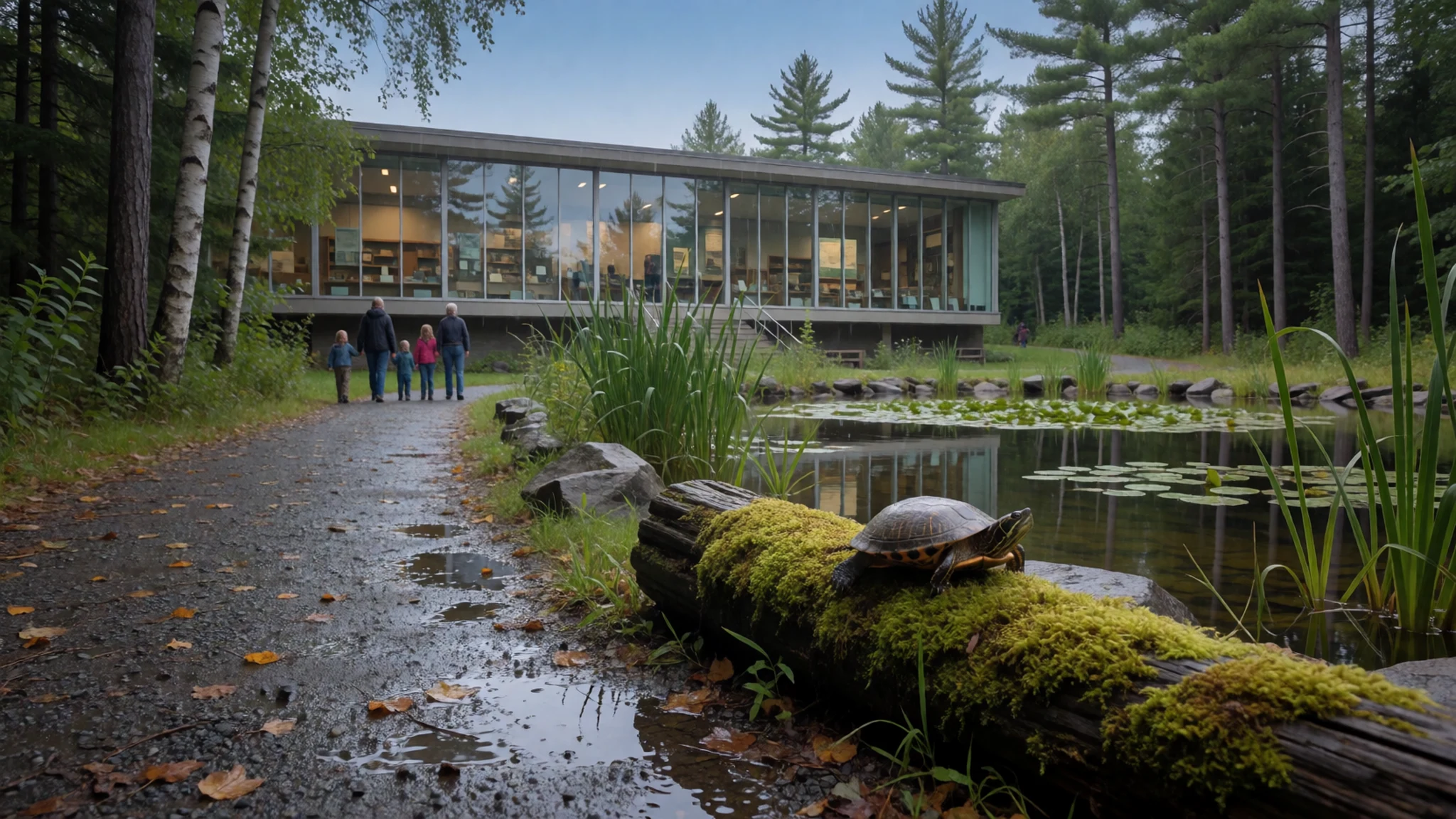
Culture
The Adirondack Mountains sit inside a park where villages, working forests and wild land share the map, and local culture follows from that mix. Outdoor life is the common language: guides, canoe hirers, ski towns and lakeside camps shape the calendar, and many families return each year to the same cabin. The region is also tied to art, since landscape painters came to the lakes and peaks for subjects, helping to make wilderness a theme worth painting. Upstate New York is sometimes seen as more conservative than the city, but most residents are easygoing and used to visitors from all over. Conversation tends to turn to weather, trail conditions and the insect season. Indigenous heritage matters here too: the Mohawk and Oneida used these mountains as hunting country, and Haudenosaunee communities remain part of the cultural life of New York State. Further south, New York City carries the memory of the attacks of 2001, and some people prefer not to discuss it while others will share their own stories, so follow their lead. In small towns, locals value quiet evenings, tidy campsites and people who stop to help a lost walker. Stay on marked trails, carry all your rubbish out, and say hello to other walkers as you pass.
What to wear
The Adirondack Mountains have no single regional costume, but two clothing traditions stand out. Haudenosaunee communities, including the Mohawk and Oneida, have distinctive regalia, with beadwork, ribbon shirts and woven or leather pieces worn at ceremonies and gatherings; it is dress with meaning, not costume, and should be admired respectfully. The working past of the region lives on in thick wool and plaid shirts, the sort of check pattern associated with logging camps and cold mornings. Today most people wear practical outdoor clothing: fleeces, waterproof shells, jeans or walking trousers, and sturdy boots or trainers, with a plaid shirt as a local favourite. Smart clothes are rarely needed, even in restaurants in resort villages. Visitors should dress in layers whatever the season, because summer evenings turn chilly and mountain weather shifts quickly. Pack a waterproof jacket, a warm hat, and walking boots with good grip for rocky or muddy trails. In winter, add insulated boots, gloves, thermal layers and traction aids for icy paths. Insect repellent and long sleeves help in early summer. In autumn hunting season, wearing a bright colour on the trails is wise. No special modesty rules apply, though cover up in towns and at cultural sites.
What to eat
- Maple syrup — Roadside sugarhouses, farm stands and village diners
Maple syrup is the region's signature sweetener, boiled down from sap in late winter and early spring. Look for roadside sugarhouses and farm stands, and order it over pancakes at a village diner. It also appears in candies, glazes and on ice cream.
- Poutine — Pubs and casual eateries in northern towns
Poutine, chips topped with cheese curds and gravy, reflects the French-Canadian influence found across the northern part of New York State. It is a filling post-hike meal, served at pubs and casual eateries in towns nearer the Canadian border.
- Apple cider doughnuts — Orchards and farmers' markets in autumn
Apple cider doughnuts are a cinnamon-sugared autumn treat, best eaten warm. They turn up wherever orchards and farmers' markets operate during the leaf-colour season, usually alongside fresh cider and pumpkins, and make an ideal snack for a car journey. - Lakeside fish fry — Lakeside taverns and village eateries
A fish fry of battered white fish with chips and coleslaw is a casual staple in lake towns, especially on Fridays. Portions are generous and the setting is relaxed, often with a view of the water and a pitcher of local beer on the table. - Local craft beer — Brewpubs in Lake Placid and other resort villages
Small breweries have spread through resort villages, serving pale ales, stouts and seasonal brews alongside pub food. A flight of small tasting glasses is an easy way to sample several styles after a day on the trail or the water.
Plan it
Best time. Late June to September brings the warmest, most settled weather for walking, swimming and paddling, though evenings stay chilly and rain is common. Early October is good for autumn colour and thinner crowds. Winter, from December to March, is long, cold and snowy, suited to skiing and snowshoeing. Spring is short and muddy.
How long. 3–4
Getting there. Most international visitors fly into one of New York City's airports; smaller upstate airports mostly connect through bigger hubs. Albany is the nearest large upstate city. The last leg is by road, and a hire car is by far the easiest way to reach trailheads and lake towns.
Budget. mid
Tips
- Book lodging and campsites well ahead for summer weekends and the autumn colour season
- Start mountain hikes early and carry a waterproof layer, as weather can change fast
- Download maps before leaving the villages, because mobile signal drops in the valleys
- Carry cash and a card, and fill water bottles before long trails
- Check official park and trail websites for closures, seasonal roads and conditions
Etiquette
- Stay on marked trails and carry all rubbish out
- Keep noise low at campsites and on summits
- Wear bright colours on trails in hunting season
Nearby
Sources
- Wikidata Q357546 (CC0)
- Wikipedia: Adirondack Mountains (rev 1379862068) (CC BY-SA 4.0)
- Wikivoyage: New York (state) (rev 5431299) (CC BY-SA 4.0)
- Photo: Adirondacks 2016 Cascade mountain hike (stillwellmike) (CC BY-SA 2.0)
- Photo: 1876 Wallace Guide Map of NY Wilderness (W. W. Ely) (Public domain)
- Photo: Diopside marble (Twyla Baker) (CC0 1.0)
- Photo: Whiteface Mountain from Lake Placid Airport (Mwanner) (CC BY 3.0)
- Photo: Spotted Northern Turtle (Gr8northwoods) (CC BY 3.0)
- Photo: Adirondacks in May 2008 (R khot) (Public domain)
- Photo: Lake Tear of the Clouds (Rocfan275) (CC BY-SA 4.0)
- Photo: Lake George from village beach (Daniel Case) (CC BY 3.0)


