Anchorage
Anchorage, United States
Anchorage puts a working Alaskan city, deep Native history and mountains, tidal flats and wildlife within one short drive.
The place
Anchorage sits in Southcentral Alaska on a broad peninsula at the head of Cook Inlet, with the Knik Arm to the north and the Turnagain Arm to the south. About 289,600 people live here, which makes it the state's main city by a wide margin and home to a big share of all Alaskans. The municipality is drawn generously. It takes in the downtown grid, suburbs, a military base, small outlying settlements and most of Chugach State Park, so a city bus can end up close to bear country. The elevation is only 31 m, but mountains crowd the eastern skyline and the water opens out to the west. Founded in 1914 as a railway construction camp beside Ship Creek, Anchorage still feels like a working hub rather than a resort. Freight planes, port cranes, rail yards and fishing gear are part of daily life. Downtown is compact and walkable, with low-rise offices, museums, coffee stops and a few good viewpoints. The real appeal lies at the edges, where trails, lakes and tidal flats begin. Summer brings very long evenings and the heaviest visitor traffic. Winter is dark, cold and quiet, with locals skiing and watching for northern lights on clear nights. Anchorage works best as a base for exploring Alaska, and a hire car or pre-planned transfers make a big difference.
Its story
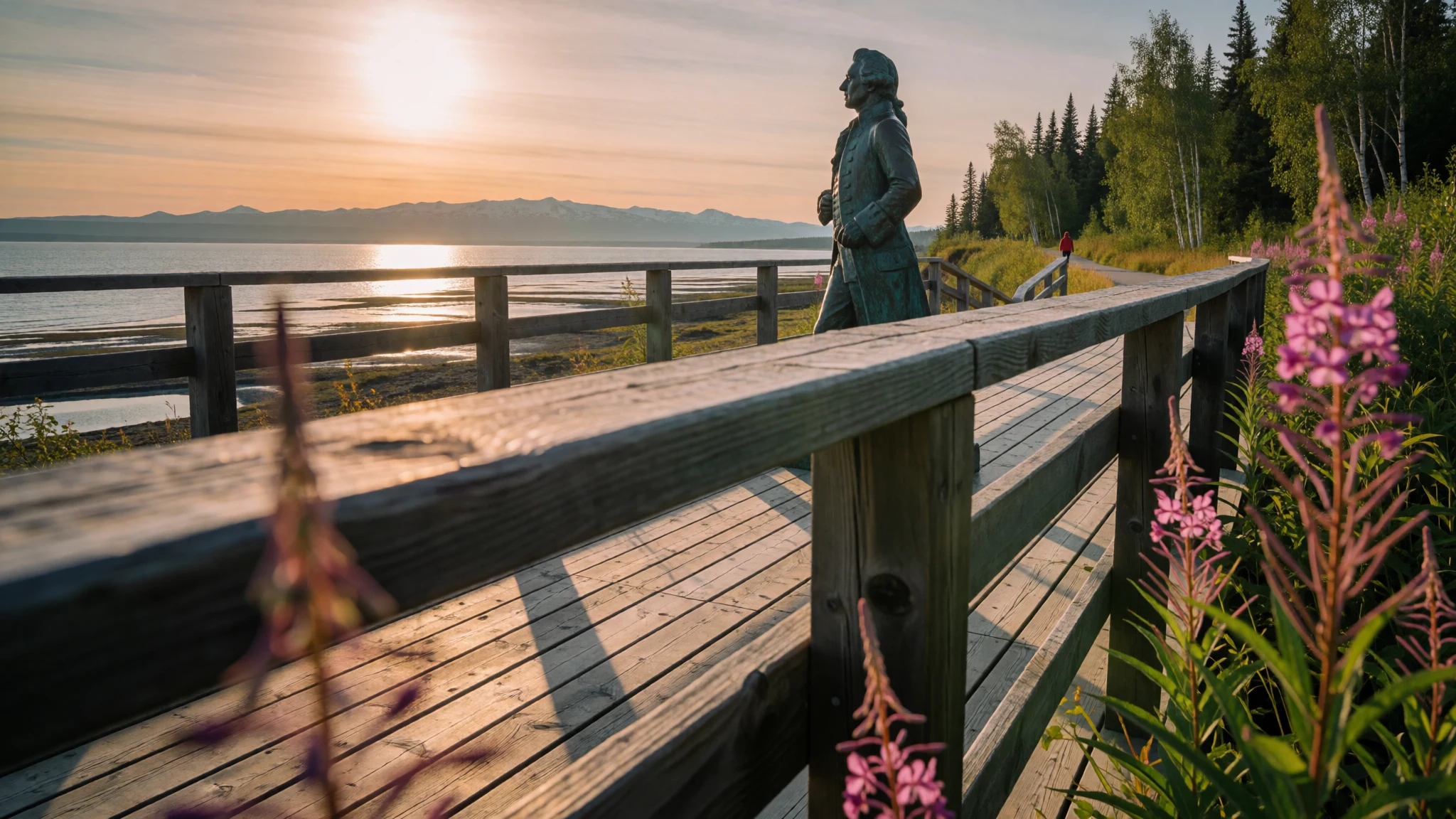
Anchorage lies on land that the Dena'ina call Dgheyay Kaq'. Dena'ina Athabaskan people arrived through the mountain passes well over a thousand years ago and lived by the calendar. Salmon streams filled the summer, autumn meant game and berries, and winter was spent near trading crossroads where they met neighbours such as the Ahtna. Before them, Alutiiq groups reached Cook Inlet by kayak in several waves, and finds at Beluga Point on the Turnagain Arm show how long people have lived along this shore. European contact came late. In 1778 Captain James Cook, searching for a Northwest Passage to the Pacific, sailed into the inlet that now carries his name, and many place names on this coast are his. A bronze statue of him now looks out over the water from downtown. The modern city dates from 1914, when the railway to the interior was being built. Workers, tents and supply yards gathered at the mouth of Ship Creek, and a town grew around the rail line. Military bases and air routes between Asia and North America shaped much of the twentieth century. Later, the city and the surrounding borough merged into a single municipality that now stretches from the shore to the high mountains. Old photographs of Ship Creek, with rows of pale tents on the flats, show how recent the place is.
What to see
- Anchorage Museum
The Anchorage Museum, in downtown Anchorage, is a good first stop for making sense of the North. Galleries cover Alaska Native cultures, art, science and the story of settlement, with attention to how northern life is changing. It suits a wet or cold day well. Check the museum's official site for opening times and joint tickets.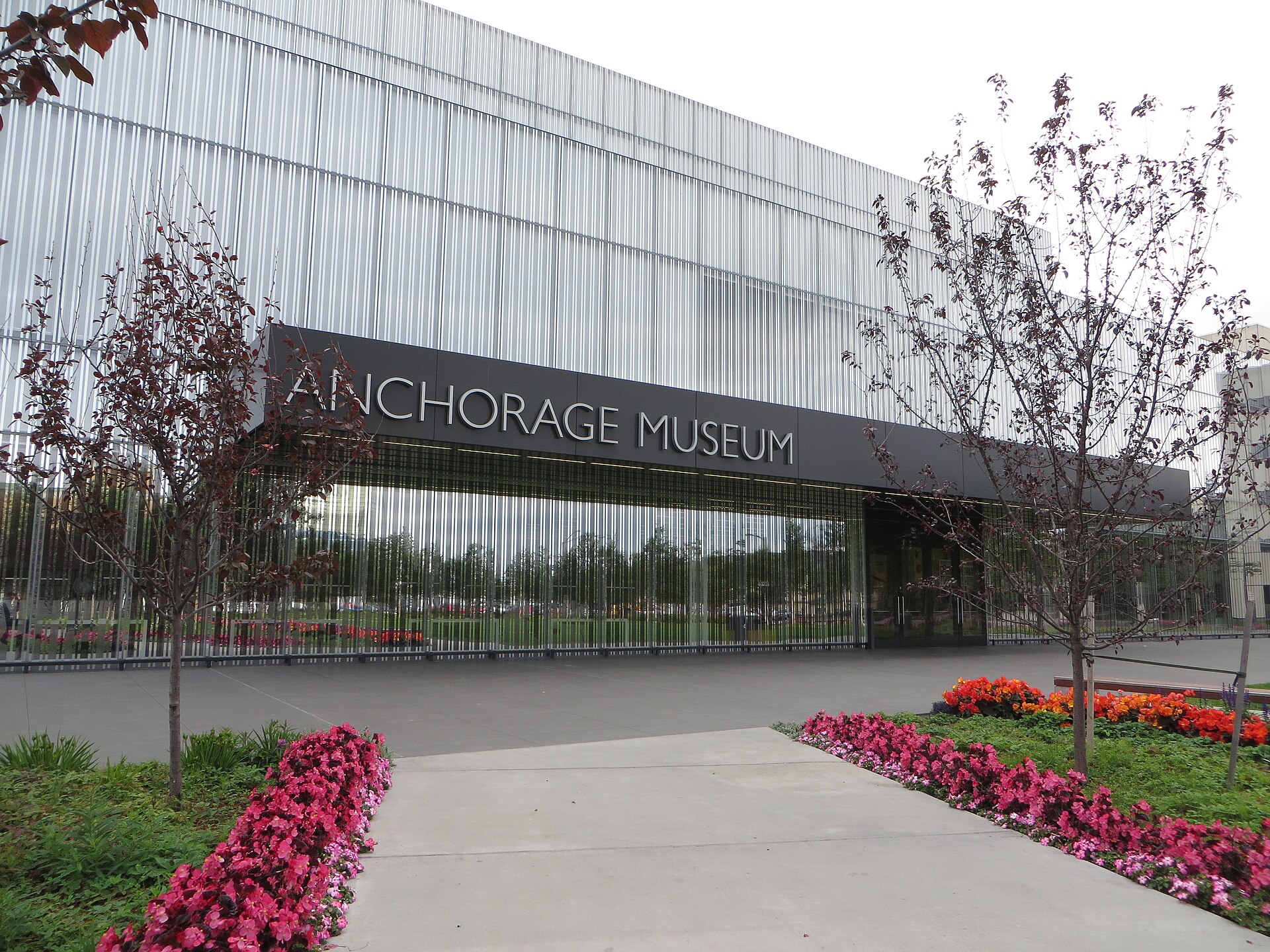
- Alaska Native Heritage Centre
The Alaska Native Heritage Centre sits on the north-eastern side of Anchorage beside Lake Tiulana. Its gathering place and outdoor village sites introduce the peoples of Alaska through dance, storytelling and craft demonstrations, led by Native hosts. It is busiest in summer, and a shuttle has linked it with downtown, so check current details first.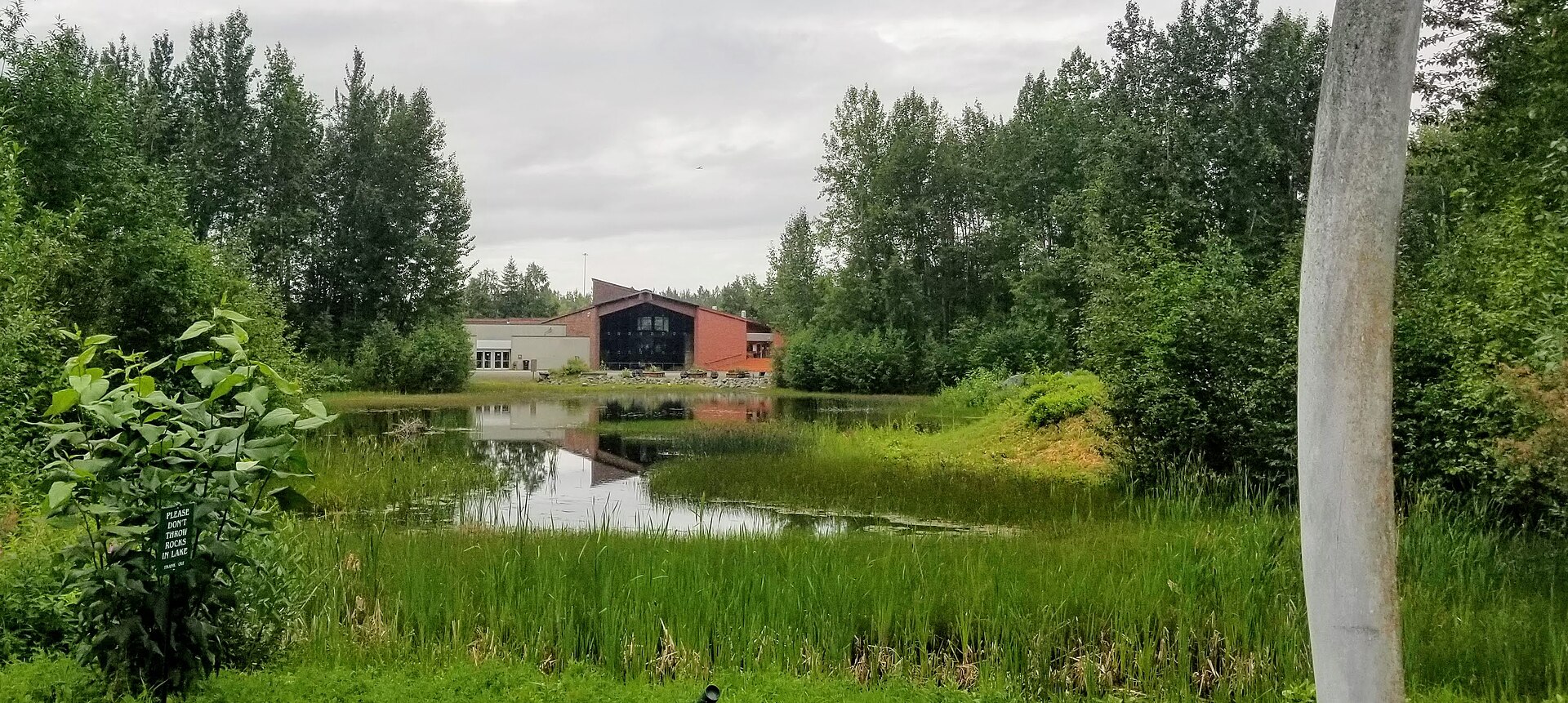
- Resolution Park
Resolution Park is a small clifftop space near downtown Anchorage, named after Captain Cook's ship HMS Resolution. A bronze Cook stands on a wooden deck facing Cook Inlet. On a clear evening the view across the water to the distant mountains is worth the short walk, and the benches are good for watching the light change.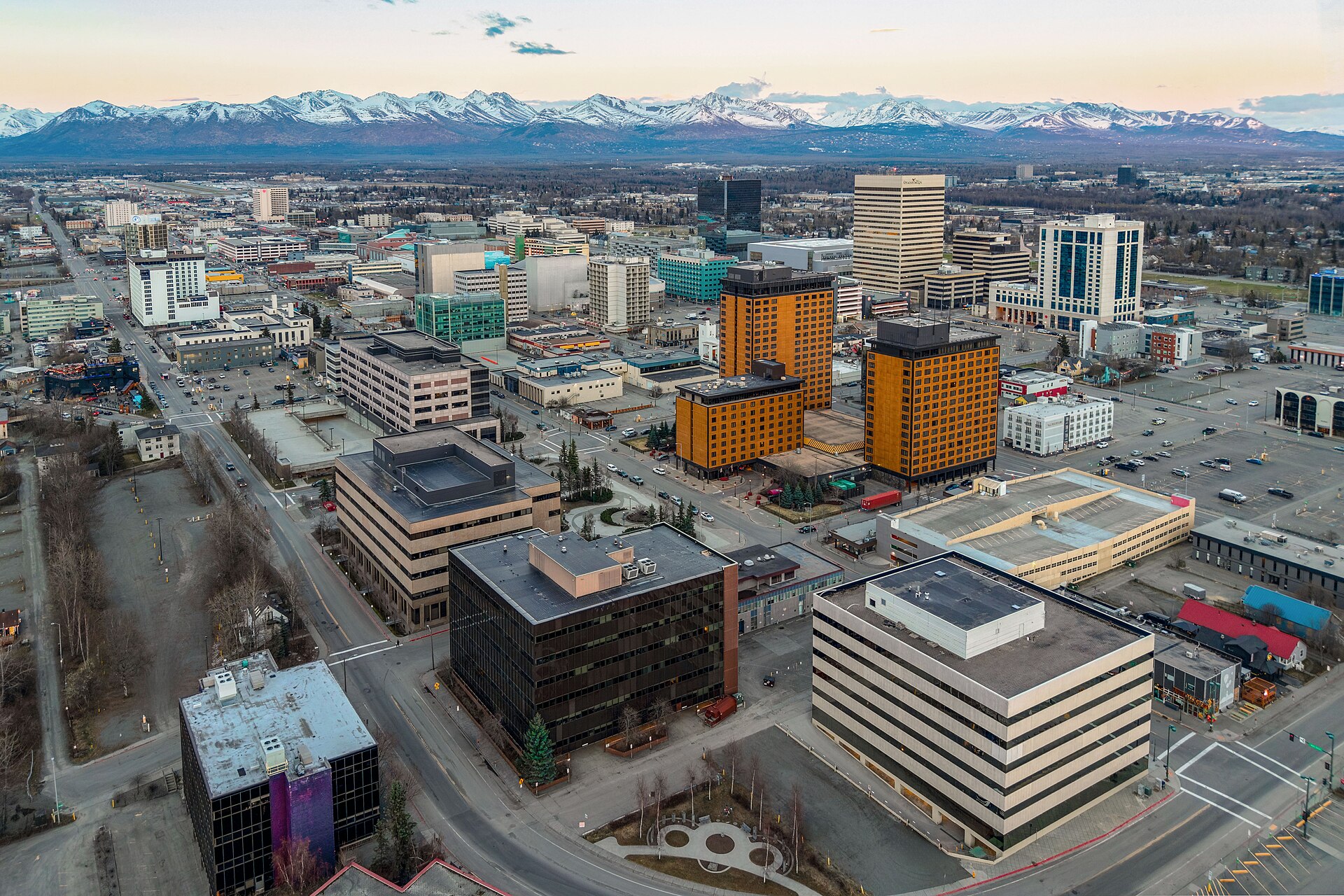
- Alaska Zoo
The Alaska Zoo is a small, shaded zoo on the southern side of Anchorage, a short drive from downtown. It keeps animals of the northern climates, including moose, musk oxen, grizzly bears, eagles and a polar bear. It is a safe way to see animals that are far harder to find in the wild. - Alaska Wildlife Conservation Centre
The Alaska Wildlife Conservation Centre lies south of Anchorage along the Turnagain Arm, and works as a refuge for orphaned, injured or sick animals. Wood bison, bears and moose can be seen from drive-through paths and walkways. It pairs well with a scenic drive beside the tidal inlet, so allow a full half-day.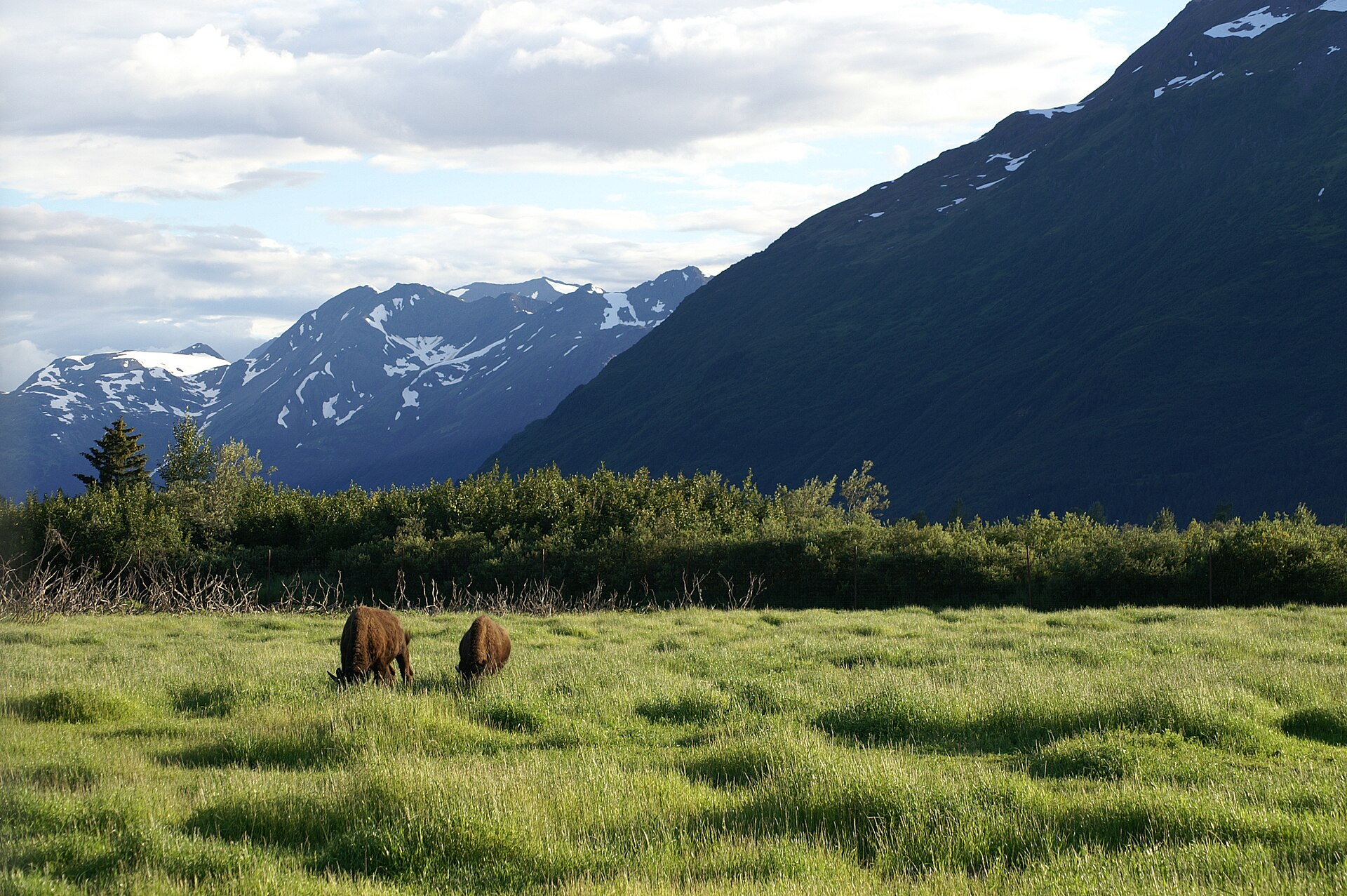
Culture
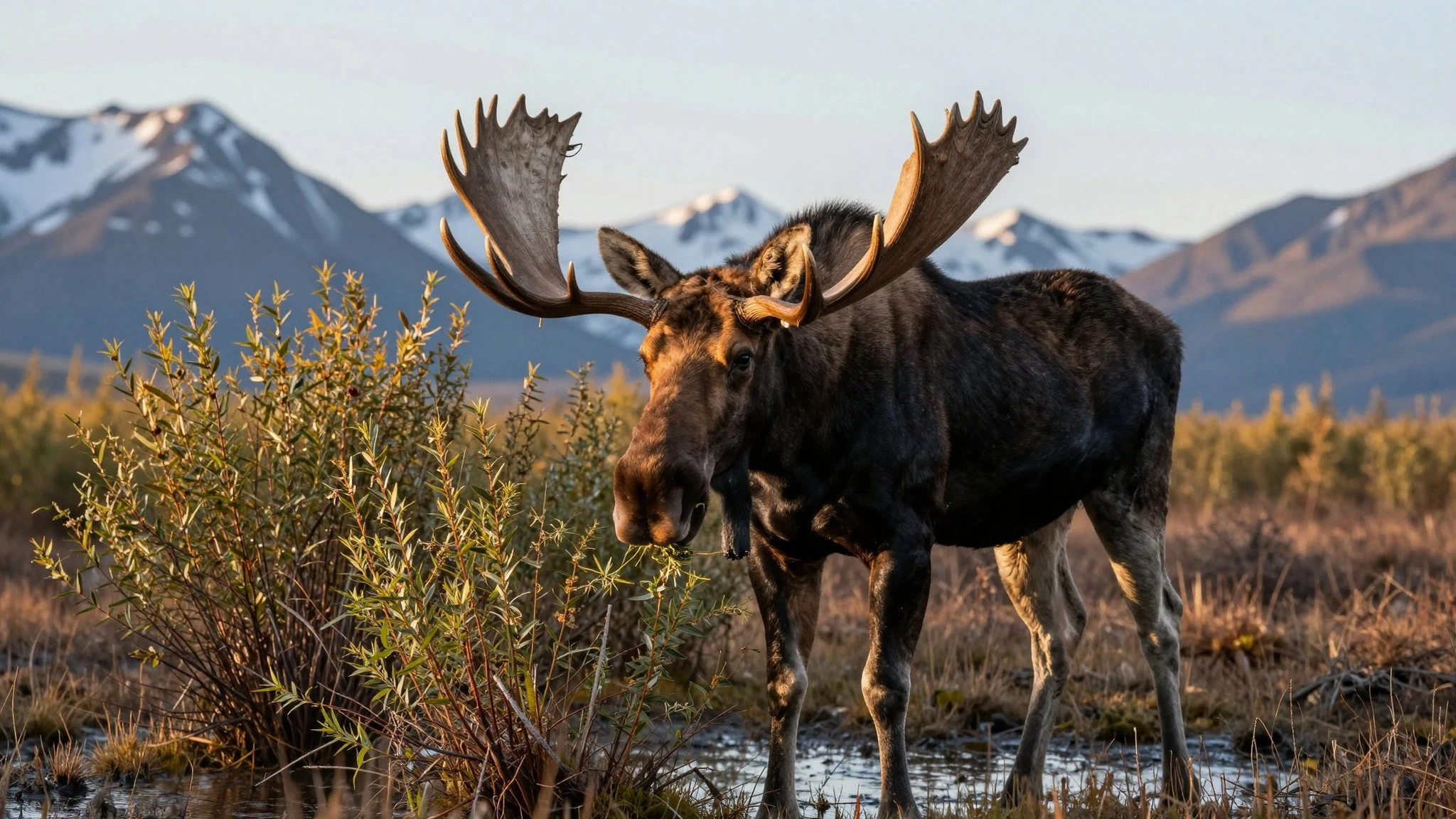
Anchorage is a young, practical, outdoors-minded city, and its culture sits on top of much older Alaska Native traditions. Dena'ina people are the original inhabitants of the area, and Yup'ik, Iñupiaq, Aleut, Tlingit and other Alaska Native families now live in the city as well. Their art, dance and storytelling appear at the Alaska Native Heritage Centre, in the Anchorage Museum and at summer gatherings. Everyday habits come from the land. Salmon fishing is a family ritual, many people keep a small plane or boat, and weekends mean trails, ski slopes or the lake. Locals tend to be relaxed and chatty, will happily recommend a trail or a diner, and rarely dress up for dinner. Summer's long light makes evenings lively, with festivals, markets and late walks, while winter turns life indoors to cafes, galleries, sports and celebrations of light. Wildlife is part of urban life. Moose wander through suburban gardens and bears turn up near trails, so people think about safety as casually as about weather. Restaurant service follows American tipping custom, with a service charge usually left by the customer rather than included. Visitors who ask questions about local heritage and listen to Native hosts usually receive warm and generous answers. Keep a long distance from moose and bears, never feed wildlife, and ask permission before photographing people at Native cultural events.
What to wear
Anchorage's traditional dress belongs to its Alaska Native peoples. Dena'ina and other Athabaskan clothing was made from tanned moose and caribou hide, fur trim and intricate beadwork with floral patterns, and boots made of skin kept feet warm in snow. Across Alaska, the kuspuk, a loose cotton overshirt with a hood or collar and often a bright printed fabric, is worn at celebrations, in schools and on ordinary days. Fur ruffs, parkas and mukluks, the soft insulated boots, appear at dances, festivals and cultural events. What people wear now is practical and layered. Fleece, waterproof shells, work trousers, knitted hats and sturdy boots are normal in town, including in restaurants and at concerts. Rubber boots are common near fishing streams. Dressing smartly rarely means more than clean outdoor clothes. Visitors should plan for changeable weather even in summer. Pack a warm mid-layer, a waterproof jacket, sunglasses for the low sun, and a hat. Trail shoes with grip suit the muddy paths of Chugach State Park, and insect repellent is useful in warm months. In winter, insulated boots, thermal layers, gloves and a proper coat are essential. There are no special modesty rules for museums or cultural centres, though a tidy, respectful appearance is appreciated at Native ceremonies.
What to eat
- Wild Alaskan salmon — seafood restaurants and fish counters in downtown Anchorage
Salmon is the dish of the region, served grilled, smoked or baked with simple herbs. Seafood restaurants, fish markets and casual lunch spots around downtown all offer it. Ask which species is on the menu, since flavour and richness vary through the season. - Halibut and chips — casual fish-and-chip counters and waterfront cafes
Fresh halibut in a light crisp batter, served with chips and tartare sauce, is a reliable lunch. The fish is firm and mild, and portions are usually generous. Many fish-and-chip places in town offer it alongside salmon or cod. - Reindeer sausage — downtown food carts in summer and local diners
Reindeer sausage is a smoky, slightly sweet street snack, usually grilled and served in a bun with onions. It is an Alaskan staple and a quick, cheap bite between museums, found at summer food carts and in some diners. - Giant cinnamon rolls — breakfast diners across the city
Cinnamon rolls the size of a small plate, glazed and soft, are the standard order at old-fashioned breakfast diners. They are designed for sharing and pair well with coffee. Pair one with a plate of eggs only if hiking later. - Himalayan momos and curries — Spenard district restaurants near the airport
Anchorage has a surprising number of Himalayan and Indian restaurants, with momos, lentil dishes and fragrant curries that suit a cold evening. The Spenard district, near the airport, is a good place to start. Spice levels can usually be adjusted.
Plan it
Best time. June to August for long days, open trails and the widest choice of tours; September for autumn colour, fewer crowds and a chance of early northern lights. Winter (roughly December to March) is cold and dark but good for skiing and aurora watching.
How long. 2–3
Getting there. Ted Stevens Anchorage International Airport (ANC) is served by Alaska Airlines and several other carriers, with non-stop flights from many US hubs and some from Canada, Germany and Iceland. From the terminal, take a taxi, shuttle or hire car for the short last leg into the city. Many flights arrive late at night.
Budget. mid
Tips
- Book summer flights, accommodation and day tours well ahead, as the season is short and busy.
- Hire a car if you want to reach Chugach State Park, the Turnagain Arm and wildlife centres; downtown itself is walkable.
- Pack layers and a waterproof jacket in every season, and carry water on trails.
- Cards are widely accepted, but carry a little cash for small stalls and tips.
- Check the Municipality of Anchorage site (https://www.muni.org) and each attraction's official site for current hours and tickets.
Etiquette
- Give moose and bears plenty of space, and never feed wildlife.
- Ask before photographing people, especially at Alaska Native events.
- Tip restaurant staff in line with local custom.
Nearby
Sources
- Wikidata Q39450 (CC0)
- Wikipedia: Anchorage, Alaska (rev 1382986000) (CC BY-SA 4.0)
- Wikivoyage: Anchorage (rev 5428617) (CC BY-SA 4.0)
- Anchorage on an April evening, Frank K. (CC BY 2.5)
- Anchorage, Alaska skyline, Quintin Soloviev (CC BY 4.0)
- Wood Bison in Alaska, Nirajha (CC BY-SA 4.0)
- Alaska Native Heritage Center across Lake Tiulana, Skvader (CC BY-SA 4.0)
- Parque Eagle River, Anchorage, Diego Delso (CC BY-SA 4.0)
- Anchorage Museum at Rasmuson Center 2014, Bernt Rostad (CC BY 2.5)
- Anchorage Alaska aerial view, U.S. Army Corps of Engineers (Public domain)
- Anchorage Alaska 1 July 1915, Alberta Pyatt (Public domain)


Wildlife
- Moose (animal)
The moose is the biggest deer in the world, and the grown-up males wear wide, flat antlers a little like giant hands. In Anchorage it is a familiar neighbour, known to stroll through suburban gardens, so you may meet one without leaving town. Watch from a respectful distance, stay quiet and calm, and never feed it. Locals treat safety around wildlife as casually as the weather, and a sensible visitor keeps that same easy awareness.