Paharpur
Paharpur, Bangladesh
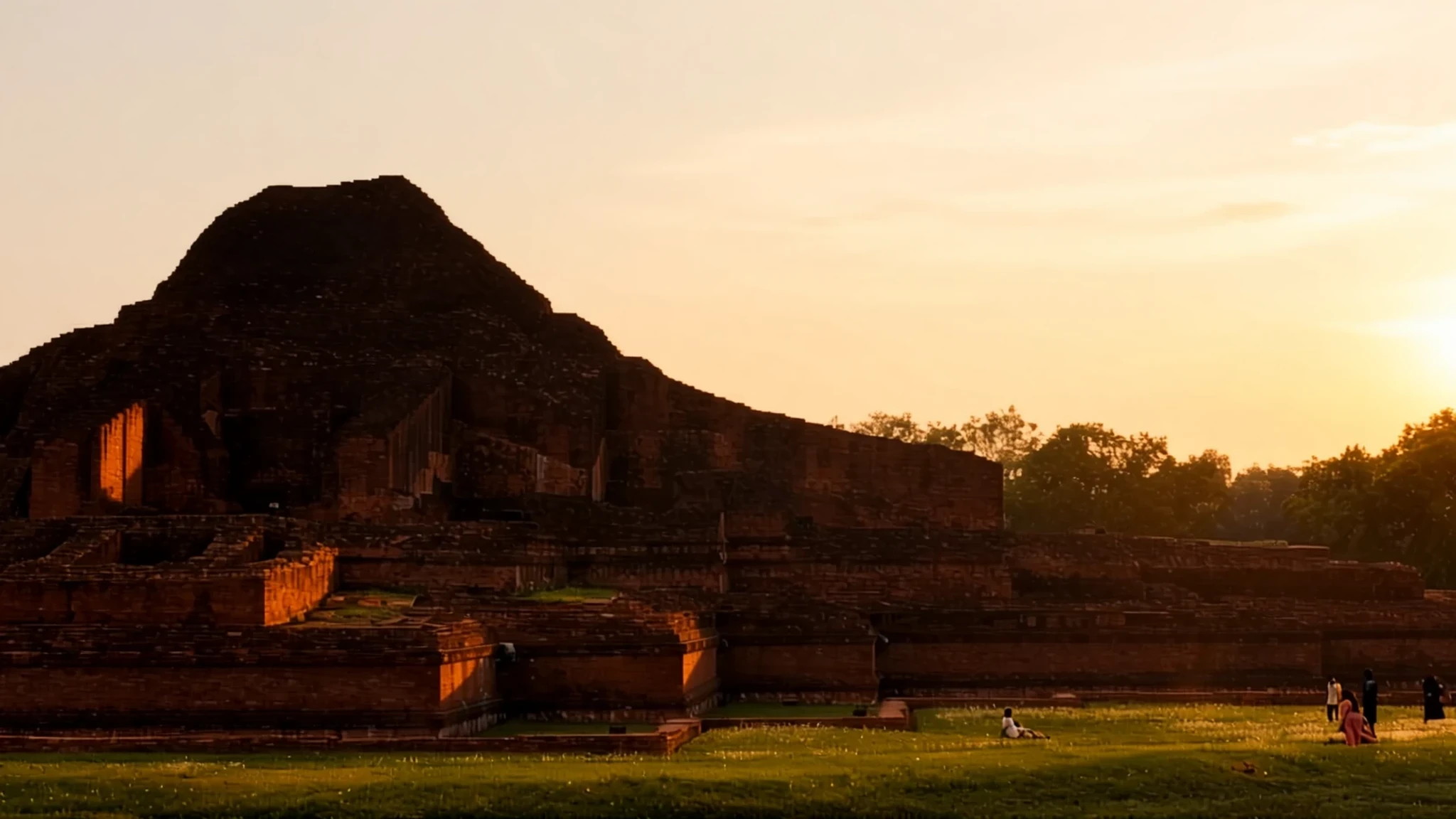
Paharpur holds the large brick monastery of Somapura Mahavihara, a cruciform shrine rising from the flat northwest of Bangladesh.
The place
Paharpur sits in Naogaon district, on the Barind tract of northwestern Bangladesh, a scatter of villages and paddy around a large brick ruin. The monument is Somapura Mahavihara, also called Sompur Mahavihara: a Buddhist monastery whose central shrine still rises in a stepped, cross-shaped mass from an open courtyard. The village name points at that mass. Paharpur is understood as the place of the hill, the shrine having been the only height for a long way across the plain. The monastery is a quadrangle. Ranges of small cells line the inner faces of the outer walls, each a plain room that once opened toward the court, with a few larger halls breaking the rhythm. In the middle stands the shrine, built in terraces, its arms projecting so the plan reads as a cross from above. Much of the wall was once covered in terracotta plaques, small fired-clay panels of figures, animals and mythic scenes set into the brick. Many are worn, missing or kept in the site museum; what remains on the walls is a patchwork of bare brick and surviving panels. The setting is landscaped. Manicured gardens, paved paths, flower beds and grass sculptures fill the grounds, with a cafe and a guest house by the gate. A visit is a long circuit of the cells, a pause in the courtyard and a climb onto the shrine where the steps are open. The monument is a World Heritage site, designated in 1985, and it draws school groups from across Bangladesh more often than long-stay travellers. Paharpur rewards time on the ground: the interest is the scale of the enclosure and how a monastery was organised.
Its story
Paharpur's story is the story of Somapura Mahavihara, a monastery raised when the Pala kings patronised Buddhism across Bengal and Bihar. Tradition and the site's inscriptions link the foundation to Dharmapala, a Pala ruler remembered for endowing large viharas. This was not a village shrine. It was a residential seat of Mahayana learning: monks lived in the cells, studied, copied texts and met students who travelled between the other monasteries of the north. The central shrine, terraced and cruciform, belongs to a building type shared with other Pala monuments, a sanctuary set inside a living community rather than a temple standing alone. Terracotta was the local language of sculpture. Clay lay everywhere on the Barind, and fired plaques let builders cover a huge brick surface with narrative and ornament. The panels show deities and dancers, and also animals, musicians and scenes of ordinary life, a record of a monastery set in a peopled landscape. The community did not last in its first form. As Buddhist houses in this part of Bengal lost royal support and the region changed hands, the vihara was abandoned, then buried by silt, vegetation and the village that grew against the mound. For generations the hill was simply part of Paharpur. Archaeological work later opened the quadrangle, traced the cells and moved plaques and stone images into safekeeping. What a visitor walks now is that recovered plan: not a monastery in use, but the footprint of a Pala seat of learning. Paharpur's later life is local and Muslim; the ruin is kept as heritage rather than as a working Buddhist pilgrimage. The story on the ground is endowment, study, desertion and careful digging, and the village name still remembers a hill that was in fact a temple.
What to see
- Central shrine — Somapura Mahavihara, Paharpur
The central shrine at Paharpur is the stepped brick mass at the heart of Somapura Mahavihara. Its arms project in a cross, and the terraces climb toward a ruined sanctum that once held the main image. From the upper levels the quadrangle of cells is clear, and the plain of Naogaon stretches out flat beyond the walls.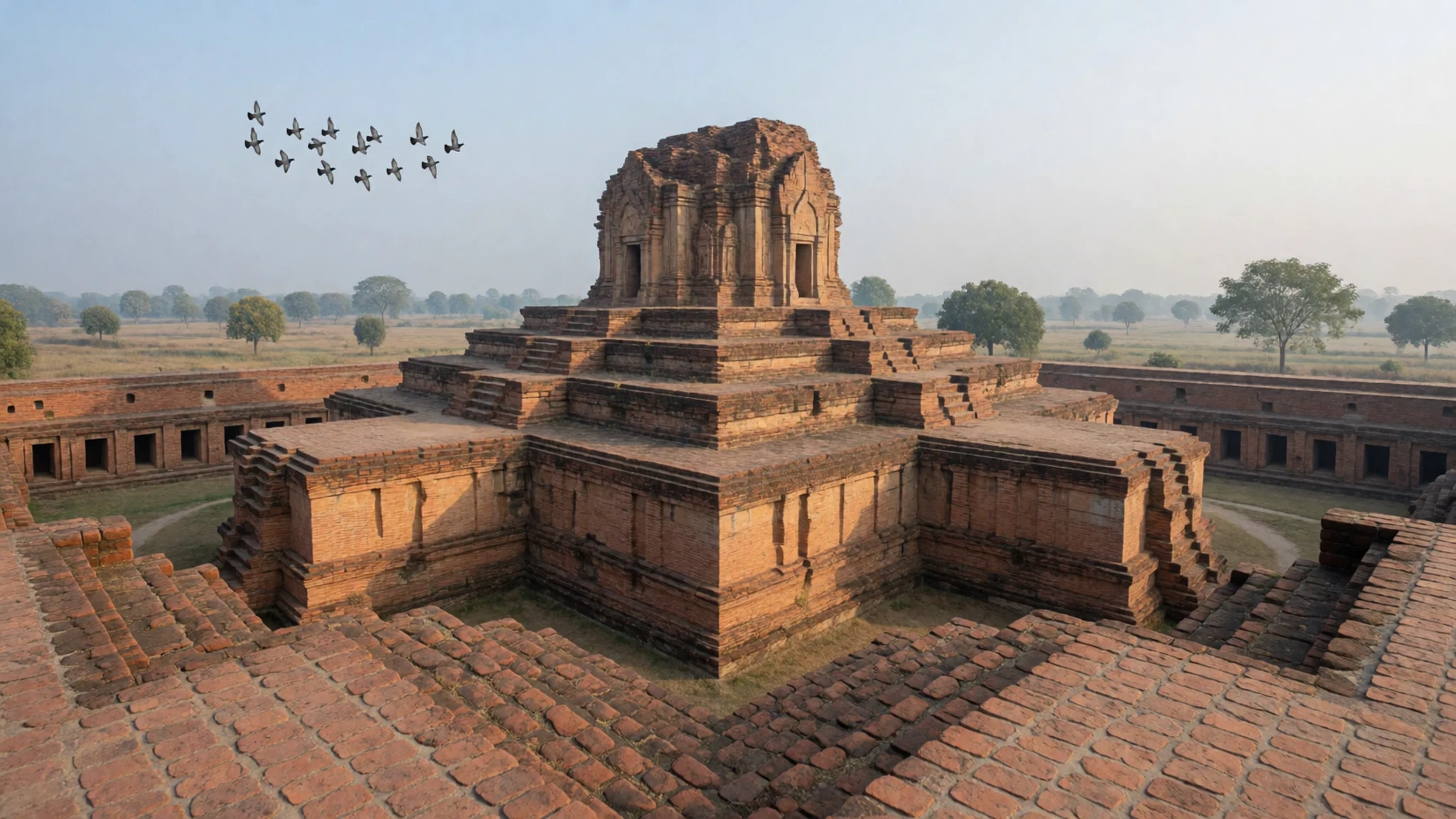
- Monastic cells — Quadrangular ranges, Paharpur
The monastic cells at Paharpur form the long inner ranges of the outer quadrangle. Each is a small, plain room that once housed a monk, opening toward the shared courtyard rather than outward to the fields. A few larger spaces interrupt the row and may have served as halls or shrines. Walking the full circuit shows how strictly the community was ordered.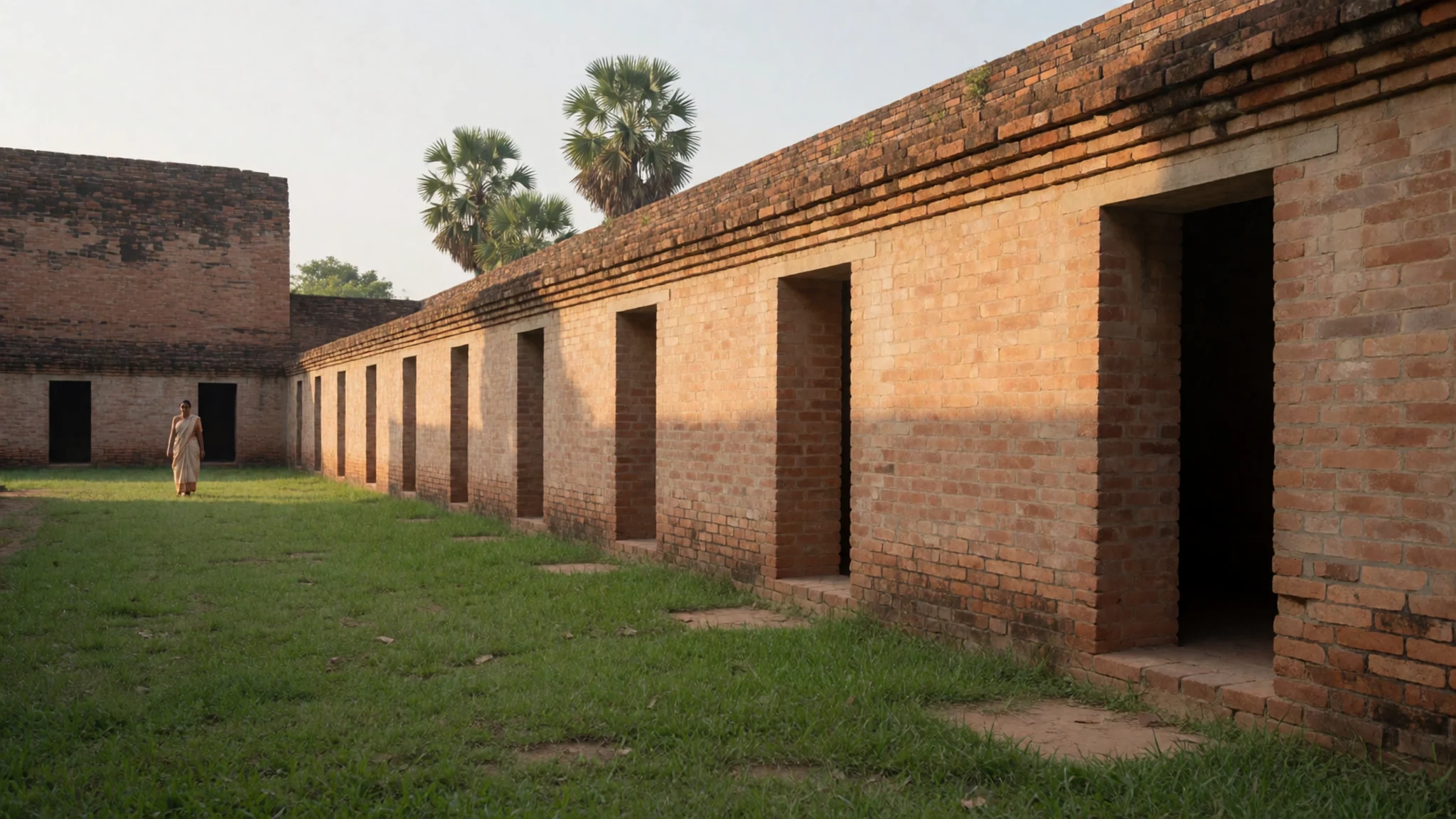
- Terracotta plaques — Monastery walls and site museum, Paharpur
Terracotta plaques still cling to stretches of wall at Paharpur, and more are kept in the site museum. They are small fired-clay panels set into the brick: deities, dancers, animals, musicians and scenes of ordinary work. Clay was the material to hand on the Barind, so the monastery could carry a whole sculptural programme without stone brought from far away.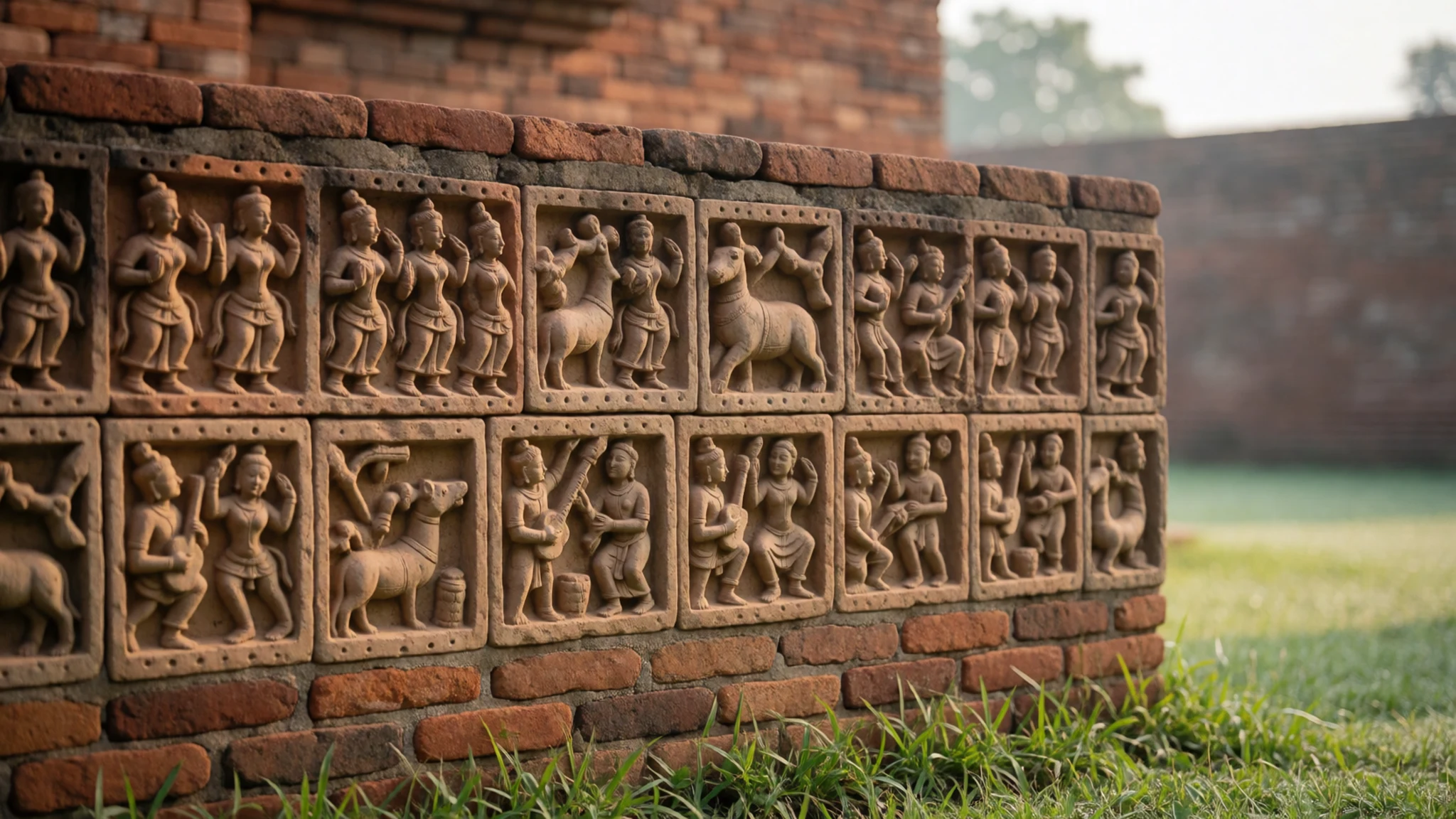
- Site museum — Site museum, Paharpur
The site museum at Paharpur holds sculpture and plaques lifted from Somapura Mahavihara so the weather no longer works on them. Stone images, terracotta panels and smaller finds sit in a modest building beside the ruins, and the labels set each piece back in the life of the monastery. Seen after a circuit of the cells, the finer carving explains what the bare brick outside has lost.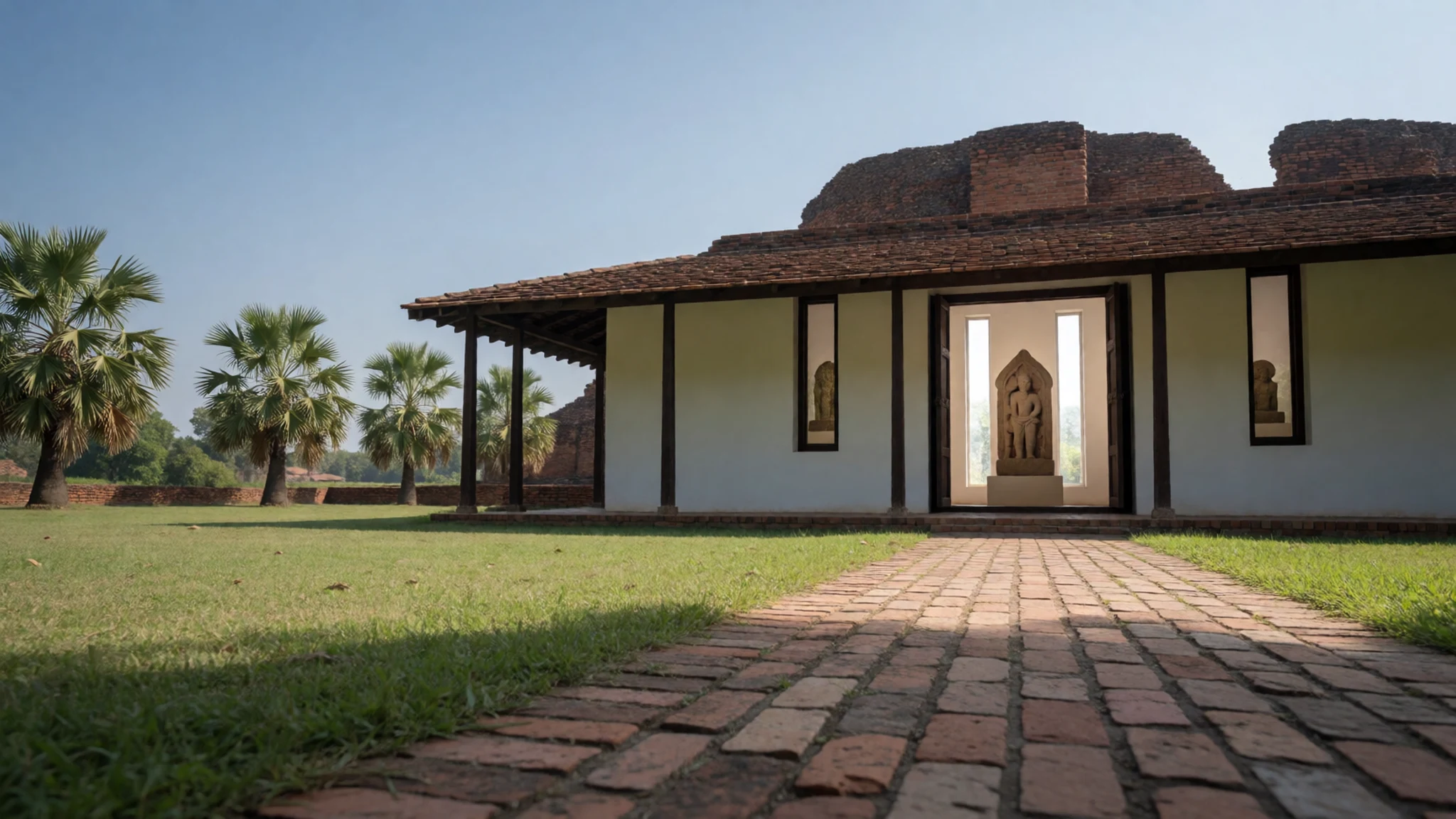
- Courtyard and outer walls — Inner courtyard, Paharpur
The courtyard at Paharpur is the broad open ground between the central shrine and the ranges of cells. It is where the size of Somapura Mahavihara becomes obvious: a long walk in any direction still ends inside the enclosure. The outer walls are thick brick, broken by gaps and later repairs, with patches of terracotta still in place. Grass covers much of the court.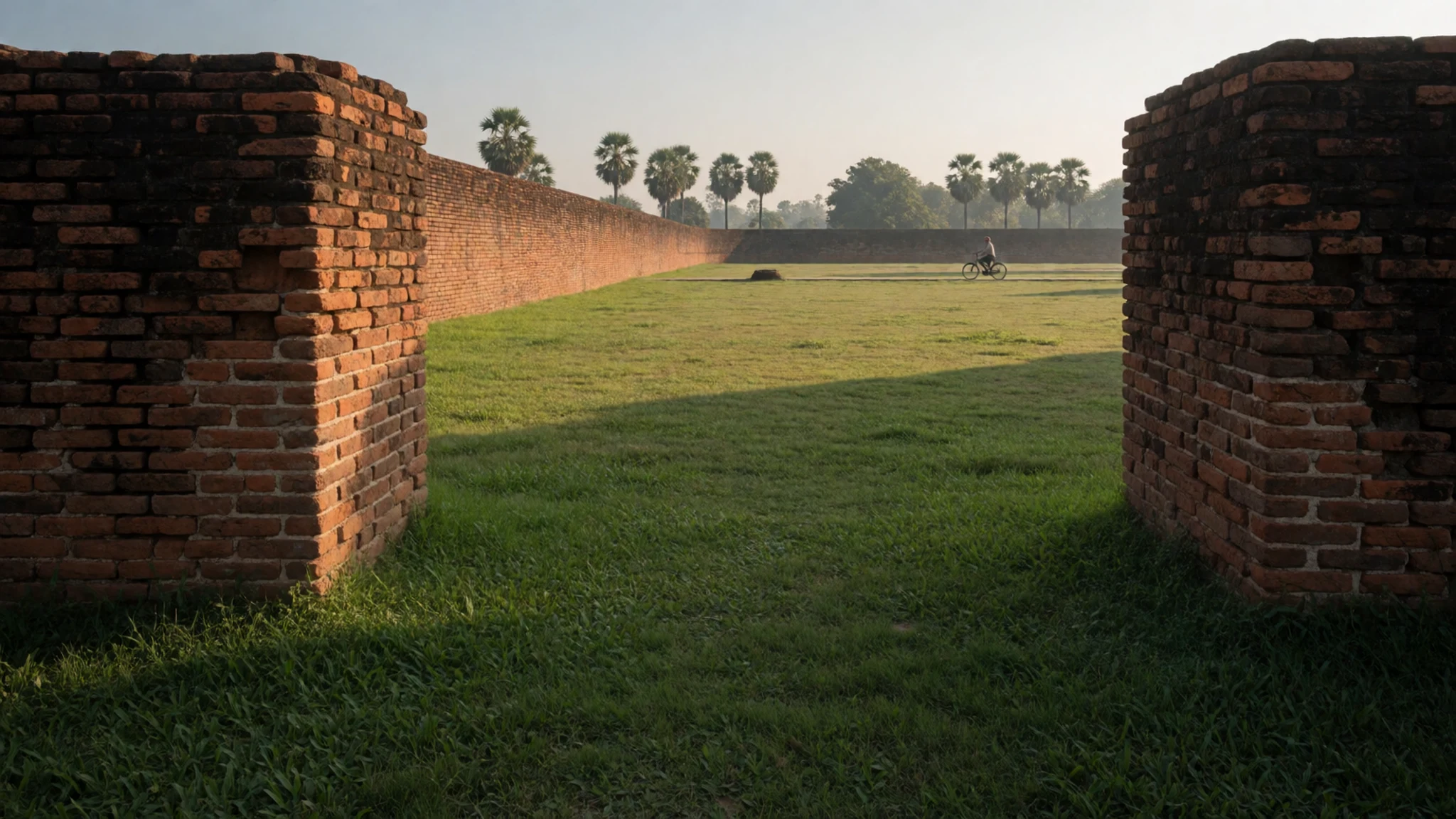
Culture
Paharpur today is a Bengali Muslim village around a Buddhist monument, and that double life shapes any visit. Daily culture is the call to prayer, the school run and the work of the fields; the monastery is heritage, explained by teachers and guides rather than by a resident community of monks. A market day brings more noise to the roads than the ruin itself usually does. People at the gate are used to visitors, and a greeting in Bangla is returned in kind. School groups are part of the soundscape: teachers treat the terraces as an open-air classroom, so the site can feel busy even when travellers from abroad are few. The plaques and stone images are ancient sacred art, yet for most local families they are history rather than objects of present worship, and the mood on the grass is curious rather than devotional. Dress still signals respect, because Paharpur is both a protected monument and a conservative stretch of countryside. Women in the village wear a sari or salwar kameez, and men a shirt with a lungi or trousers. Visitors who keep shoulders and knees covered, and who stay quiet near anyone at prayer, match the place. Ask before photographing people, and remove your shoes wherever a step up leads onto a mat or into a prayer room.
What to wear
Paharpur has no court costume of its own to revive; the dress of the visit is the dress of rural Rajshahi and Naogaon. The traditional garment for women is the sari, often a cotton taant or a simpler handloom from nearby weaving districts, worn with the pallu over the chest and hair tied back for field work. Men have long worn the lungi, a checked or plain cotton wrap, with a vest or a panjabi on Fridays and at family events. Those textiles are practical: cotton breathes in the humid months and dries quickly after rain. Day to day, younger people now mix those clothes with shirts, trousers, salwar kameez and the occasional synthetic sari that costs less to keep. At the monastery gate the crowd is mostly this ordinary mix, plus school uniforms of white and navy. A visitor should dress for sun, dust and modest company. Loose cotton, covered shoulders and knees, and a scarf for women when the wind lifts, work better than shorts or sleeveless tops. The ground is uneven brick and packed earth, so closed shoes with a grip are kinder than sandals that slip, though sandals are what local people wear and are easy to slip off. Carry a warm layer in December and January, when the nights turn cold; the rest of the year the problem is heat.
What to eat
- Panta bhat — Village households and roadside eateries
In Paharpur, panta bhat is leftover cooked rice soaked overnight in water, eaten as a cooling morning meal with salt, onion, green chilli and mustard oil. It turns up in village households and at simple roadside eateries on hot days.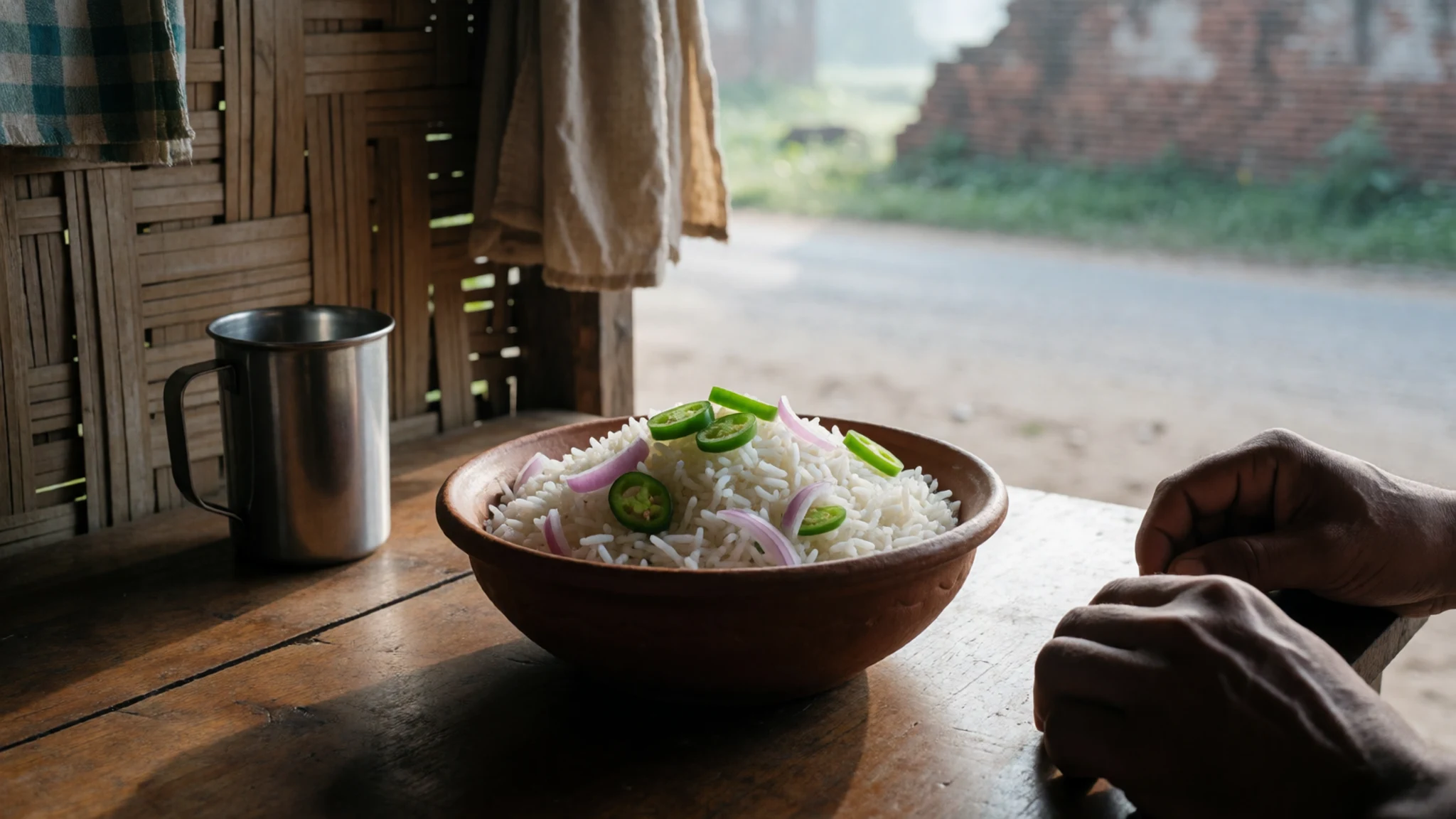
- Machher jhol — Village kitchens and bazaar eateries
Around Paharpur, machher jhol is a light fish curry of a small pond fish such as puti or koi, simmered with turmeric, cumin and oil until the gravy is thin enough to eat with rice. It is everyday food at village kitchens and at eateries in the nearest bazaar.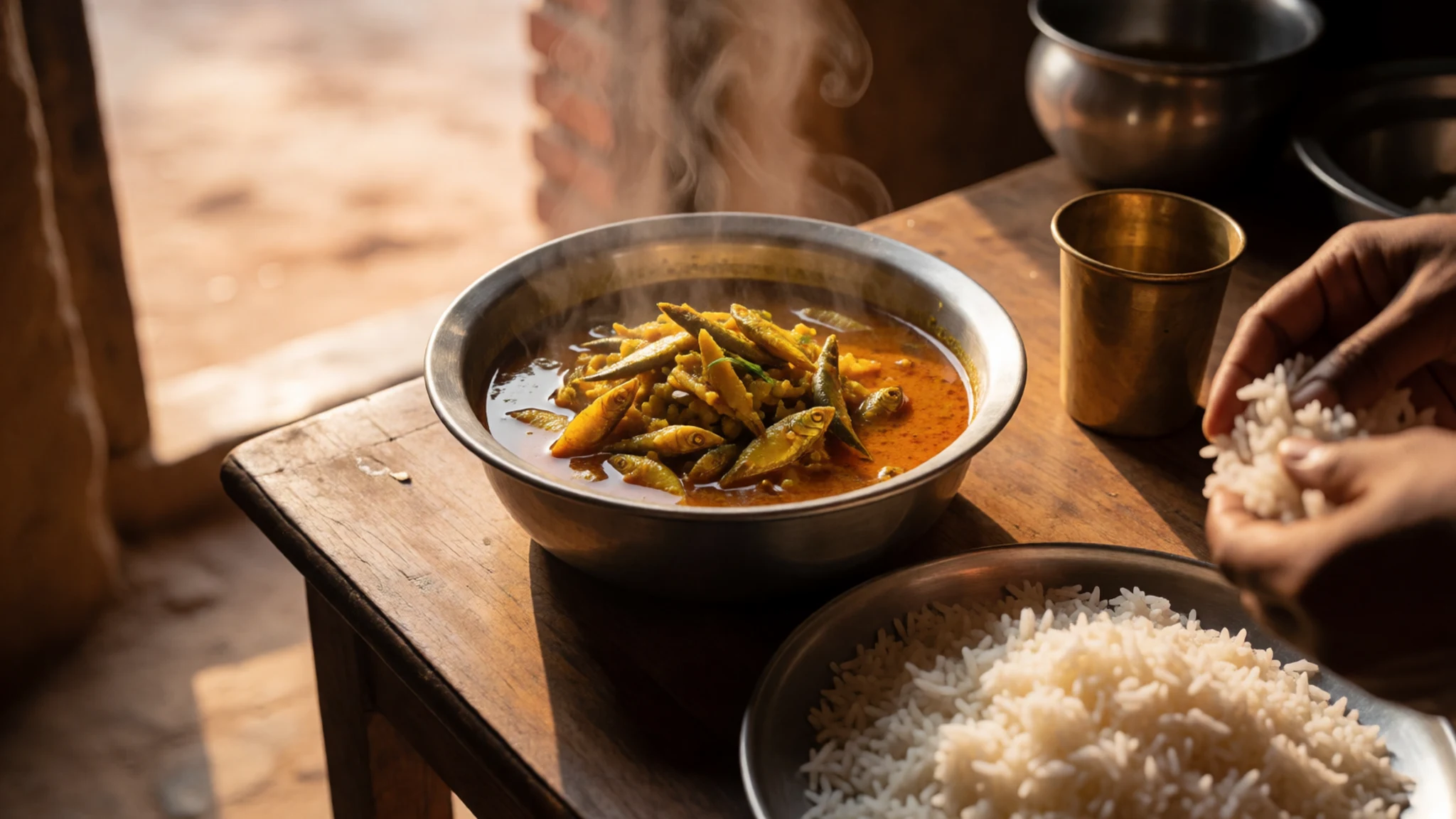
- Shutki bhorta — Bazaar eateries near Paharpur
Near Paharpur, shutki bhorta is dried fish mashed with onion, chilli and mustard oil into a fierce paste, eaten in small amounts beside a large plate of rice. Bazaar eateries also sell bhorta of aubergine or potato beside the same rice. - Ruti and bhaji — Bazaar stalls and the road to the monastery
Ruti, a griddle-cooked flatbread of wheat flour, is the quick meal of roadsides around Paharpur, torn and eaten with a spiced potato or mixed-vegetable bhaji. Stalls set up near the bazaar and along the road to the monastery. - Pitha — Households and winter markets
Around Paharpur, pitha are steamed or fried rice-flour cakes filled with coconut or molasses, and they appear when the weather cools and the new rice is in. Households and winter markets make them in batches.
Plan it
Best time. November to January is the comfortable window at Paharpur: the days are dry and milder, the brick paths stay firm, and winter crops green the Barind. February to May turns hot, and May is the hottest month. From May the monsoon softens the paths and raises the humidity, and July is the wettest month, so the site is walkable but muddier. October stays wet, the rain still heavy before the dry months.
How long. 1–2
Getting there. Most visitors reach Paharpur from Dhaka by intercity rail toward the northwest, changing for a local bus or a hired car at Naogaon, Santahar or Bogura for the last run through the villages. Rajshahi, with its domestic airport and a wider choice of guesthouses, is the usual city base for anyone who wants a night before the road north. There is no airfield at the monument itself.
Budget. low
Tips
- Start soon after opening, before heat and school groups fill the terraces.
- Carry drinking water; shade on the shrine is thin.
- Wear closed shoes with a grip for broken brick and packed earth.
- Keep some cash; roadside stalls and small eateries rarely take cards.
- Check official archaeology notices for access before you travel, and do not rely on a printed timetable.
Etiquette
- Ask before you photograph local people.
- Remove shoes wherever a step leads onto a mat or into a prayer room.
- Do not climb on loose brick or touch the terracotta plaques.
- Cover shoulders and knees, and keep voices low near anyone praying.
Nearby
Sources
- Wikidata (CC0)
- Wikipedia (CC BY-SA 4.0)
- Wikivoyage (CC BY-SA 4.0)