Oze National Park
Oze National Park, Japan
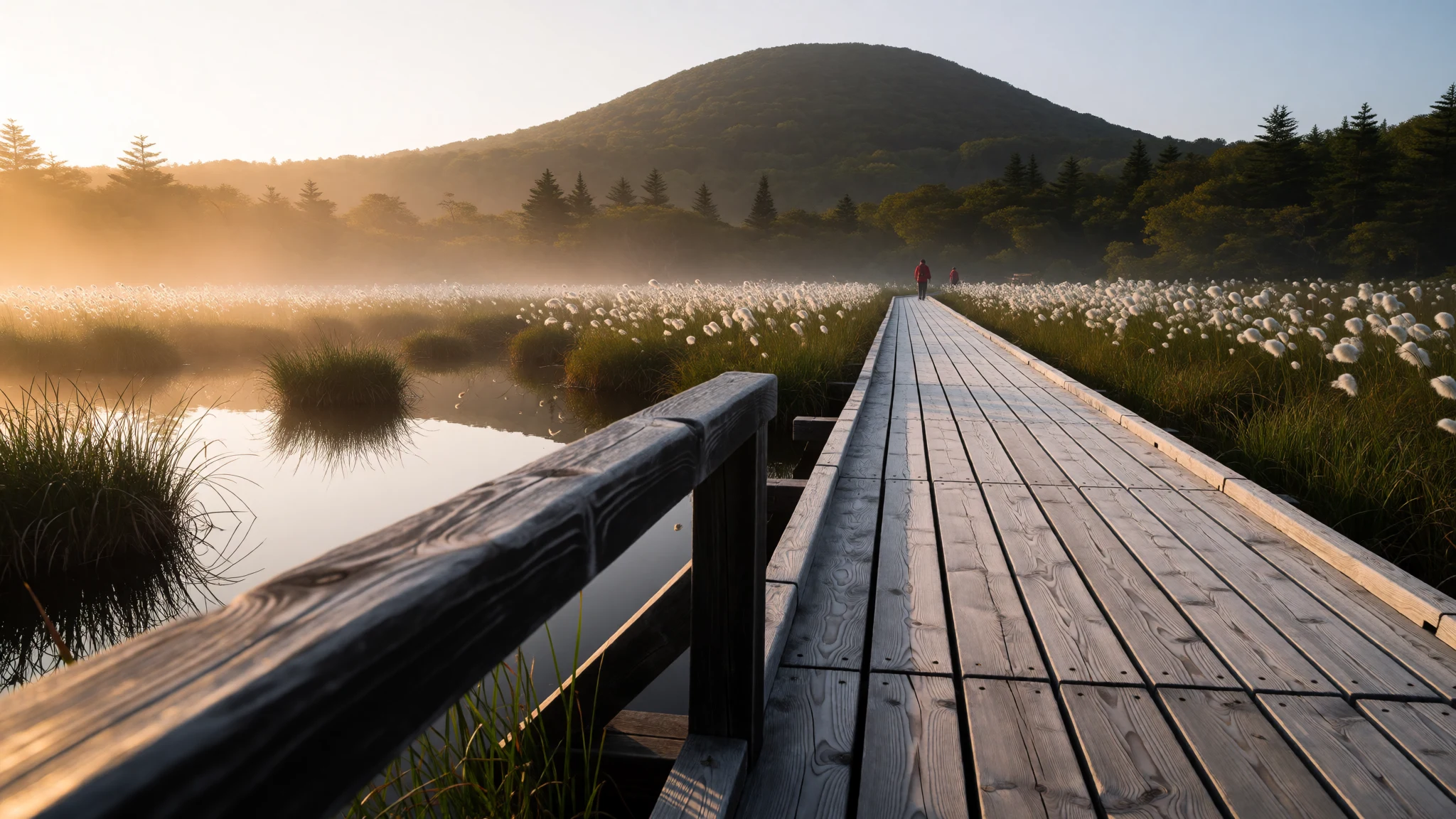
Oze National Park is a high marsh in the Japanese mountains, reached only on foot, with seasonal flowers, wooden boardwalks and small lodges.
The place
Oze National Park sits where four prefectures meet: Fukushima, Tochigi, Gunma and Niigata. Its core is Ozegahara, an open marsh of wet grassland laced with wooden boardwalks, and around it rise mountains such as Shibutsu and Hiuchigatake. Further out, the park also takes in Mt Tashiro and Mt Aizukomagadake, so the protected area is much larger than the single loop most walkers complete. Oze became a national park in 2007, when it was separated from Nikkō National Park and given its own status. The Ministry of Environment runs an official bilingual website for it. No road crosses the marsh. Everyone arrives on foot from one of five entrances: Oshimizu, Fujimishita, Hatomachi Pass, Miike and Numayama Pass. From there, boardwalks and trails lead to a scattering of mountain lodges, which take a limited number of guests by reservation. That makes the place feel more like a walkers' village in the hills than a conventional park. What draws people changes with the calendar. In spring, mizubasho (Japanese skunk cabbage) opens white flowers along the wet ground. In summer the orange-yellow Nikkō-kisuge day lilies take over the meadows. Autumn turns the marsh grass gold and the slopes red and orange. The ground is soft, the plants recover slowly from trampling, and the weather is that of a mountain basin: cool nights, quick-moving cloud and rain that arrives with little warning. Peak flower and colour weekends bring queues on the narrow boardwalks, so weekdays and the quieter entrances repay some planning.
Its story
Oze National Park is young as a national park but older as a place people travelled to on foot. Before 2007 the marsh and its mountains sat inside Nikkō National Park. The change that year detached them and gave Oze a status of its own, bringing the wetland, the surrounding peaks and nearby ranges such as Aizukomagadake and Tashiroyama under one park. It was a notable moment, because new national parks in Japan are rare events rather than routine ones. The human side of Oze's story is told well by old photographs. One shows Hirano Chozo standing in front of the first Chozo-goya, a modest timber lodge, in the Taishō era. Another shows the same lodge in later decades. They suggest how Oze grew as a destination: a simple hut, a keeper who knew the ground, and walkers who came in with their own packs. That pattern still shapes the park. There is no road through the marsh, the lodges are small and run by reservation, and the best-known routes are boardwalks laid to protect fragile wet ground. More recently, a new mountain lodge run by Hoshino Resorts opened at Hatomachi Pass in September 2025, part of a government policy to attract upmarket accommodation to national parks. How much comfort a place defined by plain huts and slow walking should take on is a fair question, and one that regulars are likely to keep asking.
What to see
- Ozegahara Marsh — Central Oze, between Hatomachi Pass and the eastern lodges
Ozegahara is the open wetland at the centre of Oze National Park and the reason most people come. Wooden boardwalks cross wet grassland, with pools and streams on both sides and mountains on the horizon. Skunk cabbage flowers here in spring and day lilies in summer. Allow time to walk slowly, since the boardwalks are narrow and busy in peak weeks.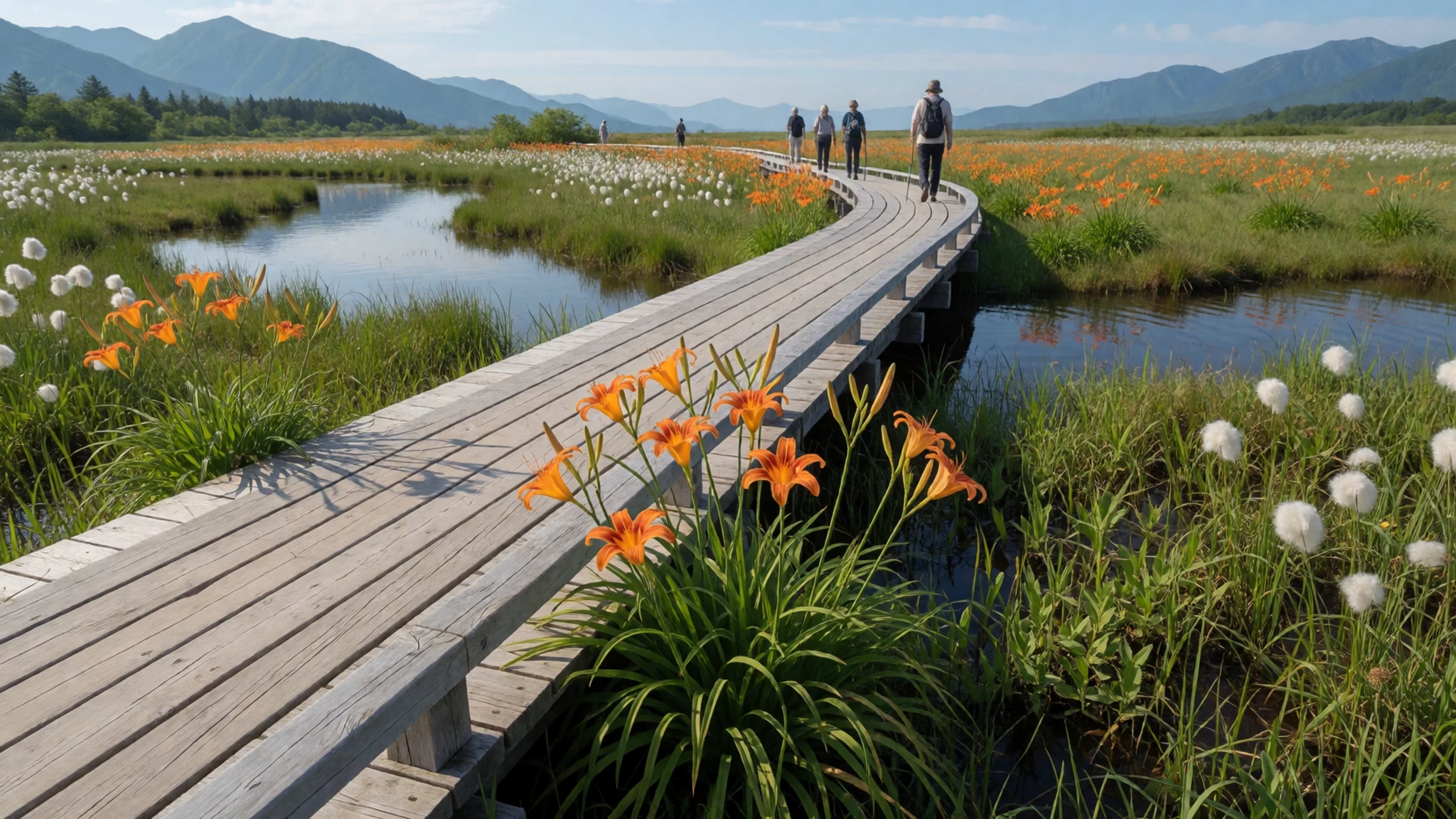
- Ozenuma Pond — Eastern Oze, near Numayama Pass
Ozenuma is a pond on the eastern side of the park, close to the Numayama Pass entrance. It is a gentler outing than the full marsh walk, with the surrounding peaks reflected on calm mornings and lodges nearby. It suits a short visit, or a night's stay before heading west along the boardwalks.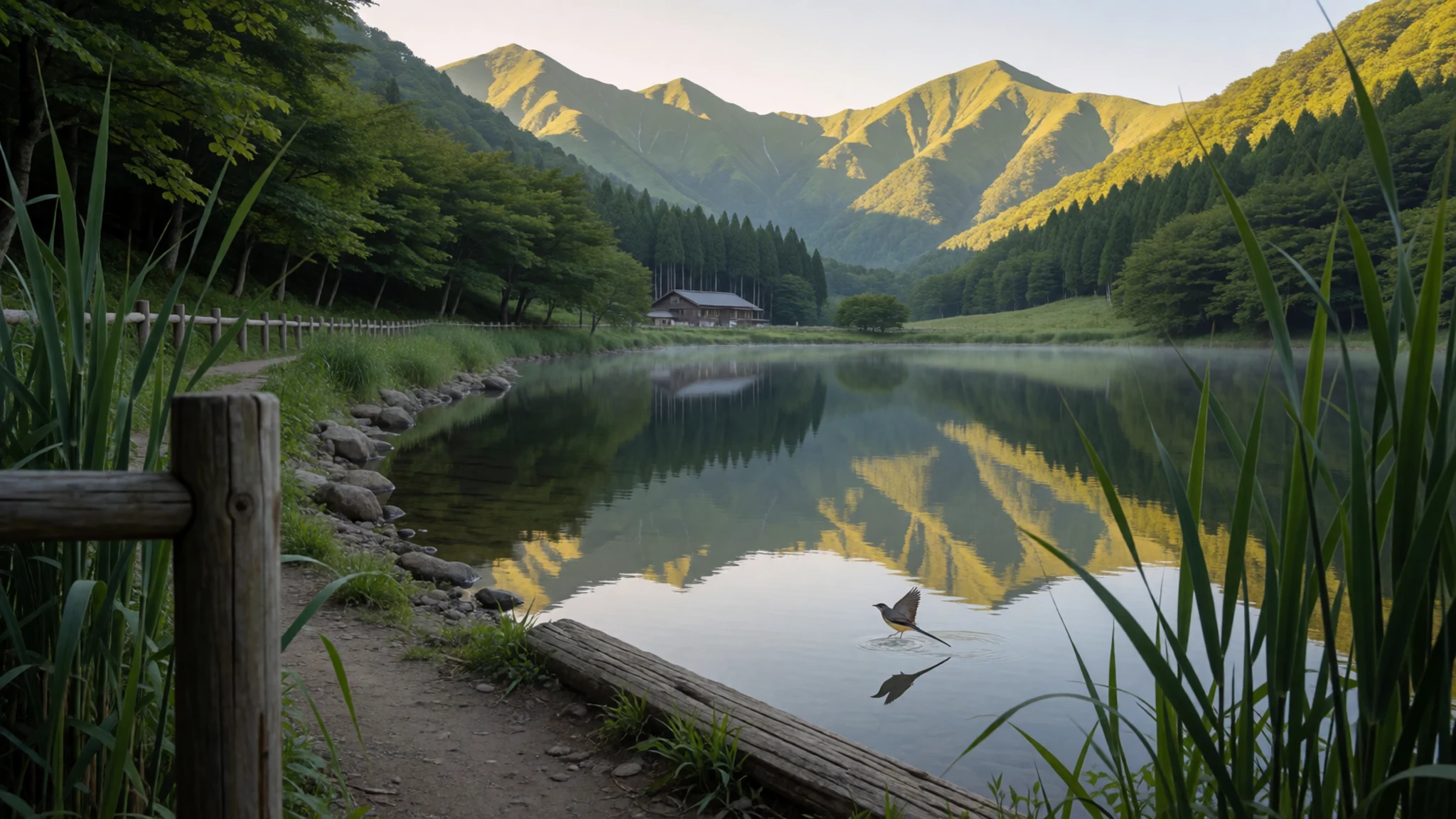
- Mt Shibutsu — Southwest of Ozegahara, Gunma side
Mt Shibutsu is one of the peaks overlooking Ozegahara, and photographs show it rising behind the flat marsh. The climb is steeper and rockier than the boardwalks, so it calls for proper boots, an early start and a check of the weather before setting out. Many walkers treat it as the day's big effort.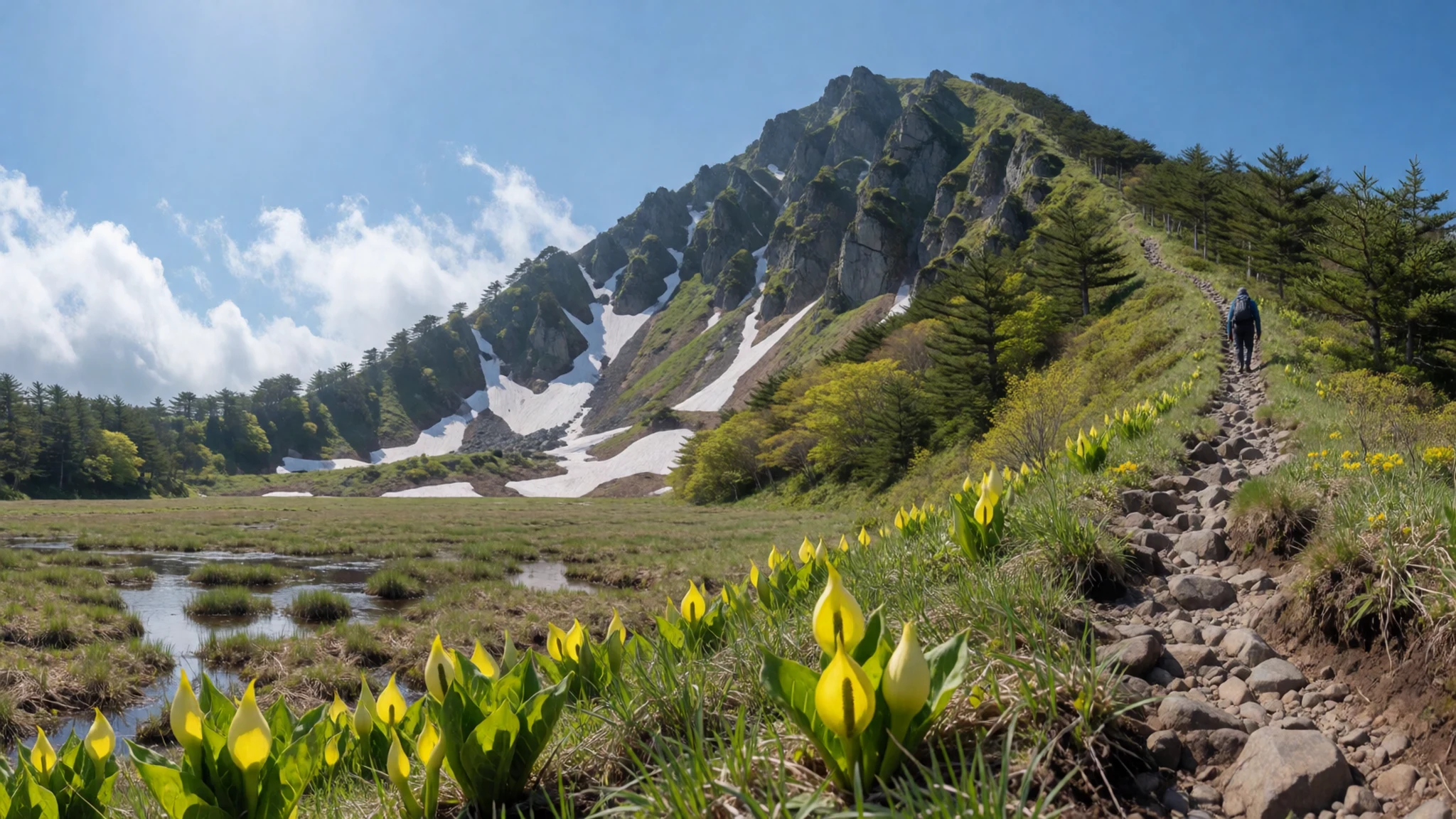
- Mt Hiuchigatake — Eastern edge of the marsh, Fukushima side
Mt Hiuchigatake stands on the Fukushima side and overlooks the marsh from the east. Its foot is a popular spot for autumn colour, when grasses and shrubs turn rust and gold. The climb is a serious day for fit walkers, and the weather on the summit can differ sharply from the marsh below.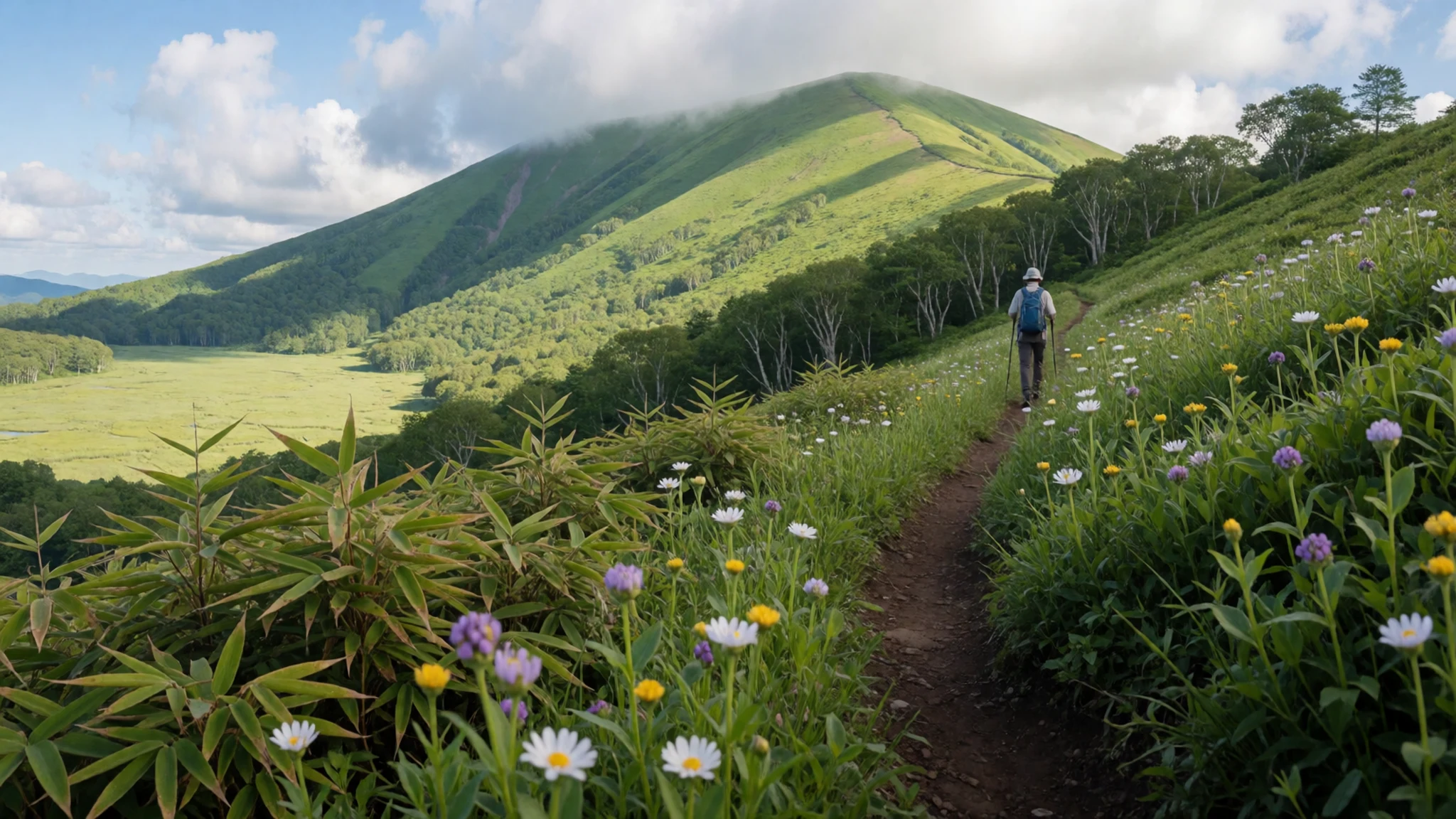
- Mt Tashiro — Eastern Oze
Mt Tashiro lies on the eastern edge of the park, away from the usual marsh crowds. It was brought into the park when Oze was reorganised in 2007, together with the Aizu-Komagatake area. It suits walkers who want a quieter mountain day with more trail and fewer boardwalks. Check current trail conditions with the park office.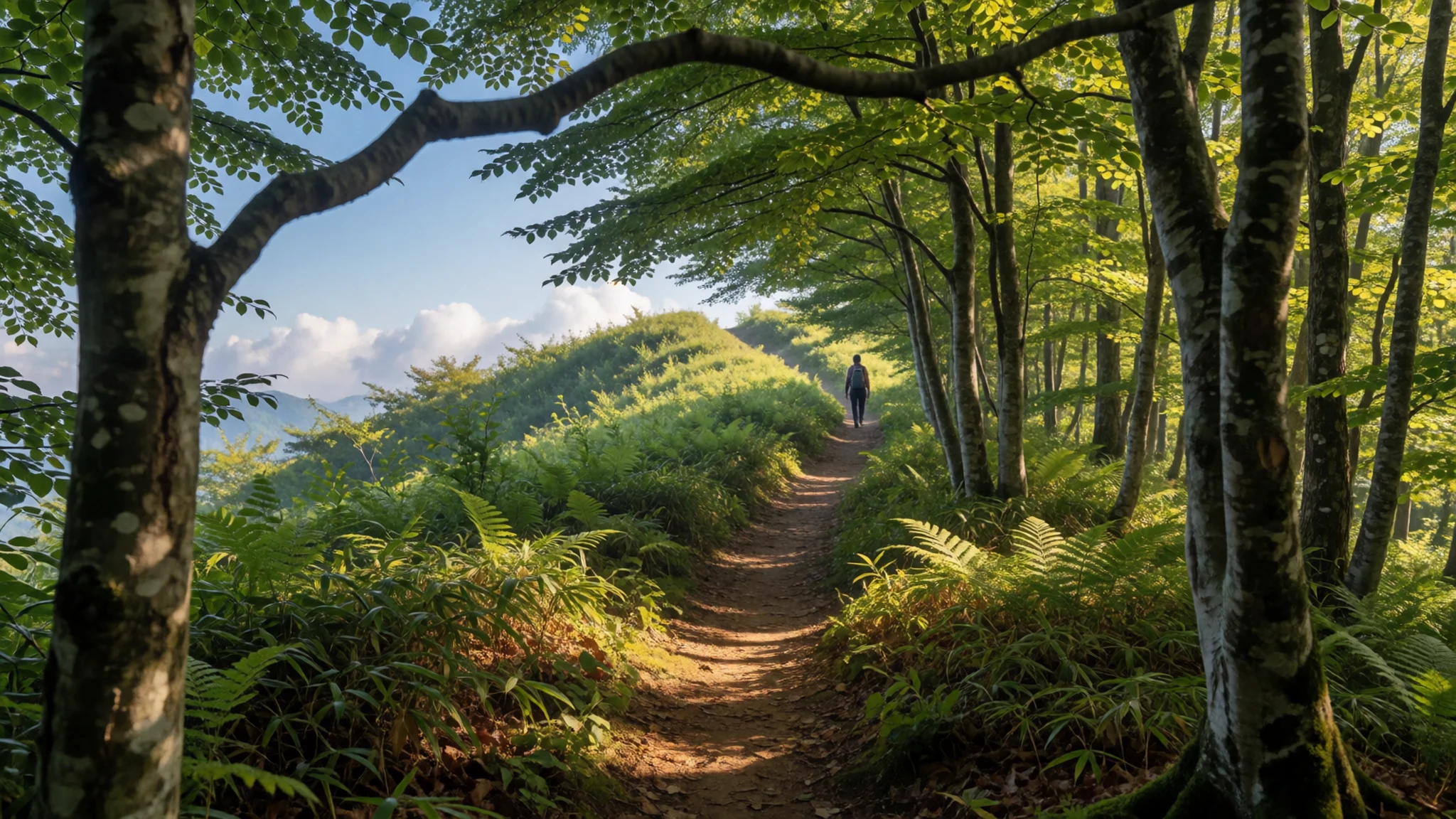
- Mt Aizukomagadake — Fukushima side of the park
Mt Aizukomagadake is another mountain included in the park, on the Fukushima side. It is a full-day objective rather than an add-on to the marsh walk, and it appeals to walkers who want a summit without boardwalk crowds. Plan transport and daylight carefully, and check the official website for access and conditions.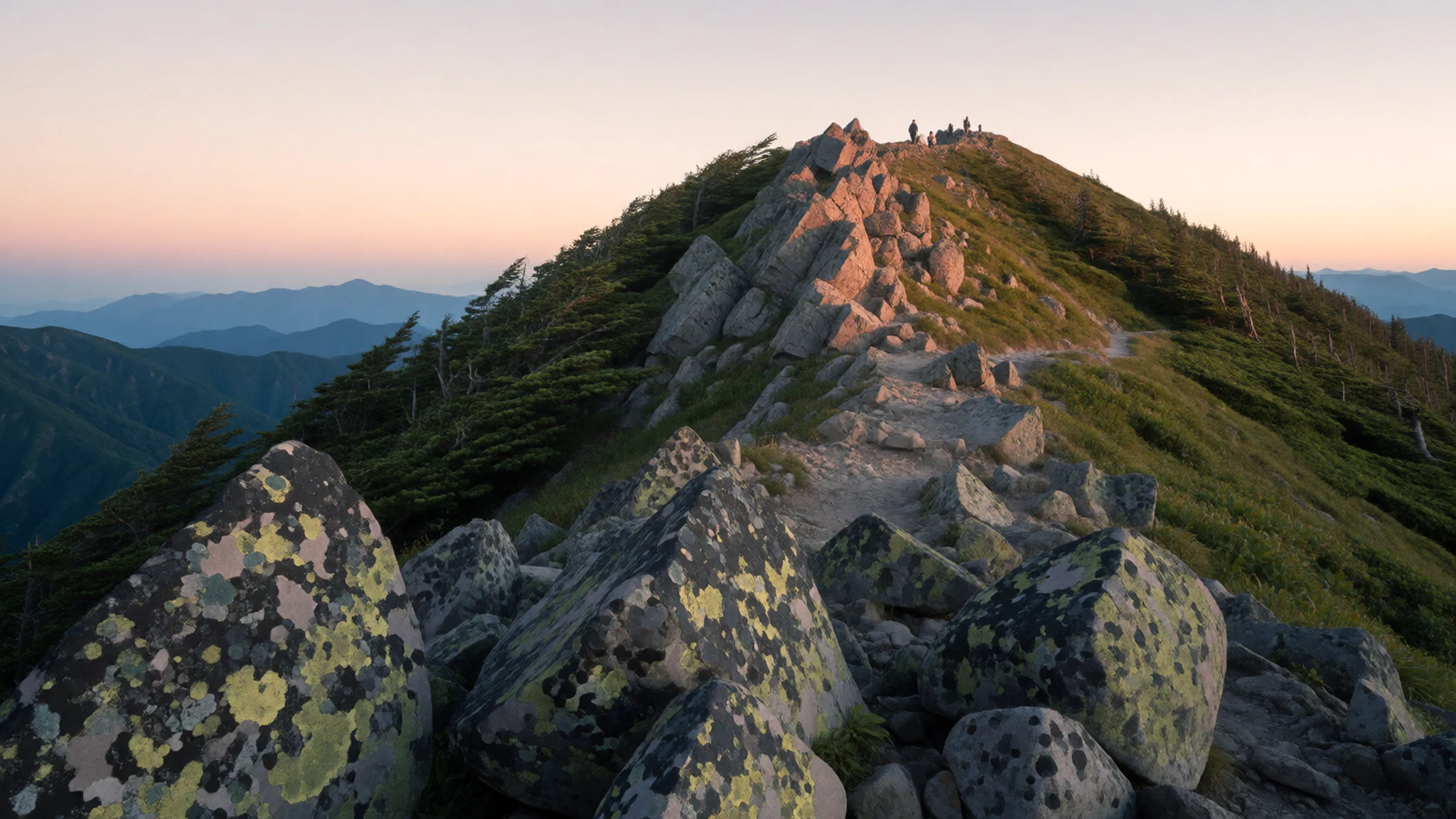
Culture
Oze National Park's culture is the culture of Japanese mountain walking, shaped by small lodges, shared rooms and a strong habit of carrying everything out. Walkers greet one another on the boardwalks with a quick hello or a nod, and passing on the narrow planks is done patiently, with a brief wait for whoever is coming through. Lodges are the social centre of the park. Dinner is served at a set hour, lights go out early, and guests sleep on futons in shared rooms. Wet clothes dry in a boot room or drying room, and the evening talk is mostly about tomorrow's weather. The flowers set the calendar much as harvests do elsewhere: mizubasho in spring, Nikkō-kisuge day lilies in summer, golden grass in autumn. Photographers set up early to catch the light on the marsh, and a courteous queue forms at the best spots on the boardwalks. Because the marsh rests on soft, slow-growing ground, the unwritten rule is that nothing is left behind, not even food scraps, and nothing is taken away, not even a flower. Many walkers also wear a small bell against bears, a reminder that this is a wild place rather than a garden. Stay on the boardwalk, step aside only to let others pass, and carry every scrap of rubbish out with you.
What to wear
Oze National Park has no costume of its own, so the traditional dress here is the dress of the wider Japanese countryside. Kimono of silk are for formal occasions, while yukata, light cotton robes, are worn in summer and are often provided at lodges and hot-spring inns in the region. Hardwearing cotton work clothes in indigo blue, including baggy monpe trousers, were once everyday wear for mountain farmers and still turn up at local festivals. On the trails today, people wear modern outdoor kit: layered fleeces, waterproof jackets, quick-dry trousers, wide-brimmed hats and small packs, often in bright colours so they are easy to spot in cloud. Many walkers clip a small bell to the pack as a precaution against bears, and trekking poles are common on the descent. A visitor should dress for a mountain marsh. Think layers rather than one heavy coat, since mornings and evenings are cool even when midday is warm. Pack a waterproof shell, long trousers to protect against sun and brush, and a hat. Sturdy boots or trail shoes with a good grip are better than trainers, especially on wet planks. There are no temples on the main routes, so no particular modesty code applies, though lodges expect you to remove outdoor shoes at the entrance and to change into slippers.
What to eat
- Lodge dinner set — Mountain lodges inside the park, by reservation
Dinner at an Oze lodge is a plain, filling set meal of rice, miso soup, pickles and a simple main, served at a fixed time. It is mountain food in the practical sense, built to refuel walkers. Expect little choice and enough to eat.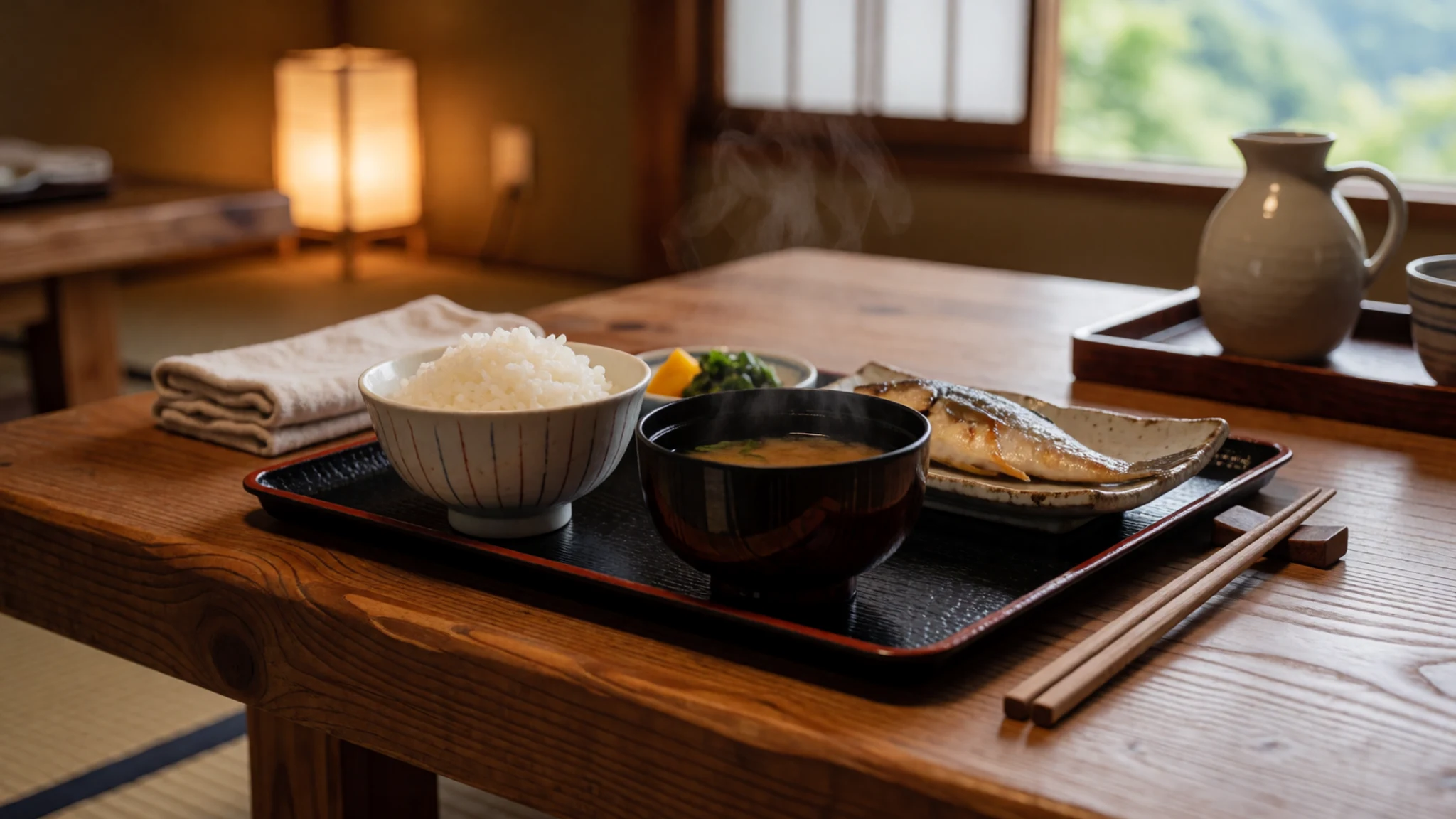
- Grilled iwana (char) — Lodges, and riverside inns and eateries in the towns outside the park
Iwana is a freshwater fish of cold mountain streams, usually grilled whole on a skewer over charcoal and salted. The flesh is delicate and the skin crisp. It is a classic of upland Japan and turns up on lodge menus and at inns in the towns around the park.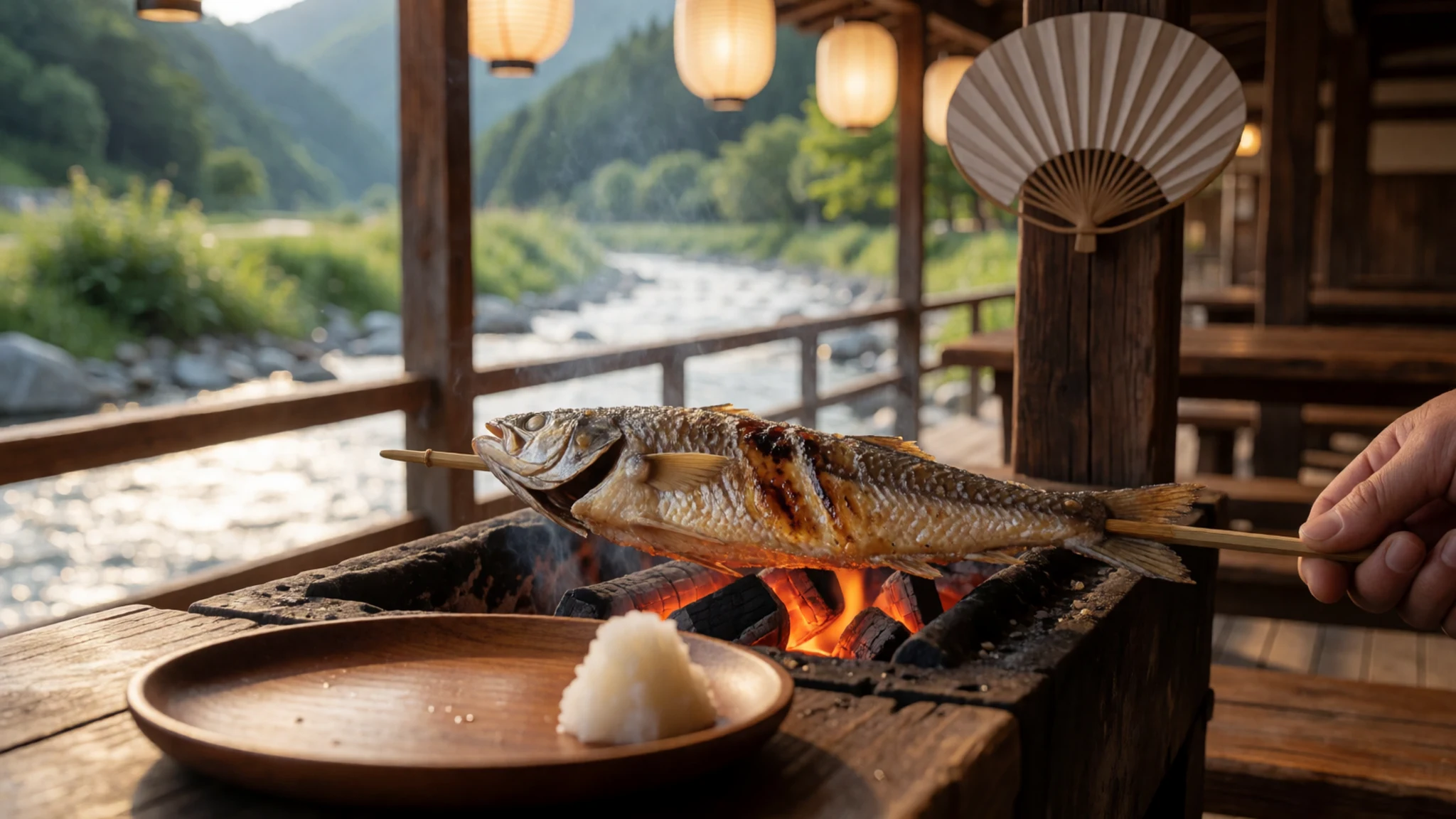
- Soba noodles — Soba restaurants in the towns on the approach roads
Buckwheat noodles are a staple of the cool uplands, served cold on a bamboo tray with a dipping sauce or hot in broth. Niigata's regional style, hegi soba, is served in a wooden tray. They make a light lunch after a walk. - Yaki-manju — Roadside stalls and shops in Gunma towns near the park
A Gunma speciality: a plain bun on a skewer, brushed with sweet miso sauce and grilled until it chars at the edges. It is salty-sweet and filling, and easy to eat while waiting for a bus after the walk. - Onigiri and trail lunch — Lodges and shops near the main entrances
Rice balls wrapped in seaweed, with fillings such as pickled plum or salted salmon, are the standard walker's lunch. Lodges usually pack them as a bento box for the next day's walk if you order ahead the night before.
Plan it
Best time. Late May–June for skunk cabbage as the snow melts, July for day lilies, late September–October for autumn colour. Snow covers the marsh in winter, so most visitors walk from late spring to autumn; check the official site for what is open. Mornings and evenings are cool even in summer.
How long. 2–3
Getting there. Tokyo is the nearest major gateway. From there, take rail to a town on the Gunma or Niigata side, then a seasonal bus to a trailhead such as Hatomachi Pass or Oshimizu; the Fukushima side has its own bus to Numayama Pass. Timetables vary by season, so check the operators and the official site.
Budget. mid
Tips
- Reserve a lodge well ahead, as they take a limited number of guests
- Go on a weekday, or arrive early, to avoid queues on the boardwalks at peak flower and colour weeks
- Carry cash, since lodges and small shops may not take cards
- Bring layers and rain gear, as mountain weather changes quickly
- Check conditions and entrance access on the official site: https://www.env.go.jp/park/oze/index.html
Etiquette
- Stay on the boardwalks and trails to protect the marsh
- Carry all your rubbish out with you
- Remove outdoor shoes at the lodge entrance and keep to lights-out times
Nearby
Sources
- Wikidata Q1204729 (CC0)
- Wikipedia: Oze National Park (rev 1383722680) (CC BY-SA 4.0)
- Wikivoyage: Oze National Park (rev 4879763) (CC BY-SA 4.0)
- Mountains in Oze National Park, BrianAdler (Public domain)
- Mt.Shibutsu 16, Σ64 (CC BY 3.0)
- Japan natural location map, Alexrk2 (CC BY 3.0)
- Oze aerial view, BehBeh (CC BY 3.0)
- Autumn foliage in Oze, Ka23 13 (CC BY-SA 4.0)
- Chozo Goya 1934, unknown author (Public domain)
- Hirano Chozo, unknown author (Public domain)
- Hiuchigatake, Qwert1234 (CC BY 3.0)


Wildlife
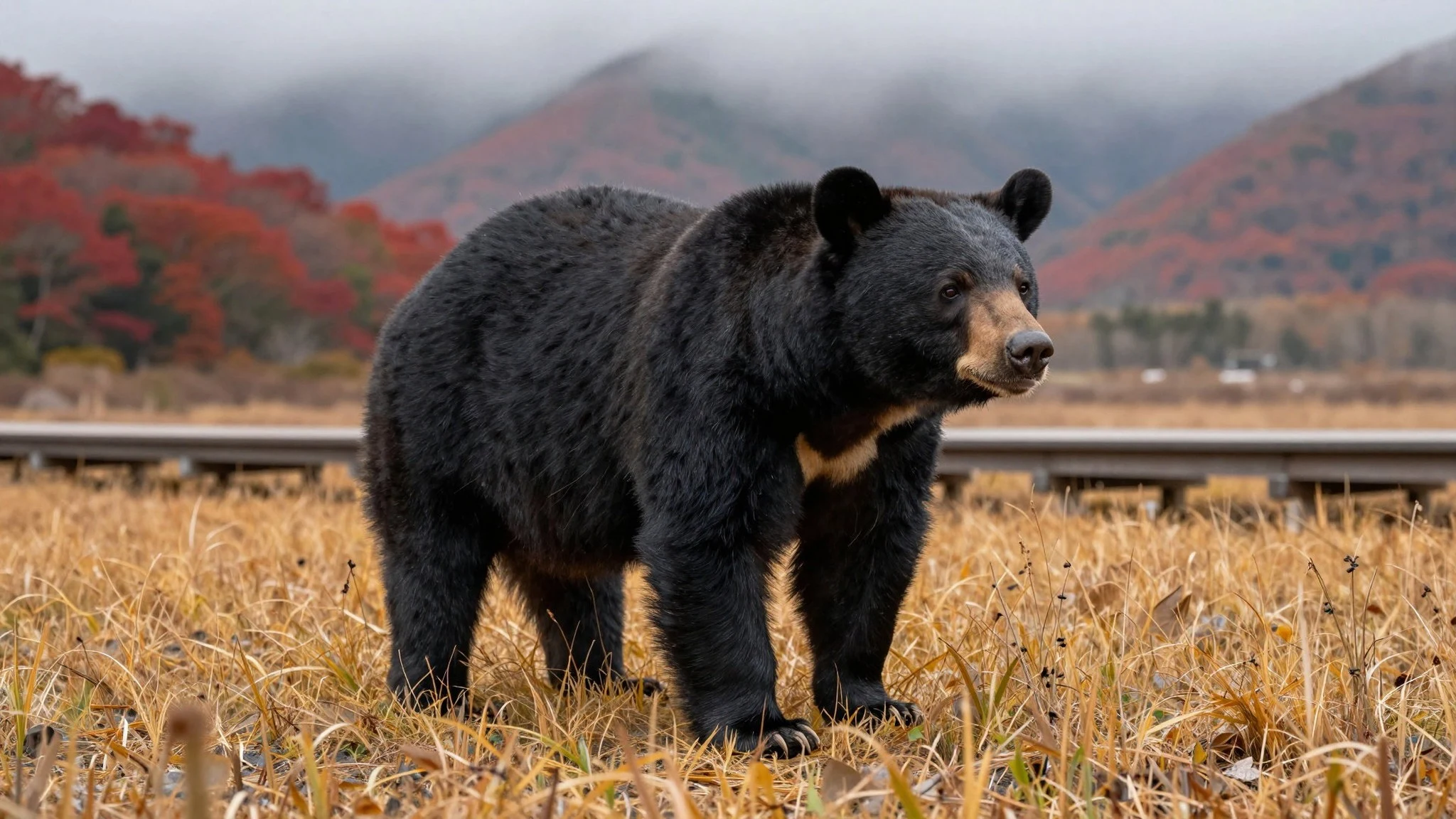
- Asiatic black bear (animal)
The Asiatic black bear, sometimes called the moon bear, is a medium-sized bear that is happiest climbing trees. It is found on the Japanese island of Honshū, among many other places across Asia. Many walkers carry a small bell as a reminder that this is wild country. Watch from a long way off, keep quiet, go with a guide if you can, and never feed it. It is a vulnerable species, so it deserves your respect.