Ouarzazate
Ouarzazate, Morocco
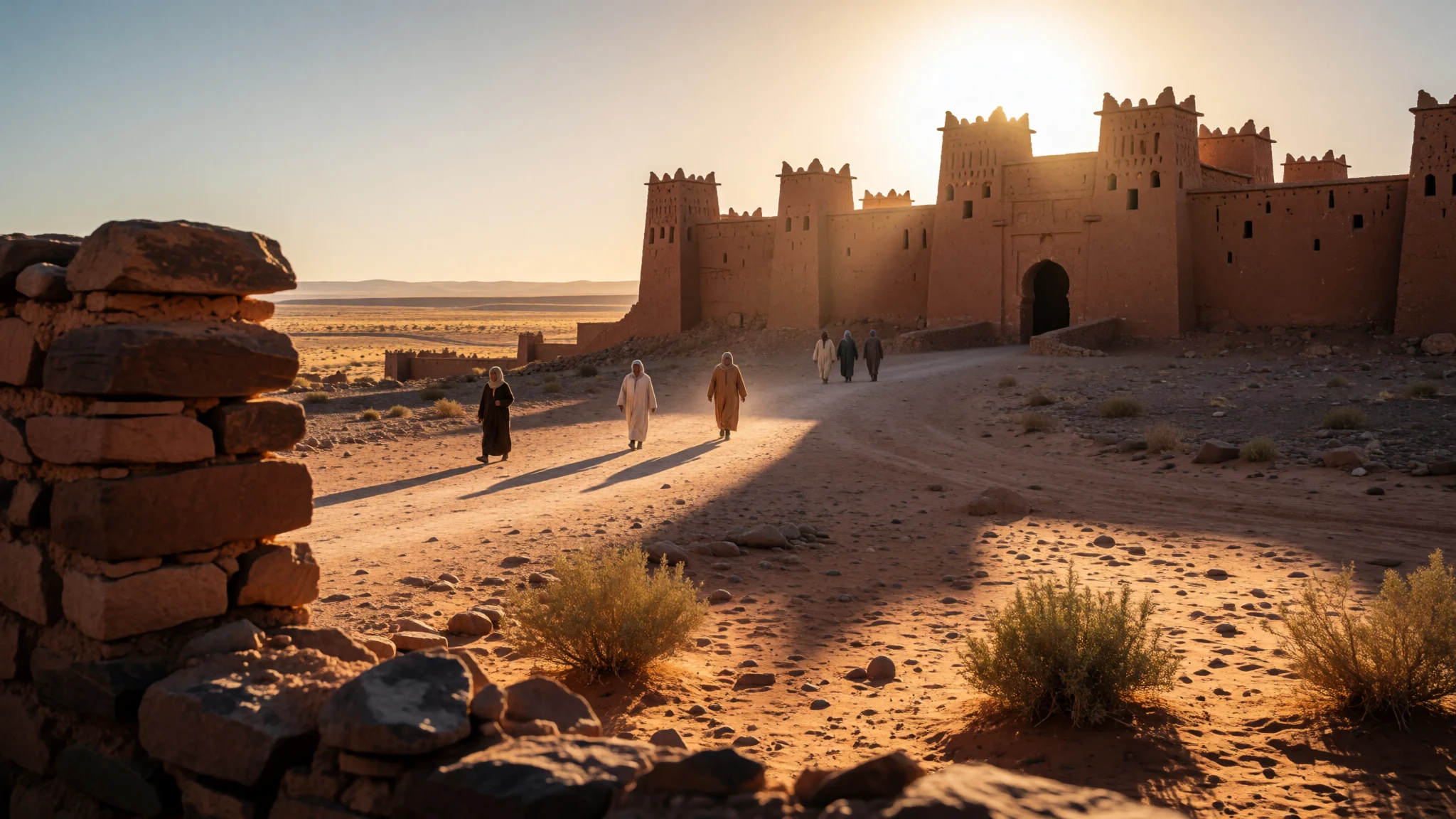
Visit Ouarzazate to explore cinematic landscapes, ancient mud-brick kasbahs, and the gateway to the Sahara desert.
The place
Ouarzazate is a dusty, red-hued city perched on a high plateau in south-central Morocco. Known as the gateway to the desert, it sits at an elevation of about 1,151 metres, nestled between the High Atlas Mountains and the Sahara. For those arriving from the frantic energy of Marrakech or Fez, Ouarzazate feels remarkably quiet and spacious. The landscape is stark and arid, crossed by the Assif Iriri river, with the shimmering El Mansour Eddahbi Reservoir lying to the east.
While the town itself is modest in size, its global fame comes from its unique light and architecture, which have made it a magnet for international film crews. From the sweeping vistas of historical epics to the gritty settings of modern dramas, the surrounding plains and fortified villages provide a timeless backdrop. Beyond the cinema, Ouarzazate serves as a vital hub for travellers venturing deeper into the Draa Valley or towards the dunes of the south. The atmosphere is a blend of Berber traditions and administrative colonial influence, reflected in the mix of winding alleys and wide avenues. It is a place where the heat of the desert meets the cooling breeze of the mountains, creating a sensory experience defined by the scent of dry earth and the sight of towering clay walls.
Its story
Ouarzazate began as a modest crossing point for traders moving goods between sub-Saharan Africa and the Mediterranean coasts of northern Morocco. Over the centuries, it evolved into a strategic outpost for regional emirs. The city is deeply tied to the history of the Glaoui family, whose power was cemented through the ownership of the imposing Kasbah Taourirt. A Krupp field gun, once used to secure this authority, remains on display today as a testament to the era of local strongmen.
Parallel to its military and political history, Ouarzazate was once home to a vibrant Jewish community. The old Mellah district housed these residents, and the town's history is still visible in the Old Synagogue, which has stood for centuries, and a quiet, decommissioned Jewish cemetery. During the French colonial era, the town expanded its role as a garrison and customs post, adding European architecture like the Eglise Saint Therese to its skyline.
In recent decades, the story of Ouarzazate has shifted toward the future. It has transitioned from a remote outpost to a creative hub, joining UNESCO’s Creative Cities Network in late 2023. Simultaneously, the city has embraced sustainable energy, hosting a massive solar power station that looms over the horizon, marking the town's transition from a historic crossroads to a modern centre of green energy production.
What to see
- Kasbah Taourirt — Avenue Mohammed V
A sprawling, labyrinthine fortress in the city centre. Visitors can wander through a maze of clay rooms and hallways that once housed powerful local leaders, now serving as a gallery for various artists. - Aït Benhaddou — West of the city
A stunning, well-preserved fortified village and UNESCO World Heritage Site. This iconic mud-brick ksar is a favourite for film crews and offers a picturesque climb to the top for sweeping valley views. - Atlas Studios — City outskirts
A sprawling open-air movie set where many historical epics were filmed. It offers a glimpse into the cinematic magic used to create ancient cities and exotic locales for global audiences. - Oasis de Fint — South of the city
A lush, green sanctuary tucked away in the dry hills. This small paradise of palms and vegetation provides a stark, beautiful contrast to the surrounding arid landscape of the region. - Bet Knesset Synagogue — The Mellah
A historic place of worship turned museum. The interior is filled with Jewish artefacts and heritage items, providing a quiet look at the city's diverse religious history via guided tours.
Culture
Ouarzazate is a meeting point of Berber and Arab influences, where the slow pace of desert life still dictates the rhythm of the day. The culture is one of hospitality and resilience, shaped by the harsh environment of the high plateau. There is a strong pride in the traditional architecture of the kasbahs—the towering clay structures that define the horizon. The city's identity is currently in a state of flux, balancing its heritage as a trade post with its modern role as a global filming location and a hub for renewable energy. Visitors will find the locals generally warm but reserved, with a deep connection to the land and the seasonal migrations of the region. The influence of the cinema industry has brought a cosmopolitan touch to the town, yet the heart of the community remains in the markets and the family-centric traditions of the Draa Valley. When visiting, remember that modesty is appreciated; keep shoulders and knees covered to respect local norms.
What to wear
Traditional dress in Ouarzazate is dominated by the djellaba, a long, loose-fitting robe with a hood, typically made of wool for the cold winters and lighter cotton for the scorching summers. Men often wear the gandoura, a shorter tunic, while women wear brightly coloured kaftans or wraps that provide protection from the sun and wind. Hand-woven Berber textiles, featuring geometric patterns and natural dyes, are common in home furnishings and shawls used for warmth.
Nowadays, most residents wear a mix of traditional and Western clothing. It is common to see young men in jeans and t-shirts paired with a djellaba for prayers or formal occasions. In the city centre, the attire is more contemporary, reflecting the administrative nature of the town.
For visitors, the key is versatility. The desert climate means extreme temperature swings; breathable linens are essential for the daytime heat, but a heavy jacket and warm layers are necessary for the biting mountain winds and occasional winter snowfall. Sturdy walking shoes or boots are recommended for exploring the sandy terrain of the kasbahs and the rocky paths of the oasis.
What to eat
- Lamb Tagine — Central square restaurants
Slow-cooked lamb with apricots or prunes in a conical clay pot, offering a rich blend of sweet and savoury flavours. Found in the eateries around the central square. - Vegetable Couscous — Mohammad V street
Steamed semolina topped with a hearty stew of seasonal root vegetables and chickpeas. A staple meal available at most family-run restaurants along Mohammad V street. - Fresh Mint Tea — The local souk
The ubiquitous 'Moroccan whisky', a sweet infusion of green tea and fresh mint, served in small glasses. Available at every cafe and stall in the souk. - Harira — Market-side eateries
A thick, warming tomato and lentil soup, often served as a starter or to break a fast. Common in the small, budget-friendly eateries near the market.
Plan it
Best time. March–April and October–November are ideal to avoid the extreme heat of summer and the icy mountain winds of winter.
How long. 2–3
Getting there. Fly into Casablanca or Marrakech, then take a CTM bus or a grand taxi; the drive from Marrakech takes about 4 hours via the Tizi n'Tichka pass.
Budget. mid
Tips
- Carry plenty of cash for markets and small museums
- Dress in layers to handle the temperature drop at night
- Start your visit to Aït Benhaddou early to beat the tour buses
- Keep hydrated with bottled water, available at supermarkets near the main square
- Be wary of taxi drivers who may request commissions for hotel referrals
Etiquette
- Dress modestly, covering shoulders and knees
- Ask permission before photographing local people
- Avoid wandering into unfamiliar side alleys after dark
Nearby
Sources
- Wikidata Q505208 (CC0)
- Wikipedia (CC BY-SA 4.0)
- Wikivoyage (CC BY-SA 4.0)