Ifrane
Ifrane, Morocco
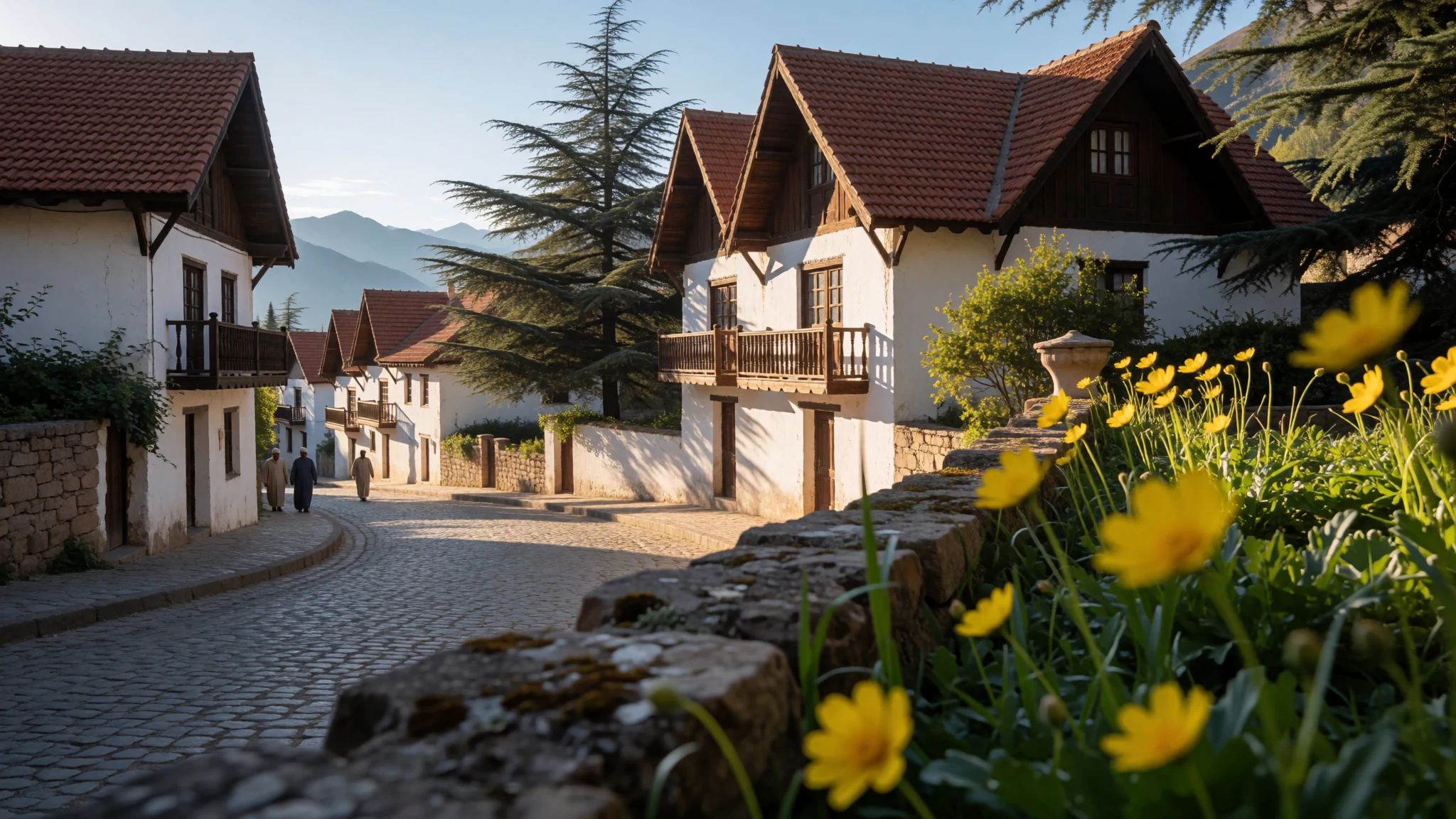
Ifrane is a cool, snowy Middle Atlas town of Alpine-style roofs, forest walks and wild macaques, a refreshing change from Morocco's hot plains.
The place
Ifrane sits at 1,713 m in the Middle Atlas of northern Morocco, a town of about 13,558 people that looks more like an Alpine village than a Moroccan city. Steep tiled roofs, tidy lawns and tree-lined avenues create the effect, and Moroccans often call the place "Little Switzerland". The resemblance is deliberate. The French protectorate administration laid out the modern town in 1929 as a hill station, a retreat where Europeans could escape the summer heat of the interior plains. Today Ifrane is the capital of Ifrane Province in the Fez-Meknes region, and daily life runs on local administration and on a university whose students fill the cafes. Altitude is the reason people come. Winters are long, cool and damp, snow can begin as early as October, and nights turn severely cold. Summers are short, warm and fairly dry, and noticeably gentler than in the lowlands around Fez and Meknes. Moroccan families arrive in July to cool off, and in the snowy months the town works as a small ski resort. It is a quiet place rather than a monument-hunting one: the pleasures are walking in the woods, watching Barbary macaques, riding a horse with a local guide, and sitting in a cafe with a hot drink. Nearby Lake Dayet Iffer is used by athletes for altitude training, and a spring called Ain Vital lies a short distance from the centre. Expect a calmer, more orderly pace than in Morocco's old medinas, and pack for weather that can change quickly.
Its story
Ifrane's story begins in the Tizguit valley, downstream from the modern town. In the sixteenth century a sharif named Sidi Abdeslam founded a religious community there, and the first homes were caves cut into the limestone wall of the valley. The name itself reflects this: in the local Amazigh language, ifran means caves. The settlement became a zawiya, a community built around a holy man and his descendants, and its caves are still used today to shelter animals and store goods, now beneath houses that residents have only recently begun to build above ground. By the middle of the seventeenth century the zawiya was prosperous enough to receive a large land grant from the Alawi sultan Al-Rashid, covering the valley from above present-day Ifrane down to the El Hajeb escarpment. The community lived from irrigated fields on the valley floor, from livestock and from forest products. Late in the nineteenth century, herding groups of the Beni M'guild and Ait Seghrouchen, who had crossed the Middle Atlas from the upper Moulouya plain, began grazing sheep and goats on the surrounding plateau. Land was divided in two ways: farm plots were private property, while pasture belonged to the tribe collectively. Then came the colonial chapter. In 1929 the French authorities built a new European-style resort on the high ground above the old valley settlement, for the cool air. That planned town, rather than the cave village, is the Ifrane most visitors see now, though the older story remains visible a short drive away.
What to see
- Centre-ville and the lion statue — Town centre
Ifrane's newer centre is compact and easy on foot. It holds the tourist office, a park with a small lake, cafes, and the stone lion statue where visitors queue for photographs. Chalet-style roofs and clipped gardens make it feel unlike the rest of Morocco. Walk it slowly, ideally in the morning.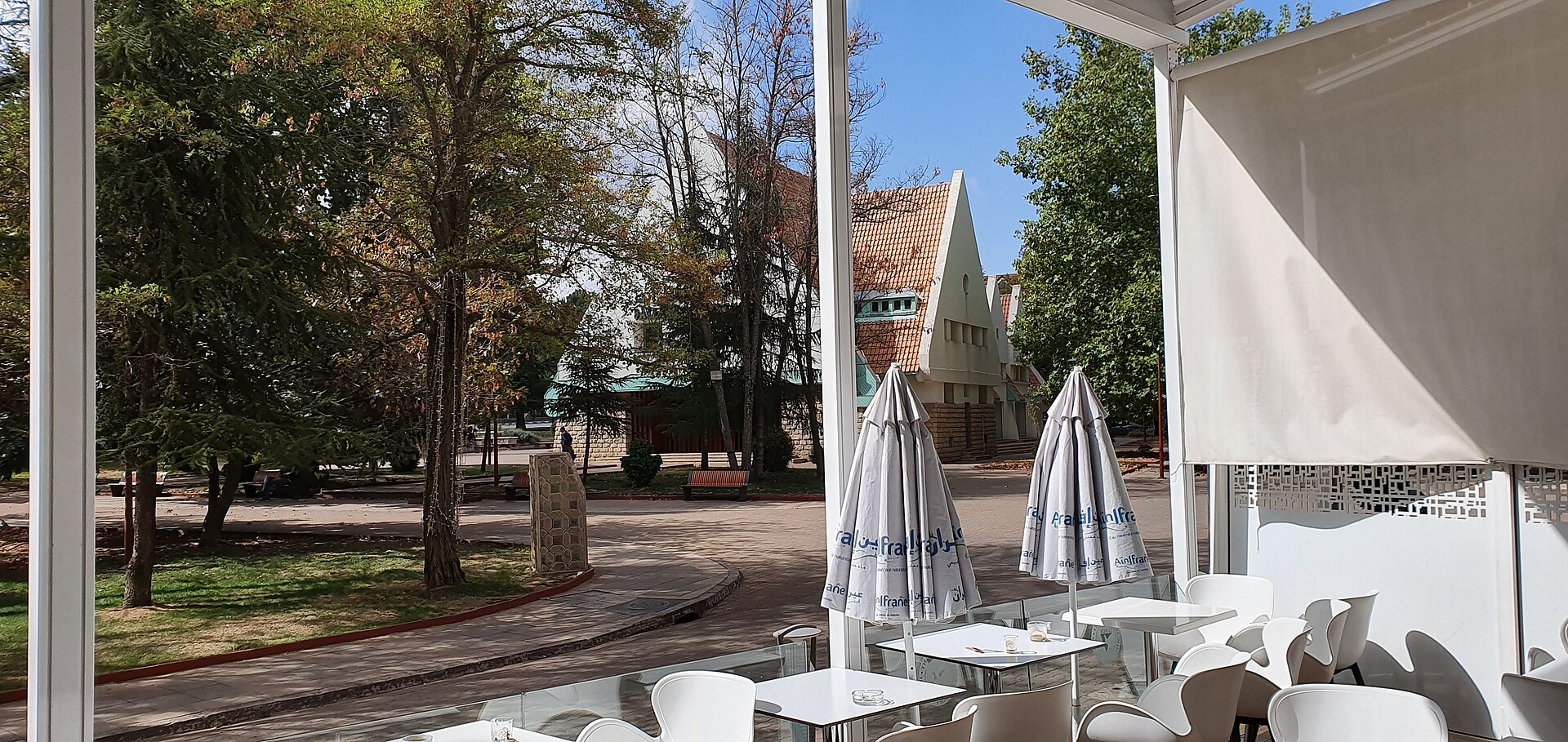
- Al Akhawayn University — Edge of town
The campus is Ifrane's best-known modern landmark, built under royal patronage in an Atlas-meets-Alpine style. It is normally closed to people who are not students, though occasional events open the gates, and visitors can apply to the faculty for special permission. Even from outside, its roofs and setting are worth a look.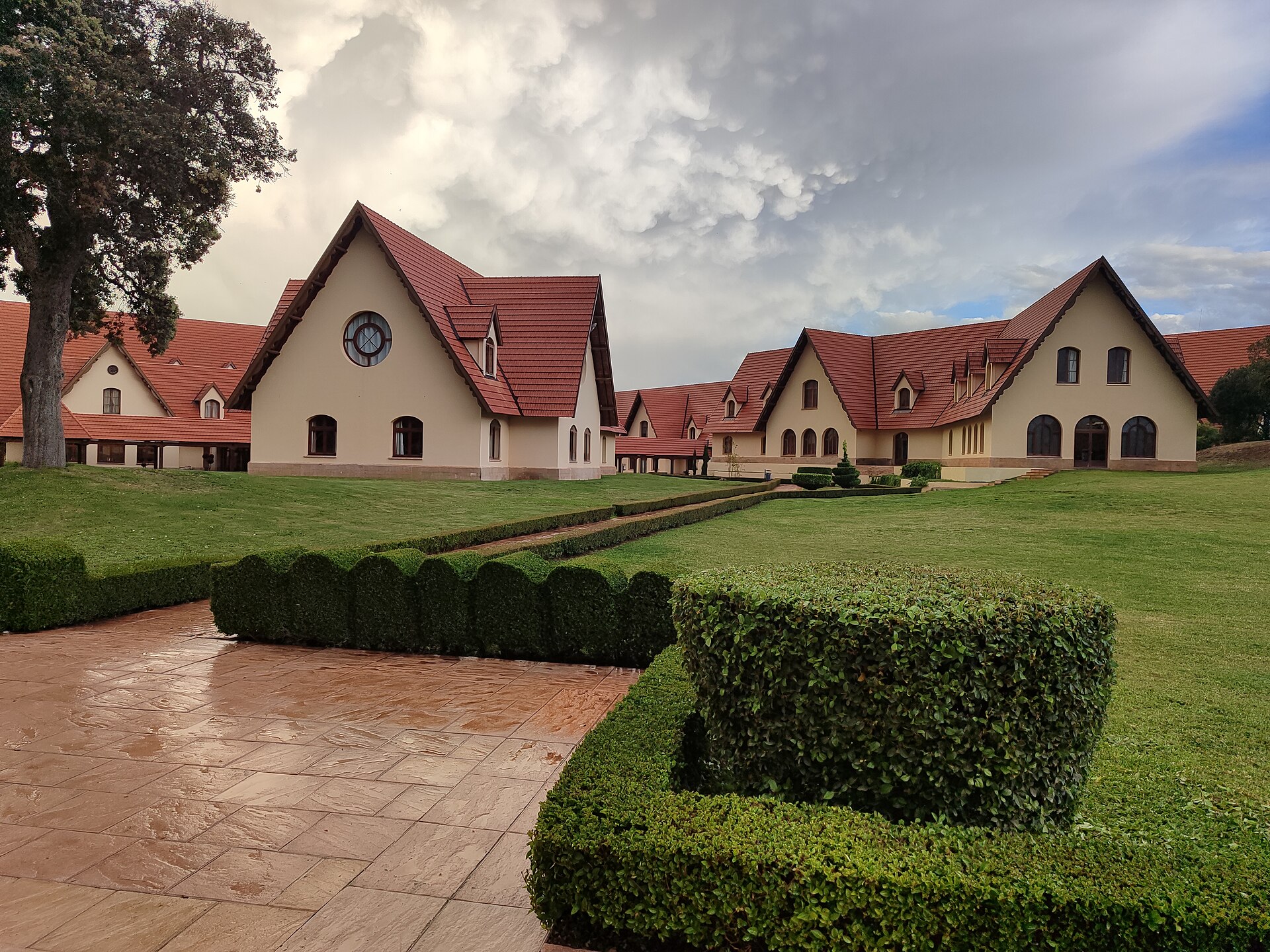
- The market and the macaques — Southern edge of town
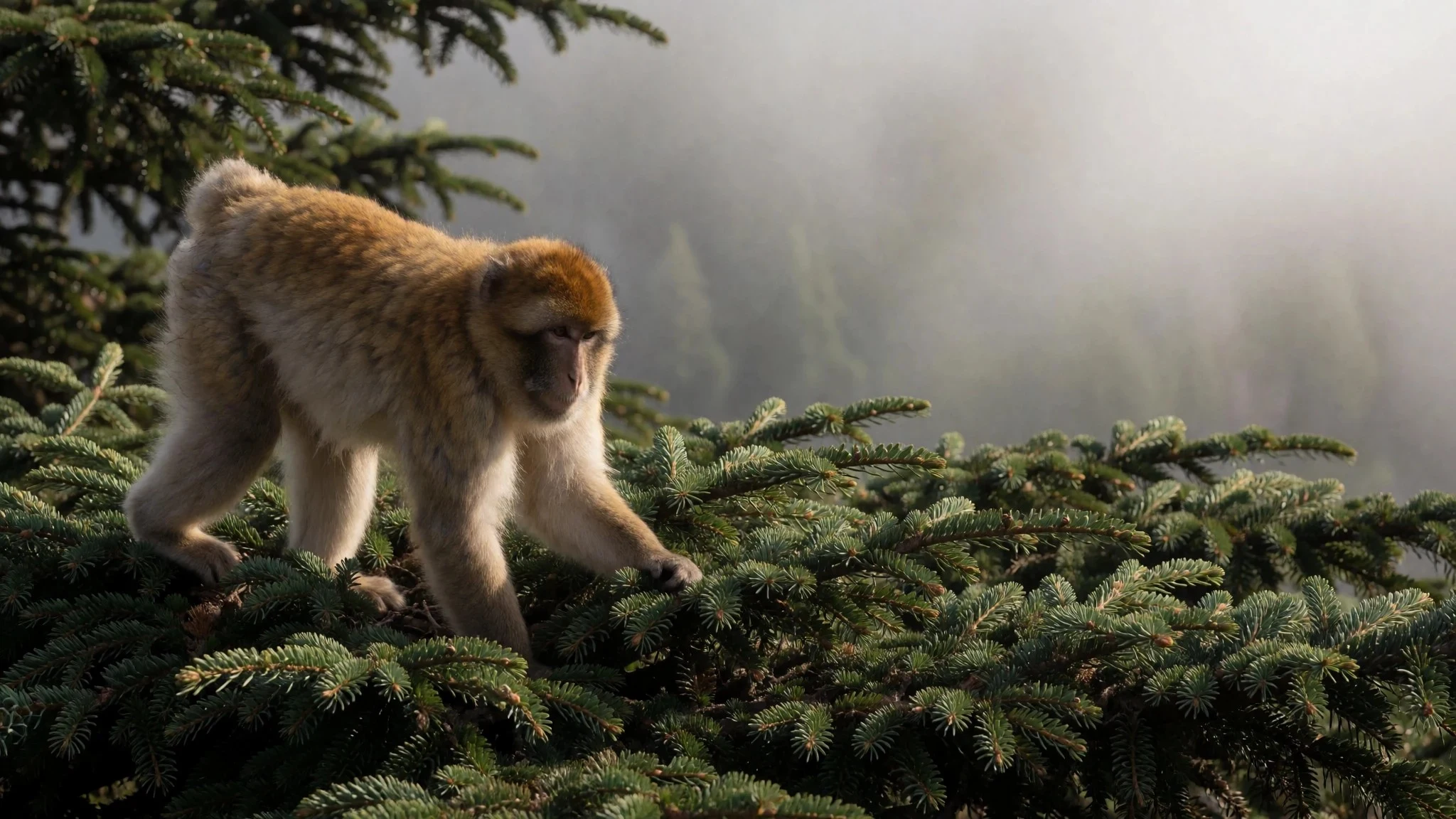
The daily market is where locals buy fruit, meat, books and electronics, and it has plenty of cheap eateries. Barbary macaques gather around the southern edge of town near it. Watch them from a distance, keep bags closed and food out of sight, and never feed them. - Ain Vital springs and waterfalls — About 3 km from the centre
Ain Vital, sometimes called the Virgin Falls, is a spring a short drive from the centre, with small cascades in the forest. None of the falls is dramatic, but the walk through the trees is pleasant, especially after rain or snowmelt. Taxis reach the further ones. - Zaouiat Sidi Abdeslam in the Tizguit valley — Tizguit valley, about 9 km downstream
Downstream from Ifrane lies the old zawiya village where the town's story began. Houses now stand over the limestone caves that the first settlers dug. The shrine of the founding sharif is the focus. It is a quiet, working community, so visit respectfully and ask locally about access.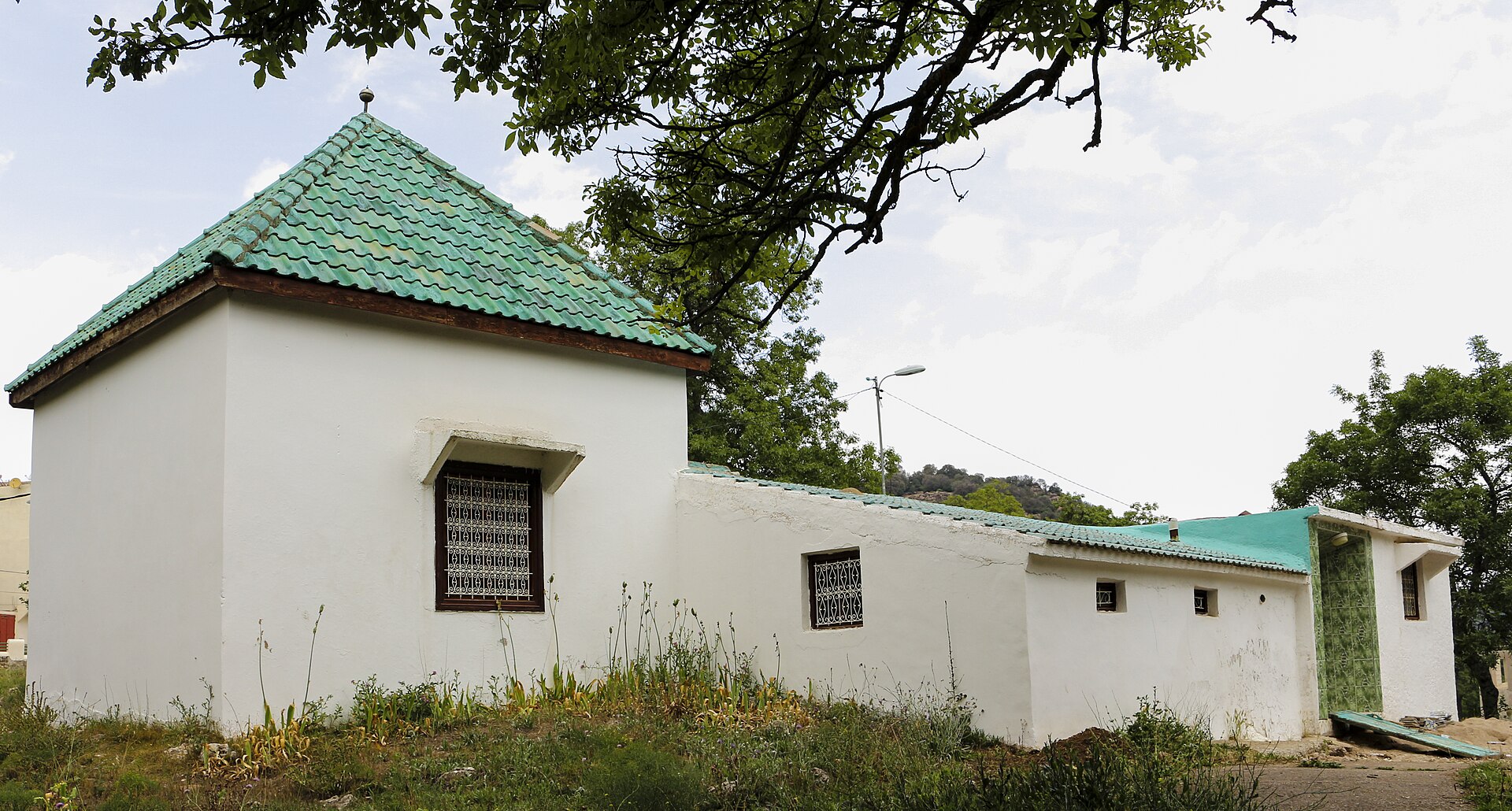
Culture
Ifrane's culture blends the Amazigh heritage of the Middle Atlas with the energy of a university town. The most distinctive local tradition is Ahidous, a communal art that joins sung poetry, group dancing and driving rhythms, usually performed in a line or circle. It appears in events staged in the town, including a concert called the Ahidous Symphony, which gathers groups from across the Middle Atlas and sets old forms alongside newer staging. The Ifrane International Festival is the biggest modern arts event in the calendar. Beyond these, students and young residents support contemporary Moroccan and Amazigh music, hip-hop, painting and live performance, so the town's cultural life is livelier than its size suggests. Older layers are present too: the zawiya in the Tizguit valley reflects a long tradition of religious communities, and pastoral families in the surrounding hills still keep sheep and goats. Everyday manners are warm but formal. Greetings matter, a few words of Arabic or French are appreciated, and cafe conversations can be unhurried. Weekends and summer holidays bring Moroccan families, so the town is busiest then and can feel quiet midweek in the cold months. Alcohol is limited in a small, conservative mountain town, and public behaviour is generally modest. Ask before photographing people, especially women and older residents, and do not feed the macaques that wander near the market.
What to wear
In Ifrane, traditional dress follows Moroccan and Middle Atlas custom. The classic garment is the djellaba, a long hooded robe worn by men and women, cut from heavy wool in winter and lighter cotton in warmer months. Men often pair it with babouches, soft leather slippers, and some herders and older villagers still wrap themselves in thick woollen cloaks and blankets against the cold. Women may wear a headscarf, and on festive days richly embroidered kaftans and Amazigh jewellery appear at weddings and Ahidous performances. Day to day, most people dress in a plain, practical way: jeans, jackets, knitwear and trainers, with fleeces and padded coats in the long cold season. University students bring a casual, international look, and the town feels closer to a European mountain resort than to a desert market. Visitors should plan for the weather first. Bring warm layers, a waterproof jacket, a hat and gloves for winter, and a fleece even in summer evenings. Sturdy boots with a good grip suit forest paths, mud and snow. Clothing should be modest, with shoulders and knees covered, which also suits the local climate. Women do not need a headscarf in town but should carry one if entering a religious building where visitors are permitted, and everyone should dress more conservatively around the zawiya and in smaller villages.
What to eat
- Kefta tagine — Family restaurants in the centre and by the market
Spiced meatballs simmered in tomato sauce, often finished with egg, and served bubbling in a clay pot with bread. It is a dependable order at family restaurants in the centre and around the market, and good on a cold day. - Harira — Cafes in the town centre
A thick, tomato-based soup with lentils, chickpeas and herbs, eaten with bread and sometimes dates. In Ifrane's chilly climate it is the obvious warm-up, and it is standard fare in almost every cafe in the centre. - Brochettes — Grill stalls and cafes near the market
Skewers of seasoned grilled meat, served with bread, salad and a little chilli. They are simple, quick and filling, and a good choice for a casual lunch after a morning walk in the forest. - Pastilla — A few higher-end restaurants in town
A flaky pastry pie, traditionally filled with spiced poultry and almonds and dusted with sugar and cinnamon. In Ifrane it is a smarter-restaurant dish rather than an everyday one, so ask whether it is on the menu. - Roast or grilled chicken — Chicken eateries and market-area restaurants
Simple, well-seasoned chicken is a local staple, served with chips, salad and bread. It suits budget meals and is popular with students, who favour the cheaper eateries in the market area. - Mint tea — Any cafe, especially around the park and lake
Sweet green tea poured from a height with fresh mint, served in small glasses. It accompanies nearly every sit-down meal and every cafe stop, and tastes best on a terrace in the cool mountain air.
Plan it
Best time. February for snow and skiing, May–June and September for walking in mild, fairly dry weather. Winters are long, cool and damp, with snow from as early as October; summers are warm but cooler than the plains. Nights can be severely cold in winter, so pack accordingly.
How long. 2–3
Getting there. Fly to Fès–Saïs airport, then take a grand taxi or bus to Ifrane, about an hour. Fez and Meknes are the usual gateways, and buses between Marrakech and Fez also stop in town.
Budget. mid
Tips
- Book a room ahead for school holidays and snow weekends, when Moroccan families fill the town
- Carry cash for small cafes, the market and taxis
- Bring waterproofs and warm layers even outside winter, as mountain weather changes fast
- Use taxis for the further waterfalls and valley visits, and agree the fare first
- Hire a horse and guide for a few hours to see the forest, and keep food away from the macaques
Etiquette
- Ask before photographing people, especially women and elders
- Dress modestly, covering shoulders and knees, and more conservatively near religious sites
- Do not feed or approach the macaques
Nearby
Sources
- Wikidata Q1001887 (CC0)
- Wikipedia: Ifrane (CC BY-SA 4.0)
- Wikivoyage: Ifrane (CC BY-SA 4.0)
- Dennis Sylvester Hurd, Fes to Merzouga (55322835409) (CC BY 4.0)
- Dennis Sylvester Hurd, Fes to Merzouga (55322618071) (CC BY 4.0)
- Marokistorique, Ifrane city (CC0 1.0)
- Souira 23, Zrouka, Ifrane, 2025 (CC0 1.0)
- AyourAchtouk, Mohamed VI Mosque 2 Ifrane (CC BY-SA 4.0)
- Mounir Neddi, Zaouiat Moulay Abdeslam, Tizguite 3 (CC BY-SA 4.0)
- Yair Haklai, Ifrane (CC BY-SA 4.0)
- Mounir Neddi, Al Akhawayn University (CC BY-SA 4.0)


Wildlife
- Barbary macaque (animal)
The Barbary macaque is a wild monkey from the Atlas Mountains that lives in big groups called troops. Around Ifrane, look in the cedar woods encircling the town, where whole troops roam. To watch them well, keep a respectful distance, stay quiet and move slowly, and consider going with a local guide who knows the woods. Never feed them. Their numbers in North Africa are falling, so every calm, careful visitor helps keep these monkeys wild.