Chefchaouen
Chefchaouen, Morocco
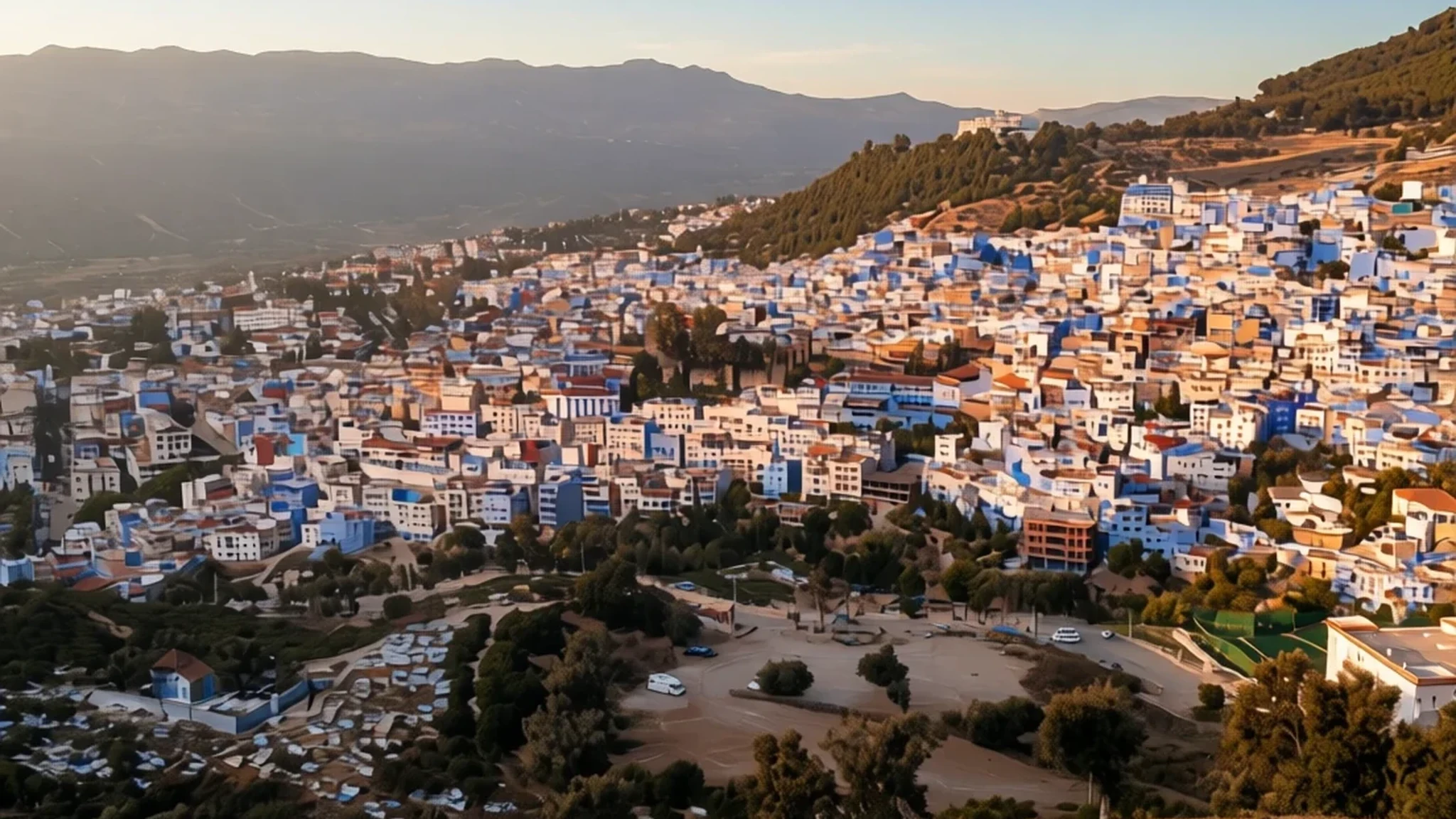
Visit Chefchaouen to wander through cascading blue-washed lanes tucked beneath the dramatic peaks of the northern Rif mountain range.
The place
Chefchaouen is a striking mountain settlement in northwest Morocco, serving as the chief town of its province. Situated in the foothills of the western Rif mountains between Tétouan and Ouazzane, the settlement rests high above sea level in a rugged landscape. It is widely recognised as the Blue City because its traditional houses feature walls painted in vivid shades of cobalt, indigo and powder blue against a backdrop of stark limestone peaks. The urban fabric is sharply divided between the historic walled medina and the newer districts that have expanded beyond the ancient perimeter. Within the old town, steep, winding alleys connect small public squares where residents gather under the shade of citrus trees and climbing vines. The surrounding mountainous terrain contributes to cooler air than the coastal plains, creating a distinct microclimate across the seasons. Visitors arrive to experience a quieter pace of life compared to the larger imperial capitals, though the visual draw of the powder-blue walls has made the settlement a prominent stop for travellers traversing the northern highlands. The call to prayer echoes across the rooftops from several neighbourhood mosques, blending with the daily routine of local trade, carpet weaving and agricultural exchange with nearby rural valleys.
Its story
The history of Chefchaouen began in 1471 when Ali ibn Rashid al-Alami established a small fortress in the rugged northern terrain. Built as a defensive stronghold, the initial fortification was designed to protect the region from Portuguese forces expanding their reach along the Moroccan coast. The founder was a local leader with deep lineage ties who gathered regional tribes and refugees to secure the mountain pass. Following the Reconquista and the fall of Granada, waves of Andalusi Muslims, Moriscos and Iberian Jews crossed the Mediterranean to settle in the valley. These newcomers brought advanced agricultural techniques, distinctive architectural styles, and culinary traditions that permanently shaped the character of the settlement. Under subsequent leaders, including powerful figures who directed local administration during periods of regional growth, the town expanded beyond its initial military purpose into a vibrant cultural centre. Over the centuries, the community maintained a degree of autonomy in its remote mountain setting, largely isolated from the political upheavals of the southern plains. Spanish forces entered the area in the early twentieth century before Moroccan independence restored national administration. Today, the enduring legacy of its Andalusian founders remains visible in the tiled roofs, interior courtyards, and urban layout of the old quarters.
What to see
- Kasbah — Place Outa El-Hammam
This historic fortress stands as one of the earliest structures built in the settlement following Andalusian architectural traditions. Inside the fortified walls, visitors find an enclosed garden, several defensive towers, a small prayer space, and former administrative rooms that now house regional exhibits.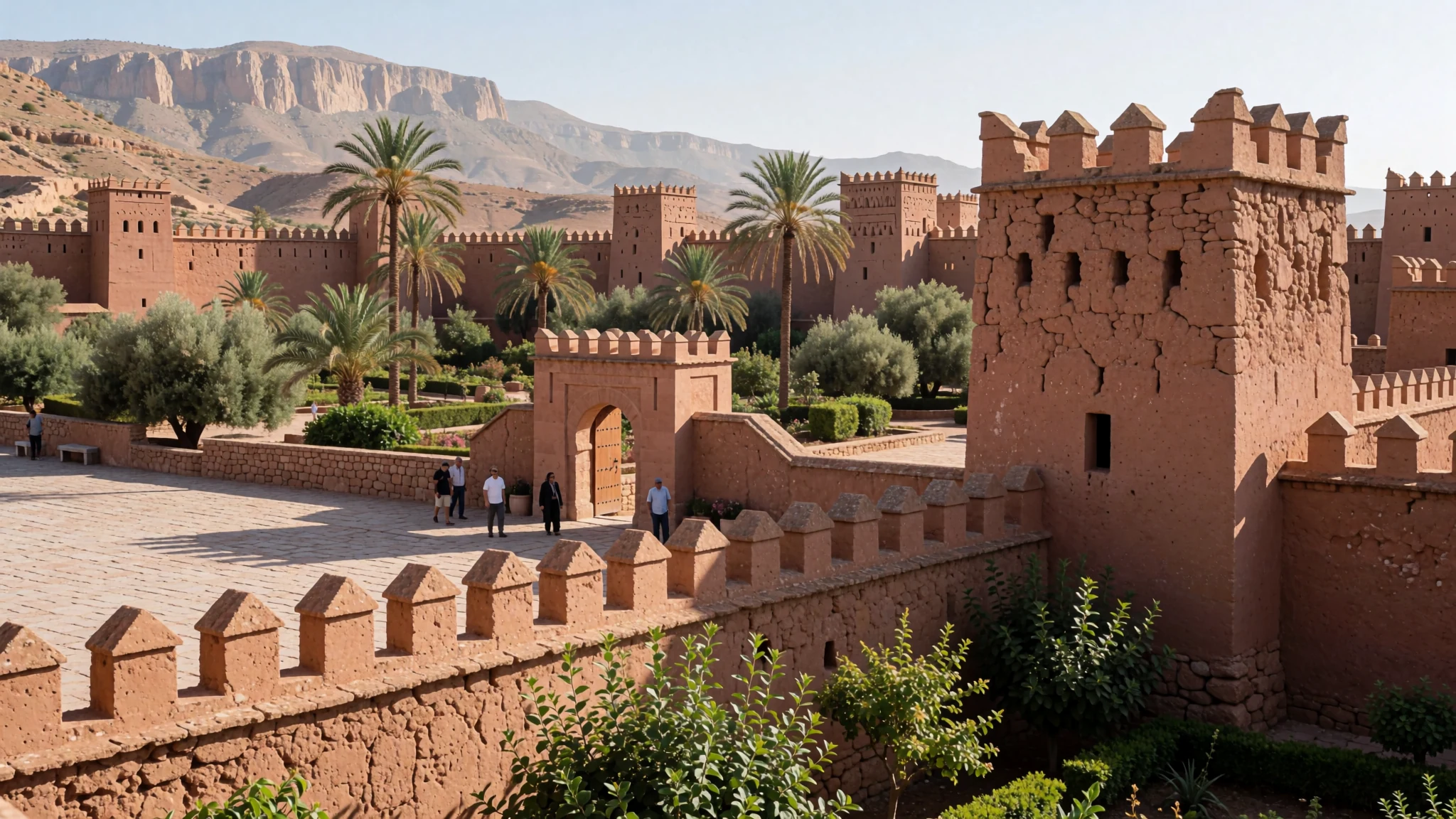
- Outae Hammam square — Central Medina
Serving as the primary public gathering space within the historic medina, this open paved square is shaded by large trees and surrounded by cafes. Local residents and travellers meet here to drink tea, socialise, and watch the daily rhythm of the town unfold beneath the mountain slopes.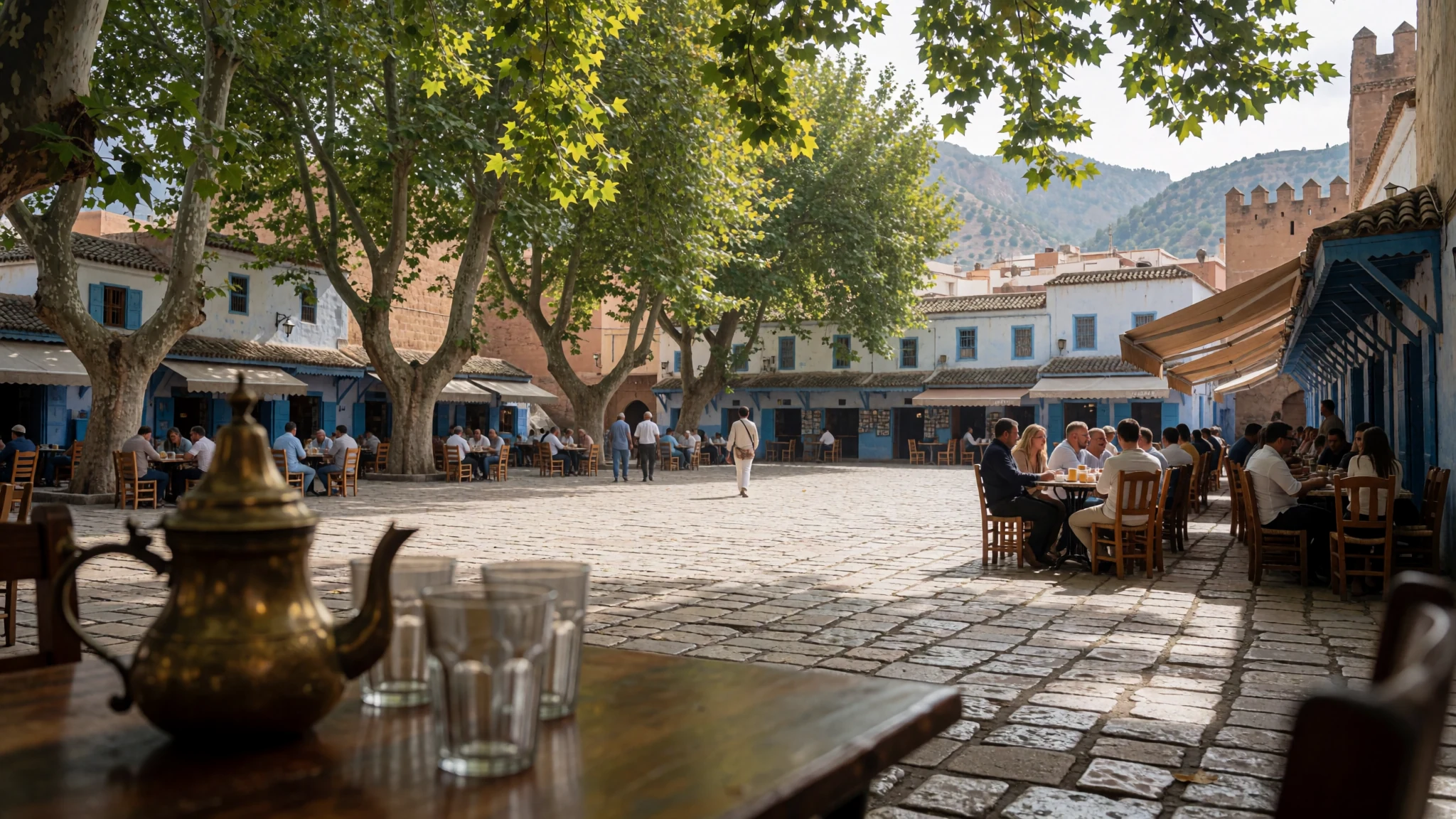
- Grand Mosque of Chefchaouen — Near Outae Hammam square
Constructed during the late fifteenth century, this stone-built sanctuary features an unusual octagonal minaret that rises above the surrounding rooftops. As the oldest Friday mosque in the settlement, it remains an active place of worship for local residents and is closed to non-Muslim visitors.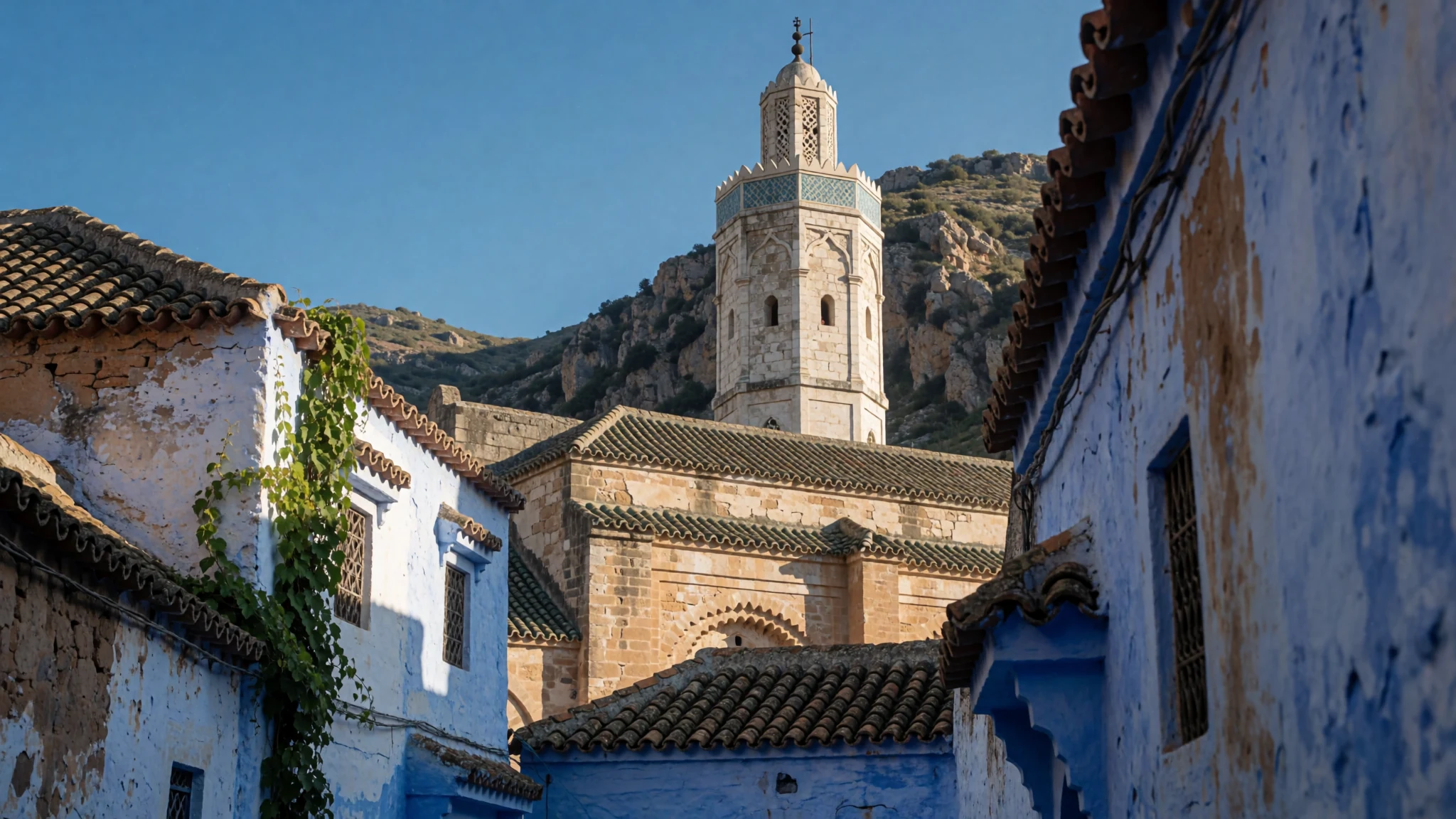
- Souiqah quarter — Northern Medina
Representing the second-oldest residential neighbourhood established by Andalusian families, this quiet residential quarter features narrow pedestrian lanes lined with blue-painted doorways. Traditional homes with wooden lintels and flower pots showcase the enduring craft heritage of the families who settled here centuries ago.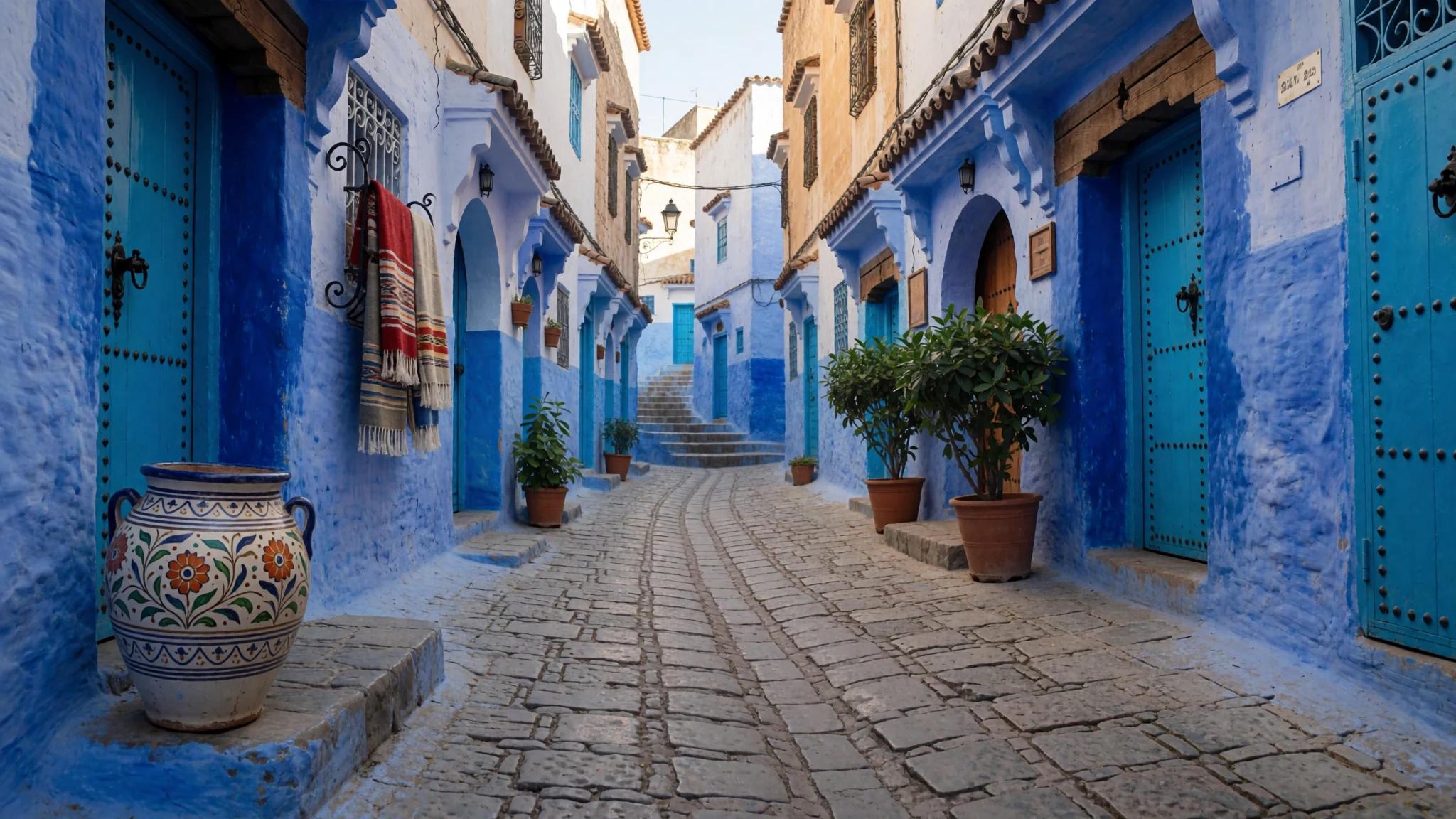
Culture
The cultural identity of Chefchaouen is shaped by the interaction between the indigenous Jebala hill tribes and the descendants of Andalusian refugees who arrived centuries ago. Communities from surrounding federations—including Akhmas, Ghomara, and Sanhaja—frequently interact with the town through weekly markets, trading agricultural produce, wool, and mountain herbs. Traditional dwellings were constructed using local stone, timber, soil, and lime, featuring central open-air courtyards surrounded by covered galleries. These interior yards are often planted with fruit-bearing trees such as lemons and oranges, alongside fragrant shrubs like night-blooming jasmine that cool the domestic spaces during warm afternoons. Music, weaving, and ceramic crafts reflect a distinct regional heritage preserved through generations of mountain isolation. Visitors should dress modestly with shoulders and knees covered out of respect for local religious and social traditions.
What to wear
Traditional attire in the region reflects practical adaptation to mountain winters and agricultural labour. Local men and women often wear heavy woollen garments, including the distinctive jellaba—a hooded outer robe—woven from local sheep's wool to protect against cold winds blowing down from the peaks. Hand-woven striped blankets and woollen shawls in red and white patterns are traditionally worn across the shoulders by women in the surrounding Jbala countryside. In the town itself, residents now blend traditional garments with contemporary everyday clothing, while younger generations lean towards modern jackets and trousers. For visitors exploring the steep, uneven stone steps of the medina, sturdy walking shoes with good grip are essential. Travellers should choose comfortable, lightweight layers that cover shoulders and knees to respect local conservative standards while navigating the warm daytime temperatures and cooler mountain evenings.
What to eat
- Mountain Fish Tajine — Medina side streets near the central square
A slow-cooked stew prepared in an earthen vessel with fresh fish, tomatoes, peppers, and regional spices, served piping hot with bread in small family-run eateries.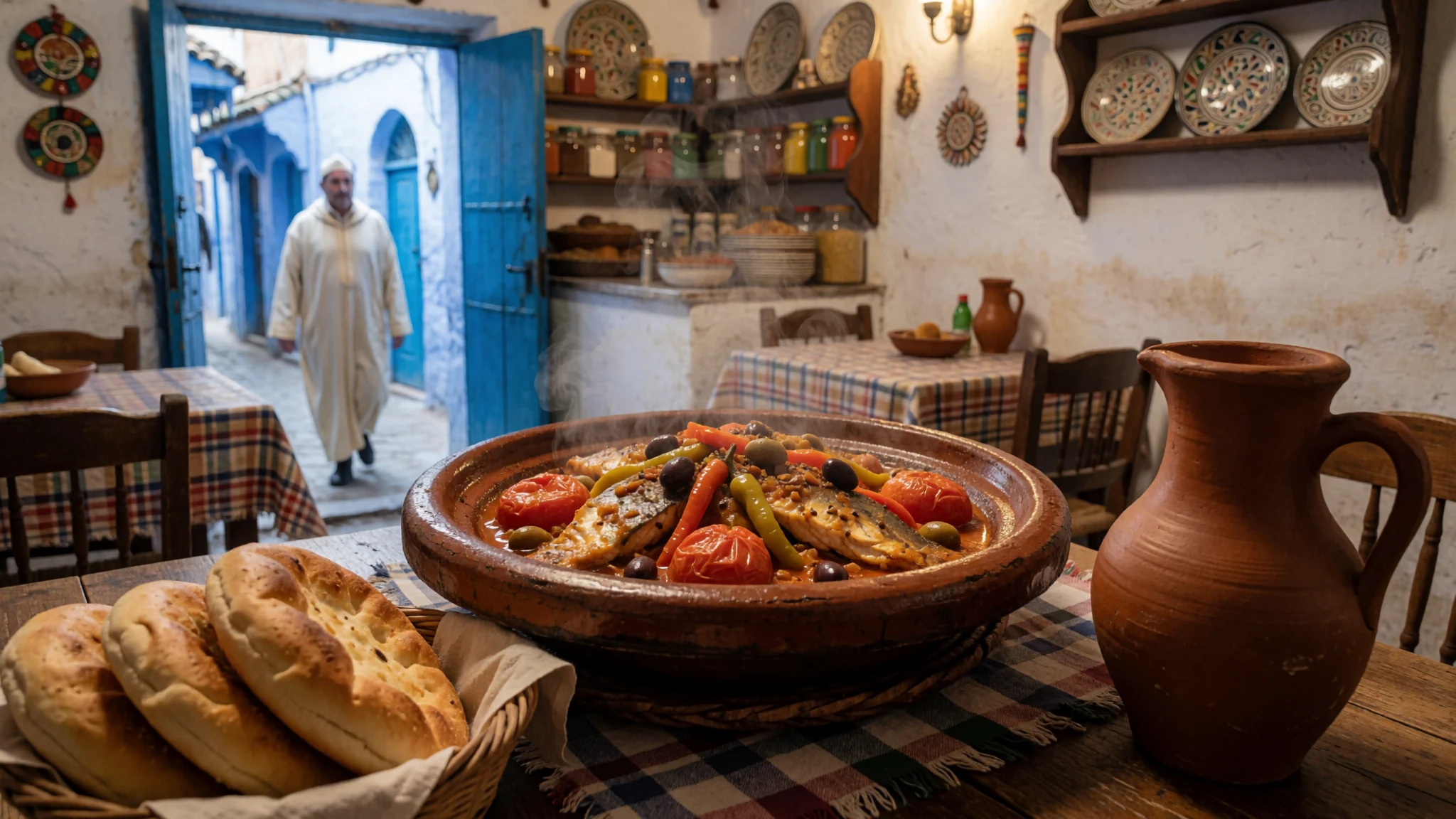
- Local Goat's Cheese — Morning market stalls and local sandwich shops
Fresh, unaged cheese produced by pastoral families in the surrounding hills, frequently sold plain or lightly salted in small neighbourhood grocery stalls.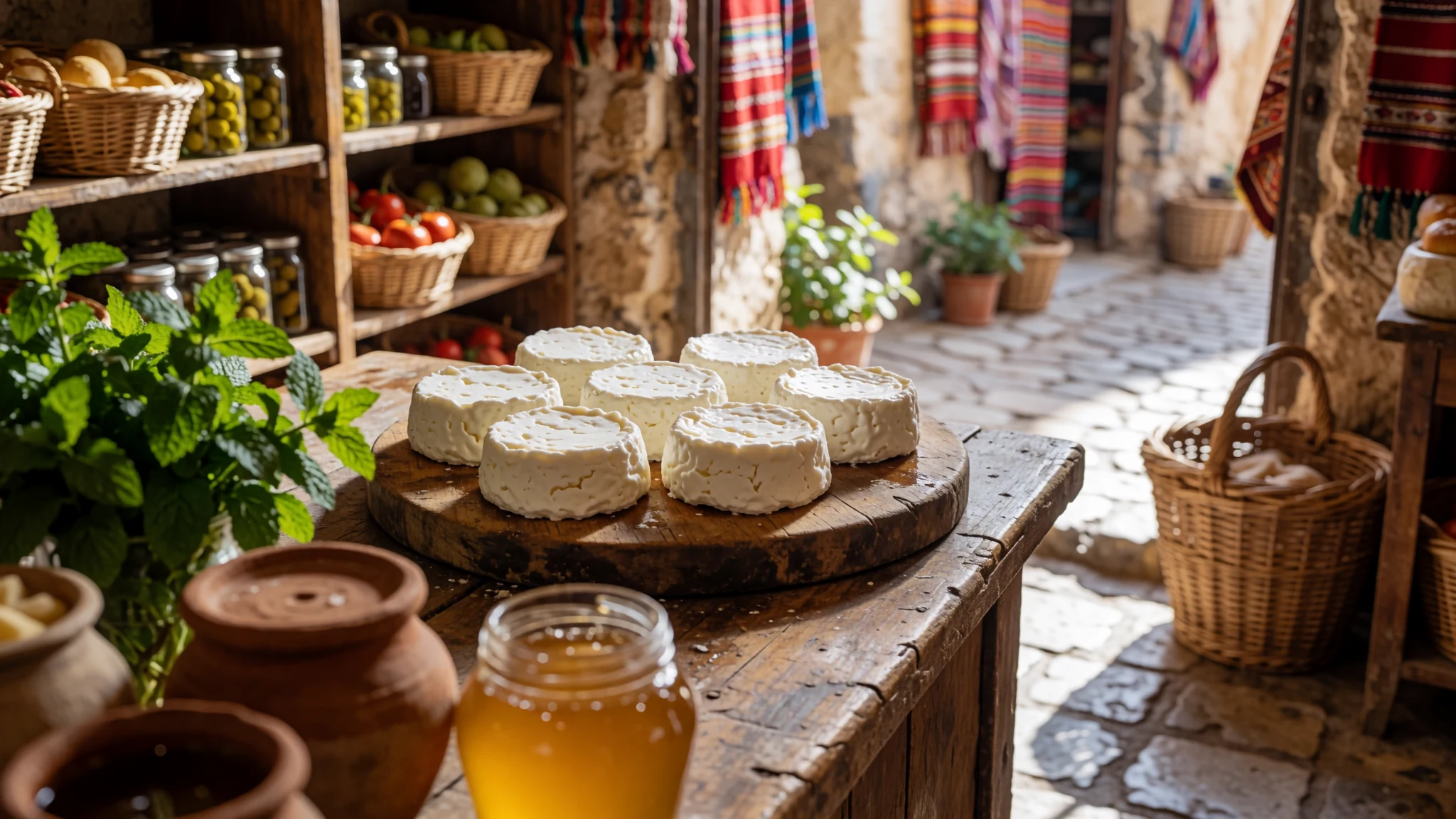
- Vegetable Couscous — Traditional terrace restaurants overlooking the square
Steamed semolina grains topped with a generous assortment of seasonal root vegetables, squash, chickpeas, and a fragrant vegetable broth simmered with local herbs. - Medina Street Sandwiches — Small snack counters near Bab el-Ain gate
Quick, casual snacks filled with spiced meats, fresh local cheese, or fried vegetables tucked inside crusty bread from neighbourhood bakers. - Traditional Mint Tea — Open-air cafes around Outae Hammam square
A sweet infusion of green tea leaves and fresh spearmint poured from a height into small glass cups, served as a gesture of hospitality across all local cafes.
Plan it
Best time. March to April offers the most comfortable walking weather; June to August are very hot, with highs above 40°C, November is the wettest month, and winter nights in the mountains turn cold.
How long. 2–3
Getting there. Fly into Tangier, Fez, or Tetouan, then continue by intercity bus or shared taxi through the mountain roads to reach the town.
Budget. mid
Tips
- Wear sturdy footwear with good grip for walking on steep, polished stone steps
- Carry cash in local currency for small market purchases and cafes
- Explore the medina early in the morning before day-tripper crowds arrive
- Dress respectfully with shoulders and knees covered throughout the town
Etiquette
- Do not attempt to enter active mosques if you are a non-Muslim visitor
- Ask permission before photographing local residents in the alleys
- Greet shopkeepers with a polite smile and local greeting before browsing
Nearby
Sources
- Wikidata Q676778 (CC0)
- Wikipedia (CC BY-SA 4.0)
- Wikivoyage (CC BY-SA 4.0)