Dades Gorge
Dades Gorge, Morocco
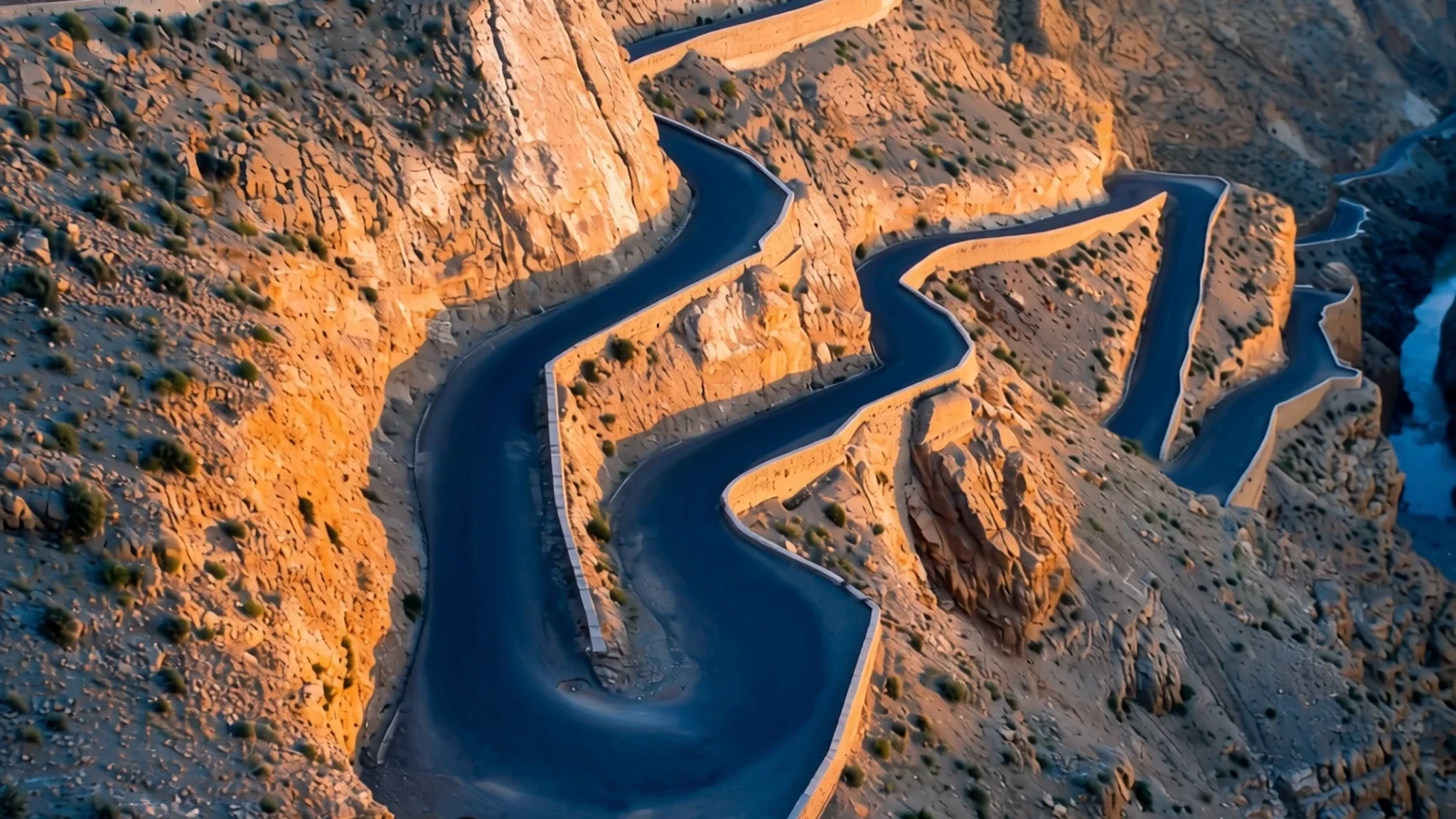
Dades Gorge is a river-cut canyon in the High Atlas, where red cliffs, a winding road and mud-brick villages make a slow day's drive feel like the start of the desert.
The place
The Dadès Gorges, also known as the Dades Valley, are a run of rugged wadi gorges cut by the Dadès River in southern Morocco. The river rises in the High Atlas, the great range that runs across the country, and carries its meltwater some distance southwest before meeting the Draa at the edge of the Sahara. For much of that journey the land is dry and open, but where the river has cut through rock the scenery turns dramatic. The gorge walls climb from about 200 to 500 metres, and in places the cliffs press so close that the sky narrows to a strip. The rock changes colour through the day, from pale ochre at dawn to deep rust by late afternoon, and its layers show how slowly the water has worked. On the flat ground beside the river, terraces of barley, alfalfa and fruit trees are watered by channels maintained for generations. Mud-brick villages and kasbahs cluster where the valley widens. Amazigh (Berber) families have lived here for a very long time, and Tamazight is still spoken in homes and markets. Most people earn a living from farming, small trade and the visitors who now drive the valley road. The place feels lived in rather than staged, which is part of its appeal, though the gorge's popularity means the road can be busy in the middle of the day.
Its story
The valleys of the High Atlas have long been home to Amazigh communities, and the Dadès Gorges sit within that world. Morocco's earliest known independent state, the Berber Kingdom of Mauretania, dates back at least to 300 BCE. From the 1st century BCE, the lowland territory it shared with its neighbours formed part of the Roman province of Mauretania Tingitana. Yet the mountain interior was never fully absorbed. Through the Roman period and the invasions that followed, highland Berber groups kept their own leadership and customs, and steep, cut-off valleys made outside control costly. When the first Islamic conquest of the coastal plain took place in 670 CE under Uqba ibn Nafi, the mountains changed more slowly. Islam spread into the valleys over time, but local practice, language and village organisation stayed distinct, which is why the gorge towns still feel different from the lowland cities. The river did much of the work of keeping them apart, since a narrow canyon is a hard place to govern, trade through or invade. Routes running between the Sahara and the north crossed country like this, and villages profited from passing traffic while guarding their own affairs. Today the story shows in the architecture, in the markets and in the way families speak of their valley as their own.
What to see
- The hairpin bends — The road through the gorge, between the upper and lower sections
The road through the gorge doubles back on itself in a series of tight bends, so you spend as much time looking up as ahead. Drive slowly, use the wider spots to pull over, and give way on narrow stretches. The best light for photographs is in the morning, when the cliff faces are still in shade and the road is quiet.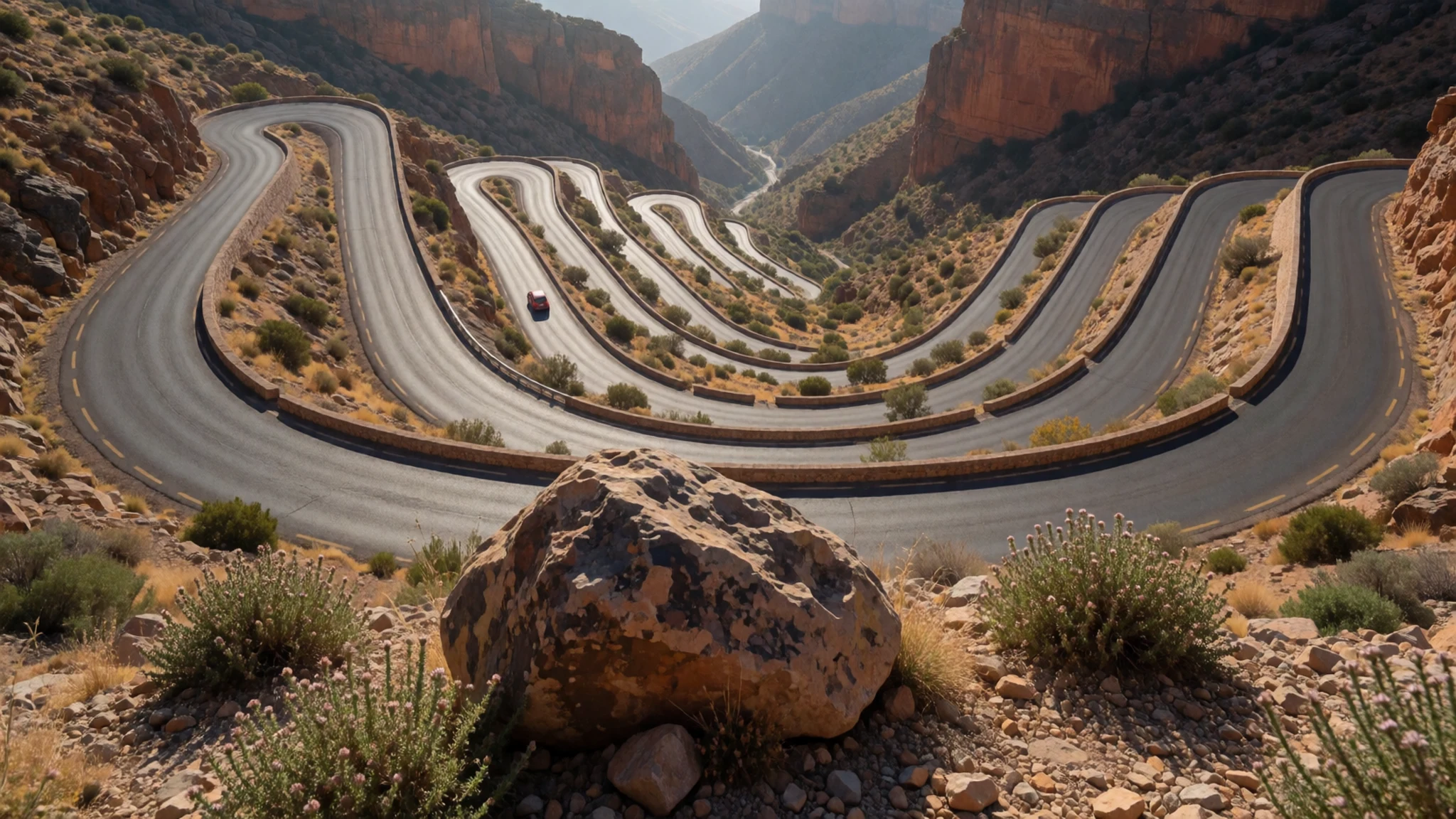
- The gorge walls — The middle of the gorge, along the river and the main road
Walls climbing from about 200 metres to around 500 metres sit so close to the road that the sky sometimes narrows to a ribbon at midday. Stop at a turn-off with a view across the river, and look for the layered bands of rock that show how slowly the water has cut. Bring a hat in the warmer months; there is little shade on the valley floor.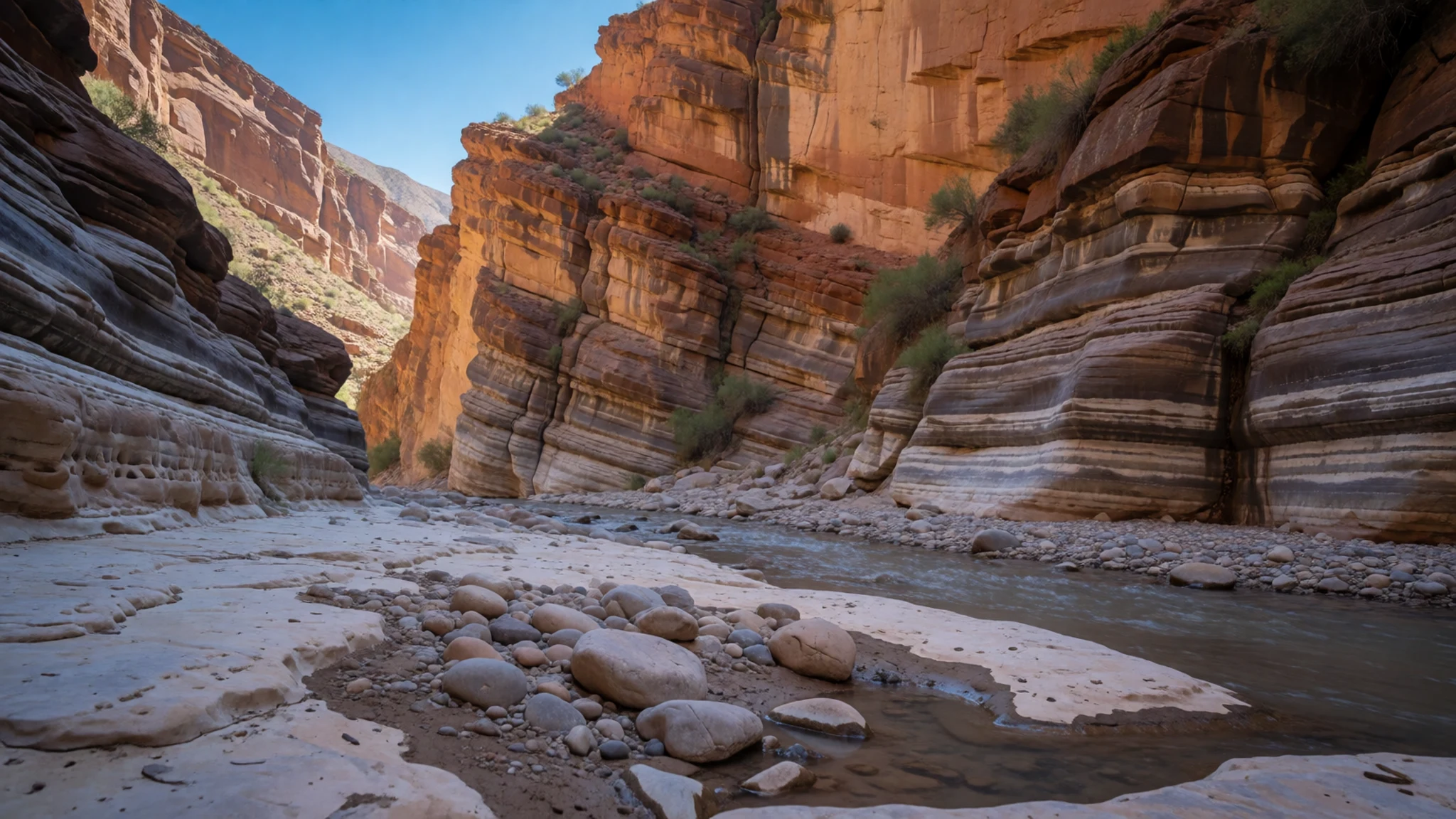
- Valley kasbahs and villages — Villages on the valley terraces, especially where the valley widens
Kasbahs are fortified mud-brick houses with corner towers, and several stand on the terraces above the river. Some are still lived in by families who farm barley, alfalfa and fruit; others have been converted into guesthouses. Ask before photographing people at work, and keep to the paths between fields, which are irrigated and easily damaged.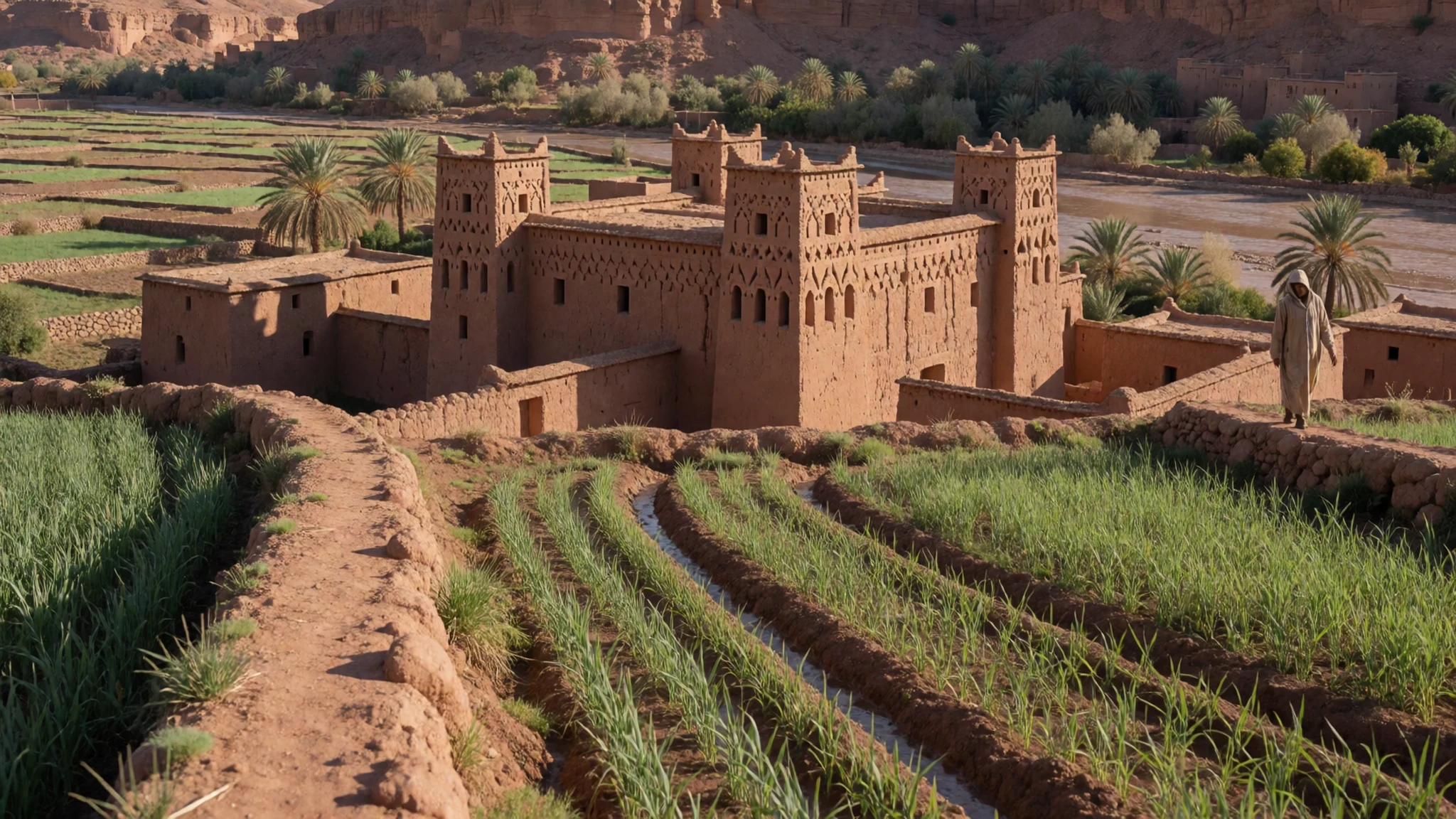
- Shepherds and goat tracks — Dry washes and ledges above the river, around the villages
Goats and sheep pick their way along the rock ledges and dry washes, and shepherds walking them are a common sight. Greet them with a 'Salaam Alaykum' and a nod; a short conversation is welcome, but do not expect a photograph to be posed. Keep your distance from the animals, and carry water, since the paths above the river rarely have shops.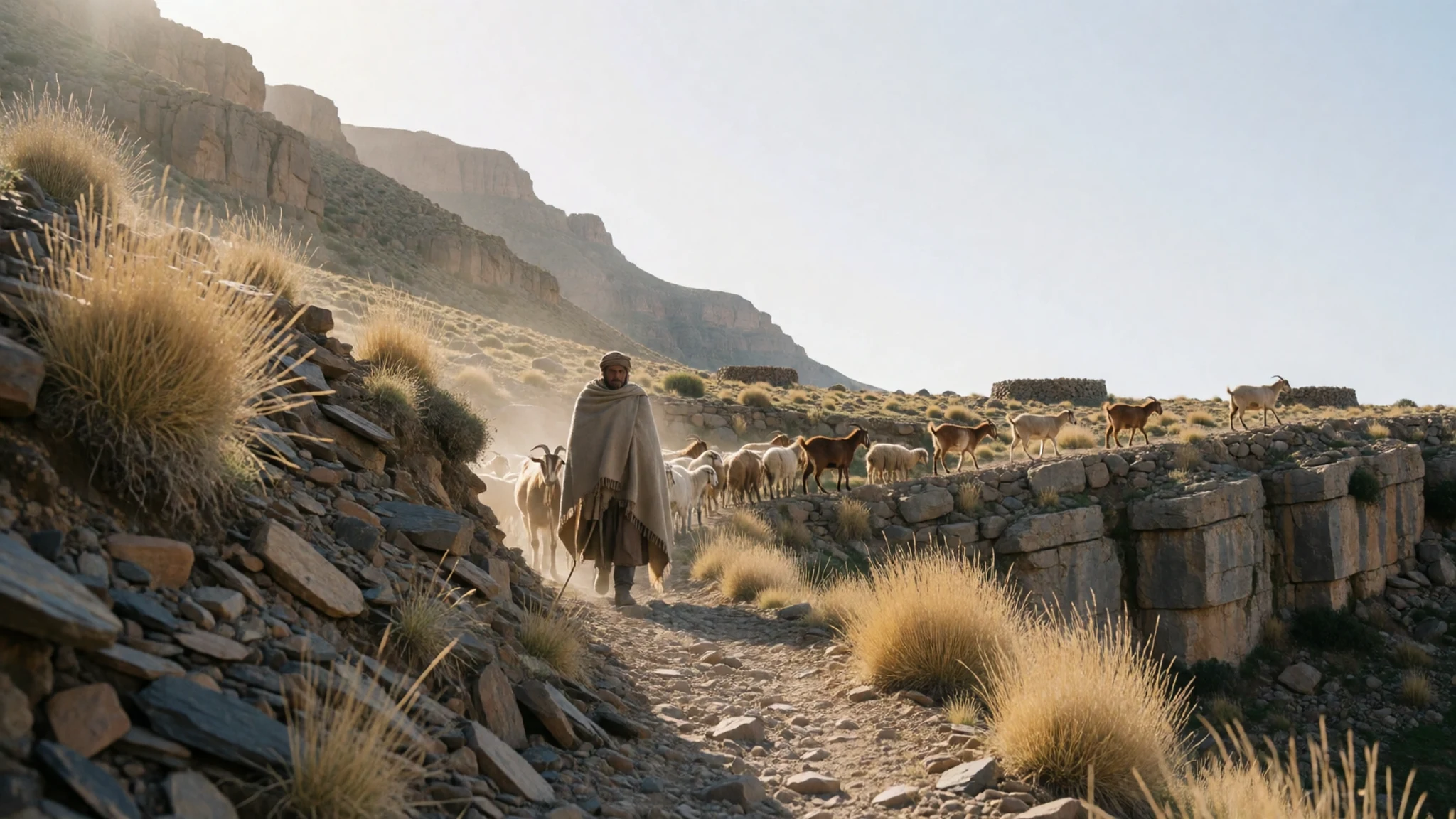
Culture
Dades Gorge lies in a country where Islam shapes everyday life, so manners and dress carry weight. Moroccans tend to express views indirectly, protecting face and avoiding anything that sounds like judgement, so a roundabout question usually gets a fuller answer than a blunt one. Greetings matter. With someone not yet known, the standard opener is 'Salaam Alaykum', meaning 'peace upon you', followed by a handshake; touching the heart with the right hand afterwards is a warm sign of sincerity. Cheek kissing is reserved for family, close friends and people of the same gender, so it should wait for a clear signal. Beckoning with a crooked finger is considered impolite, and an open hand is the accepted alternative. In villages, ask before photographing anyone, and take off shoes before stepping into a home or mosque.
What to wear
Traditional dress in the Dadès Gorges follows the wider Moroccan pattern, with Amazigh variations in colour and embroidery. The djellaba, a long loose robe with a hood, is the classic garment for men and women, usually in wool for the cold mountain months and cotton in the heat. Women may wear a kaftan, often in silk or velvet for celebrations, and a headscarf. Many valley households still weave wool for rugs and blankets, and kilims with geometric patterns are sold in local shops. Amazigh jewellery, often in silver, is worn at weddings and festivals. In everyday life, people in the valley wear jeans, trainers, sweatshirts and synthetic tops, keeping the djellaba for prayer, Friday and family occasions, or for working in cold weather. For a visitor, the best choice is loose, breathable clothing that covers shoulders and knees, especially in villages and near shrines. A light scarf is useful for women to cover the head when entering a mosque area or a family home. Wear a wide-brimmed hat and sunglasses for the open valley, and bring footwear with good grip for rocky paths and the river bank. Layers help, since the valley can feel warm at midday and cold after dark.
What to eat
- Bissara — Morning stalls near the markets and in the medinas
A thick soup of split peas, finished with a generous pour of olive oil and eaten with bread, usually at breakfast. Stalls serve it hot in bowls from big pots, and it is rarely seen in tourist restaurants. Look for it early in the day.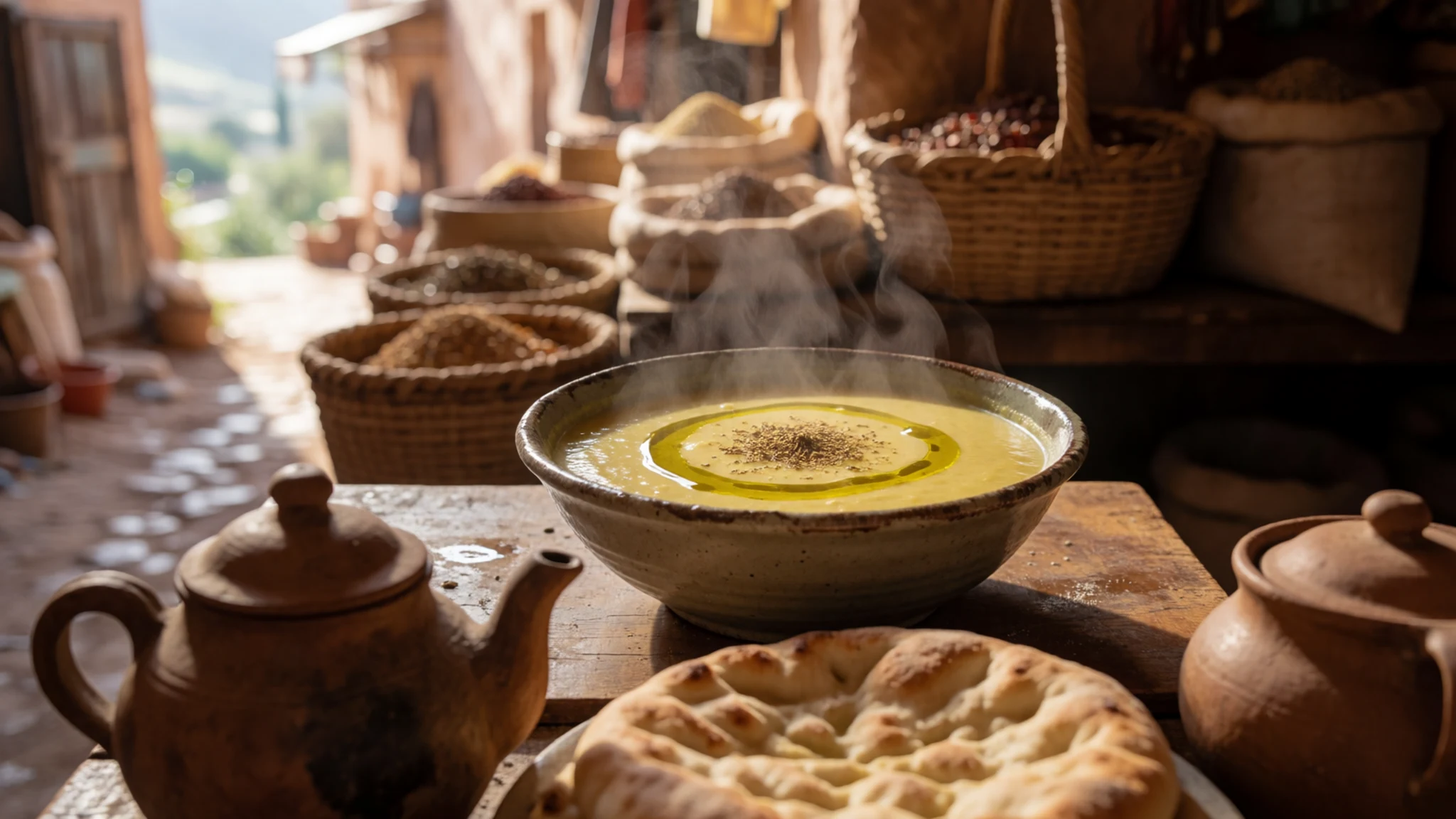
- Couscous — Family-run eateries and home-style tables in the valley towns, especially on Fridays
Semolina grains steamed over a stew in a tall pot called a couscoussière. It is often served on Fridays, and families cook it in large quantities. Vegetables, chickpeas and meat or chicken are common additions.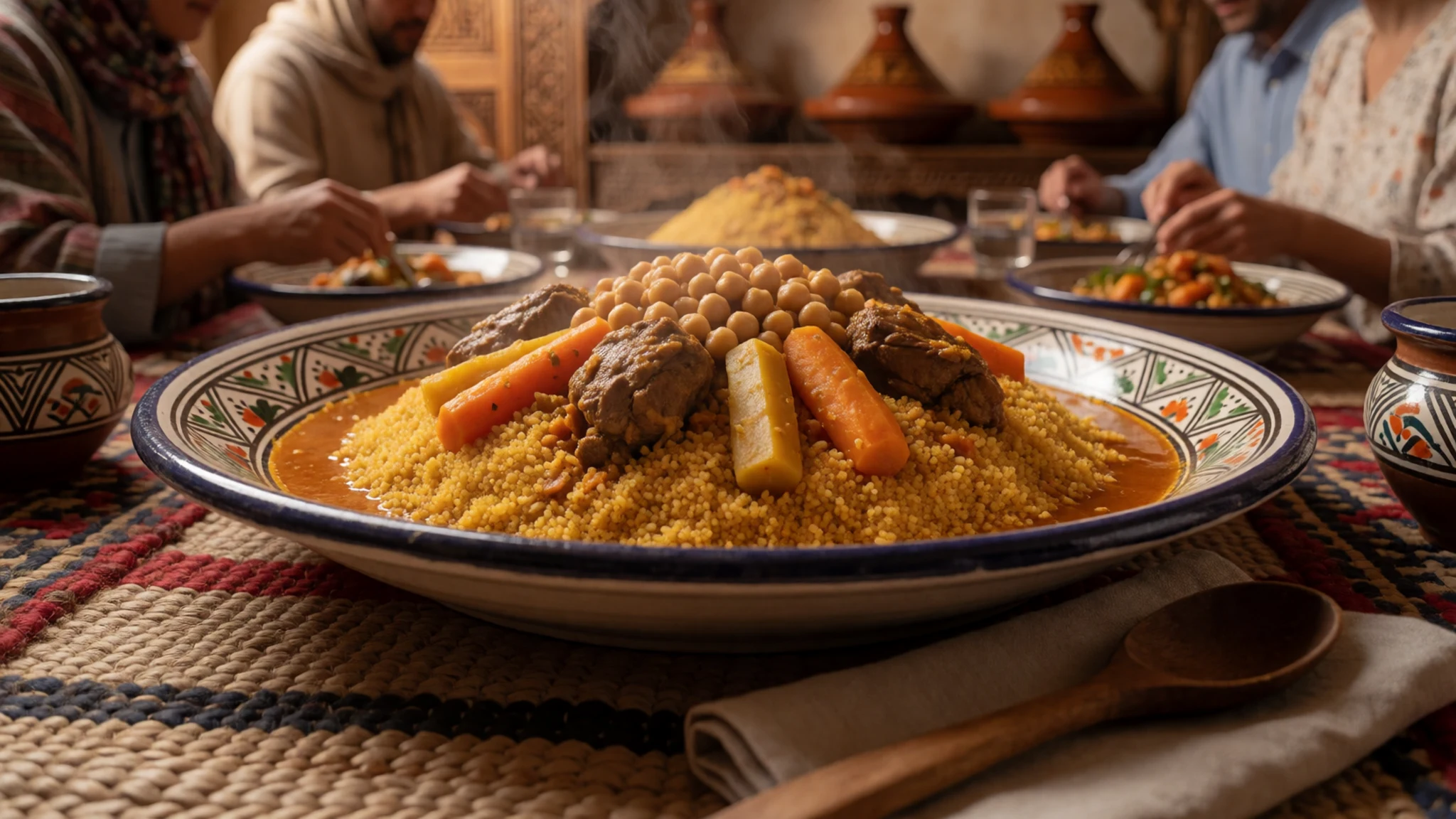
- Tagine — Village eateries along the valley road, and family kitchens if invited
A slow-cooked stew named after the conical clay pot it is cooked in, made with lamb, chicken or vegetables, often with dried fruit and preserved lemon. Cooking takes time, so it is worth ordering in advance at a family eatery. - Harira — Cafés and soup stalls in the valley towns, and family tables during Ramadan
A tomato-based soup thickened with lentils and chickpeas, flavoured with herbs and sometimes a little meat. It is a staple at sunset during Ramadan, when it is served with dates. Outside the fasting month it is still common as a light supper. - Mint tea — Cafés and shaded terraces in the valley towns, and family homes when invited
Green tea brewed with fresh mint and a lot of sugar, poured from a height to froth it, and offered to every guest. Accepting a glass is a common courtesy, and it is often the first thing offered on arrival. Cafés in the valley towns serve it all day.
Plan it
Best time. April to May and September to October suit the valley best, when days are warm without the peak summer heat. Summer afternoons in the gorge can be very hot and dry, and winter nights are cold.
How long. 2–3
Getting there. Fly into Marrakesh and travel by car or hired driver over the High Atlas. The road is winding and the journey takes most of a day, so plan it as a full day's travel, with local buses and shared taxis covering the final stretch.
Budget. low
Tips
- Start driving early; the hairpin bends are slower than they look, and the light is better in the morning
- Carry dirham in cash for small purchases, fuel and village eateries, since cards are not reliable in small towns
- Bring water and sun protection, because the valley floor offers little shade
- Hire a driver for the mountain road if you are not confident on narrow bends
- Stay overnight in the gorge rather than making a single day trip, so you can walk in the cooler hours
- Check road conditions locally before heading into the high passes, especially after rain
Etiquette
- Ask before photographing people, especially women and children
- Dress modestly in villages and take off your shoes before entering a home or mosque
- Greet people with 'Salaam Alaykum' before asking anything
Nearby
Sources
- Wikidata Q901124 (CC0)
- Wikipedia, Dadès Gorges (rev 1381053584) (CC BY-SA 4.0)
- Wikivoyage, Morocco (rev 5404268) (CC BY-SA 4.0)
- Gorges du Dadès03, Hans Peter Schaefer (CC BY 3.0)
- Spektakuläre Haarnadelkurven 04, Holger Uwe Schmitt (CC BY-SA 4.0)
- Die Schlucht gehört zu dem absoluten Höhepunkten einer Reise 23, Holger Uwe Schmitt (CC BY-SA 4.0)
- Gorges du Dadès05, Hans Peter Schaefer (CC BY 3.0)
- Die Schlucht gehört zu dem absoluten Höhepunkten einer Reise 06, Holger Uwe Schmitt (CC BY-SA 4.0)
- Dades gorge, Sgroey (CC BY 4.0)
- Shepherd in The Dades Gorge, OMOLEONIE (CC BY-SA 4.0)
- Die Schlucht gehört zu dem absoluten Höhepunkten einer Reise 01, Holger Uwe Schmitt (CC BY-SA 4.0)


