Akchour
Akchour, Morocco
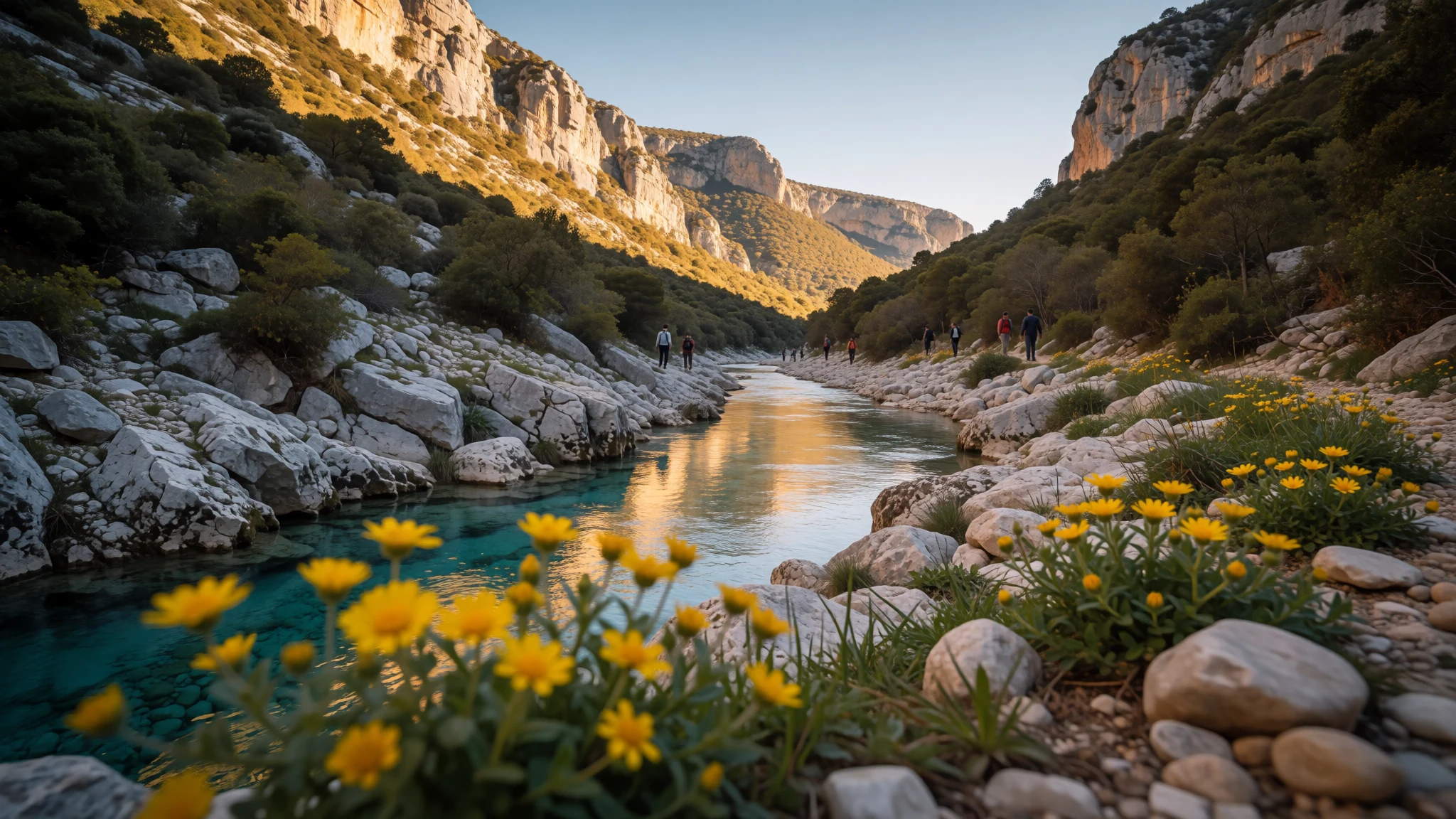
Akchour is a Rif mountain village where a green river drops through pools and waterfalls, a short ride from Chefchaouen.
The place
Akchour is a small village in the Rif mountains of northern Morocco, set in a gorge on the Oued Farda, a river that runs down from the highlands behind Chefchaouen. The village itself is modest: a scatter of houses, a road that narrows to a track, and a string of riverside cafés that exist mainly because of the walkers. Almost everything worth seeing lies upstream and has to be reached on foot. The path follows the water through oak, pine and fig, crosses the stream on stepping stones and rough footbridges, and passes a series of cascades and pools where the rock has been polished smooth. Further along sits a natural stone arch known as God's Bridge (Pont de Dieu), the usual turning point for day walkers. The setting feels quite different from the Morocco of the imperial cities: green, damp underfoot, loud with moving water, and cool in the shade even when the plains below are hot. The valley belongs to the wider Talassemtane National Park area, so the surrounding slopes carry mountain forest rather than desert scrub. Crowds are a matter of timing. A spring Saturday brings Moroccan families and day trippers from Chefchaouen, and the path can feel busy, while a weekday in autumn can be almost empty. The river level changes a great deal with the season, so the walk varies more than photographs suggest. Facilities are basic, and most visitors base themselves in Chefchaouen or in a simple guesthouse close to the trailhead.
Its story
Akchour has little written history of its own, and it is best understood as part of the Rif, a mountain belt that has long shaped who could and could not rule northern Morocco. The high country behind the coast was hard to govern, and the Berber communities of the mountains kept a good deal of independence even when Roman and later Byzantine power reached the north. After the first Islamic conquest of the North African coast, which began in 670 CE, the mountain peoples adopted Islam but held on to their customary laws and local leadership. One of the earliest Muslim states in the region, the emirate of Nekor, was founded in the Rif in 710, decades before the Idrisid dynasty made Fez its capital in 788. That pattern, of highland communities bargaining with distant courts instead of simply obeying them, runs through the region's past. Akchour's own story is quieter and more recent. Households along the river have traditionally lived from small-scale farming and grazing, with the stream shaping where fields and paths could go. In recent decades, better roads and the growing fame of nearby Chefchaouen have brought walkers and weekend swimmers, and the village has slowly turned towards visitors. The protected forest around the valley reflects a newer idea of the Rif as something to keep intact rather than only to farm or cross. Exact dates for these changes are thin on the ground, so local people are still the best guides to how the village has altered.
What to see
- The Akchour waterfalls — Upper valley, a walk from the village
The main cascades lie a walk upstream from Akchour village, where the Oued Farda drops over stepped rock into green pools. The water volume swings with the season: full and loud after spring rain, thinner by late summer. Spray keeps the rocks slick, so the viewing spots are best approached slowly, in shoes that grip.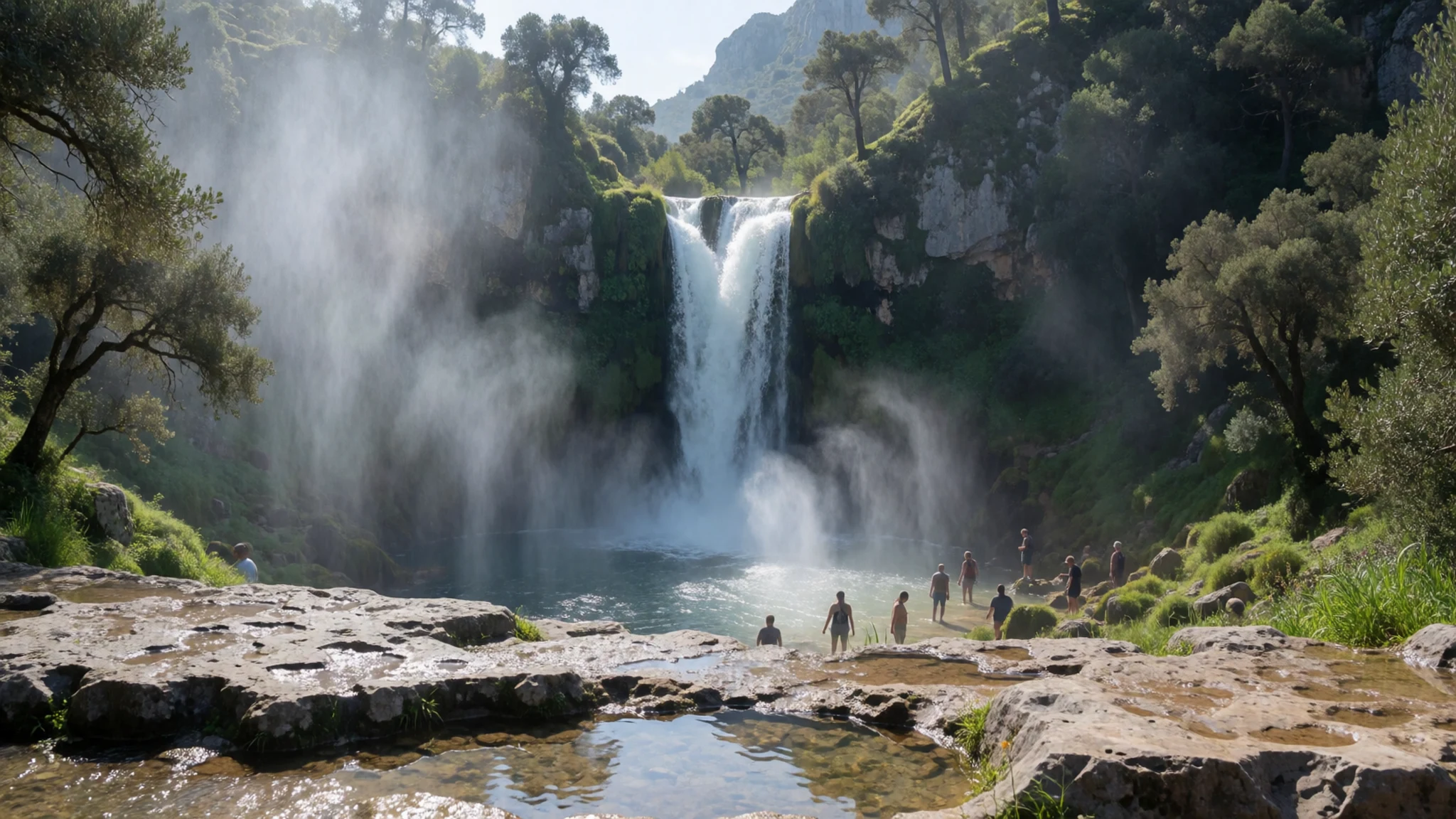
- The Oued Farda river path — Along the river from the village
The trail beside the river is the real attraction, more than any single viewpoint. It threads through oak and pine, crosses the stream several times and passes small cafés built out over the water. Some sections are rocky and the crossings get wet after rain, so it suits steady walkers used to uneven ground.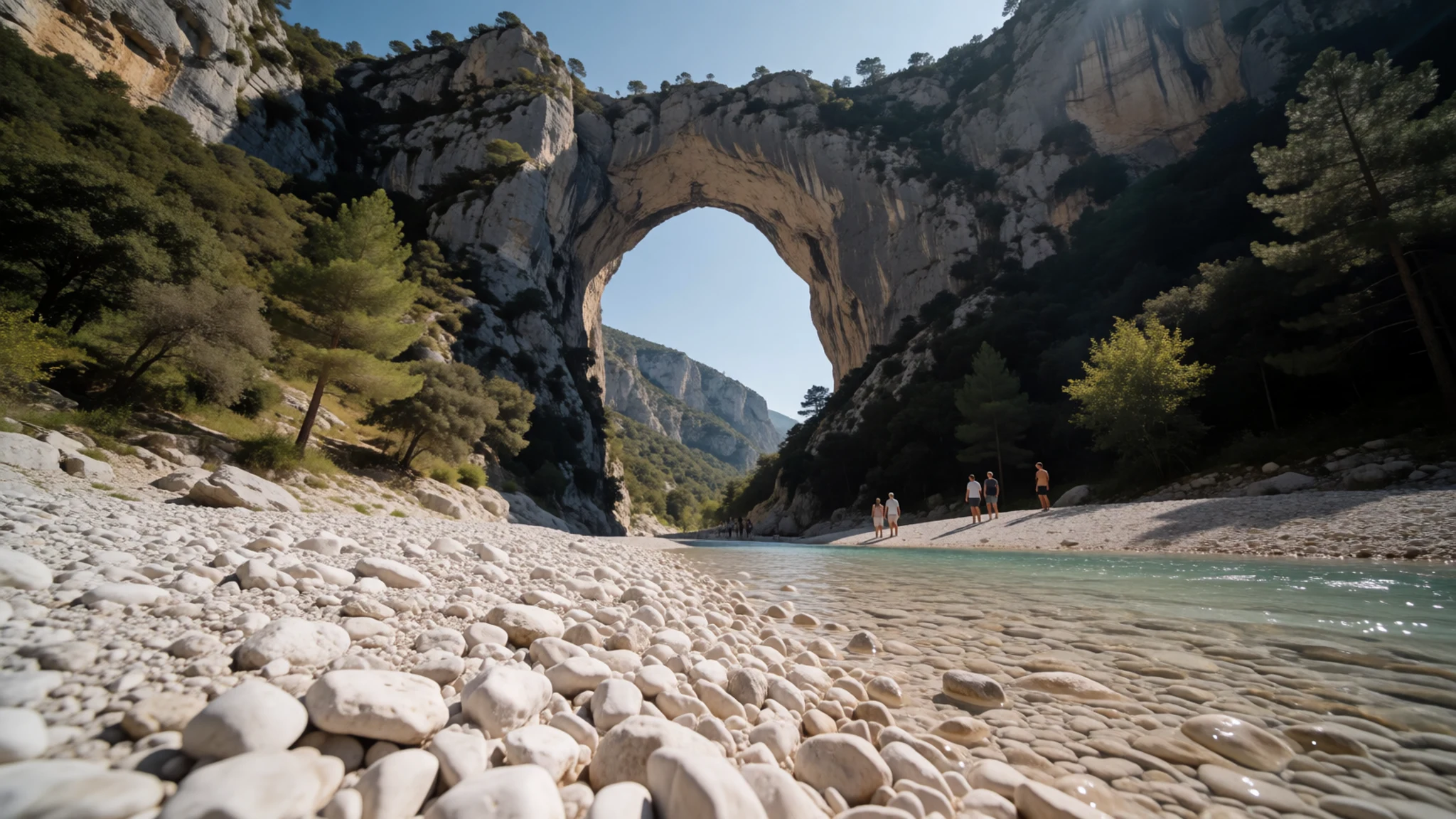
- God's Bridge (Pont de Dieu) — Further up the gorge
God's Bridge is a natural rock arch spanning the gorge, and most day walkers treat it as the goal of the outing. The route is rougher than the lower path and has steep, exposed stretches. Light reaches into the gorge best around midday. Villagers can advise on the current state of the trail before setting out.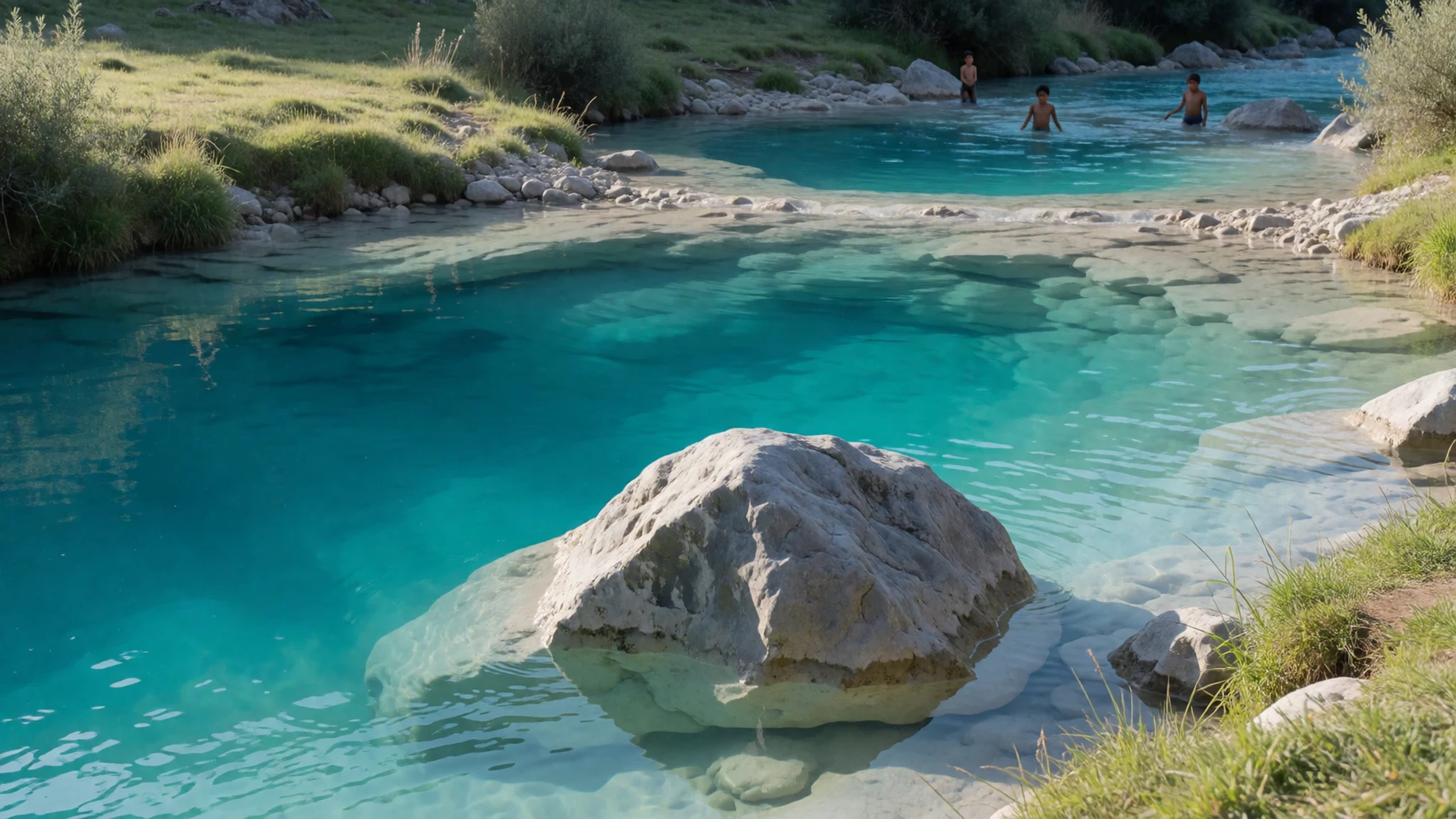
- The lake near the valley entrance — Lower valley, near the road end
Near the lower end of the valley, slow green water gathers into a lake that is often the first view on arrival. Its shoreline is a quiet place to sit after the walk, with shade and a café or two. Swimming conditions vary, so ask locally before getting in.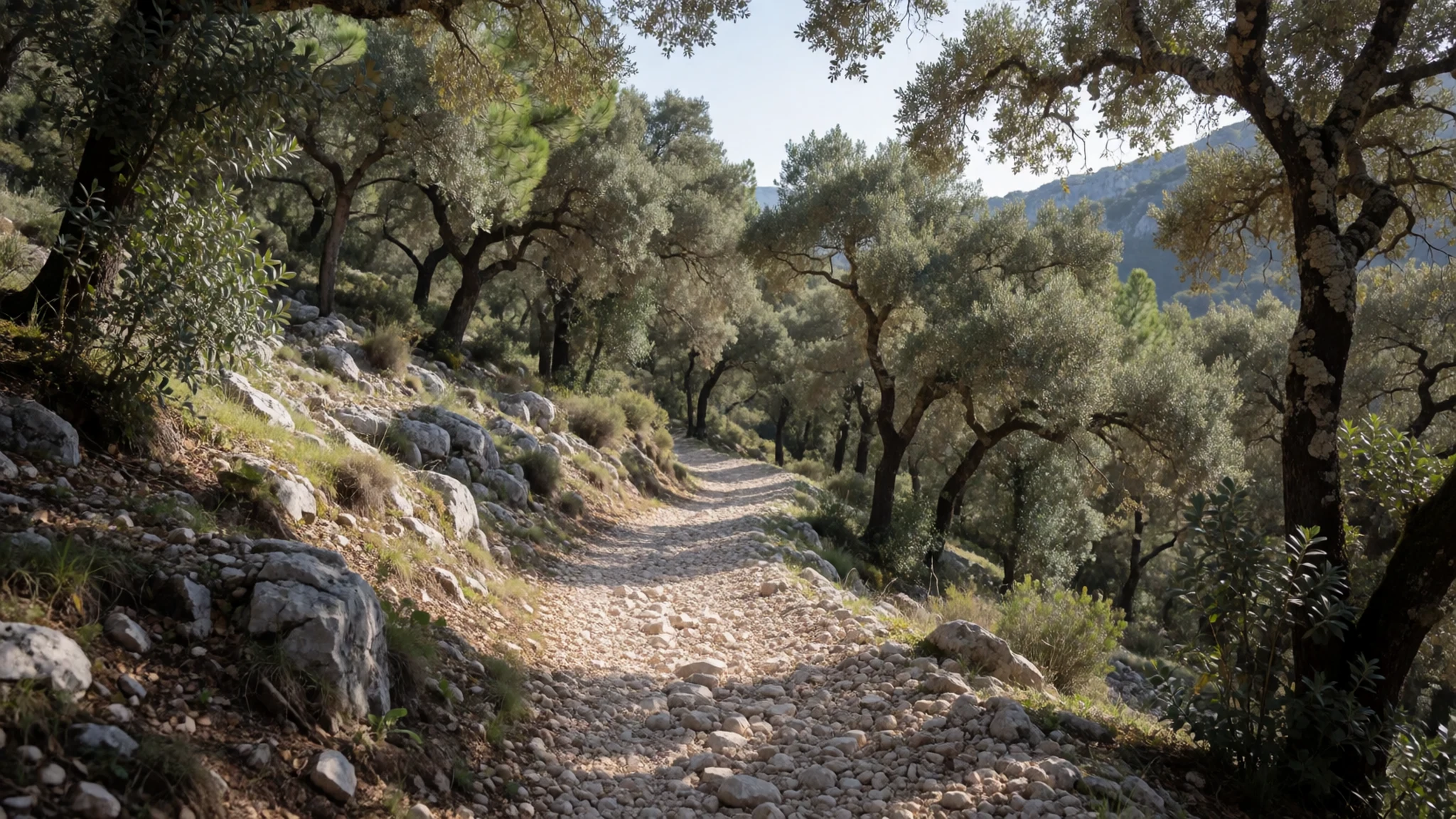
- Chefchaouen as a base — Chefchaouen medina, a drive from Akchour
Chefchaouen, the blue-washed mountain town, is the usual base for visiting Akchour. Its medina has narrow lanes, small craft shops and terrace cafés looking out over the Rif. Many visitors spend a night in town and a full day at the river. Shared taxis link the two, but check current arrangements locally.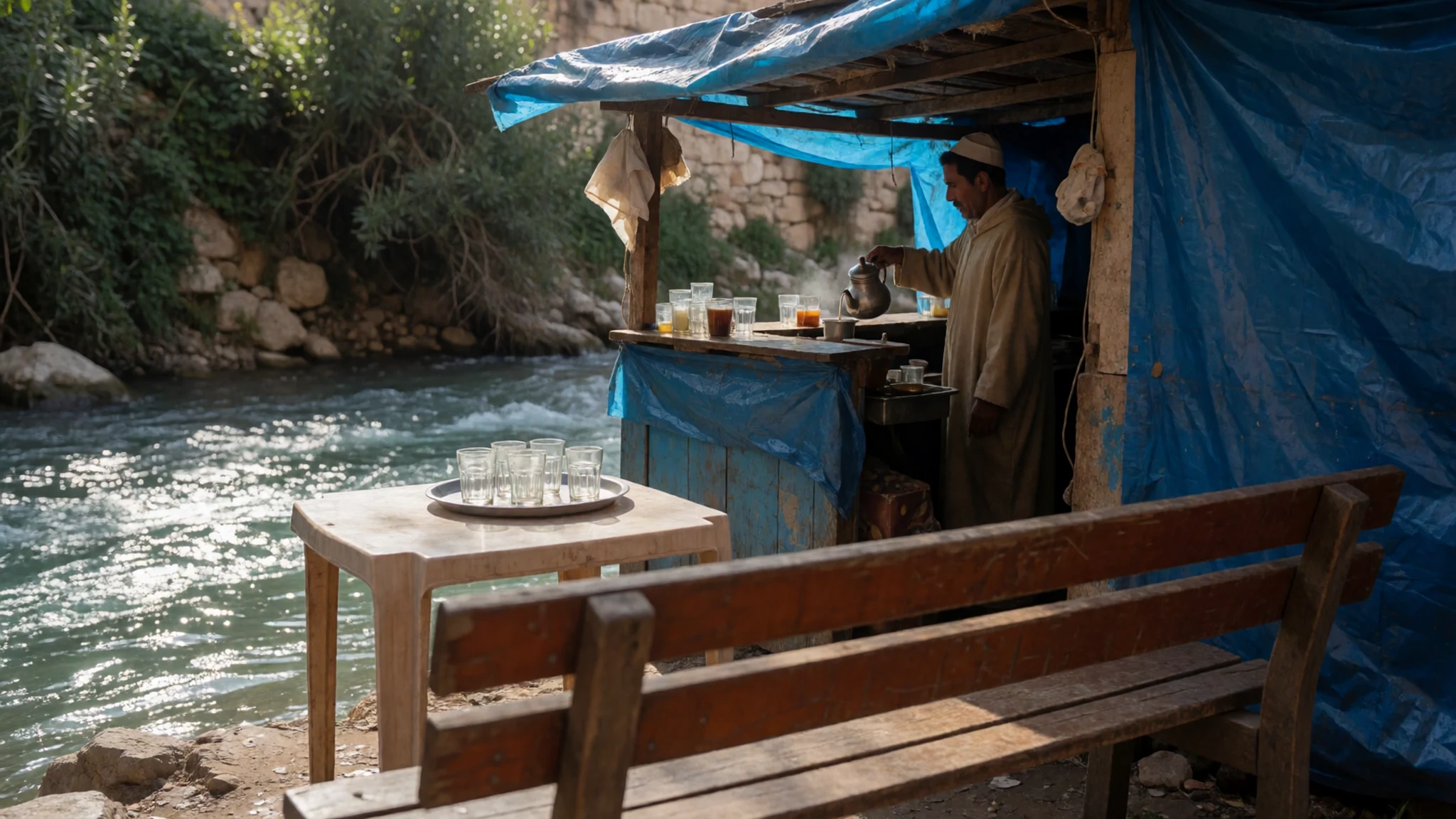
Culture
Akchour sits in the western Rif, where Islam is the dominant religion and daily life follows the rhythm of prayer, markets and family visits. Moroccans tend to be indirect communicators, softening disagreement and avoiding anything that could sound blunt or judgemental, so a roundabout answer is usually polite rather than evasive. The standard greeting to a stranger is 'Salaam alaykum' (peace upon you), and a handshake is safer than kissing cheeks, which is for friends, family and people of the same gender. Touching the heart with the right hand after a handshake signals sincerity. Beckoning someone with a crooked finger is considered rude, so a wave or a spoken greeting works better. Hospitality is real in the mountains: an invitation to mint tea at a riverside café or in a home is generally offered in good faith, though it is fine to decline politely if time is short. Weekends and holidays bring Moroccan families to the river with picnics and music, so the mood is sociable rather than remote. Friday is the main day of congregational prayer, and the pace of village life shifts around midday. Local people are also quietly proud of the valley, and visitors who carry out their rubbish and keep noise down are noticed and appreciated. Dress modestly in the village, keep swimwear for the pools, and ask before photographing people, especially women and older residents.
What to wear
Akchour belongs to the Jebala country of the western Rif, where traditional dress is still seen in the villages around Chefchaouen. Women of the region are known for the fouta, a striped woollen or cotton wrap worn over the skirt, often in red and white, and for wide straw hats with woollen pompoms that shade the face in the fields. Both sexes wear the djellaba, a long hooded robe in wool for the cold months and lighter cotton for summer, with leather babouche slippers. These garments are worn daily by many older residents, and by everyone on Fridays, at weddings and on festival days. Day to day, most people now wear a mix: jeans, tracksuits, football shirts and trainers among younger people, headscarves and long tunics for many women, and a djellaba pulled on over everything when the evening turns cool. Visitors are best in lightweight, quick-drying layers that cover shoulders and knees, which suits both the village and the sun on the trail. Shoes need real grip: trail shoes or water shoes with a secure strap, since the path is rocky and the stone by the pools is slippery. A sun hat helps on exposed stretches, and a thin waterproof is useful in spring and autumn. Swimwear can go under clothes for the pools, with a cover-up for the walk back through the village. Inside a mosque, dress conservatively and remove shoes.
What to eat
- Tagine — Riverside cafés along the Oued Farda path
Tagine, meat or vegetables slow-cooked in a conical clay pot, is the standard hot lunch beside the river. Chicken with preserved lemon and olives, or lamb with prunes, are common versions. The kitchen can be slow on busy weekends, so ordering early is sensible.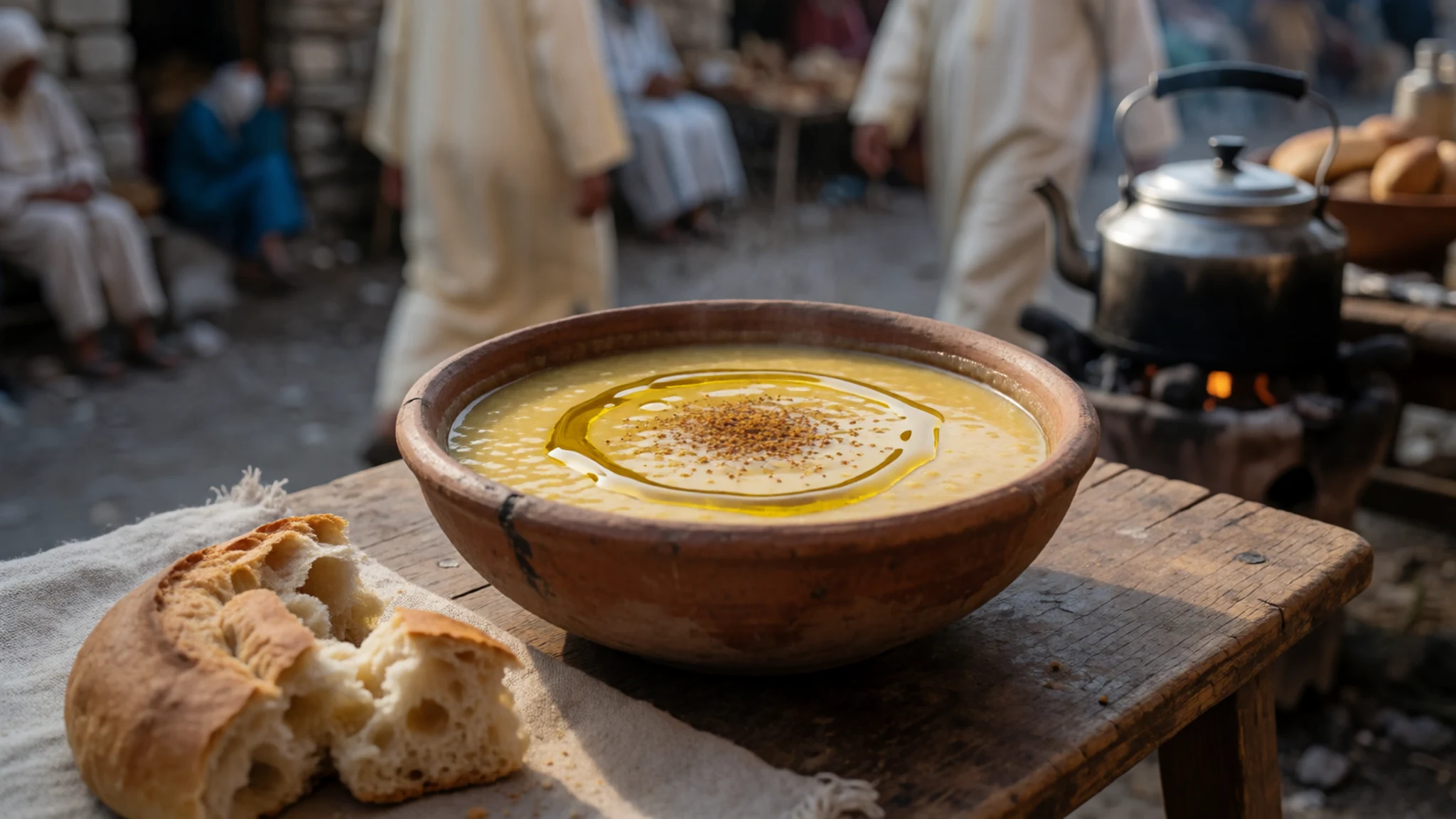
- Bissara — Morning stalls in Chefchaouen's medina and nearby markets
Bissara is a thick soup of split peas with plenty of olive oil, eaten hot in the morning. It is found bubbling near markets and in medinas early in the day, and rarely in tourist-facing places. It makes good fuel before a day on the trail.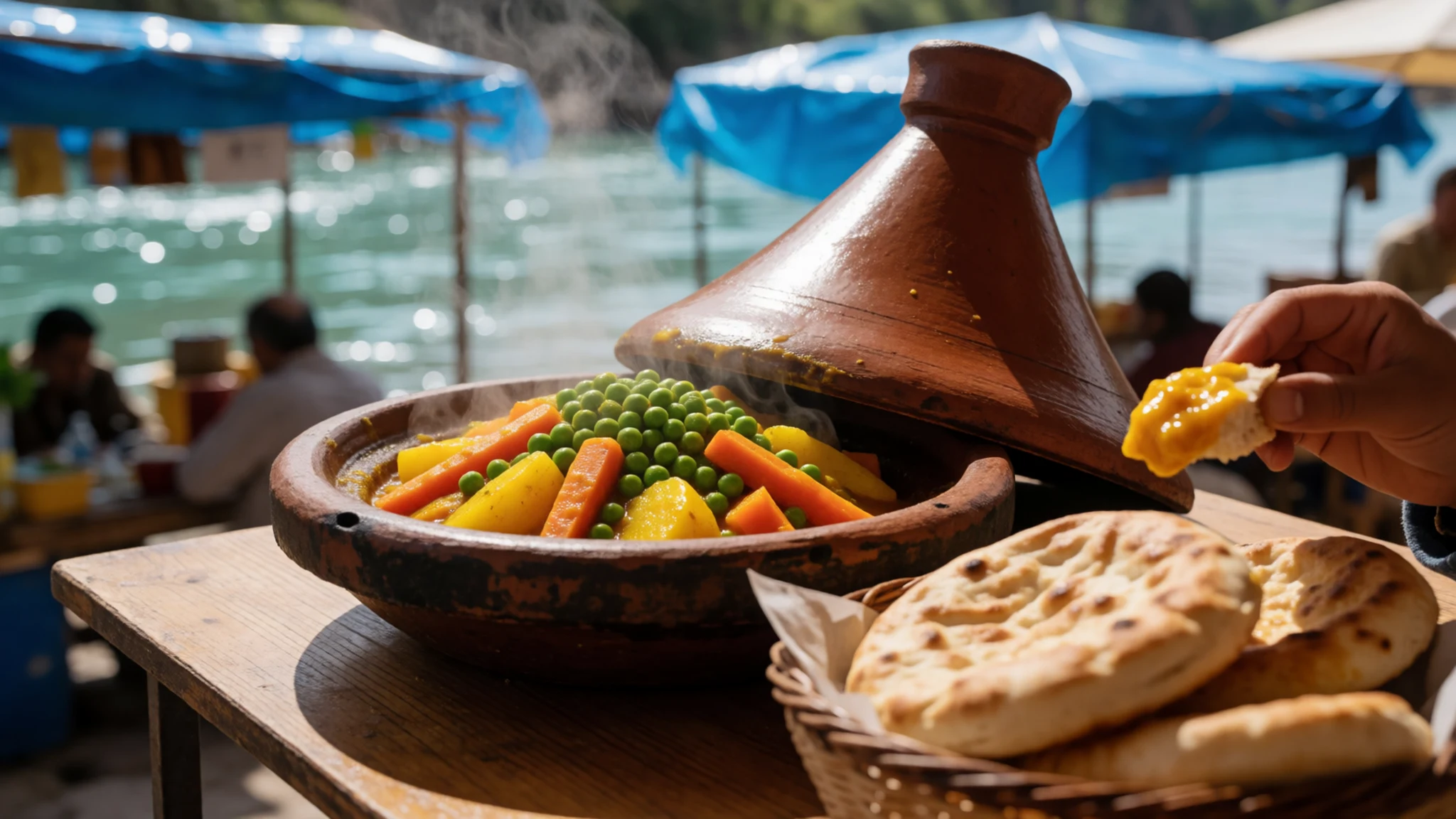
- Couscous — Family-run eateries in Chefchaouen on Fridays, or a village home if invited
Couscous, semolina grains steamed over a stew of vegetables and meat, is the traditional Friday meal across Morocco. Made by hand it takes hours, so a home-style plate is far more likely to be the real thing than one on a standing tourist menu. - Brochettes — Grill stalls and cafés near the start of the walk
Brochettes are skewers of seasoned lamb or chicken grilled over charcoal and served with bread and salad. They are quick, filling and cheap by local standards, and suit hungry walkers coming back off the river path. - Mint tea — Any café terrace in Akchour or Chefchaouen
Mint tea is green tea brewed with fresh mint and generous sugar, poured from a height into small glasses. Accepting a glass is part of the courtesy at any café or shop, and it is the natural way to rest after the climb.
Plan it
Best time. April–June, when the river runs full and the hills are green, and September–October, when the heat has eased but water still flows; July and August are hot and busy with holiday visitors, and heavy winter rain can make the river crossings and rocky path hazardous.
How long. 1–2
Getting there. Fly into Tangier or Tetouan, then go by road to Chefchaouen by bus or shared taxi. From Chefchaouen, a shared taxi or private transfer reaches Akchour village, where the road ends and the walk begins. Check current transport and road conditions locally.
Budget. low
Tips
- Start early: the path and pools are quieter in the morning, and weekends fill up fast
- Carry cash, as small riverside cafés may not take cards
- Bring water and sun protection, because shade is patchy on the upper path
- Wear shoes with real grip, since wet stone is slippery
- Check the weather and river level before setting out, and avoid the gorge after heavy rain
Etiquette
- Greet people with 'Salaam alaykum' before asking a question
- Dress modestly in the village and keep swimwear for the pools
- Ask before photographing people, and take your rubbish with you
Nearby
Sources
- Wikidata Q2828961 (CC0)
- Wikivoyage: Morocco (rev 5404268) (CC BY-SA 4.0)
- Akchoure waterfall.jpg — Nabilchatt, via Wikimedia Commons (CC BY-SA 4.0)
- بحيرة اقشور، اقليم شفشاون — Yobennane, via Wikimedia Commons (CC BY-SA 4.0)
- Vodopády Akchour, Maroko — Issamelm, via Wikimedia Commons (CC BY 3.0)
- Vodopády Akchour Falls v Maroku — Issamelm, via Wikimedia Commons (CC BY 3.0)
- Vodopády Akchour, Maroko — Issamelm, via Wikimedia Commons (CC BY 3.0)
- Akchor201.JPG — Issamelm, via Wikimedia Commons (CC BY 3.0)
- Akchor2015.JPG — Issamelm, via Wikimedia Commons (CC BY 3.0)
- Akchour cascade.jpg — Nabilchatt, via Wikimedia Commons (CC BY-SA 4.0)
- Wikipedia (CC BY-SA 4.0)


