Asilah
Asilah, Morocco
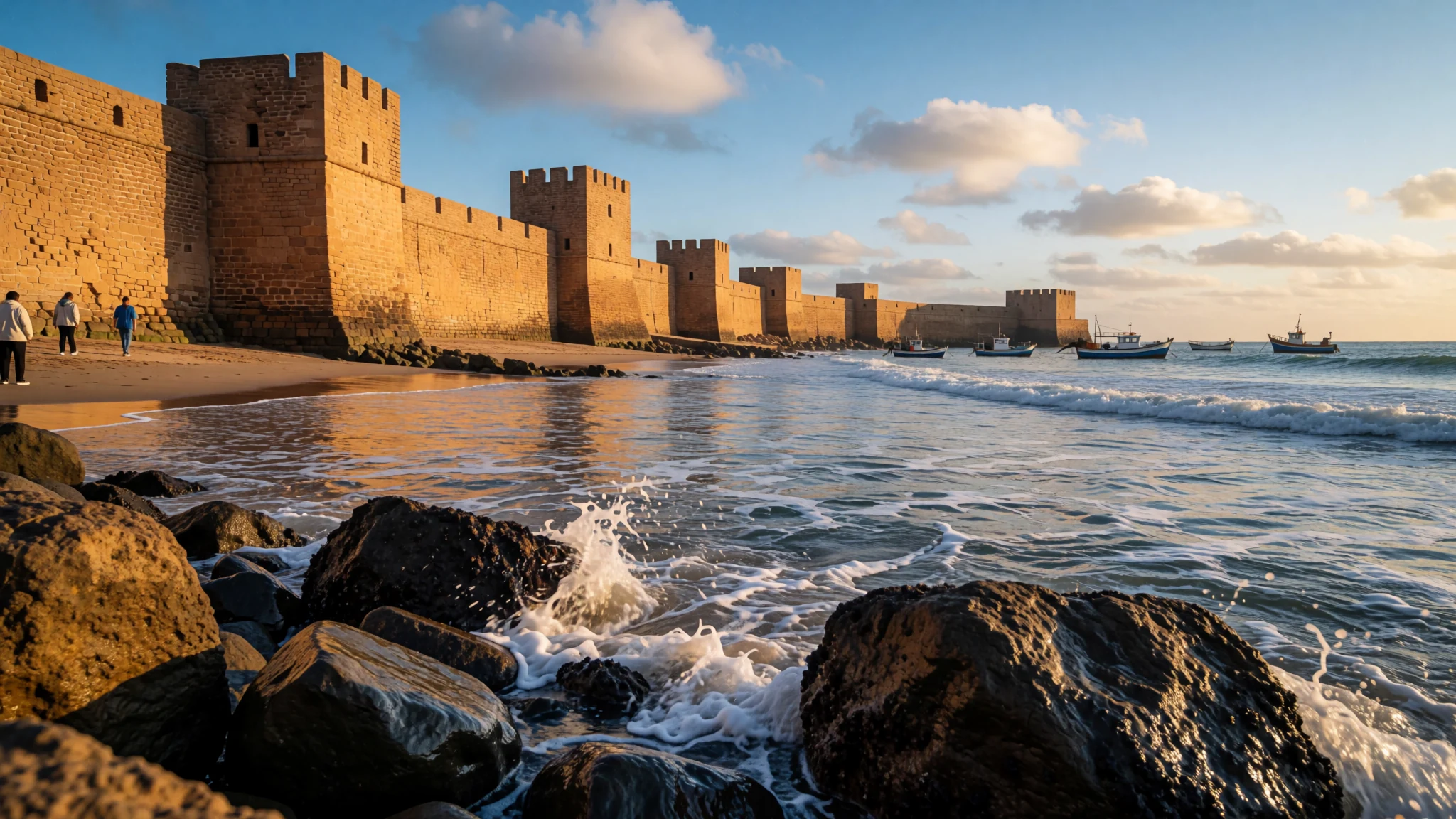
A whitewashed walled town on Morocco's Atlantic coast, easy to explore in a day or two and known for its painted medina walls.
The place
Asilah sits on the northwest Atlantic coast of Morocco, about 31 km south of Tangier, where a fortified old town meets a long sandy shoreline. The ramparts and gateways that enclose the medina are still complete. From the top of the walls the harbour, the fishing boats and the wide sweep of the sea are all visible at once. The old quarter is compact. Its lanes are narrow, whitewashed and clean, and many house walls carry murals by artists from across Africa and beyond, added over the years during the summer festival. Many houses still show mashrabiya, carved wooden oriel windows that let air move through the rooms without letting the street look in. Outside the walls, the newer grid of the ville nouvelle is calmer, with its own market hall and cafés.
The town has changed character over the decades. It is now a popular seaside resort, and families from Casablanca use it for weekend breaks. The coast road from Tangier fills with holiday apartment blocks, and July and August can feel busy. Out of season the town is quieter, the light is softer and the medina is easier to walk slowly. The appeal lies in the walls, the painted doorways, the seafood and the evenings spent on café terraces watching the town go by.
Its story
Asilah's history is layered, and its walls show most of it. The story of the site is usually traced back to around 1500 BCE, when a Phoenician settlement called Silis stood a short drive from the present town. Scholars now tend to identify that site with the ancient Zilil. The town itself was founded by the Idrisid dynasty, and in 966 the Umayyad caliph al-Hakam II rebuilt it. The Portuguese took the place in 1471 and built the fortifications that still define the medina, but they abandoned it in 1549 amid a debt crisis. In 1578 Sebastian of Portugal used the town as a base for a crusade that ended with his death, which set off a succession crisis in Portugal two years later. The Portuguese held on for a time, the Saadians briefly retook the town in 1589, and then it passed to the Spanish.
In 1692 forces under Moulay Ismail brought the town under Moroccan rule. Through the nineteenth and early twentieth centuries it became a base for pirates, and in 1829 Austrian forces bombarded it in response. From 1912 to 1956 the town lay within Spanish Morocco, and that period still shows in the cooking and some of the building styles.
The modern revival began in 1978, when the mayor Mohamed Benaissa launched a plan to restore the old town. With the painter Mohamed Melehi he set up an art festival, the International Cultural Moussem, which brought visitors and steadily improved local incomes. The festival is still held each August. It is credited with renewing the medina, and its visiting artists keep the walls changing.
What to see
- The ramparts and sea walls — Medina
The ramparts are the reason most people come, and they survive along almost their whole circuit. Walking the top gives views over the medina roofs, the harbour and the Atlantic. The seaward stretch is where the old stone meets the waves, and in the late afternoon it turns golden. Allow an hour for a slow circuit, and keep to the paths rather than climbing onto the parapets.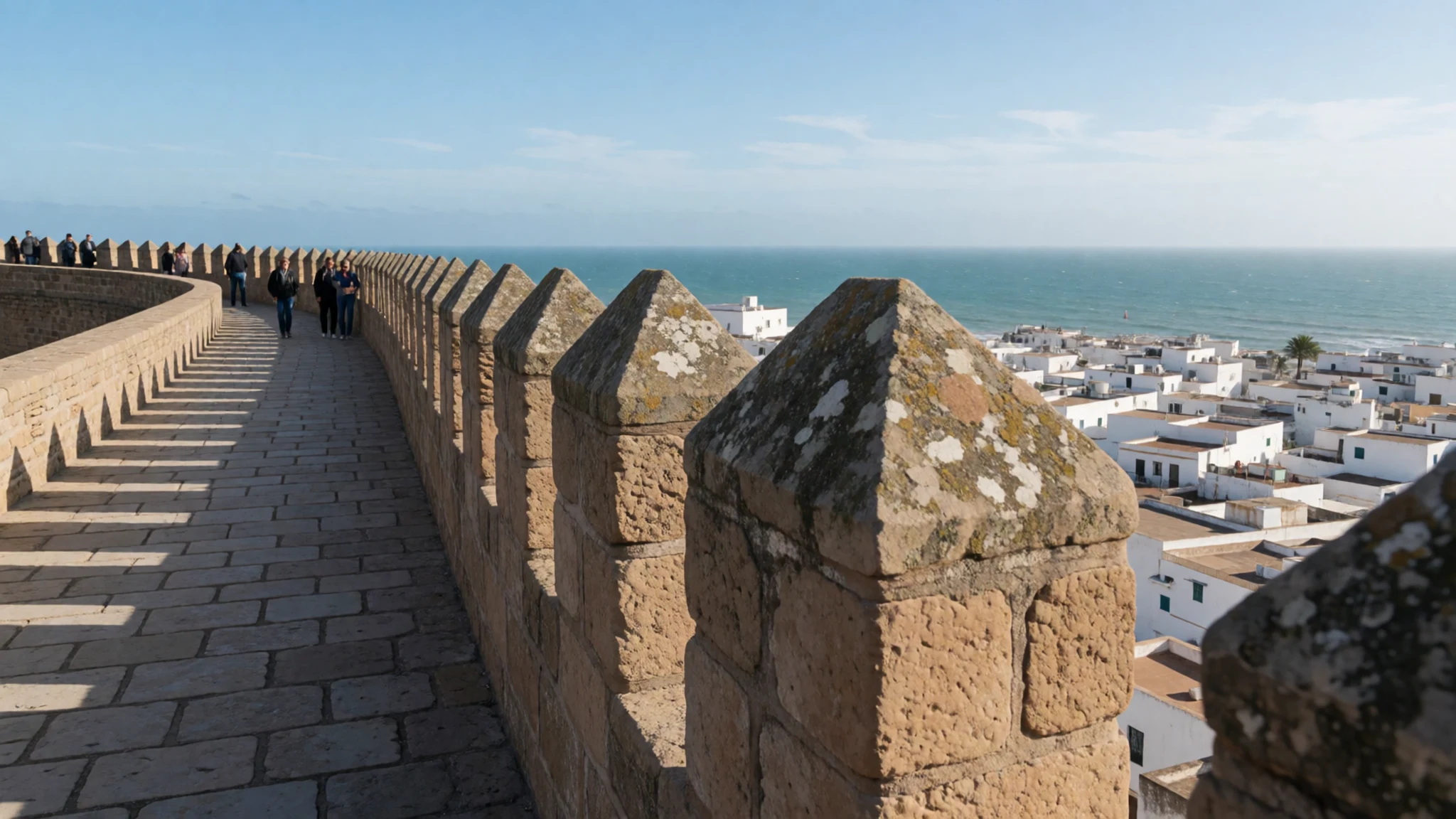
- Medina lanes and wall paintings — Medina
The medina is small, and its lanes are clean enough to explore without a plan. Many house walls carry murals by African artists, added during the summer festival, so the same street can look different from one year to the next. Look for carved doorways, iron work and mashrabiya windows above them. It is a good place to wander, stop for mint tea and let the day slow down.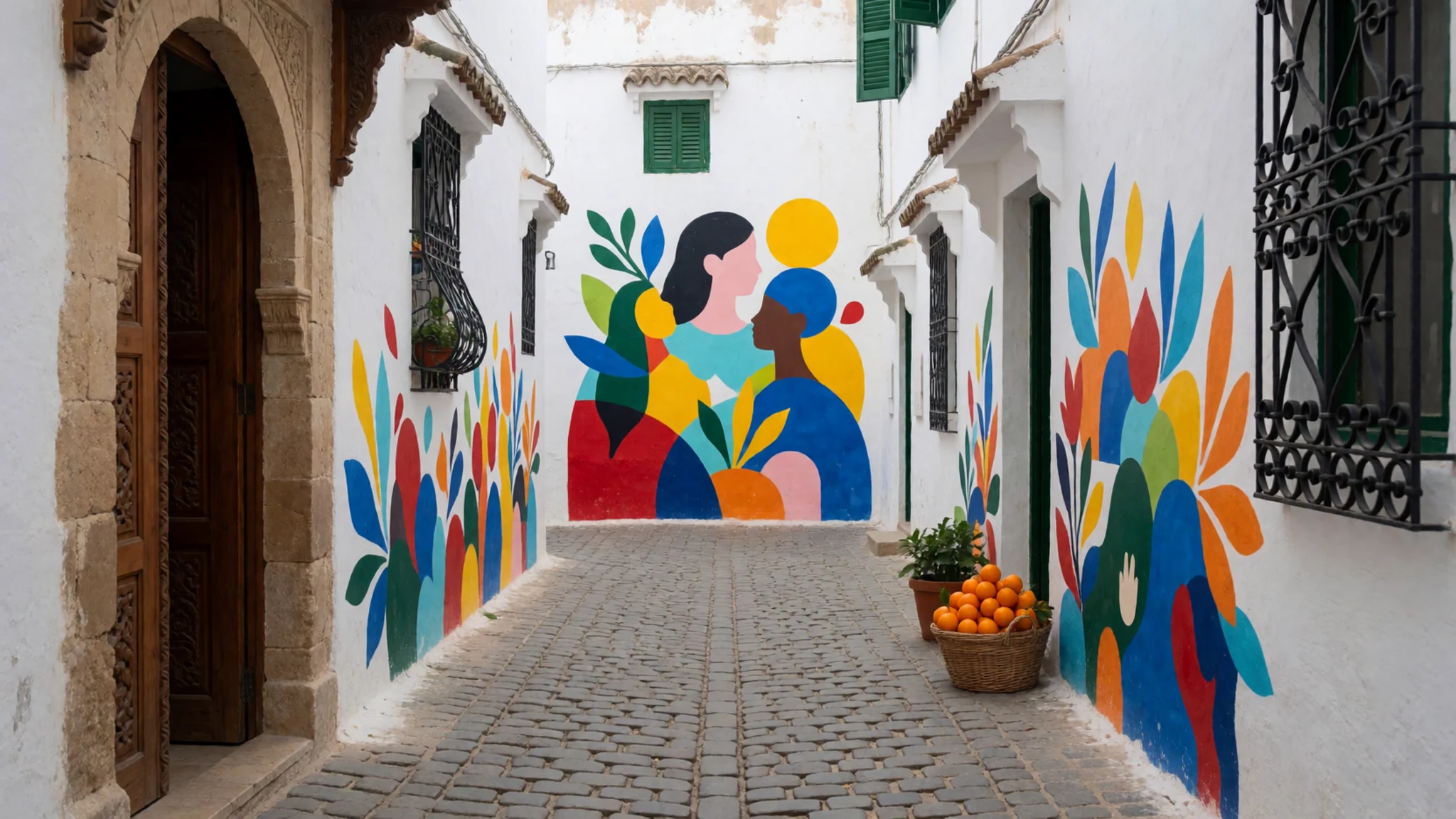
- The market hall in the ville nouvelle — Ville Nouvelle
North and east of the medina, the newer town is laid out on a plain grid and feels calmer. The market hall is the place for local produce, fish, spices and household goods, and it is busiest in the morning. Many visitors find the streets here more relaxed for a quiet coffee than the medina. Keep an eye on bags in crowded aisles.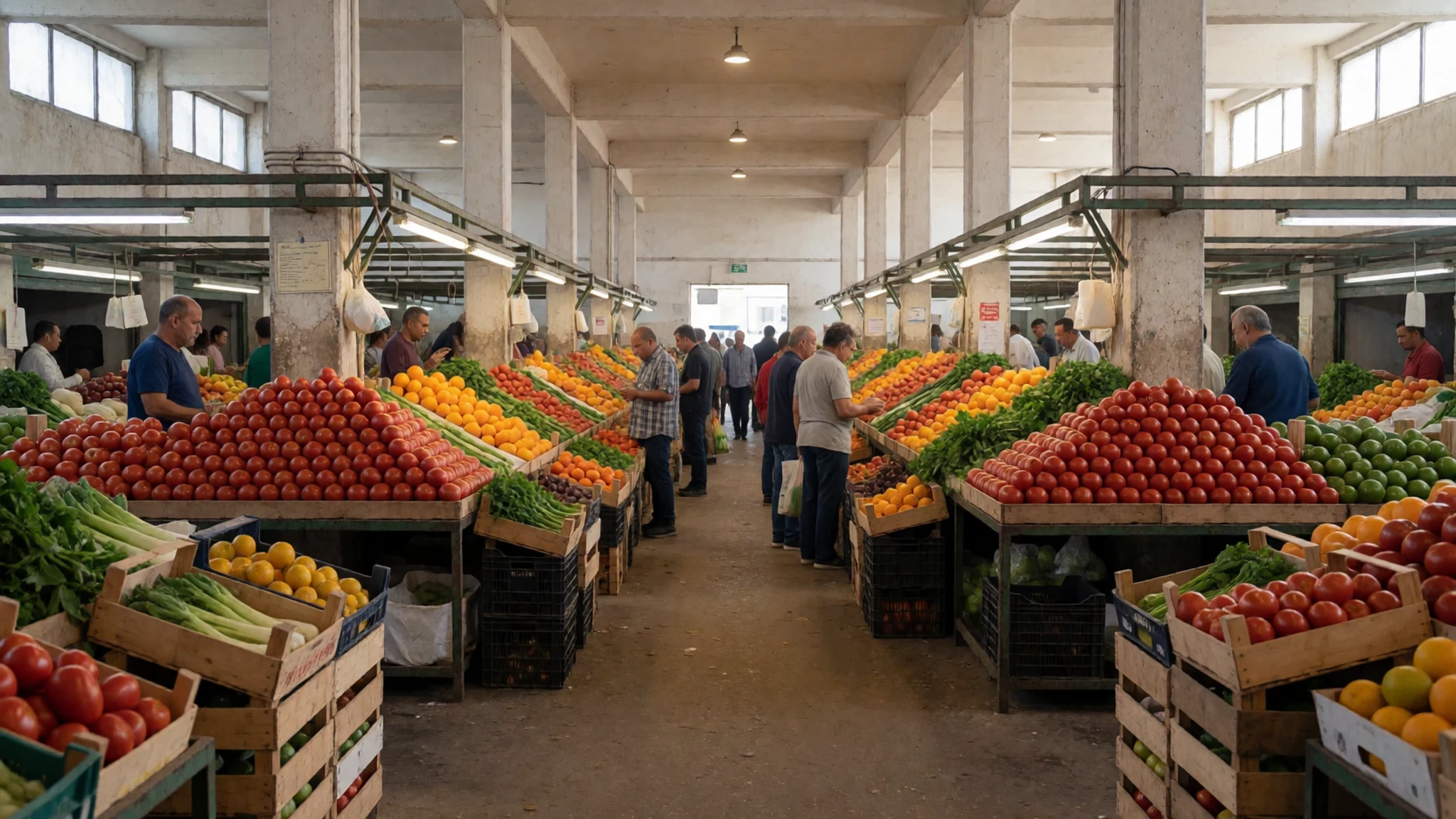
- Centre Hassan II — Medina edge
The main cultural centre, the Centre Hassan II des Rencontres Internationales, is housed in a former Spanish barracks. Its exhibitions and events run alongside the festival, and it is one of the places where the town's arts scene is most visible outside August. Programmes change from year to year, so check locally before you plan a visit around a particular show.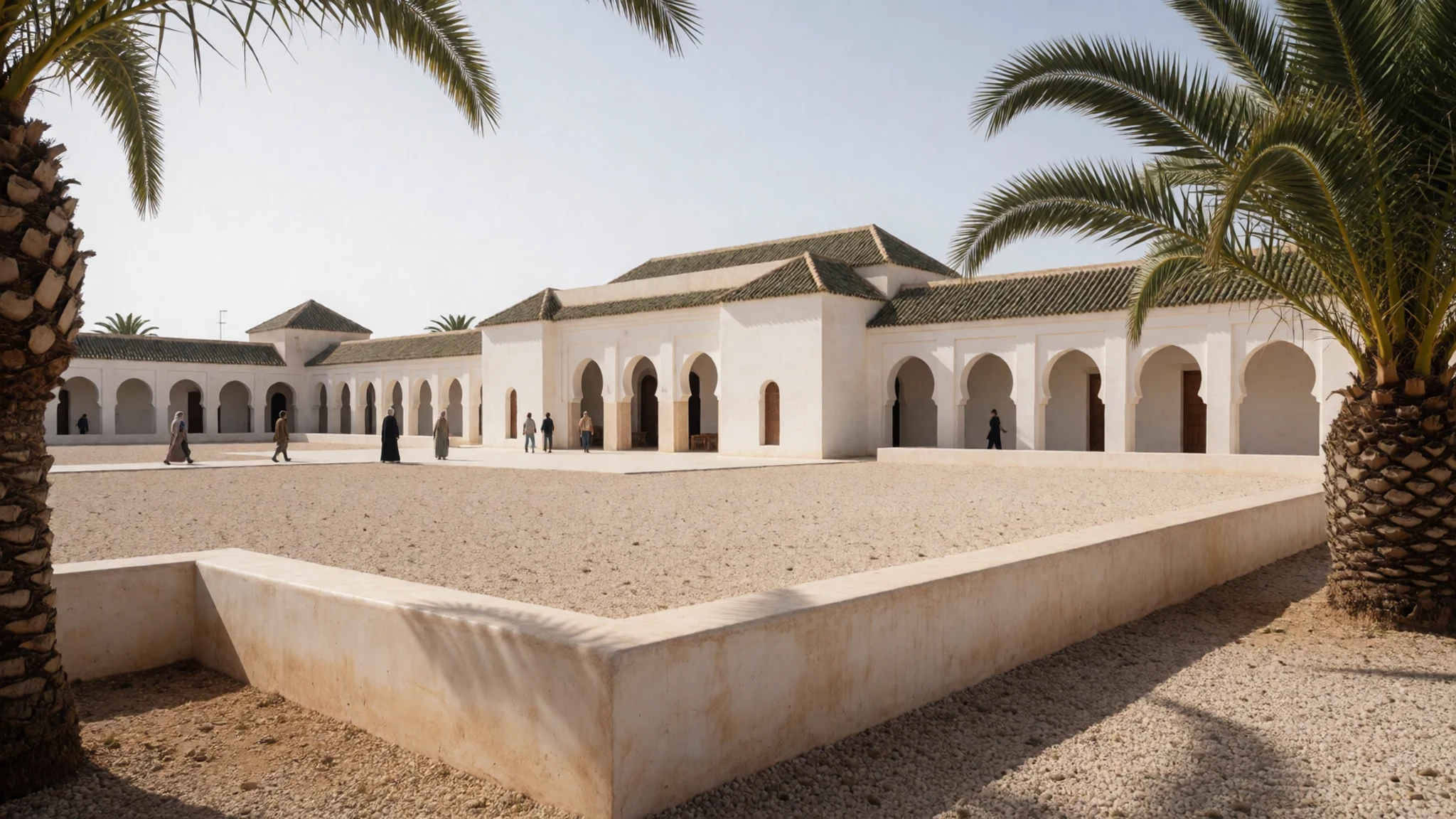
- Beaches north and south — North and south of the town
Beaches stretch both north and south of the town, and they are the easiest way to leave the walls behind for an afternoon. The sand is wide, but the Atlantic can be cold and the surf strong, so swimming depends on the conditions that day. In summer the stretch nearest town gets busy with families from the coast road, while the quieter stretches fill more slowly.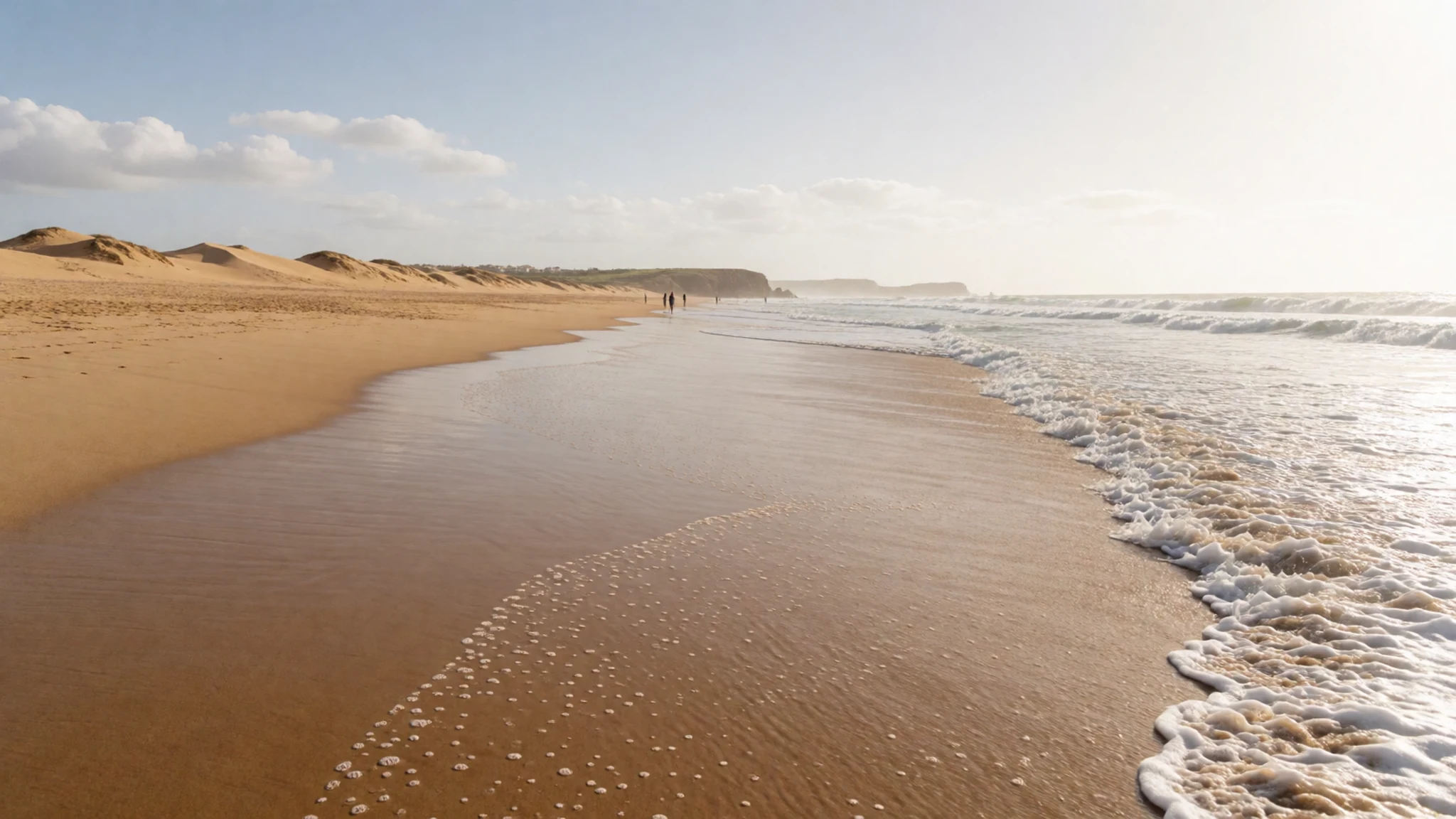
Culture
Asilah is a tourist town, but it is still a good introduction to Moroccan life. The best-known event is the Moussem, the International Cultural Festival held each August, which brings jazz, Moroccan music, exhibitions and workshops for artists. It was co-founded by the painter Mohamed Melehi, who taught at the Casablanca art school, and the politician Mohamed Benaissa. Mural painting is central to it, and new work by visiting artists appears on the medina's houses each year, so the walls form a living record of the event. The main cultural centre, the Centre Hassan II, occupies a former Spanish barracks, a reminder that the town's history and its arts scene sit side by side. Look too for mashrabiya, the carved timber windows that let air and light into the rooms while screening the street. Ask before photographing people in the medina, especially women and market traders, and never point a camera into a home.
What to wear
The traditional dress of Asilah is the Moroccan djellaba, a long, loose, hooded robe worn across the country. Wool suits the cooler months and lighter cotton suits summer. Men wear them over trousers, while women often choose richer colours, sometimes embroidered at the neck and cuffs, and may add a headscarf. The kaftan, a long robe in silk or cotton, appears at weddings and celebrations. Plain wool and embroidered cotton are the textiles most often seen, and leather slippers, known as babouches, finish many outfits.
In daily life most people wear European-style clothes such as jeans, trainers and fitted shirts, especially in the ville nouvelle. The djellaba remains common for older residents, for prayer and in colder weather. Modesty is widely expected, but dress is not uniform.
For a visitor, light, breathable clothing with covered shoulders and knees is the sensible choice, particularly in the medina and near any mosque. A light scarf is useful for mosques and for a quick cover-up. Choose shoes with grip, because the medina's lanes are uneven stone and the ramparts have steep steps. In summer a hat and a linen layer for the evening are worth packing.
What to eat
- Fruit and vegetable market — The morning market near the medina
Go in the morning, when the stalls are fullest. The fruit and vegetable market is the place for self-catering, with seasonal produce and bread sellers nearby. Bring a bag and small change, then buy fruit and vegetables for a picnic on the walls.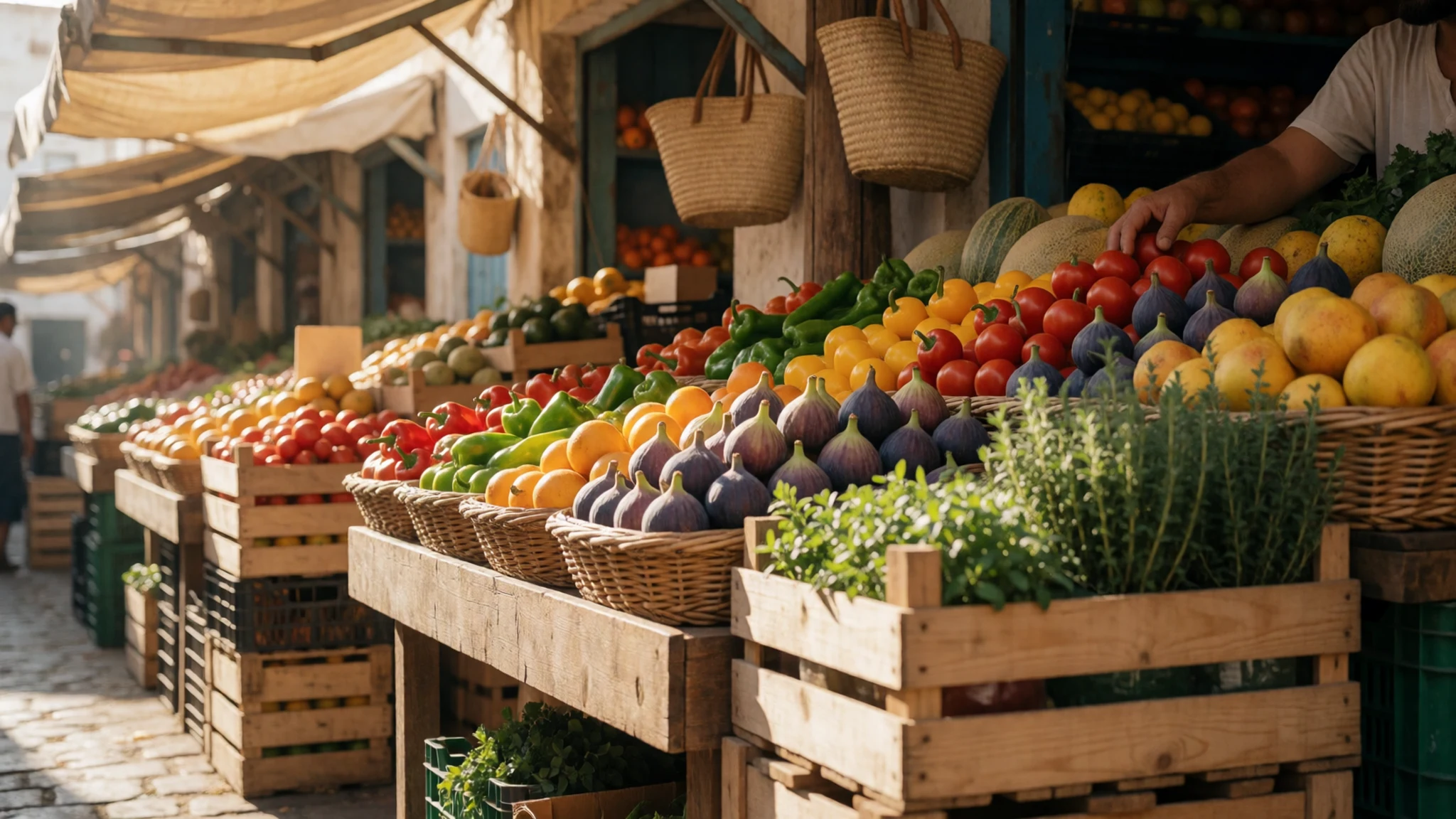
- Seafood on Avenue Mohamed el Hassani — Avenue Mohamed el Hassani, by the southeast wall
Many seafood restaurants line Avenue Mohamed el Hassani, and several have covered terraces beside the southeast wall of the medina. This is the place for fish cooked simply, with salad and bread. Ask at the door whether beer or wine is served, as not every eatery sells alcohol.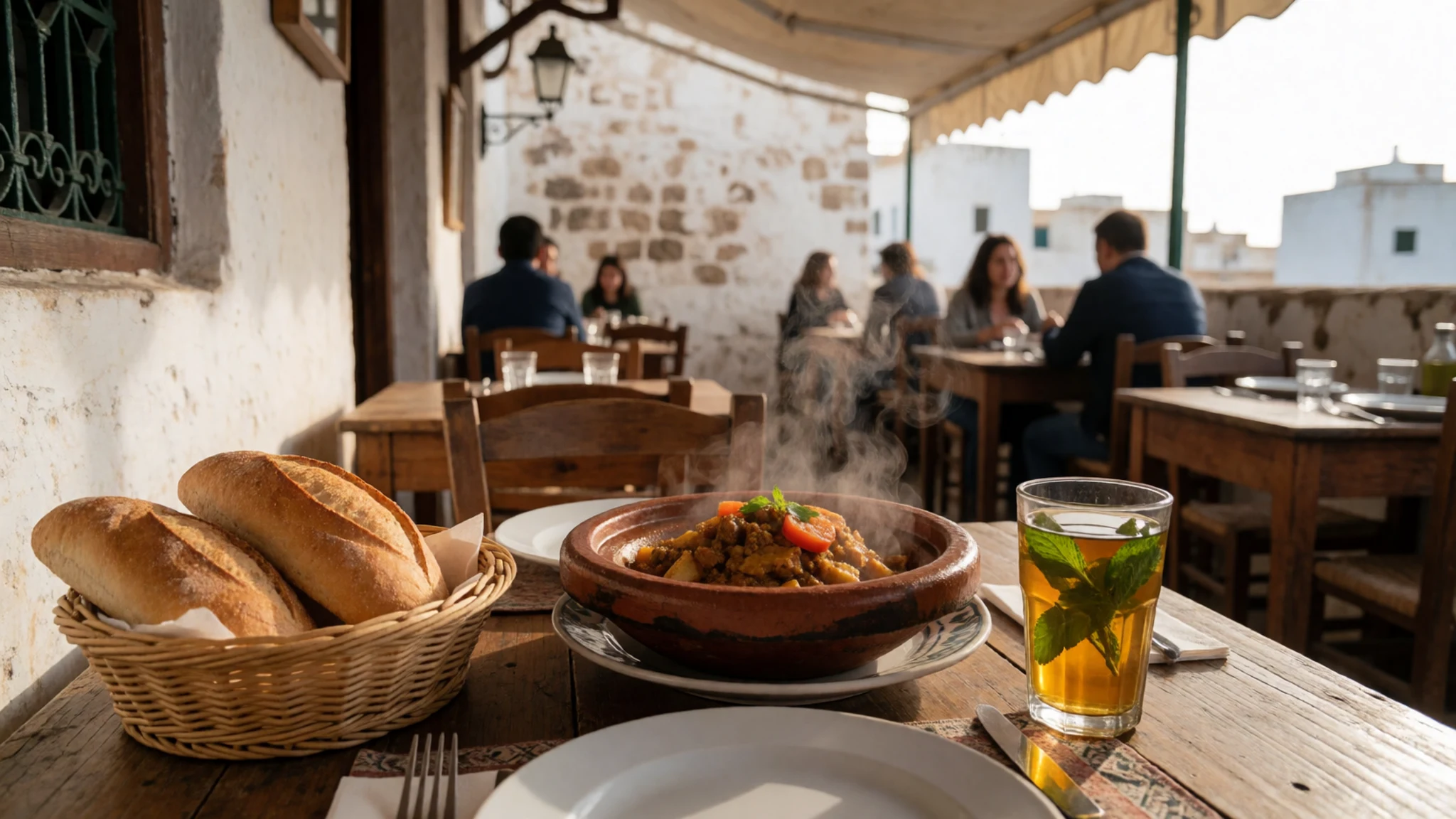
- Paella and tortilla — Restaurants in the medina and along the avenue
Because so many Spanish visitors come here, many restaurants serve Spanish classics alongside Moroccan dishes. Paella shows the Valencian influence on the town's cooking, and tortilla, a Spanish omelette, makes a light lunch. Look for both in the eateries inside the medina and along the avenue.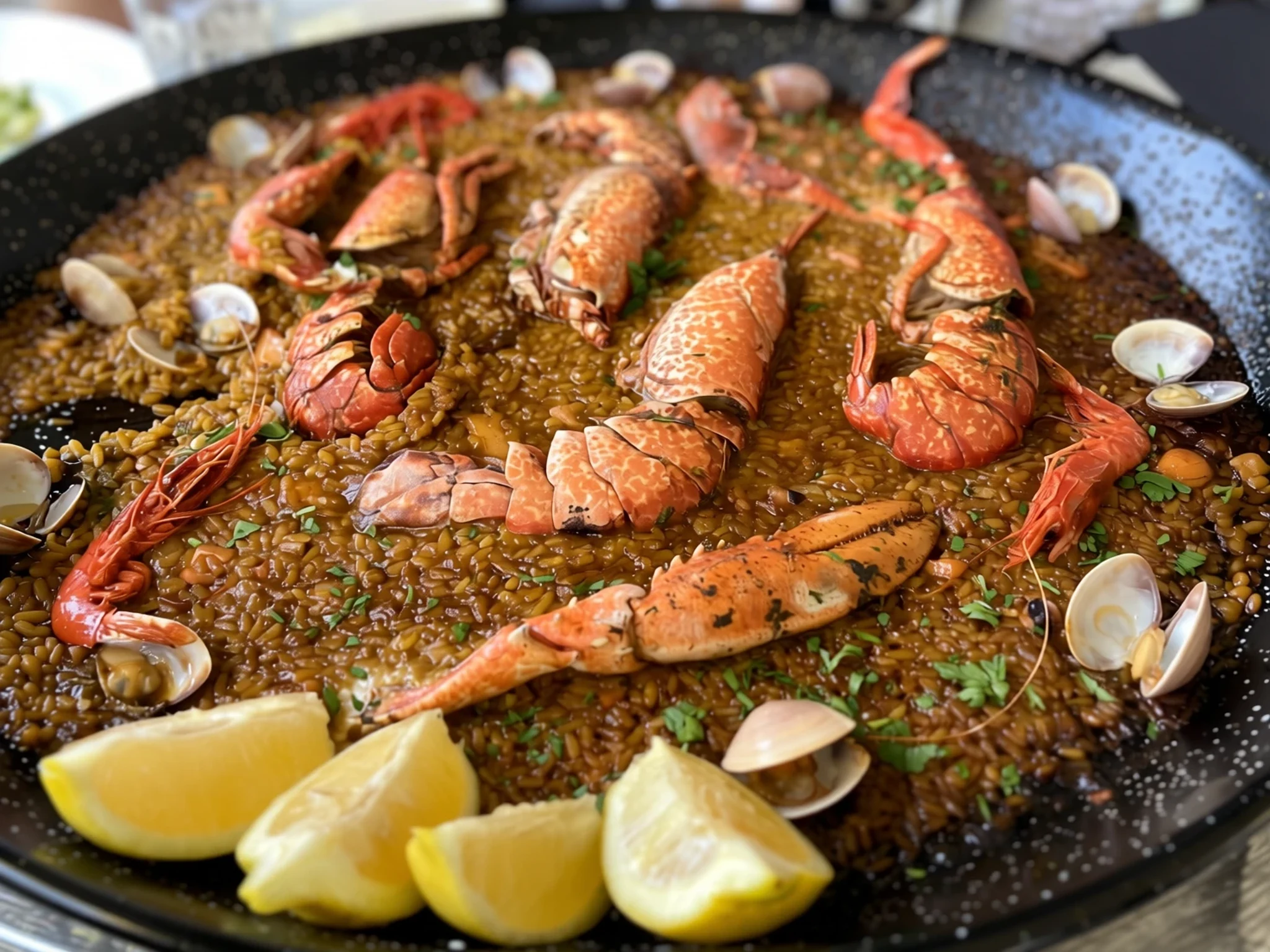
- Tagine and couscous — Any family-run eatery in the medina
Tagine and couscous are the staples found on almost every menu. Slow-cooked tagines of lamb, chicken or vegetables arrive in clay pots, and couscous is served with vegetables and broth. Ask for the dish you want when you order, since menus vary from place to place. - Anchovies and small fish — Seafood eateries near the harbour
Anchovies appear on many menus, because the local catch is a key part of the town's Ibero-Moroccan cooking. Small fish are often fried or grilled and served with lemon and salad. Choose a seafood counter or eatery close to the harbour for the freshest selection. - Mint tea in the cafés — Cafés on the squares and medina edges
Mint tea is the everyday drink of the town, served sweet and hot in small glasses. Cafés on the main squares and along the medina's edges suit a long sit with a view of the street. It is a cheap and easy way to pause in the middle of a walk.
Plan it
Best time. March and April are the most comfortable months, with daytime highs near 24 °C and less rain, while November, October and January are the wettest. June to August brings the crowds of holiday visitors, though August is also the festival month. Winter is calmer and cooler, with fewer visitors.
How long. 2–3
Getting there. Tangier airport is the nearest, followed by a grand taxi or bus to Asilah on the road south. The road from Tangier takes about an hour. Buses leave Tangier's Gare Routière frequently, and shared grand taxis run from the main road. Tangier is the practical hub for onward travel.
Budget. low
Tips
- Agree the fare with the grand taxi driver before setting off
- Book a guesthouse ahead in August, when the festival fills rooms
- Walk the ramparts early, before the midday heat and the day trippers
- Carry dirham in cash, as smaller eateries and cafés may not take cards
- Arriving by bus or taxi, expect guesthouse touts; a booking in advance avoids the hassle
Etiquette
- Dress modestly in the medina and when visiting any mosque
- Ask before photographing people, especially women and traders
- Ask whether a restaurant serves alcohol before sitting down
Nearby
Sources
- Wikidata Q730328 (CC0)
- Wikipedia, Asilah (rev 1380973713) (CC BY-SA 4.0)
- Wikivoyage, Asilah (rev 5242328) (CC BY-SA 4.0)
- Assilah Waterfront2, Dans (CC BY 3.0)
- Asilah seafront, Robert Prazeres (CC BY-SA 4.0)
- Marokko2018-248, paigeproduction2012 (CC BY-SA 2.0)
- Assilah 06, M. Rais (CC BY 3.0)
- Assilah Waterfront South, Dans (CC BY 3.0)
- Mesquita em Asilah, Rui Ornelas (CC BY 2.5)
- Assilah, JalilArfaoui (CC BY 3.0)
- Asilah (Calles de Arcila), Zelkova~commonswiki (Public domain)


