Essaouira
Essaouira, Morocco
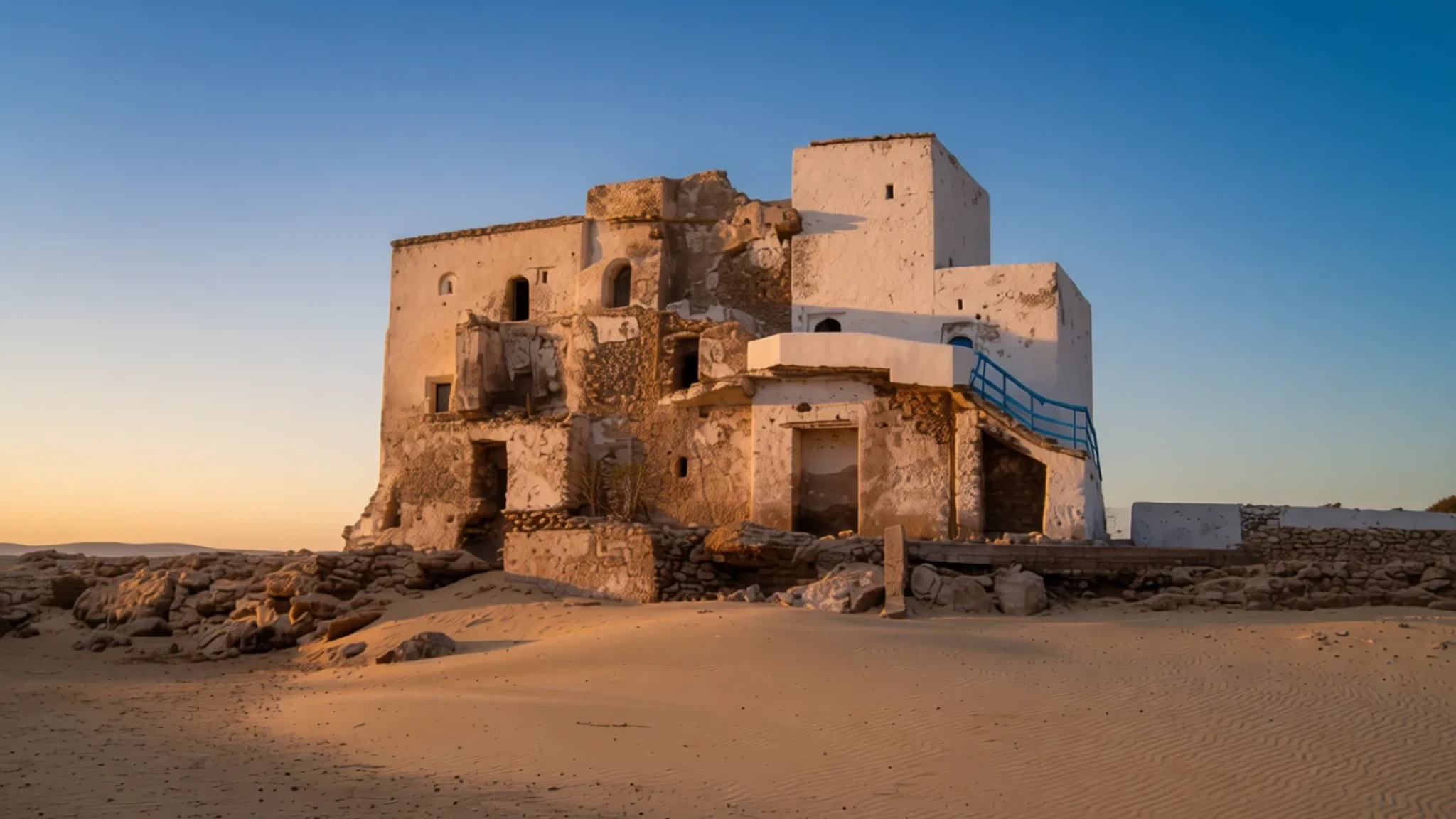
A whitewashed Atlantic port with sea-battered ramparts, a UNESCO-listed medina and a windswept beach, and a relaxed counterpoint to Marrakech.
The place
Essaouira sits on Morocco's Atlantic coast, a port city of about 83,000 people. Its older name, Mogador, still turns up on maps and in conversation, and the town has the loose, salty feel of a place built around ships. The bay curves in behind a small group of islands that break much of the swell, which is why boats have sheltered here for centuries.
The centre is the medina, a compact grid of white and blue walls, narrow lanes and workshops. Woodcarvers, metalworkers and makers of thuya-wood boxes sell from their doors, and the streets reward wandering without a fixed route. The medina was listed by UNESCO in 2001, but its appeal lies less in single monuments than in the slow path from the lanes down to the harbour or up to the ramparts.
Wind shapes daily life. It is strongest on the beach and along the sea walls for much of the year, so a light windproof layer is worth carrying even on a sunny afternoon. The town feels calmer than Marrakech, with fewer touts and slower mornings, and its rhythm is set by the fishing boats coming in around the harbour.
South of the walls, the main beach runs for a long way towards Diabat. Surfers, windsurfers and kitesurfers use it, and the sand and dunes make a good counterpoint to the crowded lanes behind the town.
Its story
Essaouira has been inhabited since prehistoric times, and its sheltered bay gave ships a landing place long before the modern town existed. The island of Mogador screens the bay from the worst Atlantic weather, which is the main reason the harbour has always been prized.
Classical sources and traders knew the spot early. The Carthaginian navigator Hanno called here in the 5th century BCE and set up a trading post. Around the turn of the era, the Berber king Juba II ran a workshop producing a prized purple dye from shellfish gathered on the nearby rocks, the pigment that marked the stripe on the togas of Roman senators. A Roman villa on Mogador has yielded pottery and coins from the 3rd century CE, many of which are now displayed in museums in Essaouira and Rabat.
The name Mogador probably comes from Sidi Mogdoul, a Muslim saint buried here in the Middle Ages. Portuguese traders and builders later arrived on this coast and left their mark on it.
The present town is a deliberate creation. In 1760 Sultan Mohammed bin Abdallah commissioned a planned port and gave the design to several architects, among them Théodore Cornut and Ahmed al-Inglizi. Their labour included French prisoners taken after a failed French expedition to Larache in 1765. The aim was a city suited to foreign merchants. From the late 18th century into the first half of the 19th, Essaouira became Morocco's leading commercial port and its diplomatic centre. UNESCO recognised the medina as a World Heritage Site in 2001.
What to see
- Essaouira Ramparts — Western edge of the old town, by the harbour
The ramparts line the western edge of the old town, where the Atlantic throws spray over the stonework in strong winds. Walk the full circuit at a slow pace in the late afternoon, when the light turns the walls gold and the fishing boats come in below. The stretch by the harbour gets the most spray, so keep the camera dry.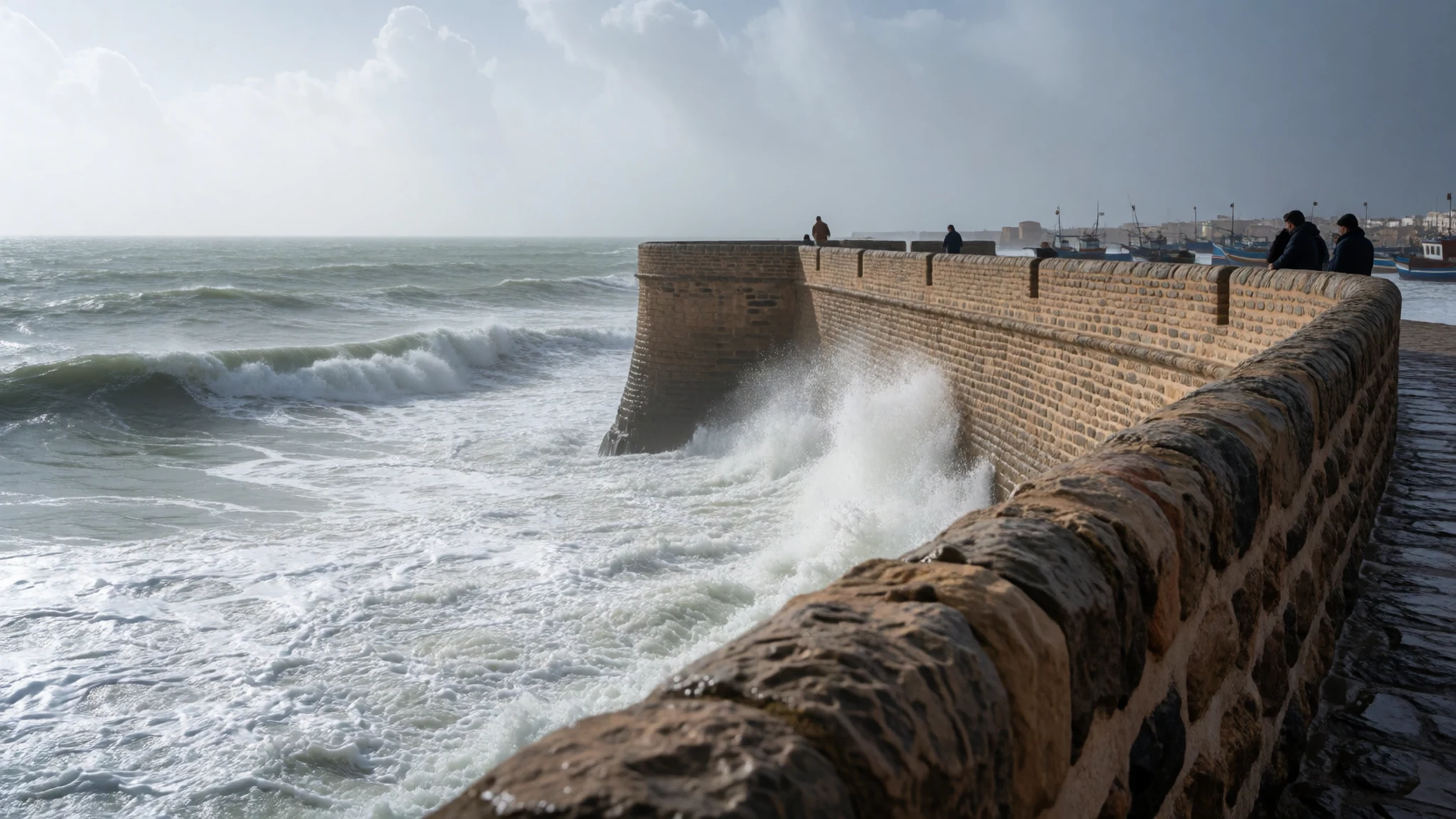
- Essaouira Citadel — Seaward side of the medina, near the harbour
The citadel stands near the harbour on the seaward side of the medina, a fortress built to guard the port. Its gun platforms look out over the water, and the view back across the medina roofs is worth the short climb. Expect uneven steps and some wind, and go in the morning if you want the light on the sea.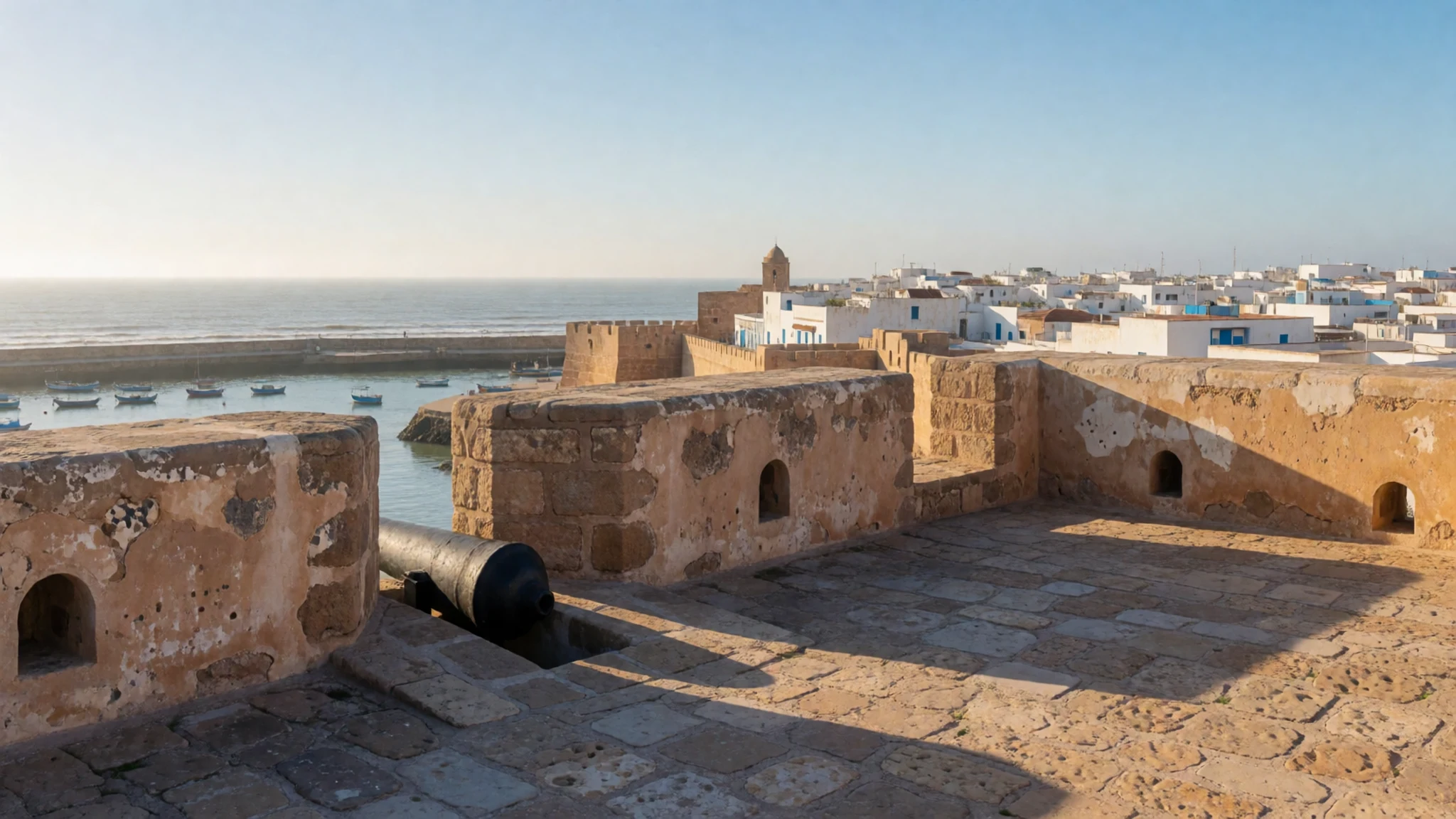
- Mogador island — Offshore, in the bay
Mogador island lies offshore in the bay and is a nature reserve, so visits need official authorisation. In the 19th century it served as a quarantine station for pilgrims returning from Mecca. Excavations there found a Roman villa and Phoenician pottery. Arrange any trip through the official authorities rather than assuming a boat will take you across.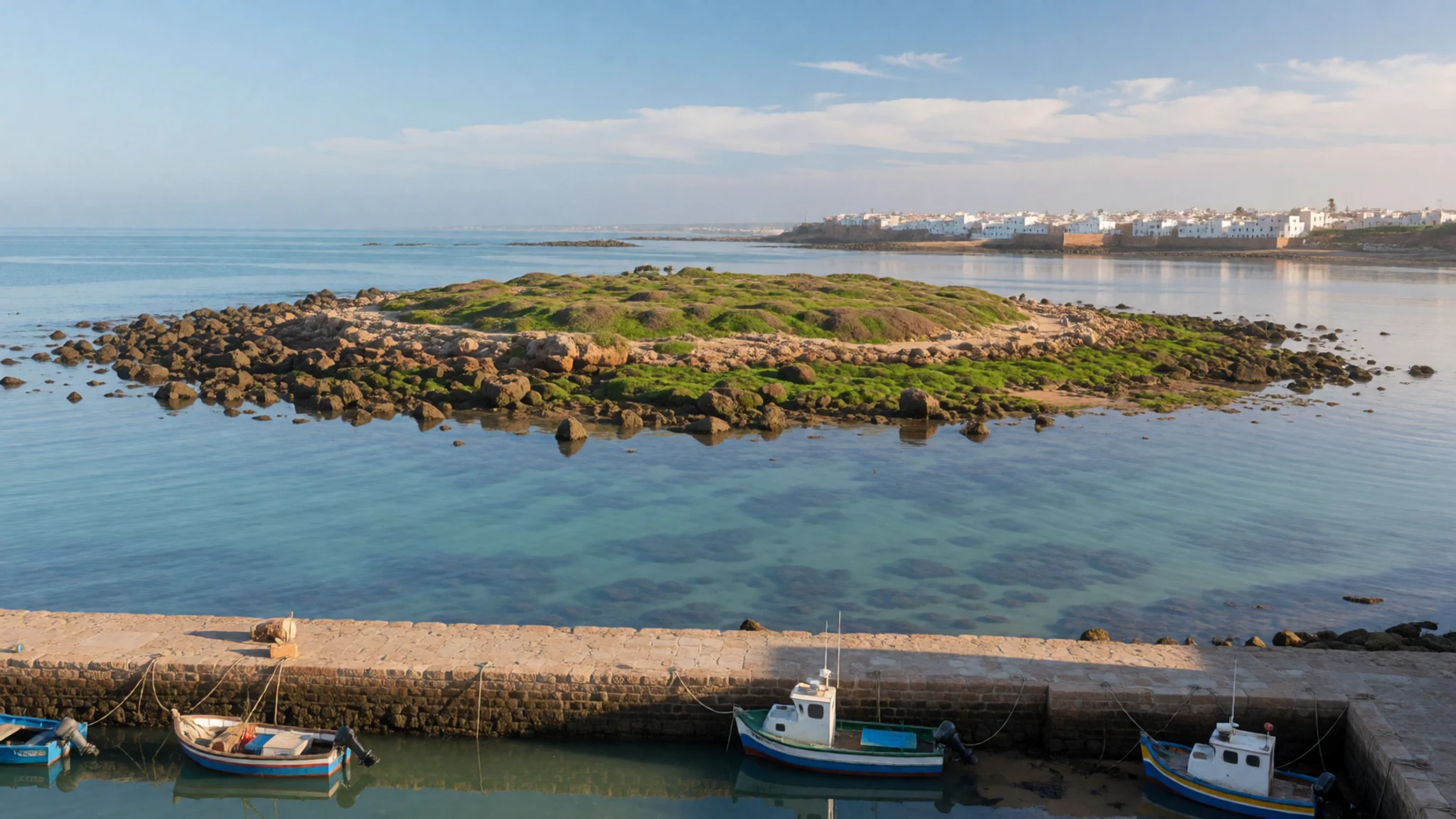
- Diabat — Southern end of the main beach
Diabat sits at the southern end of the main beach, a windswept stretch where the sand runs for a long way and a ruined fort stands above it. Local stories link the spot to the musician Jimi Hendrix, though the tale is unconfirmed. Whether or not it is true, the walk is worth the effort, and kitesurfers often crowd the sky on windy days.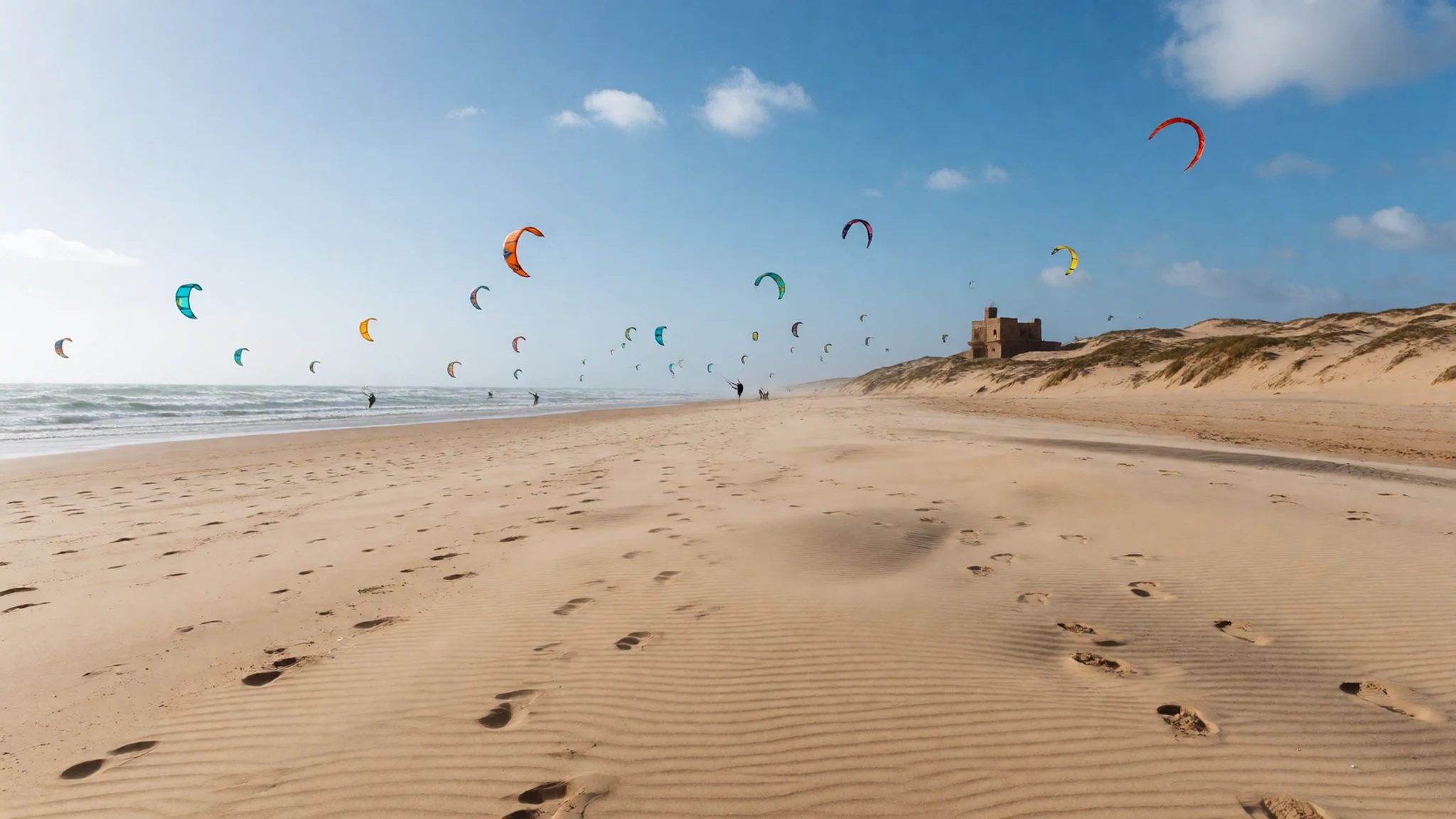
- Dar Sultan Palace — Hills south of the town, beyond the river
The ruins of an 18th-century palace used by sultans and kings sit in the hills south of the town. Reach them by walking the beach and crossing the shallow Oued Igrounzer. Little of the structure survives, but the setting above the sea is striking. Go early or late, carry water, and wear shoes with grip for the uneven ground.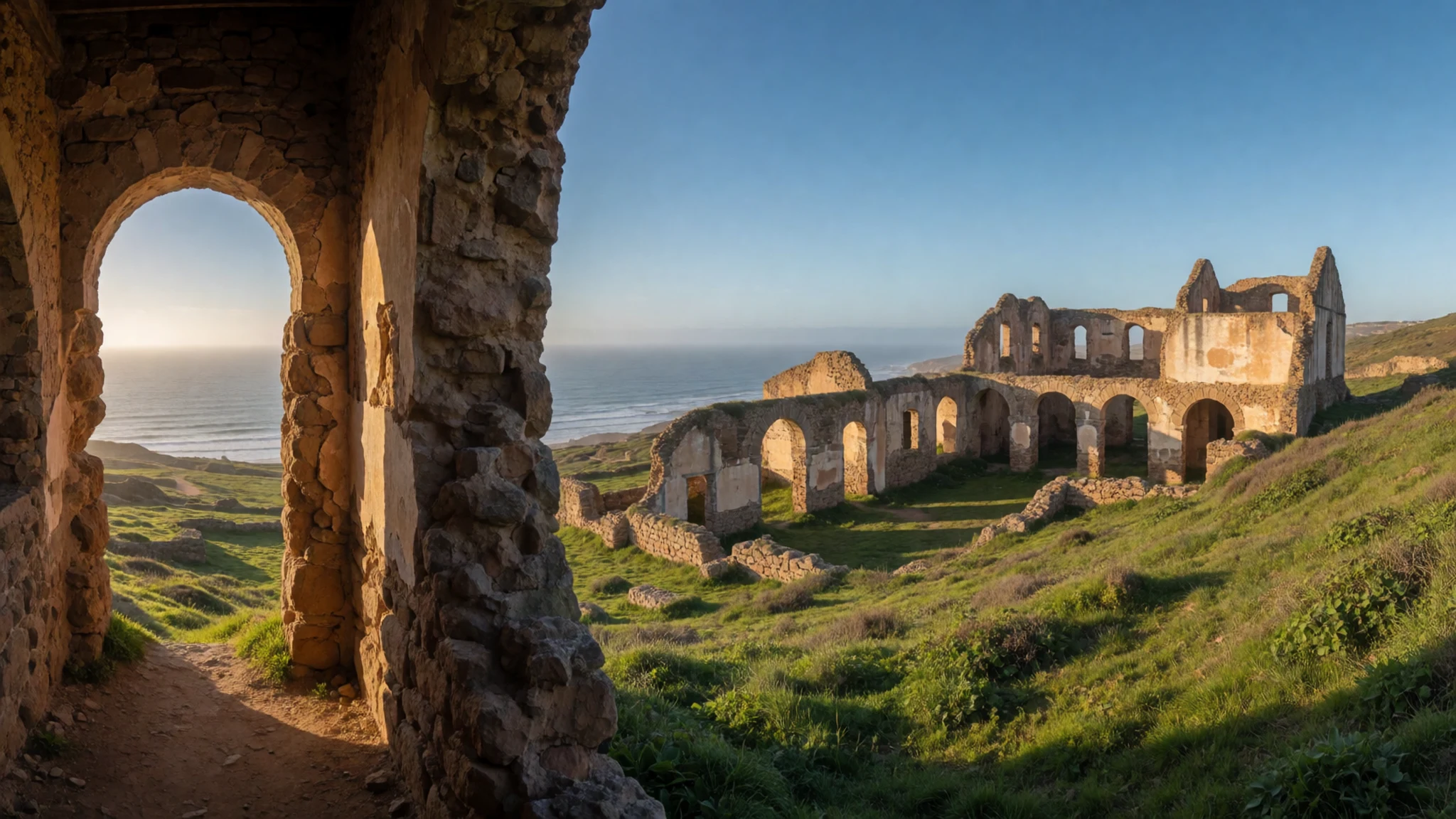
Culture
Essaouira has a long habit of welcoming outsiders, and its festivals show it. Since 1998 the Gnaoua Festival of World Music has been held here, normally in the last week of June. Gnaoua music is its core, but the programme stretches to rock, jazz and reggae, and around 450,000 spectators attend each year. The festival earns comparisons with a famous American rock gathering, though its mood is closer to a street party.
The MOGA Festival, an electronic music event started in 2016, works on two levels. MOGA OFF is free and spreads across riads, rooftops, art installations and surf sessions in the medina. MOGA IN brings international headliners to several stages.
Daily life is quieter and more conservative than the festival calendar suggests. Most residents are Muslim, the Friday midday prayers shape the rhythm of the medina, and mosques are closed to non-Muslims. Dress modestly when walking through the lanes, and ask before photographing people, especially women and market vendors.
What to wear
Traditional dress in Essaouira follows the wider Moroccan pattern. Men wear the djellaba, a long, loose robe with a hood, made in heavy wool for winter and lighter cotton in warmer months, usually in natural or grey tones. Women wear the kaftan, a long gown often embroidered at the neck and sleeves, and many older women cover their hair with a scarf or light veil. Coastal weavers and embroiderers have long made woollen blankets, woven cloth and silver jewellery, and these textiles still appear in the medina's shops.
Everyday dress is a mix. Young people wear jeans, trainers and fitted tops, while many men and women still choose a djellaba for work, prayer or cooler days. Visitors in the medina see more Western clothes than in rural areas, and the mix feels relaxed.
A visitor should dress for wind and sun, with a light layer, a scarf and a hat. Cover shoulders and knees in the medina, near mosques and at shrines; the beach is more relaxed, though a cover-up is still polite away from the sand. Choose flat, sturdy shoes with grip for cobbles, steps and sand, and carry a closed bag in crowded lanes.
What to eat
- Grilled sardines — Grill stalls by the fish market, near the harbour
Sardines are the everyday fish here. Grilled whole over charcoal and served with bread, lemon and a plain salad, they are the simplest meal on the harbour. Grill stalls near the fish market cook them while you wait, and the portions are generous.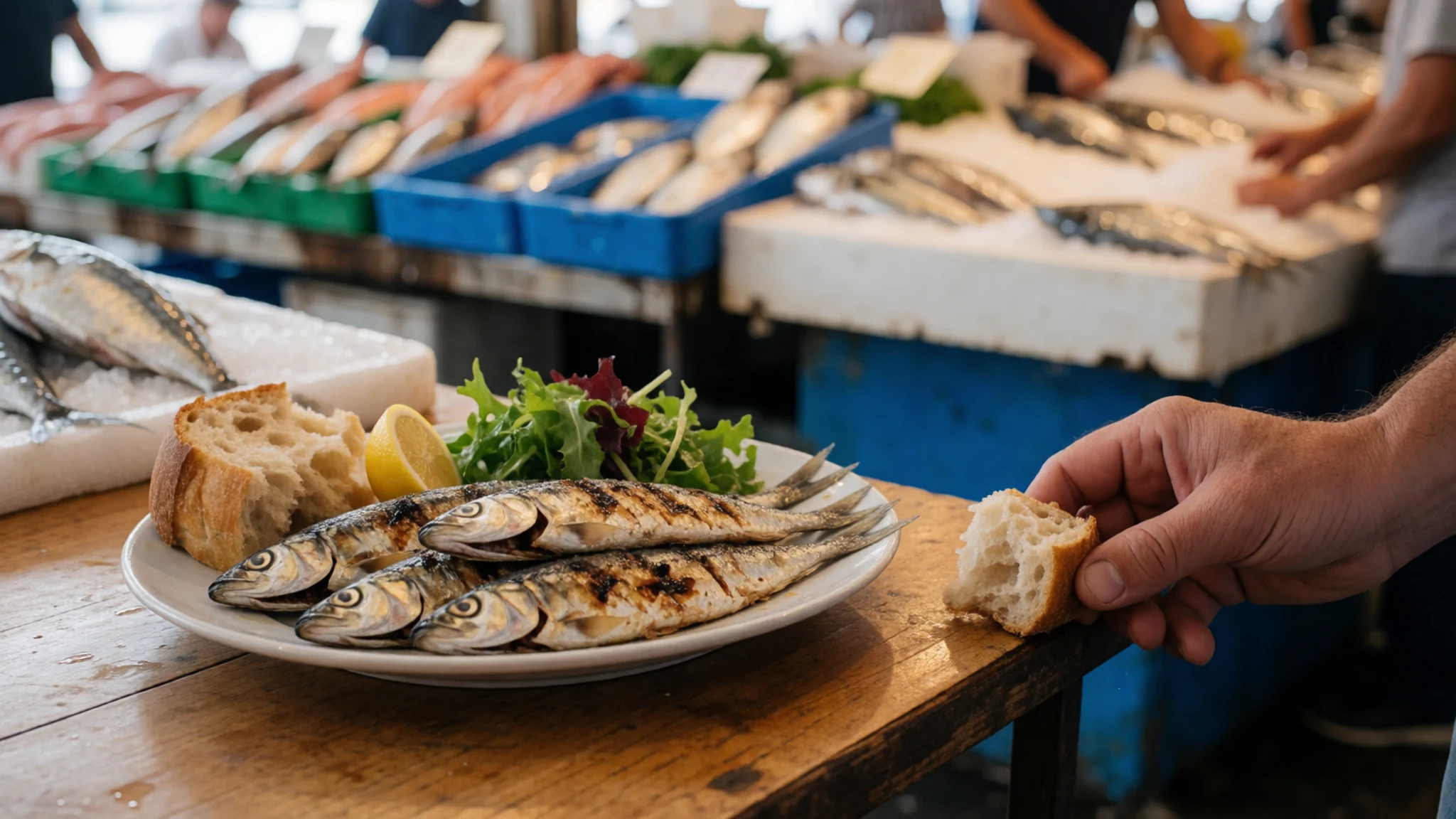
- Grilled shrimp — The fish market, at the vendors' counters
Shrimp are the local prize, sold at the fish market in quantities that make them good value. Pick from the tray and the vendor cooks your choice on the spot over charcoal. Eat them with bread, standing at a counter while the gulls circle overhead.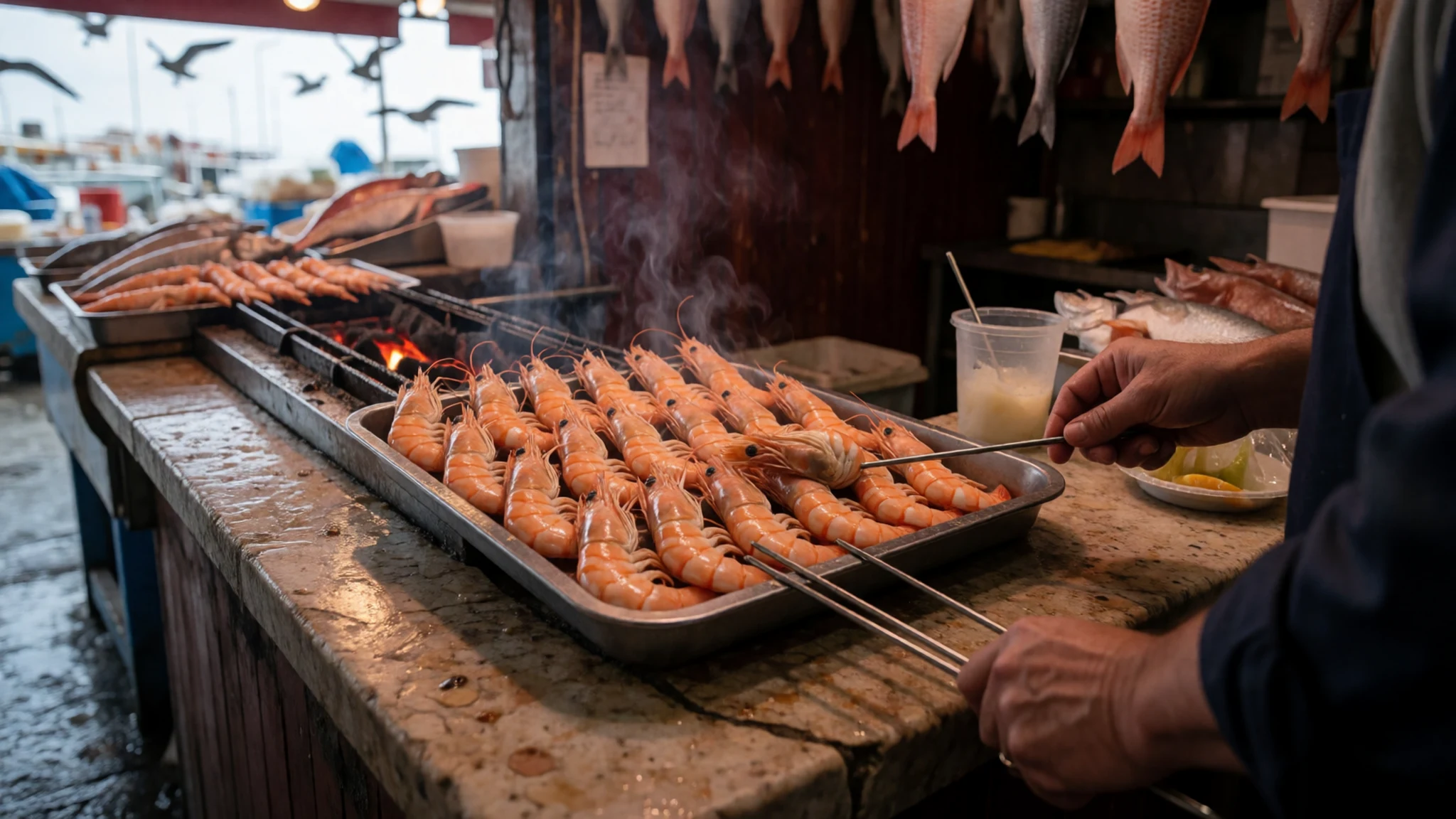
- Fried fish platter — Small eateries along the harbour and by the fish market
Fried fish platters are a staple at the small eateries along the harbour. Hake, calamari and whatever the boats landed that morning arrive crisp and golden, with cumin-spiced salad and fries. Choose a place where the cook is frying in front of the counter and the oil looks fresh. - Berber omelette and bread — Small cafés inside the medina, such as those near Bab Doukkala
Berber omelette is a rustic dish of eggs cooked in a shallow pan with tomato, onion, peppers and spices, served straight from the pan with fresh bread. It is an easy breakfast or lunch in the medina, especially in the smaller cafés. - Mint tea — Any cafe in the medina, or a Berber village on a countryside walk
Mint tea is served in almost every cafe, poured from height into small glasses and sweetened generously. Order it at a cafe in the medina, or ask for it in a Berber village on a countryside walk, where it often comes with a small plate of nuts or dates.
Plan it
Best time. April and May, or September and October, suit most visitors: highs sit near 30°C, only a few degrees below the July and August peak, rain is lighter than in winter, and the medina is easier to walk. June brings the Gnaoua Festival and a rush on rooms, so book well ahead if you are going then. Midsummer is hot and busy, and the wind is a constant factor in any season.
How long. 2–3
Getting there. Fly direct to Essaouira airport from several European cities on budget carriers, or fly into Marrakech, Agadir or Casablanca, the larger international airports. For the last leg, take a grand taxi, which is quickest and can carry up to six people, or the number 2 bus from near Bab Doukkala, which is cheaper but less reliable.
Budget. low
Tips
- Book flights and rooms early for June, when the Gnaoua Festival fills the town.
- Walk the ramparts and harbour before 9 am, when the light is soft and the fish market is busiest.
- Carry some cash for small eateries, stalls and taxis, as cards are not always accepted.
- Bring a windproof layer, since the sea wind can feel cold even on sunny days.
- Bus departures can be cancelled or sell out, so check times with the driver and allow a spare hour.
- Arrange any trip to Mogador island through the official authorities in advance.
Etiquette
- Dress modestly in the medina and near mosques and shrines.
- Ask before photographing people, especially women and market vendors.
- Do not expect to enter mosques, which are closed to non-Muslims.
- Allow for the brief pause around Friday midday prayers, when some shops close for a while.
Nearby
Sources
- Wikidata Q216939 (CC0)
- Wikipedia, Essaouira (rev 1383002141) (CC BY-SA 4.0)
- Wikivoyage, Essaouira (rev 5401790) (CC BY-SA 4.0)
- Photo 01, Ramparts of Essaouira (Kayaky) (CC BY 3.0)
- Photo 02, The Medina of Essaouira (Holger Uwe Schmitt) (CC BY-SA 4.0)
- Photo 03, The fortress of Essaouira (Holger Uwe Schmitt) (CC BY-SA 4.0)
- Photo 04, The fortifications in the harbour (Holger Uwe Schmitt) (CC BY-SA 4.0)
- Photo 05, City walls and gates (Holger Uwe Schmitt) (CC BY-SA 4.0)
- Photo 06, Phoenician plate with red slip (Uploadalt) (CC BY-SA 1.0)
- Photo 07, Amphora of the Beltran 2B type (Uploadmo) (CC BY 3.0)
- Photo 08, Roman coins excavated in Essaouira (Uploadalt) (CC BY 3.0)


