Oshino Hakkai
Oshino Hakkai, Japan
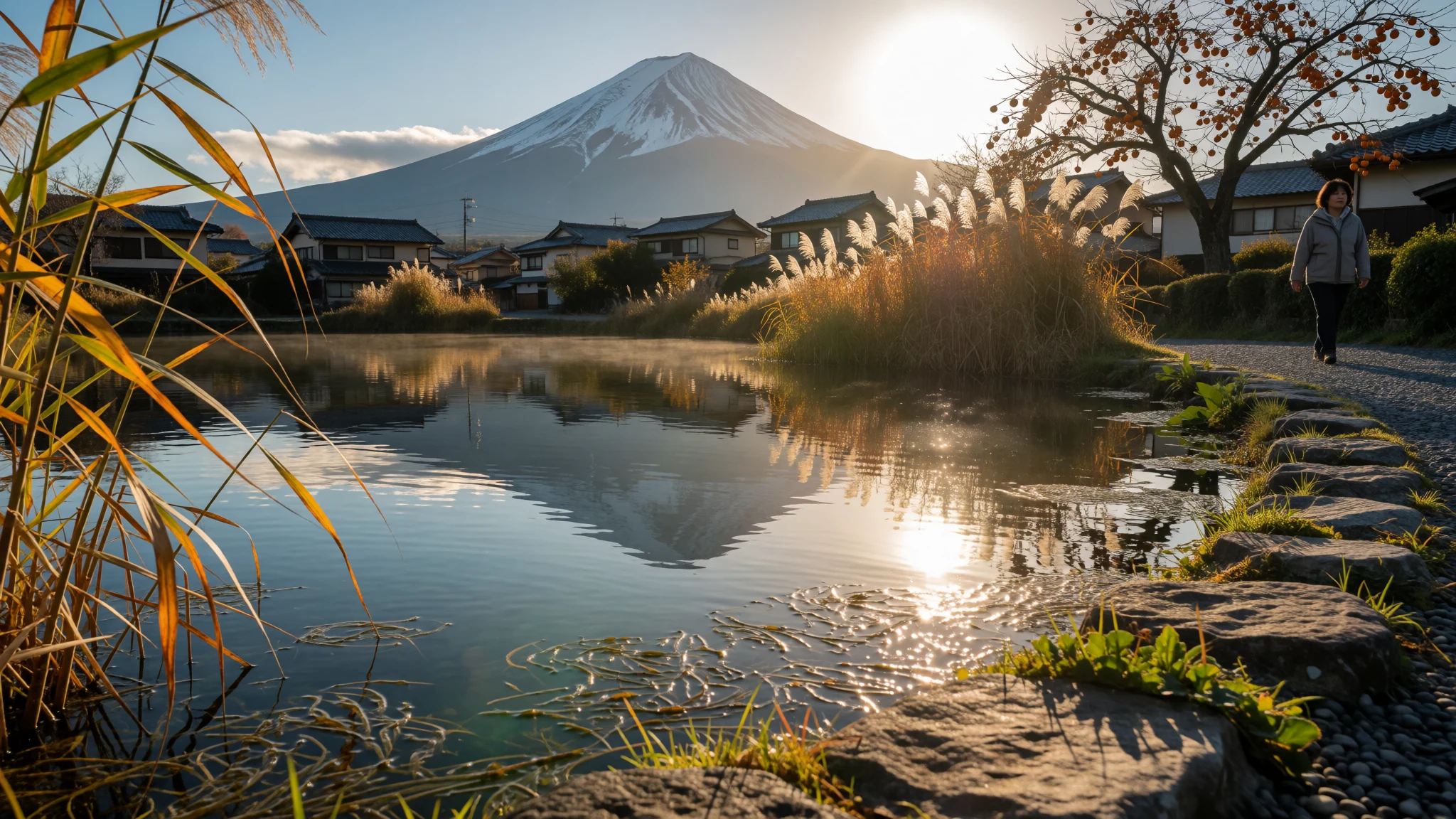
Oshino Hakkai gathers clear spring ponds at Mount Fuji's foot, where snowmelt that has travelled through the volcano surfaces as glassy water.
The place
Oshino Hakkai (忍野八海, "Eight Seas of Oshino") is a cluster of eight spring-fed ponds in the village of Oshino, Yamanashi prefecture, on the northern side of Mount Fuji's base. Despite the word "sea" in the name, each is a small pool, some no bigger than a garden pond. All are fed by water that fell on Fuji as rain and snow and re-emerged after filtering through volcanic ground. The result is water that looks almost unnaturally clear, with waterweed swaying and fish drifting over the bed.
The ponds are scattered along lanes, fields and house plots rather than gathered in one park, so a visit is a stroll from one to the next. Some sit beside souvenir shops and cafés, others behind small shrines or at the edge of a paddy. The springs are a Natural Monument of Japan and part of the Mount Fuji World Heritage property, and they rank among Yamanashi's important visitor attractions. That means tour coaches and day-trippers, especially at midday and at weekends. Early mornings and late afternoons are calmer, and the light on the water is better too.
On a clear day Fuji rises above the village roofs, and the best-known view is across Naka-ike pond. Yamanashi has much closer ties to Tokyo than its mountain geography suggests, which is why Oshino works as a short outing from the capital. The wider Fuji Yoshida area has its own lakes, trails and festivals for anyone who wants to stay longer.
Its story
The story of Oshino Hakkai starts underground. Rain and snowmelt sink into Mount Fuji's porous volcanic rock and travel slowly through it before surfacing in Oshino as springs. That long, filtered journey is why the ponds are so clear, and it is also why people here have treated the water as something special for a very long time.
Traditionally, pilgrims bound for the summit of Fuji, a mountain worshipped as sacred, stopped in the area to purify themselves in the springs before climbing. The eight ponds became part of that devotional landscape, and each gathered its own name and its own tale. Deguchi means roughly "exit", and Okama recalls a cauldron. Choshi is named for the shape of a sake flask. Kagami means "mirror", for its reflections, and Waku suggests water welling up. Nigori means "cloudy", and Shobu is named for irises.
Sokonashi, "bottomless", carries the best-loved legend: things thrown in are said to vanish without trace. The tale says more about the pond's deep, dark look than about its geology. The name Hakkai itself, "eight seas", echoes the idea of eight sacred bodies of water around a holy peak.
Yamanashi, once called Kai Province, has kept nearly the same borders for centuries, and its people still honour Takeda Shingen, the warlord who once looked set to dominate Japan. Oshino sits quietly outside that military history, a village of springs, farmland and pilgrim routes. Today the ponds are protected as a Natural Monument and sit within the Mount Fuji World Heritage property.
What to see
- Naka-ike pond — Central Oshino village
Naka-ike is the pond most people photograph, because the village rooftops, a still foreground and Mount Fuji line up in one frame on a clear day. It sits beside souvenir shops, so it is also the busiest. Come early, before the coaches arrive, and wait for the surface to settle.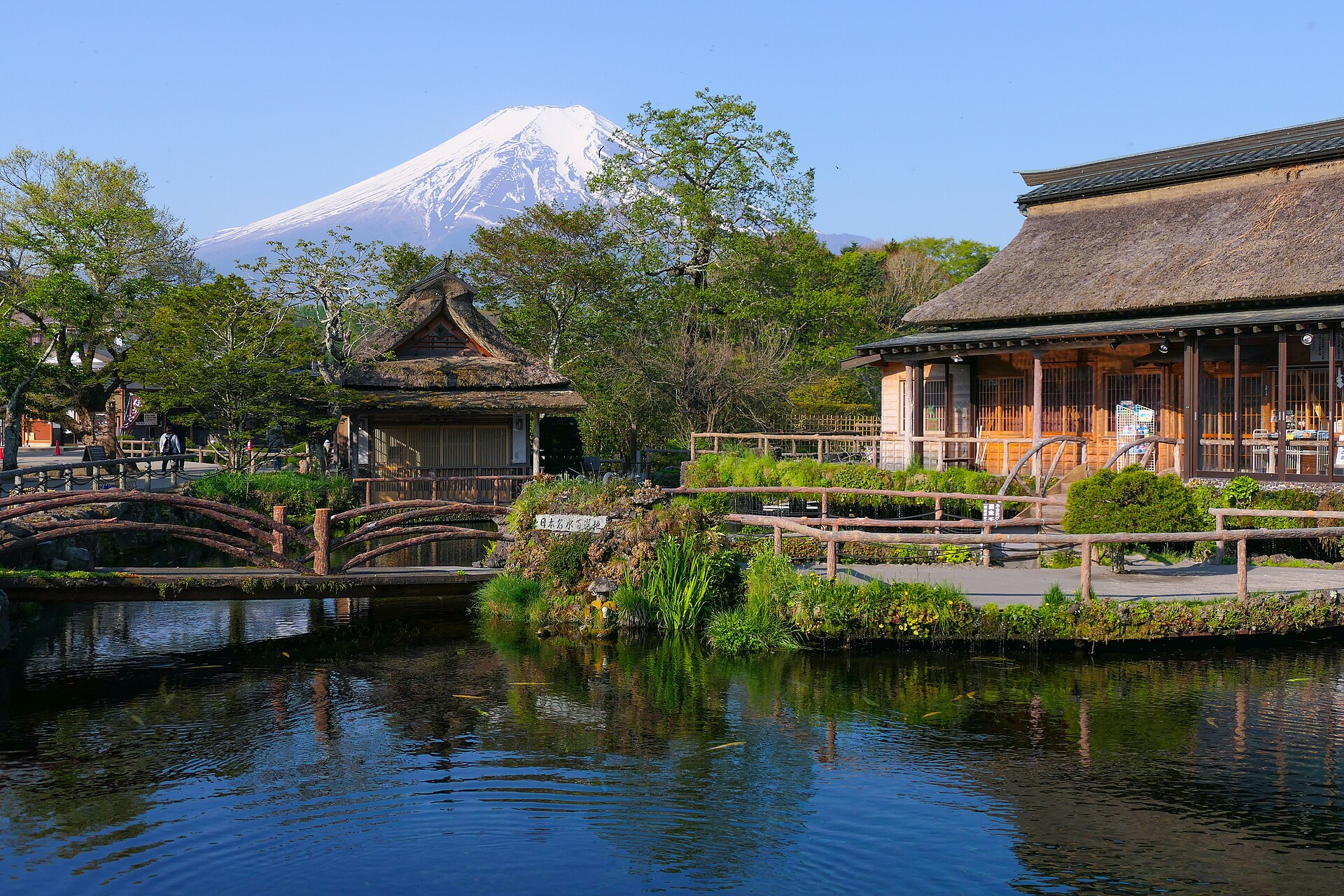
- Deguchi-ike — Oshino village
Deguchi-ike, the "exit pond", is a quiet, reedy pool that suits slow looking more than quick photographs. Water moves visibly through it, and the planting around the edge makes it feel more like a village garden than an attraction. It is a good first stop for adjusting to the scale of the ponds.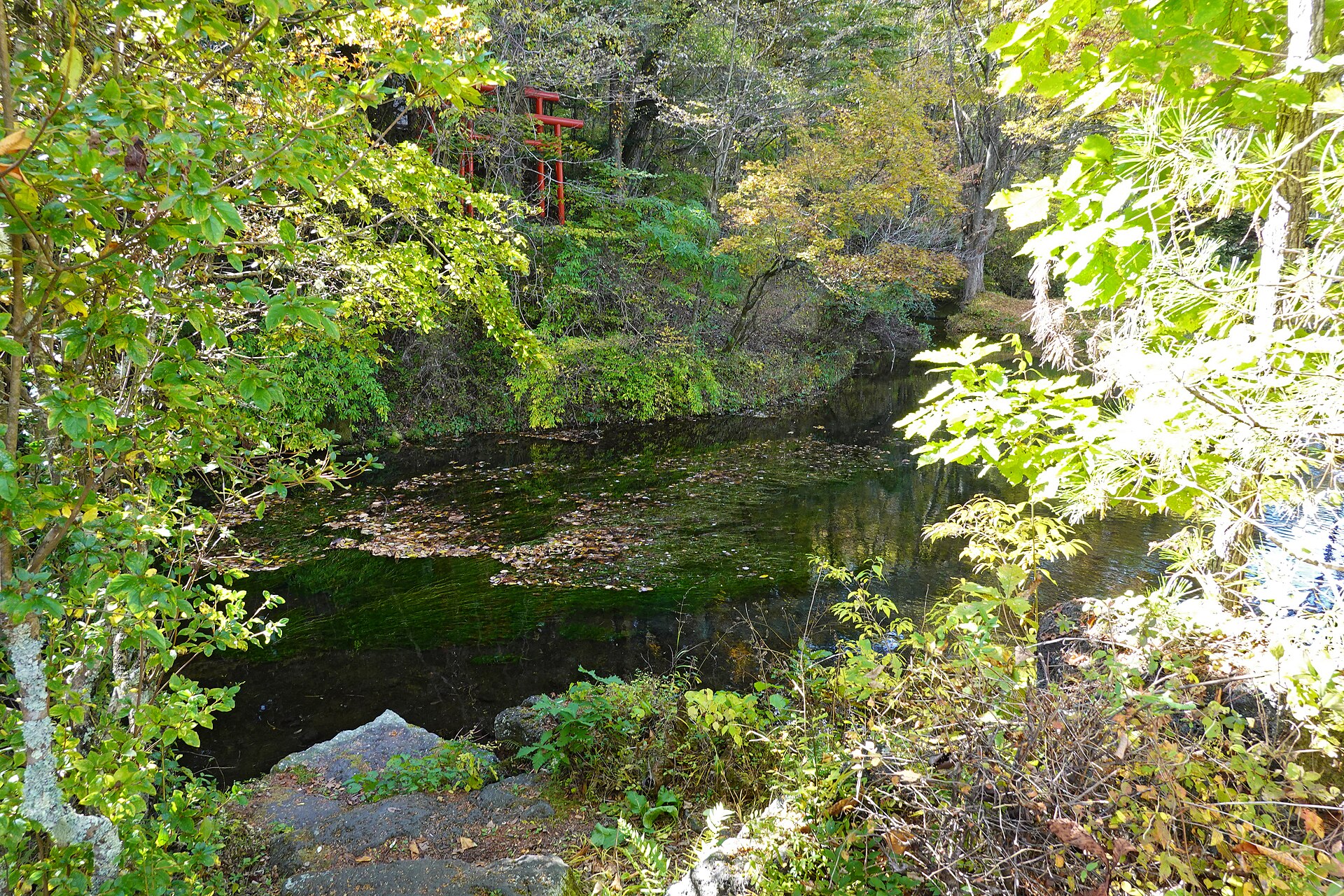
- Okama-ike — Oshino village
Okama-ike is a small, deep, intensely clear pool, and many visitors rate it the most beautiful of the eight, though that is only a matter of taste. Its compact size means a couple of minutes is enough, but the colour of the water rewards a longer pause in good light.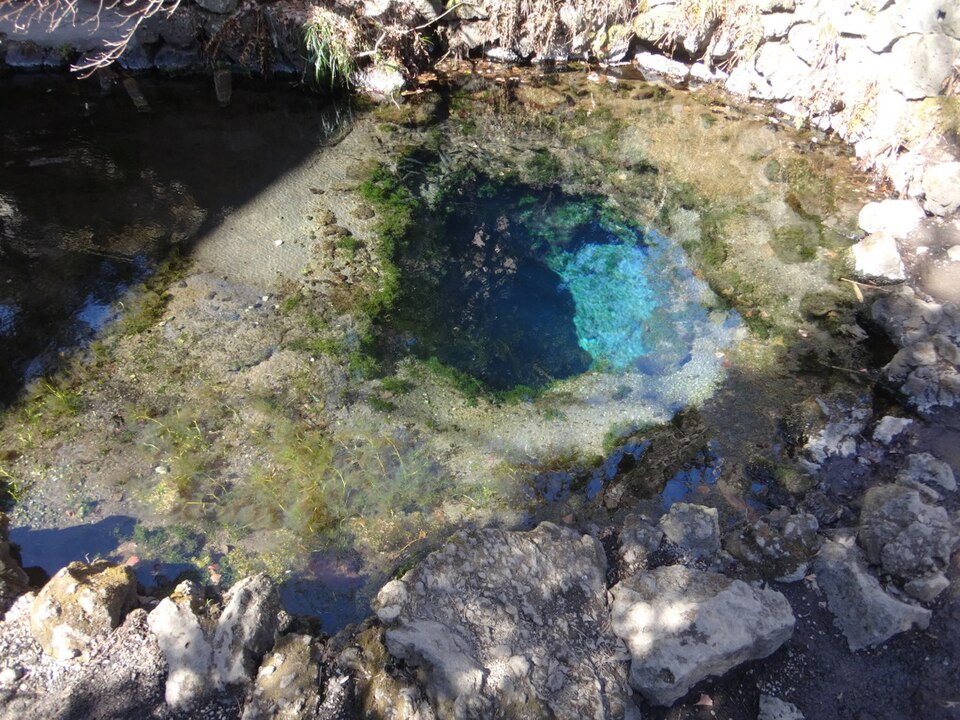
- Sokonashi-ike — Oshino village
Sokonashi-ike, the "bottomless pond", looks darker and deeper than its neighbours, which feeds its legend of objects that vanish. It sits slightly apart from the others, so the walk there is a pleasant pause between busier stops. Keep back from the edge and enjoy the stillness.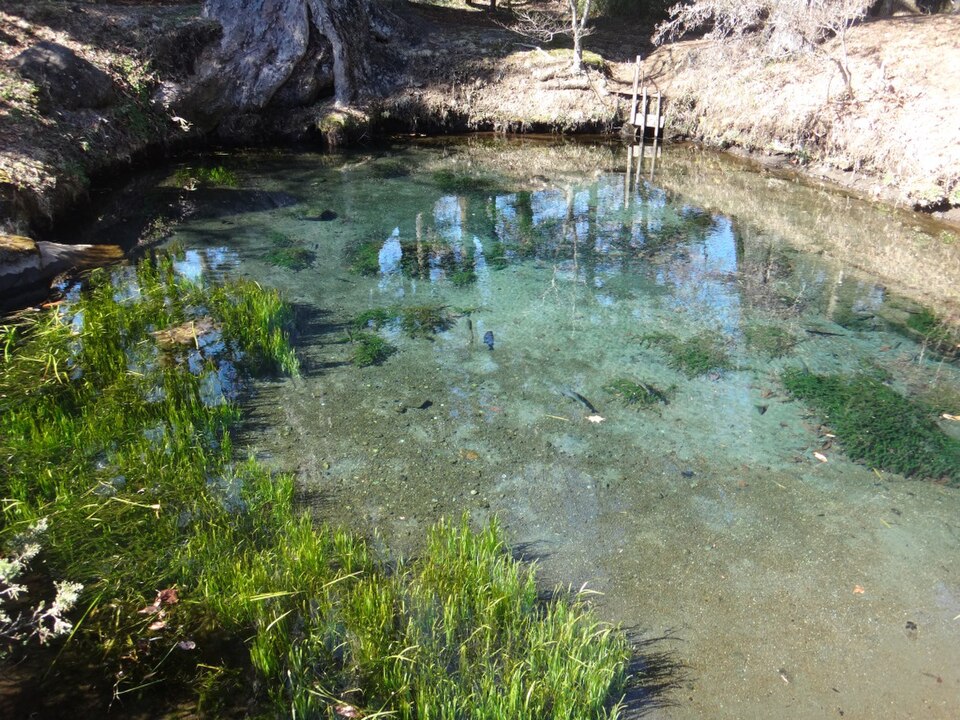
- Choshi-ike and Kagami-ike — Oshino village
Choshi-ike and Kagami-ike are worth pairing. Choshi, named for a sake flask, is a modest pool with calm water and tidy surroundings. Kagami, the "mirror", earns its name on windless mornings, when the surface reflects trees and sky. Both reward patience more than a rushed circuit.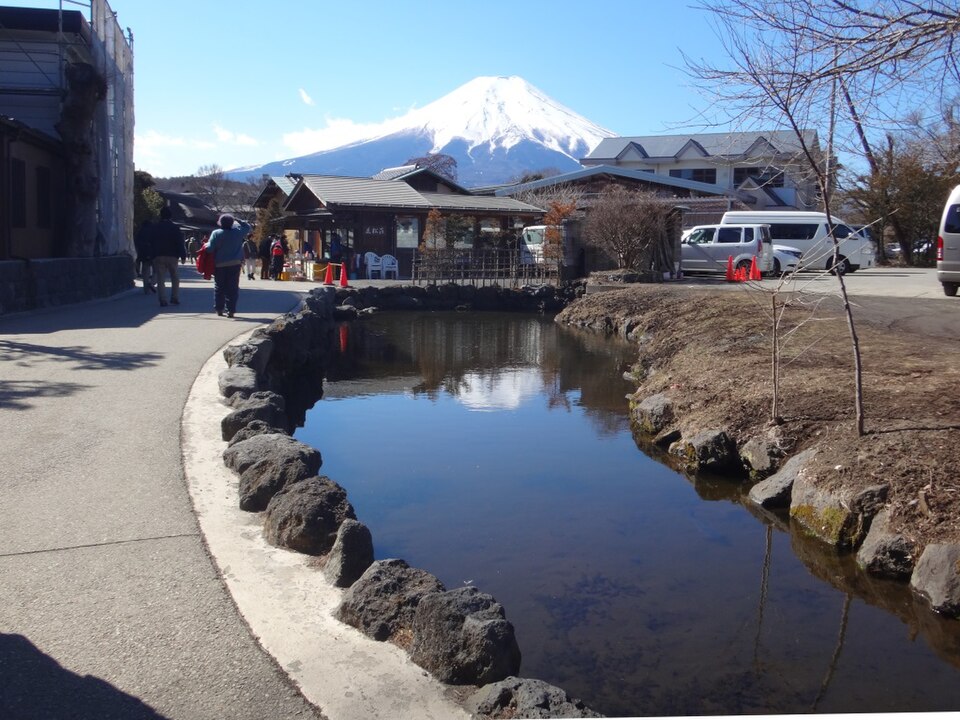
- Waku-ike and Nigori-ike — Oshino village
Waku-ike is named for water welling up, and the movement in the pool shows why. Nearby Nigori-ike is shallower and often looks cloudier, in contrast to the others. Seeing both side by side shows how varied the springs are, even though they share one source mountain.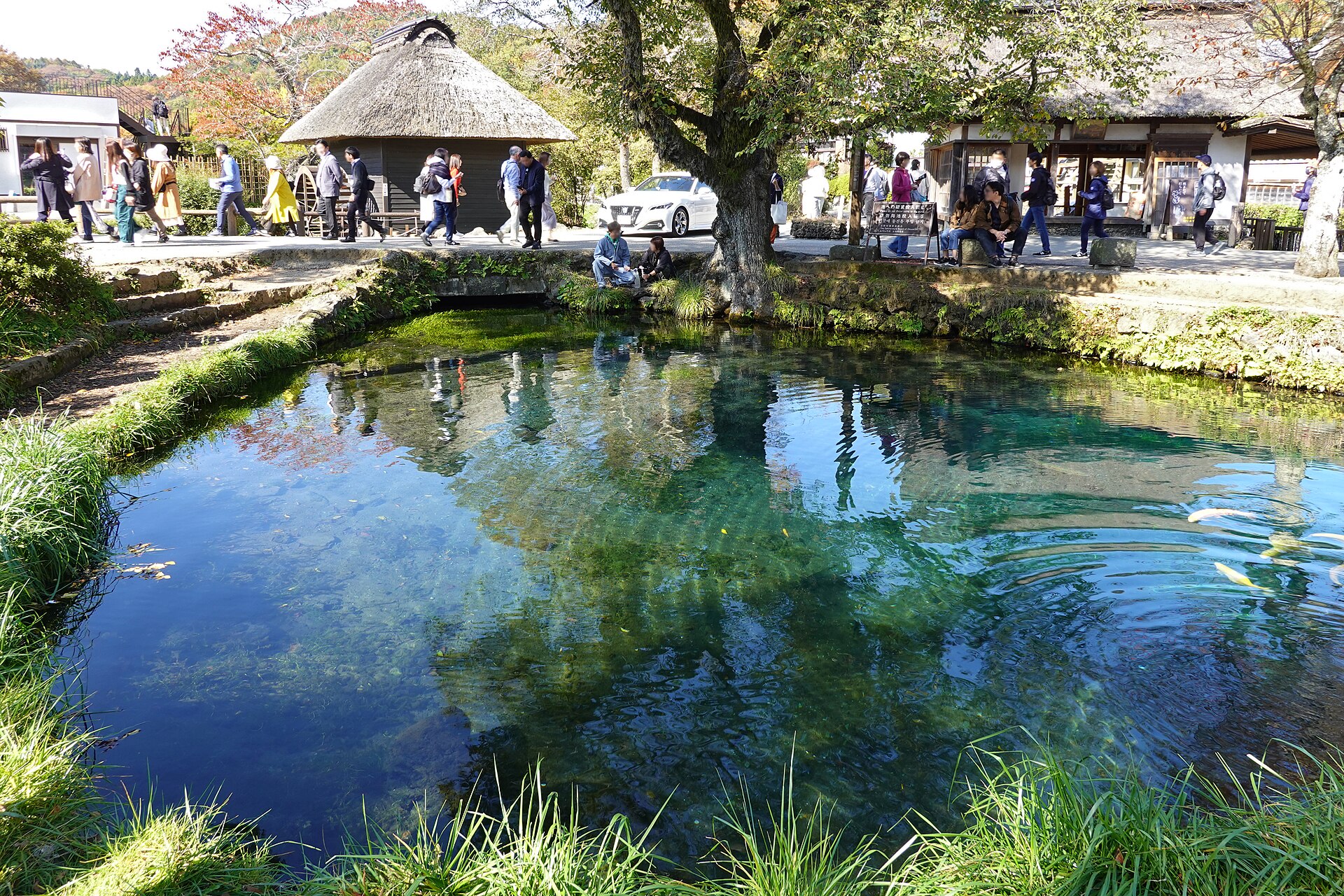
Culture
Oshino Hakkai is a place where everyday village life and mountain devotion overlap. Mount Fuji has long been worshipped as sacred, and the springs that rise at its foot were part of that faith. Pilgrims once purified themselves in the water before climbing. Small shrines and stone markers near some ponds are a reminder that this is not only a scenic stop but also a place with spiritual meaning for local people.
The ponds sit among houses, fields and shops, so residents live right beside the springs. Many families have looked after these pools across generations, and the lanes are working village streets, not a theme park. Cafés and souvenir shops serve the visitors, but daily routines carry on around them.
Yamanashi's wider culture adds context. The prefecture celebrates its historic lord Takeda Shingen with processions, and Fuji Yoshida, a short way off, holds an annual fire festival in late August honouring the goddess of Mount Fuji. Local food, from miso-based noodle stews to wine, reflects the cold winters and fruit-rich basin of the region. Visitors who read the ponds as part of that living landscape, rather than as a checklist of eight photo stops, usually come away with a better sense of the place.
Please keep to the paths, do not throw coins or rubbish into the ponds, and speak quietly near the small shrines.
What to wear
Traditional dress around Oshino follows the wider Japanese pattern. The kimono, made of silk or cotton, is worn for weddings, coming-of-age days and formal occasions. The lighter cotton yukata appears at summer festivals, and festival crews wear short happi coats. At the Yoshida Fire Festival in nearby Fuji Yoshida, local participants dress for the occasion in this kind of festive wear. The Fuji foothills have long been a textile-weaving area, though most visitors will only see this in craft shops.
Day to day, people in Oshino wear practical, weather-ready clothes: fleeces, windproof jackets, work trousers and sturdy shoes, since the village is a farming community at the foot of a mountain. In winter, padded coats and gloves are normal, because Yamanashi gets properly cold. Around the ponds the mood is casual, and nobody expects anything formal.
For visitors, layers matter more than style. Mornings can be cool even in the warmer months, and the wind off Fuji can bite. Bring a light waterproof, a sun hat for open stretches, and comfortable shoes with decent grip, because the stone paths and pond edges are often wet. Shoulders and knees do not need covering at the ponds, but dress tidily if you step into a shrine precinct. In winter, add a warm hat, gloves and a thermal layer.
What to eat
- Hōtō — Local noodle restaurants in Oshino and Fuji Yoshida
Hōtō is Yamanashi's hearty noodle stew: wide, flat wheat noodles simmered in a miso base with pumpkin, burdock, radish, taro and other vegetables. It is a cold-weather comfort dish, and worth ordering after a chilly morning by the ponds. - Yoshida udon — Small udon shops around Fuji Yoshida
Yoshida udon is a firm, thick-cut noodle served in a broth, with or without meat. The chew is the point. It is the everyday lunch of the Fuji Yoshida area, and a sensible stop on the way to or from the ponds. - Yamanashi grapes and peaches — Roadside fruit stalls and farm shops across the prefecture
Yamanashi is known for its grapes and peaches, and the basin's climate makes the fruit notably sweet. Sold fresh in season, they make a simple, cheap snack, and good fruit makes a better gift than another souvenir trinket. - Yamanashi white wine — Wineries and tasting rooms, especially around Katsunuma
The prefecture is the centre of Japanese wine making, and the sweetness of the local fruit shapes the wine. The whites are the safer choice, while the reds can be a mixed experience. Tasting rooms and cellars make an easy afternoon. - Basashi — Traditional eateries and izakaya in Yamanashi towns
Basashi is raw horse meat, served thinly sliced with soy and ginger, and a regional speciality that is not to everyone's taste. Order it where locals do, and ask the staff how it is usually eaten if unsure.
Plan it
Best time. April–May and October–November are the most comfortable months, with milder days and a good chance of clear mornings for Fuji views. Winters in Yamanashi are properly cold, and summer is warmer and often hazier, so the mountain is more likely to hide behind cloud.
How long. 1
Getting there. Yamanashi has no airport, so fly into Tokyo, preferably Haneda, which is far easier than Narita for this route. From Tokyo take the Chuo Line towards Otsuki, then local rail and bus towards the Fuji Five Lakes area and Oshino. Direct highway buses from Tokyo also run. Check current timetables, as services change.
Budget. mid
Tips
- Go early in the morning or late in the afternoon, as midday brings coaches and crowds
- Carry some cash, since small shops and stalls near the ponds may not take cards
- Check the weather before going, because Fuji is often hidden by cloud and clear mornings are the best bet
- Wear shoes with grip, as paths and pond edges are frequently wet
- Combine Oshino with Fuji Yoshida or a lake for a fuller day, as the ponds themselves need only a couple of hours
Etiquette
- Stay on the paths and keep away from pond edges
- Do not throw coins or rubbish into the water
- Keep voices low near shrines and respect local homes beside the lanes
Nearby
Sources
- Wikidata Q11072216 (CC0)
- Wikipedia: Oshino Hakkai (rev 1339902121) (CC BY-SA 4.0)
- Wikivoyage: Yamanashi (prefecture) (rev 5214058) (CC BY-SA 4.0)
- Photo: 01-oshino-hakkai-nakaike.jpg, MaedaAkihiko (CC BY-SA 4.0)
- Photo: 02 Deguchi-ike, 663highland (CC BY-SA 4.0)
- Photo: 03 Okama-ike, Snap55 (CC BY 3.0)
- Photo: 04 Sokonashi-ike, Snap55 (CC BY 3.0)
- Photo: 05 Choshi-ike, くろふね (CC BY 3.0)
- Photo: 06 Waku-ike, 663highland (CC BY-SA 4.0)
- Photo: 07 Nigori-ike, 663highland (CC BY-SA 4.0)
- Photo: 08 Kagami-ike, Snap55 (CC BY 3.0)


