Nzulezo Stilt Village
Nzulezo Stilt Village, Ghana
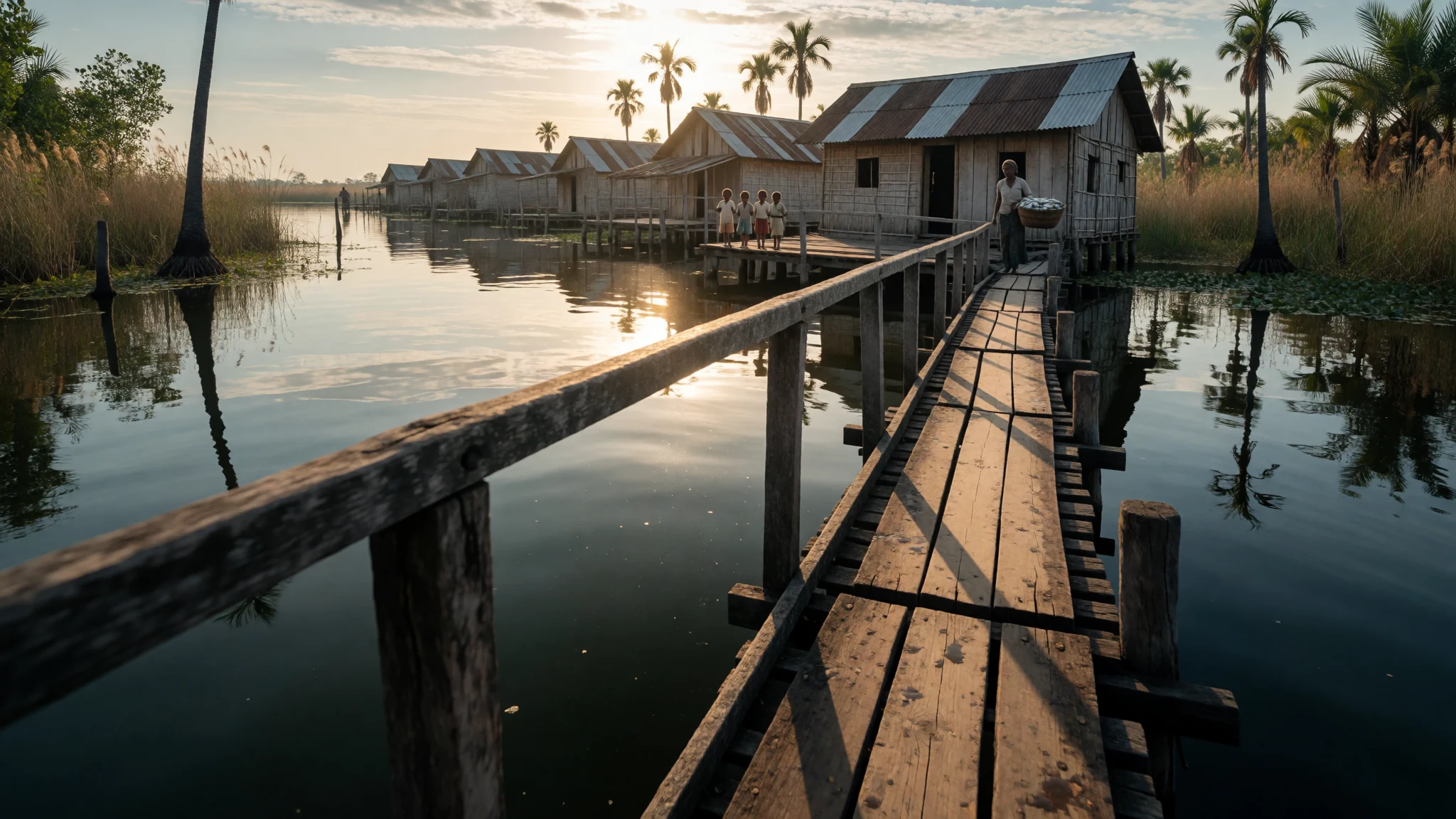
Nzulezo is a whole village raised on stilts above a lake, reached by a short canoe ride through mangrove and swamp.
The place
Nzulezo is a village built on Lake Tadane, in the Amansuri wetland of Ghana's Western Region, in the Jomoro District close to the coastal town of Beyin. Houses, paths and public buildings all stand on stilts and wooden platforms above the water, so there are no streets in the usual sense. People move along narrow plank walkways and by canoe, and children learn to paddle early. The community numbers several hundred, and its income comes from fishing, farming on the surrounding land, craft-making and, increasingly, visitors.
The approach is part of the experience. Motorised canoes leave from the Beyin side and wind through swamp and mangrove before opening onto the lake. The trip is short, and on a still morning it is quiet apart from the engine, with birds in the reeds and palms along the edge of the water.
Life on the platforms is modern as well as traditional. The village has electricity, so a small bar sells cold drinks, and some bamboo houses carry satellite dishes. Residents also hold that the lake protects the village from dangers such as fire, a belief that shapes how they talk about the water.
It is a small place and a working community, not a theme park. Heat and humidity are real, there is little shade on the water, and weekends and holidays can be busier than weekdays. Mornings are cooler, and the light is better for the walkways and the lake.
Its story
The name Nzulezo comes from the Nzema language and means roughly "water surface", which is an exact description of where the village stands. Its origin story is told by the community itself and is best read as tradition rather than documented history.
According to that account, the founders were a group of people who left Oualata, a city of the ancient Ghana Empire in what is now Mauritania. They travelled south over a long period, searching for a place to settle in safety. A snail is said to have guided them, moving ahead of the group until it reached the lake. The people took this as a sign, built their homes over the water and stayed. For that reason the snail is a totem in Nzulezo, respected by the villagers.
The water also gave the settlement a practical logic. Life on the lake meant fishing close at hand, canoes as the main transport and a setting that was hard for outsiders to approach. The Ewuture, a group remembered in local tradition, looked after the waterways and the movement of goods and people between the village and the shore.
Today the story is part of how Nzulezo presents itself to visitors, along with its school, which relies partly on voluntary donations from those who come. Guides tell the legend on the canoe or on the walkways, and the tone is that of a community describing its own past, not reciting a museum label.
What to see
- The canoe ride from Beyin — Beyin landing, Amansuri wetland
The journey to Nzulezo is a highlight in itself. A motorised canoe carries a small group from the Beyin landing through swamp and mangrove, then out across the open water of the Amansuri wetland. It is brief, calm and scenic, and life jackets are provided, so non-swimmers need not worry.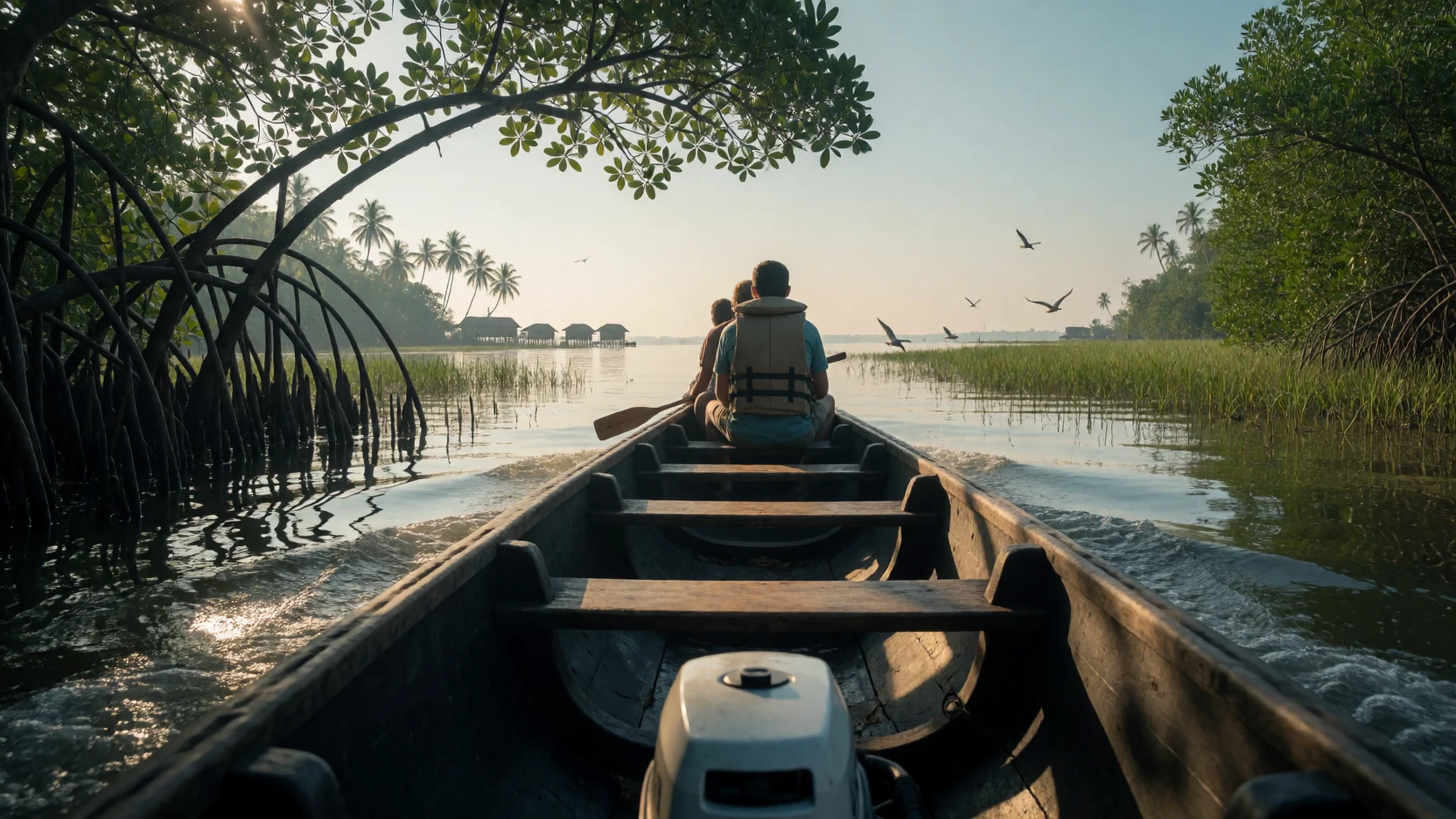
- The plank walkways and stilt houses — Nzulezo village
Wooden walkways link the houses, and the whole village sits clear of the lake on stilts. Walking them shows how the place works: canoes tied at doorways, washing hung out, fish being prepared. Bamboo and timber dominate, and a few satellite dishes show how modern life has arrived.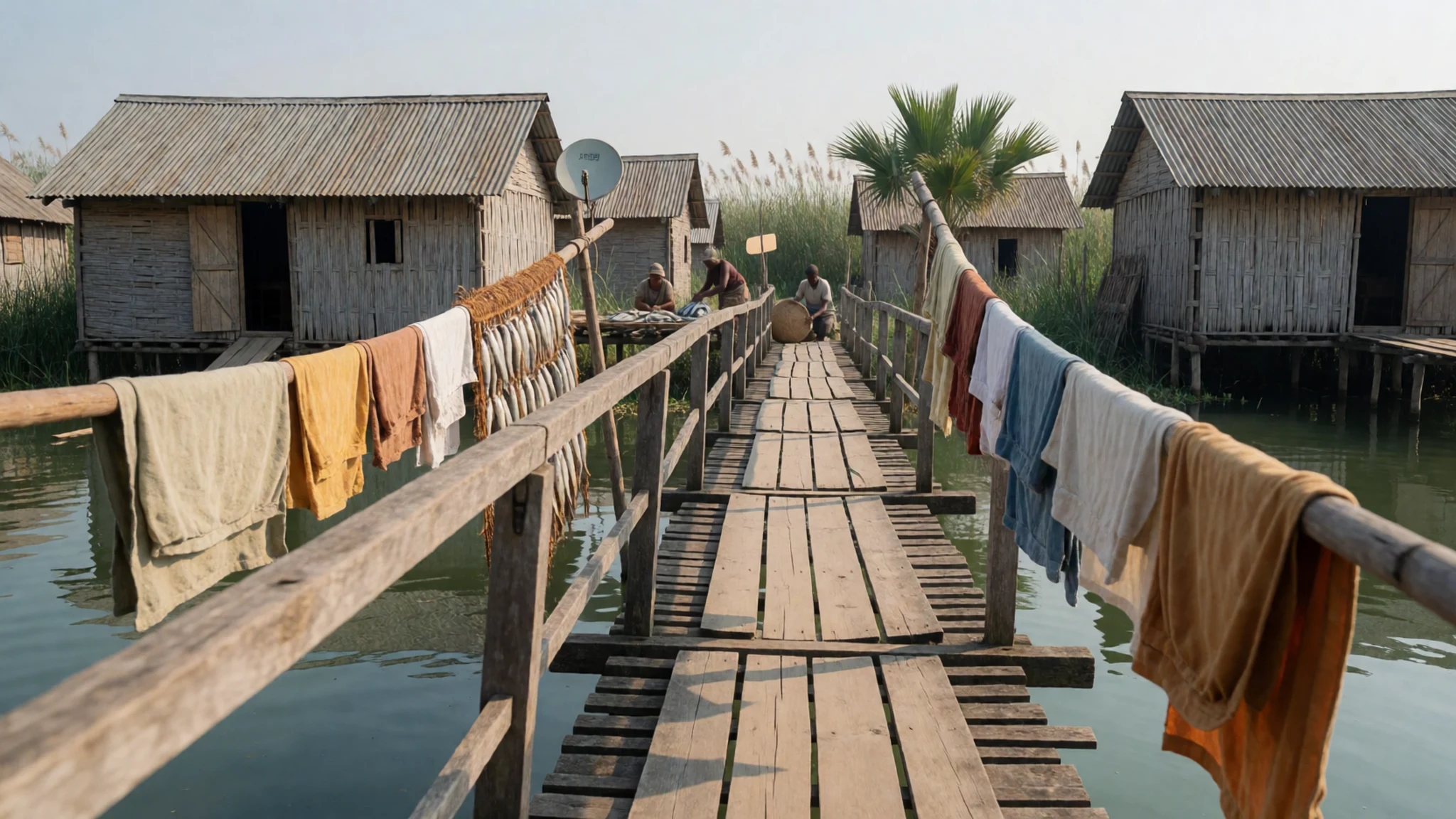
- The village school — Nzulezo village
The school stands on the water like everything else. Visitors are usually taken past it during the guided tour, and blackboards often show the day's lesson with the date written at the top. After the tour, visitors are invited to make a voluntary donation towards it. Giving is optional.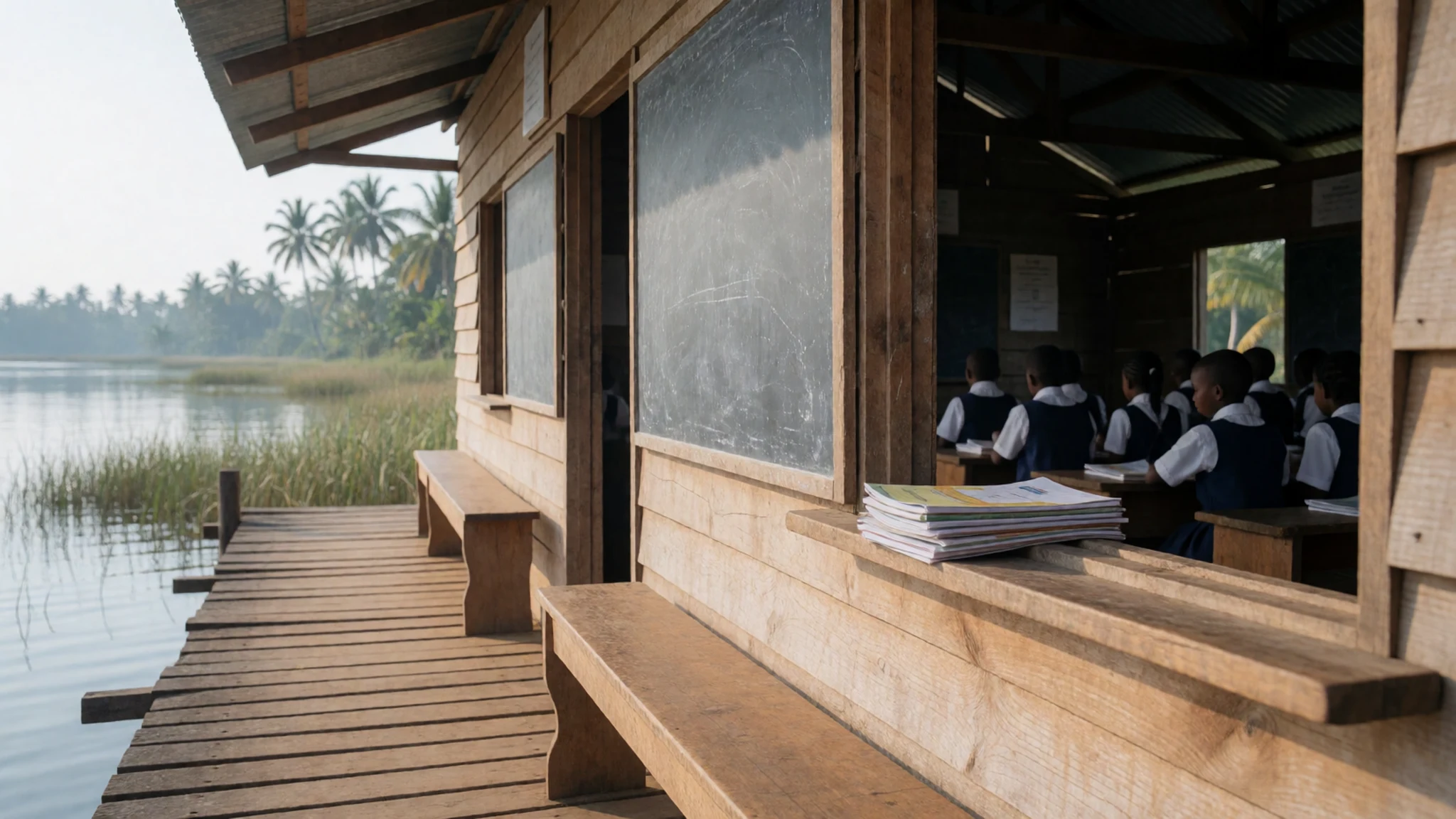
- Craft stalls and village conversation — Nzulezo village
Residents make crafts and sell them to visitors as souvenirs, and buying directly is a simple way to put money into the community. The guide will usually introduce people at work, and residents are generally friendly and open to conversation. Take time to chat, and ask your guide before photographing anyone.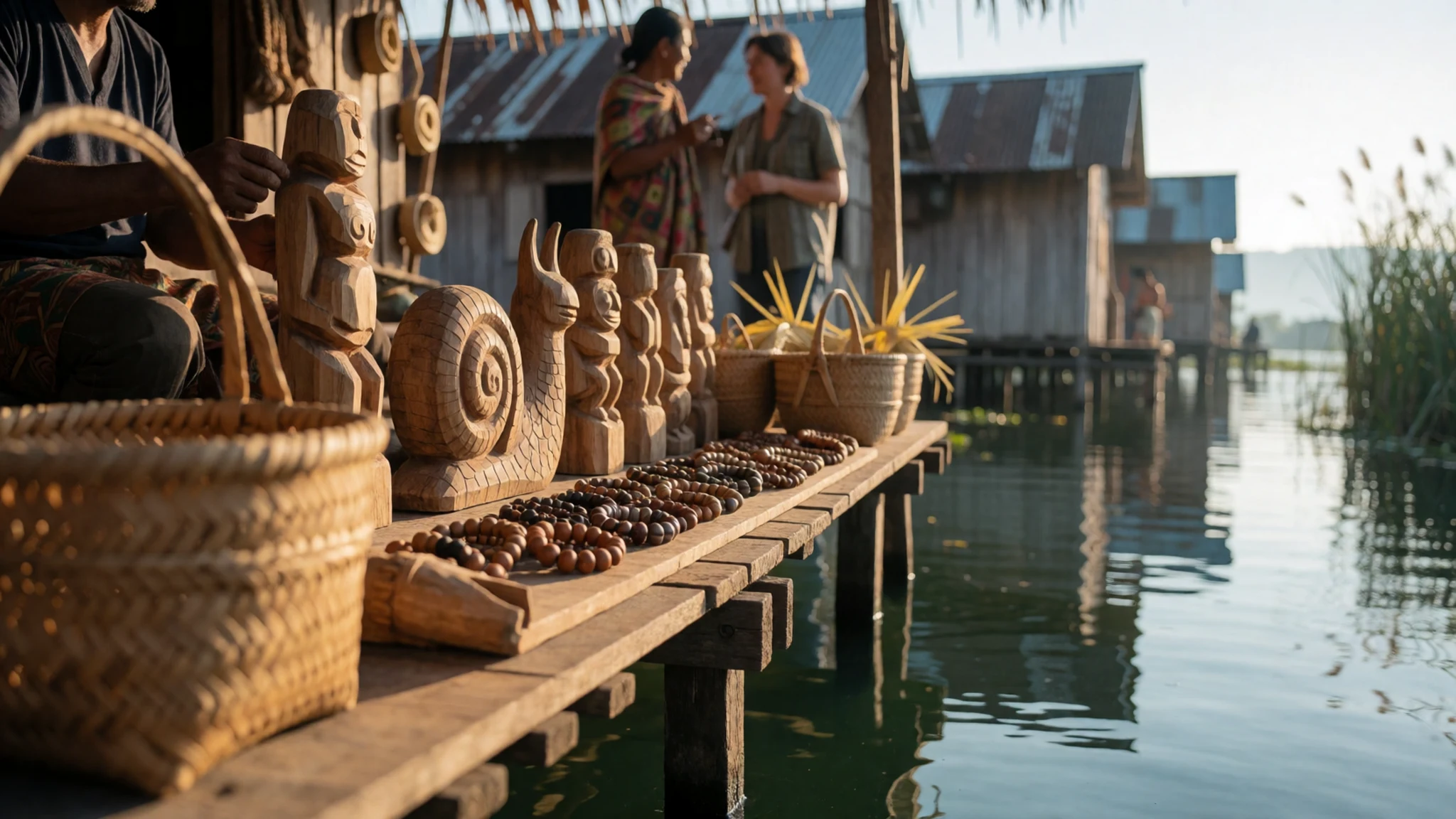
- Lake Tadane at the quiet hours — Lake Tadane
Away from the walkways, the lake itself is the draw: open water, reed edges and light that changes quickly. Early morning is cooler and calmer, and the best time for photographs of the houses from the canoe. Late in the day the village often feels more private again.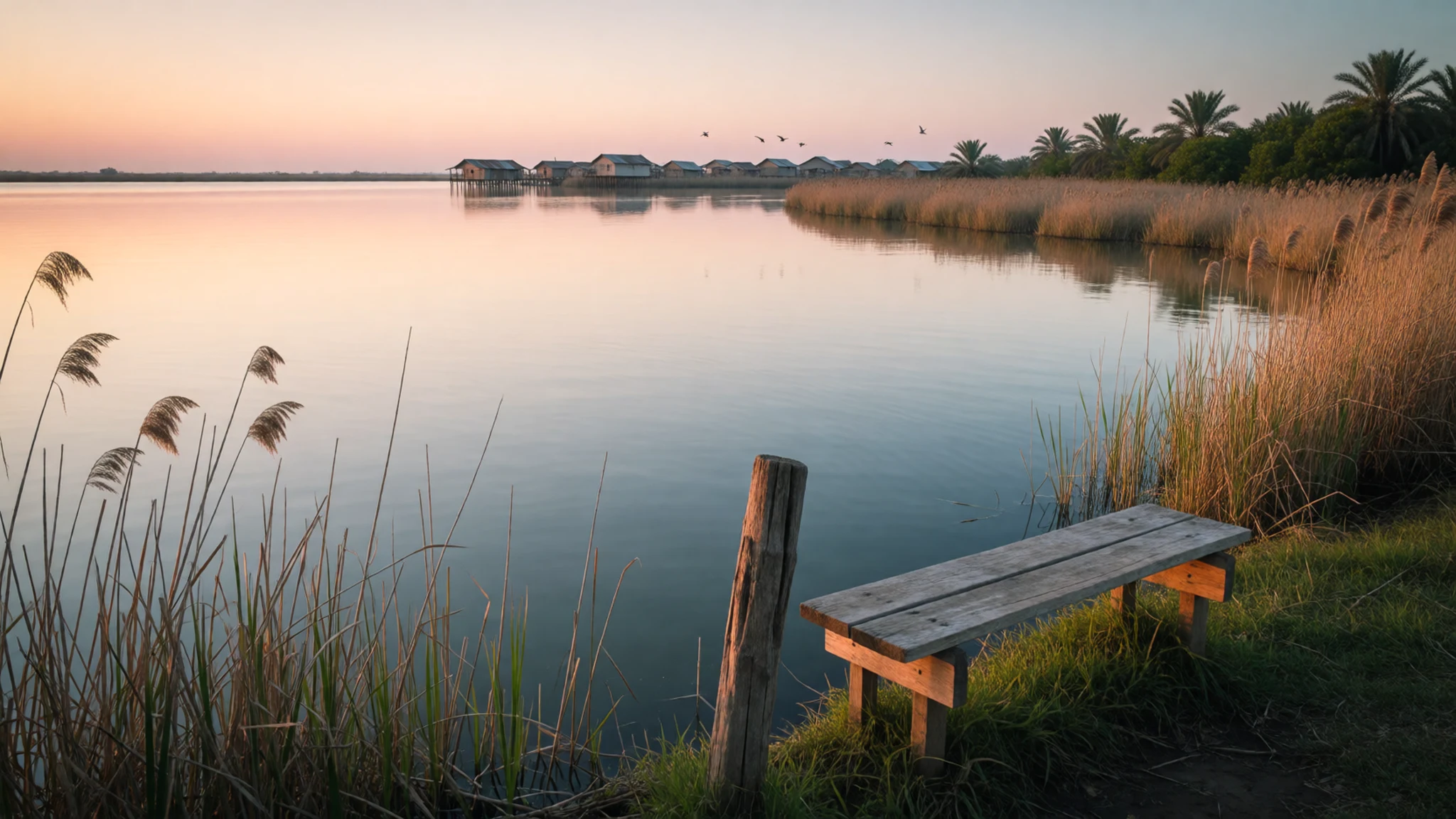
Culture
Nzulezo is a living community of Nzema speakers, and visiting it is closer to being a guest in someone's neighbourhood than entering a monument. The village runs its own tours, organises the canoes and decides how visitors are received, and the guide is the link between residents and outsiders.
The snail is the best-known cultural symbol here. Tradition says it led the founders to the lake, and it is revered as a totem. Visitors will hear the story told with some pride, and listening properly is part of showing respect for it.
The lake is also believed by residents to protect the village from harm such as fire, which gives the water a meaning beyond scenery or transport. Daily life follows the rhythm of fishing, farming on the land beyond the lake, craft-making and school. Children, elders and families go about their work while visitors pass through, so the village is not a stage.
The school is central to the village's present. Visitors are invited, not required, to donate to it at the end of the tour, and the way this is done reflects the community's wish to keep its young people educated at home.
Greetings matter in Ghana generally, and a friendly hello goes a long way on the walkways. Conversation with residents is welcome, and many are happy to explain their work and daily routines.
Ask your guide to request permission before photographing any resident, and do not point a camera at people without that introduction.
What to wear
Nzulezo has no single costume of its own, so the fashion picture here is a regional one. Nzema people belong to the wider Akan-speaking cultural world of southern Ghana, where festivals, funerals and church services bring out woven kente and printed wax-cloth worn as wrapped cloths, kaba-and-slit outfits, and shirts or tunics for men. These are cotton or silk-blend textiles, chosen for colour and pattern, and they are generally kept for occasions rather than for the lake.
Day to day in Nzulezo, practicality rules. Residents wear light T-shirts, shorts, wrapped cloths, simple dresses and sandals or bare feet on the boards, with hats or cloths for the sun. Children go to school in uniform, and the clothes are suited to heat, damp and work around canoes and fishing gear.
For visitors, the climate decides most of it. Light, breathable cotton or linen works best in heat and humidity, with sleeves or a loose shirt for sun on the water. Modest dress, with shoulders and knees covered, is a courteous choice in a small community. Shoes need a firm grip: sandals or trainers with non-slip soles suit wet wooden walkways better than flip-flops. A hat, sunglasses and a light rain layer are sensible, and a dry bag protects a phone or camera from splashes and sudden showers.
What to eat
- Grilled tilapia with banku — Chop bars and eateries in Beyin
Freshwater tilapia, grilled over charcoal and served with pepper sauce and banku, a smooth, slightly sour fermented maize and cassava dough. It is a staple of southern Ghana and suits the lakeside setting well.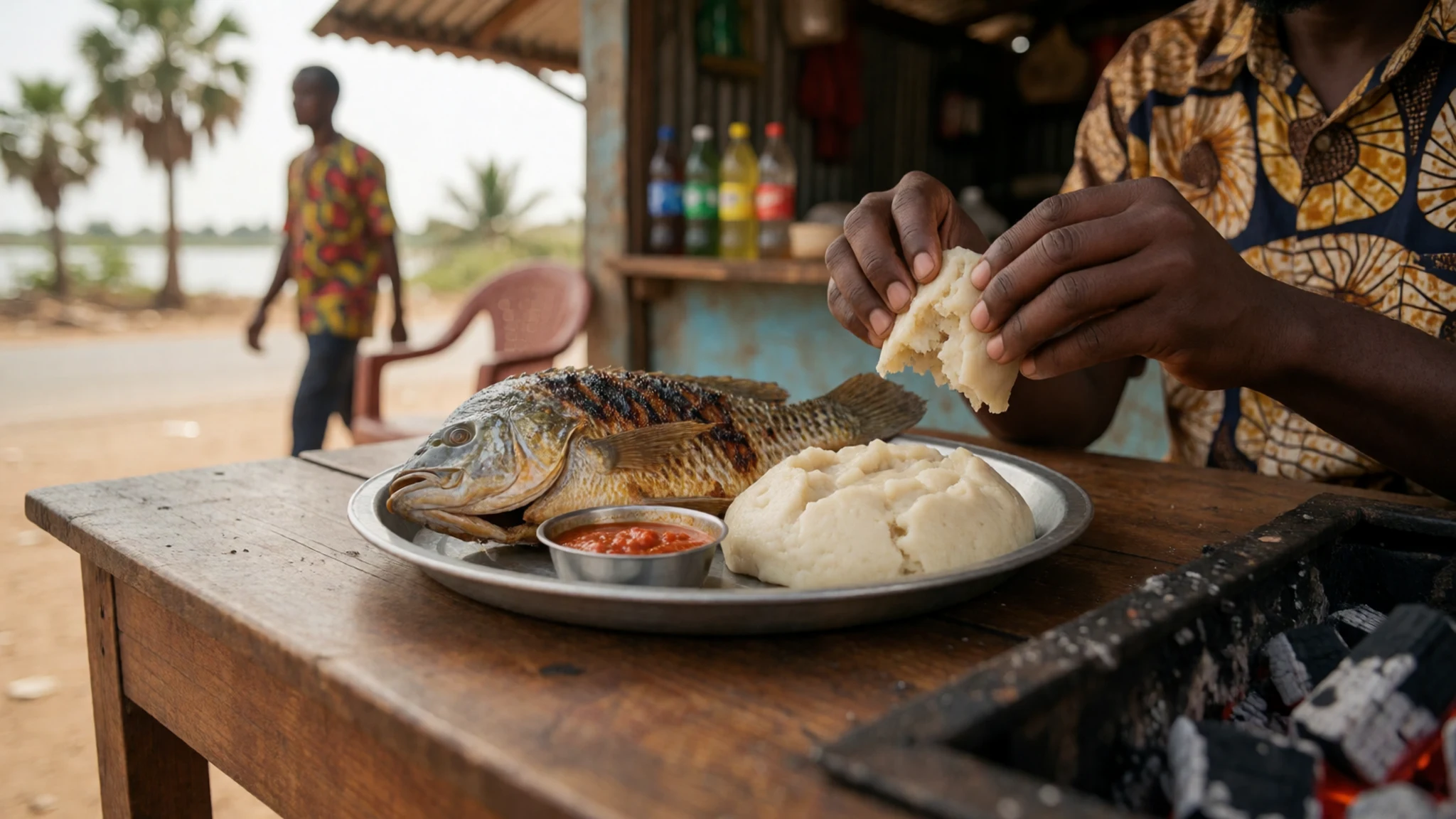
- Fufu with light soup — Local eateries along the road to Beyin
Pounded cassava and plantain served in a peppery, tomato-based broth with fish or chicken. It is eaten by hand, and it is a heavy, filling meal, so a midday portion suits those who plan a quiet afternoon.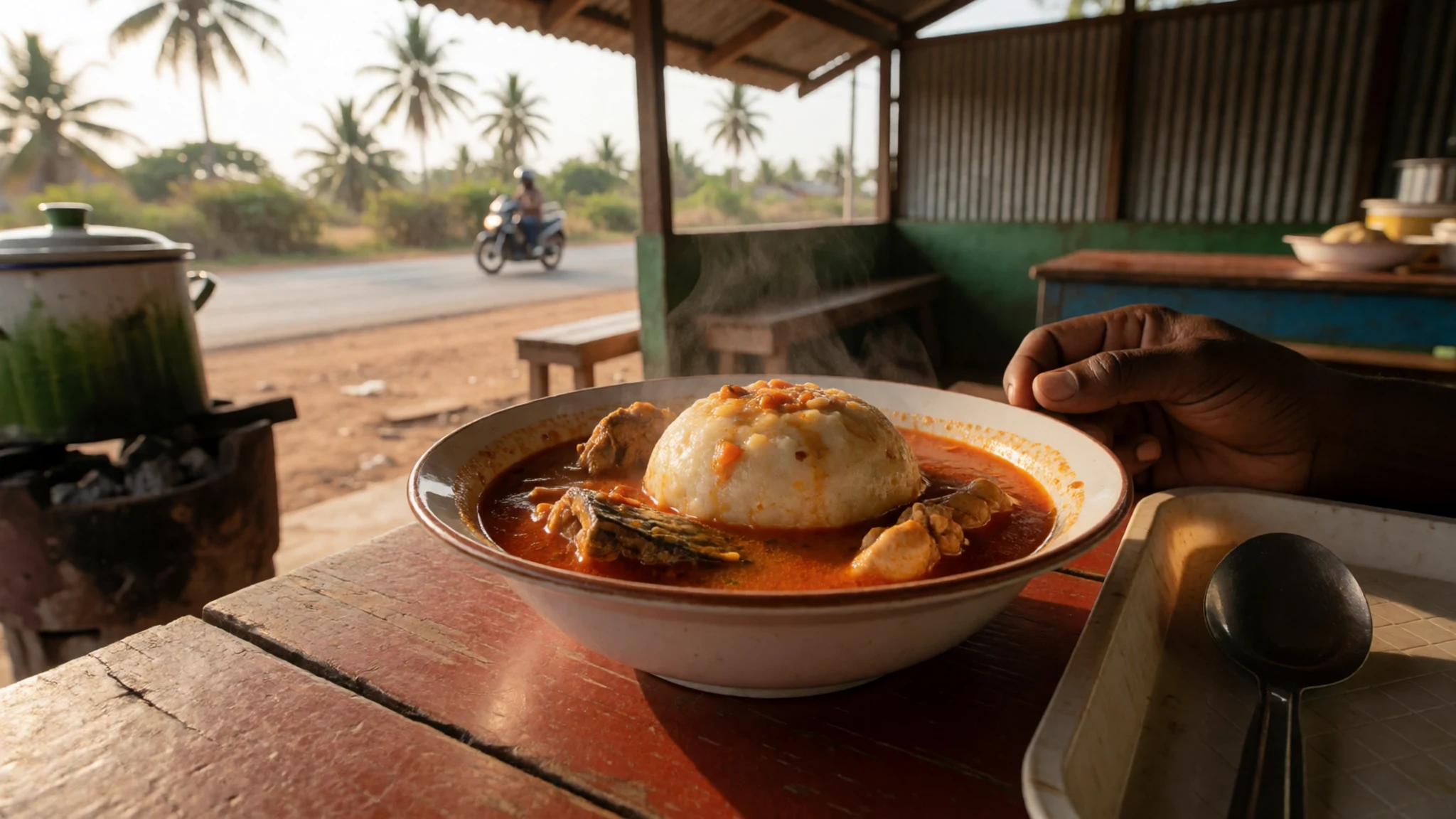
- Red-red — Roadside food stalls and chop bars
Stewed black-eyed peas in palm oil, served with fried ripe plantain and often gari. It is hearty, mildly spicy and a reliable choice for vegetarians when no fish or meat is added. - Kelewele — Street stalls in the evening, in Beyin and Takoradi
Ripe plantain cubes spiced with ginger and chilli, then fried until caramelised at the edges. It is a street snack, served hot in paper, and best when it comes straight from the fryer. - Cold drinks at the village bar — The small bar in the village
Nzulezo has a small bar with beer, spirits and soft drinks, kept cold by the village electricity. The village is also known for a locally made alcohol. There is no need to carry food for the trip, but a bottle of water is wise.
Plan it
Best time. November to March is the more comfortable stretch, with less rain and lower humidity for the canoe ride. The main rains usually arrive from roughly April to July, with a lighter wet spell around September and October. The wetland is greener then, but showers can interrupt the trip, and walkways get slippery.
How long. 1
Getting there. Fly into Accra, or Takoradi if a connection suits, then continue by road to Beyin on the coast. From Takoradi, shared taxis and trotros run to Beyin, usually with a change at Essiama or Eikwe. Driving from Accra is a long day on a road described as easy to follow. The last leg is a motorised canoe from Beyin, which takes a short while.
Budget. mid
Tips
- Check the current ticket price and opening arrangements at the Beyin office before you go, as these change.
- Start in the morning, when it is cooler and quieter, and leave time for the return so you are not travelling after dark.
- Carry cash for tickets, donations, crafts and snacks, as cards are unlikely to work in the village.
- Bring drinking water, sun protection and a rain layer, and keep your phone in a dry bag.
- Guesthouses exist in the village and in Beyin if you want to stay the night, but check availability in advance.
Etiquette
- Ask your guide before photographing any resident, and let them seek permission.
- Treat the school donation as voluntary, and give what you are comfortable with.
- Wear life jackets as instructed and move calmly on the walkways.
Nearby
Sources
- Wikidata Q924568 (CC0)
- Wikipedia: Nzulezo (CC BY-SA 4.0)
- Wikivoyage: Nzulezo (CC BY-SA 4.0)
- Nzulezo stilt village — Luke Bosman (CC BY-SA 1.0)
- Villaggio di Nzulezo — Chiappi Nicola (CC BY 2.5 it)
- more views on images in Nzulezo — SAgbley (CC BY-SA 4.0)
- A house built on water — Kwameghana (CC BY-SA 4.0)
- Nzulezo Ghana's only stilt village — Ackahblay89 (CC BY-SA 4.0)
- Nzulenzu bamboo house community — Kwameghana (CC BY-SA 4.0)
- Nzulezo-3 — KwesiRaul (CC BY-SA 4.0)
- A bamboo house fitted with a TV satellite dish — Kwameghana (CC BY-SA 4.0)


