Lake Volta
Lake Volta, Ghana
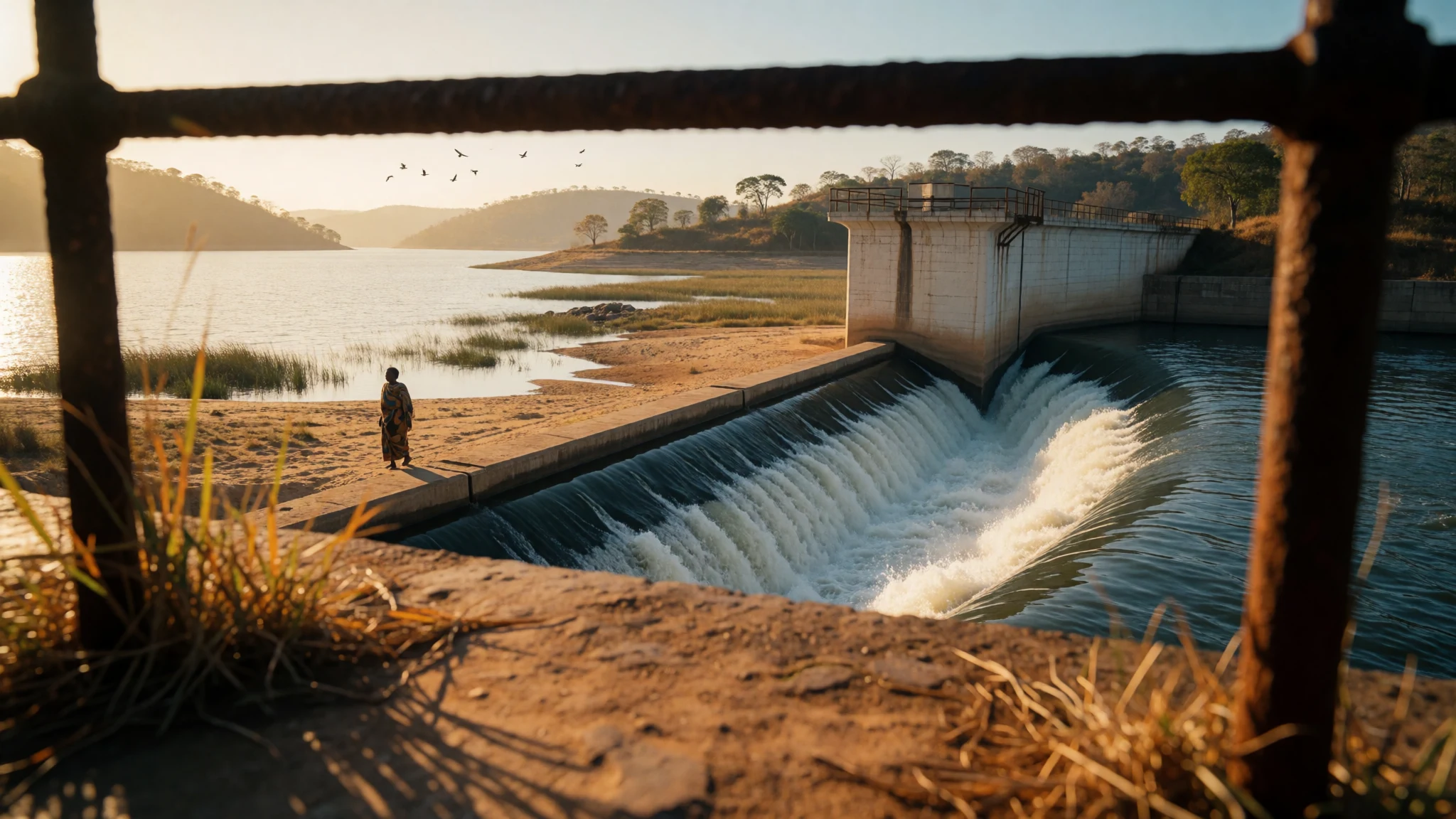
Lake Volta is a vast working reservoir in Ghana, best for ferry rides, fishing villages and island trips, not for resort polish.
The place
Lake Volta fills a long trough of eastern and central Ghana. It is a reservoir with a surface area of 8,502 square kilometres, held back by the Akosombo Dam at its southern end, and it lies entirely inside the country. From the dam it stretches roughly 520 kilometres north, ending near the town of Yapei, and the lake surface sits at about 85 metres above sea level.
The White Volta and the Black Volta once met in the middle of what is now open water. Today both rivers feed the lake, and a single Volta River begins again below the dam, running on to the Atlantic in the south of the country. The dam's powerhouse produces 912 MW, which supplies Ghana and is also sold to Togo, Benin and neighbouring countries.
The shoreline is not a single scenic strip. In places it is wooded hills and sandy landings; elsewhere it is reedy margins, drowned tree stumps and long, empty distances. Dodi, Dwarf and Kporve are the main islands, and Digya National Park covers part of the western shore. Because the lake sits in the tropics, the water stays warm all year.
This is a working lake rather than a polished resort. Ferries and cargo boats link communities, canoes fish the shallows, and tourism is concentrated near Akosombo and around Dodi Island. Facilities thin out quickly further north, heat and humidity are constant, and getting around takes more time than the map suggests. That unhurried, practical character is the reason to come.
Its story
Lake Volta exists because of a human decision, and the story of the lake is also the story of what that decision cost. The idea of damming the Volta to power an aluminium industry was first put forward in 1915 by the geologist Albert Ernest Kitson, during British colonial rule. It returned after the Second World War, when Kwame Nkrumah led the Gold Coast towards independence and made the river central to his plans for a modern country.
The project's original industrial backer withdrew, and the plan was reworked around smelting imported bauxite, with new financing arranged. Building the Akosombo Dam ran from 1961 to 1965, and work began before the resettlement plans were ready. A public agency raised 52 replacement towns, intended as models of modern living, but the move was rushed and badly organised. Some 740 villages went under the rising water, and about 78,000 people had to relocate. The hardship from that upheaval lasted long after the dam was finished.
The consequences were mixed. Traditional farming and fishing were disrupted, and diseases linked to standing water became more common. The government's hopes for planned modernisation largely failed, and communities adapted on their own terms. Yet fish catches and food production grew in the following decades, the lake opened a waterway toward the north, and cargo and passenger boats now use it. Tourism is growing, and a recent enterprise has even begun harvesting timber from the drowned forests below the surface.
What to see
- Akosombo Dam — Akosombo
The dam at Akosombo is the structure that created the whole lake in 1965. Viewing points near the wall show the scale of the water behind it and, when levels are high, the floodgates open and release a roaring spill. Check the operator's official channels before travelling, as access to the site can change.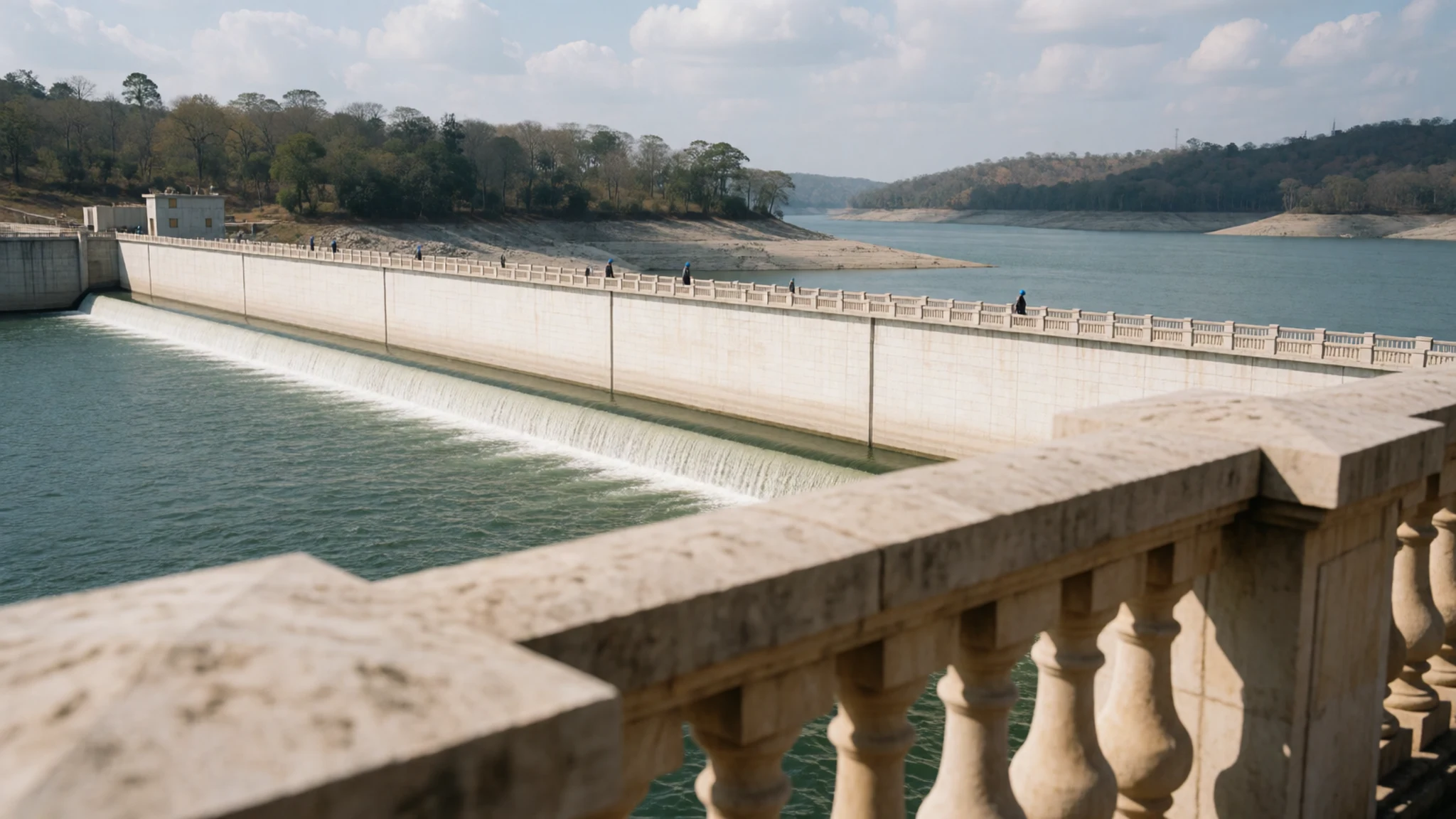
- Dodi Island — Southern Lake Volta, near Akosombo
Dodi Island is the lake's best-known excursion, reached by tourist cruise from the southern shore. It is a low, green island with a modest eco-tourism setup developed by the Volta River Authority's hospitality arm. Go for a slow boat ride, a swim in warm water and a quiet lunch, and confirm cruise arrangements locally.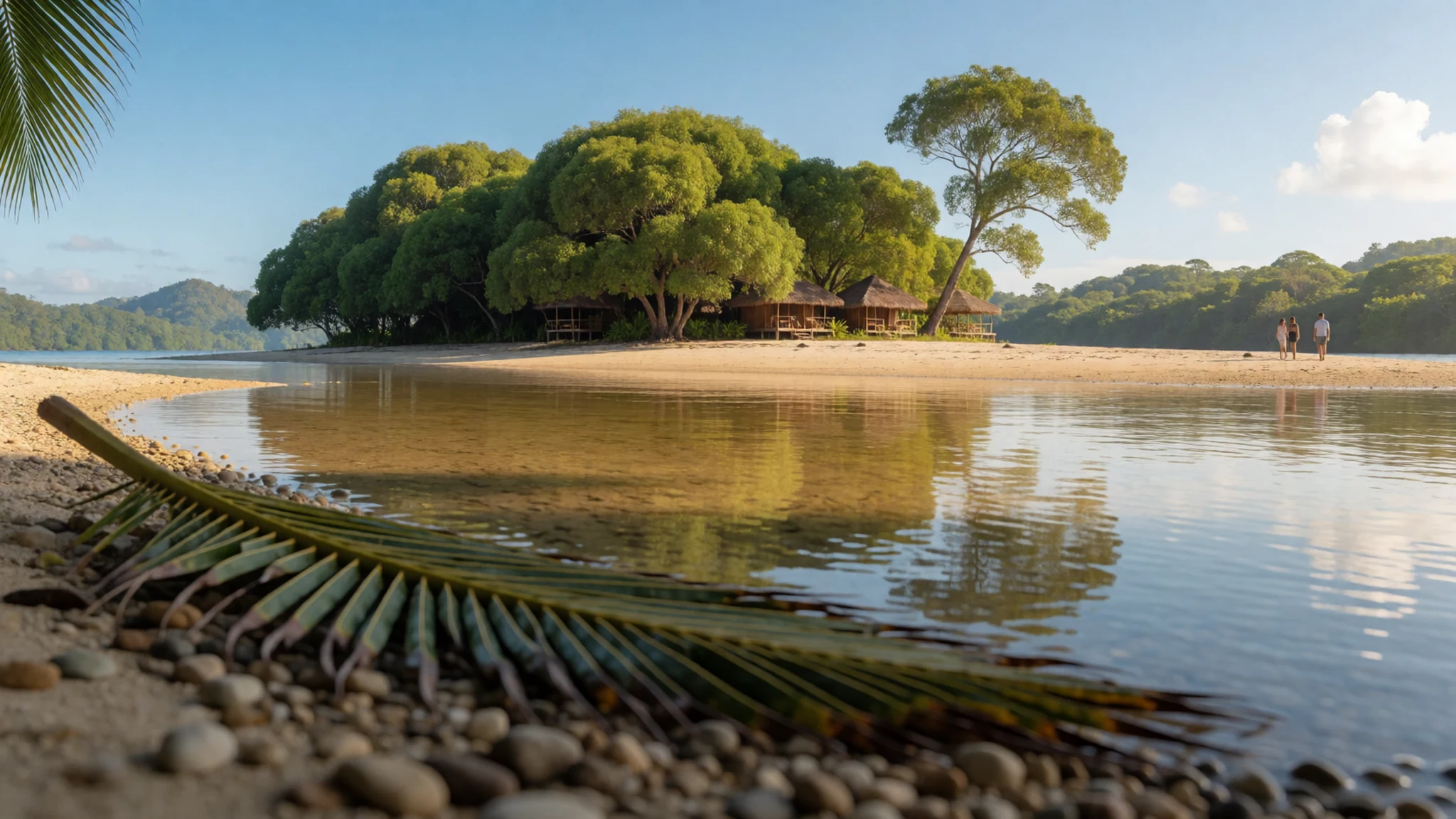
- Adomi Bridge — Atimpoku area, below the dam
The Adomi Bridge crosses the Volta River just below the dam, a steel arch that makes a clear landmark against the water and hills. It is a quick stop on the road between the dam and nearby towns. Pull over safely at a viewpoint, as traffic crosses it constantly.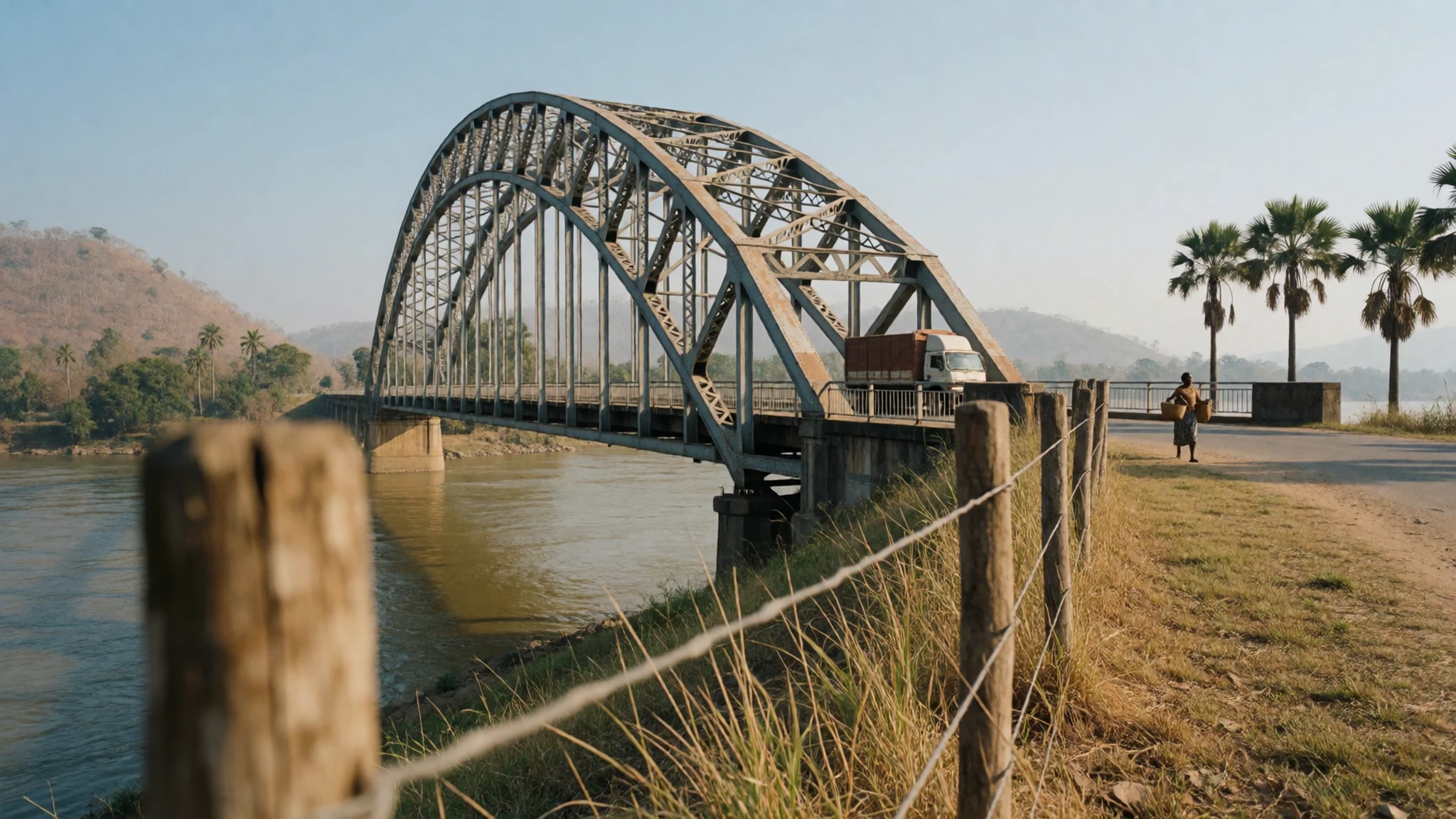
- Fishing communities — Shoreline villages around the lake
Along the shore, villages live by the lake, with canoes pulled up on the sand, nets drying and fish being smoked or sold. A visit works best with a local guide or boat operator who can introduce you. Ask before photographing people or their boats, and buy fish directly if offered.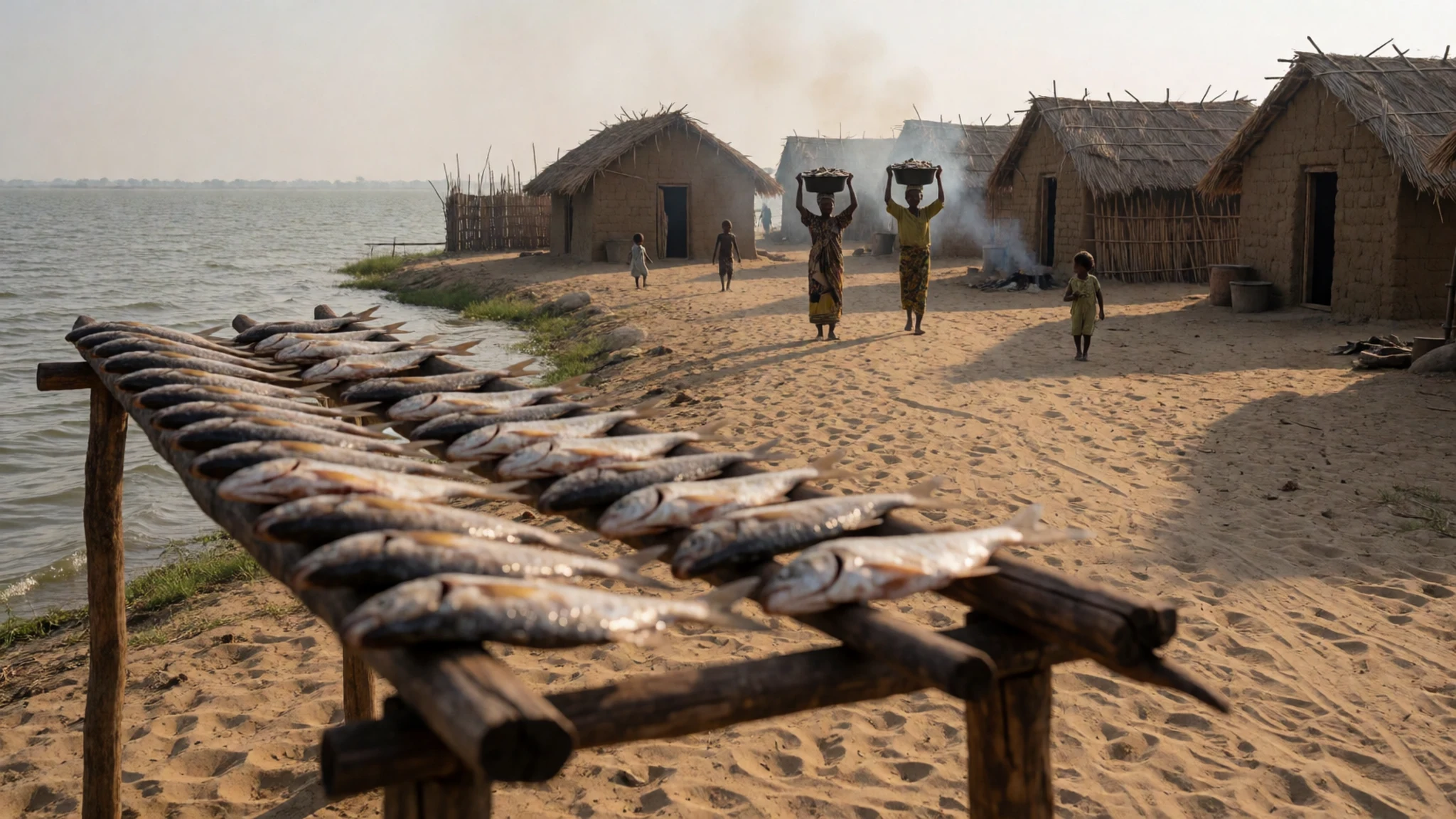
- Lake ferries — Ferry landings along the lake
Passenger and vehicle ferries cross the lake and show how much of Ghana's movement still depends on water. Crossings are slow, scenic and sometimes crowded, with market goods stacked beside passengers. Timetables vary and weather can change them, so ask locally on the day and allow spare time.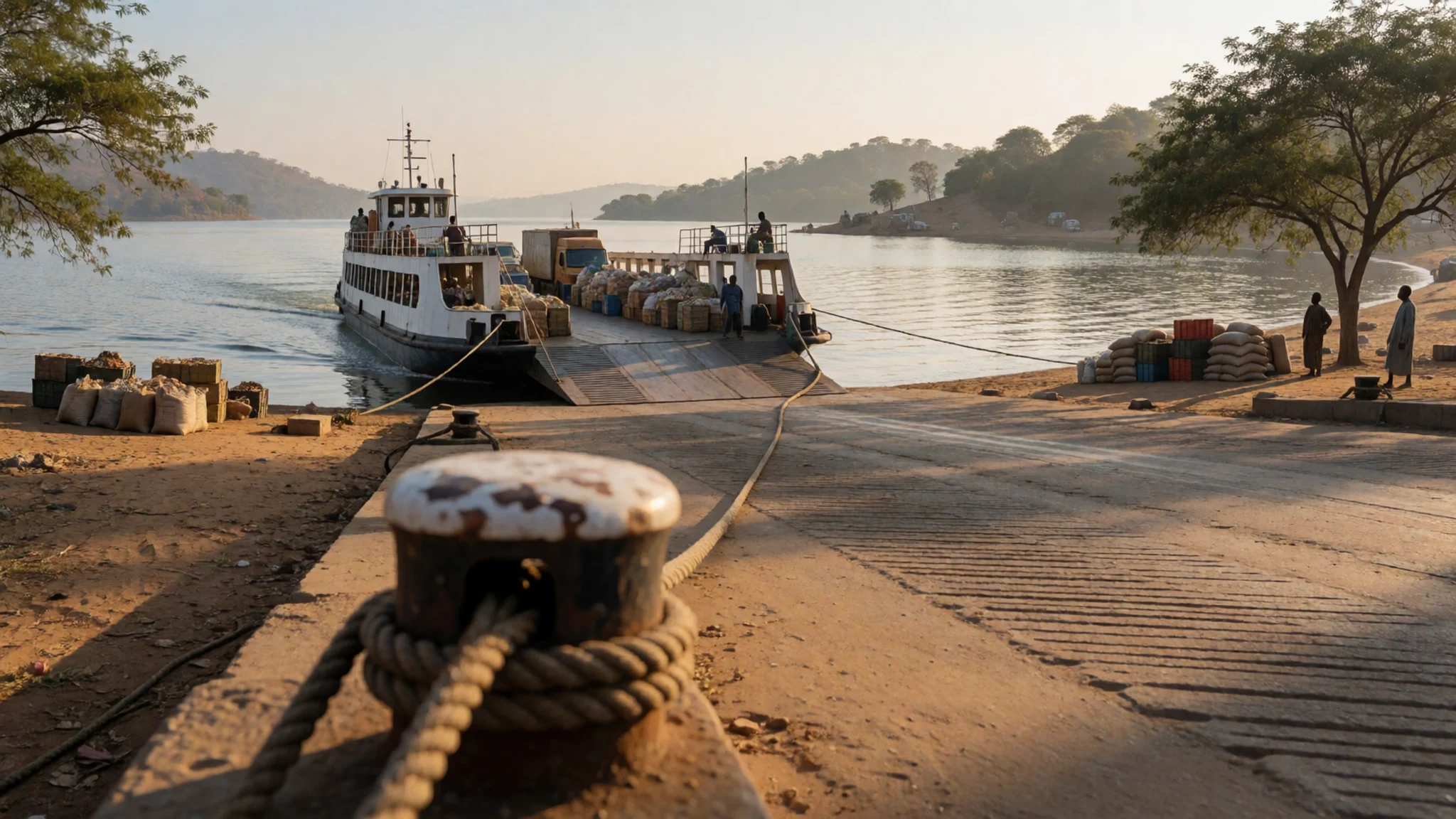
- Santa Barbara Church viewpoint — Akosombo
The Santa Barbara Church at Akosombo sits above the water and gives a wide outlook across the southern lake, with hills on the far shore. It suits an easy half-hour stop, especially in the cooler morning light. Treat it as a place of worship and dress accordingly.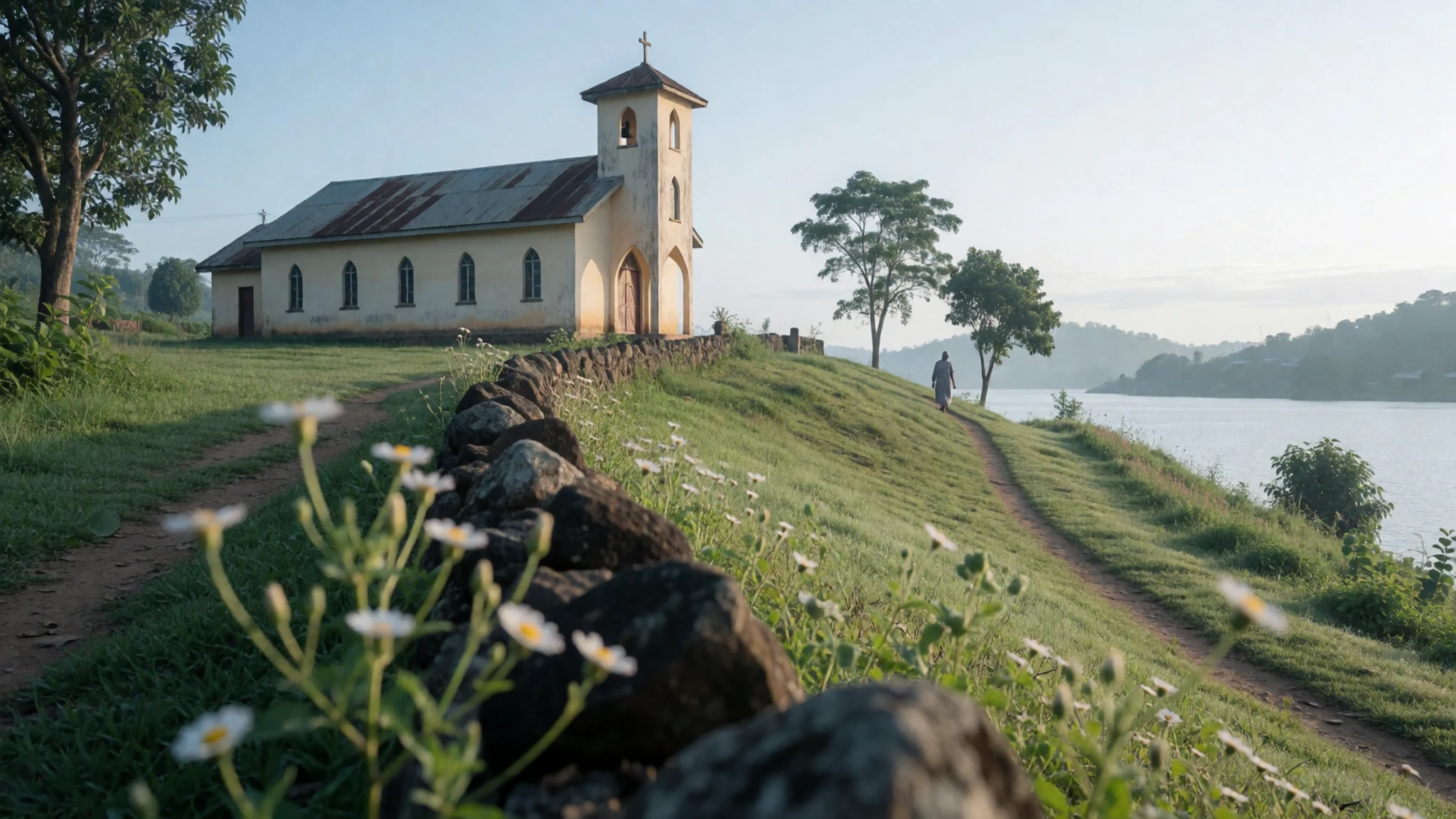
Culture
Lake Volta is home to many communities, and daily life here is organised around water, fish, farming and markets. Fishing is often a family business, with men working the canoes and women handling smoking, drying and selling the catch at the shore or in town markets. The lake's creation changed these routines, because entire villages were moved and rebuilt, and that history is still part of how older residents talk about the water.
The region includes Ewe, Akan and other communities, each with its own language, festivals and customs. Greetings matter across all of them. A proper hello, a handshake and a question about the person's day come before any request or purchase, and rushing past this is read as rude. Elders get special respect, and in many villages a chief or elder is the right person to approach before visiting or photographing community life.
Churches play a large part in weekend life, with services that are long, musical and warmly welcoming of visitors who stay quietly. Funerals, naming ceremonies and festivals are major social occasions, usually marked by bright cloth, drumming and shared food. Many communities also observe traditional rest days or taboos connected to the water, and local boat operators will explain these if asked.
When visiting a fishing village, greet the elder or the person in charge first, use your right hand for handshakes and for giving or receiving anything, and ask permission before taking photographs of people.
What to wear
Around Lake Volta, traditional dress draws on Ghana's famous woven and printed cloth. Kente, a handwoven strip cloth of silk or cotton in bold geometric bands, is linked with both Asante and Ewe weavers, and the Ewe versions from the Volta Region are especially well known. It is worn at weddings, funerals, festivals and other formal occasions, usually draped over the shoulder or wrapped around the body. Adinkra cloth, stamped with symbolic designs, is another ceremonial option, and in the north a thick cotton smock is common.
Everyday clothing is more relaxed. Many people wear commercially printed cotton, often called wax print, which tailors turn into shirts, dresses and skirt-and-top sets. Women often wear kaba and slit outfits, men wear shirts and trousers or smocks on formal days, and T-shirts, jeans and football shirts are common among younger people. Church clothes tend to be neat and brightly coloured, and many people dress up noticeably on Sundays.
For visitors, the climate decides most choices. Light, loose cotton or linen, a wide-brimmed hat, sunglasses and high-factor sun protection make boat days far more comfortable. Bring a long-sleeved top for the sun on the water and for evenings near the shore, when insects are active. Sturdy sandals or trainers suit muddy landings and jetties. Covered shoulders and knees show respect in villages and at churches, and a light waterproof is useful in the rainy season.
What to eat
- Banku with grilled tilapia — Lakeside eateries near Akosombo and Atimpoku
Banku is a smooth, slightly sour dough of fermented corn and cassava, eaten with fish grilled over charcoal. The fish comes with hot pepper sauce, onions and tomatoes. It is the classic lakeside meal, and the dish is eaten by hand.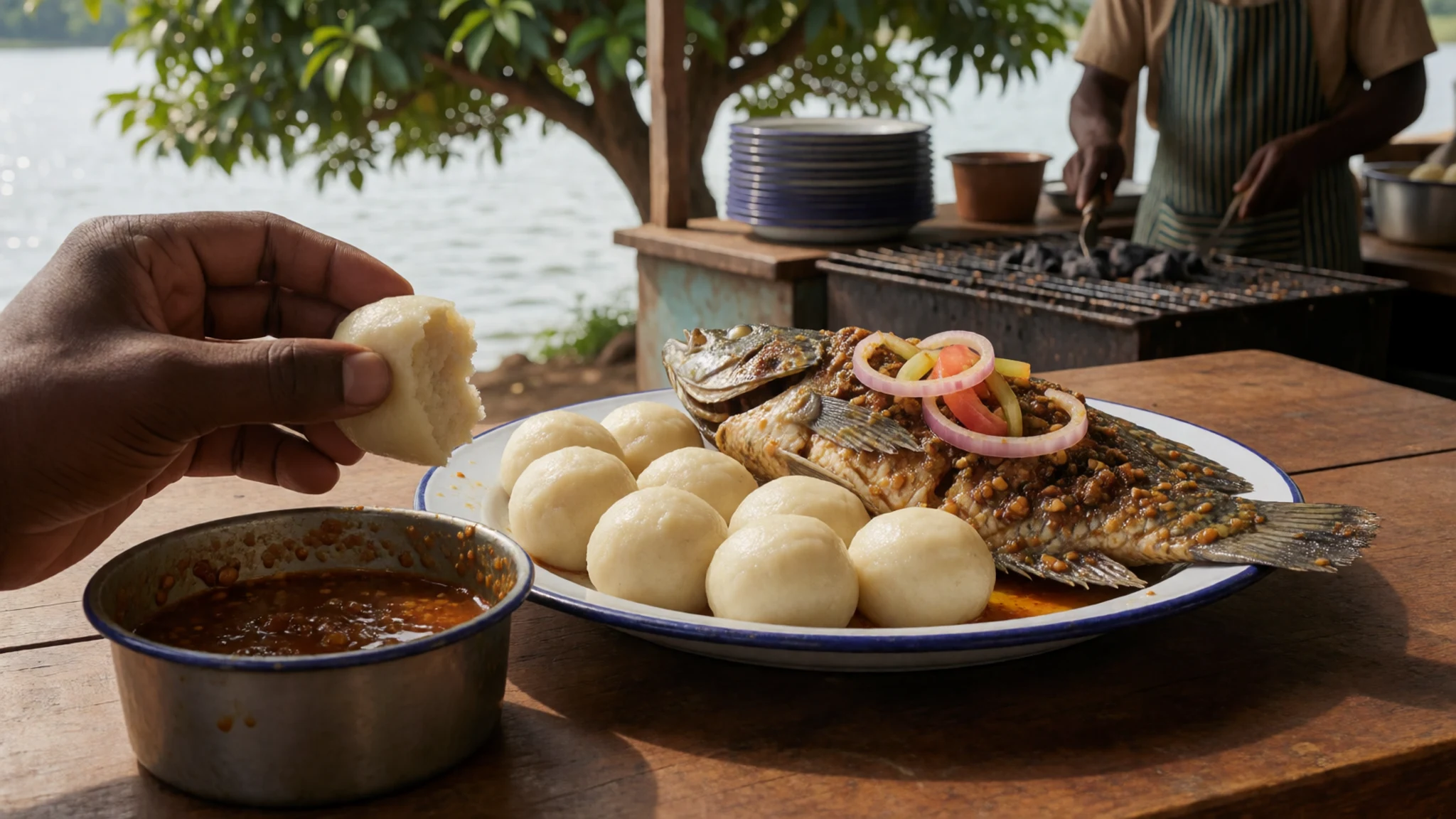
- Kenkey and fried fish — Roadside stalls and local market eateries
Kenkey is fermented corn dough, wrapped in leaves or husks and steamed into dense, tangy parcels. It is usually served with fried fish and a pepper sauce, often with shito, a dark chilli relish. It makes a filling, cheap lunch for travellers.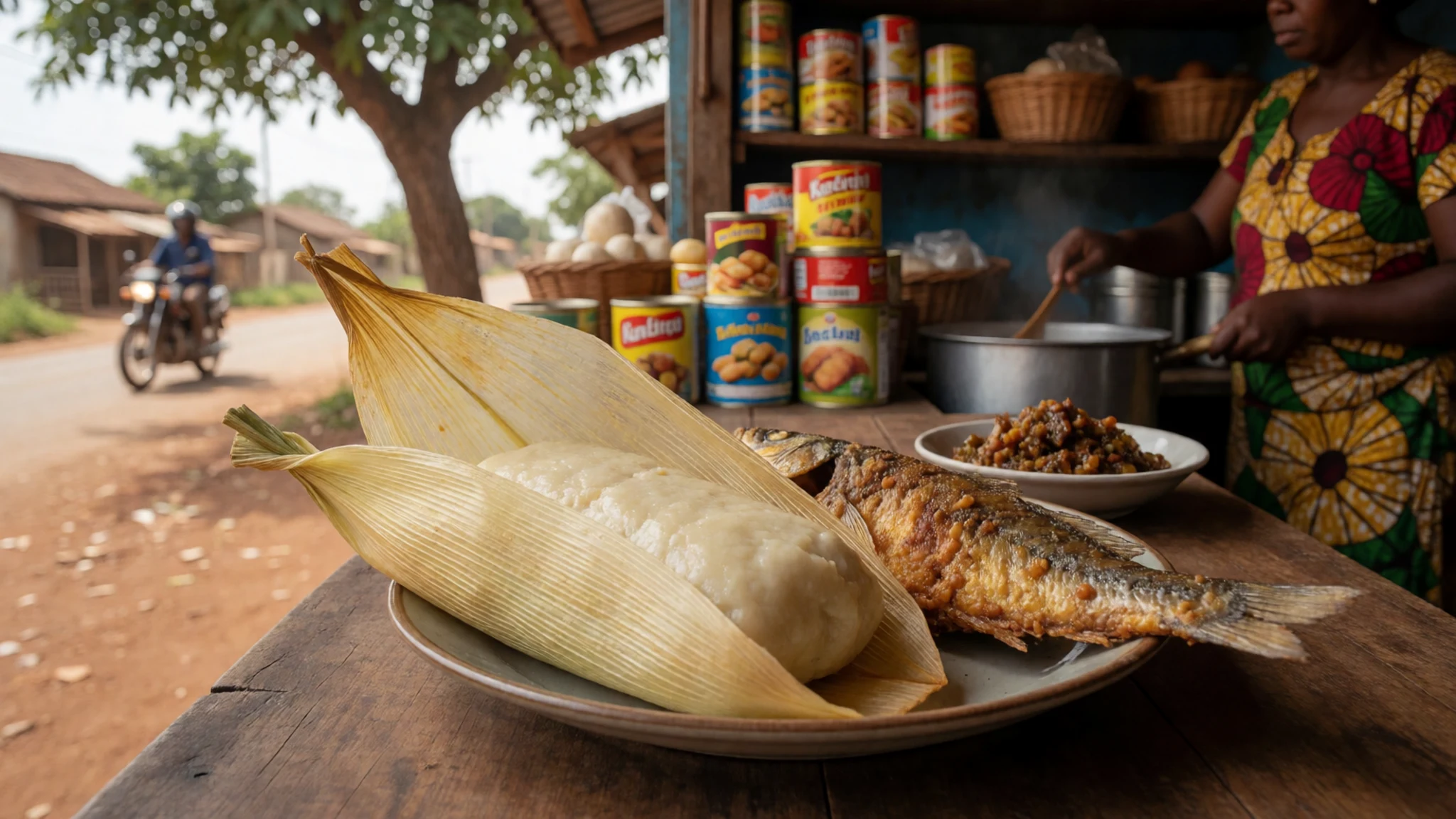
- Smoked fish — Fishing villages and the shoreline markets
Fish from the lake is often smoked over wood, giving it a deep, savoury flavour that keeps well. It appears in soups and stews, or is bought whole to carry home. The smell of woodsmoke often marks the fishing villages. - Fried yam with pepper sauce — Street stalls and small town eateries
Thick pieces of yam are fried until golden outside and soft within, then served with a spicy tomato and chilli sauce. It suits a snack or a light meal, and it is common as a side dish with fish. - Jollof rice — Restaurants in Akosombo and Ghana's larger towns
Jollof is rice cooked in a tomato, onion and pepper base until it takes on a rich orange colour. It is served with chicken, fish or salad at celebrations and everyday restaurants alike. Ghanaians take pride in their version, and opinions on it are strong.
Plan it
Best time. November to February is usually the more comfortable stretch for boat trips, with lower humidity and less rain. The lake lies in the tropics, so it is warm year-round, and the rainy season can make roads and landings muddy and cut visibility on the water.
How long. 2–3
Getting there. Fly to Kotoka International Airport in Accra, then travel by road towards Akosombo, which is the usual gateway to the southern lake. For ferries and northern shores, plan extra time and ask locally about landings and schedules, as services vary.
Budget. mid
Tips
- Book cruises and Dodi Island trips through an established operator and confirm times locally, as schedules change.
- Start boat trips early, as mornings are cooler and the water is often calmer.
- Carry cash in small notes for ferries, village markets and snacks, as cards are unreliable outside larger towns.
- Bring drinking water, sun protection and insect repellent, since shade is limited on the lake.
- Check the official channels of the Volta River Authority before visiting the dam, as access can change.
Etiquette
- Greet people and elders before asking questions or taking photographs.
- Use your right hand to give, receive and shake hands.
- Dress modestly in villages and churches, with shoulders and knees covered.
Nearby
Sources
- Wikidata Q201679 (CC0)
- Wikipedia — Lake Volta (rev 1383411930) (CC BY-SA 4.0)
- Wikivoyage — Lake Volta (CC BY-SA 4.0)
- Adomi Bridge — Eggi, via Wikimedia Commons (CC BY 3.0)
- Volta river black white red descriptions — Unknown author, via Wikimedia Commons (CC BY 3.0)
- Akosombo Dam spilling water — ZSM, via Wikimedia Commons (CC BY 3.0)
- Fishing community — Naa afoncia, via Wikimedia Commons (CC BY-SA 4.0)
- Volta lake from the Santa Barbara Church — SandisterTei, via Wikimedia Commons (CC BY 3.0)
- Volta Lake, Sogakope 2 — Celestinesucess, via Wikimedia Commons (CC BY-SA 4.0)
- Ferry Lake Volta — Hugues, via Wikimedia Commons (CC BY-SA 2.0)
- Lake Volta Ghana — Jurgen, via Wikimedia Commons (CC BY 2.5)


