Elmina Castle
Elmina Castle, Ghana
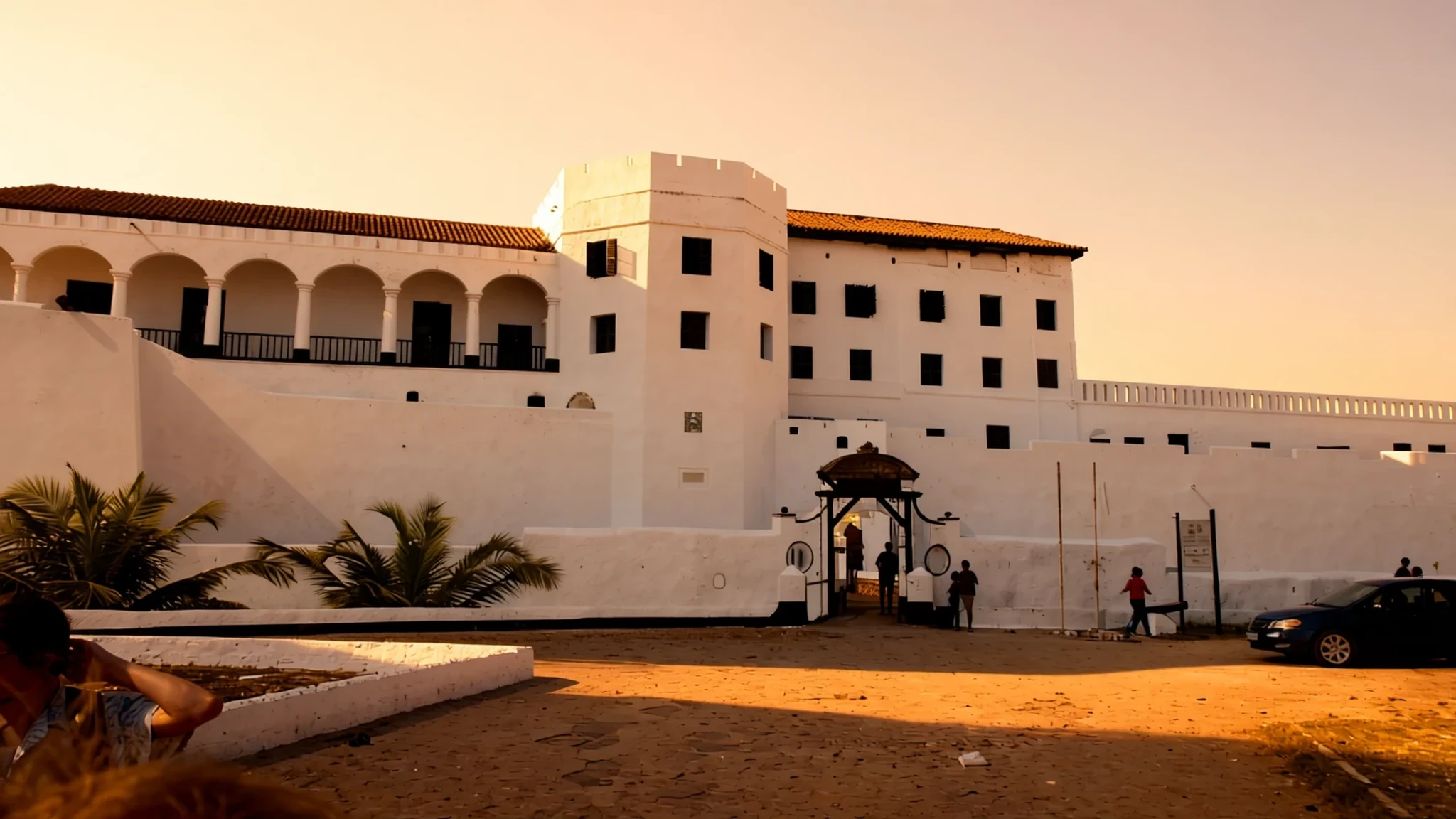
A 1482 Portuguese fort on the Ghanaian coast where the Atlantic slave trade is told in stone, and best approached slowly.
The place
Elmina Castle stands on the Ghanaian coast in the fishing town of Elmina, a short drive from Cape Coast. The Portuguese began it in 1482 as Castelo de São Jorge da Mina, meaning St George of the Mine Castle, and it is still known in English as Fort St George. Elmina Castle is best known for being the earliest trading post set up on the Gulf of Guinea. Wikipedia describes it as the oldest surviving European building in Sub-Saharan Africa.
The fort occupies a low headland above the water, with whitewashed walls and bastions that show clearly from the town and the harbour. The approach runs through the streets of Elmina, so the building arrives gradually. Inside, the rooms are arranged around a central courtyard, with the church set within it and dungeons beneath the ground. Most visitors cover the site on foot in a morning, though it rewards a slow walk.
The castle is a World Heritage Site, listed alongside other forts and castles in Ghana because of its place in the Atlantic trade. It is also one of the country's major tourist attractions, so guided groups and school parties are common, especially at weekends and during the Christmas holiday. A licensed guide is worth hiring, because the rooms make far more sense when someone explains what each one was used for and the history behind it.
Its story
Before the Portuguese arrived, the coast around Elmina was home to Fante communities, whose exact relationship with the Akan peoples of the forest to the north is debated. Their ancestors traded gold with markets far across the Mediterranean and the Near East from medieval times. Society was organised along family lines, with family heads united in communities under a recognised local authority. Along the Gold Coast there were more than twenty independent states, and Elmina lay between the Fante kingdoms of Fetu and Eguafo.
Long-distance exchange was older than European contact. Shared metal trade, artistic forms and farming techniques suggest that routes linking the Sahara with the coast were active well before ships appeared. The Portuguese reached the Gold Coast in 1471, though others may have touched the port first. Prince Henry the Navigator had been sending expeditions down the African coast since 1418, moving a little further each time, and the Portuguese came in search of gold, sea routes and a foothold in the region.
In 1482 the Portuguese began the castle as a trading base, and it grew into a hub of the Atlantic trade. The Dutch West India Company took it from the Portuguese in 1637, after a failed attempt in 1596, and extended control over the Portuguese Gold Coast by 1642. The trade in enslaved people continued under Dutch rule until 1814. In 1872 the Dutch Gold Coast, including the fort, passed to the British under a treaty that divided forts and dominance between the two powers. The Gold Coast became independent as Ghana in 1957, and the state now controls the castle.
What to see
- The central courtyard and church — Inside the castle walls, central courtyard
The courtyard is the heart of the fort, an open square where the rooms open onto one another. The church sits within it, and it is one of the first things visitors notice. Walk the arcades slowly and look up at the upper levels. Late morning light suits photographs. Ask before photographing inside the church, since services and private prayer may be taking place.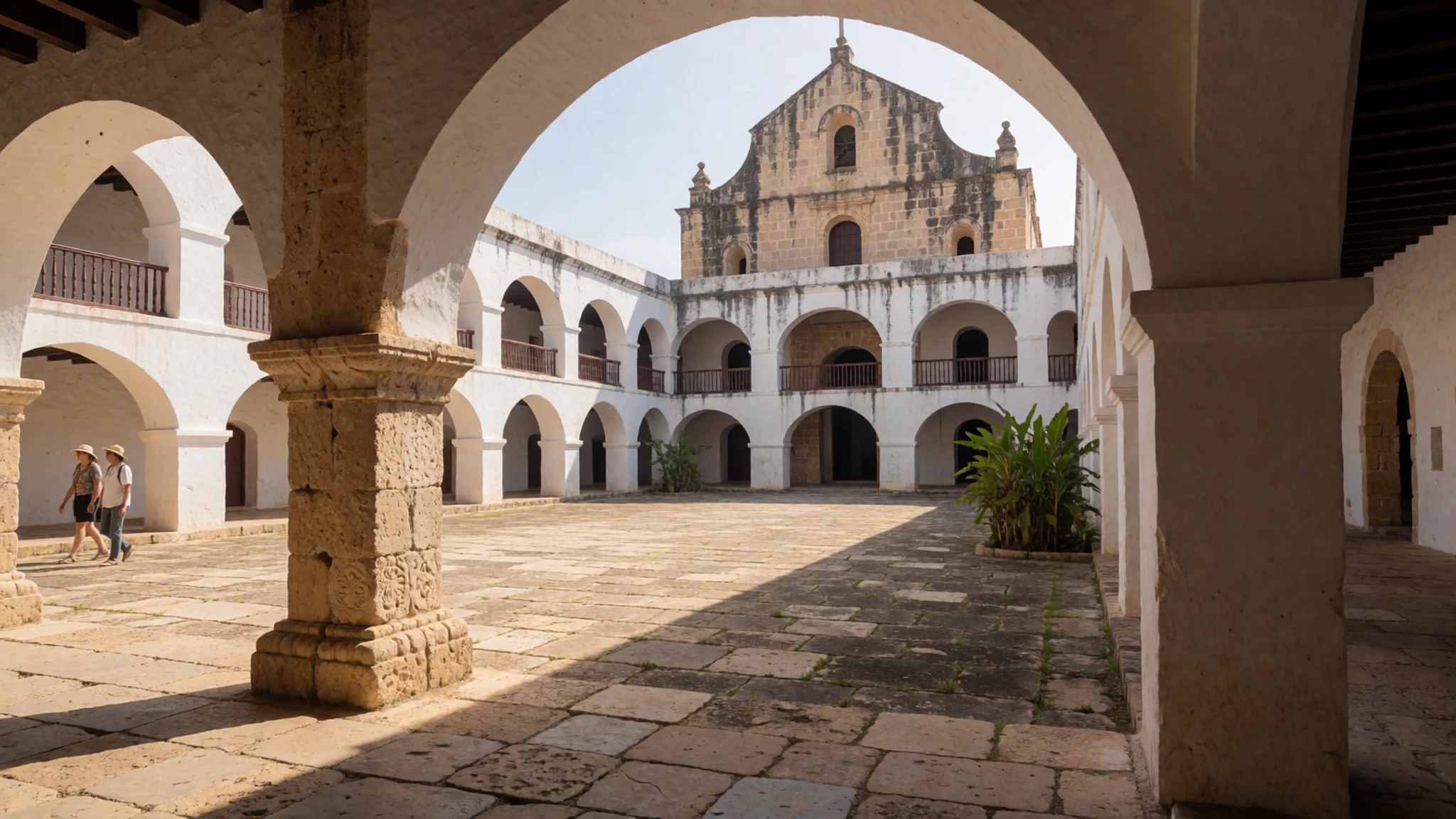
- The dungeons below the fort — Ground level beneath the castle, reached from the courtyard
The dungeons below the fort are the part of the castle most visitors remember longest, and the part that most needs care. Rooms beneath the ground were used to hold enslaved people awaiting shipment across the Atlantic. The spaces are low, dark and damp, and guides explain how they were arranged. Go in a group with a guide, keep voices low, and allow time to sit quietly before leaving.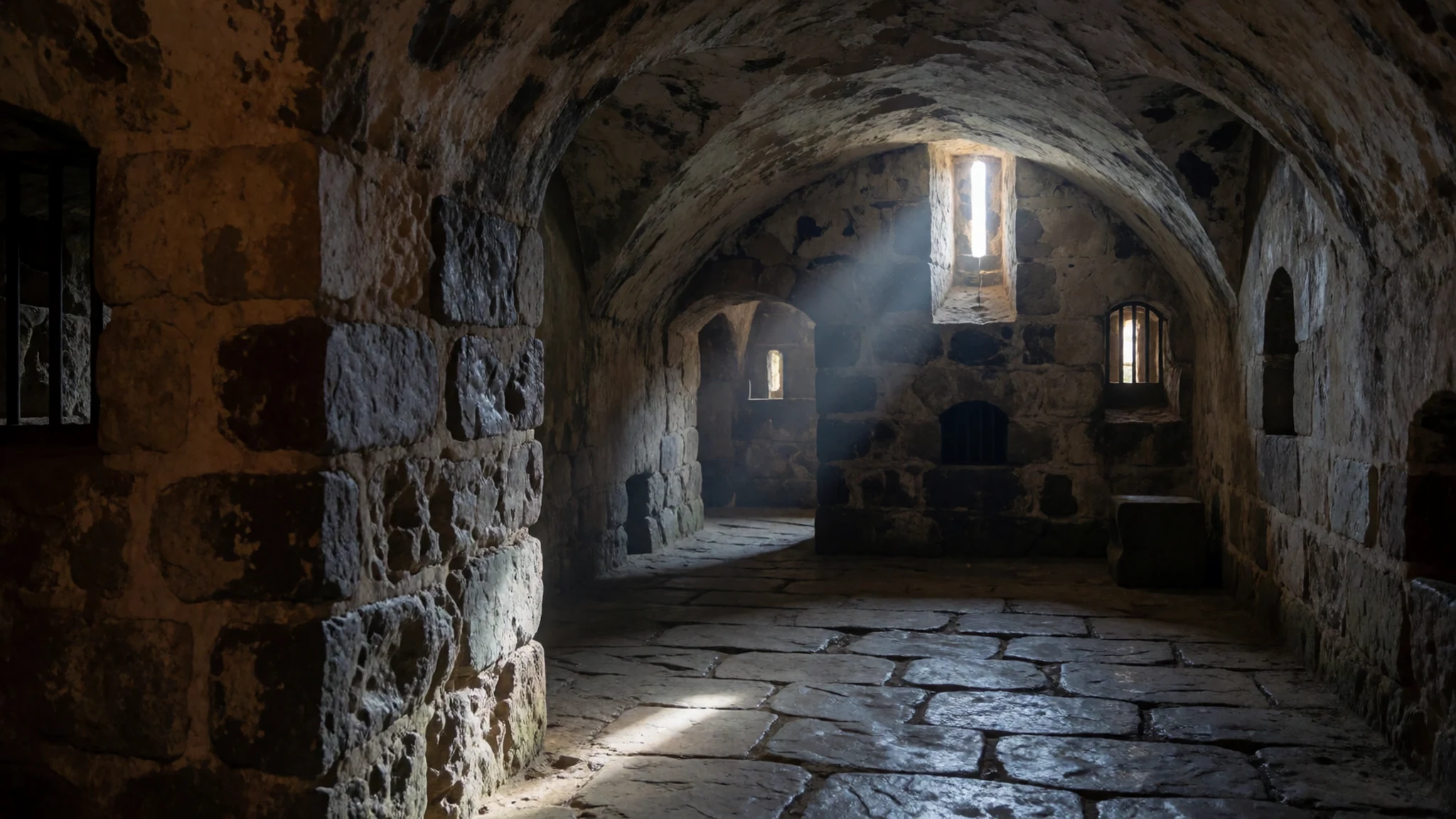
- The ramparts and sea walls — Seaward side of the castle, above the harbour
The ramparts and sea walls give the clearest view of how the fort was defended and where it meets the water. Climb to the walkways for sight of the harbour, the fishing boats drawn up on the beach and the town behind. Wind and spray can be strong near the edge, so hold the rail. Keep to the marked paths, as some sections are uneven.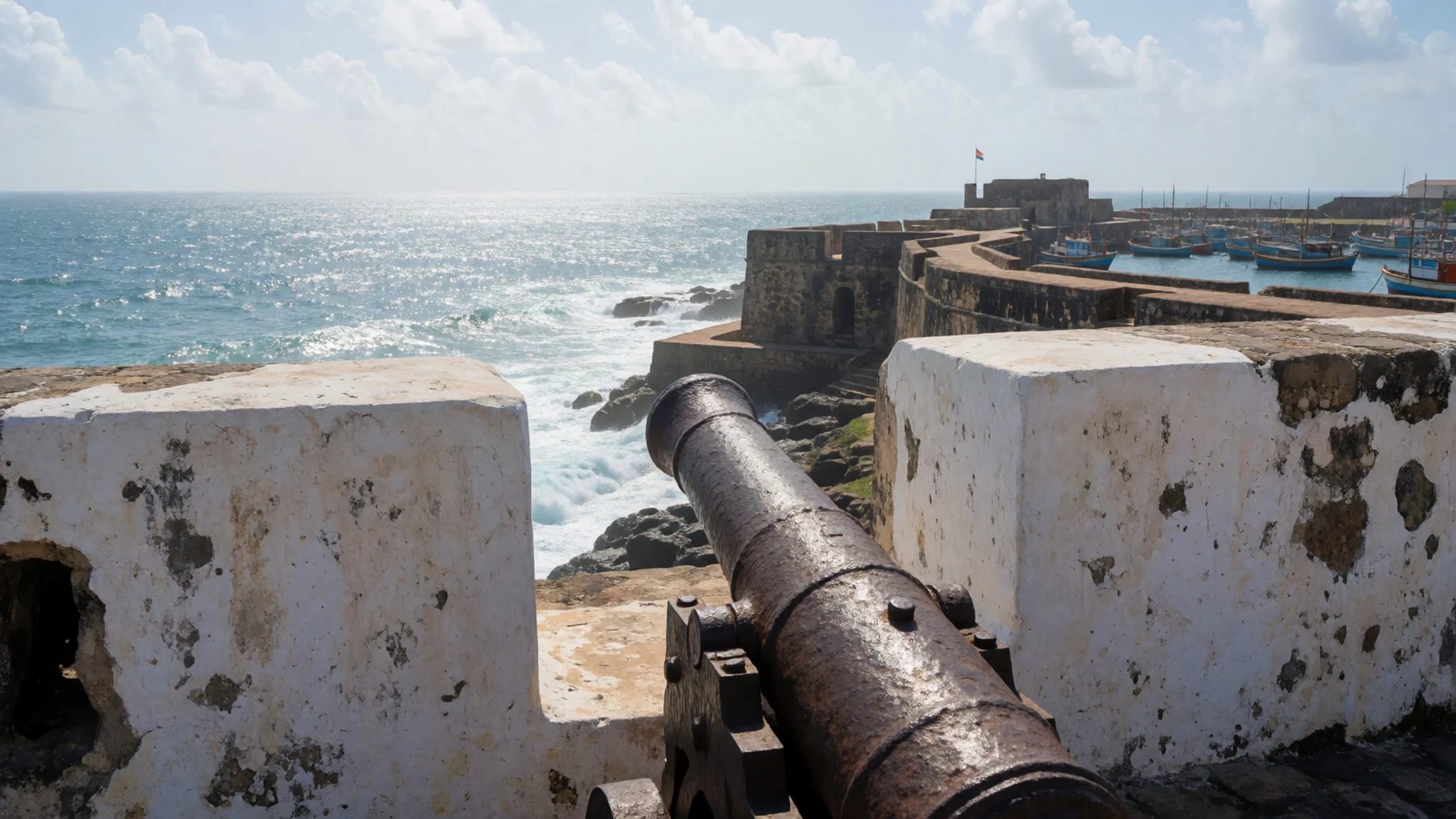
- The river-side walls — River side, north-west of the castle
The river side of the fort has a quieter outlook than the seafront. Old prints of the castle were made from the river, showing how it looked to ships and traders approaching the coast. Walk round to compare that outline with what you see from ground level. Mornings are calmer, and fishermen are often working on the water. Photograph from a distance and respect the people at work.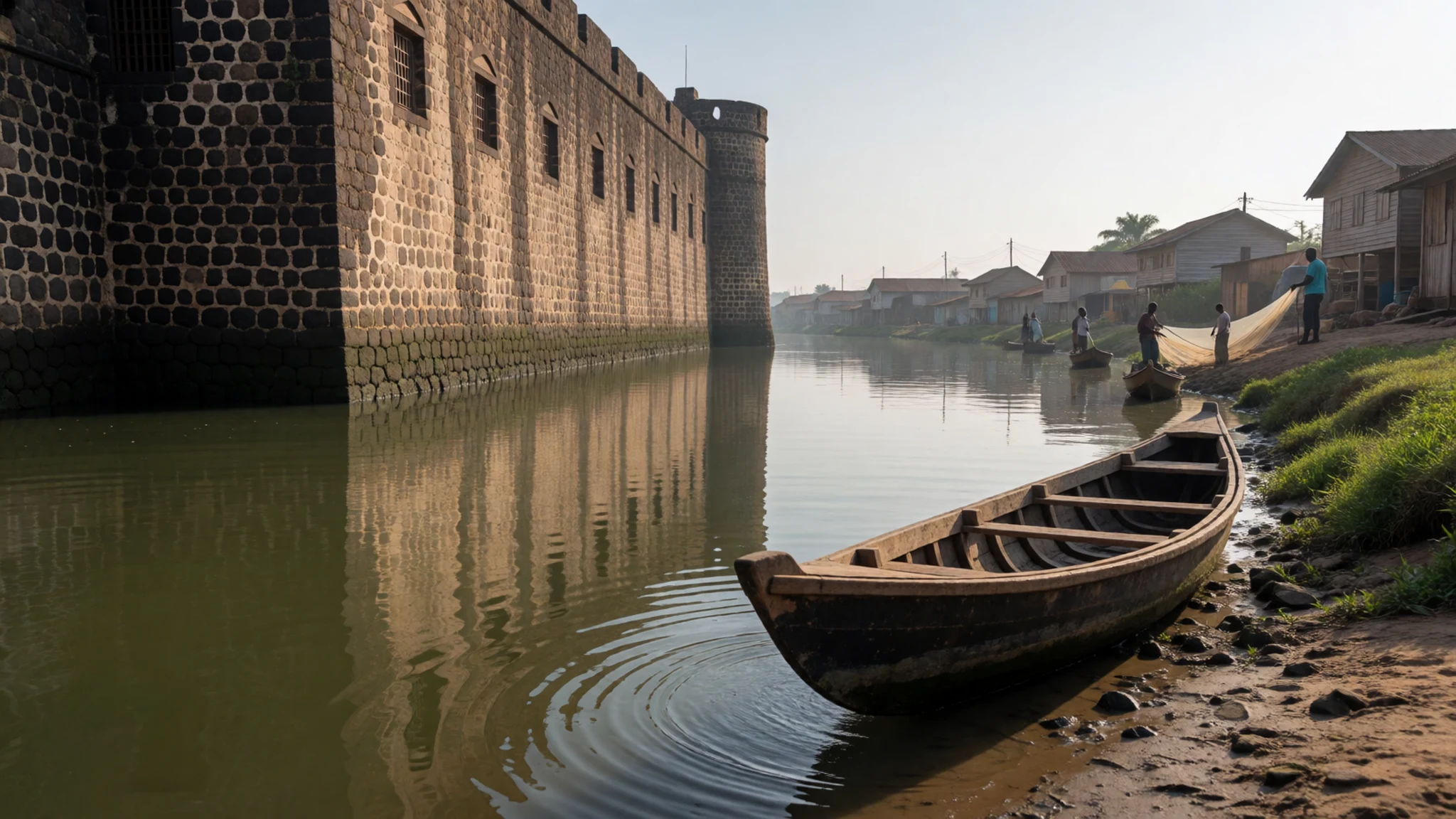
- Elmina town outside the walls — Elmina town, streets immediately outside the castle
Elmina town itself is part of the visit. Leave by the main gate into the streets of the fishing community, where the market and harbour are busiest in the early morning. Ask locally before photographing people, and expect friendly greetings along the way. Light traffic and small shops make the town easy to explore on foot, with the castle in view for most of the walk.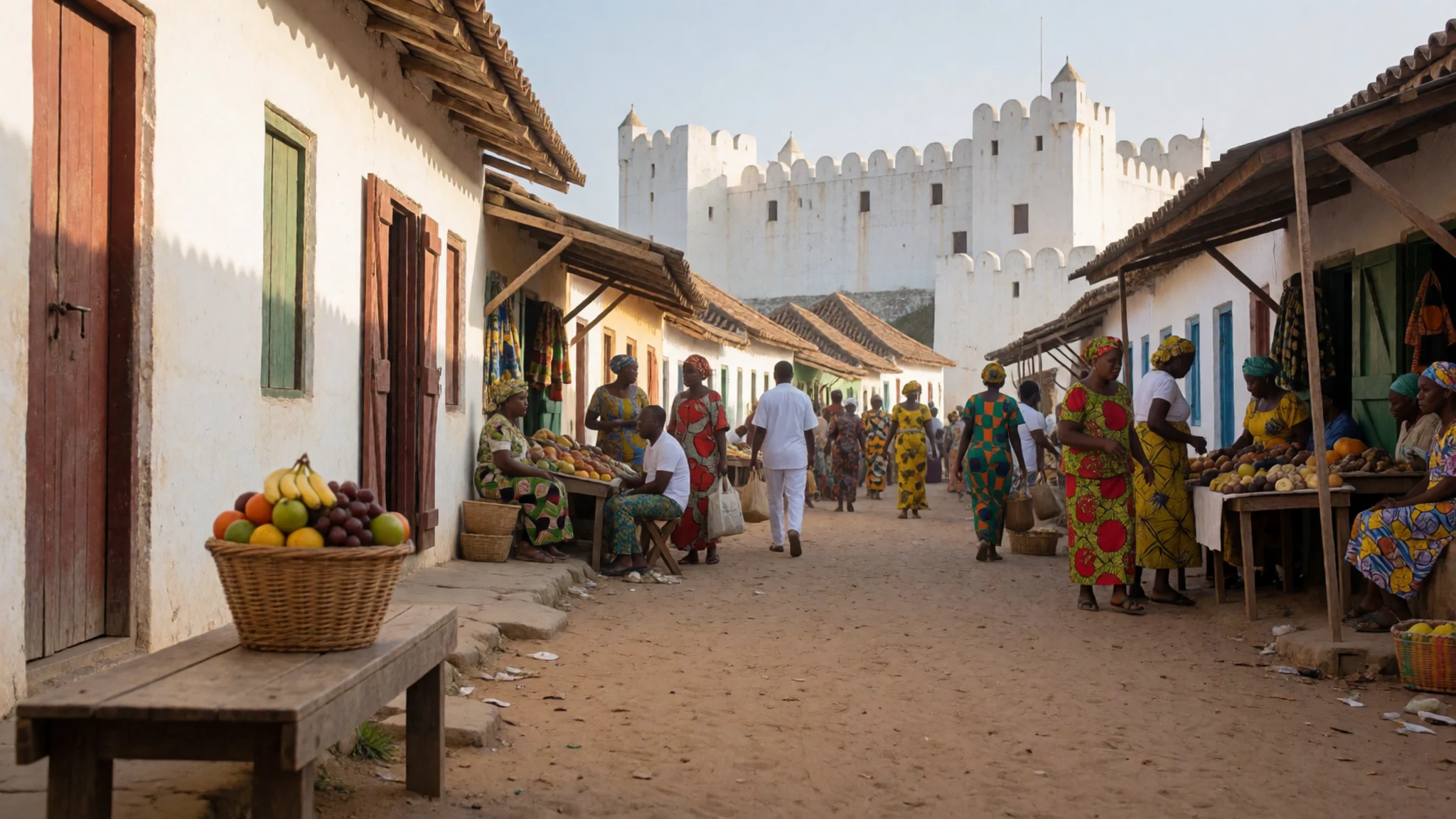
Culture
Elmina Castle sits within a community where greetings matter a great deal. Ghanaians place high value on taking time to greet people properly, and a visitor who rushes straight to a question may seem abrupt. A simple good morning or good afternoon, with a salute, is the usual opening, and the reply mirrors it. Asking how someone is doing is a good follow-up.
The handshake often ends in a distinctive sequence: the hands slide, the middle fingers hook briefly, and both people snap their fingers. It can surprise first-time visitors, so let it happen and smile.
Religion shapes daily life as well. Around seven in ten Ghanaians are Christian, and the church inside the castle is a reminder of that presence. Christmas is widely observed with family gatherings, feasts, carols and church services. Ghanaians are generally forgiving of visitors who get things wrong, but it helps to know a few customs. Try not to eat or offer things with your left hand. Dress modestly, particularly at church services, and keep your voice low in the historic rooms where others are reflecting. When you photograph people, ask first, and never take pictures inside the church during a service.
What to wear
Elmina Castle is a historic site, so a visit is a good moment to notice how dress in the town reflects both tradition and everyday life. Formal traditional dress along the coast draws on kente cloth, a strip-woven fabric of silk and cotton associated with the Akan peoples, worn for festivals, weddings and important occasions. Adinkra cloth, stamped with symbols, is another traditional textile seen at ceremonies. Many people now wear printed cotton, often tailored into everyday dresses, shirts and blouses, and churchgoers dress smartly on Sundays.
For a visit, dress for the climate. Light cotton or linen, loose and breathable, will keep you comfortable for hours in the heat. Cover your shoulders and knees for the church and for any formal occasion, and bring a light layer for cooler indoor spaces. Choose closed shoes with good grip, because the courtyards, stairs and sea walls can be uneven and some floors may be damp. A hat and sunglasses are sensible for the open walkways.
What to eat
- Fufu — Local canteens and chop bars in Elmina town and Cape Coast
Fufu is the most widely served traditional dish, made from pounded balls of yam, plantain or cassava. It is eaten with soups and stews made from groundnut, palm nut, okra or other vegetables, often with meat or fish. Tear off a piece with your right hand, shape it and dip it into the soup.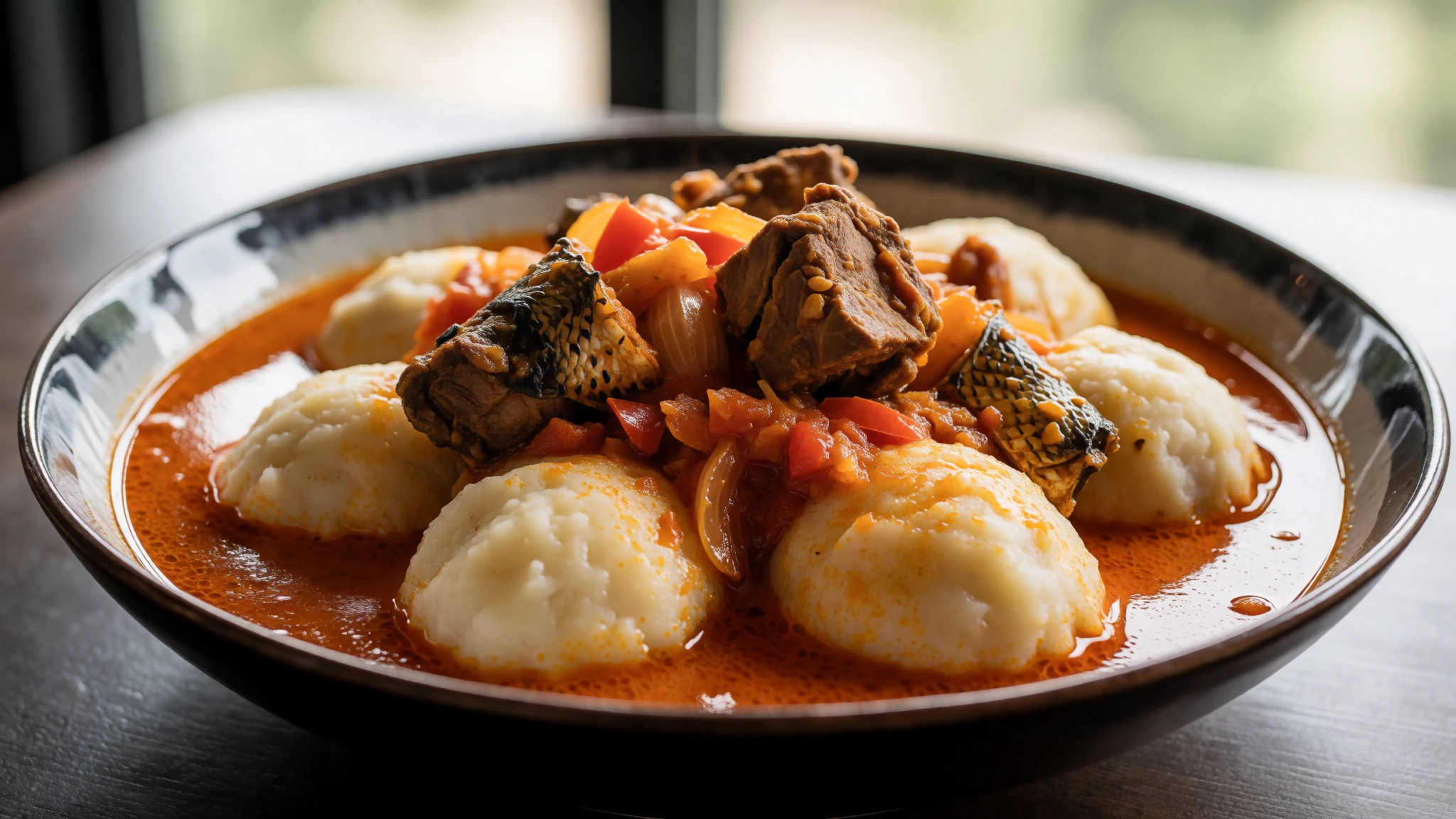
- Banku — Coastal fish stalls and eateries near the Elmina fishing harbour
Banku is a fermented corn dish, smoother and tangier than fufu, shaped into dumplings. It is usually served with grilled tilapia or okra soup, and the fermentation gives it a gentle sourness. Eat it with your right hand, as you would fufu.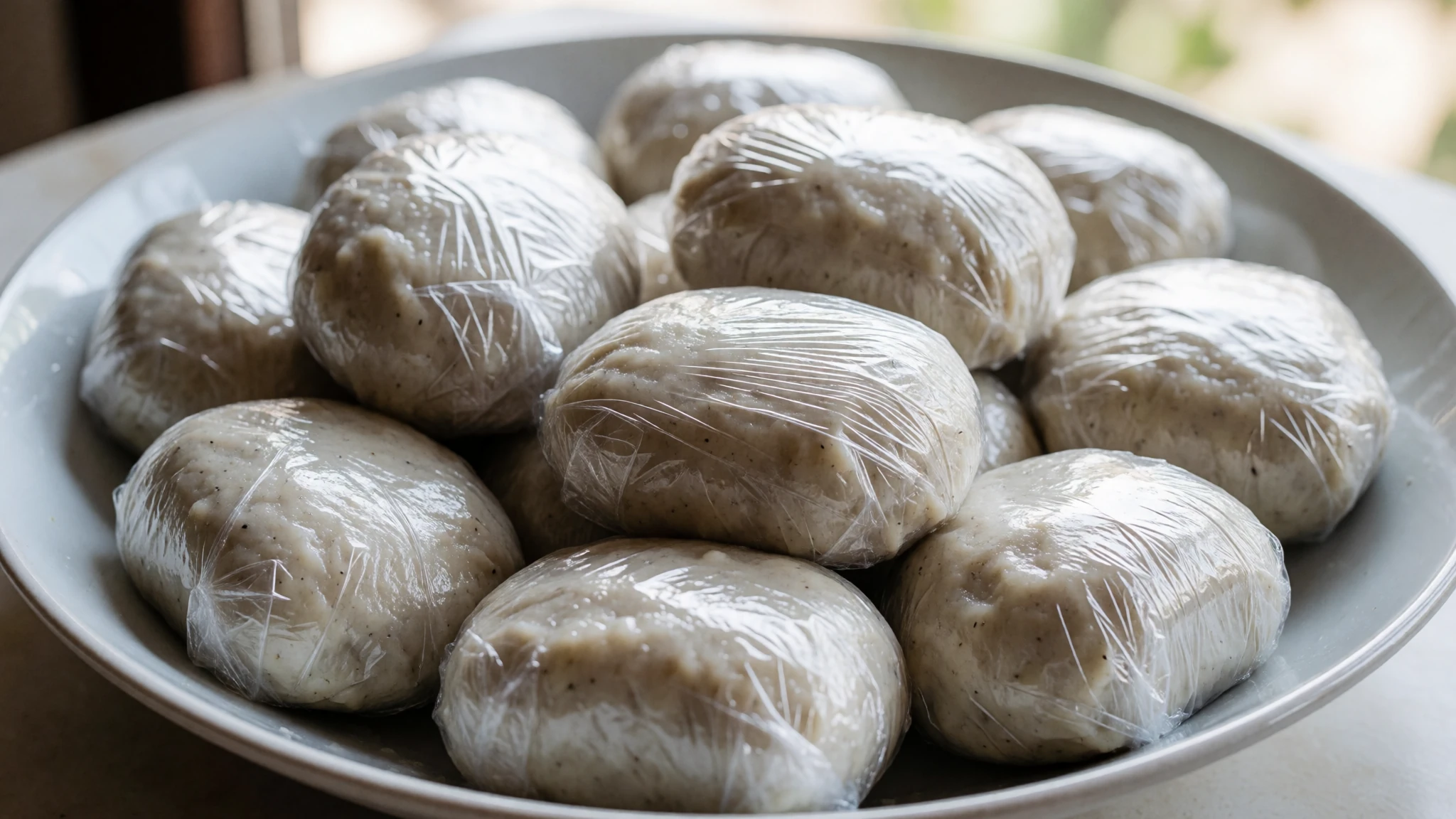
- Jollof rice — Food stalls and eateries across the town, especially at lunchtime and celebrations
Jollof rice is white rice cooked in a tomato-based sauce with vegetables, meat pieces and spices, and every cook makes it differently. Ghanaians enjoy good-natured debate about whose version is best, so ask locals for their favourite. It is a common lunch and party dish.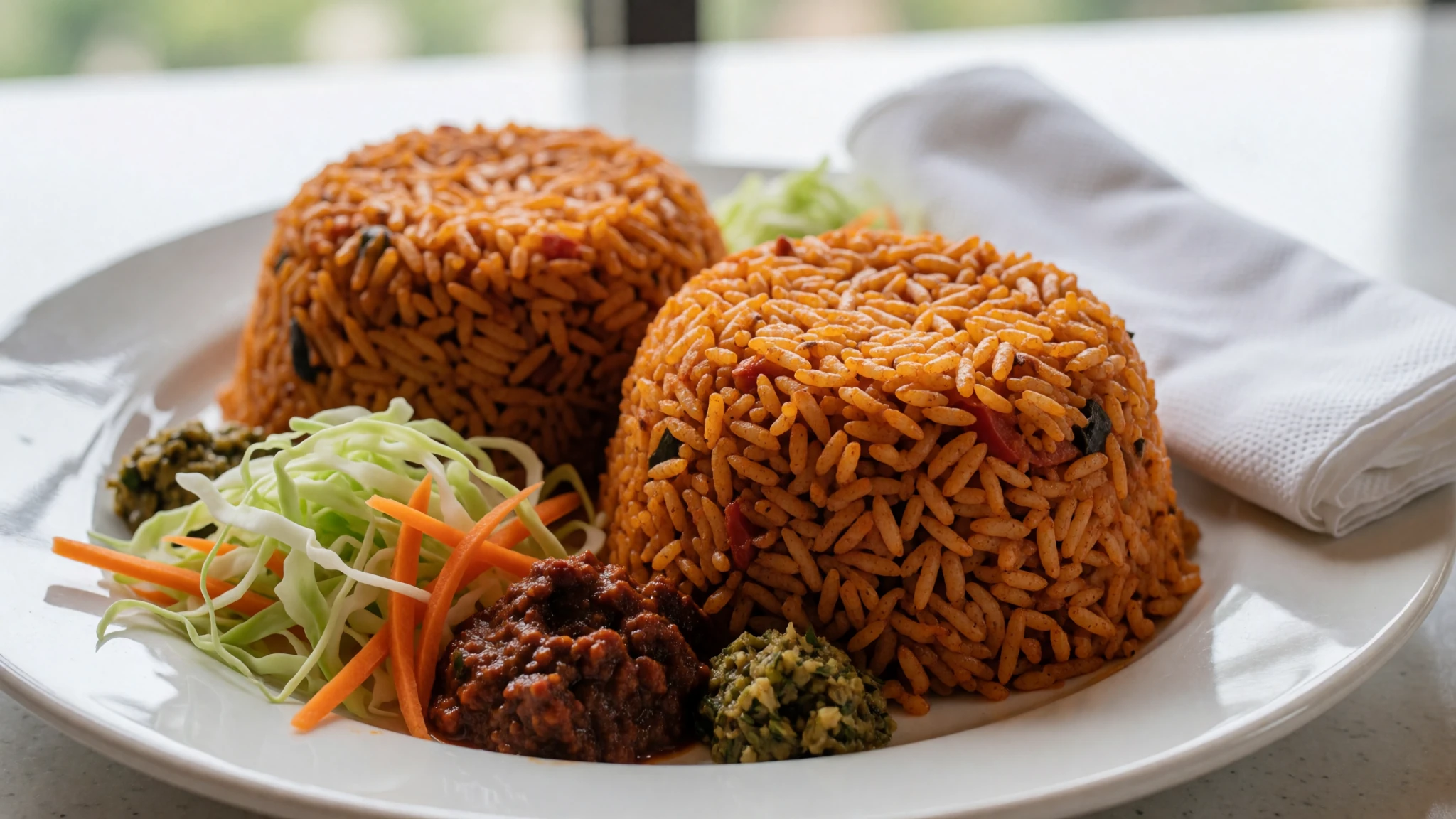
- Waakye — Morning food stalls and roadside sellers near the Elmina market
Waakye is a mix of beans and rice, often served with gari, a powder of ground cassava, and sides of shredded lettuce, cucumber and tomato. Many people eat it for breakfast or as a snack. It is an easy introduction to local flavours.
Plan it
Best time. December to February is the drier season along this coast, though the harmattan dust in those months can haze the sky. May to July is the wetter, more humid stretch, peaking in June, though August brings a brief drier spell. Check current conditions before you travel, since rainfall varies from year to year.
How long. 1–2
Getting there. Fly into Kotoka International Airport in Accra, then travel by road along the coast through Cape Coast to Elmina; allow a few hours for the journey, longer in traffic.
Budget. low
Tips
- Go early in the morning, before tour groups arrive and the heat builds
- Hire a licensed guide at the entrance for the full history of the site
- Carry cash in small notes for taxis, drinks and small purchases
- Bring water and a hat, as there is little shade in the courtyards and on the walkways
- Check entry rules with the Ghana Immigration Service well before booking, as visa requirements depend on nationality and the official site is the reliable source
Etiquette
- Greet people properly before asking anything
- Ask before photographing people or the church interior
- Keep voices low in the dungeons and in the church
- Do not eat or hand over things with your left hand
Nearby
Sources
- Wikidata Q55264655 (CC0)
- Wikipedia: Elmina Castle (rev 1381743253) (CC BY-SA 4.0)
- Wikivoyage: Ghana (rev 5388781) (CC BY-SA 4.0)
- Castle of St. George's, Bolance (CC BY 3.0)
- Elmina Castle - Ghana, Damien Halleux Radermecker (CC BY-SA 2.0)
- Elmina slave castle, Dave Ley (CC BY 3.0)
- Lázaro Luís 1563 nautical chart, Alvesgaspar (Public domain)
- Elmina Atlas Blaeu van der Hem, Johannes Vingboons (Public domain)
- Museum Bronbeek, Foto van Kasteel Elmina (Public domain)
- Ghana Elmina Castle Interior View of Church, Kurt Dundy (CC BY 3.0)
- Ghana Elmina Castle Interior, Kurt Dundy (CC BY 3.0)


