Kakum National Park
Kakum National Park, Ghana
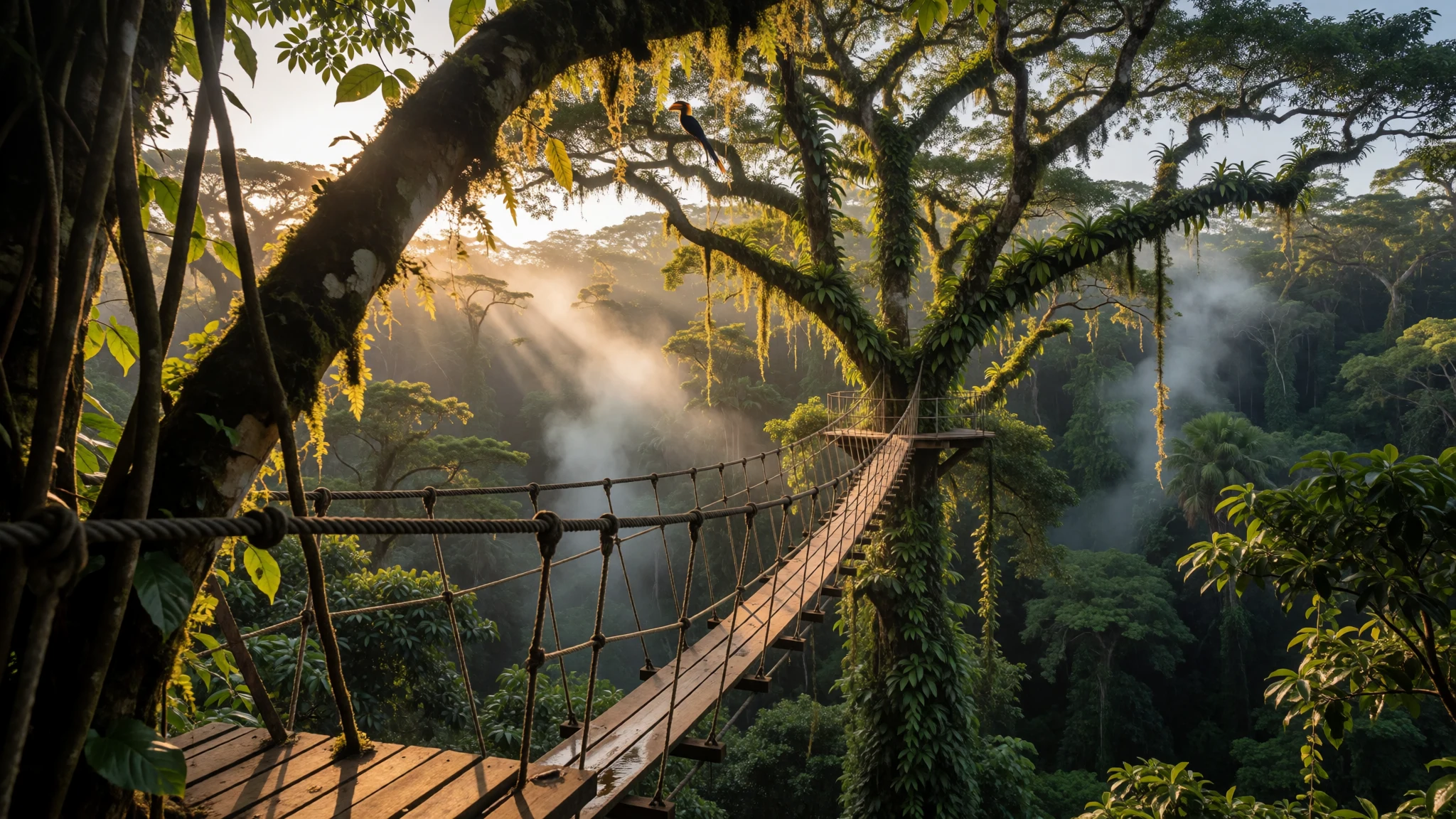
Kakum National Park lets visitors walk a rope bridge through the crowns of a Ghanaian rainforest, an hour from the coast at Cape Coast.
The place
Kakum National Park sits in the coastal part of Ghana's Central Region, a block of tropical forest a short drive inland from Cape Coast. It covers 375 square kilometres, and the Kakum River, which rises inside the boundary, gave the park its name. The forest is humid, dim beneath the canopy and noisy with insects and birds, while the larger animals mostly stay out of sight. Threatened species recorded here include the Diana monkey, the giant bongo antelope, the yellow-backed duiker and the African elephant. Birdlife is the stronger draw for many visitors. The park is recognised as an Important Bird Area, with 266 species confirmed, among them nine kinds of hornbill, the grey parrot and the white-breasted guineafowl. Butterflies number more than 600 species. What sets Kakum apart from most West African parks is its canopy walkway: a line of bridges about 350 metres long, linking seven tree tops and strung roughly 40 metres above the forest floor. It draws school groups, tour parties and birdwatchers alike, and the early morning is noticeably calmer than the middle of the day. Ghana's heritage authorities have put the park forward for World Heritage status, and the submission has sat on the tentative list since 2000. The usual base is Cape Coast, about an hour away by road, with the capital Accra a longer drive to the east.
Its story
Kakum National Park began life in 1931 as a forest reserve covering the headwaters of the Kakum River. For decades it was a working forest: loggers took mahogany from it until 1989, when responsibility passed from the Forestry Division to the Wildlife Department. That change opened the way to a different idea of what the forest was worth. In 1990 a feasibility study, carried out under a United Nations Development Programme project, sketched how the reserve and its neighbour, the Assin-Attandanso reserve, could become an ecotourism destination. The work drew in biologists, forestry and wildlife officials, local communities, Ghanaian universities and regional government, and it leaned on early elephant counts and surveys of plants and animals. Local people are often credited with pushing for protection, which sets Kakum apart from parks created from the capital downwards. A regional tourism official, Ebenezer Kwasi Agbley, is also remembered for the Central Region tourism scheme that carried the idea forward. A bird survey helped persuade the authorities, and in 1992 the reserve was gazetted as a national park. The visitor centre opened on Earth Day in 1997, and the park won an international tourism award the following year. Visitor numbers climbed steeply through the 1990s, which brought income to nearby villages and also the pressure of crowds on a forest that had only recently stopped being logged. That mix of logging legacy and tourism success still shapes how the park is run.
What to see
- The canopy walkway — Main park entrance
The canopy walkway is the reason most people come to Kakum National Park. Rope-and-plank bridges join seven tree tops, running about 350 metres and reaching roughly 40 metres above the ground. Looking down on the crowns gives a different view from the forest floor, with birds, insects and sometimes monkeys at eye level. Go early, before the tour groups arrive.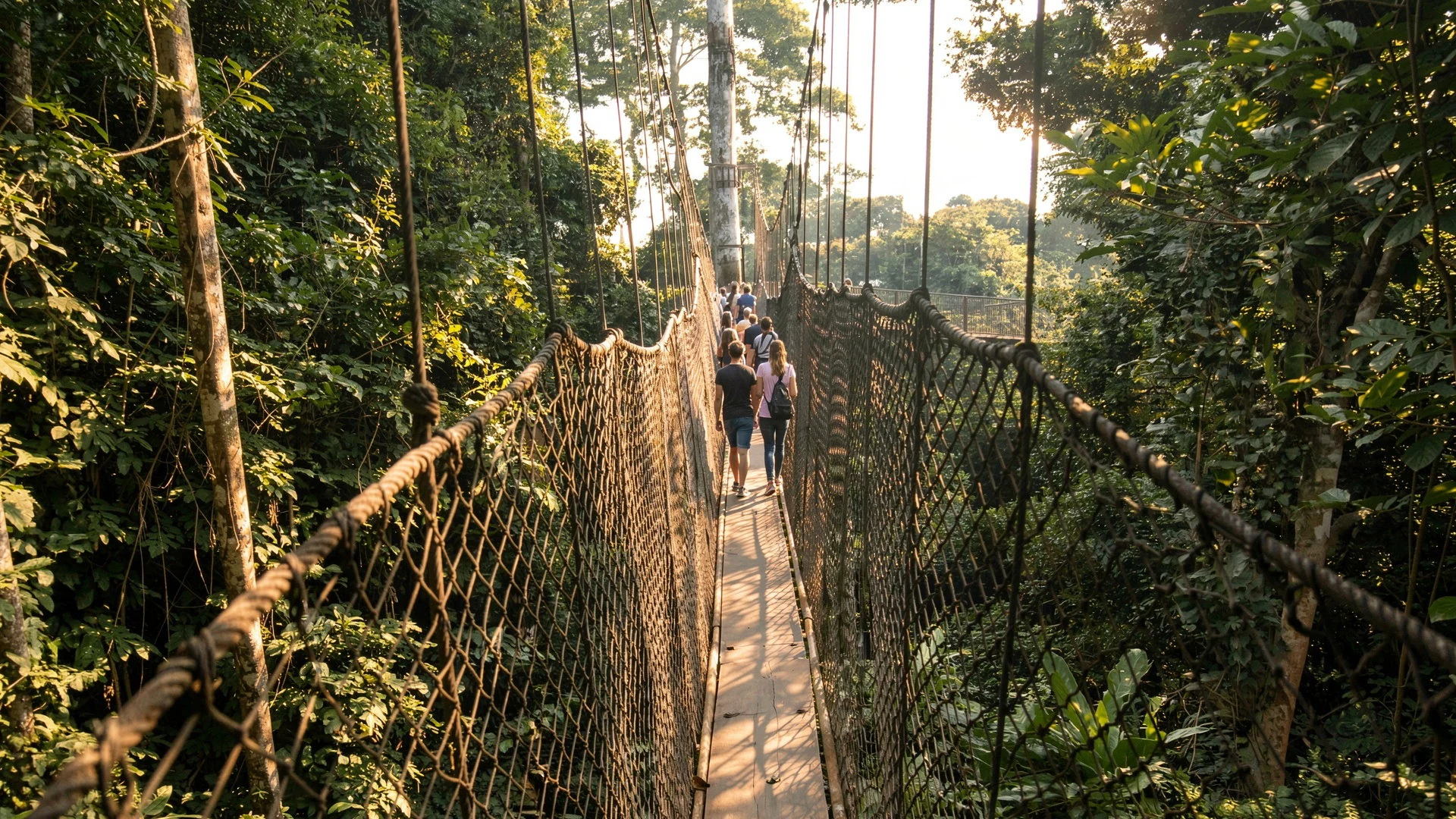
- A guided walk at ground level — Forest trails near the visitor centre
A guided walk on the forest floor at Kakum National Park shows what the bridges cannot. Guides point out useful plants, buttress roots, animal tracks and the calls of birds hidden in the leaves. It is hot and humid under the trees, so the pace is slow, and the walk suits anyone who prefers not to be up high.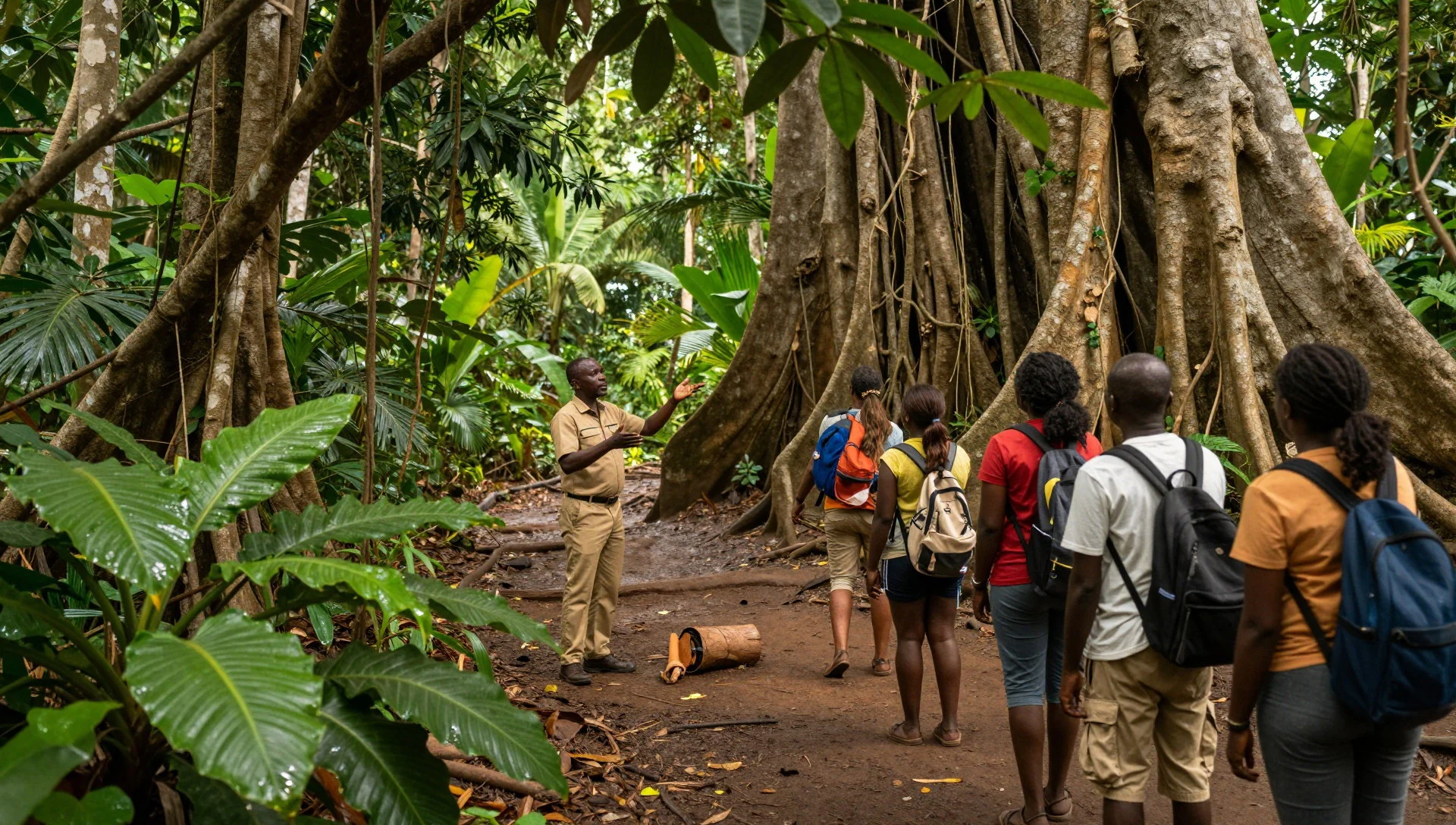
- The visitor centre display — Park entrance
The visitor centre at Kakum National Park, opened on Earth Day in 1997, holds a display on how rainforests work. It is a sensible first stop before the walkway, and children tend to enjoy it. The centre is also where guided walks are arranged, so it is worth arriving with a little time to spare.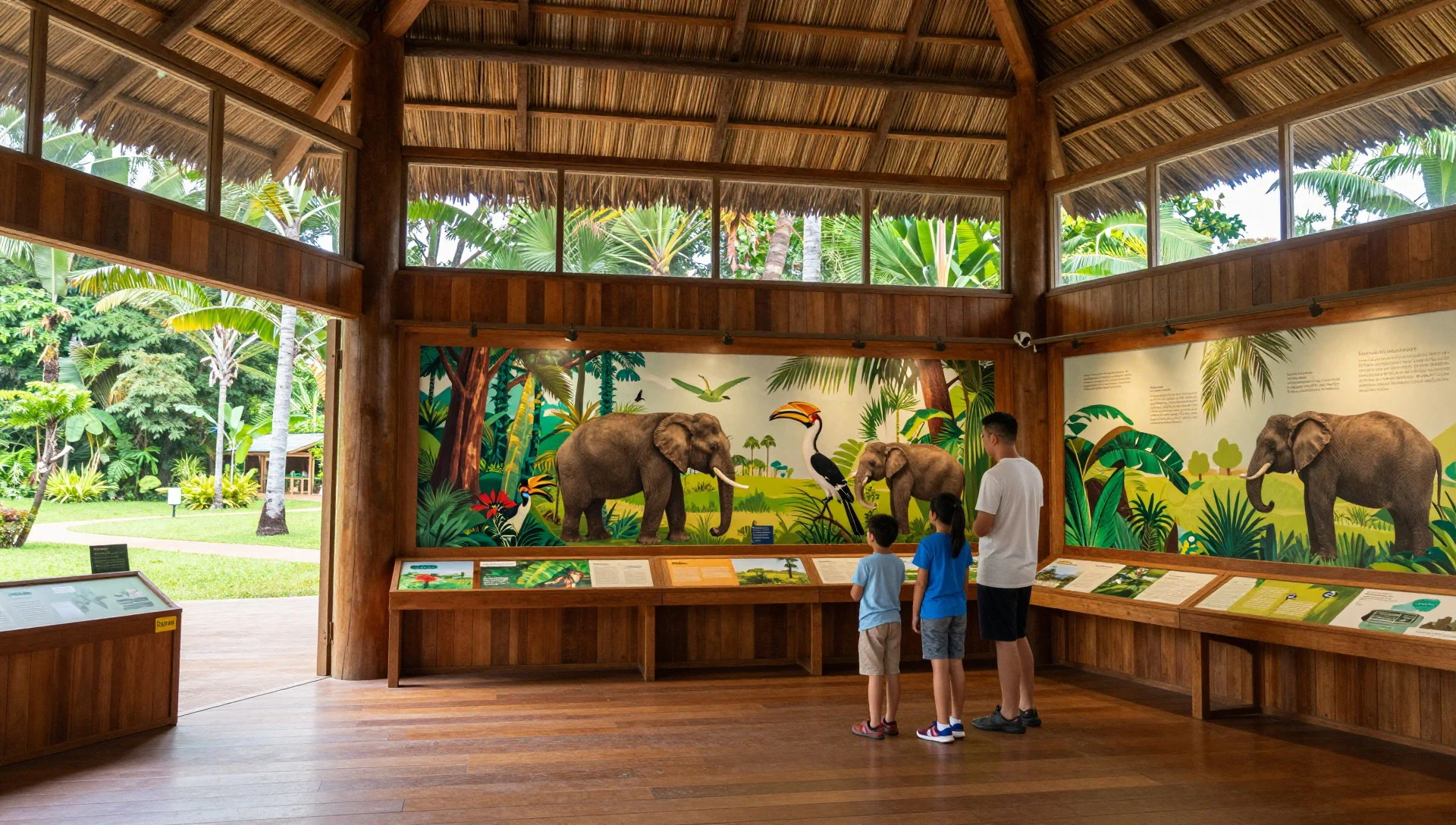
- Monkey Forest Resort — Near the park, on the Cape Coast road
Monkey Forest Resort is a small animal sanctuary and zoo a few kilometres from Kakum National Park. It suits visitors who want to see animals at close range, which the wild forest rarely allows. Birds, civets and grasscutters are among the residents. Treat it as a short add-on rather than a substitute for the park itself.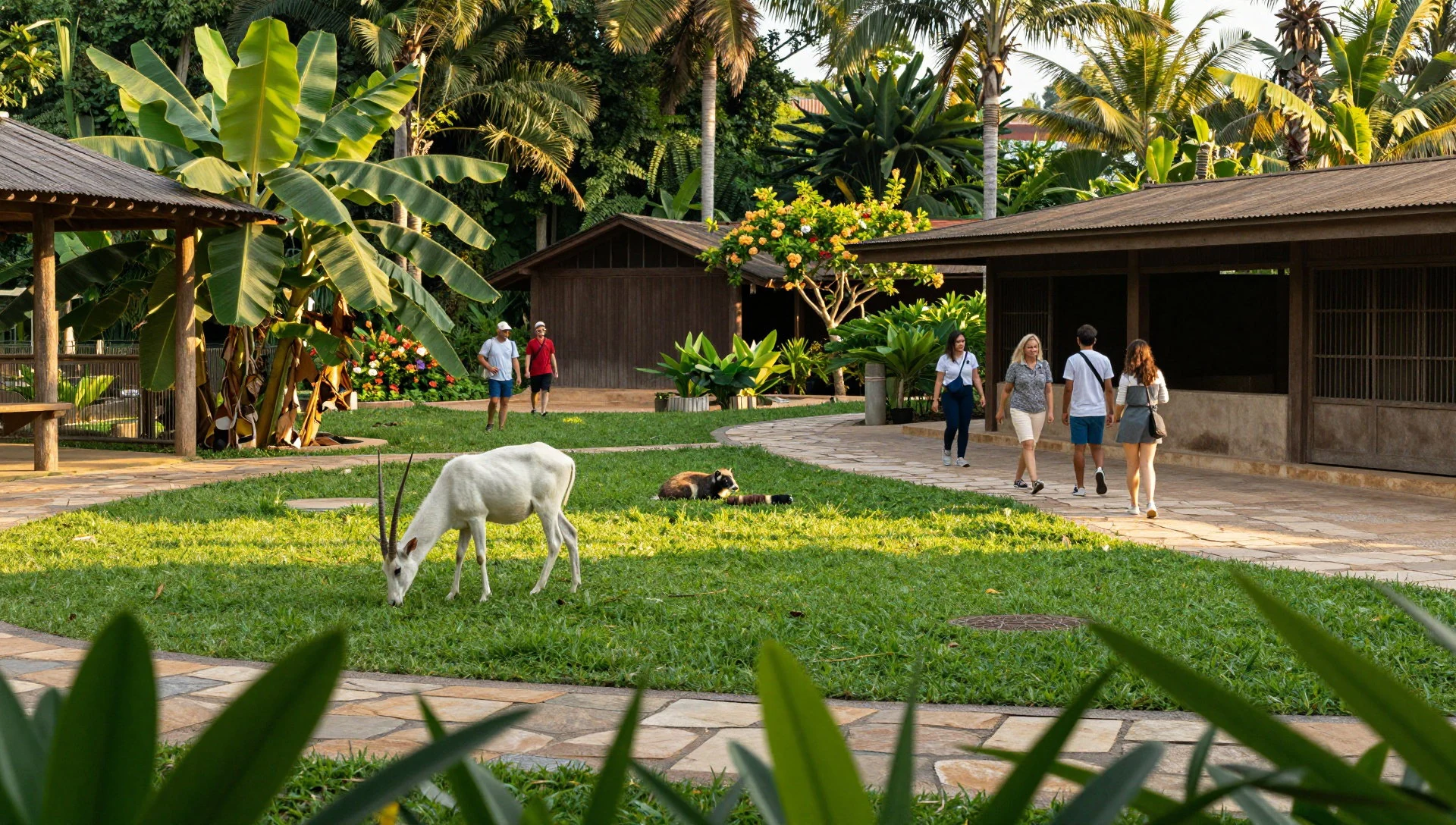
- Domana Rock Shrine — Domana village
Domana Rock Shrine lies in forest and farmland a drive away from Kakum National Park, and few tourists make it there. The village runs a community ecotourism visitor centre where a local guide can be arranged. The walk to the shrine takes under an hour through trees and farms. Go early or late, because midday heat is heavy.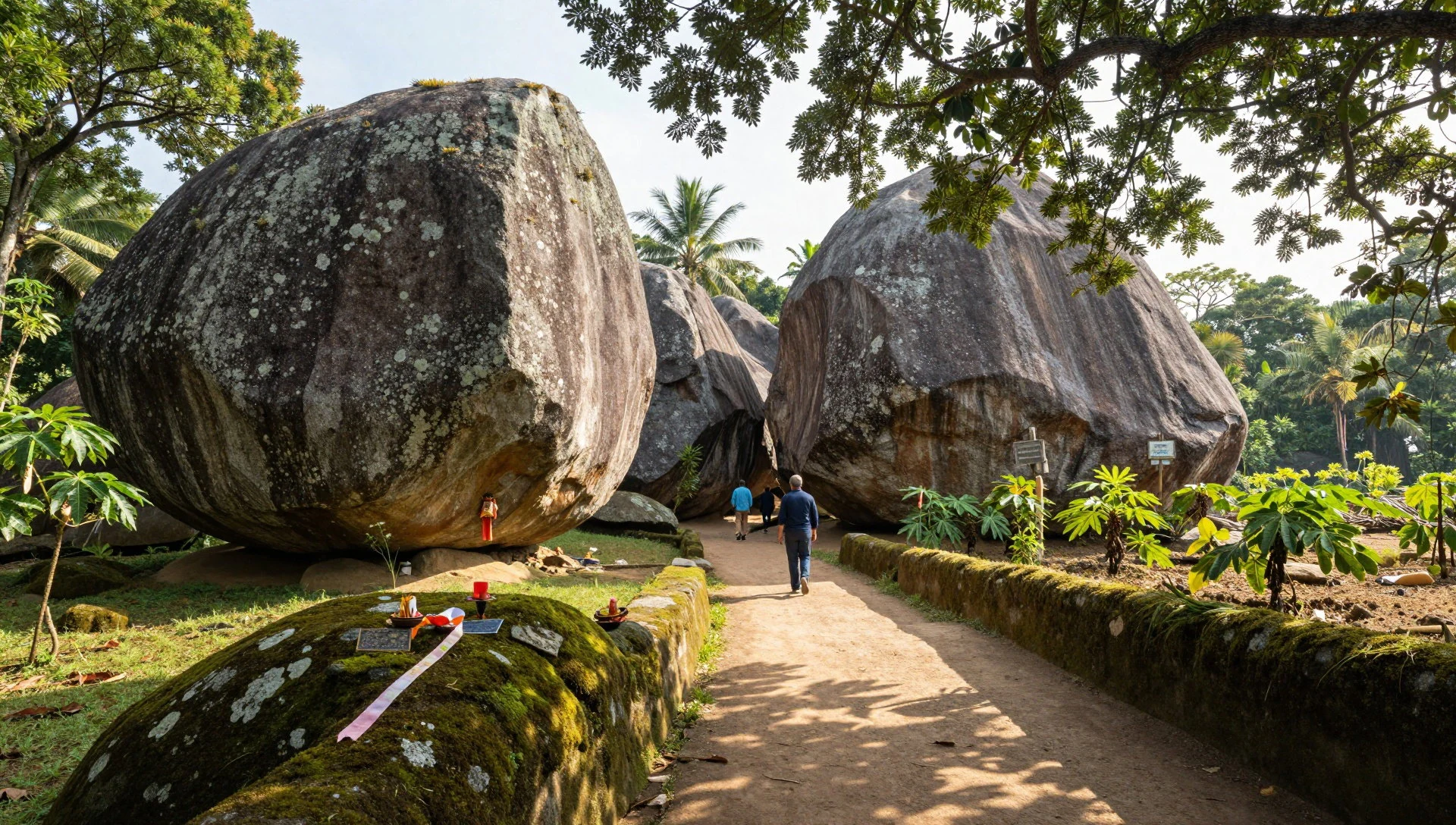
Culture
Kakum National Park belongs to a landscape of villages where forest, farming and trade have long been tied together. The park exists partly because local people pressed for it, and that still shapes a visit: guides, drivers and craft sellers around the entrance often come from nearby communities, and money spent with them stays in the area. This part of Ghana is Akan country, and Fante is widely spoken around Cape Coast. A greeting goes a long way, and a handshake and a few words before any request are the normal start to a conversation. The forest carries meaning beyond tourism. Shrines and sacred places exist in the wider region, including the Domana Rock Shrine, and community guides treat them as living places rather than sights. Cocoa grows in and around the park, a reminder that the forest edge is also farmland. Weekends and school holidays bring noisy groups, so a weekday morning feels like a different park altogether. Alongside its logging history, Kakum's story is one of people choosing to protect a forest rather than cut it, and visitors who spend time with the guides tend to hear that story first-hand. Greet your guide and any villagers before anything else, ask permission before photographing people or entering a shrine, and keep your voice low on the walkway so the wildlife stays close.
What to wear
Kakum National Park sits in Akan country, where the best-known traditional cloth is kente, a strip-woven fabric of silk or cotton in bold geometric patterns, draped over the shoulder at weddings, festivals and funerals. Adinkra cloth, stamped with symbols in dark dye, is another traditional textile, often worn for mourning and ceremony. Everyday dress today is more varied. In Cape Coast and the villages near the park, people wear Western-style shirts, jeans and dresses alongside wax-print cloth made up by local tailors into dresses, shirts and wraps, and Sunday church brings out the smartest outfits. For the forest itself, visitors need practical clothing rather than anything traditional. The park is hot, humid and damp underfoot, so light long trousers and a breathable top protect against insects and scratches, and quick-drying fabric copes with sweat and sudden showers. Closed shoes with a good grip are needed for muddy trails and the walkway; sandals are a poor idea. A hat, insect repellent and a thin rain jacket all earn their space in the bag. Away from the park, covering shoulders and knees is polite in towns and villages, and a modest outfit is wise for a shrine or a church.
What to eat
- Fufu with light soup — Chop bars in Cape Coast
A pounded dough of cassava and plantain, eaten with a peppery broth usually holding fish or chicken. It is not sold near the park gate, so look for it at the simple eateries called chop bars in Cape Coast.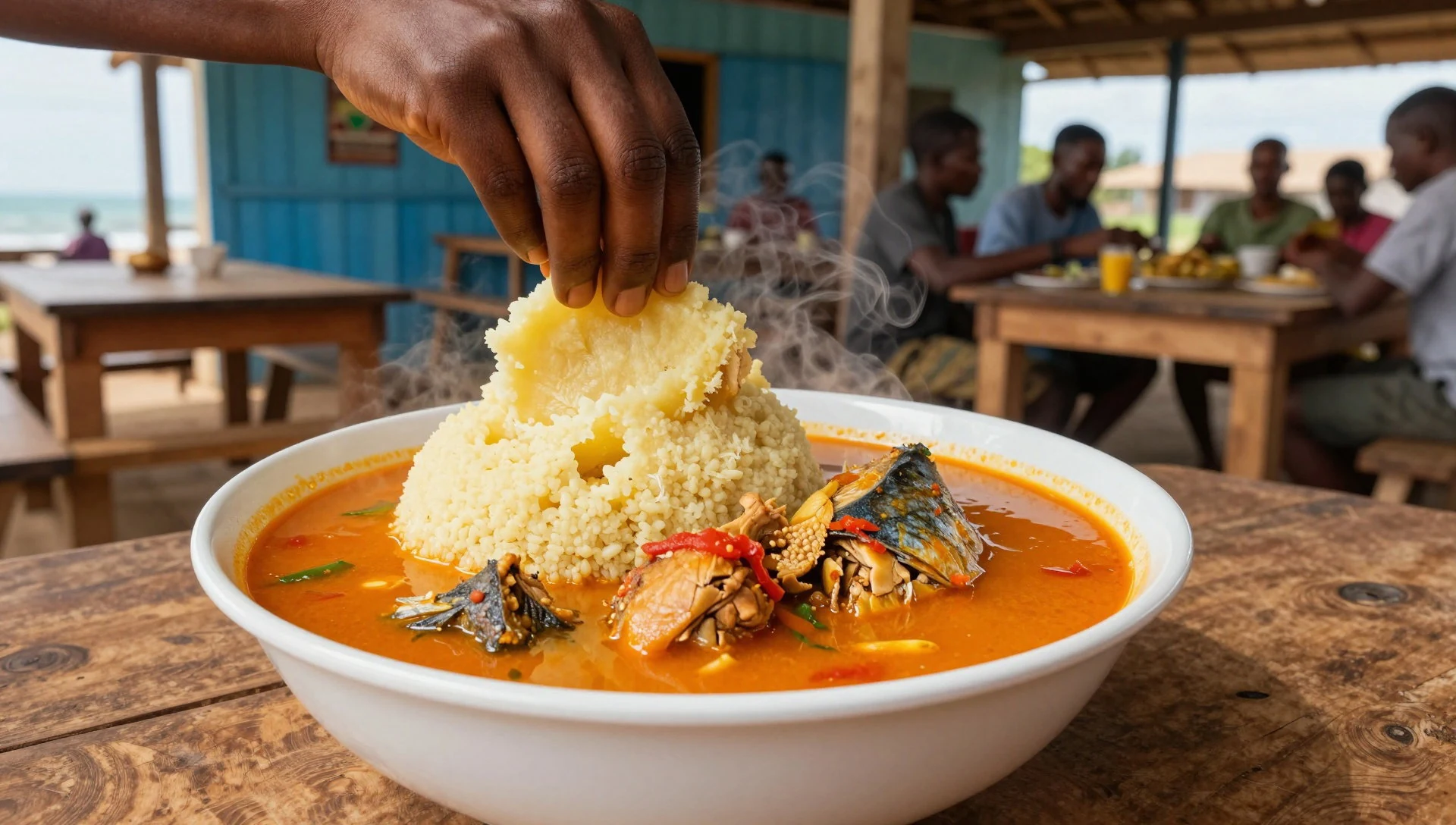
- Banku with okra stew — Local eateries in Cape Coast
A smooth, slightly sour dough of fermented corn and cassava, served with a slippery okra stew, often with fish. Like fufu, it is a town dish rather than a park dish, found at local eateries in and around Cape Coast.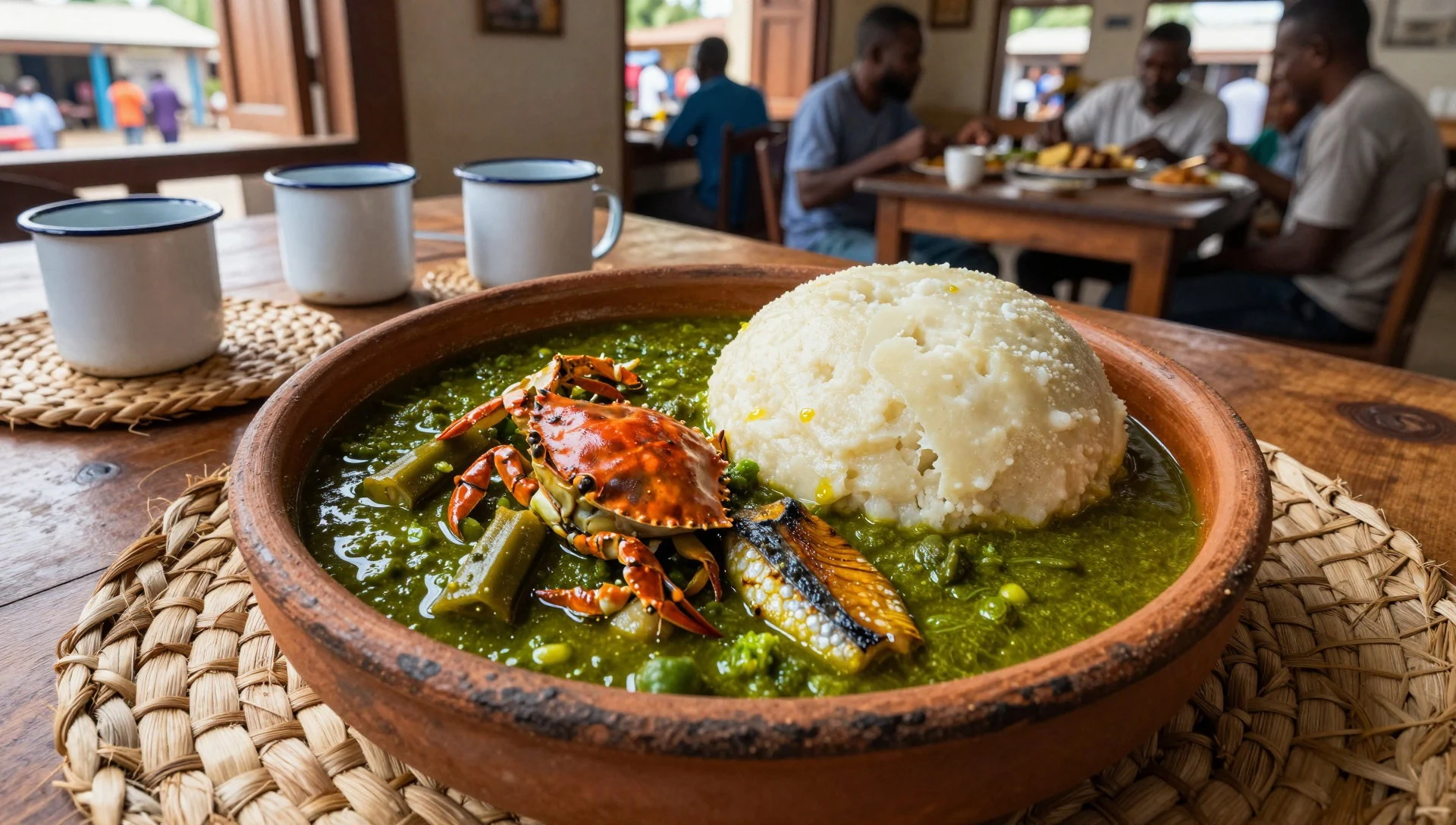
- Grilled fish with pepper sauce — Fishing harbour and beach stalls, Cape Coast
Fish from the Atlantic coast, grilled over charcoal and served with a hot pepper sauce and a starch such as banku. The fishing harbour and beachside stalls in Cape Coast are the usual places to eat it. - Palm wine — Roadside sellers near Cape Coast; the park cafe
A lightly sweet, cloudy drink tapped from palm trees, found around Cape Coast and sometimes at the park cafe. It ferments quickly, turning stronger and sourer through the day, so ask for a small glass first. - Cocoa — Roadside stalls and markets on the Cape Coast road
Cocoa grows in and around the park, and its beans end up as chocolate and hot drinks across Ghana. Look for cocoa products at roadside stalls and markets on the way from Cape Coast to the park gate.
Plan it
Best time. December and January are usually the drier, easier stretch for trails. This is a rainforest, so heat, humidity and rain can arrive in any month, and heavy rain makes the paths slippery.
How long. 1–2
Getting there. Fly into Accra, then go by road to Cape Coast, the usual base; a private car with a driver is the most comfortable way. From Cape Coast the park is about an hour away by charter taxi or tro-tro (shared minibus).
Budget. mid
Tips
- Walk the canopy early in the morning, before the tour groups arrive.
- Tro-tros to the park are cheap, but there is no stop for the return trip and flagging one down can take an hour or more, so many visitors agree a taxi fare from Cape Coast in advance.
- Bring water and snacks: the park cafe menu is limited and local dishes are not sold nearby.
- Ask at the visitor centre or check official Ghana wildlife channels for current fees and opening times.
- For a night on a forest platform, bring a mosquito net and a torch; the forest is loud after dark.
Etiquette
- Greet guides and villagers before making requests.
- Ask before photographing people or entering a shrine.
- Keep to the walkway in single file and stay quiet so wildlife is not scared off.
Nearby
Sources
- Wikidata Q568693 (CC0)
- Wikipedia: Kakum National Park (rev 1362777828) (CC BY-SA 4.0)
- Wikivoyage: Kakum National Park (rev 5384286) (CC BY-SA 4.0)
- Photo: Kakum National Park, Chiappi Nicola (CC BY 2.5 it)
- Photo: Drone shots of the Kakum National Park, daSupremo (CC BY-SA 4.0)
- Photo: Monkeys at Kakum National Park, Abdul Rahman Abdul Kudus (CC BY-SA 4.0)
- Photo: Kakum National Park, Monocletophat123 (CC BY 3.0)
- Photo: Kakum National Park Side View, Abdul Rahman Abdul Kudus (CC BY-SA 4.0)
- Photo: Stachelschwein-drawing (Public domain)
- Photo: Kakum Canopy Walk, aripeskoe2 (CC BY 2.5)
- Photo: KAKUM NATIONAL PARK 16, Amuzujoe (CC BY-SA 4.0)


