Lake Bosumtwi
Lake Bosumtwi, Ghana
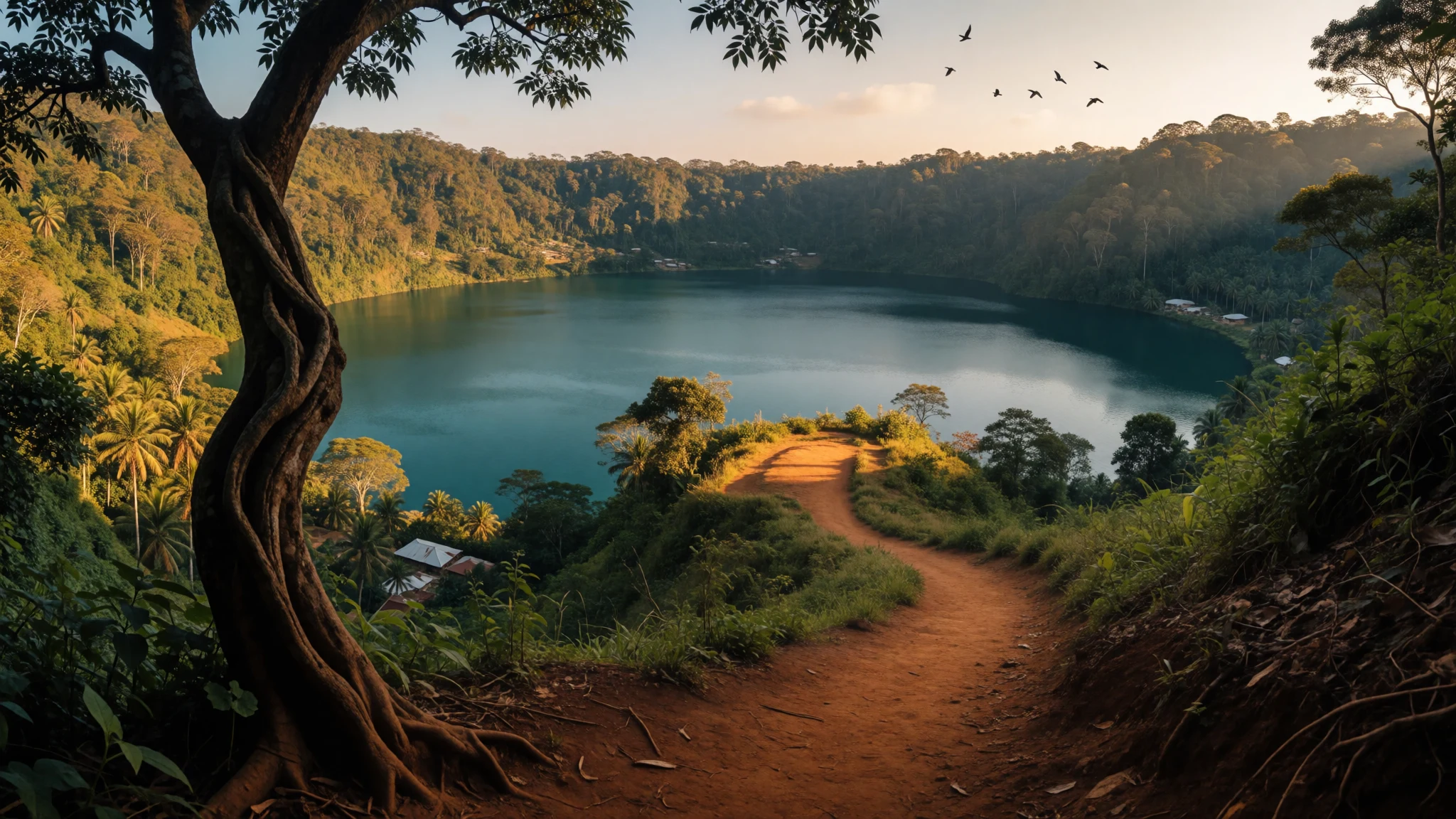
Lake Bosumtwi is Ghana's only natural lake, a sacred crater of calm water where fishermen paddle wooden planks by hand.
The place
Lake Bosumtwi fills a round basin in the forested hills of the Ashanti Region, a short drive south-east of Kumasi, and it is the only natural lake in Ghana. The basin is an impact crater about 10.5 km across, and the water inside has no outlet: small streams and rainfall feed it, and nothing flows away. Depth may reach 81 m in the middle. Steep wooded slopes close in on every side, so the first view from the rim, with the lake far below in a green bowl, is the moment most visitors remember. Around the shore sit a number of villages, and Abono is where most travellers base themselves, with guesthouses and resorts strung along the water. The lake surface lies at about 107 m above sea level, so the air is warm and humid, and the sun on open beaches is strong with little shade. Kumasi is close enough for a day trip, though a night or two lets the place settle. The whole area is a protected biosphere reserve, and the water holds a cichlid found nowhere else, so birdwatchers and anglers share the shoreline with Ashanti families who treat the lake as sacred. Weekends bring Kumasi residents for swimming and lunch; weekdays are calmer, and Sundays carry a special hush that is worth planning around. Mornings are the best hours, when mist lifts off the water and the paduas, the fishermen's wooden planks, are already out.
Its story
Lake Bosumtwi has two origin stories, and both are told with confidence around the shore. Geologists confirmed in the 1960s that a meteorite struck here about 1.07 million years ago, leaving a crater that later filled with water. Before the impact the land was rainforest. Over the ages the lake rose and fell with the climate: in wet periods it climbed above the lowest gaps in the rim and spilled out through a channel, and in dry ones it shrank to little more than a pond while forest crept down into the basin. Local tradition and climate records agree that the lake stayed very low until roughly 300 years ago. The Ashanti account is different. In 1648, the story goes, a hunter named Akwasi from Asaman chased an antelope into a pond, and the pond swelled into a lake full of fish. The name Bosomtwe, 'antelope god', honours the spirit that guided him there. Belief adds another layer: the souls of the dead are said to travel to the lake to say goodbye to the goddess Asase Ya. Science and legend sit comfortably together here, and local guides will happily offer either, or both, depending on the question.
What to see
- The crater rim — Hills around the lake
The forested ridge around Lake Bosumtwi is the rim of the impact crater, and the viewpoints along it give the widest outlook over the water. Go early, when the air is cooler and haze is thin. The slopes are steep and shaded by trees, so a short walk along the rim is rewarding.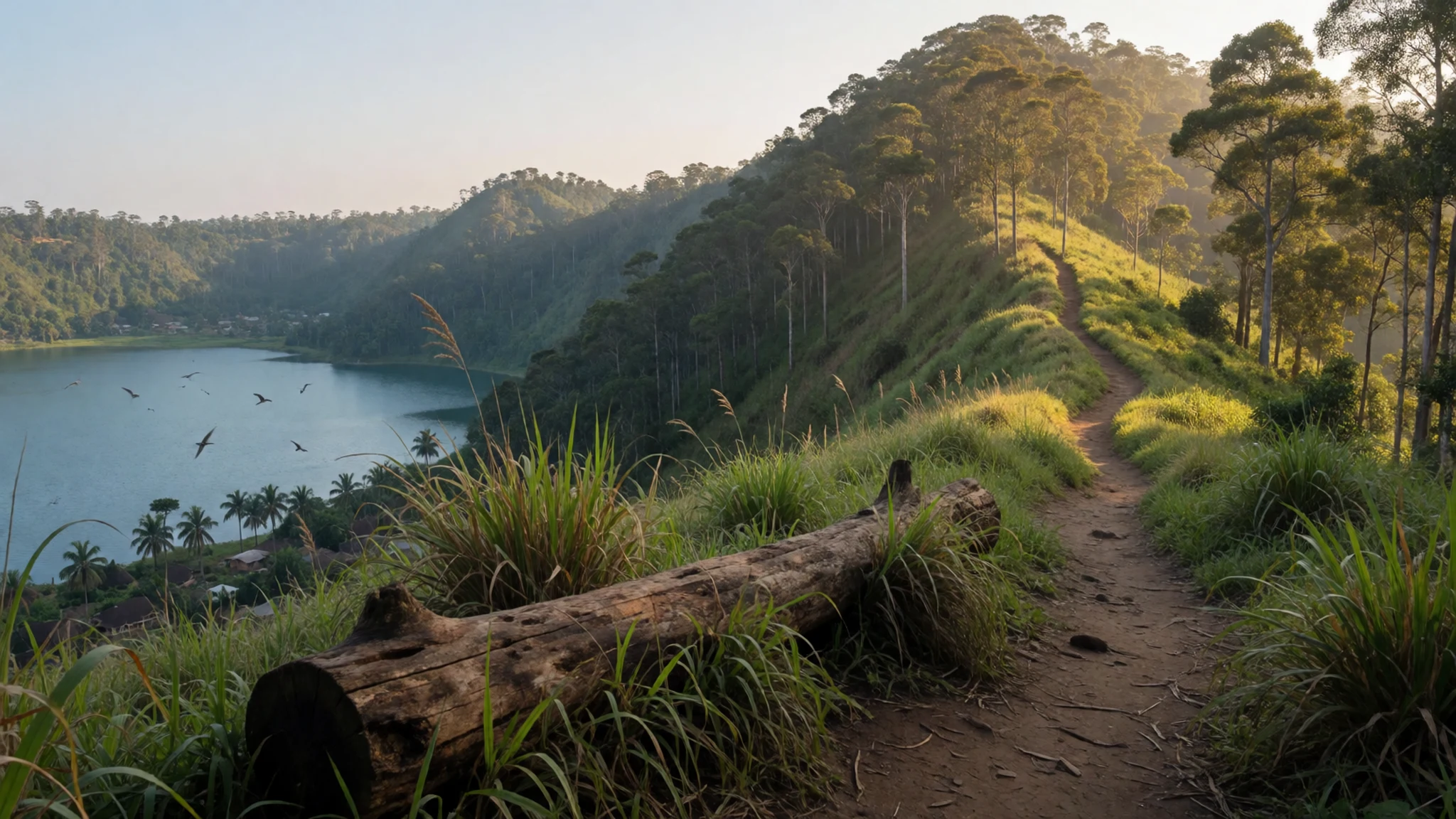
- Abono village — Northern shore, the main visitor base
Abono is the main base on the shore, and the place to see paduas lined up on the sand when they are not on the water. Guesthouses, small eateries and resort gates sit close together. Touts offer guiding near the entrance, so it is easier to arrange tours through your lodge.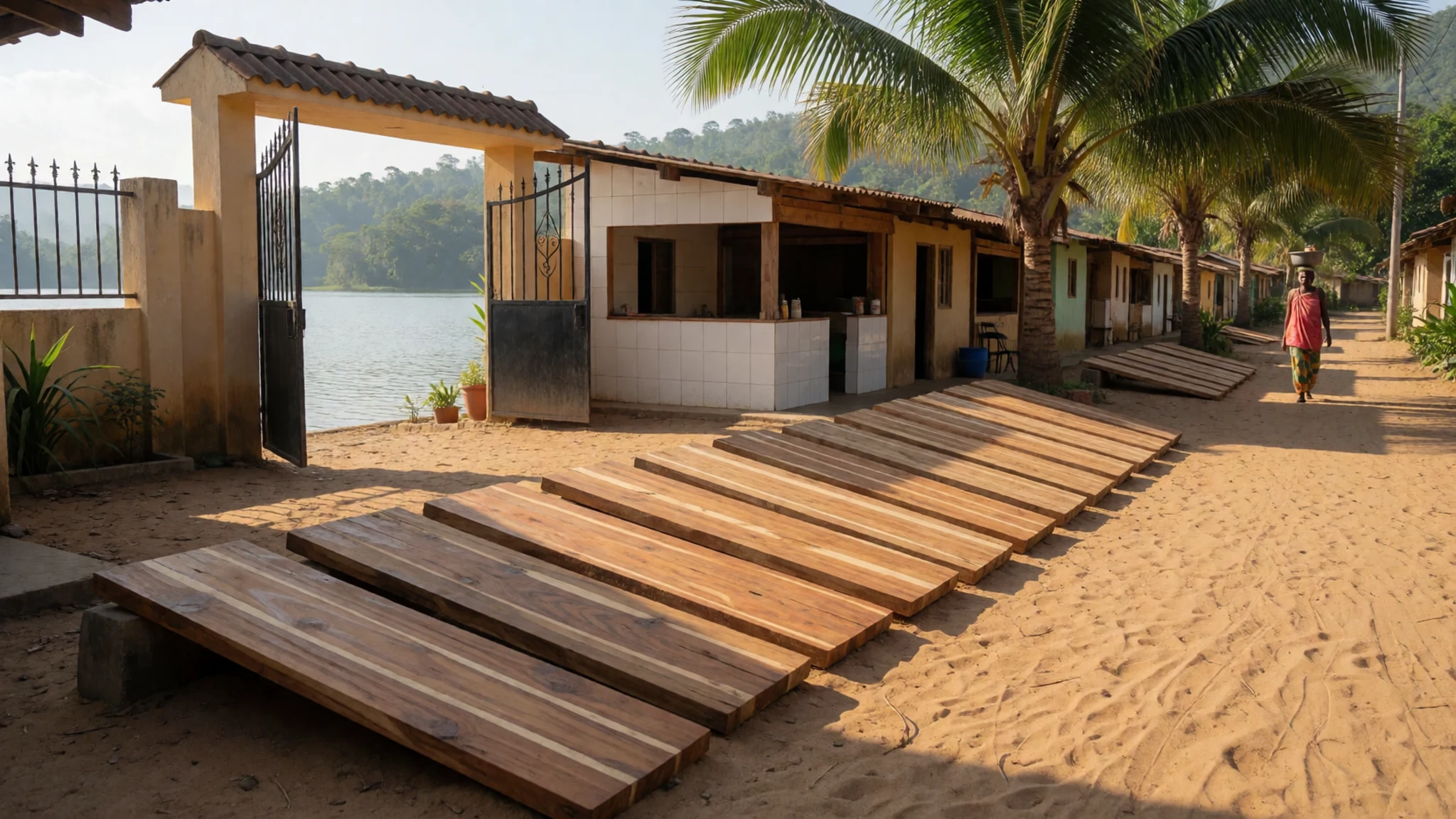
- Fishing from paduas — On the lake, off the Abono shore
Fishermen at Lake Bosumtwi sit on a flat wooden plank called a padua and paddle with their hands, keeping the water quiet out of respect for the lake spirit. Watching them cast lines from a distance is a calm pleasure. Ask before photographing, and remember that Sundays are the lake's day of rest.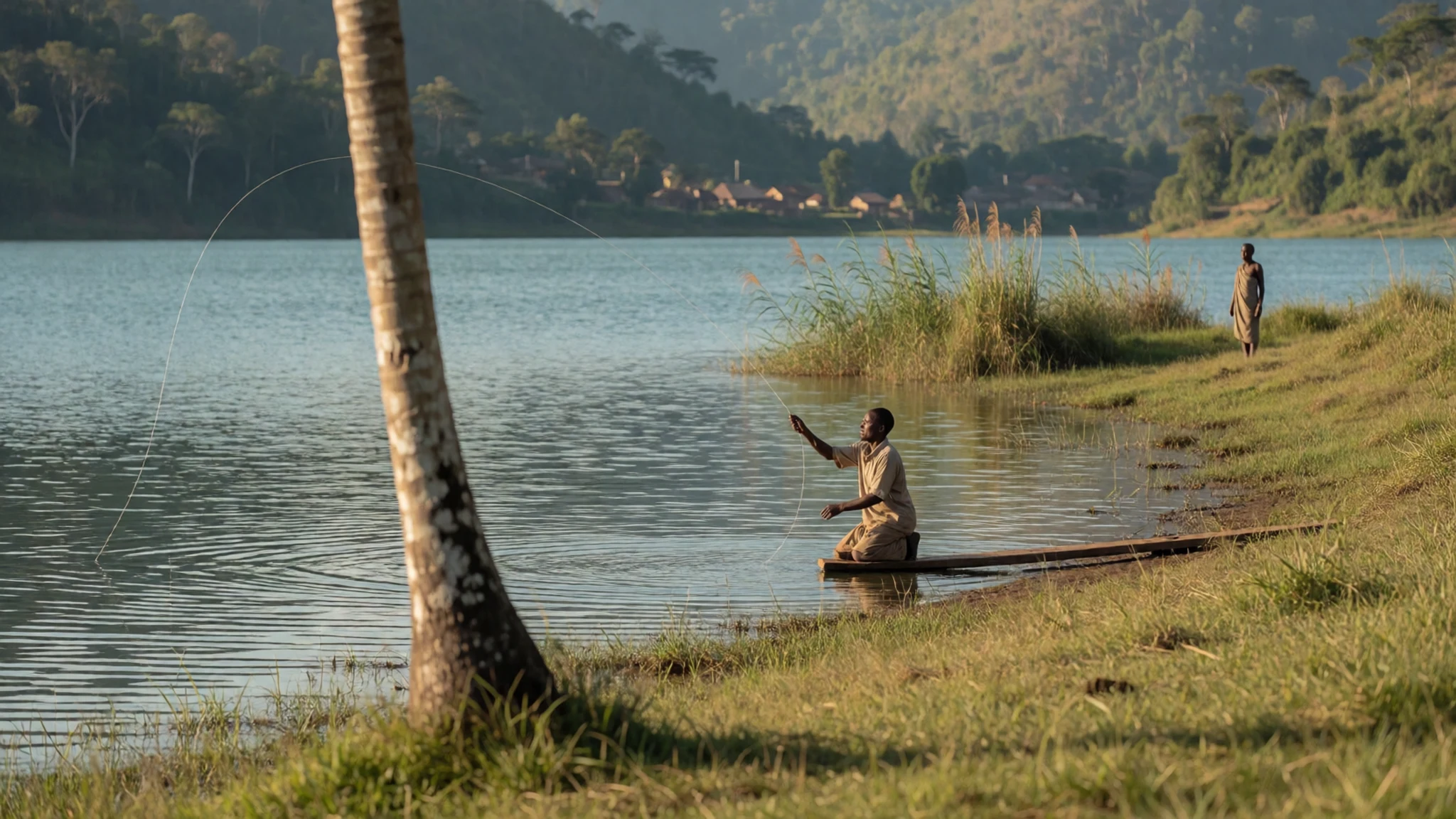
- A boat trip to the lakeside villages — Departing from Abono and the resort jetties
Guesthouses can arrange boat trips to villages around the lake, and freelance boatmen work from the Abono shore. Agree the route, duration and price before setting off, and ask about life jackets. Motors and metal craft are restricted in many parts of the water, so expect a gentle, unhurried outing.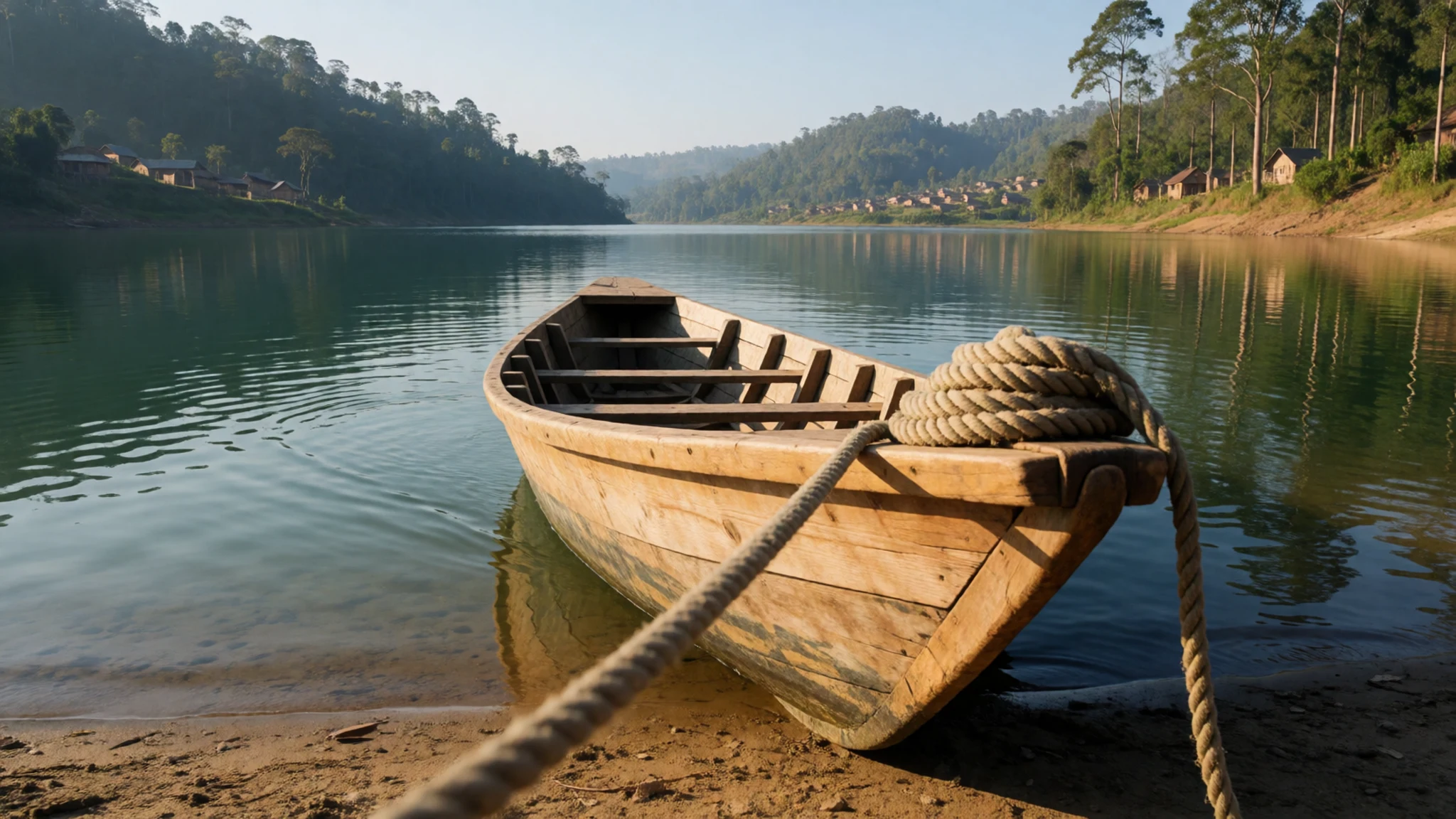
- Horse riding at Green Ranch — Lakeside hills near the resorts
Green Ranch offers horse rides through green hills and along the lakefront, which suits anyone who wants to see the crater from the saddle rather than the road. Book ahead through the ranch or your lodging, and ride in the cooler morning hours. The ranch also serves vegetarian food.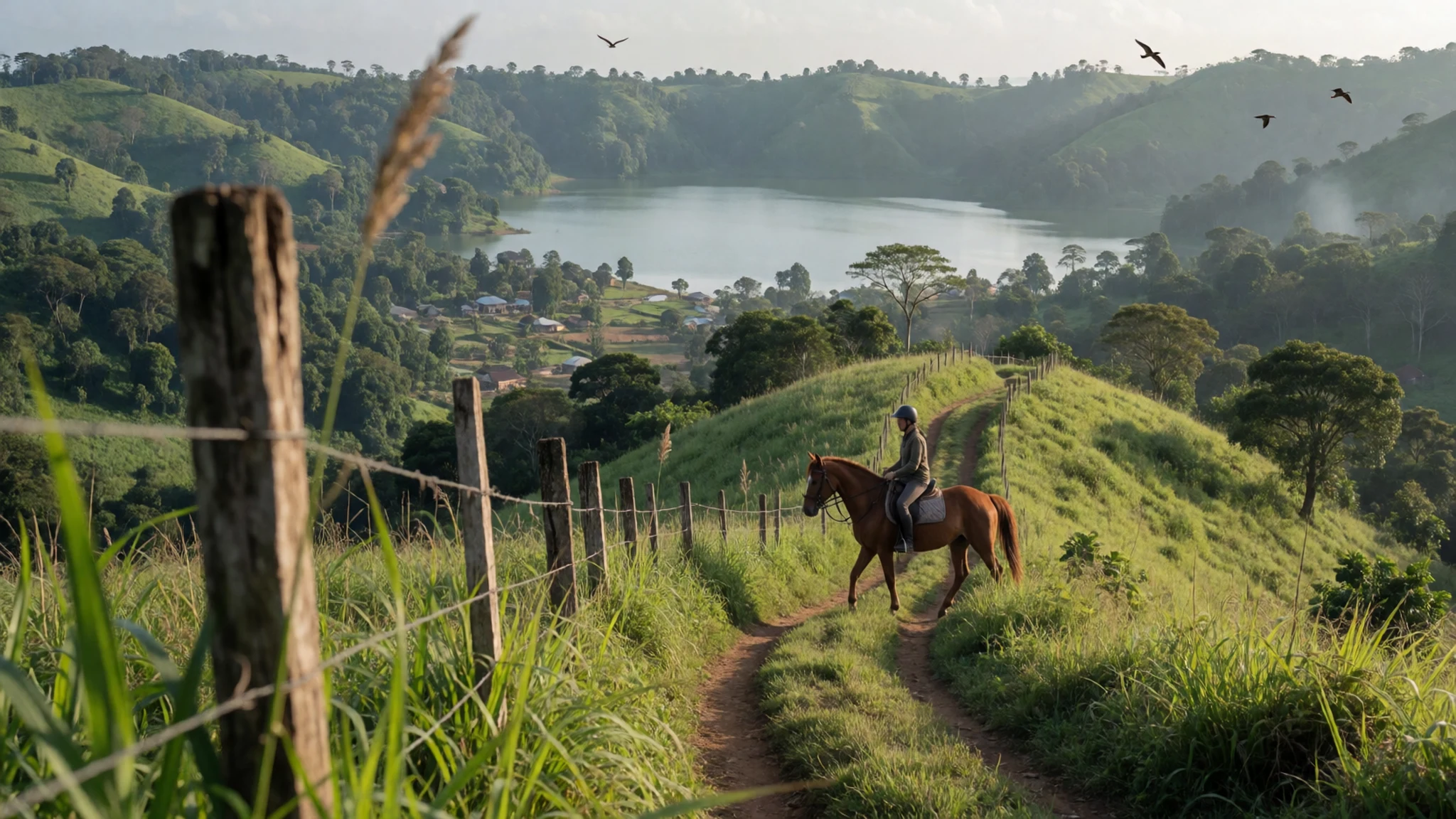
Culture
Lake Bosumtwi is sacred to the Ashanti, and that shapes daily life on its shore. According to tradition, the souls of the dead come to the lake to take leave of the goddess Asase Ya, so the water is treated as a place of spirits, not simply scenery. Fishing is permitted only from wooden planks, and in many stretches metal boats, engines and nets are not welcome. Fishermen paddle by hand so that noise does not disturb the spirit. Sundays are regarded as the lake's Sabbath, a day of rest for the water. The villages around the crater are Ashanti communities with their own chiefs, elders and festivals, and the lake runs through local naming, stories and ceremonies. The name itself, Bosomtwe, is read as 'antelope god', tied to the hunter's tale of the antelope and the pond. Local guides are used to curious visitors and tend to answer questions politely asked with patience and a good story; those who arrive with loud music or fast boats get a cooler welcome. Science and belief are not treated as rivals here, and nobody will mind if a visitor wants to hear both versions of how the lake began. Quiet is part of the etiquette of the place. Ask permission before photographing people or any ceremony, keep voices low at the water's edge, and do not use motors or metal boats on the lake unless your host confirms it is allowed.
What to wear
Around Lake Bosumtwi, traditional Ashanti dress centres on kente, a strip-woven cloth of cotton or silk made in nearby weaving towns such as Bonwire and Adanwomase. Men wear it draped over one shoulder like a large toga, women as a wrapped cloth with a fitted blouse. Adinkra cloth, stamped with symbols, is common at funerals and formal gatherings. Kente appears at festivals, weddings, naming ceremonies and chiefly occasions rather than in daily life. On the lake shore, everyday clothes follow heat and work: T-shirts, shorts, printed cotton dresses and sandals, with fishermen in light, quick-drying clothes. On Sundays and for church or family events, smart outfits and bright wax-print fabrics are common. Visitors should pack light cotton or linen, a wide-brimmed hat, sunglasses and high-factor sunscreen, since the beaches offer little shade. Closed shoes or sturdy trainers help on the steep rim paths, and sandals are fine at the water. Swimwear suits the resort swimming areas, but cover shoulders and knees when walking through villages, and dress more formally if invited to a church service or funeral. A light rain jacket is useful in the wetter months.
What to eat
- Fresh lake tilapia — Lakeside resort restaurants and eateries at Abono
Tilapia, including the lake's own busumana, is the local catch, usually grilled or fried whole and served with pepper sauce. Order it at a lakeside restaurant where the fish arrives the same day, and ask how it is cooked before choosing.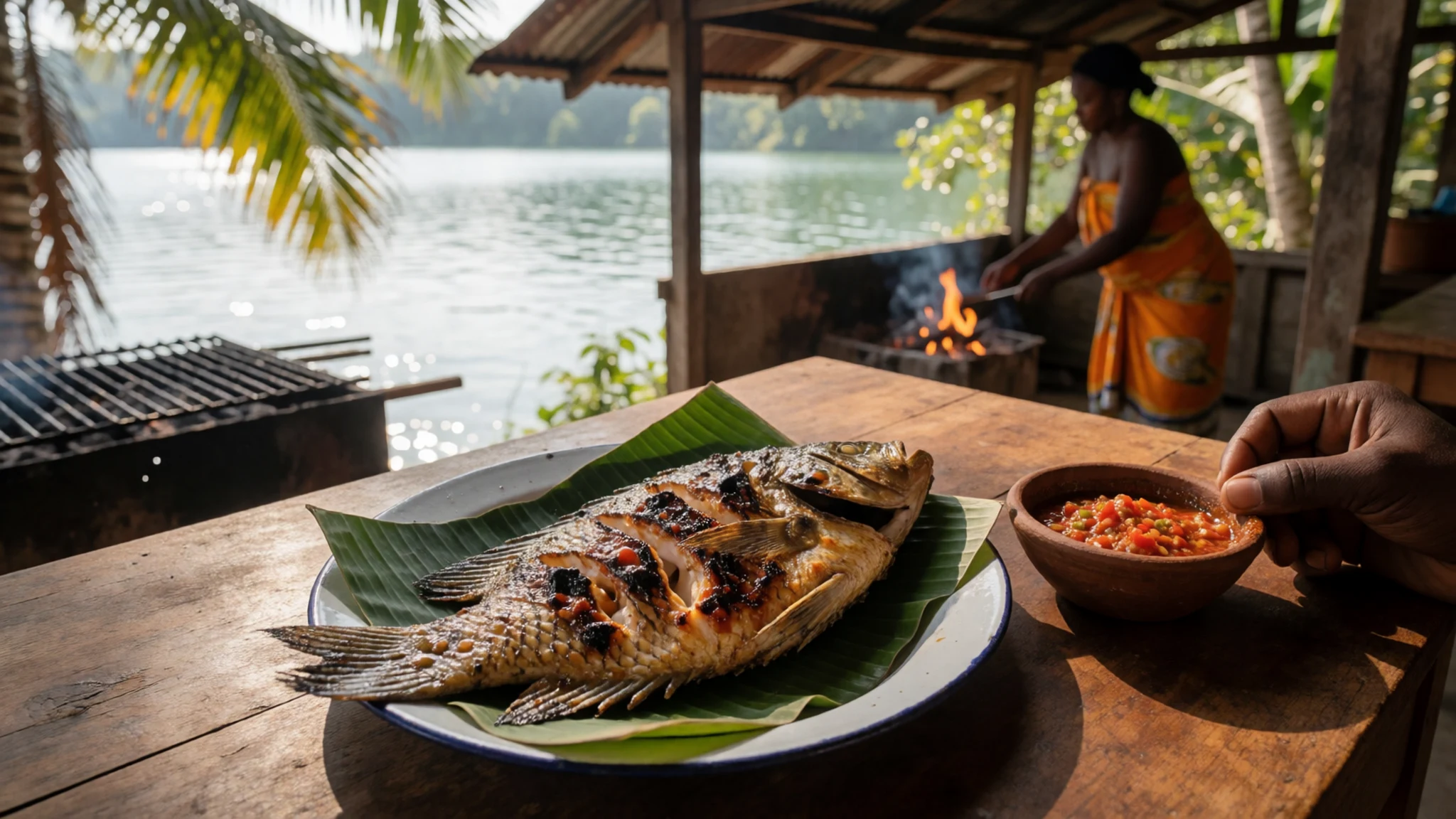
- Banku — Lakeside restaurants and village chop bars
Banku is a smooth, slightly sour dough of fermented maize and cassava, stirred until stretchy and eaten with the fingers of the right hand. It is the usual partner for grilled tilapia and a spicy tomato and onion relish.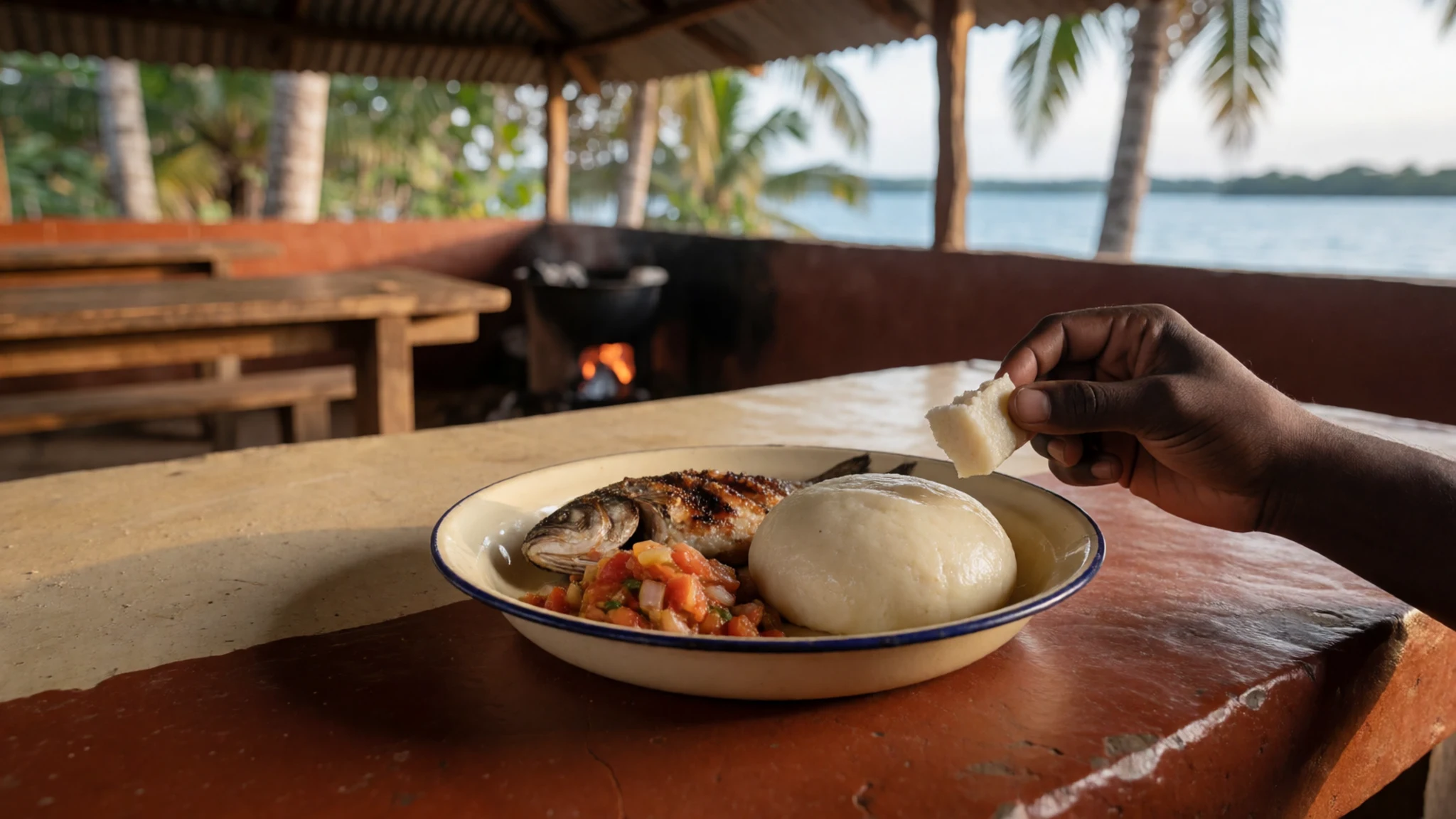
- Jollof rice — Resort dining rooms and roadside eateries
Jollof rice is West Africa's celebrated one-pot dish, rice cooked in a spiced tomato base, often served with fish, chicken or fried plantain. Versions differ from cook to cook, so a plate at a village eatery will taste different from a resort one. - Fufu with light soup — Eateries in Kumasi, on the way to or from the lake
Fufu is a soft, pounded dough of cassava and plantain, swallowed in small pieces with a peppery soup of fish or meat. It is the Ashanti region's signature meal, and Kumasi's eateries are the best place to try it. - Vegetarian plates — Green Ranch and eco-minded lodges near the shore
Green Ranch is noted for vegetarian cooking in an eco-friendly setting, a useful option when lakeside menus lean towards fish and meat. Expect vegetables, beans, plantain and rice, prepared with fresh local produce.
Plan it
Best time. November to February is the drier stretch, with easier roads and clearer views from the rim, though the harmattan can bring haze in the middle of it. April to July and September to October are the rainy months, when tracks turn muddy and skies are cloudy but the hills are greenest.
How long. 1–2
Getting there. Fly to Kotoka International Airport in Accra, then continue to Kumasi by road or domestic flight. From Kumasi it is about an hour by car or taxi on the Lake Road to Abono. Budget travellers can take a tro-tro from Atonsu Terminal or Ejisu Station towards Abono or Kuntanase, then a shared taxi down to the shore.
Budget. mid
Tips
- Agree the taxi fare before you set off from Kumasi, and carry cash in small notes for tro-tros and boatmen
- An entrance charge is collected at the crater checkpoint, so check the current amount locally
- There are no professional lifeguards, so swim only at the resort swimming areas and stay close to shore
- Arrange guides and boat trips through your lodge rather than with touts at the Abono entrance
- Come early in the day for cooler air, better light and the most fishermen on the water
Etiquette
- Ask before photographing people or ceremonies
- Do not use motors or metal boats on the lake unless your host confirms it is allowed
- Keep noise low near the water and treat Sundays as the lake's day of rest
Nearby
Sources
- Wikidata Q894613 (CC0)
- Wikipedia: Lake Bosumtwi (rev 1373908471) (CC BY-SA 4.0)
- Wikivoyage: Lake Bosomtwi (rev 5305119) (CC BY-SA 4.0)
- Photo: Bosumtwi Worldwind SW (User:Vesta) (Public domain)
- Photo: An Explosive Beginning for Lake Bosumtwi (NASA Earth Observatory, Michala Garrison) (Public domain)
- Photo: Africa relief location map (Eric Gaba) (CC BY 3.0)
- Photo: Figure 2 PX of PDFs (Majerka13) (CC BY-SA 4.0)
- Photo: Lake Bosumtwi Panorama (Erik Cleves Kristensen) (CC BY 2.5)
- Photo: Adam Jones, Bosumtwi Ufer B002 (CC BY-SA 2.0)
- Photo: Boys on Launch, Lake Bosumtwe (Adam Jones) (CC BY-SA 2.0)
- Photo: Breathtaking afternoon at Lake Bosomtwe (Kradolferp) (CC BY-SA 4.0)


