Wli Falls
Wli Falls, Ghana
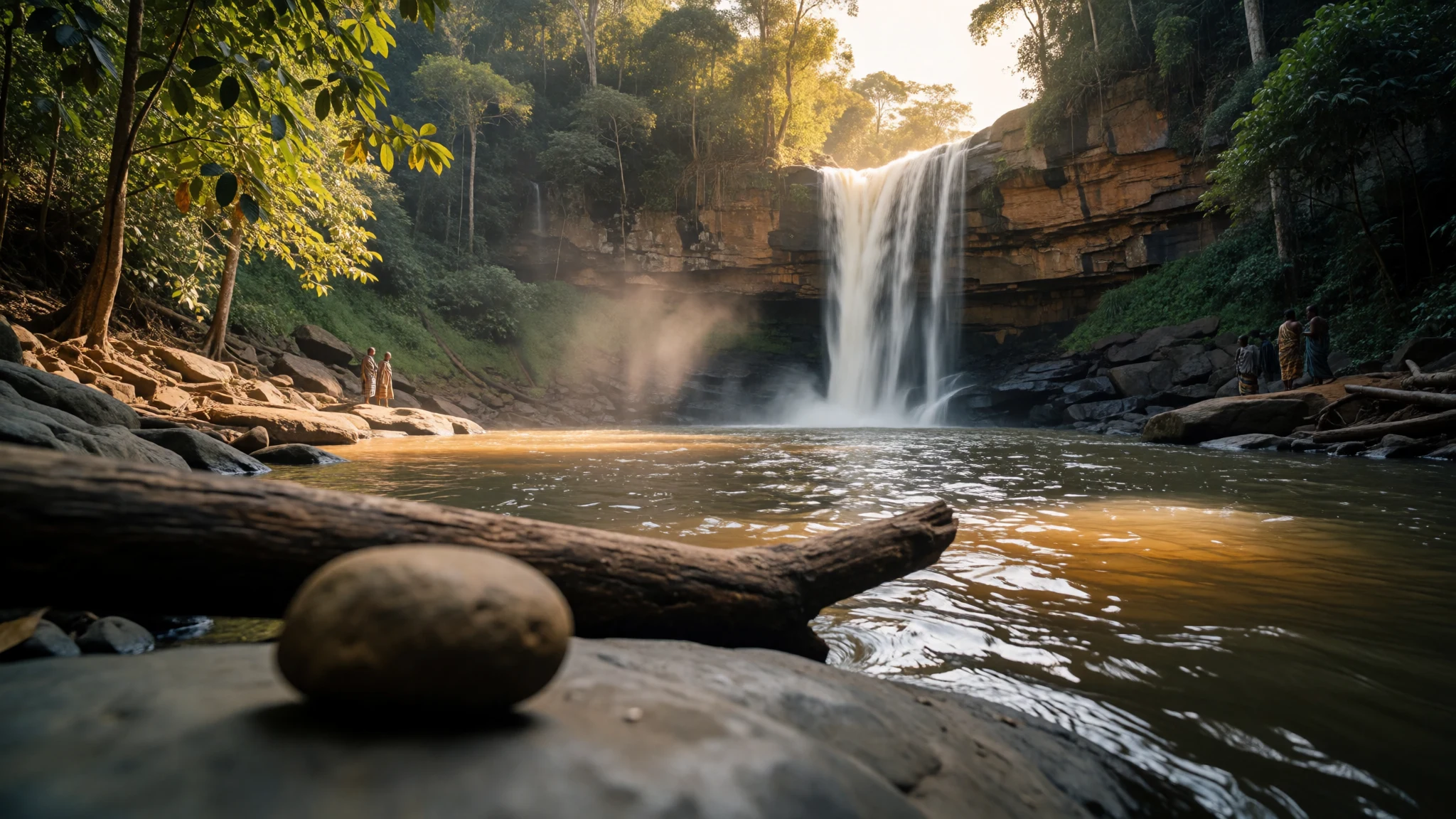
Wli Falls is Ghana's highest waterfall, a forest walk from Hohoe to a roaring pool, with a harder climb to a second fall above.
The place
Wli Falls is the highest waterfall in Ghana, and Wikipedia's account calls it the tallest in West Africa as well. It lies in the Hohoe municipality of the Volta Region, about 20 km from the town of Hohoe and some 280 km from Accra, so it is a proper day's journey from the capital rather than a quick detour. The water comes down the Agumatsa River in two stages, a lower fall and an upper fall, set in forest on a cliff of sandstone and shale. The lower fall is the easier one. A shaded walk through woodland ends at a wide pool where spray drifts across the rocks and people paddle at the edge. The upper fall is the harder prize: a longer, steeper climb of about two hours that ends at a taller drop and a quieter, more private feel. The flow changes with the seasons. From May to October the rains push the volume up and the roar carries a long way through the trees. From November to March the water runs clearer and the paths are drier and easier. Neither season is wrong, but they suit different people: the rains for force, the dry months for comfortable walking and swimming. Expect humidity, mud after storms and plenty of Ghanaian families at weekends and on holidays. Weekday mornings are noticeably calmer. Photographs from 2009 show a colony of bats in the forest nearby, numbering in the thousands.
Its story
Wli Falls is known locally as Agoomatsa, a name usually rendered as "Allow Me to Flow". The falls lie in the Hohoe municipality of Ghana's Volta Region, in Ewe country, and the river that feeds them is the Agumatsa. One story is told about how the place came to be known. A party of hunters moving through the forest heard a deep, rhythmic booming ahead and took it for a talking drum, the kind used in this part of West Africa to send messages between settlements. They hurried towards the sound, expecting to find people, and found only a river dropping off a cliff. A tale like this cannot be dated or checked, but it explains something real about the place, because the noise does carry far through the trees, particularly in the rainy months. The cliff itself is made of sandstone and shale and belongs to the Akwapim–Togo mountain range. Water cuts readily into layered rock of this kind, and the result here is a pair of falls, one above the other, rather than a single sheer drop. The river's strength follows the rains, so the falls are fullest and loudest between May and October and thinner from November to March. Today the site is a local attraction that draws visitors from Hohoe and beyond, and the walk in through the forest is as much a part of the visit as the water.
What to see
- The lower fall — Wli, near Hohoe
The lower fall is where most visitors stop, and it is the better choice for anyone short of time or energy. A forest path leads to a broad pool at the foot of the cliff. In the rainy months the spray soaks everyone standing near the water, so cameras and phones need protecting.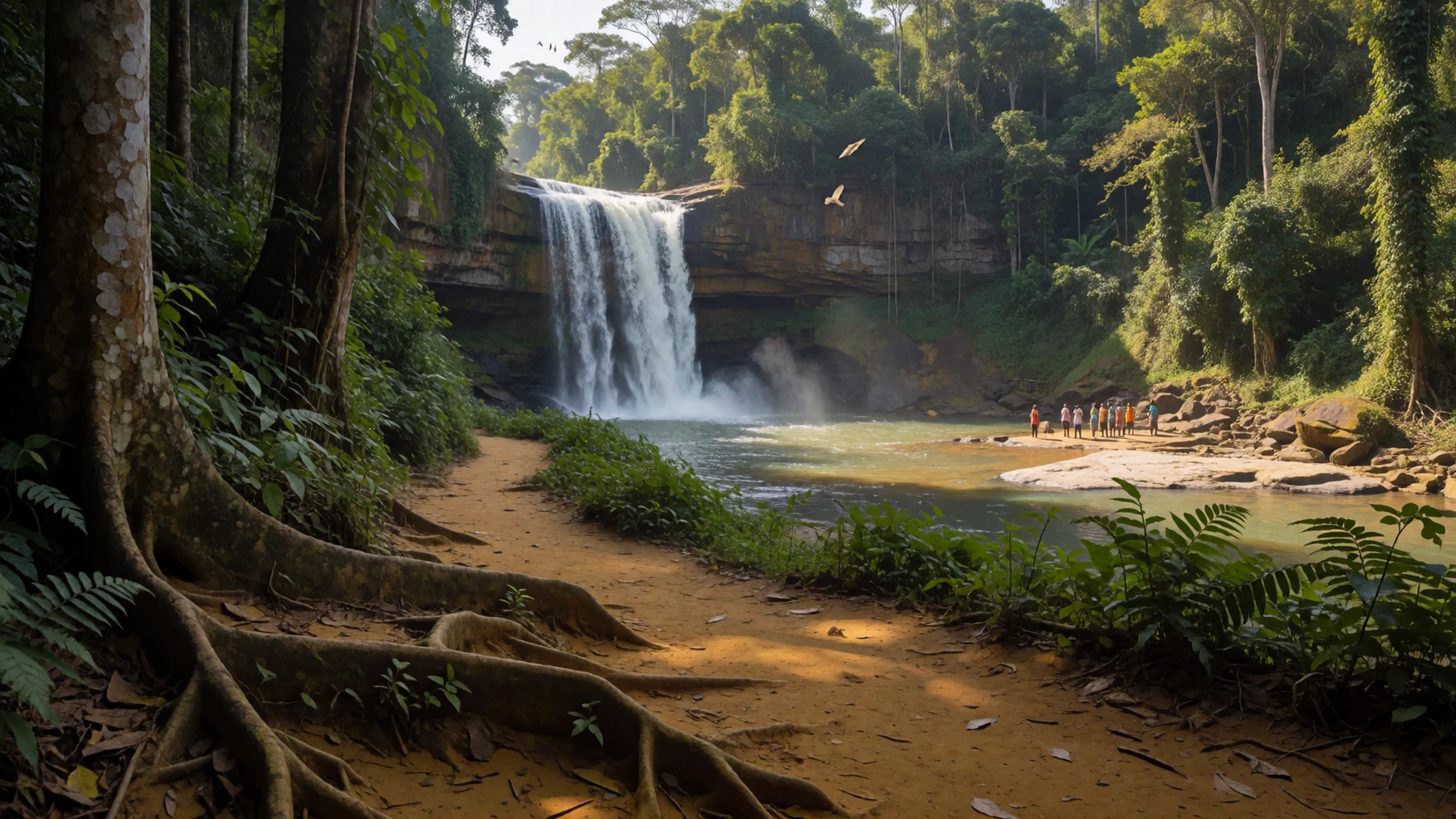
- Rocks and pool — Foot of the lower fall
Between the path and the water, large boulders are scattered along the river's edge, and they make natural seats for resting and watching the fall. The stone is slick wherever spray lands, so sturdy shoes with grip matter more than style. The pool is the usual place to paddle or swim in the dry months.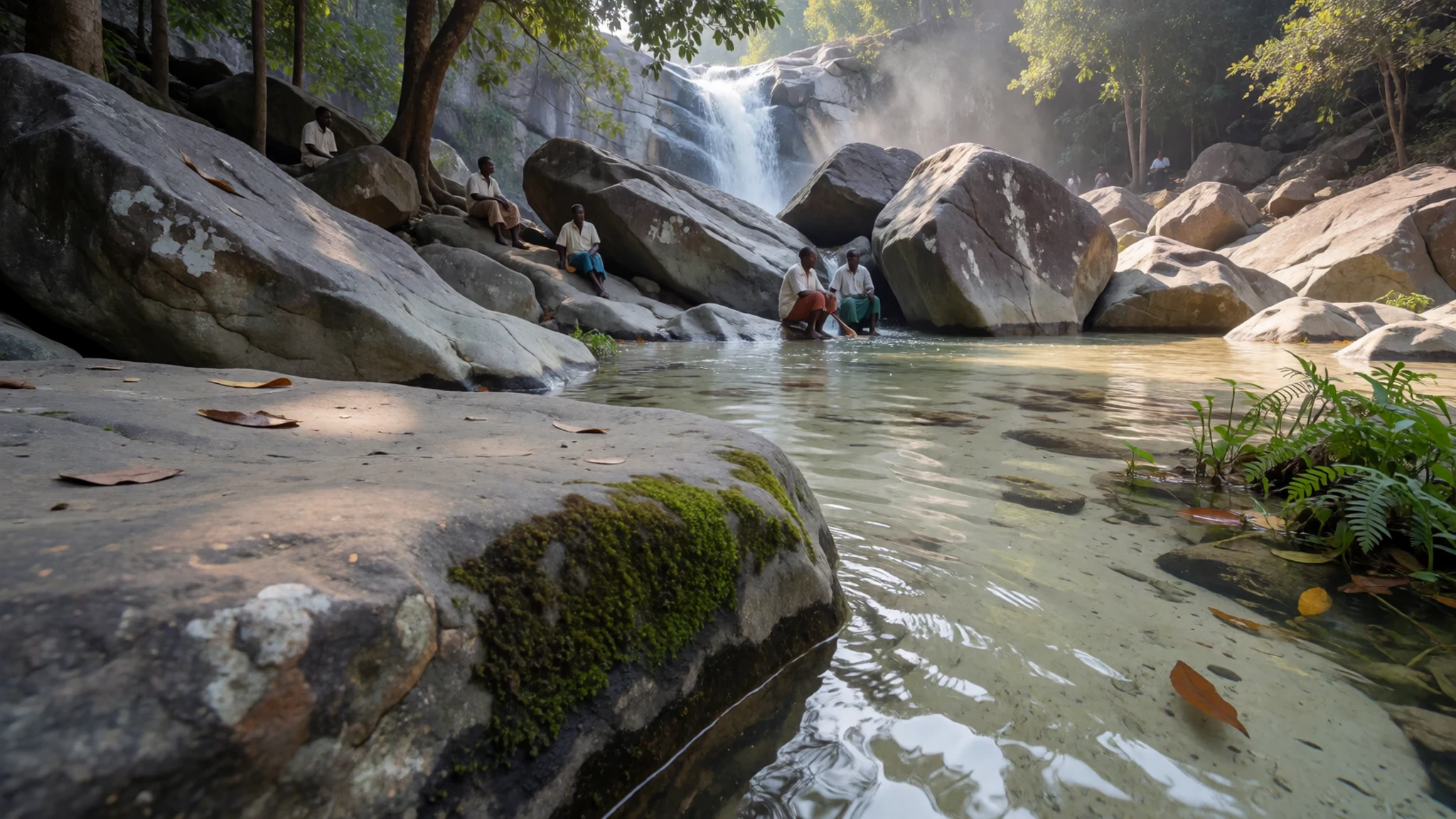
- The upper fall — Above the lower fall
The upper fall takes about two hours of walking, with a steeper and rougher final stretch than the route to the lower fall. Fewer people make the trip, so the pool is often quieter. The reward is a taller drop and a heavy shower of spray. Go with a guide and set off early.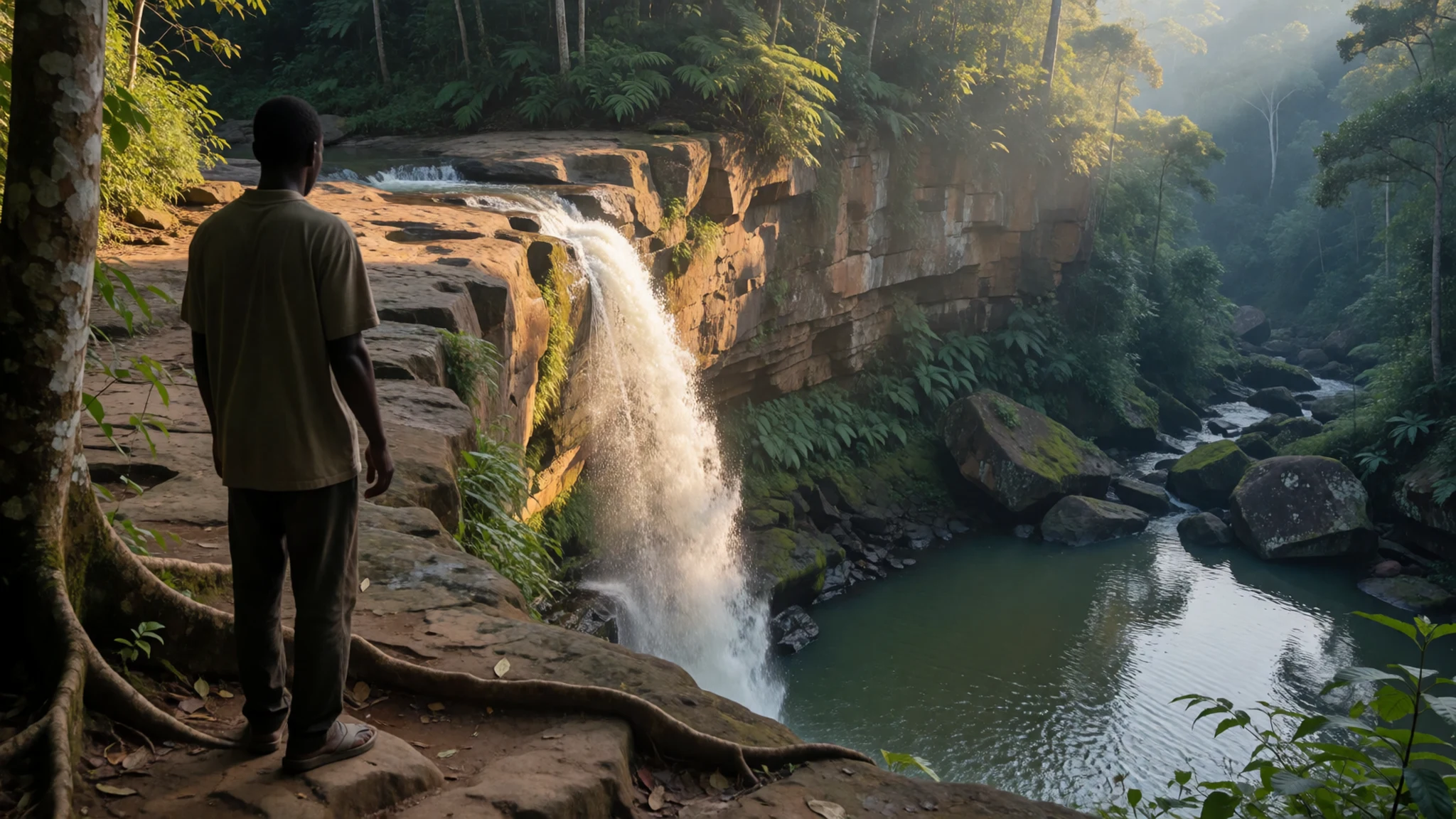
- The bat colony — Forest around the falls
Bats roost in the forest around the falls, and photographs from 2009 show them in the thousands. Whether they are visible depends on the season and the time of day, so treat them as a possible bonus rather than a promise. Ask the guide where they are currently roosting and keep noise low.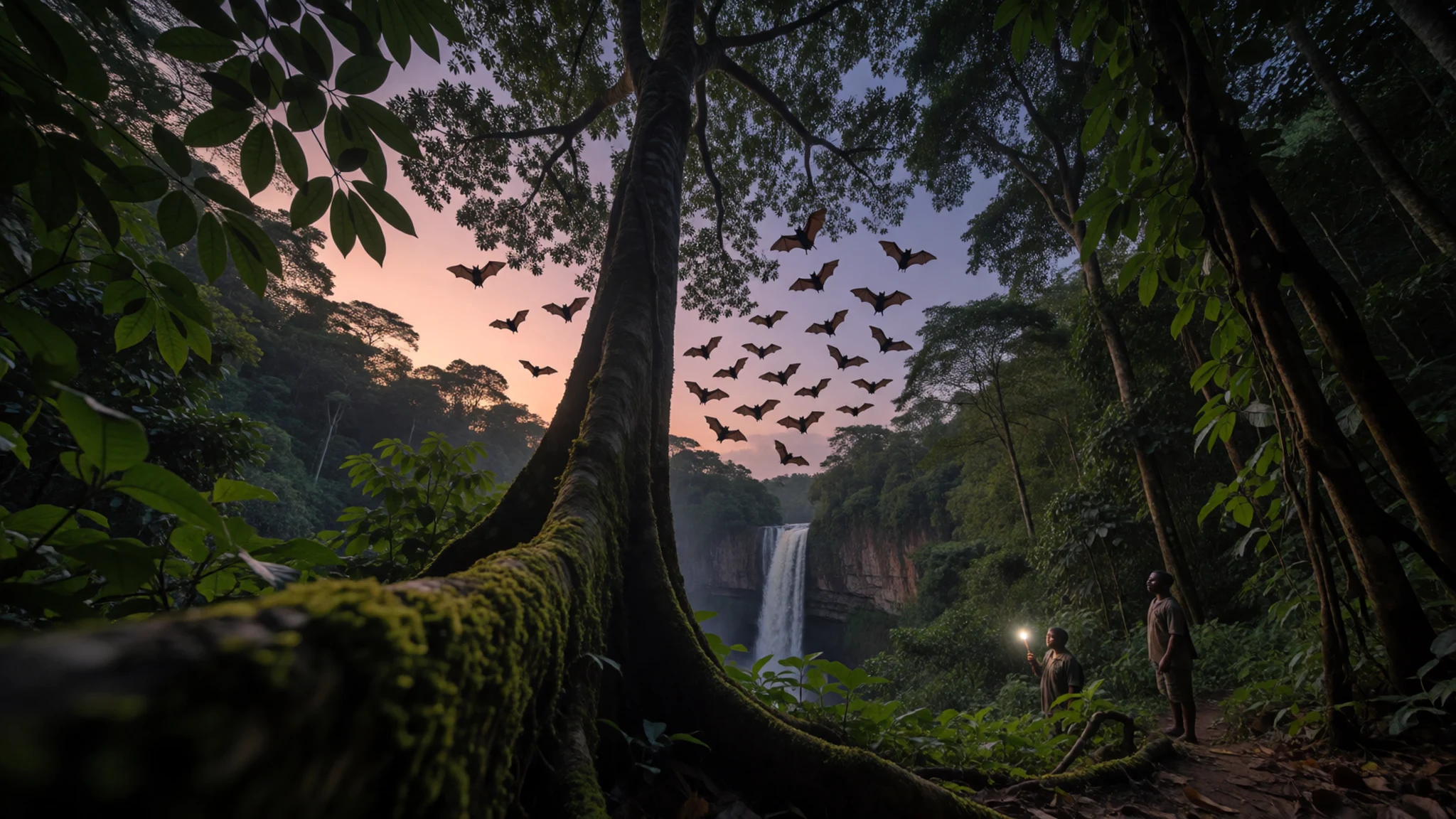
- Weekend crowds at the lower pool — Lower fall pool
At weekends and on public holidays the lower pool fills with families, school groups and day-trippers from across Ghana, and the atmosphere is closer to a village outing than a quiet nature walk. Anyone wanting empty views and photographs without crowds should arrive on a weekday morning.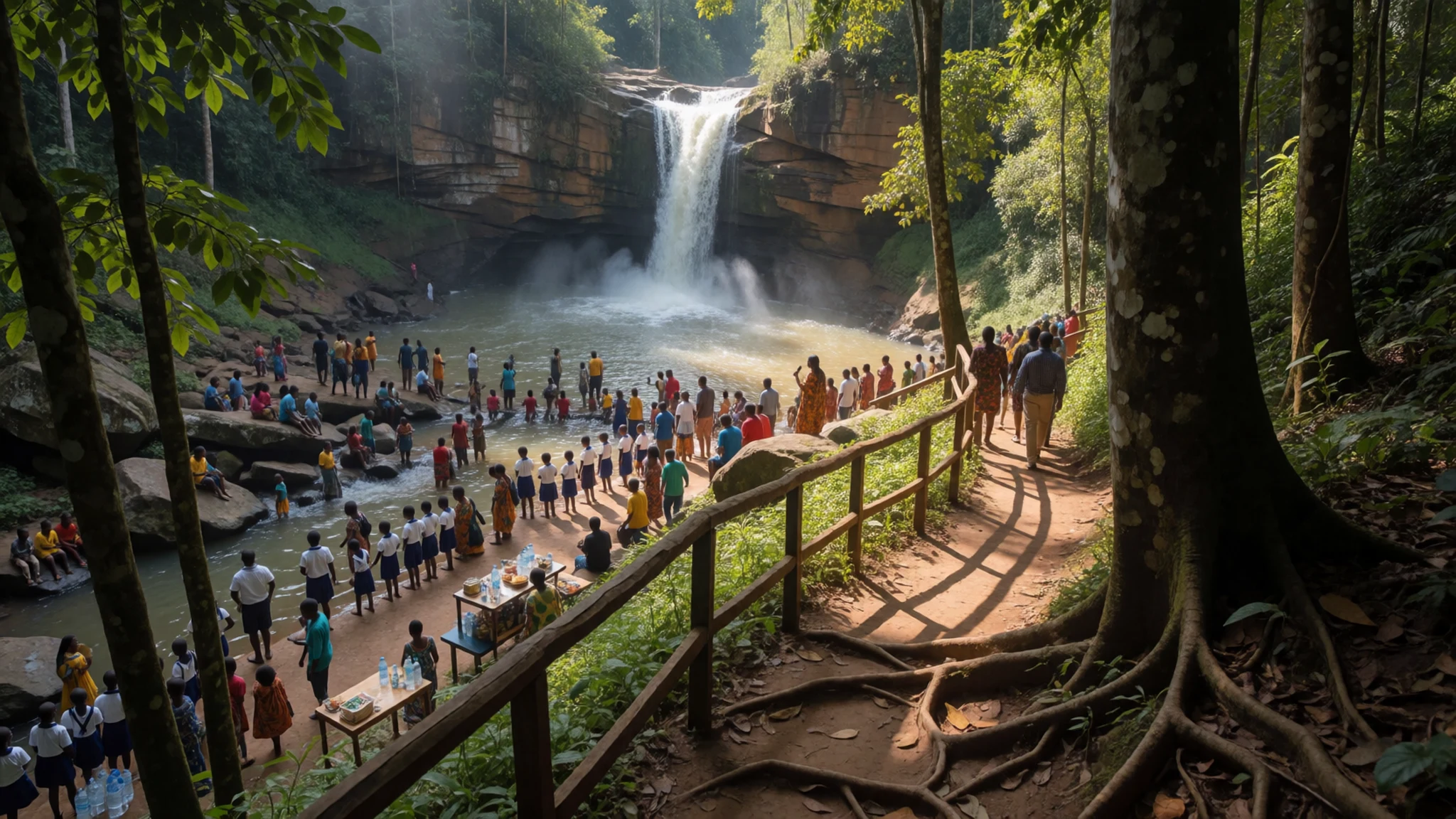
Culture
Wli Falls lies in the heartland of the Ewe people of the Volta Region, and the surrounding villages and the town of Hohoe carry that identity in language, music and dress. Ewe communities are widely known for drumming and dance, for weaving, and for the importance of chiefs and extended family in daily life. Funerals, festivals and church services are major social occasions, and they often bring out the best cloth and the loudest music. The falls themselves are a local asset as well as a visitor attraction, with guides and small traders drawn from nearby communities, so spending a little locally, whether on a guide, a drink or a snack, matters. Greetings carry real weight in Ghana. A visitor who arrives and launches straight into a request will be thought abrupt, while a proper hello, a handshake and a question about how someone is will change the tone of the whole exchange. The talking-drum tale attached to the falls reflects the same culture, since drums here were historically a way of carrying messages as well as making music. Visitors who show interest in these traditions, without treating them as a show, tend to be welcomed warmly. Greet your guide and anyone you pass in the village before asking for anything, use your right hand when giving or receiving money or food, and ask before photographing people.
What to wear
Wli Falls sits in Ewe country, where the best-known traditional textile is kente, a handwoven cloth made from narrow strips of cotton, sometimes mixed with silk or rayon, stitched together into a large rectangle. Ewe kente is known for bold geometric patterns, and it is draped over the body by men and women at weddings, funerals, festivals and other important occasions. Everyday clothing in Hohoe and the villages is much simpler. Men wear shirts and trousers or jeans, women often wear dresses or wrapped skirts in printed cotton, and football shirts are everywhere. On Sundays, church clothes are noticeably smarter and more colourful. A visitor going to the falls should dress for heat, humidity and rough ground. Quick-dry shorts or trousers and a light top work well, with swimwear underneath if a dip is planned, and a spare dry shirt for the journey back. Shoes need real grip, since trail sandals or lightweight hiking shoes are far safer than flip-flops on wet rock. In the rainy months, add a light waterproof, and in any season bring a hat and insect repellent. In Hohoe and the villages, covering shoulders and knees is the respectful norm, so a sarong or light shirt for the walk back is useful.
What to eat
- Akple with okro or fetri detsi soup — Local chop bars and eateries in Hohoe
Akple is a smooth, stiff dough of maize flour, eaten with the hands and dipped into a slippery okro soup or the leafy fetri detsi, often with fish. It is the classic Ewe meal and a good thing to try in the Volta Region.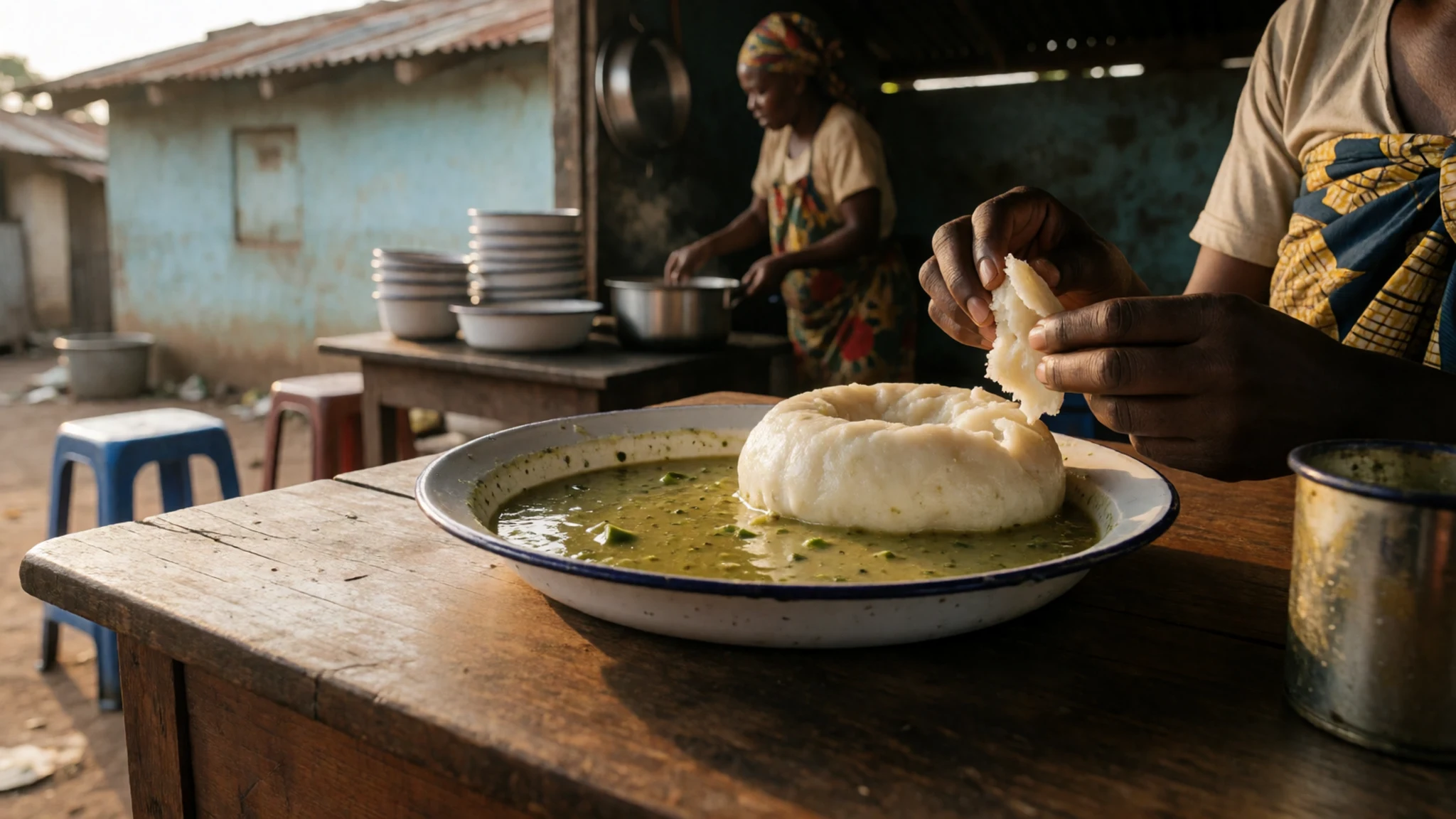
- Banku with grilled tilapia — Roadside grills and open-air eateries around Hohoe
Banku is a slightly sour dough of fermented maize and cassava. It is served with whole grilled tilapia, hot pepper sauce and sliced onion and tomato. Eaten with the fingers, it makes a filling lunch after the walk to the falls.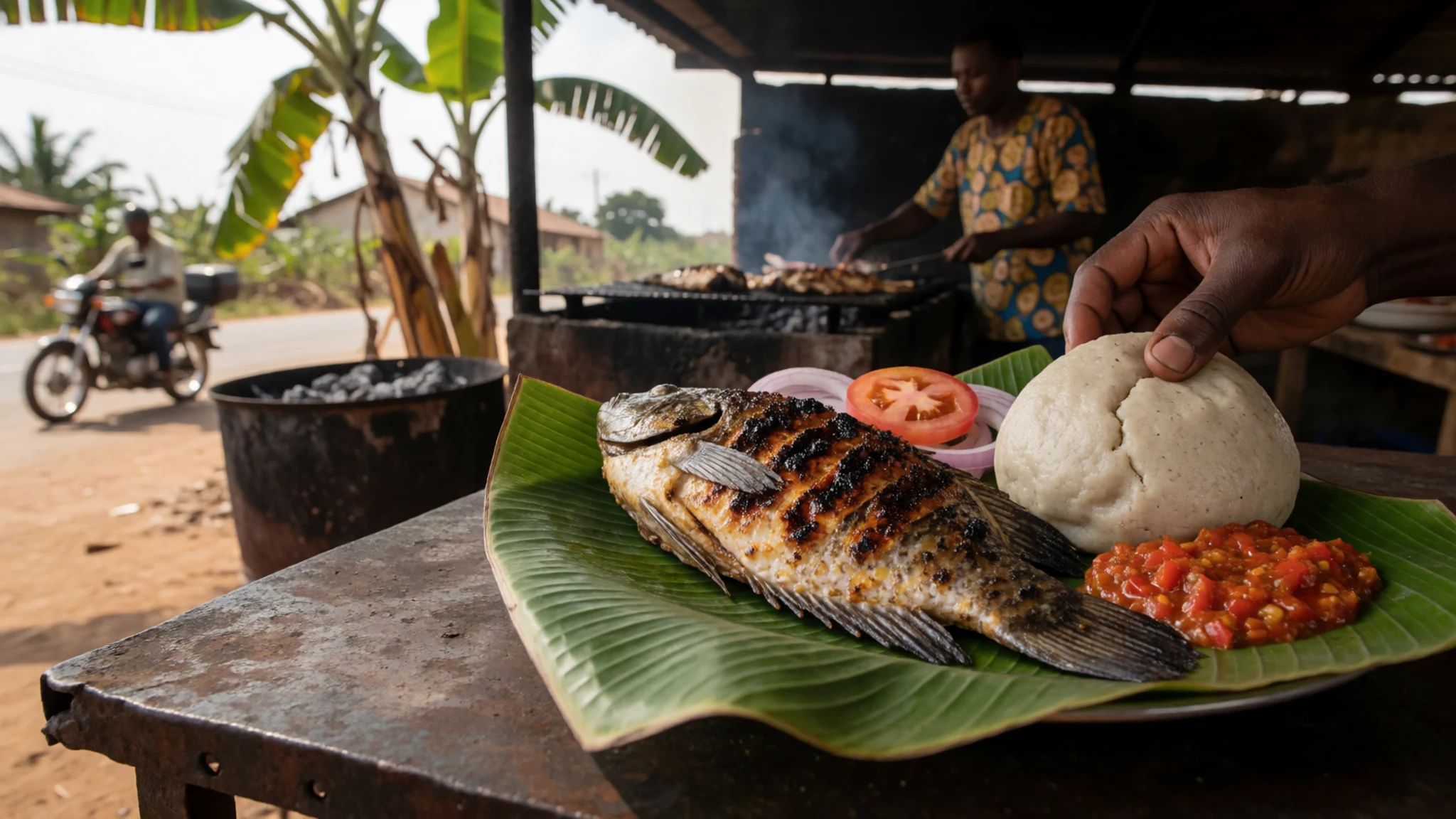
- Kenkey with fried fish and pepper — Market stalls and street vendors in Hohoe
Kenkey is fermented maize dough steamed in parcels, firm and tangy, and usually served with fried fish and a fiery tomato-and-chilli pepper sauce. It is cheap, portable and very common across southern Ghana. - Fufu with light soup — Chop bars in town, especially at midday
Fufu is pounded cassava and plantain shaped into a soft ball and eaten in a bowl of peppery broth with goat, chicken or fish. It is more a weekend treat than a quick snack, so allow time to sit and eat. - Kelewele — Evening street stalls in Hohoe
Kelewele is ripe plantain cubed, seasoned with ginger, chilli and spices, and fried until crisp outside and sweet within. It is an evening street snack, usually sold hot in paper or a bag, and good with roasted peanuts.
Plan it
Best time. November–March for drier paths, clearer water and easier walking. May–October brings heavier flow and a louder fall, but also mud, slippery rock and downpours.
How long. 1–2
Getting there. Fly to Kotoka International Airport in Accra, then travel by road to Hohoe (about 280 km) by bus, shared taxi or hired car. The last leg from Hohoe to the falls is about 20 km, normally by taxi or a pre-arranged driver.
Budget. low
Tips
- Start early, before the heat builds and before weekend crowds arrive.
- Hire a local guide at the entrance, especially for the longer climb to the upper fall.
- Carry cash for guide fees, small snacks and transport, and check official local sources for current charges.
- Bring drinking water, a dry bag for phones and a spare shirt, since spray soaks everything near the water.
- Allow a full day from Hohoe if walking to the upper fall, as rain can slow the path.
Etiquette
- Greet your guide and anyone you meet in the villages before asking for anything.
- Ask before photographing people, and keep noise low near the bat roosts.
- Take all litter away and keep to marked paths.
Nearby
Sources
- Wikidata Q15560122 (CC0)
- Wikipedia: Wli waterfalls (rev 1362228724) (CC BY-SA 4.0)
- Stig Nygaard, Wli Lower Fall-4 (CC BY 2.5)
- AbbeythanAnai, Wli tourists (CC BY-SA 4.0)
- Veennema, Bats at Wli Waterfall 2 (CC BY 3.0)
- Stig Nygaard, Wli Upper Fall-2 (CC BY 2.5)
- Blaq dynamite, A blend of huge rocks and water (CC BY-SA 4.0)
- Blaq dynamite, A glimpse at the Fall (Wli) (CC BY-SA 4.0)
- Stig Nygaard, A shower in the upper fall-1 (CC BY 2.5)
- Stig Nygaard, A shower in the upper fall-2 (CC BY 2.5)
- Wikivoyage (CC BY-SA 4.0)


Wildlife
- Straw-coloured fruit bat (animal)
Think of the straw-coloured fruit bat as a big, fruit-loving bat wearing a yellowish-brown coat, with a paler tawny belly. Photographs taken in 2009 showed a colony of thousands living in the forest near the falls, though the best season and time of day are not recorded. Because the species is Near Threatened and its numbers are falling, treat it gently: ask a local guide to lead you, keep well back, stay quiet, and never offer food.