Kumasi
Kumasi, Ghana
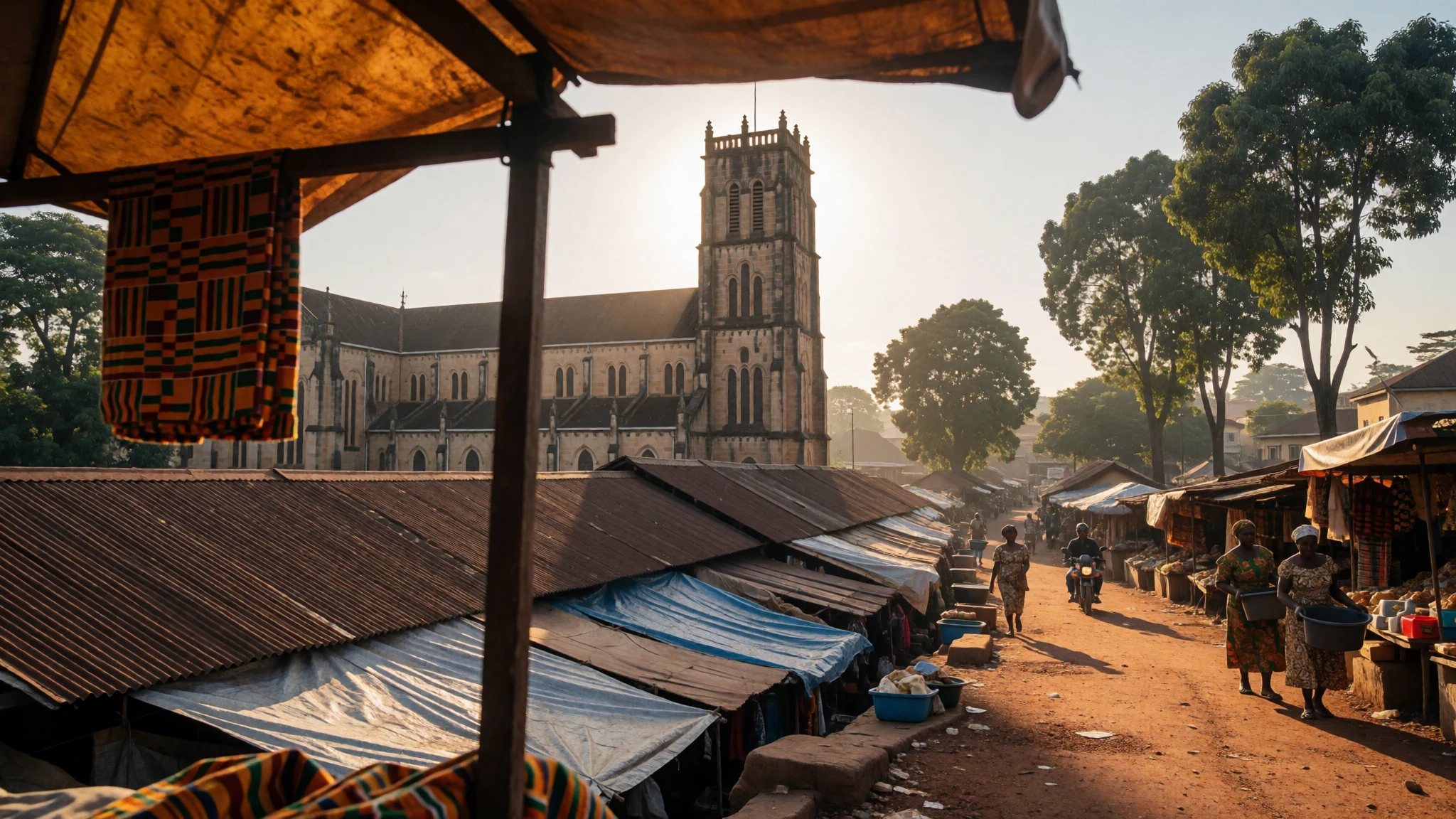
Kumasi is the living capital of the Asante: a humid, crowded market city where royal ceremony, kente weaving and fufu lunches share the same streets.
The place
Kumasi sits about 300 m above sea level in the forest belt of southern Ghana, and it is the capital of the Ashanti Region. The metropolitan area is home to about 3.9 million people, so this is a big, busy, traffic-clogged city rather than a quiet heritage town. Its nickname, the Garden City, goes back to a mid-twentieth-century planning vision and to the trees and green pockets that still run between the concrete. The climate is tropical, with two rainy seasons, so the air is humid for much of the year and heavy downpours can turn red-earth roadsides to mud within minutes. Roads from across the country meet here, and the cocoa farms of the surrounding hinterland feed the local economy, which is why Kumasi feels like a place where trade comes first and sightseeing second. It is also the seat of the Asantehene, the Asante king, so royal protocol and everyday commerce share the same pavements. Most residents are Asante, with Dagomba, Mole-Dagbon and Ewe communities alongside. Lake Bosomtwe, a crater lake, lies within a short drive and makes an easy escape from the noise. Honest expectations help: heat by midday, minibus and motorbike traffic, and dense crowds around the central market district. The rewards are in the details, such as a loom in a back room, a stall of printed cloth, a palace courtyard, or a bowl of soup shared with strangers.
Its story
The name Kumasi comes from the Twi Kumase, "under the kum tree". Tradition ties it to Okomfo Anokye, the priest and adviser who worked alongside the first Asante ruler, Osei Tutu. According to the most widely told version, he planted kum seeds at two sites and decreed that the one that thrived would become the capital. Kumasi's seed grew. Other oral accounts credit different rulers with striking the original land bargain, and the city's founders are remembered in more than one way. The facts record 1680 as the founding date. The settlement climbed the eastern slope of a ridge above marshy streams, and from here the Asante Empire governed territory that stretched across much of present-day Ghana and into Ivory Coast. Gold, trade routes and military organisation underpinned that power, and the golden stool became the empire's sacred symbol of unity. In the late nineteenth century the British took control of Kumasi, and the burning of the town in 1874, drawn by a visiting artist for a London newspaper, shows how it was seen from outside. Roads and a railway followed, and the population grew quickly. The city passed into the Gold Coast colony and then into independent Ghana. Through all of it the Asantehene's court survived, which is why Kumasi still feels like a capital with a living throne rather than a museum of one.
What to see
- Manhyia Palace Museum — Manhyia, northern Kumasi
Manhyia Palace is the former residence of the Asantehene, now a museum in Kumasi. Guided tours cover royal regalia, photographs and the story of the Asante court. It works as a good first stop because the guides explain symbols you will later spot around town. Check opening times and fees with the museum before going.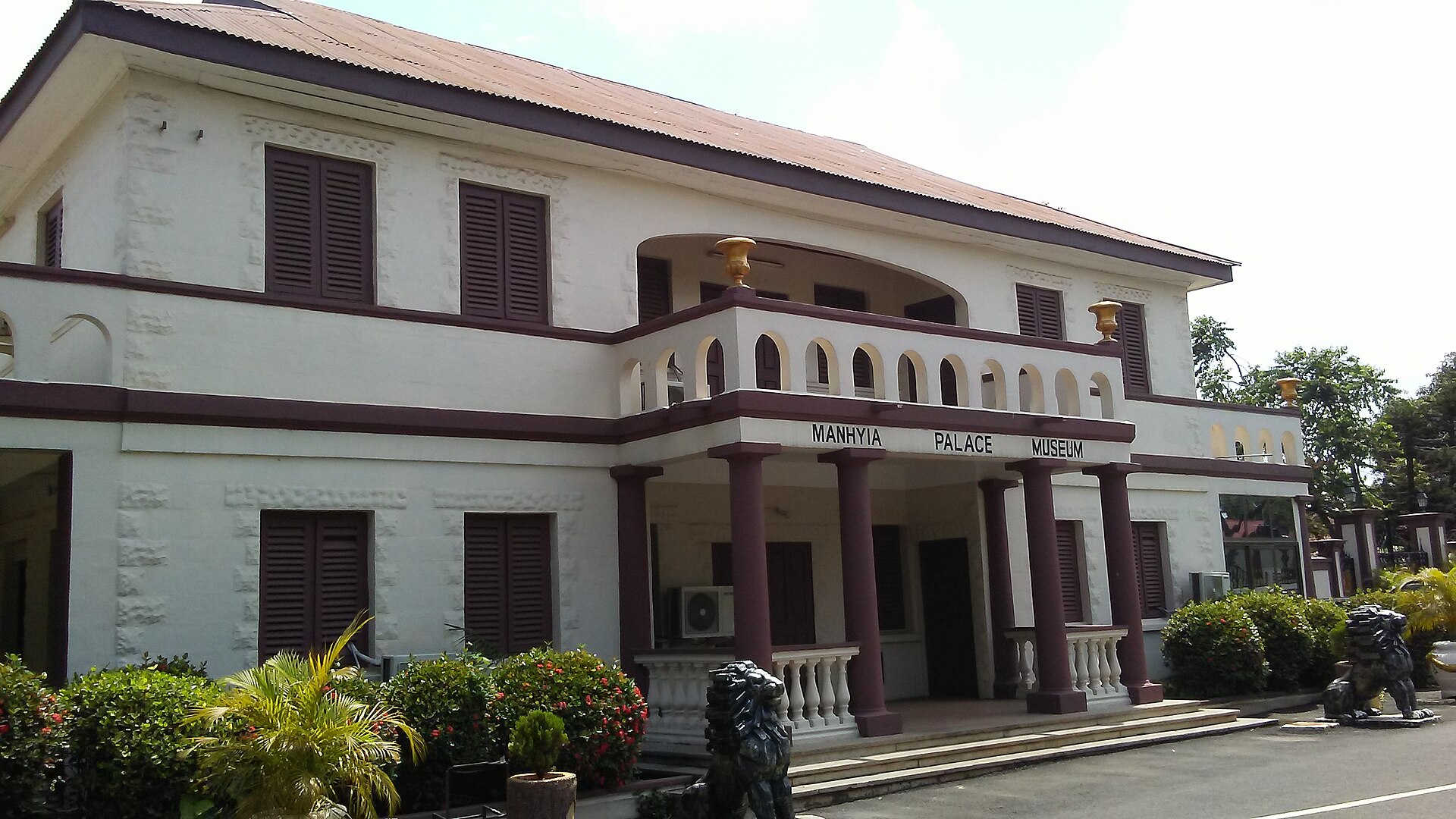
- Kejetia Market — Central Kumasi
Kejetia is billed as the largest market in West Africa, and it feels like it: lanes of cloth, kitchenware, spices, secondhand clothes and cooked food stacked into a maze. Go early, keep bags zipped in front of you, and expect pickpockets. Hire a local guide if navigating alone sounds draining. - Okomfo Anokye Sword Site — Central Kumasi
A small, quiet site marks the legendary spot where Okomfo Anokye drove a sword into the ground, and where the sword is said to remain fixed. It takes little time but gives the foundation story a physical place. Treat it respectfully, since many Asante regard the sword with real reverence. - Fort Kumasi and the Armed Forces Museum — Central Kumasi
The colonial-era fort replaced an earlier Asante fort and now houses a military museum. Displays include uniforms, weapons and an aircraft outdoors, with a view of how the British saw their role in the region. It pairs well with the palace for a half-day on Asante history.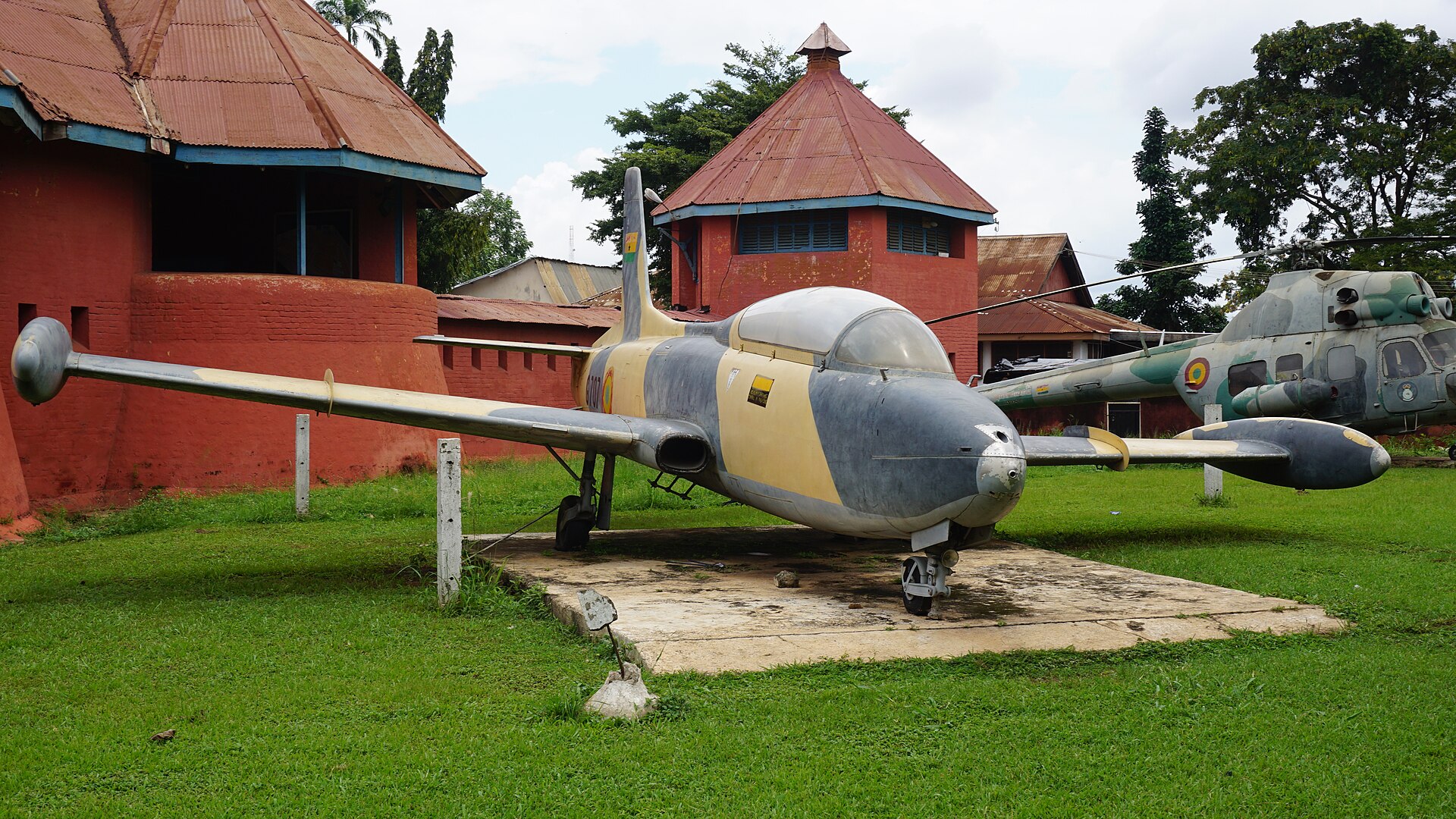
- St Peter's Cathedral — Next to Kejetia Market
St Peter's is a church landmark beside the market, a calm contrast to the shouting and horns just outside. It is worth a short stop to look at the building and watch the neighbourhood from its edge. Dress modestly and keep voices low if a service is under way.
Culture
Kumasi is the centre of Asante culture, sometimes called Oseikrom, and the throne is the organising idea behind much of it. The Asantehene's court still holds ceremonies, settles disputes and anchors the festival calendar, while the golden stool stands for the unity of the people rather than the power of any one ruler. Cultural life shows in smaller things too: proverbs used in everyday talk, drumming and horn music at funerals and festivals, and symbols such as adinkra stamps, each carrying a short saying. Kente weaving is the city's best-known craft, and the Centre for National Culture gathers regalia, craft demonstrations and a reproduction of the golden stool in one place. Funerals here are large community events as much as private grief, often held at weekends, with families in matching dark red or black cloth and crowds spilling into the road. Greetings matter: people expect a proper hello and a question about your day before any business or request. Elders are addressed with deference, and use of the right hand for giving and receiving is a quiet habit worth copying. Religion is lively and public, with Christian, Muslim and traditional practices all visible. Visitors are welcomed warmly when they show interest rather than just point cameras. Always ask permission before photographing people, shrines, funerals or palace staff, and use your right hand when greeting, paying or receiving anything.
What to wear
Kumasi's traditional dress is built on cloth. Kente is the famous one: narrow strips of silk or cotton woven on a horizontal loom, then sewn edge to edge into bold geometric panels. It is worn draped over the shoulder at weddings, naming ceremonies, festivals and by chiefs at court, and each pattern carries a name and meaning. Adinkra cloth is printed with carved stamps and dye, and is chosen especially for funerals, when families wear dark red, brown or black. Weaving and printing villages sit within reach of the city, and the market sells cheaper machine-printed copies as well, so ask what is hand-made. Day to day, most people dress smartly and practically: tailored shirts and dresses in bright wax-print fabrics, office wear on weekdays, jeans and trainers among the young, and church clothes on Sundays. Seamstresses and tailors work everywhere, so many outfits are made to measure. A visitor should plan for heat and humidity with light cotton or linen, closed shoes or sturdy sandals for broken pavements and muddy lanes after rain, and a compact umbrella or rain jacket. Cover shoulders and knees for churches, palace visits and funerals, and avoid wearing all black or all red to a celebration, since those colours signal mourning. A small cloth or scarf is handy for sun, dust and modesty. Buying fabric and having a shirt made is an easy souvenir.
What to eat
- Fufu with light soup — Any local chop bar, especially at midday
Pounded cassava and plantain, shaped into a smooth ball and served in a peppery broth with goat, chicken or fish. Eaten by hand: pinch, dip, swallow without chewing. It is the classic Kumasi lunch and is filling. - Banku with grilled tilapia — Roadside grills and open-air eateries in the evening
Fermented corn and cassava dough with a sour tang, served with whole grilled fish, hot pepper sauce, onion and tomato. It is messy and sociable, and the pepper is genuinely strong. - Jollof rice — Restaurants and street food stalls across the city
Rice cooked in a spiced tomato base, served with chicken, fried plantain or salad. Ghanaians take pride in their version and debate it with neighbours. It is a safe, reliable choice if you want something familiar. - Waakye — Street vendors near markets and bus stops, mornings
Rice and beans cooked with sorghum leaves, giving a deep reddish-brown colour. Served with spaghetti, boiled egg, stew, gari and shito pepper sauce, usually in a leaf-lined bowl. A common breakfast and lunch. - Kelewele — Street corners and roadside stalls after dark
Ripe plantain cubes tossed in ginger, chilli and spices, then deep-fried until sticky and caramelised. Sold in paper cones as an evening snack, often with roasted groundnuts. Sweet, hot and addictive.
Plan it
Best time. November to February is the drier stretch and the most comfortable for walking, though December to February brings dusty harmattan haze. Kumasi has two rainy seasons, so expect heavy showers around May to July and again in autumn, and humidity most of the year.
How long. 2–3
Getting there. Fly from Accra to Kumasi on a short domestic flight of about 45 minutes, or take the road, which needs about six hours by coach. In town, use taxis or local buses; agree fares before getting in.
Budget. low
Tips
- Visit Kejetia Market early and keep valuables zipped in front of you
- Hire a local guide for the market and the palace museum so symbols make sense
- Carry small cash notes for taxis, snacks and market stalls
- Drink bottled or filtered water and carry a rain layer
- Allow extra time for traffic when planning day trips
Etiquette
- Greet people properly before asking for anything, and use the right hand
- Ask before photographing people, shrines or ceremonies
- Cover shoulders and knees at churches, the palace and funerals
Nearby
Sources
- Wikidata Q182059 (CC0)
- Wikipedia: Kumasi (rev 1381605581) (CC BY-SA 4.0)
- Wikivoyage: Kumasi (rev 5423285) (CC BY-SA 4.0)
- Photo: Kronum, Kumasi — Maven Egote (CC BY-SA 4.0)
- Photo: Kumasi International Airport — Mervdabest (CC BY-SA 4.0)
- Photo: Manhyia Palace Museum — Caupolicaningles (CC BY-SA 4.0)
- Photo: Fort Kumasi and Military Museum — Noahalorwu (CC BY-SA 4.0)
- Bowdich (1819), Plate 9: Coomassie, part of Adam Street (Public domain)
- Bowdich (1819), Plate 11: Sketch of Coomassie (Public domain)
- Burning of Coomassie (Kumasi), Melton Prior, 1874 (Public domain)
- ISS016-E-15122 View of Ghana, NASA (Public domain)


