Cape Coast
Cape Coast, Ghana
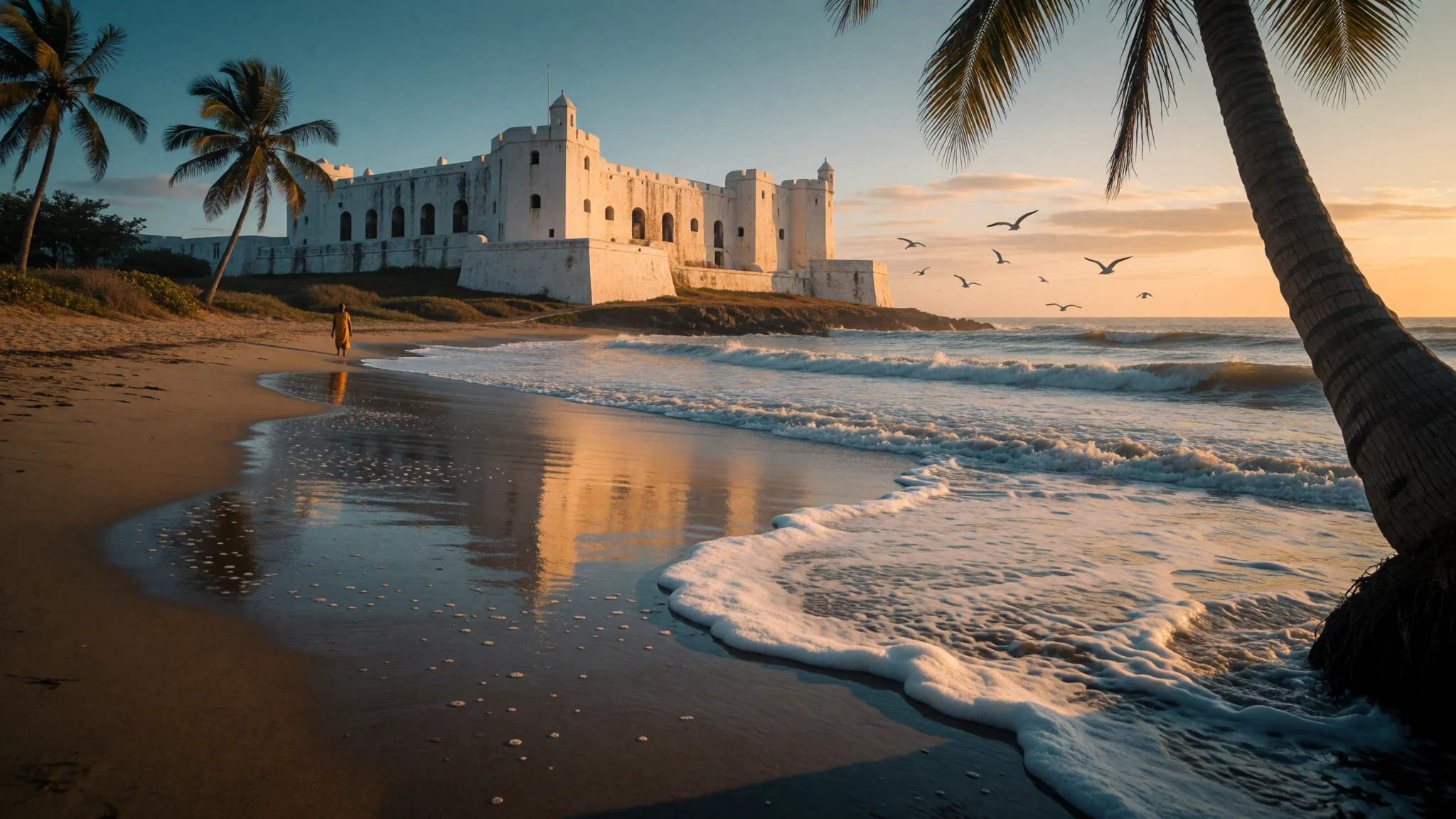
Cape Coast pairs a sobering Atlantic-coast fortress history with a lively fishing beach, student energy and a September festival.
The place
Cape Coast sits on Ghana's Atlantic shore, the capital of the Central Region and home to about 190,000 people, most of them Fante. It lies about 130 km from Accra along one coastal road that is often clogged with traffic, and Sekondi-Takoradi is the next large city to the west. The old centre is compact and walkable: whitewashed colonial-era buildings, church spires, market lanes and low houses stepping down towards a working fishing beach. The castle dominates the waterfront, heavy-walled and pale against the sea, and other fort sites punctuate the town's skyline. Away from the shore the character shifts. Cape Coast is an education town, with the University of Cape Coast, Cape Coast Technical University and many secondary and technical schools, so school uniforms, student cafés and loud football arguments are part of ordinary life. Fishing canoes, painted in bright colours, are hauled up on the sand each day, and crews pull in their nets together while onlookers drift past. The pace is slower than in Accra, though the market streets are noisy and hot by midday. Many people come for the history of the Atlantic slave trade, and the town carries that weight in a way that shapes the mood of a visit. Others come for the guesthouses along the beach, the festival season, or as a base for the coast and forest beyond. Expect heat, humidity and a few persistent guides near the castle; mornings are the kinder hours for walking.
Its story
Cape Coast began as a trading ground inside the Fetu Kingdom, an old Guan state whose main seat lay a short way inland. A market called Ogua grew there into a busy commercial centre, and the Fetu king appointed a chief to represent it. English sailors were already calling along this stretch of coast in the sixteenth century, drawn by gold, and over the following decades Dutch, Swedish, Danish and English interests all competed for footholds. In the seventeenth century a plot of land was sold by the Fetu king to a Dutch agent, and a Swedish-built fort followed on the same ground. It changed hands repeatedly before English and Dutch forces took it jointly. The English then made the settlement the headquarters of the Royal African Company in 1678, and the castle grew into a major point of embarkation in the trade in enslaved people. A Danish lodge was later set up on a hill to the north-east. Under British rule the town rose in status: Cape Coast was capital of the Gold Coast colony from 1821 until 1877, when the administration moved to Accra. That loss of office pushed the town towards a new role as a centre of schooling, a reputation it still holds. The castle today is both a monument and a memorial, and local guides interpret it for visitors from Ghana and the wider African diaspora.
What to see
- Cape Coast Castle — Waterfront
Cape Coast Castle is the town's centrepiece, a whitewashed fortress facing the sea. Guided tours take visitors through the dungeons, courtyards and the Door of No Return, and the guides give the context that makes the walls mean something. Check the official site for current tour arrangements.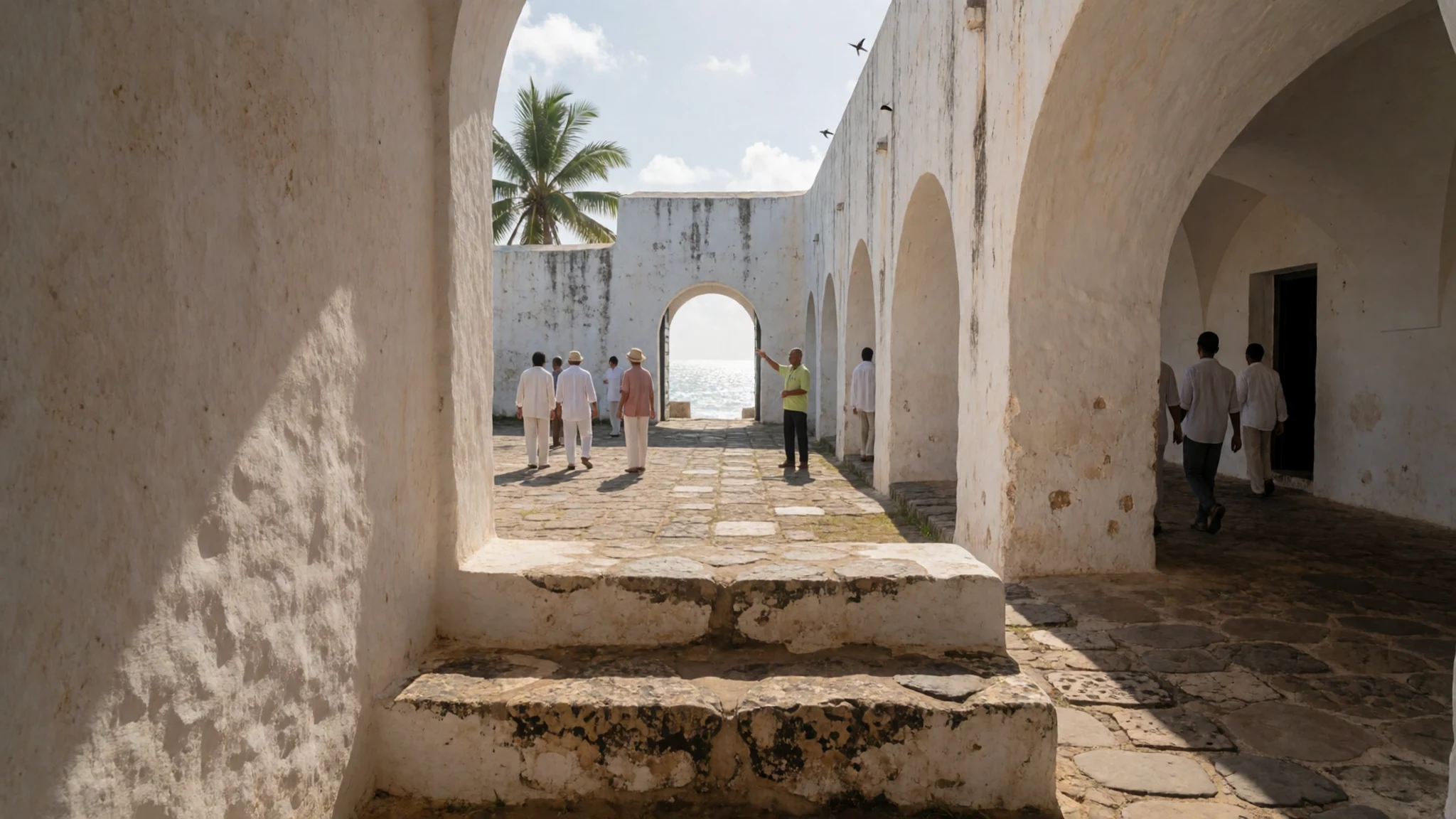
- Fort Victoria — Hill above the town
Fort Victoria stands on higher ground behind the castle and is a quieter stop. The main reward is the outlook: the rooftops, the castle, the beach and the open Atlantic spread out below. It is a good place to get your bearings, ideally in the cooler early part of the day.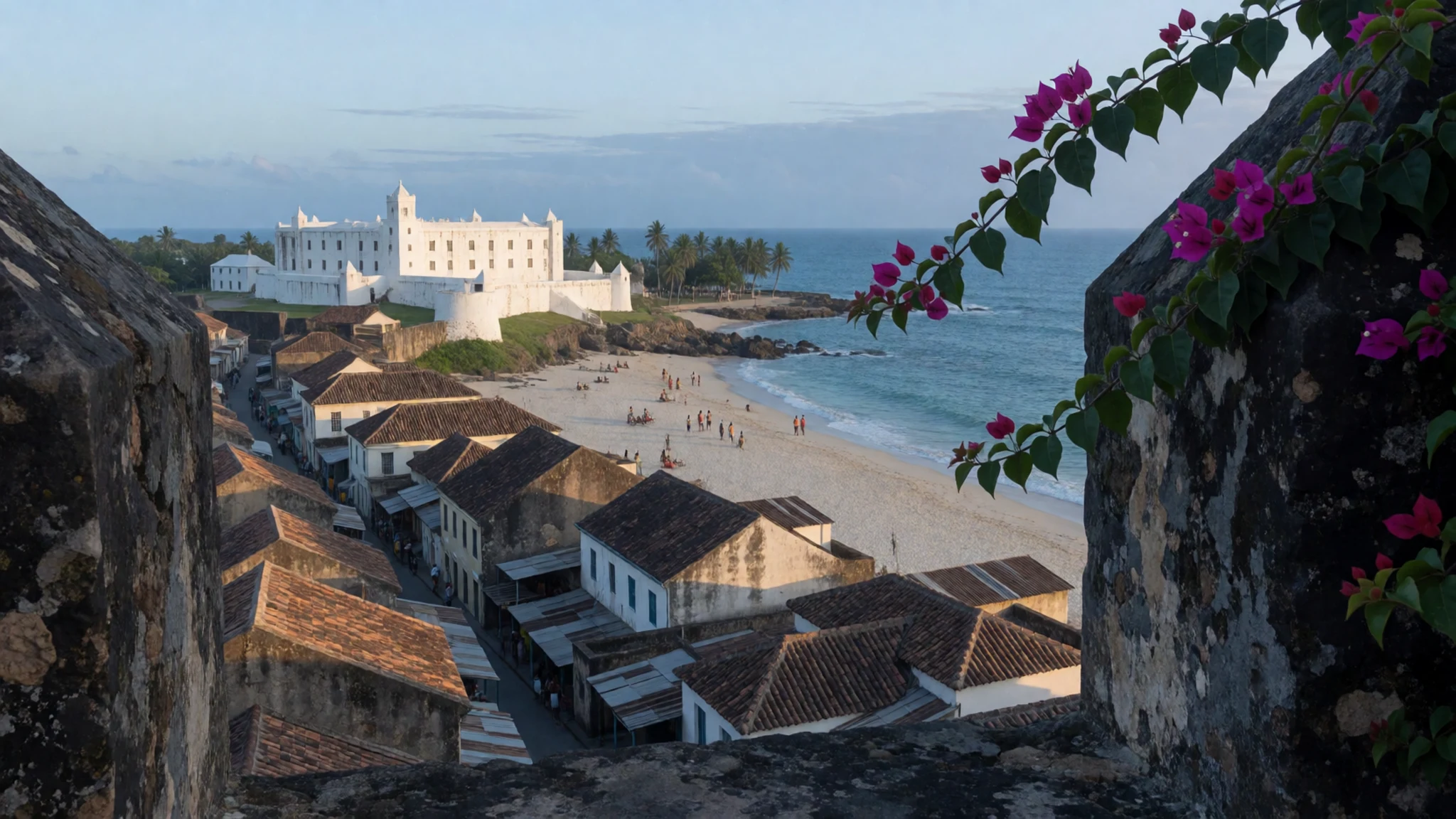
- Cape Coast Centre for National Culture — West of the centre
The Centre for National Culture is a place to see Ghanaian crafts, drumming and textile work, and to understand how local traditions are kept alive. It sits a little way from the old centre, so a taxi or short ride is easiest. Opening arrangements vary, so ask locally first.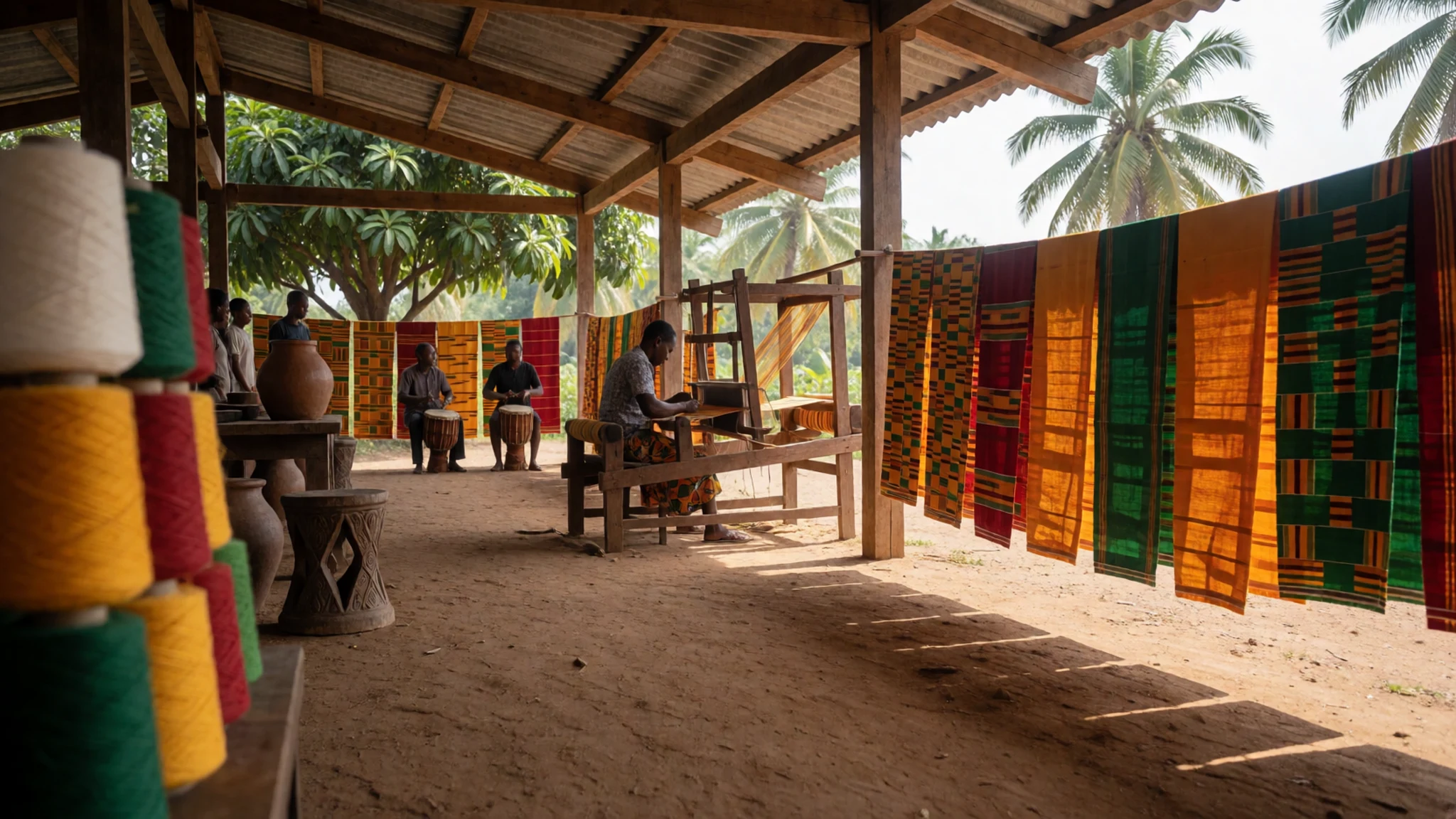
- The fishing beach — Seafront below the castle
The beach is always busy with fishing families. Painted canoes line the sand, nets are hauled in by hand, and children and traders weave between the crews. It rewards an unhurried walk under the palms, with a cold drink from a nearby bar. Ask before photographing people at work.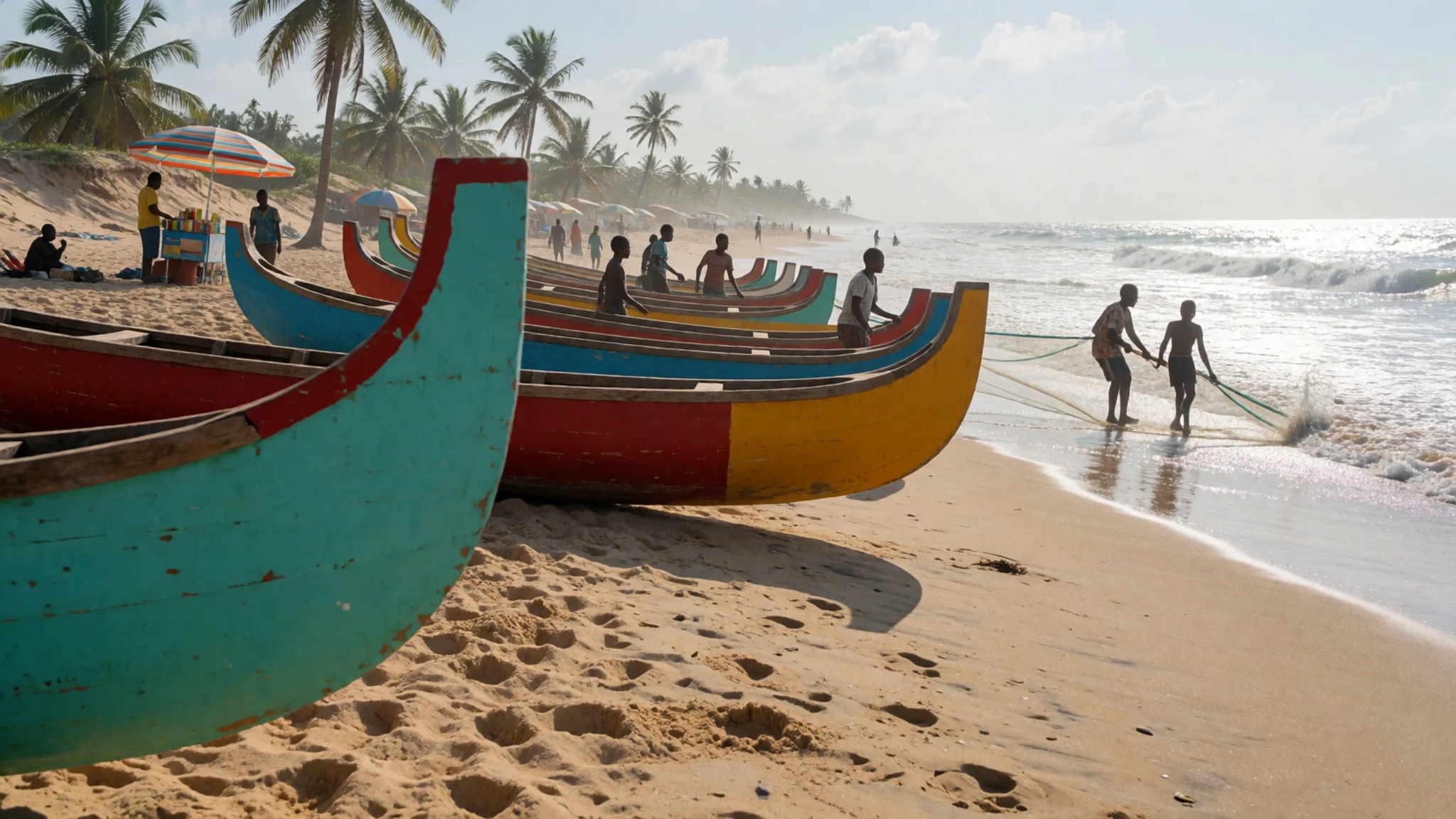
- St Francis de Sales Cathedral — Town centre
The Catholic cathedral is a prominent landmark in the town, seen from the air as a large cruciform building among low roofs. Services draw big, well-dressed congregations, and the building shows how deeply Christianity is woven into Cape Coast's daily life. If you enter, dress modestly and stay quiet during worship.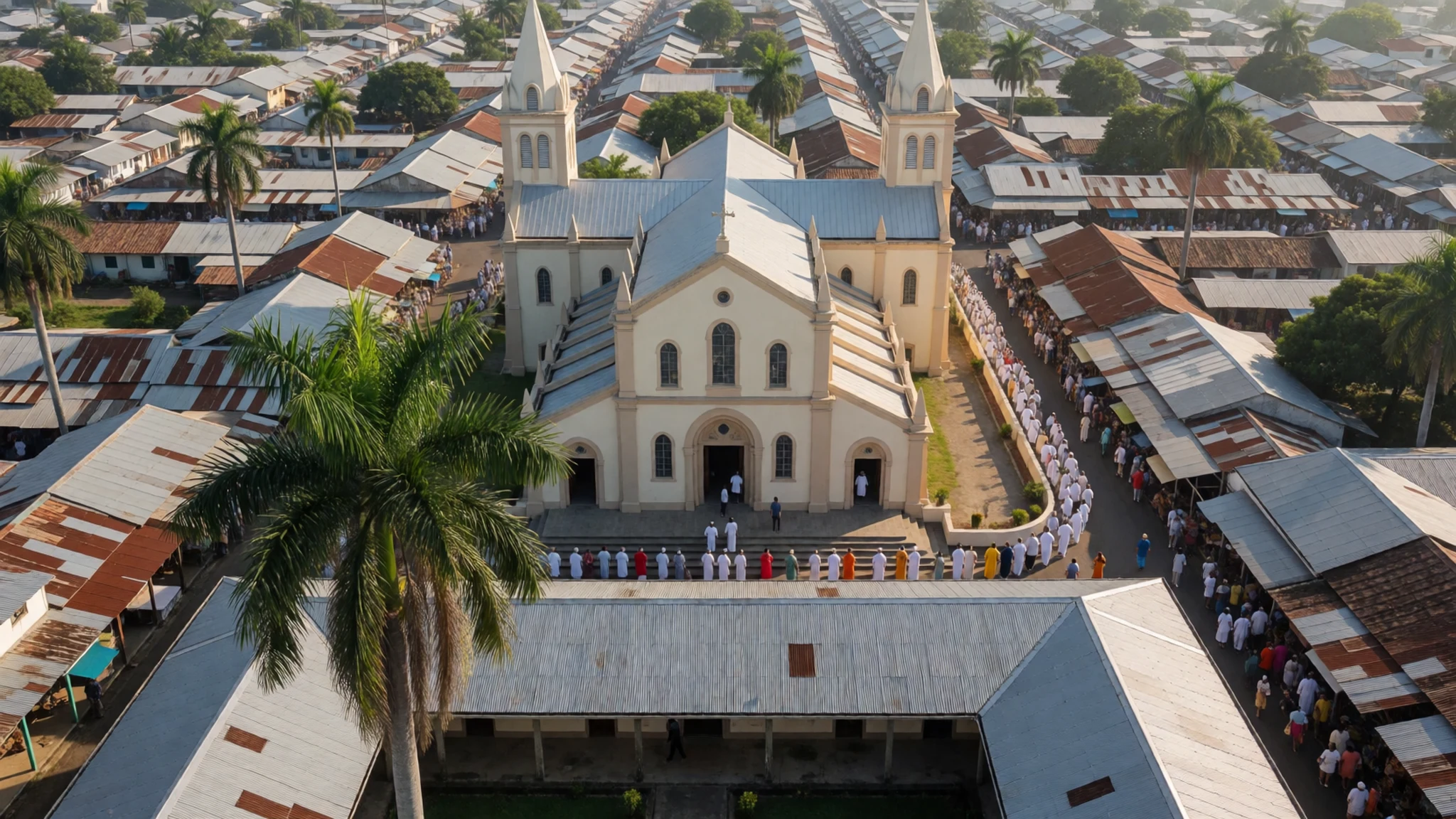
Culture
Cape Coast belongs to the Oguaa Traditional Area, and Fante identity is strong here. The year's main event is Fetu Afahye, held on the first Saturday of September, when chiefs, drummers, asafo companies and families fill the streets in procession and the town draws people back from across Ghana and abroad. Drumming, brass bands and processions of chiefs under umbrellas are part of the spectacle, and the festival is rooted in older rites of thanks and renewal. Day to day, life revolves around church, school, market and the sea. Sunday services are long and musical, and many people dress up for them. Greetings matter: people expect a hello and a handshake or nod before any request, and elders are treated with particular courtesy. English is widely spoken alongside Fante, so conversation is easy, and people are generally glad to talk about the town's history. The castle is not only a tourist stop; for many Ghanaians and for visitors from the African diaspora it is a place of mourning and remembrance, and the mood among guides and groups reflects that. Football is a shared passion, and the local ground can be loud and good-humoured on match days. Radio, with its mix of highlife, gospel and talk, is the town's soundtrack. Greet people before you ask them anything, use your right hand for giving, receiving and eating, and keep voices low and cameras respectful inside the castle dungeons.
What to wear
Cape Coast's traditional dress draws on wider Akan and Ghanaian cloth traditions. Kente, a hand-woven strip cloth of silk or cotton in bold geometric patterns, is draped over the shoulder or wrapped around the body for weddings, funerals, festivals and installations of chiefs. Adinkra cloth, stamped with symbols, is worn for mourning and ceremony, and chiefs at Fetu Afahye appear in rich cloth with gold-toned ornament and sandals. Women often wear a kaba and slit, a fitted blouse with a matching long skirt, made from wax-print cotton or lace. Everyday wear is simpler and practical. Students are in school uniform, fishermen in shorts and worn T-shirts, and traders in light cotton, with wax-print shirts and dresses common on Sundays and special days. Bright colour is normal, and dressing well for church is a point of pride. Visitors should pack for heat and humidity: light, breathable cotton or linen, a hat, sunscreen and sandals that cope with sand and uneven stone. Sturdy closed shoes help on the castle's steps and in the market's muddy lanes. Shoulders and knees covered is a sensible default in town and essential for church services, a funeral procession or a chief's palace. Swimwear belongs on the beach, not in the streets. A light rain jacket is worth carrying in the rainy months.
What to eat
- Fufu with light soup — Small chop bars and the market lanes
Fufu is a smooth, stretchy dumpling of pounded cassava and plantain, eaten with the right hand from a bowl of spiced light soup with fish or goat. Lunchtime chop bars in the market lanes serve it, and portions are generous.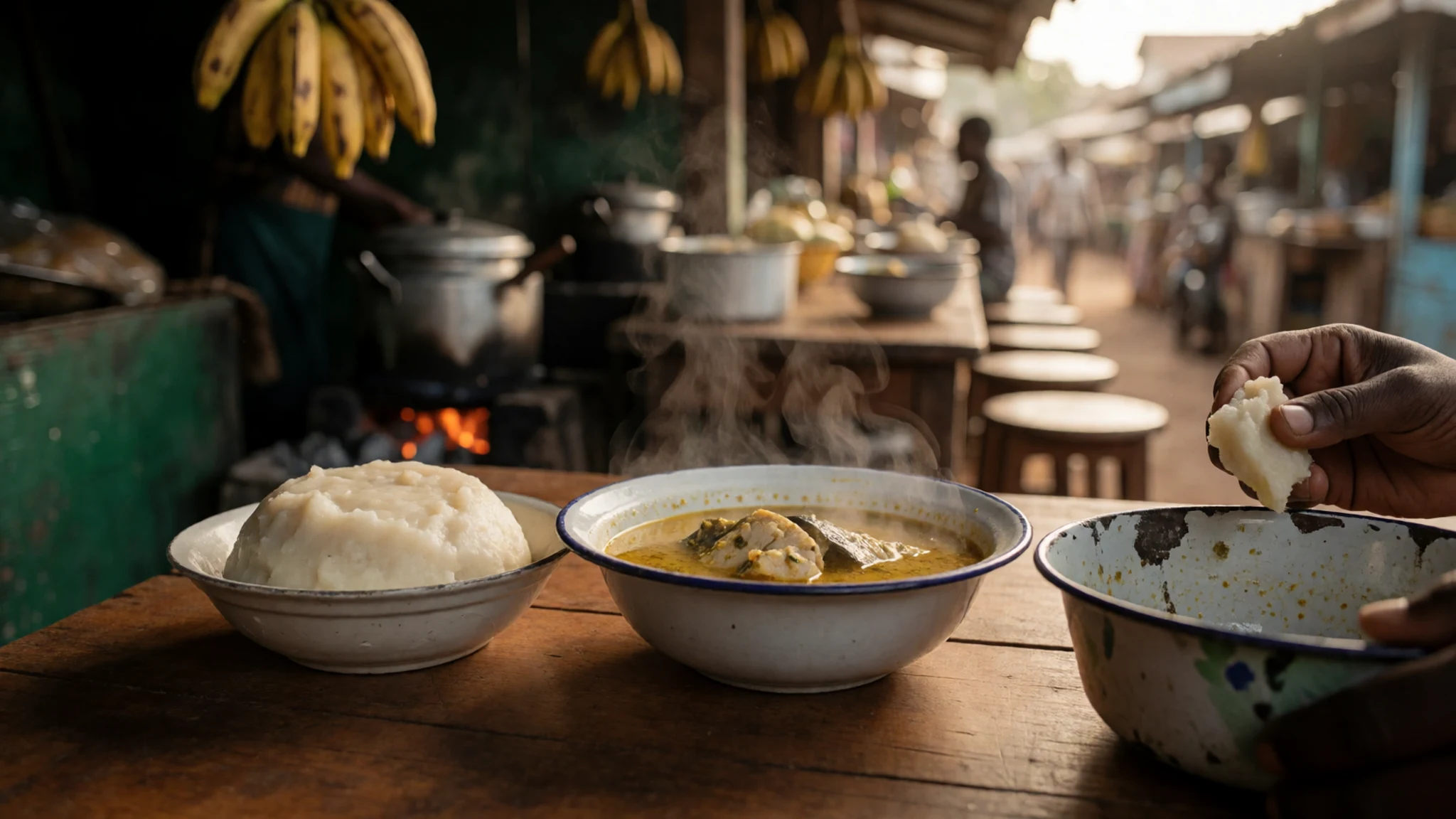
- Fried fish and kenkey — The fishing beach and nearby stalls
Fresh-landed fish is fried or grilled whole, then served with kenkey, a sour fermented maize dumpling, and a fiery pepper sauce. Beach stalls and the lanes near the landing site are the natural place to look.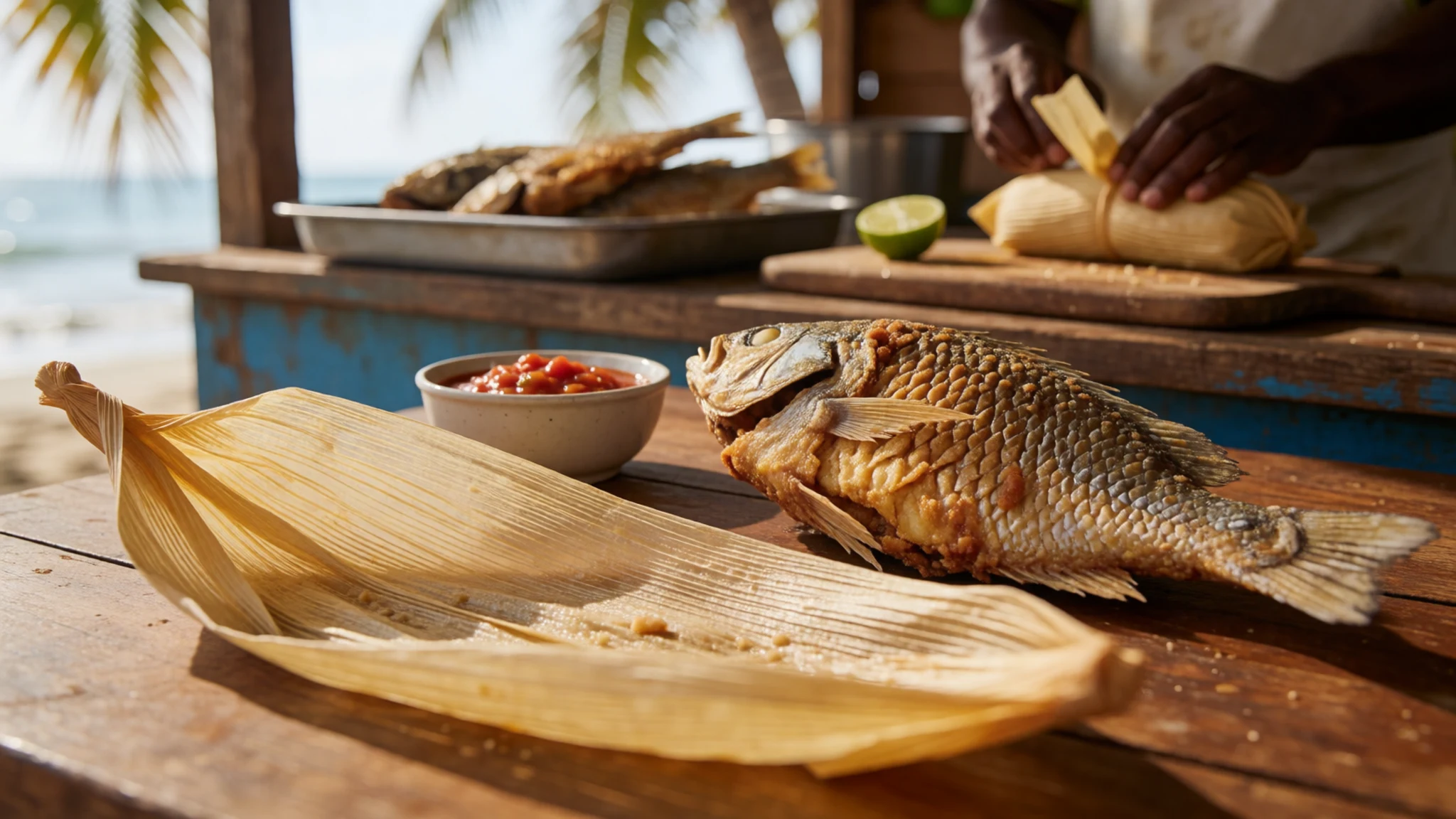
- Red-red — Everyday eateries across town
Red-red is black-eyed bean stew cooked in palm oil and served with fried ripe plantain. It is hearty, filling and often vegetarian, which makes it an easy meal in any simple eatery near the main street. - Waakye — Roadside stalls, mornings and lunchtimes
Waakye is rice and beans cooked with sorghum leaves, giving it a reddish-brown colour, then served with spaghetti, boiled egg, fried fish, gari and shito pepper sauce. Street sellers wrap it in leaves or paper. - Palm wine and pito — Beachfront bars and local drinking spots
Palm wine is a lightly fermented sap tapped from palm trees, and pito is a sour brew made from grain. Both turn up at outdoor bars along the beach, sometimes with drumming and dancing. Drink moderately; strength varies.
Plan it
Best time. November to February is the drier, more comfortable stretch for walking and beach time, though it is still hot and humid. The main rains fall around May to July, with a lighter wet spell later in the year. For the festival, plan for the first Saturday of September and book ahead.
How long. 2–3
Getting there. Fly to Kotoka International Airport in Accra, then go by road: shared Ford vans, tro-tros, VIP or STC coaches, or a chartered car. There is one main road along the coast, it is often congested, and about four hours is not unusual. From Takoradi or Kumasi, tro-tros and coaches also run.
Budget. low
Tips
- Leave Accra early to beat the traffic on the coastal road
- Visit the castle and Fort Victoria in the morning, before the heat builds
- Carry small cash for tro-tros, markets and beach stalls, and check fares before you board
- Drink bottled or filtered water and use sunscreen
- Book guesthouses well ahead for Fetu Afahye in September
Etiquette
- Greet people before asking for directions or help
- Ask before photographing people, especially fishing crews and market sellers
- Be respectful and quiet in the castle dungeons and at church services
Nearby
Sources
- Wikidata Q221283 (CC0)
- Wikipedia: Cape Coast (rev 1375328598) (CC BY-SA 4.0)
- Wikivoyage: Cape Coast (rev 5396871) (CC BY-SA 4.0)
- Photo: St Francis de Sales Cathedral, Cape Coast — Kwesi mufasa (CC BY-SA 4.0)
- Photo: Cape Coast Montage (balcony of Cape Coast Castle) (CC BY 3.0)
- Photo: Africa relief location map — Eric Gaba (CC BY 3.0)
- Photo: The market at Cape Korso — Cornelis Claesz (Public domain)
- Photo: Overzicht Cape Coast — Loek Tangel (CC BY-SA 4.0)
- Photo: Cactus at Cape Coast beach — Kobina ebo (CC BY 3.0)
- Photo: Beach at Cape Coast — David Stanley (CC BY 2.5)
- Photo: Barack Obama in Cape Coast Castle — Obama White House Archived (Public domain)


