Mole National Park
Mole National Park, Ghana
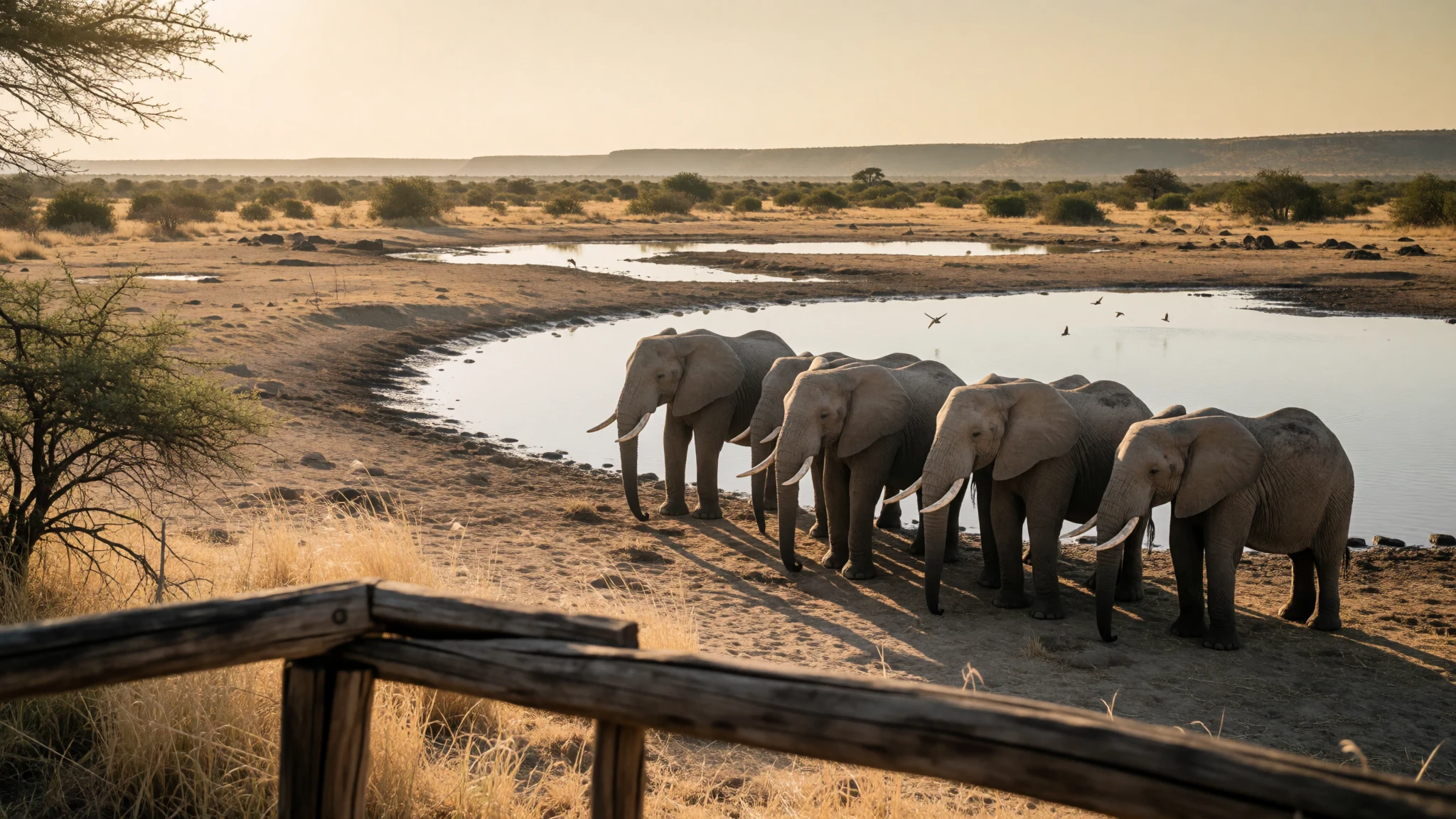
Mole National Park is Ghana's largest wildlife refuge, where dry-season waterholes draw elephants within sight of a ranger and a viewing platform.
The place
Mole National Park is a wildlife refuge in the Savannah region of northern Ghana, on open Guinea savannah broken by strips of trees along seasonal water. The Mole and the Levi run only in the rains; in the long dry season they leave pools, and those pools draw elephants, antelope, buffalo and primates. Along the south, the land breaks at a steep escarpment. Travellers enter from Larabanga. Damongo, the district capital, is 24 km away; Tamale, the regional capital and the nearest airport, lies 146 km to the north-west; Kumasi is about 430 km off and Accra about 700 km. The park covers about 4,577 square kilometres at roughly 50 m above sea level. Visitor facilities — a motel by a waterhole, ranger-led walks and drives, and a luxury safari lodge described as West Africa's first — make the reserve the most developed of Ghana's parks for tourism, while the wider woodland stays thinly built. The designation as a national park dates from 1971. Compared with the farmland outside the boundary, the woodland inside the line is still lightly settled, which is why large mammals persist this far north in Ghana. Rangers live with the practical limits of a big reserve: patrols, a single main entrance, and heat that empties the tracks at midday. Lions are only a rumour now: a sighting in August 2004 was followed at once by a poaching incident. What visitors reliably meet are elephants, antelopes, buffalo, baboons and smaller game, often from the motel platform rather than deep in the bush.
Its story
Mole National Park began as a wildlife refuge in 1958, when households still lived on the land. In 1971 that resident population was resettled and the refuge was declared Ghana's first national park. Development for visitors has stayed limited since: the protective job came before lodges and paved circuits. Funding for the park has a reputation for falling short, and poaching, together with the question of whether protection can be sustained, has worried both national and international observers. Wardens have a better record of protecting the antelope that stay in the park than they did when the refuge was new. Once people had left, researchers gained a long-running outdoor laboratory, useful precisely because similar savannah in equatorial West Africa is densely settled. A study of the resident population of 800 elephants found the damage uneven. The elephants are harder on some trees than others: Burkea africana, sold as hardwood, and the shea tree Vitellaria paradoxa suffer more breakage than Terminalia, which traders value less. Beekeepers just outside the boundary now sell Mole-area honey as a fair-trade good, the earliest such product from this part of the north. Villagers nearby take the combs in long-used, low-impact ways and sell the honey onward through a partner abroad. The park's history is therefore not only a line on a map in 1958 and 1971; it is also a story of who was moved, what science measured, and what the forest edge still produces.
What to see
- Waterhole lookout — Motel waterhole, inside the park
The motel viewing platform looks over a waterhole where elephants come to drink and bathe, especially in the early morning and in the last hours before sunset. Herds graze the open ground below the lodge. Mole National Park's dry-season pools, left when the Mole and Levi shrink, are the reason this view works. Rangers ask people to keep voices low and to hold whatever distance they set.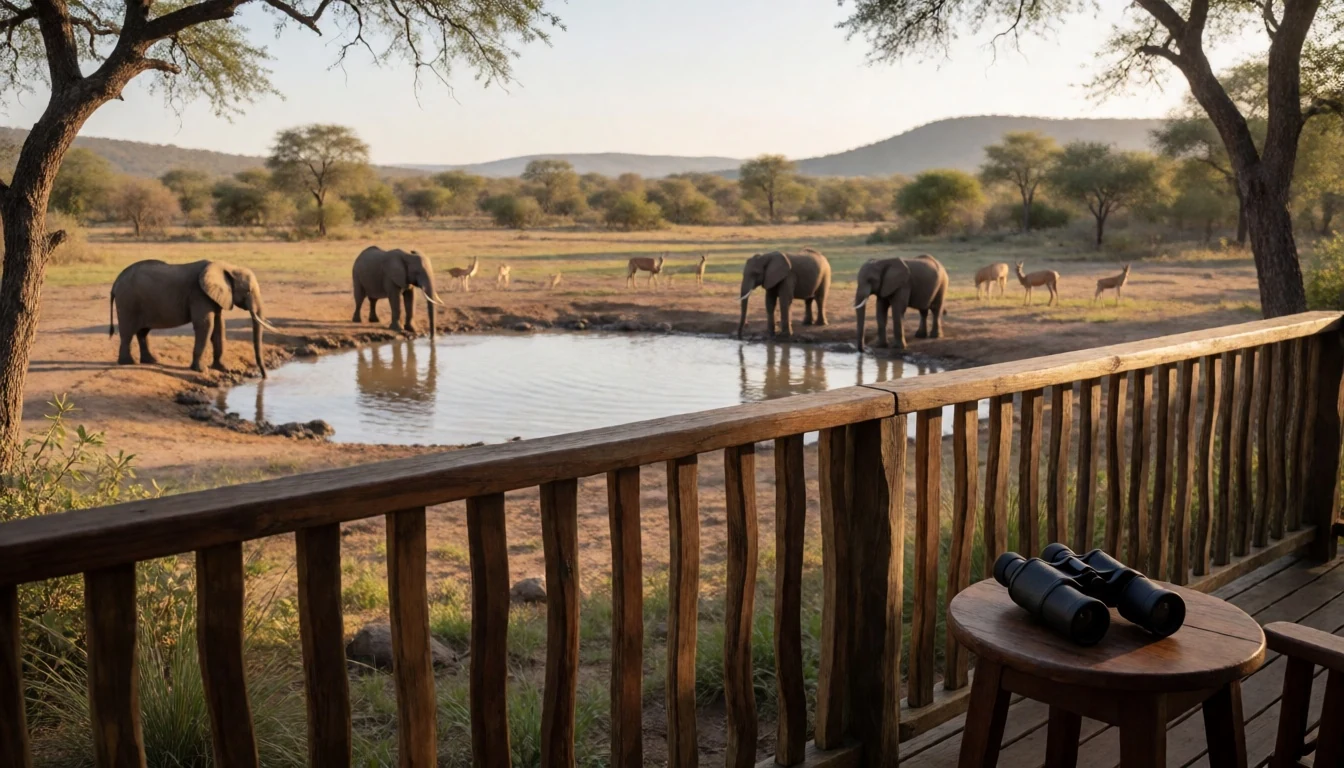
- Walking safari — Trails from the motel
A walking safari with an armed ranger is the usual way to meet Mole National Park on foot. Outings tend to leave in the early morning or late afternoon, when the heat eases and animals move. Group size depends on how many people are staying, and each party should have its own ranger. Antelope, warthog, baboon and elephant are the realistic sights, and the pace stays slow.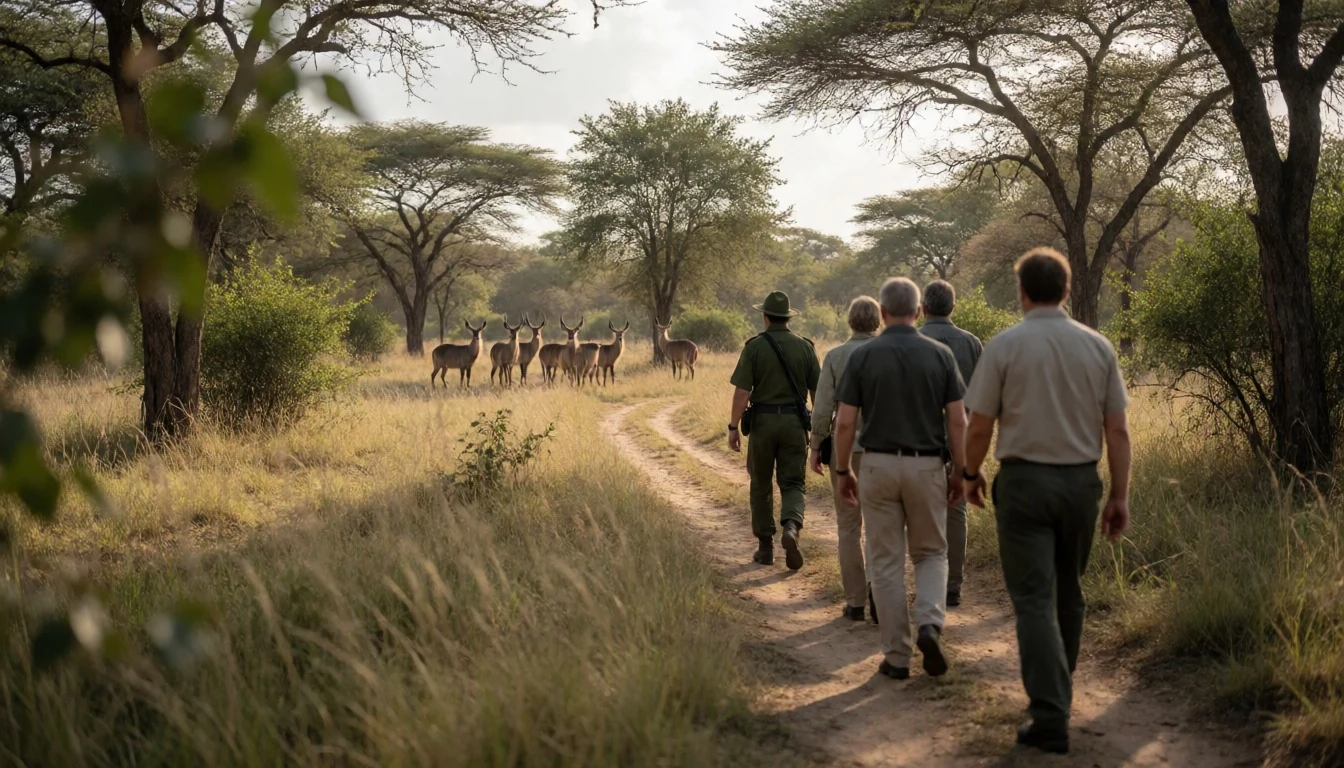
- Driving safari — Interior tracks
A chartered four-by-four, again with an armed ranger, covers far more of Mole National Park than a walk can. The vehicle takes up to seven passengers, enough for a small group. Tracks run through open Guinea savannah and towards the escarpment. This is the better choice when the goal is elephants at a distance or a wider mix of antelope across a longer loop.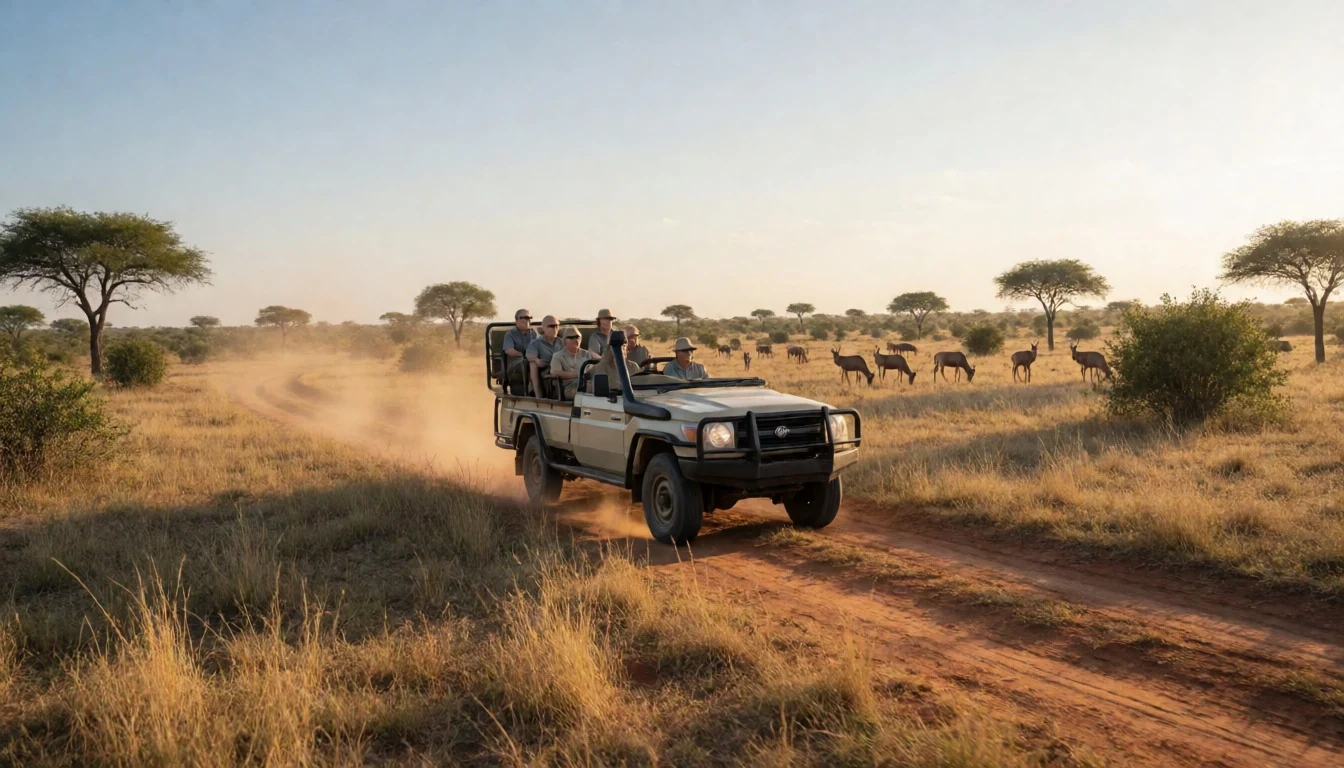
- Baboons and monkeys — Woodland around the motel
Baboons and several kinds of monkey live in the trees of Mole National Park, and a troop near the motel is often the first wildlife a new arrival notices. Mothers carrying young are a common sight in the woodland edge. They are wild animals that raid unattended food, so plates and fruit belong indoors. A ranger will say if a group should be left alone.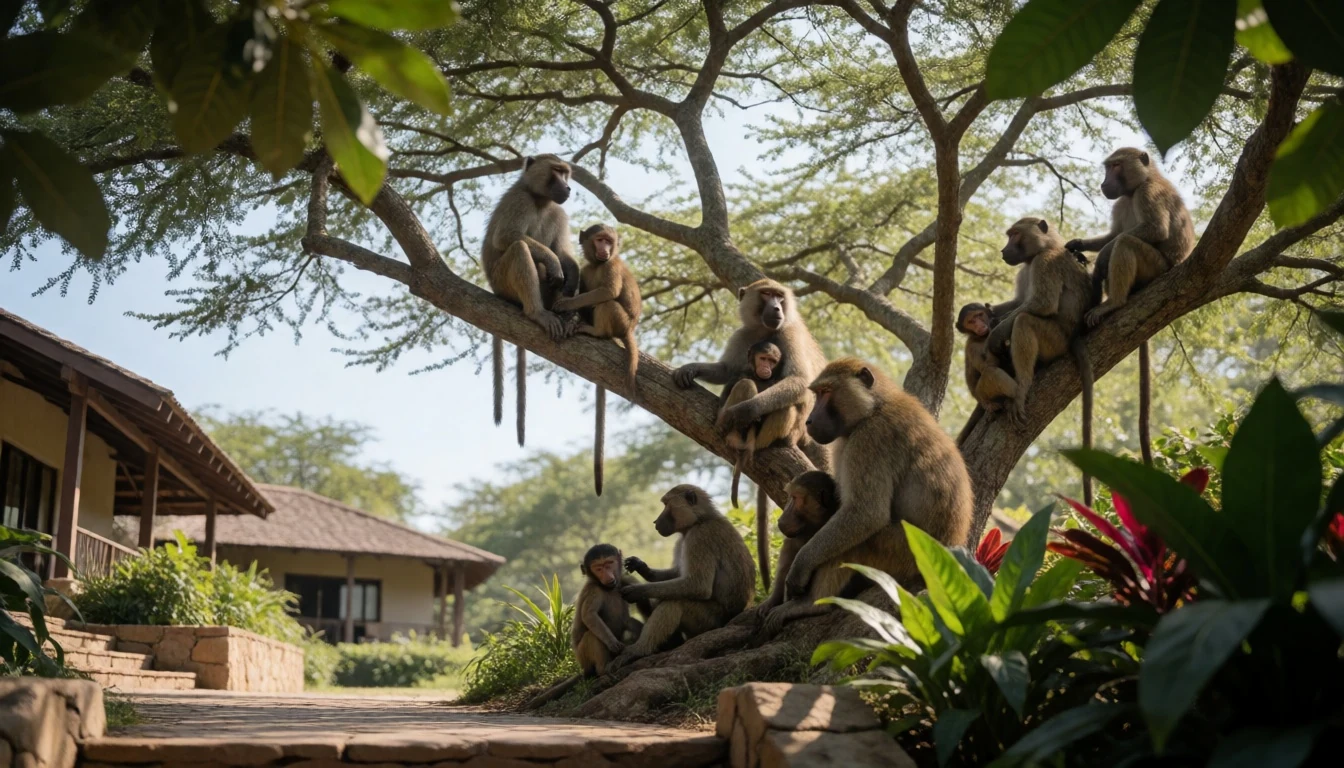
- Larabanga mosque — Larabanga
Larabanga, the town on the way into Mole National Park, holds a mud-and-stick mosque widely described as the oldest and best-preserved of its kind in Ghana. The building is still a place of prayer. Visitors may not go inside, but are expected to dress modestly and ask before photographing worshippers or the building. The park gate is only a short ride beyond the village, by tro-tro or a hired lift.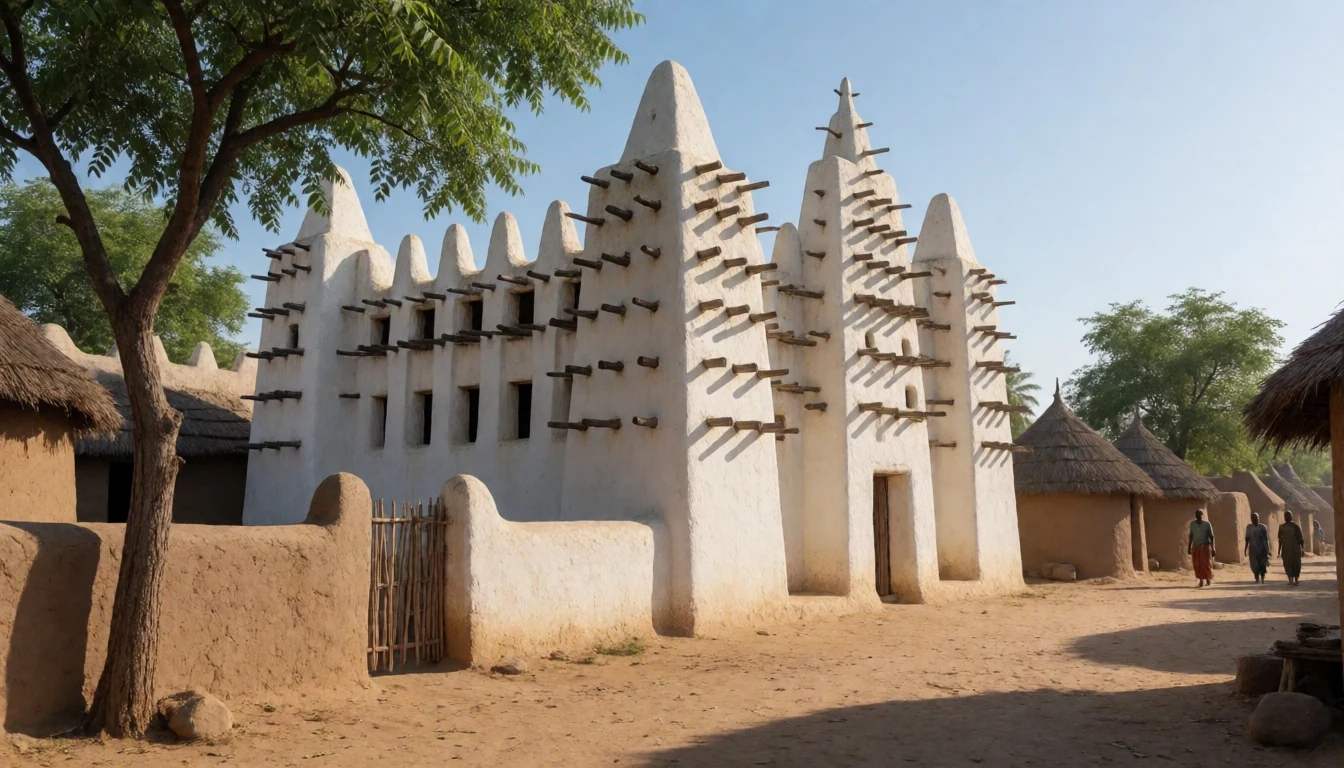
Culture
Life around Mole National Park is northern Ghanaian: Gonja and other Savannah-region communities, a strong Muslim presence in towns such as Larabanga, and a weekly rhythm of farming, shea and small trade rather than city nightlife. Damongo is the district centre; the ancient mud-and-stick mosque in Larabanga is a point of local pride and a place of prayer, not a backdrop for casual posing. Inside the park, authority sits with the rangers. Safaris go out only with an armed guide, on foot or in a vehicle, and the animals — elephants especially — are wild, not performers. Visitors who stay at the motel share the waterhole view with staff who live and cook on site, and the staff canteen is as much a part of the place as the lodge terrace. Honey gathered near the Mole woodland has become a fair-trade product sold beyond Ghana, a reminder that the forest edge still feeds households. Speak quietly on the viewing platform, follow the ranger's distance from wildlife, and at Larabanga's mosque dress modestly, stay outside the building, and ask before you photograph people.
What to wear
In the Savannah region around Mole National Park, the garment people still name first is the smock, called fugu or batakari: narrow strips of handwoven cotton, often white or indigo, sewn into a loose tunic and sometimes marked with black embroidery. Men wear it for Friday prayers, festivals, chieftaincy events and funerals; women in the north also wear smocks, or a wax-print wrapper and kaba (a tailored blouse) in cotton prints from Ghanaian mills. Those cloths come out for weddings and naming ceremonies. Day to day, the same towns look different. In Damongo and Larabanga, younger people and travellers wear T-shirts, polo shirts, jeans or simple trousers, football jerseys, sandals and trainers; market women keep a wrapper and headscarf over a blouse; rangers and lodge staff are in khaki or practical work clothes. A visitor should pack for heat, dust and early starts: breathable cotton, long sleeves and trousers against sun and insects, and neutral colours — sand, olive, khaki — on safari. Closed shoes or light boots matter on a walking safari, where thorns and loose rock are normal. At the Larabanga mosque, visitors cover shoulders and knees and admire the building from outside, since entry is not allowed. A hat and a light layer help at dawn, when the dry-season air can feel cool before the sun is high.
What to eat
- Tuo zaafi — Staff canteen beside the safari office
Tuo zaafi, the everyday swallow of northern Ghana, is a smooth maize or millet dough eaten with the fingers and a green ayoyo or groundnut soup. At Mole National Park the staff canteen beside the safari office is the place for it.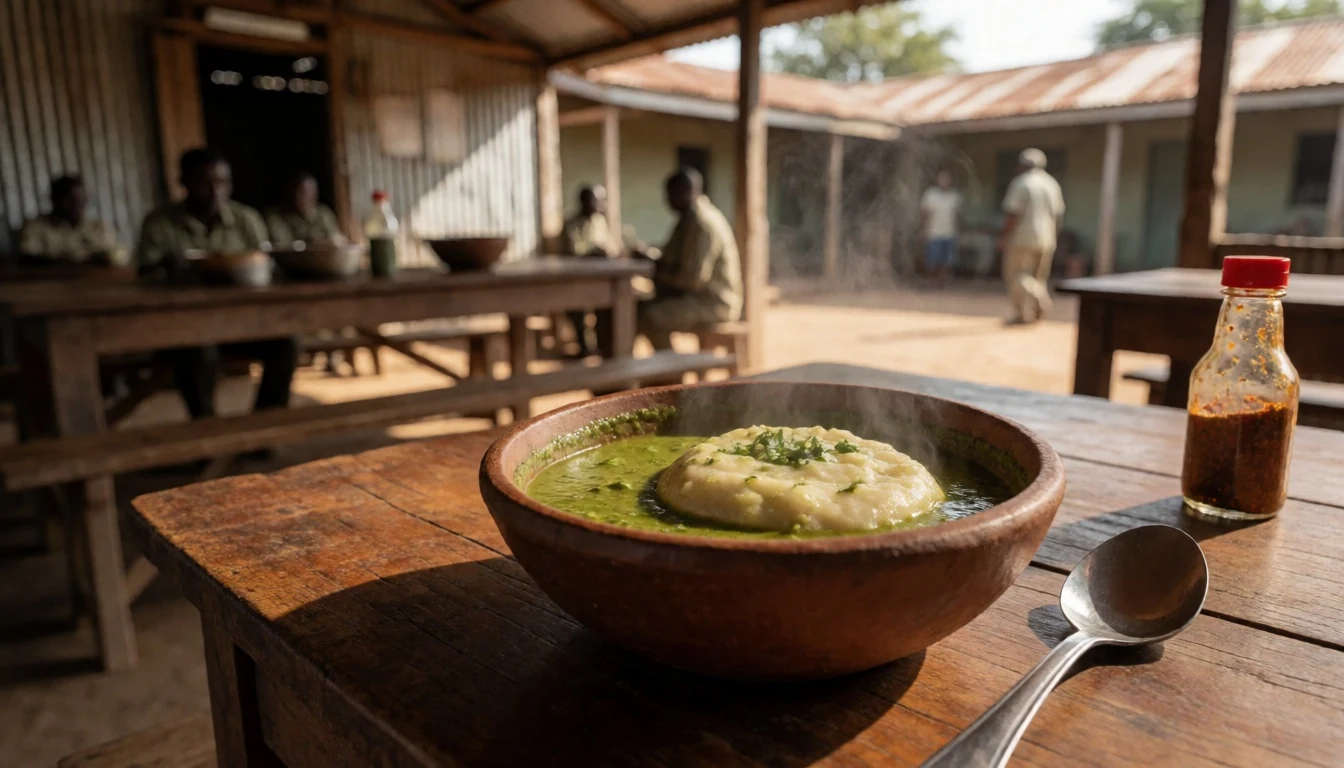
- Groundnut soup — Motel restaurant and staff canteen
Groundnut soup is a thick peanut stew ladled over rice or beside a swallow, and northern kitchens serve it in generous portions. At Mole National Park both the motel restaurant and the staff canteen beside the safari office cook local stews of this kind.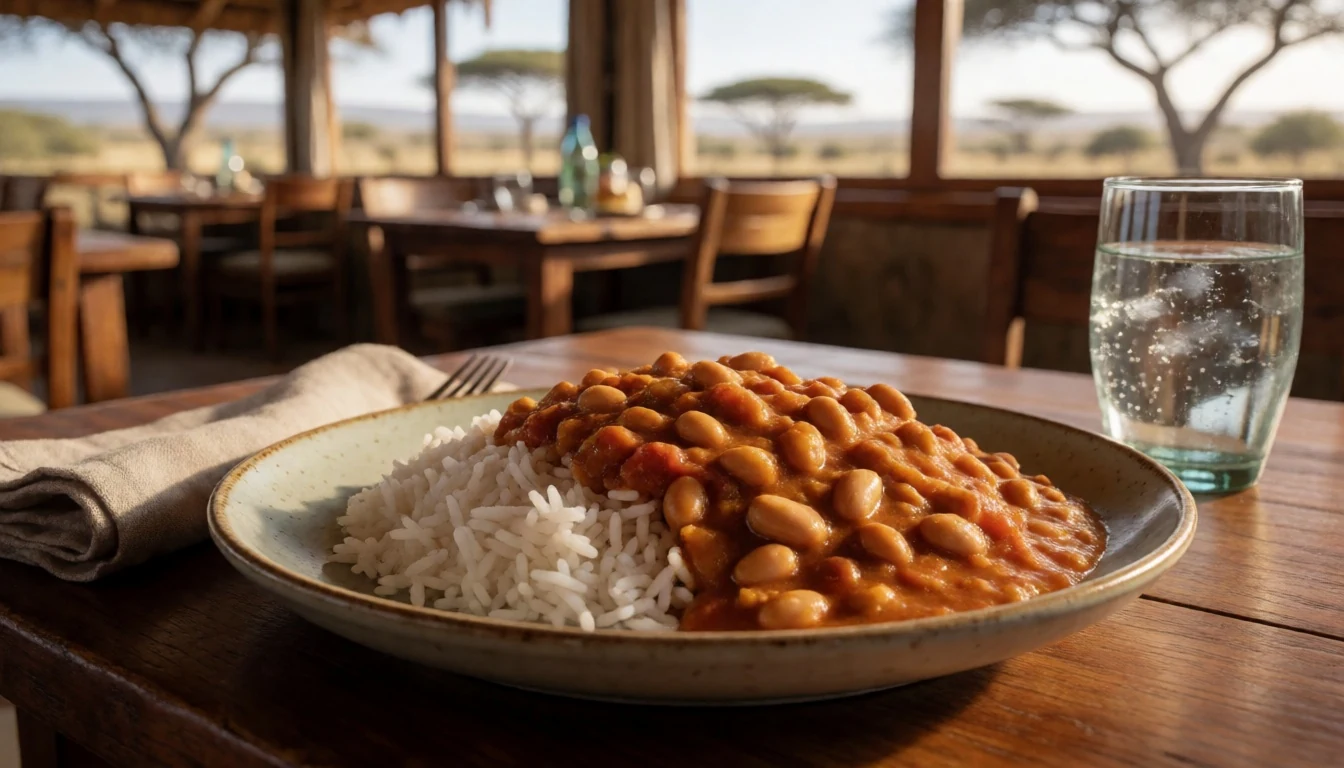
- Jollof — Motel restaurant
Ghanaian jollof is tomato rice cooked in a single pot with spices, often beside chicken or goat. At Mole National Park the motel restaurant serves local dishes as well as Western-style meals, and jollof is a reliable request there. - Guinea fowl — Chop bars in Larabanga and Damongo
Guinea fowl, grilled or gently stewed, is a northern speciality with a deeper flavour than chicken, usually finished with pepper sauce. Chop bars in Larabanga and Damongo are the places to look; the Mole National Park motel restaurant leans on a mix of local and Western-style plates. - Waakye — Morning stalls in Tamale and Damongo
Waakye is rice and beans simmered with millet leaves that stain the grains a reddish brown, sold from morning pans at stations and markets. Travellers eat it in Tamale or Damongo before the road to Mole National Park; inside the park, cooking is the motel or the staff canteen.
Plan it
Best time. Mid-December to mid-April, the long dry season, is the time for Mole National Park: rivers shrink to pools, and elephants and antelope come to the waterhole in the early morning and late afternoon. Rain makes the tracks heavy and spreads the herds out. The middle of the day is very hot, so those cooler windows are the ones that count.
How long. 2–3
Getting there. Tamale is the nearest airport to Mole National Park, about 146 km away. Daily buses take about six hours, leaving Tamale mid-afternoon and the park around dawn; from the south, ask to alight at Fulfoso junction. Services from Bole and a Metro Mass bus from Wa stop at Larabanga, about 3 km from the gate, then a tro-tro or a hitch covers the last leg. Tro-tros via Damongo also run, on a rough slow road. Kumasi is about 430 km away and Accra about 700 km, all by road.
Budget. mid
Tips
- Book the ranger-led walk the evening before; morning departures depend on how many people are staying at the motel.
- Take the early outing and the late one; heat empties the tracks in the middle of the day.
- Carry cash for tro-tros, the staff canteen and small purchases; do not count on paying every small charge by card.
- If you eat at the staff canteen beside the safari office, place the order several hours ahead.
Etiquette
- Stay with the armed ranger and do not wander off the path or out of the vehicle.
- Keep voices down on the waterhole platform and do not close the distance to elephants for a photograph.
- At Larabanga mosque, cover shoulders and knees, stay outside the building, and ask before photographing people.
Nearby
Sources
- Wikidata Q1585600 (CC0)
- Wikipedia (CC BY-SA 4.0)
- Wikivoyage (CC BY-SA 4.0)
- Photo: Mole National Park, 24 August 2015 (CC BY-SA 1.0)
- Photo: Elephant in Mole National Park (CC BY 2.5)
- Photo: Burkea africana (Wild Syringa) (Public domain)
- Photo: Monkey and young, Mole National Park (CC BY-SA 1.0)
- Photo: Road to the Mole National Park motel (CC BY-SA 4.0)
- Photo: Trees inside Mole National Park (CC BY-SA 4.0)
- Photo: Rock outcrop in the savannah (CC BY-SA 4.0)
- Photo: Bed at Zaina Lodge (CC BY-SA 4.0)


