Nerja
Nerja, Spain
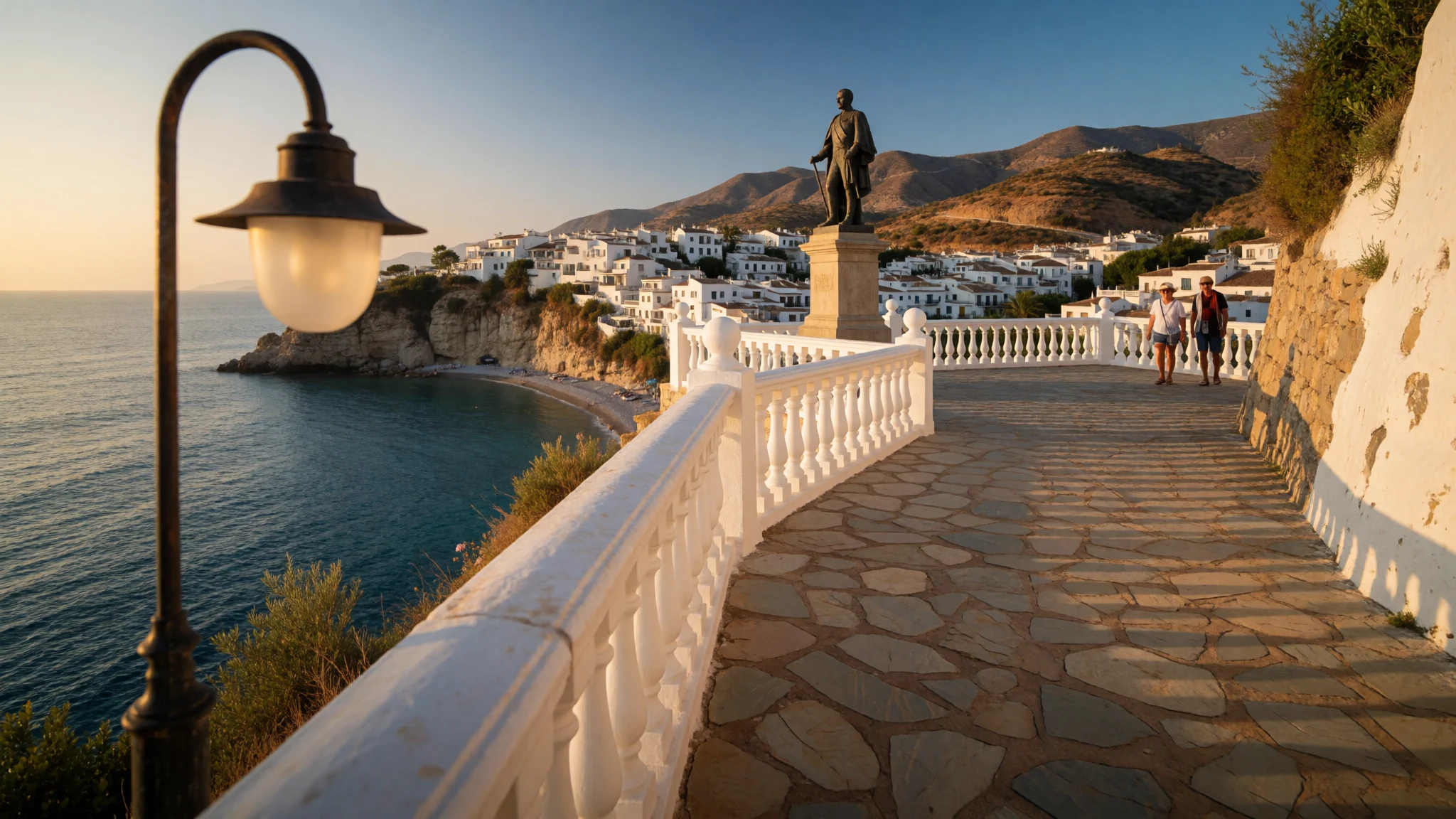
Nerja is a walkable Andalusian coast town with a clifftop terrace, small coves, a Blue Flag beach and prehistoric caves close by.
The place
Nerja is a town on the Costa del Sol in the province of Málaga, in the Andalusian south of Spain, at the eastern end of the coast most travellers know for its resorts. Its population is about 22,000, and the old centre stands only 26 m above sea level, so the sea is part of nearly every street's horizon. The town belongs to the comarca of La Axarquía and lies east of the city of Málaga, with hills rising close behind it. Brochures still sell Nerja as a fishing village, which is generous. Tourism is the main industry now, and the boats pulled up on the beach are a small remnant of a trade that supports few families. Even so, the town has kept more of a human scale than many neighbours along the coast. The historic core is walkable and still feels like a village, and the visitors are a mixed lot: Spanish families on holiday, French and Italian travellers, and northern Europeans, many of whom have settled here. That last group has changed the town's character over recent decades, and English-language signs and pubs make it obvious. The layout is easy to grasp. The Balcón de Europa, a terrace on a headland, marks the centre. Small coves and pebbly beaches sit below it, a longer sandy beach called Burriana lies further along, and the bus stop is a short walk inland. Nerja suits people who want sea, walking and a slow evening more than nightlife.
Its story
Nerja's history begins long before the town. Prehistoric people used the caves just outside it, and the paintings they left came to light only in the twentieth century, when the caves were found. They are now understood to be one entrance into a chain of linked sinkholes running far into the mountains towards Granada, and much of that system is thought to be unexplored. Romans later built three settlements in the area, among them Detunda, and substantial remains can still be seen. After the Arab conquest the town was known as Narixa, usually glossed as 'abundant spring'. A popular claim says the modern name comes from an Arabic phrase with that meaning, but the Arabic form Nāriŷa appears to descend from a name older than Islam, so the etymology stays uncertain. The headland at the centre was once called La Batería, after a gun battery housed in a fortified tower. That tower and another nearby were wrecked during the Peninsular War. The present name, Balcón de Europa, has a better story than a paper trail. Local lore says King Alfonso XII stood on the spot after a devastating earthquake in the nineteenth century and declared it a balcony over Europe. Archive papers reportedly show the name was already in use. That has not stopped the town from putting a statue of the king on the terrace, where it is a favourite backdrop for photographs.
What to see
- Balcón de Europa — Old town centre
The Balcón de Europa is a terrace on the headland at the centre of the old town, with sea views in both directions and the coves below. It works best early in the morning or at dusk, when the day-trippers thin out. The king's statue stands here, and the church is just around the corner.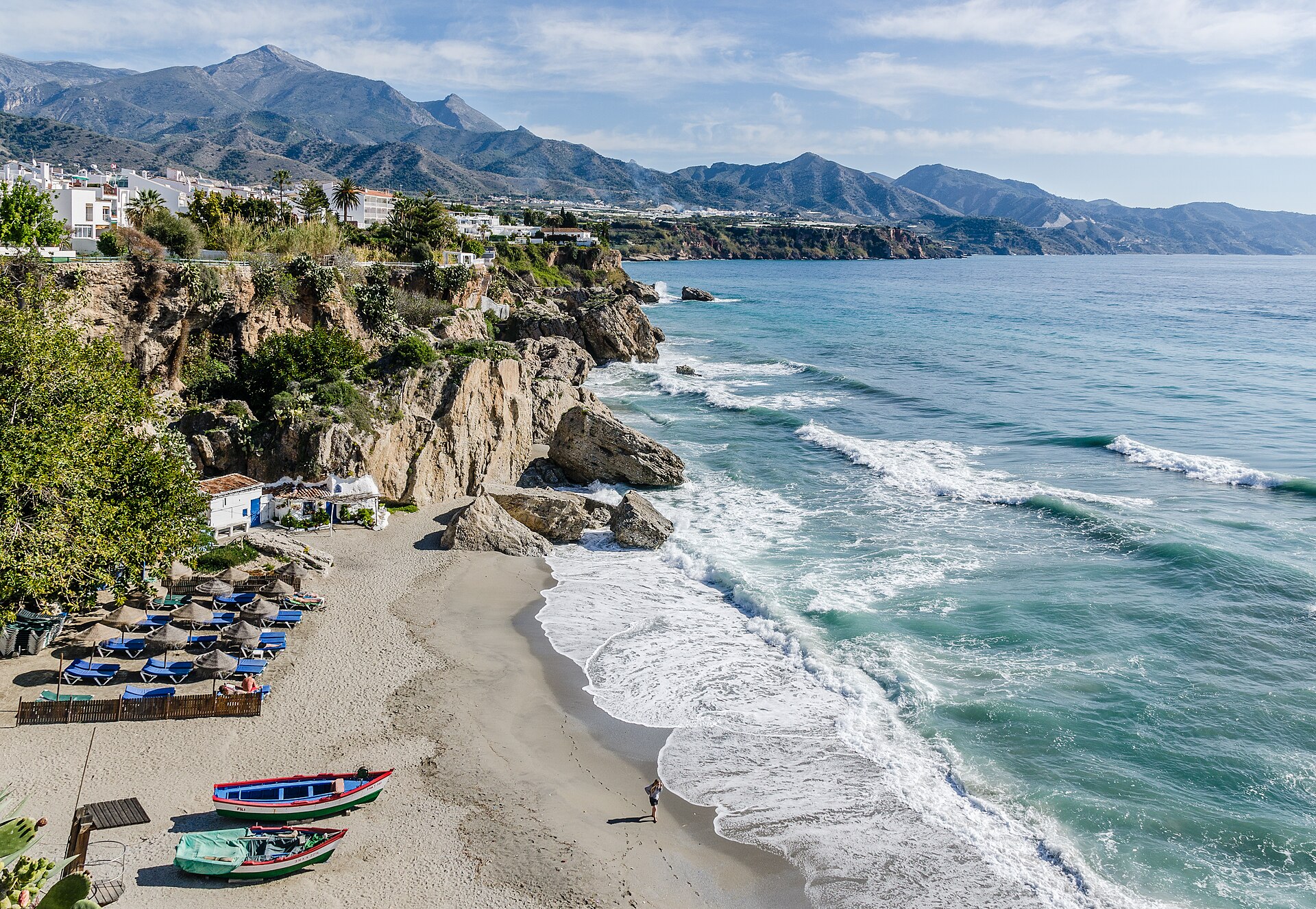
- Caves of Nerja — Outside town, near Maro
The caves lie just outside town and form a long series of caverns with prehistoric paintings in the wider system. One chamber is a natural amphitheatre where concerts are held. It is among Spain's busiest visitor attractions, so expect queues in summer. Check the official site for opening and ticket details. - Burriana Beach and the coves — Coast below and east of the old town
Burriana is the town's best-known beach and carries a Blue Flag. Nearer the centre, Calahonda and Carabeo are pebbly coves tucked into the cliffs, and Carabeo is reached by a steep stairway. Carabeillo, a sandier strip under a cliff, marks the western end of Burriana. Bring shoes for pebbles. - El Salvador Church — Old town, beside the Balcón de Europa
El Salvador is a baroque-mudéjar church of the seventeenth century, facing a small plaza a moment from the Balcón. It is a calm stop between beach and lunch. The hermitage of Nuestra Señora de las Angustias, a sixteenth-century church, also holds paintings attributed to Alonso Cano. - Águila Aqueduct — Road towards the caves and Maro
The Puente del Águila is a nineteenth-century aqueduct built in the manner of Roman ones, designed to carry water to the village of Maro, one of the older settlements hereabouts. It is easy to see on the road to the caves, so it fits naturally into the same trip.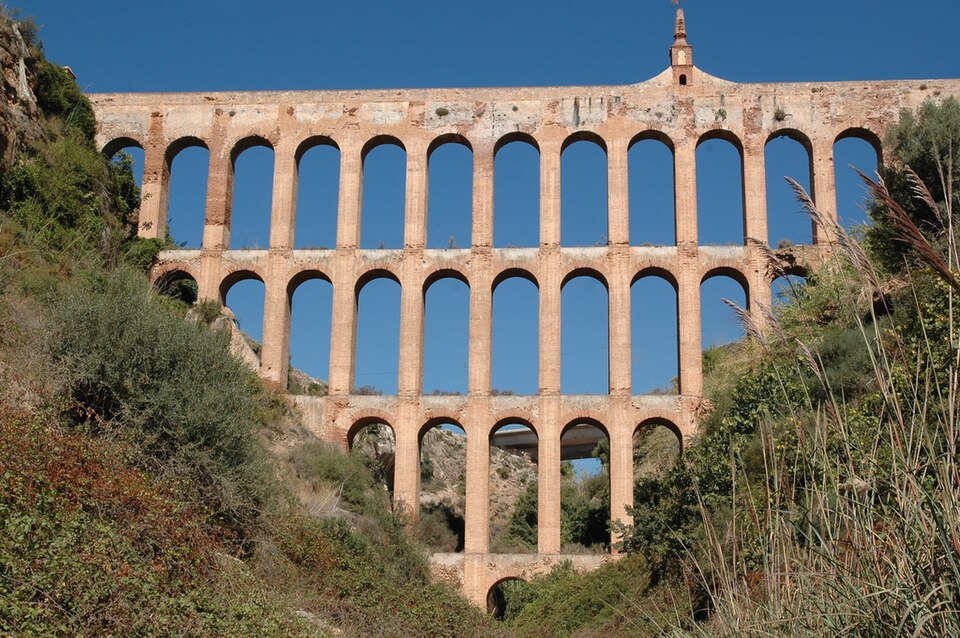
Culture
Nerja's culture is Andalusian at its core and shaped by decades of visitors. Daily life follows a southern Spanish rhythm: a late lunch, a quiet stretch in the afternoon heat, and an evening when families and friends fill the squares and the seafront promenade. Spanish holidaymakers share the town with French, Italian and northern European visitors, and a sizeable community of foreign residents has settled here. That gives the town an unusual mix: tapas bars and chip shops, Spanish chatter and English-language pubs. Older residents remember a more distinctly Spanish working town, and some locals will say the place has changed. The old centre still carries traces of that earlier town in its churches, small plazas and narrow lanes, and in the fishing boats that remain on the sand. A weekly Sunday market near the river is worth timing a visit around, since it draws residents as well as visitors. Religious life remains visible in the baroque church by the Balcón and in the hermitage, both of which are working places of worship and not only sights. Music has a place here too, from concerts in the caves to flamenco nights in some bars. Visitors who make an effort with a few Spanish phrases usually get a warmer reception than those who open in English. When you step into a small shop, bar or church, greet people first with a quiet 'buenas tardes' or 'buenos días', and keep your voice down and shoulders covered inside the church.
What to wear
Traditional Andalusian dress is most visible in Nerja at fairs and religious festivals, not on ordinary days. Women wear the traje de flamenca, a fitted dress with ruffled flounces, usually in cotton or light synthetic fabrics and often in bright colours or polka dots, finished with a flower in the hair and sometimes a fringed silk shawl called a mantón. Lace mantillas appear at religious processions. Men may wear the traje corto, a short jacket with high-waisted trousers, sometimes with a wide-brimmed hat. These outfits are festival dress and are not worn day to day. Everyday clothing in Nerja is relaxed and practical: linen shirts, light dresses, shorts and sandals in the warm months, with jeans and a light jacket on winter evenings. Beachwear stays near the sand, and people dress a little more smartly for dinner. For a visitor, light cotton or linen suits the hot, dry summers, and a sun hat, sunglasses and sun cream matter from spring to autumn. A thin jacket or jumper is useful in the mild but sometimes wet winters. Sturdy sandals or shoes with grip help on the pebbly coves and the steep stairway down to Carabeo, and water shoes make pebble beaches kinder on the feet. Cover shoulders and knees when entering the church or hermitage, and carry a light layer for that purpose.
What to eat
- Espetos de sardinas — Beach bars along Burriana
Sardines threaded on a cane skewer and grilled over a wood fire, usually on the sand. The fish is simply salted and eaten with the fingers. This is the classic beach-lunch order along this coast, and the best place to try it is a beach bar at Burriana. - Fritura de pescado — Informal marisquerías on the small squares in the west of town
A mixed plate of small fish and squid, lightly floured and fried in olive oil, served hot with lemon. It is the standard order at casual seafood places, and it tastes best shared with a cold drink at an outdoor table. - Boquerones — Tapas bars in the old town
Fresh anchovies, served either fried or marinated in vinegar and garlic. The fried version is crisp and mild; the vinegared one is sharper and cooler. Both are tapas staples in this part of Andalusia and cost little compared with main dishes. - Ajoblanco — Restaurants and tapas bars around the old centre
A cold soup of ground almonds, garlic, bread and olive oil, often served with grapes or melon. It is a good answer to summer heat. Check with the kitchen, since some places serve it only in the warmer months. - Churros con chocolate — Cafés near the plazas in the old town
Fried dough sticks dipped into thick hot chocolate, eaten at breakfast or as an afternoon treat. They are a Spanish habit shared by visitors and residents alike. Go early, since the best batches sell out quickly.
Plan it
Best time. May–June and September–October, when the sea is warm and the heat is easier than in July and August. Winters are mild but wetter, so November to March suits walking more than swimming. Summers are sunny, dry and hot, and the beaches and caves are busiest then.
How long. 2–3
Getting there. There is no airport, railway station or ferry at Nerja itself. Fly to Málaga Airport, then take a bus from Málaga bus station, which stands across the road from the city's railway station. The last leg is a coastal bus drive to Nerja's bus stop on Avenida de Pescia, a short walk inland from the Balcón de Europa. A taxi from the airport is also possible; agree the fare first.
Budget. mid
Tips
- Visit the Balcón de Europa early or at dusk to avoid the midday crowds
- Book or check the caves' opening and ticket details on the official site, https://esnerja.com, before going
- Carry water and sun protection from spring to autumn, as shade is limited on the beaches
- Wear shoes with grip for the steep stairway to Carabeo and the pebbly coves
- Check the market day if Sunday matters, since the town is lively around it
Etiquette
- Greet people in shops and bars with a short 'buenas tardes' or 'buenos días'
- Cover shoulders and knees when entering the church or hermitage
- Keep noise down in the old town in the evening, when many people live above the bars
Nearby
Sources
- Wikidata Q13149 (CC0)
- Wikipedia: Nerja (CC BY-SA 4.0)
- Wikivoyage: Nerja (CC BY-SA 4.0)
- Photo: Nerja, Costa del Sol (kallerna) (CC BY-SA 4.0)
- Photo: La ville de Nerja (Seamus Murray) (CC BY 2.5)
- Photo: View from Balcón de Europa in Nerja (Tuxyso) (CC BY 3.0)
- Photo: Los terremotos en la provincia de Málaga (Juan Comba García / Tomás Carlos Capuz) (Public domain)
- Photo: Los terremotos en la provincia de Málaga, page 61 (Juan Comba García / Tomás Carlos Capuz) (Public domain)
- Photo: Almijara Short Mat Bowls Club (Back ache) (CC BY-SA 4.0)
- Photo: Andalusia (Mickey Løgitmark) (CC BY 3.0)
- Photo: Balcon 2. Nerja. (MagBurns) (CC BY 3.0)


