National Center for Traditional Arts
National Center for Traditional Arts, Taiwan
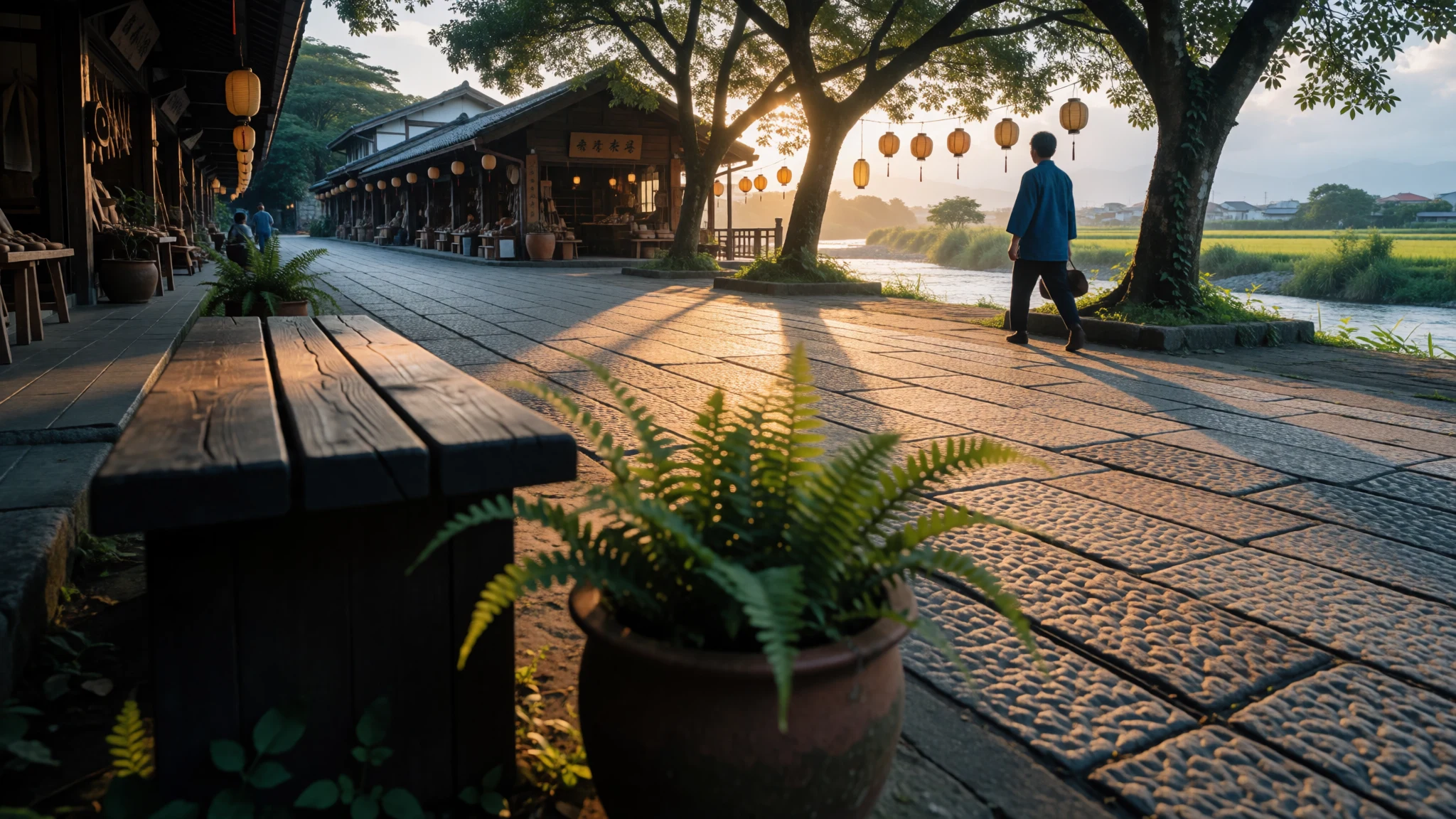
In Yilan County, the National Centre for Traditional Arts presents Taiwanese craft, opera and folk customs as living practice rather than museum pieces.
The place
The National Centre for Traditional Arts sits on the bank of the Dongshan River in Wujie Township, Yilan County, on the north-east side of Taiwan. It is a government agency, a museum and an arts centre in one, and the grounds cover 24 hectares, which is a lot of walking in summer humidity. The purpose is practical rather than decorative: staff research, record, teach and promote traditional crafts and performing arts, and also look for ways to renew them so they stay in use. For a visitor that makes the place feel less like a quiet gallery and more like a working village of the arts. A pedestrian street carries craft shops and demonstrations, stages host opera and music, and workshops let people try techniques themselves. Locals treat it as a day out as much as a cultural institution, so weekends and school holidays bring families and tour groups, while weekday mornings are calmer. The nearest town is Luodong, a modest, easy-going place with a night market, a few temples and parks, and the train and bus links that make the centre reachable. Yilan County itself is green, river-fed farmland between the mountains and the Pacific, and the centre is a popular stop within it. Half a day is the least that does it justice. The official site, https://www.ncfta.gov.tw/, is the place to check current opening days, performance schedules and workshop bookings before setting out, since programmes change with the season and with festivals.
Its story
The National Centre for Traditional Arts was founded in January 2002 as one of the agencies under Taiwan's Council for Cultural Affairs, the body then responsible for national culture policy. Its creation answered a plain problem: crafts, folk customs and performing traditions were being kept alive by scattered families, troupes and local museums, with no single institution tasked with recording and teaching them. The centre was meant to be that institution, with a riverside campus serving as both a research base and a public stage.
A few years after the opening, an amendment to the Cultural Heritage Preservation Act gave the centre formal authority over traditional arts and folk customs connected to cultural artefacts. That turned it from a showcase into a body with legal responsibility. Not long afterwards the council set up a preparatory office for cultural heritage administration, and some centre staff were transferred to it. The effect was to separate the broad business of heritage protection from the centre's own work on living arts, which is the part visitors meet today: demonstrations, courses, festivals and stage performances.
The campus has also served as a place where Taiwan receives guests. In December of a later year, the head of a cross-strait association toured it during a week-long visit around the island, a reminder that it works as a shop window for Taiwanese culture as well as a classroom. Photographs from the site show students performing Taiwanese opera and Vietnamese new-resident groups on stage, which suggests how far the idea of tradition here has widened. The institution is young compared with the arts it serves: the buildings are modern, while the skills on show are generations old.
What to see
- Folk Art Boulevard — Wujie Township, Yilan County
The pedestrian street running through the National Centre for Traditional Arts is the natural starting point, lined with craft shops, snack stalls and spaces for demonstrations. Watching a maker at work is the point, so dawdle. Weekend late mornings are busiest, and in summer the sun on the paving can be fierce.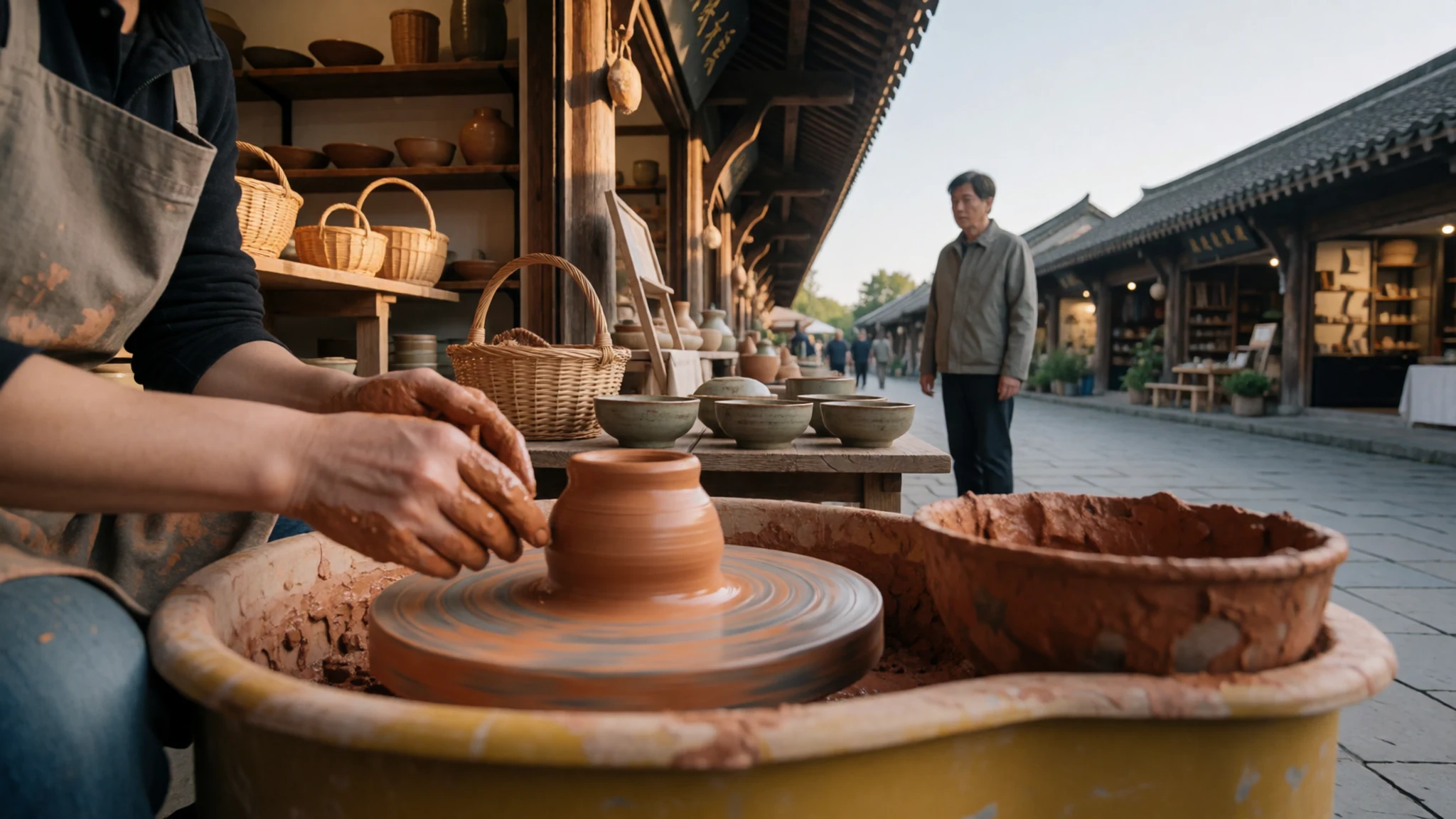
- Stage performances — Wujie Township, Yilan County
Taiwanese opera and other stage arts are the living showpiece of the National Centre for Traditional Arts. Photographs show students in full costume performing on site, and festival days add music and community groups. Programmes vary by season, so check https://www.ncfta.gov.tw/ for current schedules instead of assuming a show is on.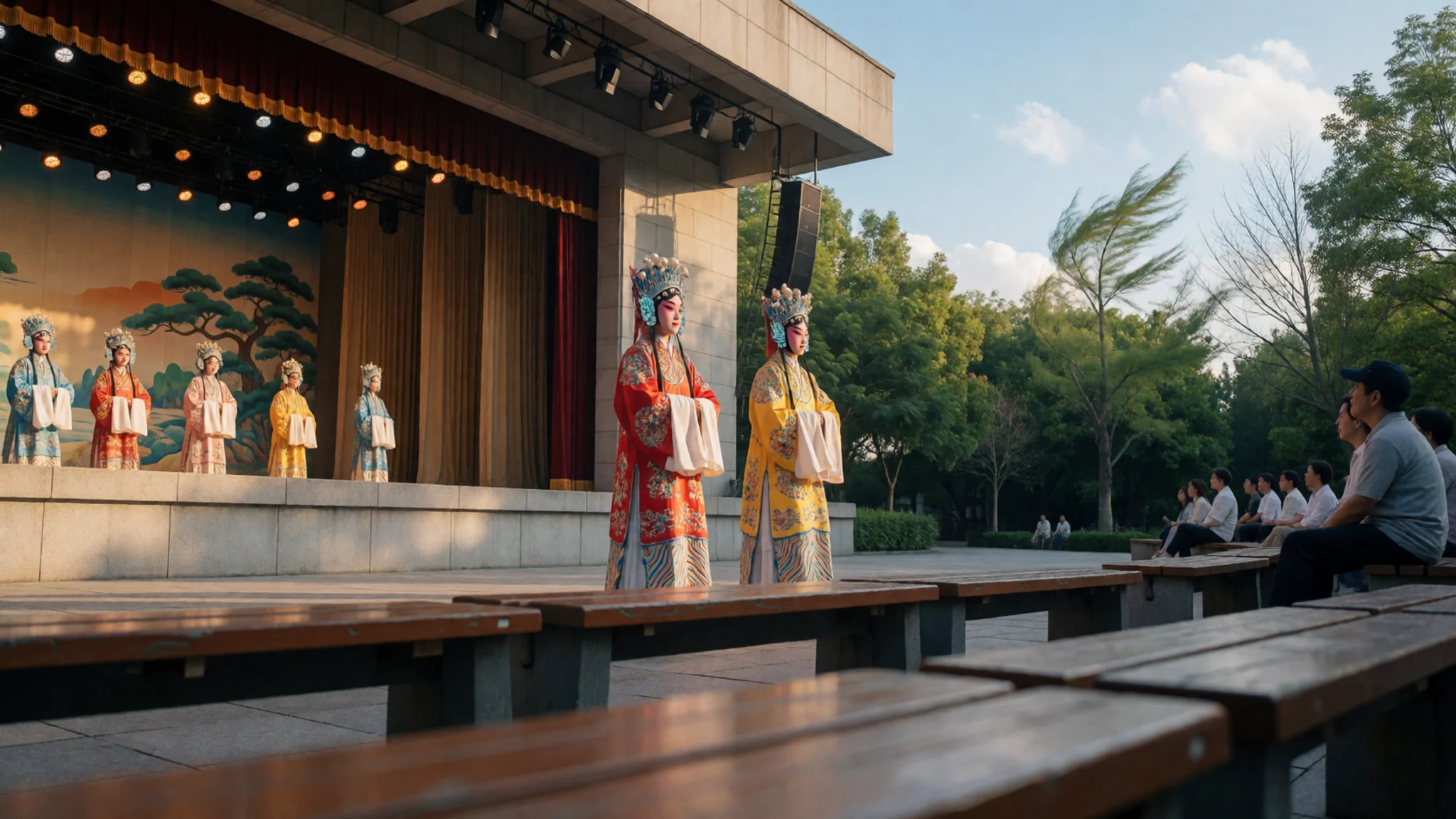
- The Dongshan River bank — Wujie Township, Yilan County
The campus sits beside the Dongshan River, so the walk between venues includes open, waterside space and wide skies. It makes a calm pause between performances. In wet weather the paths can be slippery, and an umbrella is often more useful than sunscreen.
- Luodong Forestry Culture Park — Luodong, north side of town
A short trip into Luodong town leads to this park, built around two ponds once used for storing logs in the Japanese colonial period. Old railway engines and large carved tree stumps recall the timber trade that once shaped the area. It suits a gentle walk and pairs easily with a morning at the centre.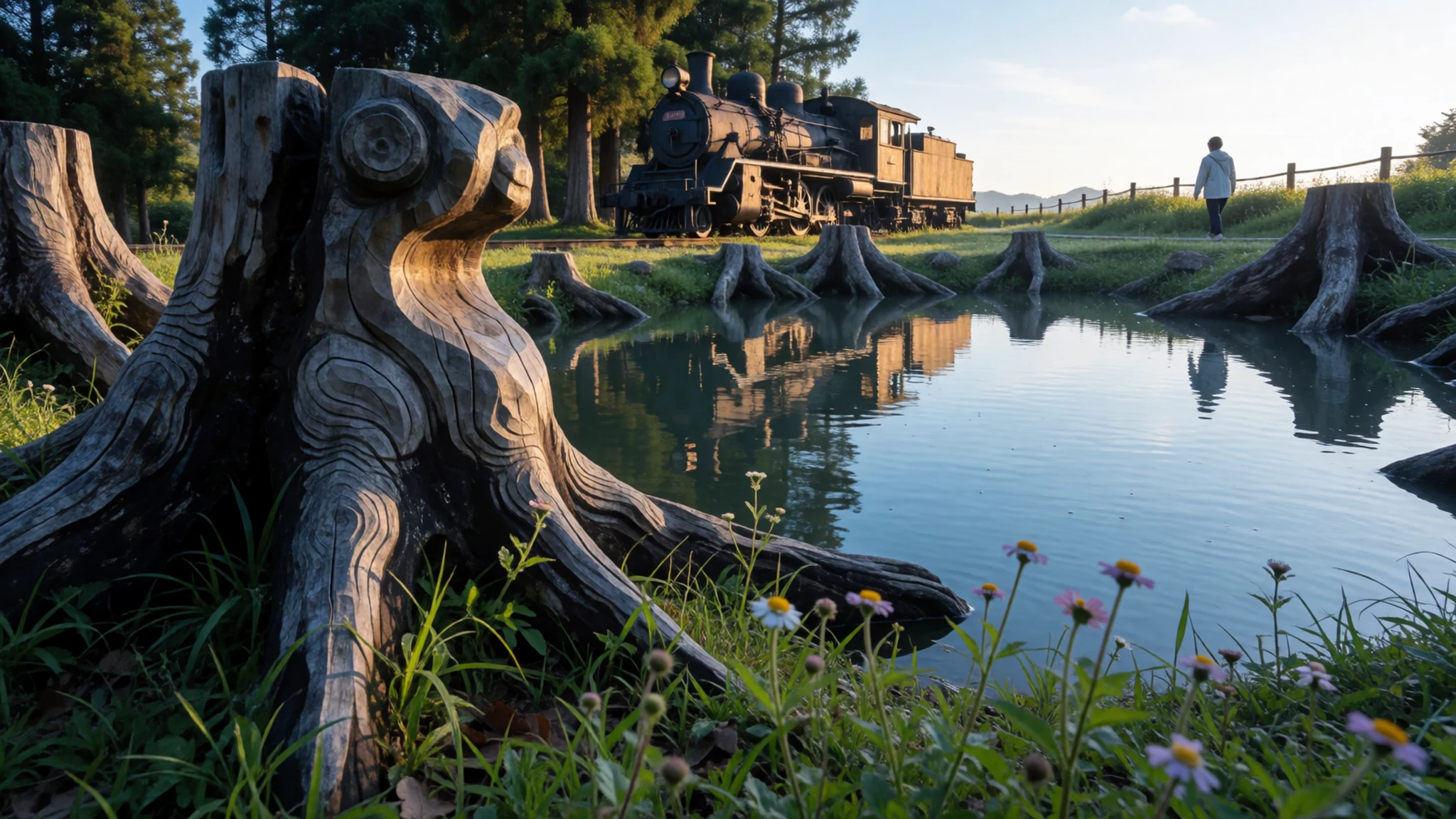
- Luodong Cultural Working House — Luodong town
This open stretch of parkland in Luodong often hosts arts performances and workshops, which makes it a useful second stop for anyone wanting more hands-on culture after the main campus. Events vary, so ask locally or check listings rather than relying on a fixed timetable, and treat anything on the day as a bonus.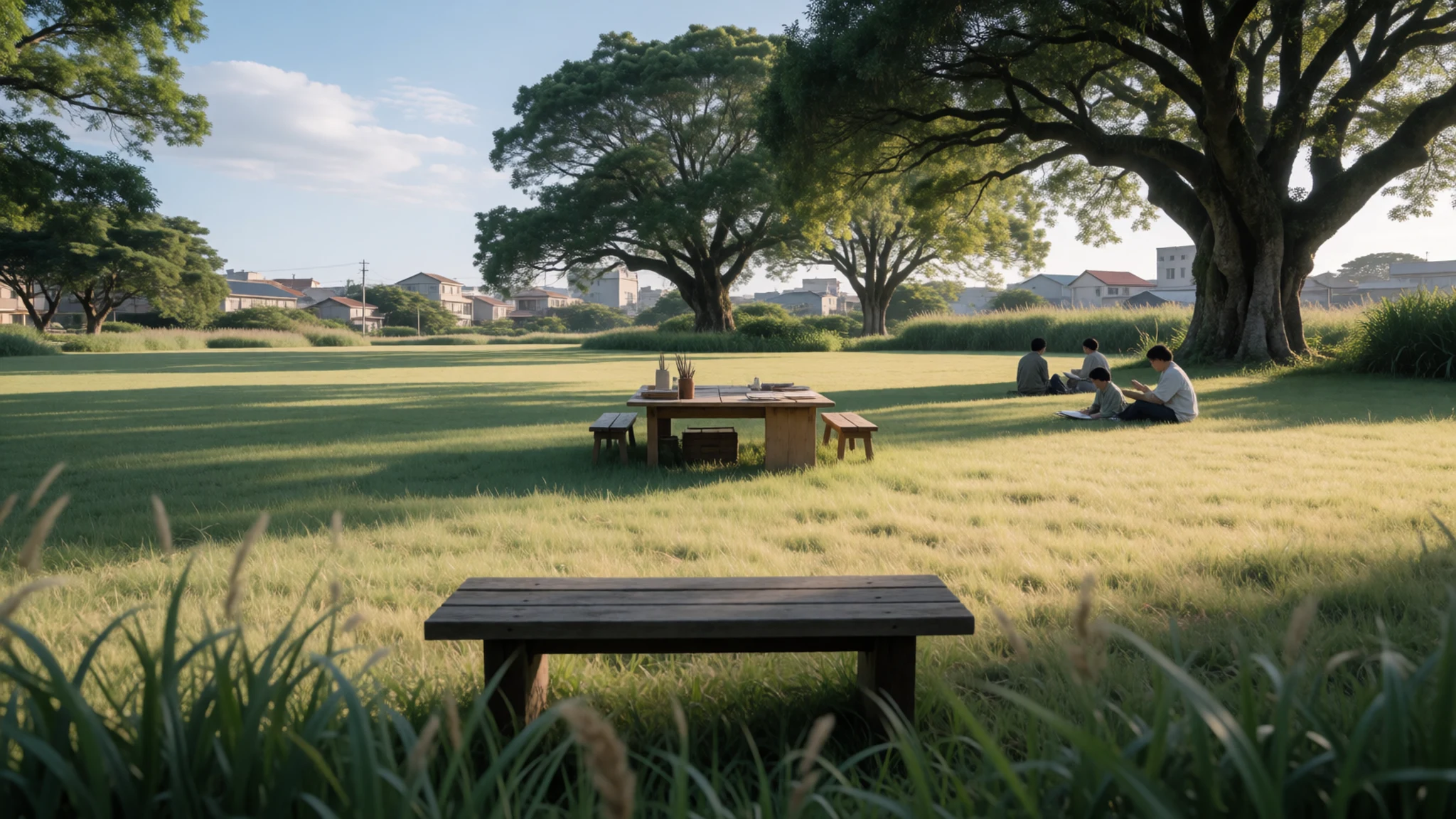
Culture
The National Centre for Traditional Arts is built on the idea that culture is something practised, not only displayed. Taiwanese opera, puppetry, folk music, craft skills and festival customs belong to an island shaped by Hokkien, Hakka, Indigenous and more recent migrant communities, and the centre tries to give each a platform. The student performances show how a craft is handed on: costume, gesture, sung speech and percussion are learned together, often from a young age. Programmes also include groups from newer communities, with Vietnamese performers among those photographed on stage, so the word 'tradition' here covers recent arrivals as well as old lineages. Seasonal festivals bring extra crowds and noise, and are the best time to catch ritual and street-style performance, though also the hardest for photography. Craft demonstrators are usually happy to talk about their work, and buying a small piece directly is a simple way to support the trade. Many customs carry religious meaning even when presented as entertainment, so the line between a show and a rite can be thin. Signs and explanations are mostly in Chinese with some English, so a translation app helps, although music and movement need little explaining. Ask before photographing performers or craftspeople at close range, and keep phones silent and flashes off during stage shows.
What to wear
The National Centre for Traditional Arts is a good place to see how dress traditions in Taiwan differ between communities. Indigenous peoples have their own woven garments, often made from ramie or cotton and finished with beadwork and bold geometric patterns that vary from nation to nation; they are worn at festivals and ceremonies. Hakka communities are associated with plain, hard-wearing blue cotton jackets. Taiwanese opera costume is a separate tradition: embroidered silk robes, elaborate headdresses and painted faces designed to be read from the back of a theatre, seen on stage at the centre. Day to day, people in Yilan wear what suits a humid and often wet climate: T-shirts, light trousers or shorts, trainers, and a rain jacket or umbrella within reach. Traditional dress turns up at performances, festivals and school events rather than on the street. Visitors should dress for the weather first: breathable cotton or quick-dry fabric, a light waterproof, and comfortable closed shoes for long paved stretches and damp riverside paths. There is no strict dress code on the grounds, but covering shoulders and knees is a courteous habit when stepping into Luodong's temples. A thin extra layer helps in air-conditioned halls.
What to eat
- Smoked duck — Food shops and stalls around Luodong town
Smoked duck is a Yilan County speciality, sold sliced and served cold or at room temperature, with a sweet-savoury edge from the smoking. It travels well, so many visitors buy some to take home. Look for shops and stalls around Luodong rather than inside the arts campus.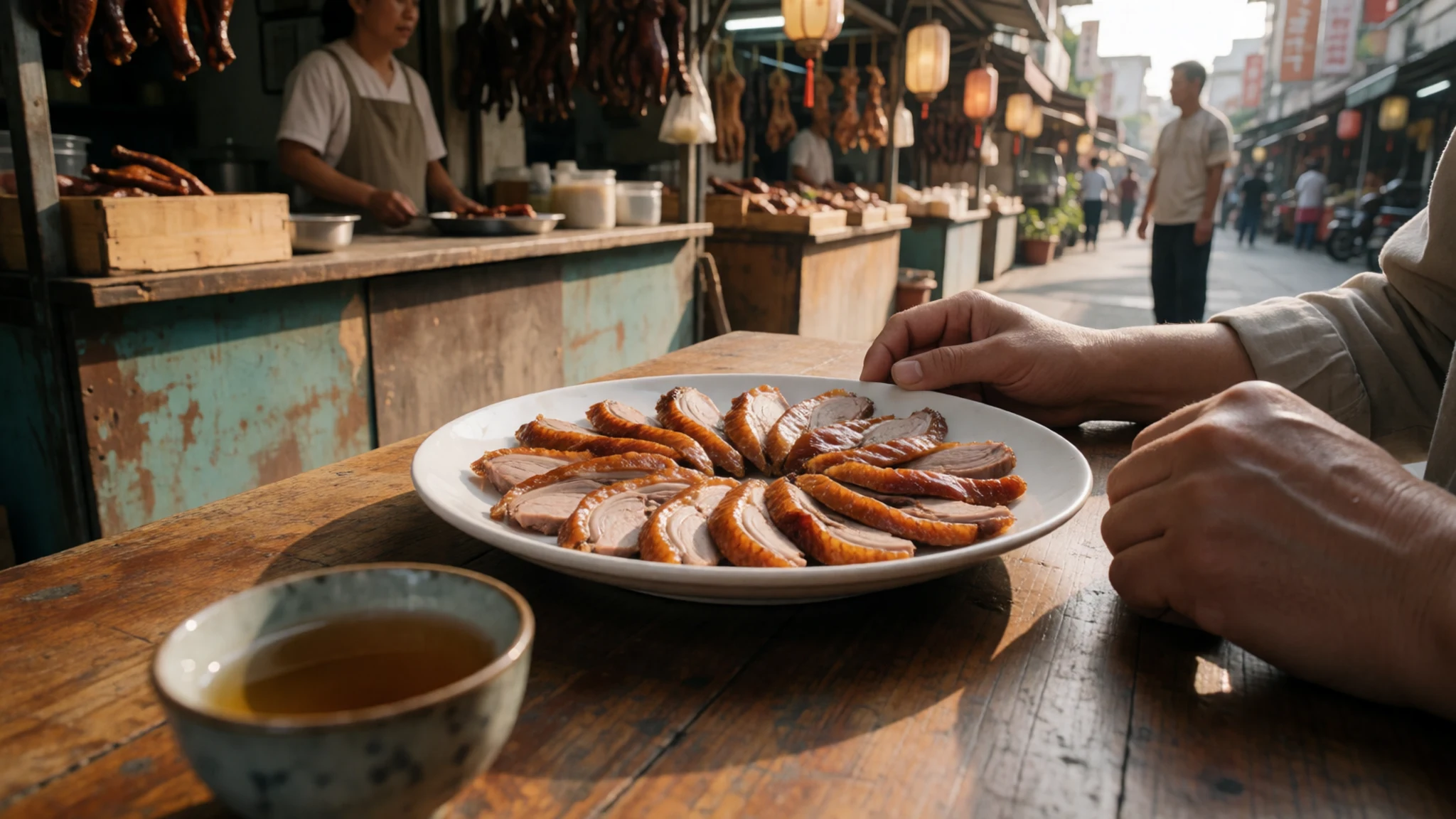
- Scallion pancake — Night-market stalls and breakfast stands in Luodong
Layered, crisp-edged scallion pancakes are an easy snack, often with egg folded in and a splash of sweet-spicy sauce. Yilan's farmland is known for spring onions, which is why they turn up so often in local street food. Best eaten straight from the griddle.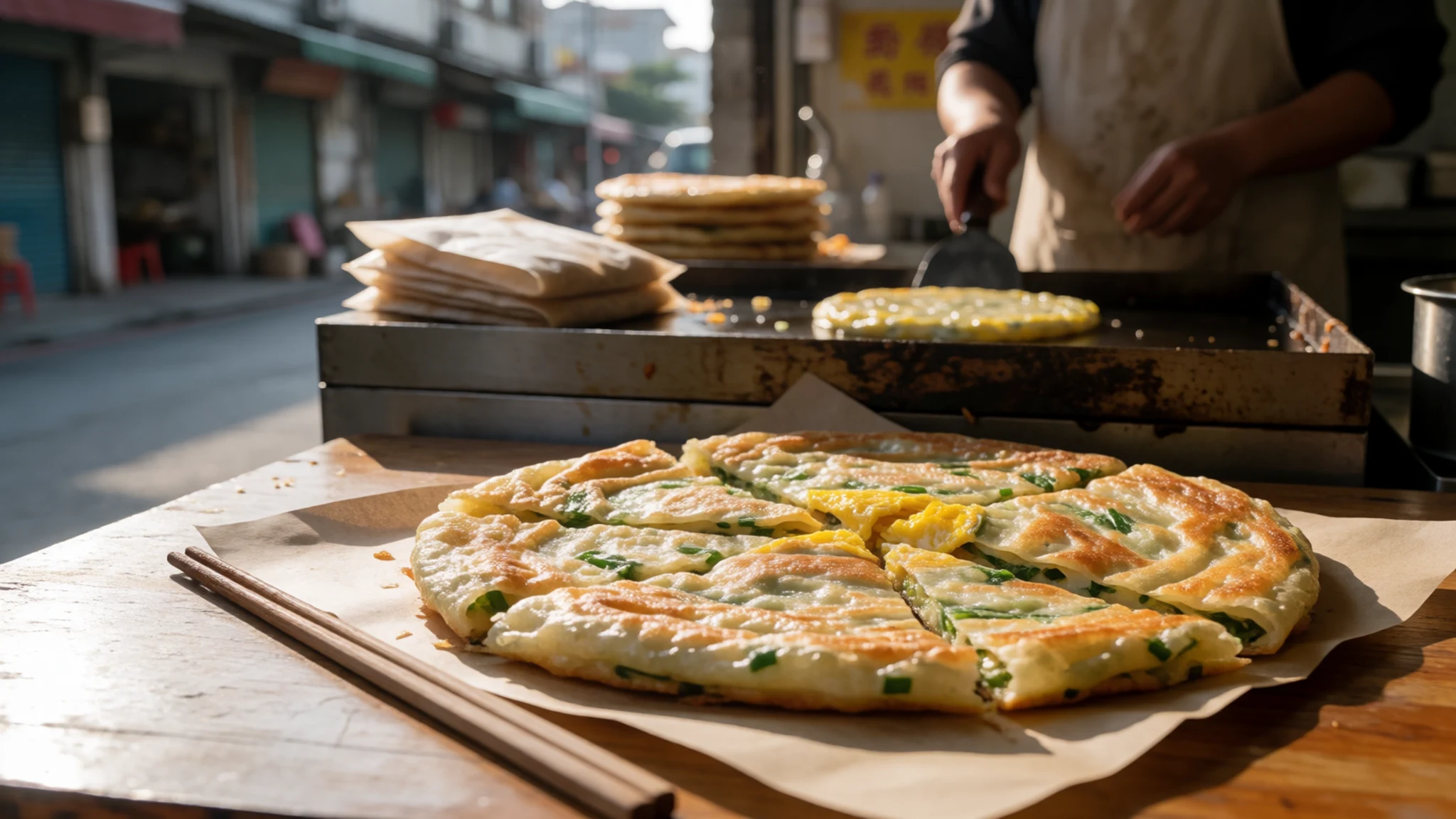
- Oyster omelette — Luodong Night Market, around Jungshan Park
A night-market staple: small oysters, egg and greens bound with starch and finished with a tangy red sauce. It is soft, glossy and best eaten hot. Look for a stall with a short queue and a pan that never goes cold. - Thick seafood or pork soup — Soup stalls and local eateries in Luodong
Thick, starchy soups of fish, squid or pork are cheap comfort food in Yilan, usually served with vinegar and coriander. Order a small bowl alongside other snacks rather than as a full meal, and eat it while it is properly hot. - Stinky tofu — Night-market stalls in Luodong
Fermented tofu, deep-fried until crisp and served with pickled cabbage and chilli. The smell reaches a long way down the street, though the taste is milder than the reputation. Choose a busy stall with fast turnover and approach with curiosity.
Plan it
Best time. March–April and October–November are generally the more comfortable months, though Yilan's north-east coast can see rain in any season, so carry an umbrella. Summers are hot and humid, and typhoon season can disrupt travel plans.
How long. 1
Getting there. Fly into Taipei (Taoyuan or Songshan), then take a train or a long-distance bus (Capital Star, Kamalan or Guoguang services) from Taipei to Luodong, or drive via the national freeway. From Luodong, take a local bus or taxi to Wujie Township; check the official site for the best last leg.
Budget. low
Tips
- Go on a weekday morning for smaller crowds and cooler air.
- Check https://www.ncfta.gov.tw/ for performance days and workshop bookings before committing to travel dates.
- Carry some cash for night-market stalls and craft purchases, plus a card as back-up.
- Bring an umbrella and a refillable water bottle, as the site is open and exposed.
- Pair the centre with an evening in Luodong for the night market.
Etiquette
- Ask before photographing performers or craftspeople at close range.
- Keep phones silent and flashes off during stage shows.
- Cover shoulders and knees when visiting temples in Luodong.
Nearby
Sources
- Wikidata Q6971385 (CC0)
- Wikipedia — NCFTA article (rev 1378793016) (CC BY-SA 4.0)
- Wikivoyage — Luodong (rev 5409916) (CC BY-SA 4.0)
- Photo: Folk Art Boulevard — Bernard Gagnon (CC BY-SA 2.5)
- Photo: The national centre in Yilan — Traininteriorguy (CC BY 4.0)
- Photo: Students' Taiwanese opera performance — Bellenion (CC BY 3.0)
- Photo: 2017 new-resident performance (Vietnamese) — P1340 (CC BY-SA 4.0)
- Photo: Yilan, Taiwan 01 — 立法院 (CC BY 4.0)
- Photo: Yilan, Taiwan 02 — 立法院 (CC BY 4.0)
- Photo: Yilan, Taiwan 03 — 立法院 (CC BY 4.0)
- Photo: Yilan, Taiwan 04 — 立法院 (CC BY 4.0)


