Mustang
Mustang, Nepal
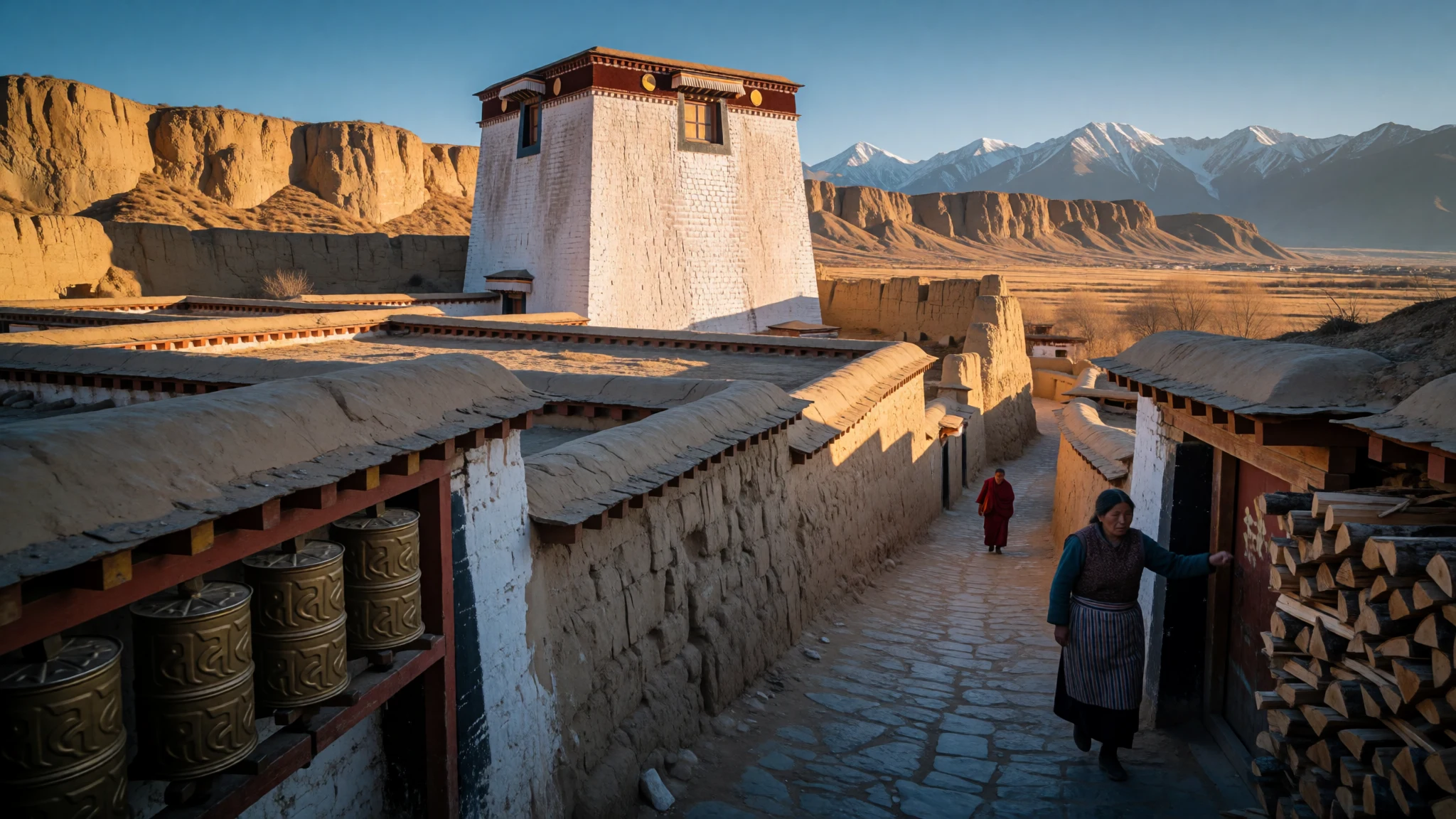
Mustang is a high Himalayan desert where Tibetan Buddhist life, a walled royal town and old caravan villages survive, reached on foot or by rough road.
The place
Mustang is a dry, wind-scoured corner of northern Nepal, tucked behind the Annapurna and Dhaulagiri ranges, which hold back most of the monsoon. The old Kingdom of Lo, now called Upper Mustang, forms the northern part of Mustang District in Gandaki Province. Rainfall is only about 250–400 mm a year, so the landscape is high desert: ochre and rust-coloured cliffs, barley fields squeezed beside streams, poplar groves around the villages and snow peaks along the skyline. The Kali Gandaki river runs south through the district, and the route beside it once carried salt between Tibet and India. Traditional Lo measures about 53 km from north to south and 60 km from east to west, falling to 2,750 m near Kagbeni and rising to 6,700 m at Khamjung Himal. The southern third of the district, Thak, is the homeland of the Thakali people, whose culture blends Tibetan and Nepali elements. Further north, Tibetic languages are still spoken daily, and the Seke language survives in villages such as Chusang, Tangbe, Gyaka and Cheile. Outsiders were kept out until 1992, and entry to Upper Mustang is still controlled by a special permit, which goes a long way to explaining why the villages feel less altered than many Himalayan ones. Livelihoods rest on herding, trade and, increasingly, trekkers. Road building is creeping up the valley, and in places new tracks now cut across the old walking route.
Its story
Mustang's story is that of a small Tibetan-speaking kingdom that prospered by sitting on a trade road. Its rulers traced their line to Ame Pal, a warrior credited with founding the Buddhist kingdom in 1380 and with raising much of Lo Manthang, the walled capital whose outline has barely shifted since. Between the fifteenth and seventeenth centuries, control of the passes gave Lo a hold on goods moving between the Himalaya and the plains of India, salt above all. Its ties ran north: language, religion and loyalty all leaned towards Tibet, and during the Sino-Nepalese War the kingdom backed Tibet and the Qing court. In 1795 Nepal absorbed Lo and made it a dependency, yet the local kings kept real standing in the eyes of their people for generations. That ended on paper in 2008, when Nepal became a republic and the government abolished the monarchy. Plenty of Mustang residents still honour the old title. The last king, Jigme Dorje Palbar Bista, was the direct heir of Ame Pal's line. The past keeps surfacing from the ground, too. In 2007 a shepherd came across 55 painted cave panels showing episodes from the life of the Buddha, a reminder of how much of the region's religious history is still unrecorded. Today the trade that once made Lo important has largely been replaced by tourism and by new roads from both north and south.
What to see
- Lo Manthang — Lo Manthang, Upper Mustang
The walled capital of the old kingdom sits on an open plain, a tight huddle of flat-roofed, whitewashed houses inside earthen ramparts. Wandering the lanes at a slow pace, past prayer wheels, courtyards and stacked firewood, is the main pleasure. Expect wind, dust and bright light, especially in the afternoon.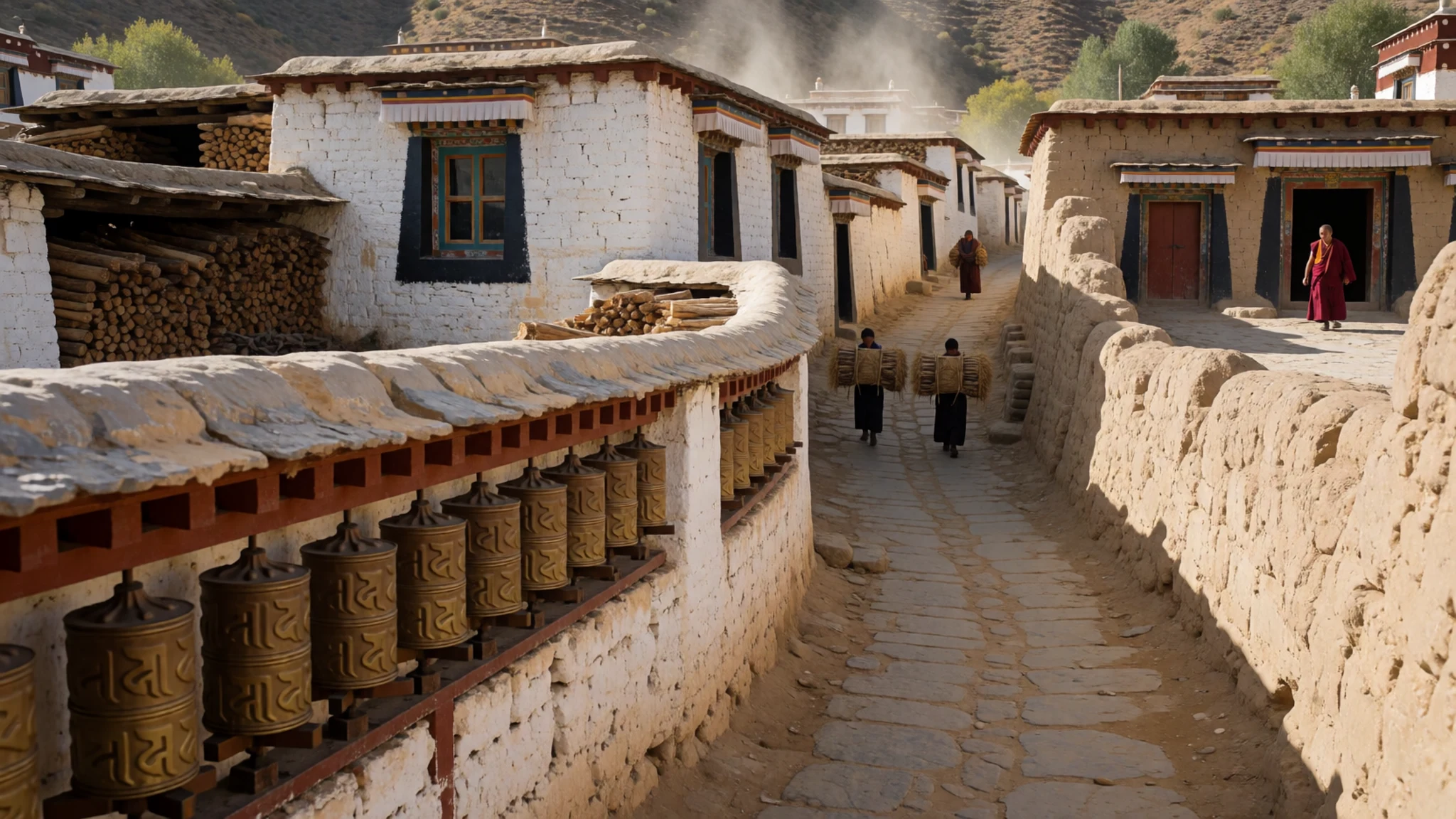
- The Royal Palace, Lo Manthang — Lo Manthang, Upper Mustang
The former royal residence rises above the town's rooftops as a tall, plain, whitewashed block. It is best appreciated from outside and from nearby lanes, where its scale against the low houses makes the old hierarchy obvious. Interiors and access depend on the family and local custom, so ask locally.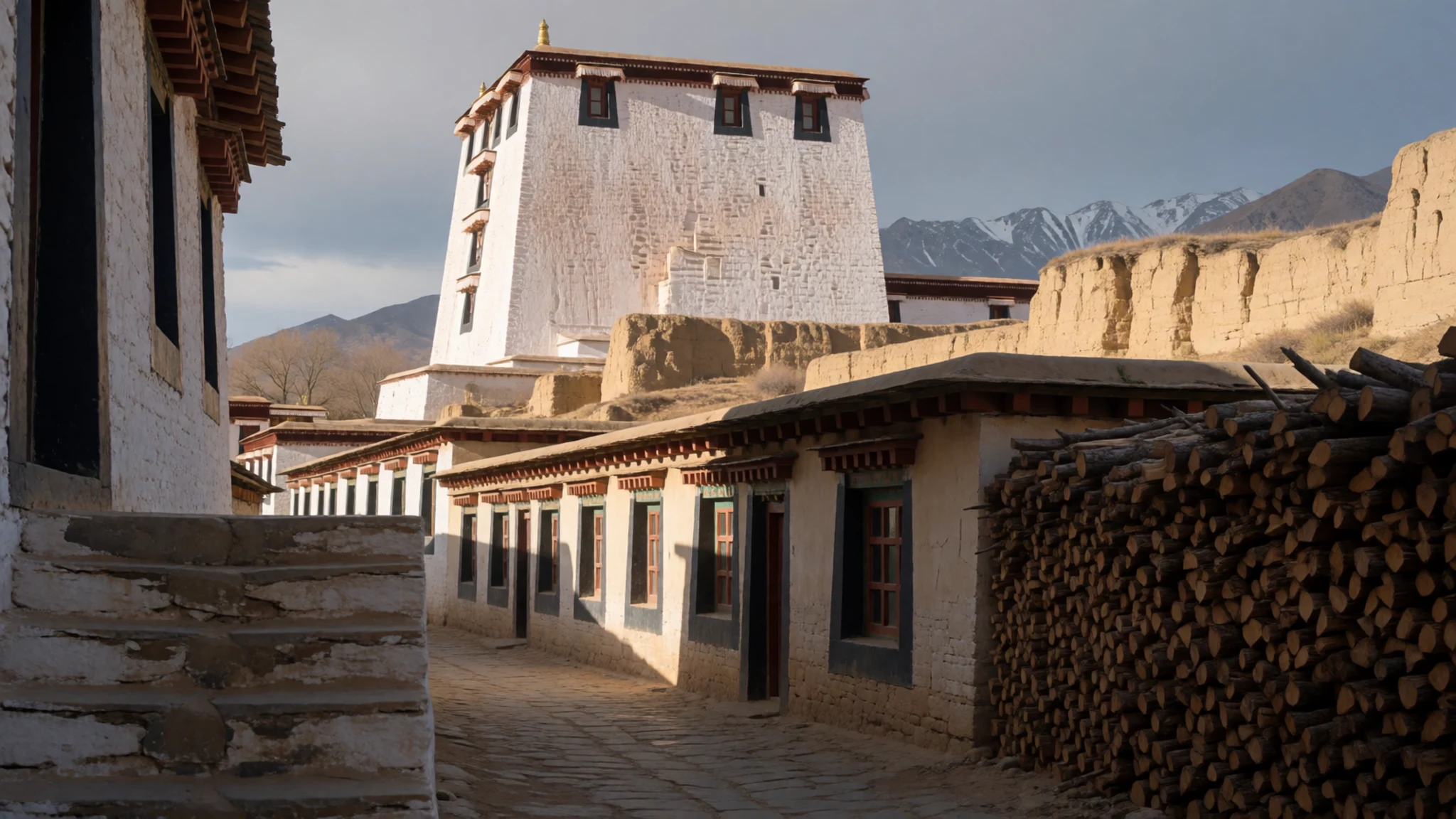
- Tangbe — Baragau region, Upper Mustang
A typical village of the valley, with narrow alleys, whitewashed walls, chortens and strings of prayer flags, set among buckwheat and barley fields. Walkers pass through on the old caravan line, and the colour contrast of green fields, white walls and red cliff is the reason many stop for photographs.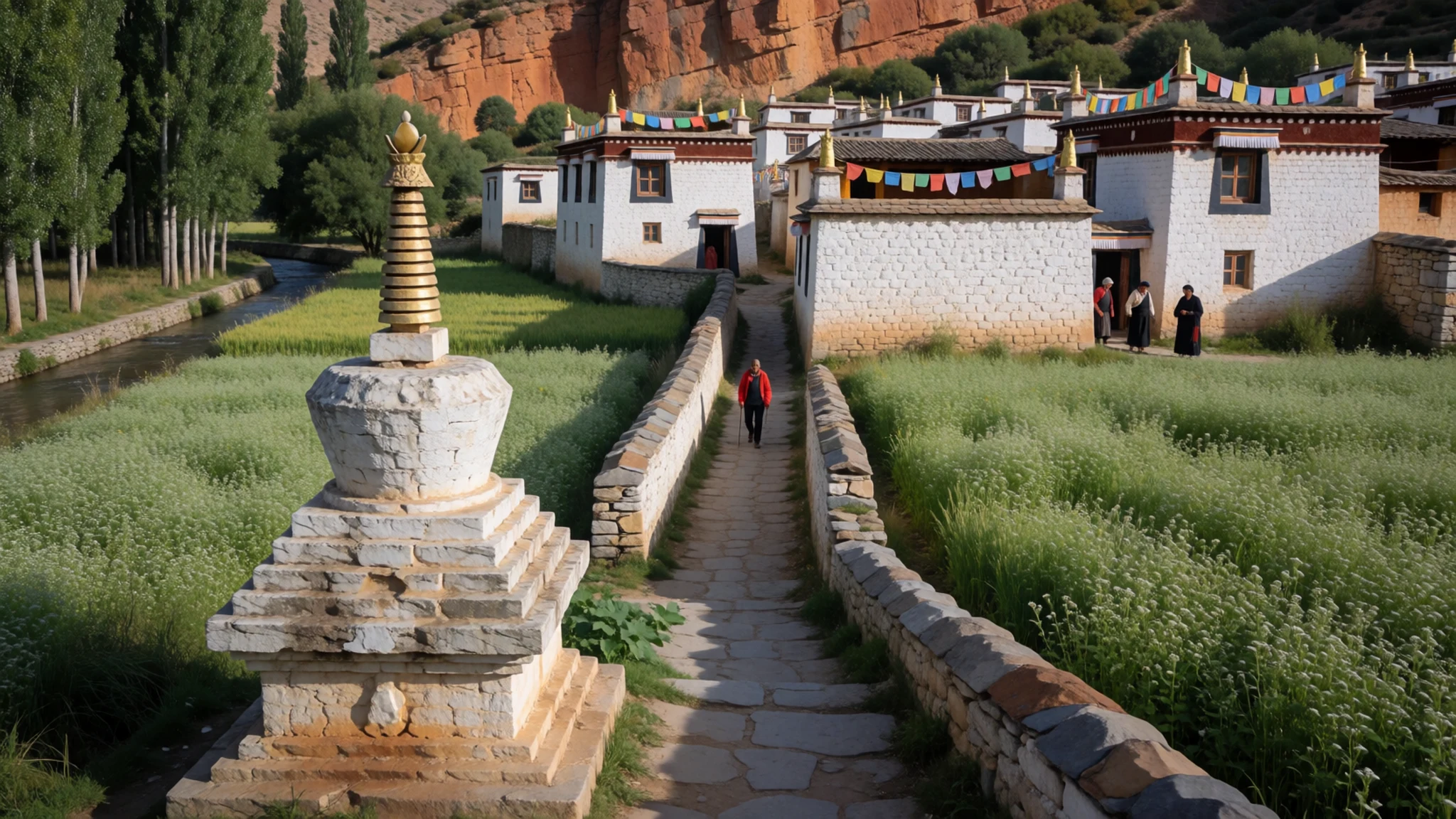
- Gyakar and the Damodar Himal — Upper Mustang
Gyakar lies in a poplar grove with the Damodar Himal summits behind it, a scene that changes through the day as shadows move across the ridges. It is a quieter stop than the capital, and a useful one for seeing how a village sits beside irrigation and fields.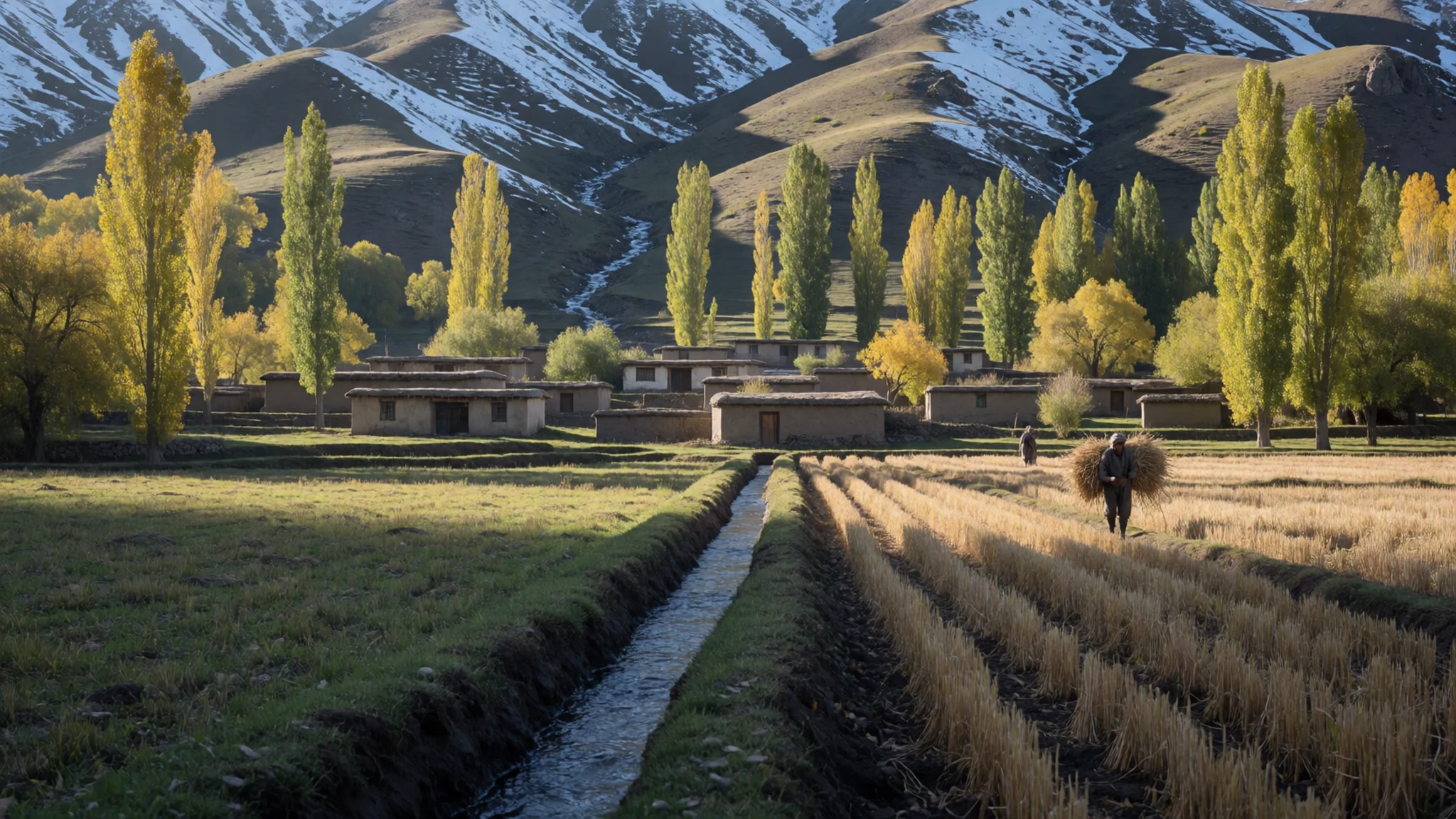
- Kali Gandaki valley at Kagbeni — Kagbeni, Mustang District
Kagbeni marks the southern doorway of Upper Mustang, where the river flows through a wide stony bed below red cliffs and fields. Views reach to Nilgiri's steep north face. The valley wind picks up in the afternoons, so walking early makes the stretch more comfortable.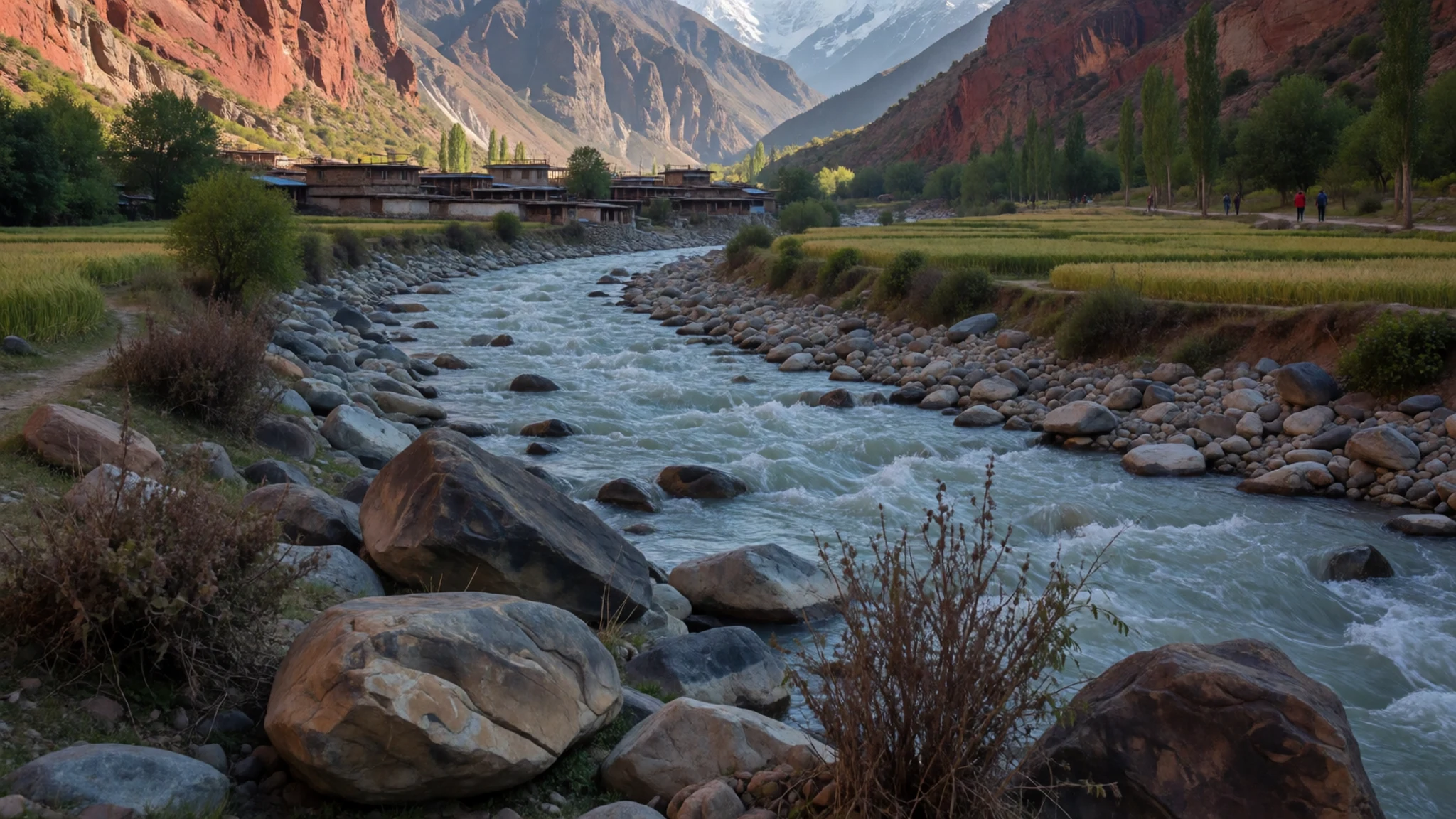
Culture
Mustang's culture is Tibetan Buddhist, and the way it has been kept intact owes a good deal to the area's long isolation. Villages are marked by chortens, mani walls and strings of prayer flags, and many have a small monastery or a temple tended by a monk or a local caretaker. Daily life follows the farming and herding year: barley and buckwheat in the short summer, animals moved between pastures, and in winter many families head south to warmer places such as Jomsom or beyond, leaving the villages quiet. Tibetic languages are still used at home in the north, and the Thakali of the south have their own language and a culture that mixes Tibetan and Nepali traditions. Religious festivals bring the community together, with masked dances, prayers and shared food, but dates follow the lunar calendar and can shift, so ask locally rather than planning a trip around one. Mustang's culture is not a museum: young people study and work elsewhere, roads bring goods and ideas, and development is changing houses, shops and expectations. Many families depend on visitors, which makes honest, unhurried dealing welcome. Walk clockwise around chortens, mani walls and temples, keep to the path the villagers use, and always ask before photographing monks, worshippers or the inside of a temple.
What to wear
Traditional dress in Mustang follows Tibetan patterns shaped by cold, wind and strong sun. The chuba, a long wrap-over robe, is made from wool or heavier cloth, often tied at the waist, and women who are married have traditionally worn a striped woven apron, the pangden, in bright bands of colour. Sheep and yak wool is spun and woven locally, and felt boots and hats keep out the cold. Jewellery, especially turquoise, coral and silver, is passed down and worn at festivals and weddings. Today, daily wear is practical and mixed: fleece jackets, jeans, tracksuits, scarves against dust, and baseball caps or woollen hats. Older people, especially women, more often keep the chuba and apron for everyday use, and most people put on their best traditional clothes for festivals and weddings. For a visitor, layers are the sensible answer, because mornings and nights are cold and afternoons bring sun and strong wind. Pack a warm jacket, a hat, sunglasses, sun protection and a scarf or buff for dust. Sturdy, broken-in walking boots matter on stony tracks, and sandals are useful for lodge evenings. Cover shoulders and knees in villages and monasteries, and avoid beachwear or very tight clothing. Long trousers or a long skirt work well, and a lightweight rain jacket still earns its place in the bag.
What to eat
- Butter tea — Village teahouses and family lodges
Tea churned with salt and butter, usually from yak or cow, served hot in small cups. It tastes more like a savoury broth than the tea most visitors know, and it suits the cold and the altitude. Offered in homes, teahouses and monasteries.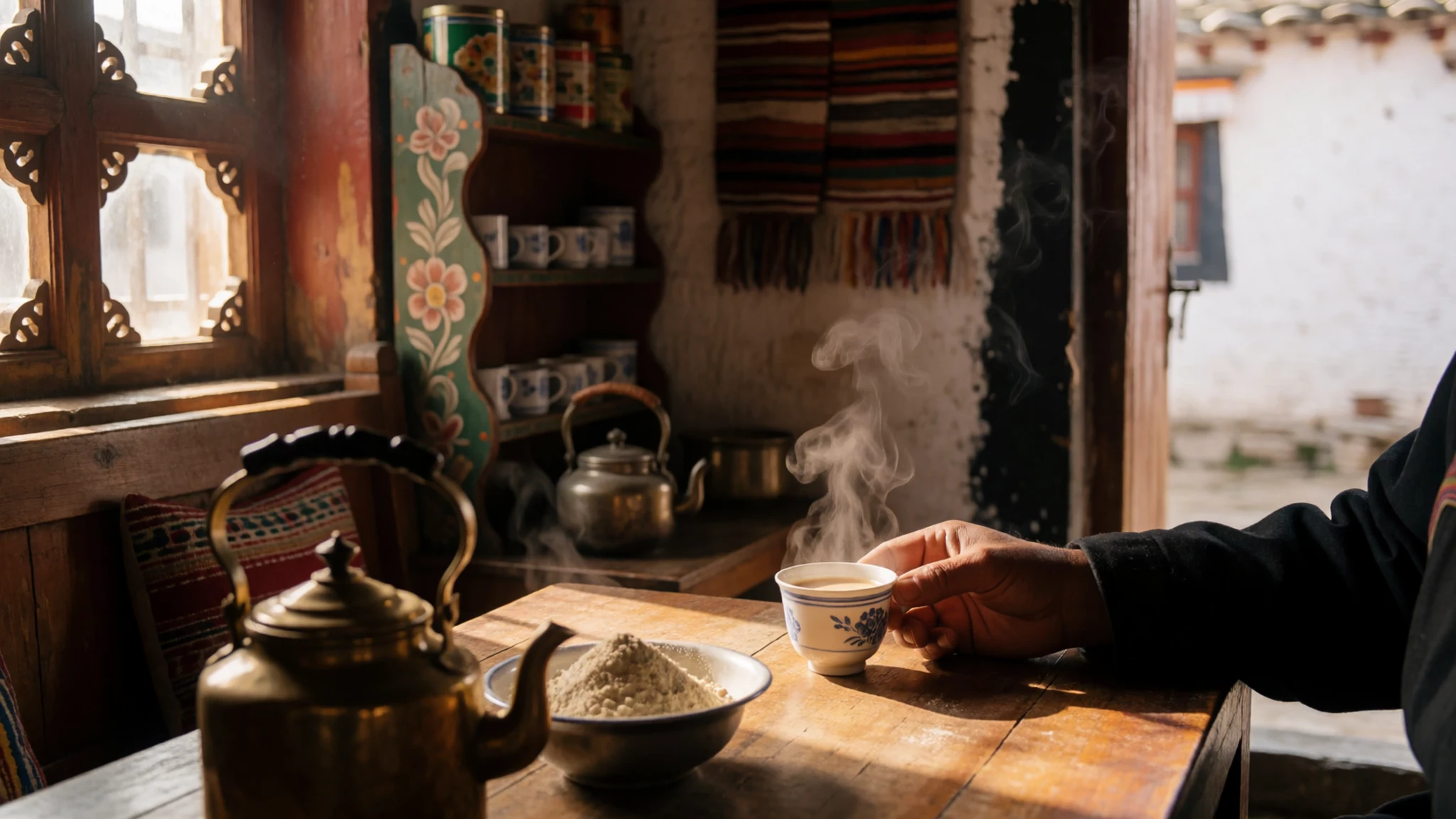
- Thukpa — Lodges and small eateries along the main trekking route
A warming noodle soup with vegetables and, often, meat, flavoured with garlic, ginger and sometimes chilli. It is a practical meal after a long day's walk and easy to find. Portions are generous and it is usually cooked fresh to order.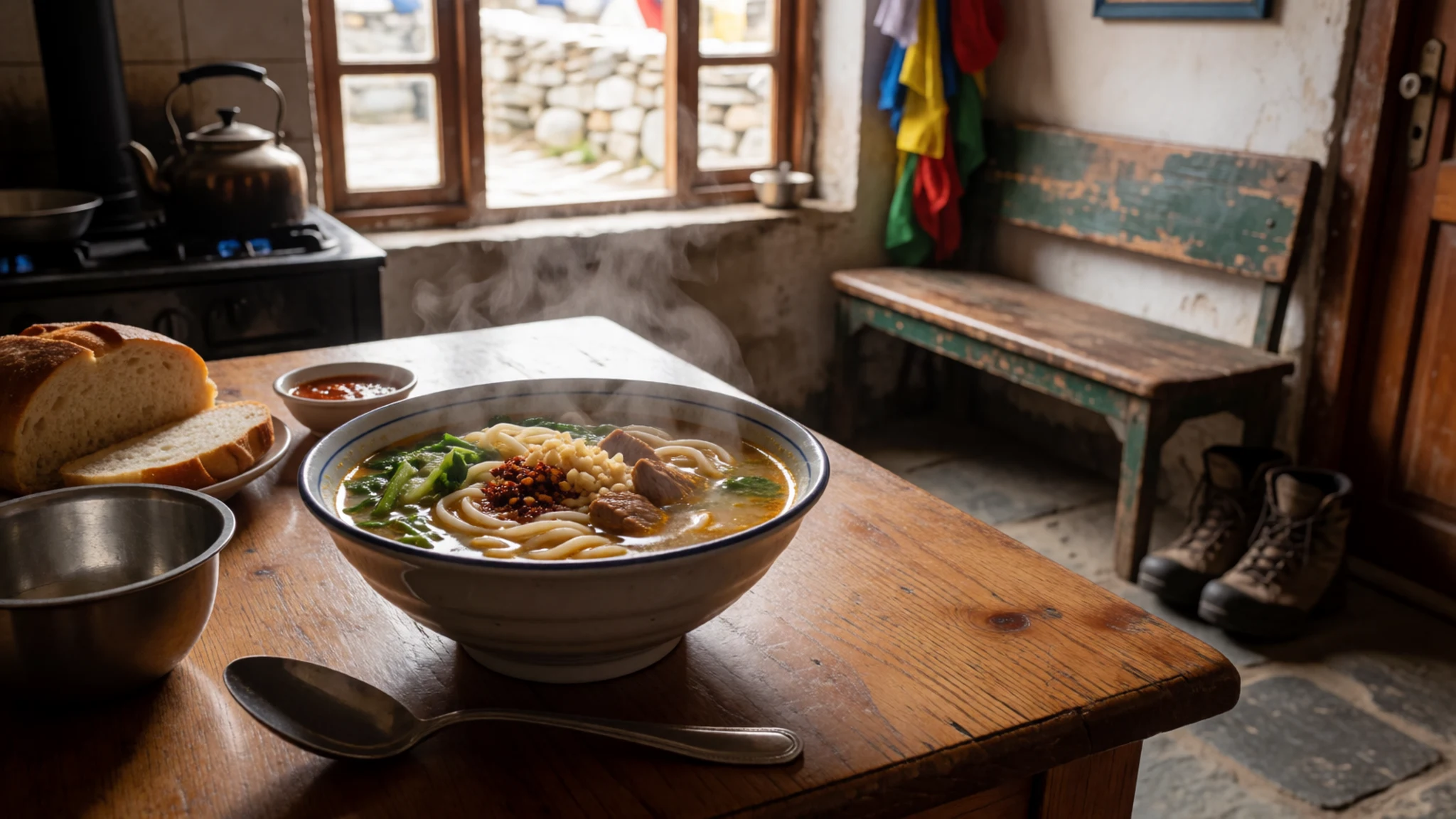
- Momos — Eateries in Lo Manthang and larger villages
Steamed or fried dumplings filled with vegetables, cheese or meat, served with a sharp tomato chilli sauce. They are everywhere in Nepal but taste especially good in the cold. Fillings are often shaped by what the household has to hand. - Tingmo — Family-run lodges and home kitchens
Soft steamed bread, plain but airy, usually eaten with a vegetable or meat stew, or with dal. It soaks up broth well and keeps the stomach settled at altitude, when richer food can feel heavy. - Buckwheat flatbread — Village lodges and Thakali eateries along the Kali Gandaki valley
A flat, slightly nutty bread made from buckwheat, a grain that grows at this height. Often served with local greens, butter or a bowl of lentils. It is associated with the Thakali kitchen further south, and it is easy to ask for at village lodges.
Plan it
Best time. Roughly May–June and September–October. Upper Mustang sits in the rain shadow of the Annapurna and Dhaulagiri ranges, so the monsoon is far lighter than elsewhere in Nepal, which is why August and October are peak months for visitors. Winter is cold and many villagers move south, so some lodges close.
How long. 8–12
Getting there. Fly from Kathmandu or Pokhara to Jomsom, then continue by road or on foot to Kagbeni, the southern gateway, and north along the Kali Gandaki valley to Lo Manthang. Check current road and flight conditions locally, as services are weather-dependent.
Budget. high
Tips
- Arrange the special Upper Mustang permit through a registered trekking agency and check the current rules and fees before you book, as they are regulated and have changed over time
- Allow rest days for altitude and drink plenty of water
- Carry Nepali rupees in cash, as cards and cash machines are scarce in the villages
- Walk in the morning, because strong wind rises in the afternoon
- Book lodges ahead for August and October, the busiest months
Etiquette
- Walk clockwise around chortens, mani walls and temples
- Ask before photographing people or the inside of a monastery
- Cover shoulders and knees in villages and religious buildings
Nearby
Sources
- Wikidata Q28307 (CC0)
- Wikipedia: Upper Mustang (CC BY-SA 4.0)
- Wikivoyage: Mustang (CC BY-SA 4.0)
- Lo Manthang, Capital of Upper Mustang, Nepal — Boerniefischer (CC BY 3.0)
- Upper & lower Mustang — Aditya Kabir (CC BY-SA 4.0)
- The Royal Palace in Lo Manthang — Wimbex (CC BY 3.0)
- Tangbe, Upper Mustang — Jmhullot (CC BY 3.0)
- View on Gyakar (edited) — Jmhullot, UnpetitproleX, Aristeas (CC BY 3.0)
- Kali Gandaki riverbed in Nepal's Upper Mustang — Carsten.nebel (CC BY-SA 4.0)
- Rigsum Gönpo and prayer flags at the entrance of Samar — Jean-Marie Hullot (CC BY 2.5)
- Mustang, Nepal — Thapa mukesh (CC BY-SA 4.0)


