Muhu
Muhu, Estonia
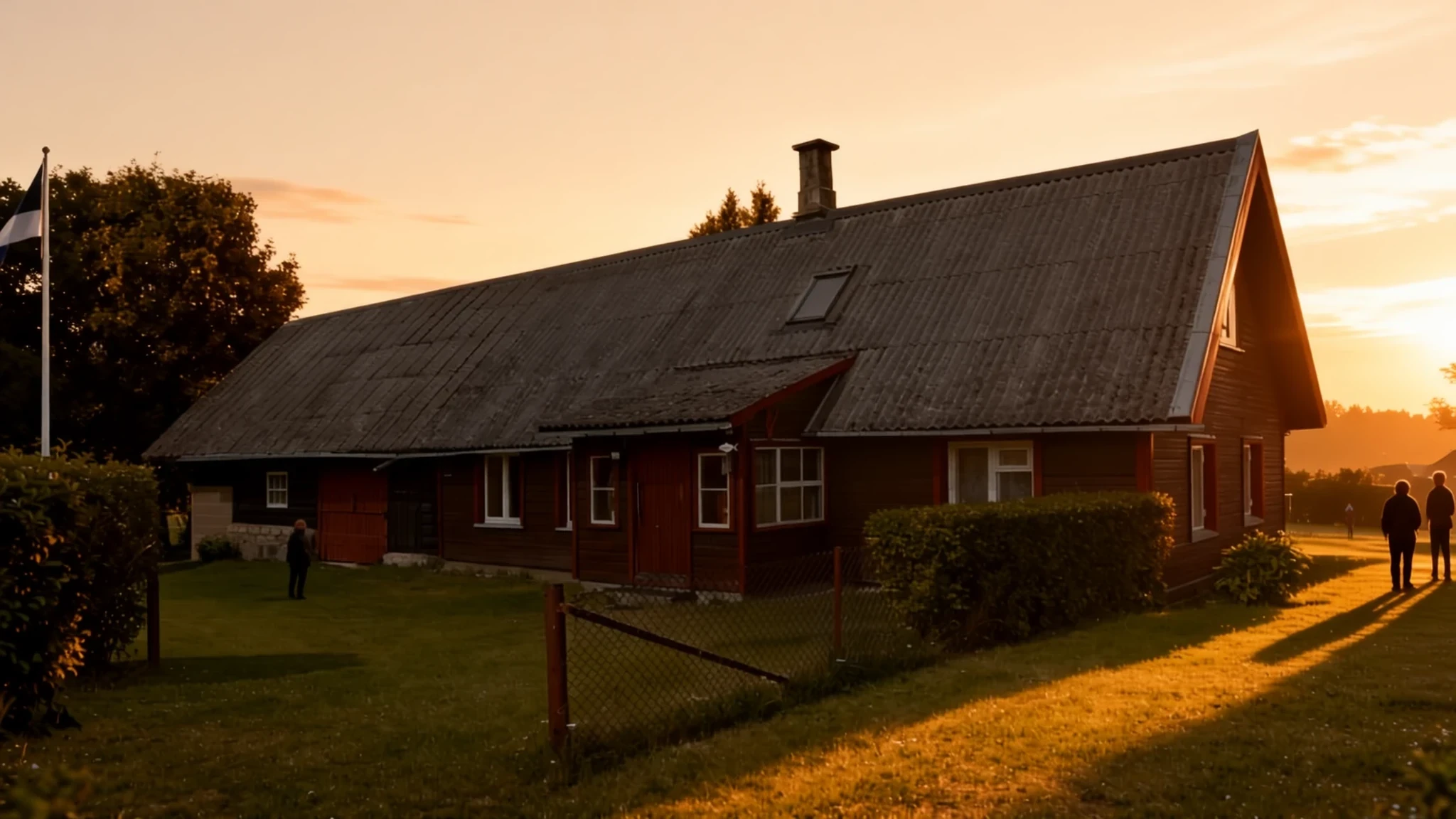
Muhu is a compact Baltic island where village life, sea air and well-kept rural sights make a calm, characterful break.
The place
Muhu (Muhu island) sits in Estonia’s West Estonian archipelago, in the Baltic Sea, and it feels like a place where time moves at a village pace rather than a holiday-agency one. The island sits between straits—the Big Strait separating it from the mainland and the Little Strait from Saaremaa—and that watery setting shapes everything: the horizons, the weather, and the way paths lead you back towards the sea.
The island is spread across 52 villages, with a mix of everyday settlements and small ensembles worth slowing down for. Kuivastu is the ferry harbour, Liiva is the administrative centre, and Koguva is known for a traditional village setting along with the Muhu Museum, where island life, crafts and local building styles are presented in a way that’s easy to understand even if you’ve just arrived.
Because Muhu is part of a wider cluster of islets (with nearby Kesselaid, Viirelaid, Võilaid and Suurlaid), it can be an easy add-on to a broader island circuit in Estonia. But Muhu also works on its own if the aim is quiet days: coastal walks, small churches, and roadside scenery of stone fences, forest edges and juniper meadows.
In spring and autumn, the light is sharp and the air is clean; in summer, it can be busy at the ferry and around popular village spots. Expect wind on exposed coasts, bring layers, and plan for changing skies—this is an island, and the weather is the main character.
Its story
Muhu’s story is tied to movement over water and the hard edges of the Baltic. Over centuries, people crossed frozen or stormy seas, built defences, and ended up with layers of local memory embedded in the landscape.
The island sits close to major routes used during regional conflicts, and that proximity shows up in surviving earthworks. Near a causeway between islands, a circular stronghold—often discussed as Mona—marks where an early thirteenth-century surrender is linked in the island’s historical narrative. That same broad region of sea and land has also been associated with later fighting, including a battle fought on the ice between Muhu and the mainland.
Muhu also carries the soundless history of the twentieth century. Around the island you’ll find traces of coastal military infrastructure from the World War I period, including surviving stretches that were designed to support artillery positions. Even if the details are better read on-site, the physical logic is clear: these were engineered to make the coastline easier to manage and defend.
Today, the historical pulse is balanced by quieter cultural identity. Muhu people are known for distinctive folk craft, and the island’s famous patterns are treated as something refined rather than “souvenir-like”. In daily life, that local pride still shows up in how villages organise community roles and how the island’s rural character has stayed largely intact compared with more intensively developed places.
What to see
- Muhu Katariina kirik (St Catherine’s Church), Liiva — Liiva (main settlement)
Muhu’s St Catherine’s Church in Liiva is a medieval Lutheran parish church with an older graveyard setting and surviving fragments of historic murals. The interior is simple, which makes the age feel close rather than ceremonial; it’s a calm pause away from the coastal wind.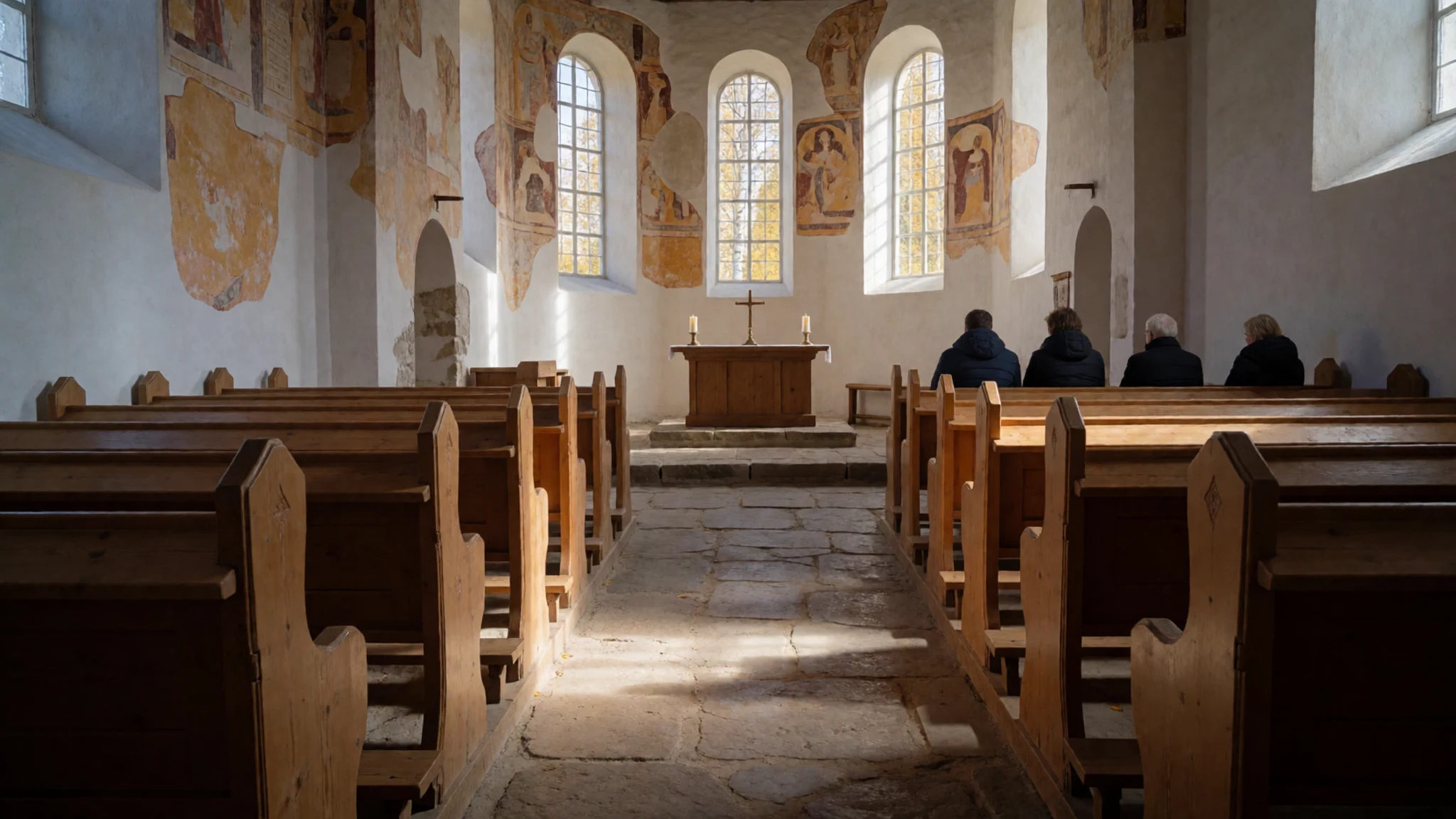
- Üügu bluff and sea views — Üügu Nature Reserve area
Üügu bluff is a limestone coastal section with cave-like hollows and open views over the water. The best way to experience it is to walk slowly and keep to marked paths near the edge, because the coast is dynamic. Short stops give changing light and wind.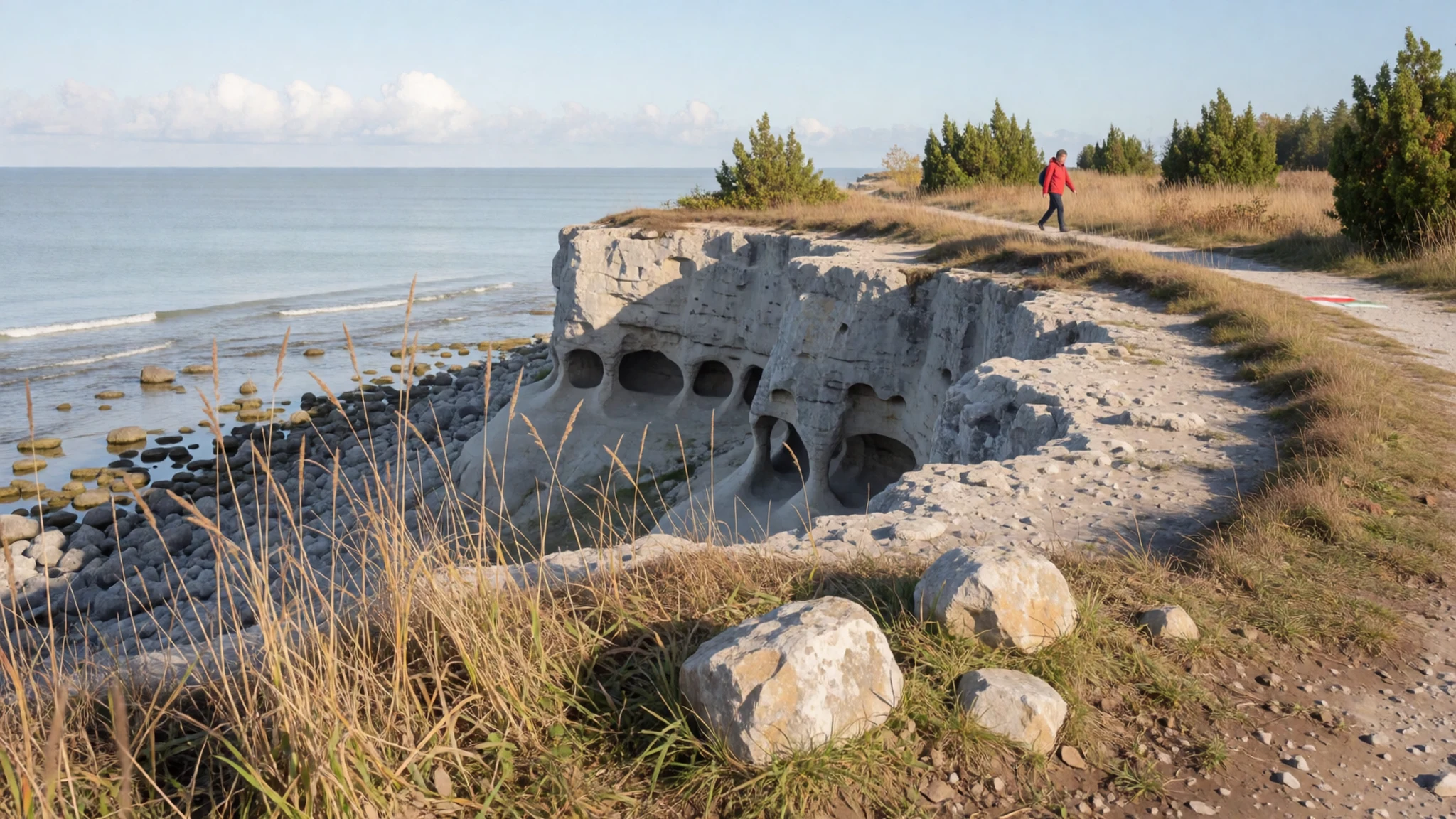
- Muhu Museum and Koguva village ensemble — Koguva
In Koguva, the Muhu Museum is set within a traditional village ensemble with stone fences and thatched farmstead buildings. It’s a straightforward way to picture how island life worked, including how crafts and local architecture were shaped by resources and everyday routines.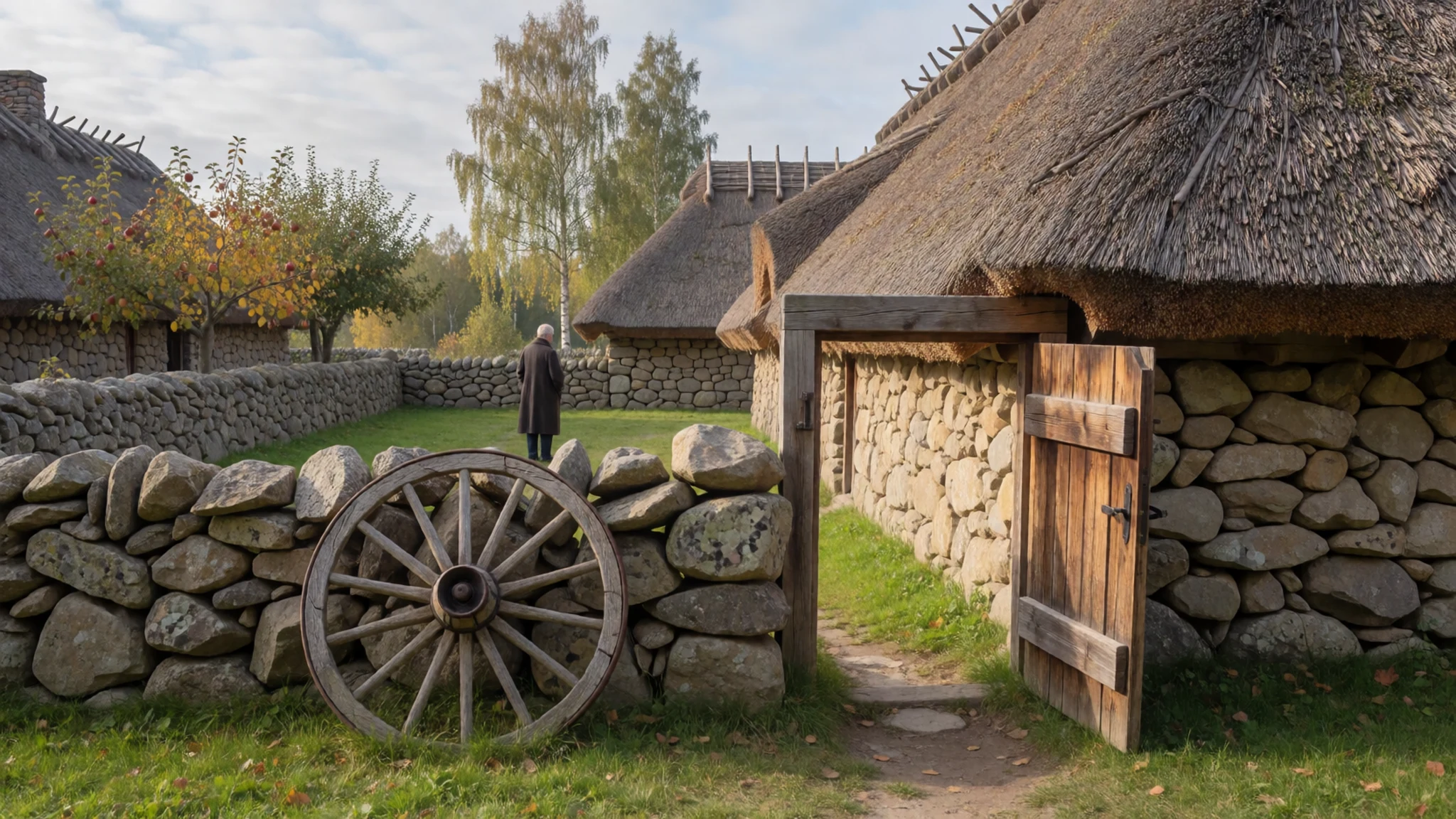
- Mona stronghold (Muhu Stronghold) — Mona stronghold area near the causeway
Mona stronghold is linked to the earlier surrender described in Muhu’s historical story, and the earthworks remain visible near the causeway area between islands. Visiting is about reading the landscape: walk the perimeter slowly and let the scale of the position sink in.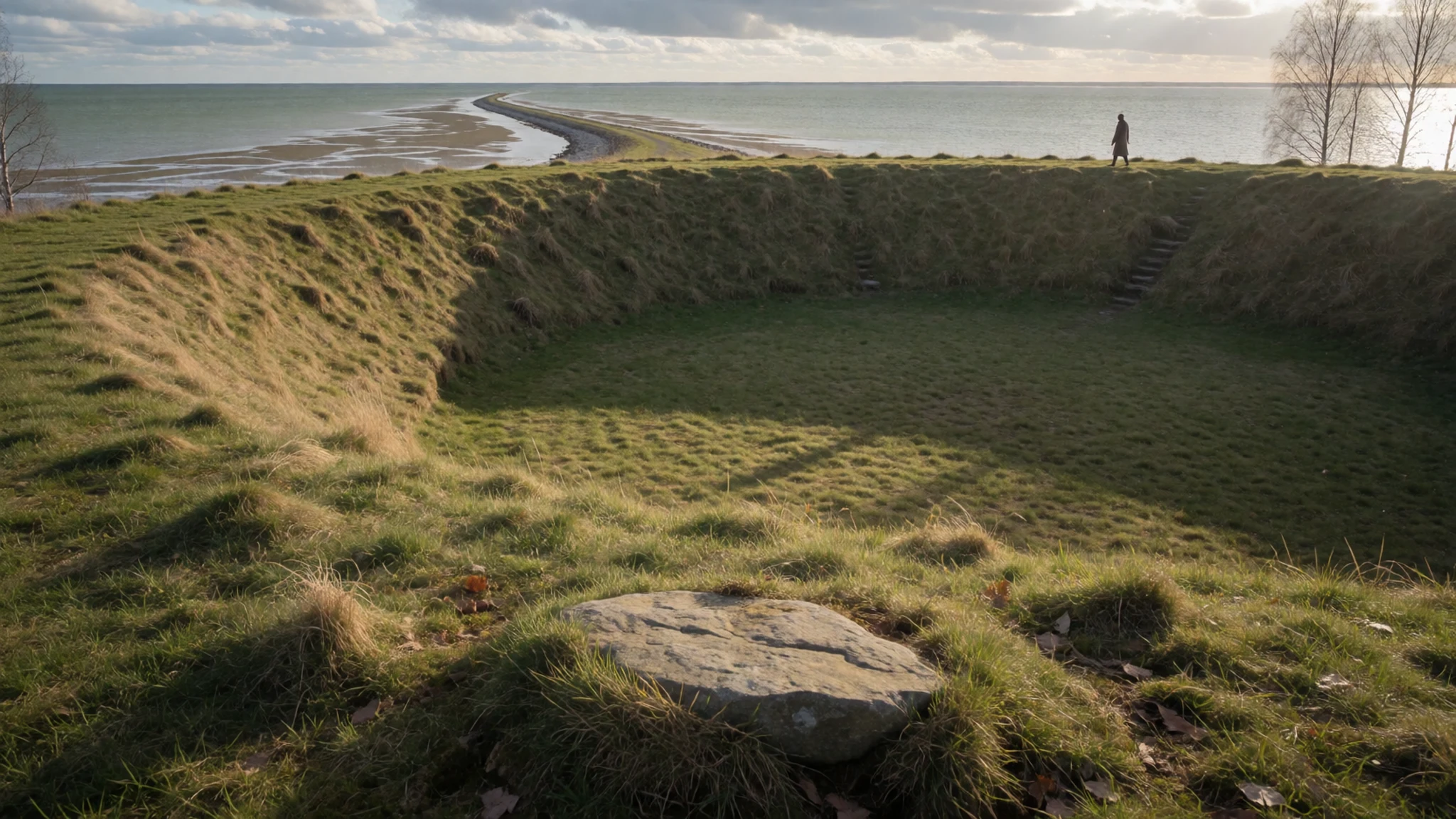
- Võiküla cobblestone road (with former coastal artillery site) — Võiküla
At Võiküla, a surviving cobblestone service road and an adjoining former coastal artillery site reflect the island’s military logistics from the World War I era. Mature trees and shade make sections pleasant, but the rule is simple: stay on paths and respect private land.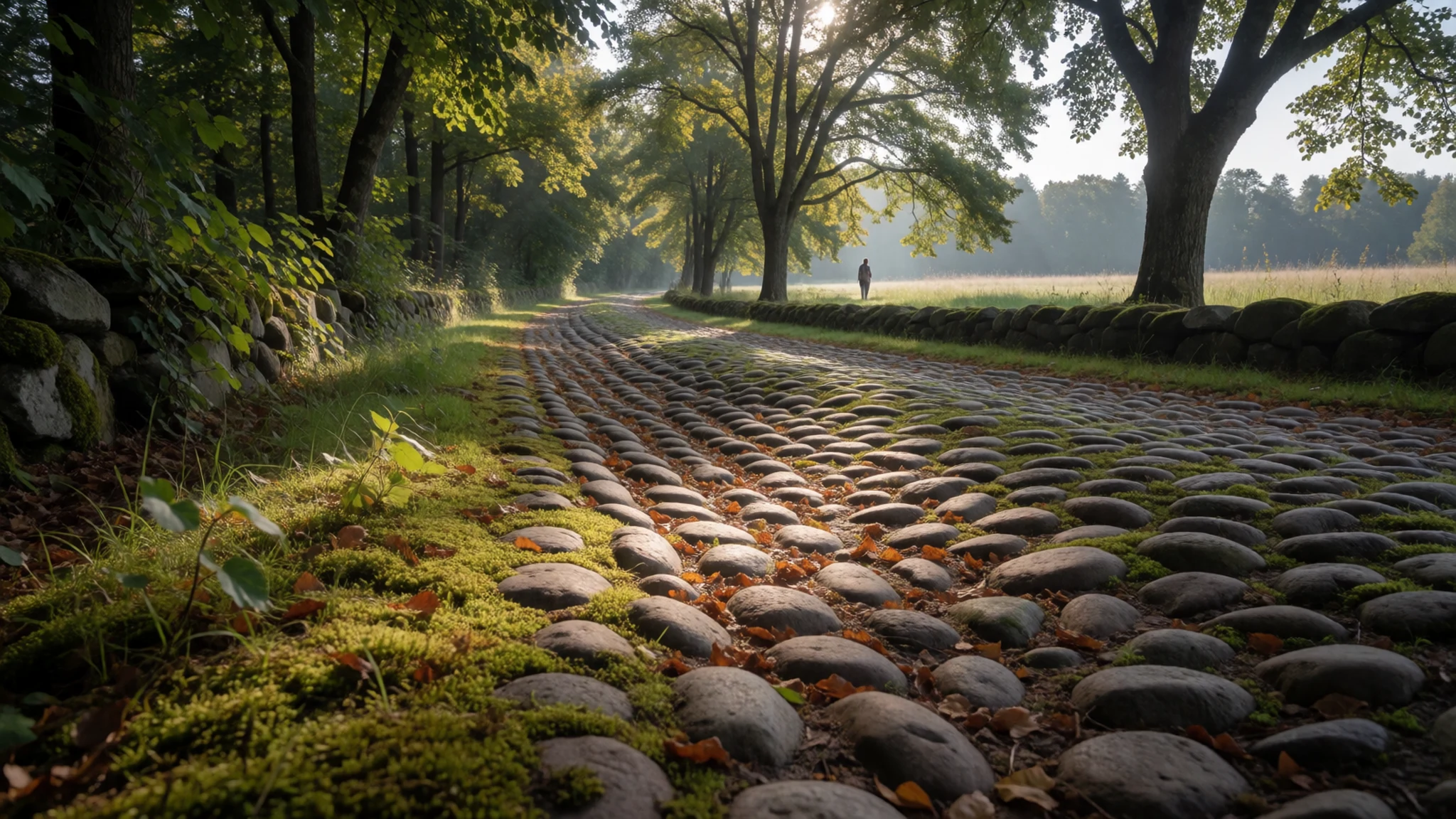
Culture
Muhu’s culture feels less like an organised show and more like a community rhythm you can stumble into. The island’s most visible landmarks are often tied to everyday identity: St Catherine’s Church in Liiva anchors a medieval parish life, while village ensembles around Koguva help explain how houses and boundary lines worked in a rural setting.
Craft is a big part of how Muhu people are talked about in Estonia. Muhu patterns are known as a refined expression of folk art, and that reputation is linked to how the island’s textiles and design traditions are remembered and carried forward. If you’re curious about what “local” looks like in practice, look for the way the island presents objects and building styles rather than chasing performances.
There’s also a distinctive relationship with local roles. Even today, some villages are headed by traditional village eldermen who act as voluntary counsel, which speaks to a continuity beyond tourist seasons.
For a trip that stays respectful, it helps to treat Muhu like a living island: slow down, ask before photographing people, and remember that village spaces aren’t just scenery.
When visiting churches or village courtyards, dress modestly and keep voices low, especially near entrances.
What to wear
On Muhu, clothing is practical first, because wind and sea weather matter more than fashion statements. Traditional dress is closely associated with local textile heritage: expect embroidered, patterned elements and knitted items that fit the island’s wider reputation for folk craft. Historically, knitted stockings and other wool items show up as part of the island’s signature look, reflecting the materials and craft traditions developed for Baltic winters.
What visitors will notice now is mainly everyday wear: breathable layers in warmer months, warmer jumpers and waterproof outerwear when skies turn. In summer, people may dress lightly but still use a light jacket for breezy evenings; in autumn and spring, you’ll see more hats and gloves on the coast.
For your visit, pack layers and something windproof. Comfortable footwear with grip helps for uneven lanes and coastal paths, and a hat is worth it even on “nice” days. If you’re visiting church interiors, bring a simple, modest layer (a scarf or cardigan) so you feel comfortable in enclosed, more reflective spaces.
What to eat
- Island-style farm and manor table dining — Pädaste manor area
On Muhu, the easiest “proper meal” option is to look for dishes served through manor-style hospitality and estate-based menus, where local ingredients and island produce feature heavily. Plan for seasonal variations rather than a fixed list.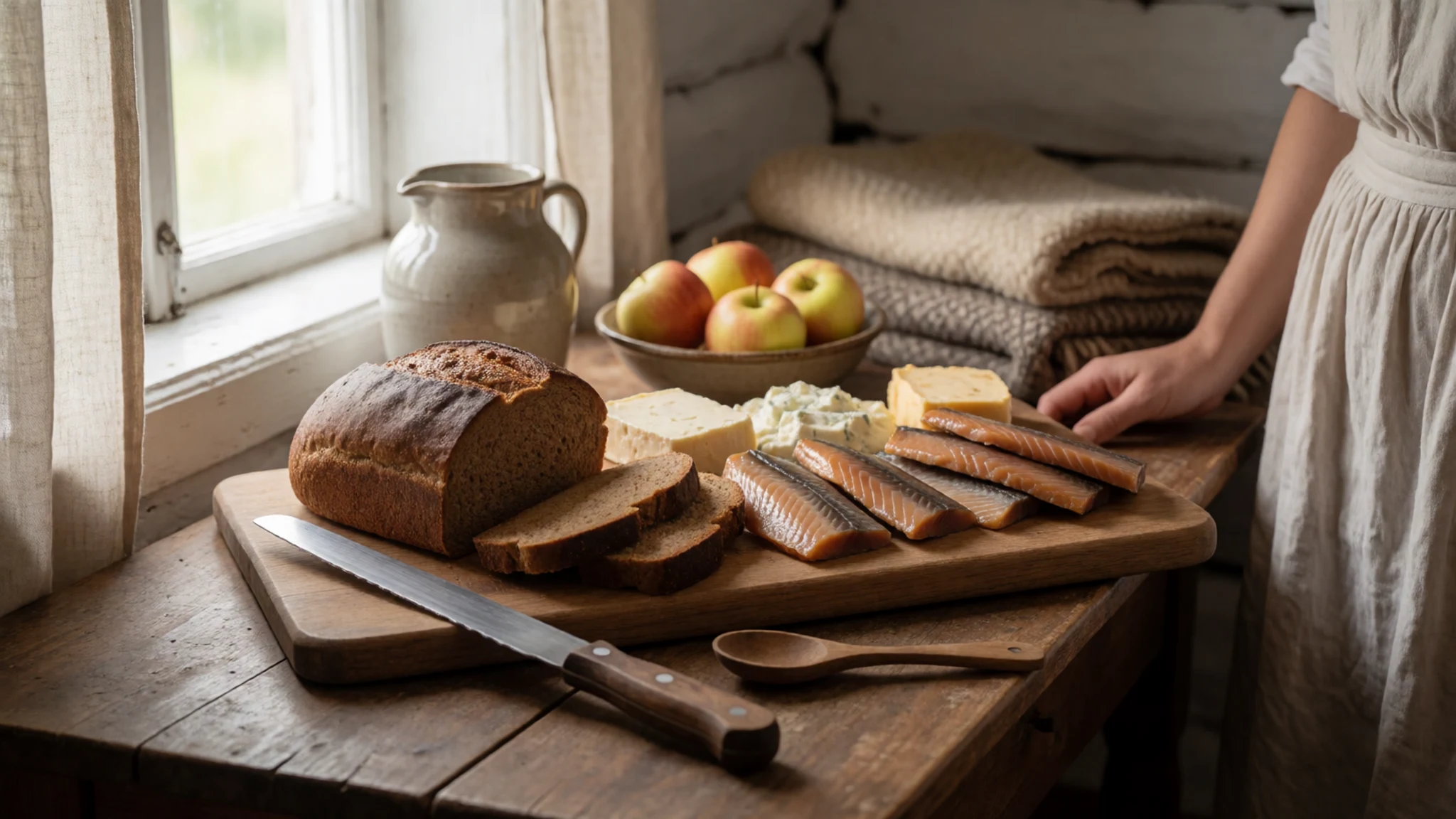
- Muhu museum craft-and-café style breaks — Koguva (museum village setting)
When you’re in Koguva, take a pause connected to the museum setting: think light lunch-style plates and warming drinks rather than elaborate dining. It’s the sort of stop that works well between village walks and coastal viewpoints.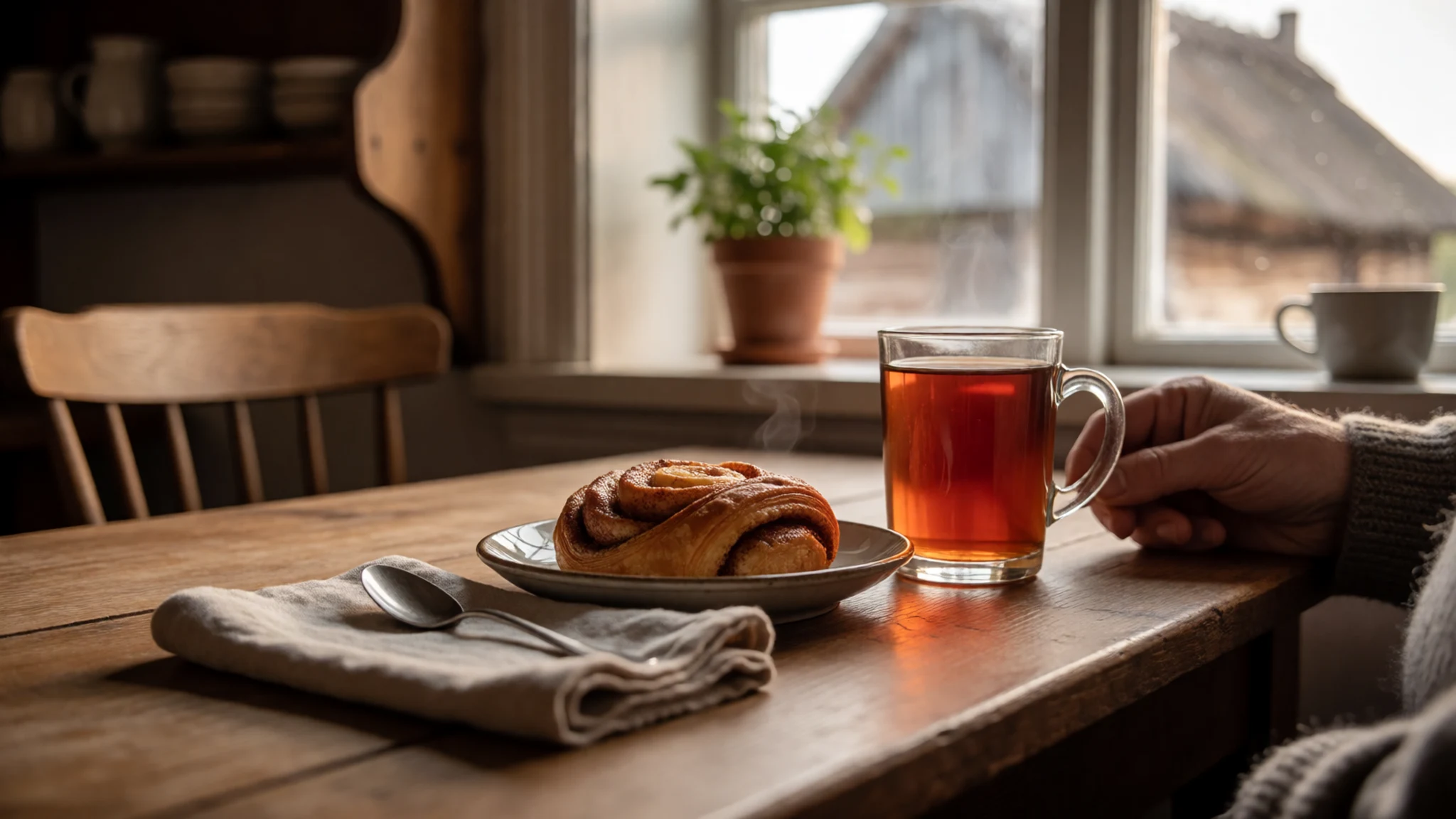
- Bayside snacks at harbour stops — Kuivastu harbour area
Around ferry and harbour areas, you’ll find straightforward snack options that suit travel days—quick bites, hot drinks and small sweet items. It’s more about convenience and sea-air than long sittings. - Seasonal market-style food stops — Local village squares and summer markets
During busier seasons, look out for seasonal stalls and local market-style stops selling simple island foods and small treats. Keep it flexible: what’s available changes with the calendar and day. - Sea-seasonal comfort plates — Local eateries across Muhu
Because Muhu is surrounded by water, many local menus lean into seafood and Baltic-influenced comfort dishes. If you want to eat like the island, ask what’s fresh that day and pair it with a warm side for the breezy evenings.
Plan it
Best time. April for spring walking conditions and October–November for calmer weather and autumn light; March can still be chilly, while summer brings more footfall and busier travel days.
How long. 2–3
Getting there. Take a car-and-passenger ferry between the mainland (Virtsu) and Muhu (Kuivastu). If flying, use the airport in Kuressaare on Saaremaa, then drive about 1 hour to Muhu by local connections.
Budget. mid
Tips
- Reserve ferry places in advance at peak times, especially in summer weekends
- On coastal walks like Üügu, stick to marked paths close to the edge for safety
- Plan church and village visits earlier in the day to avoid the busiest times around settlements
- Bring water-resistant layers and shoes with grip; the island can feel windy even when the sun is out
- Use cash for small purchases at village stalls, but also carry a card as backup
Etiquette
- Stay on public roads and paths; respect private land around viewpoints and old infrastructure sites
- Keep voices low in churches and graveyard areas
- Ask before photographing people in villages and museum settings
Nearby
Sources
- Wikidata Q1778301 (CC0)
- Wikipedia (rev 1376029429) (CC BY-SA 4.0)
- Wikivoyage (rev 5368096) (CC BY-SA 4.0)
- Photo photos/01-northmuhucoast.jpg (Public domain)
- Photo photos/02-koguva-sadam-2015.jpg (CC BY-SA 4.0)
- Photo photos/03-the-dam-connecting-muhu-and-saaremaa-islands-in-estonia-pano.jpg (CC BY 3.0)
- Photo photos/04-muhustronghold.jpg (Public domain)
- Photo photos/05-muhu-stronghold-memorial-stone2.jpg (CC BY 3.0)
- Photo photos/06-gu-cliff.jpg (Public domain)
- Photo photos/07-muhu-katariina-kirik-liiva-k-las.jpg (CC BY-SA 3.0 ee)
- Photo photos/08-p-daste-m-isa-peahoone.jpg (CC BY-SA 3.0 ee)


