Osmussaar
Osmussaar, Estonia
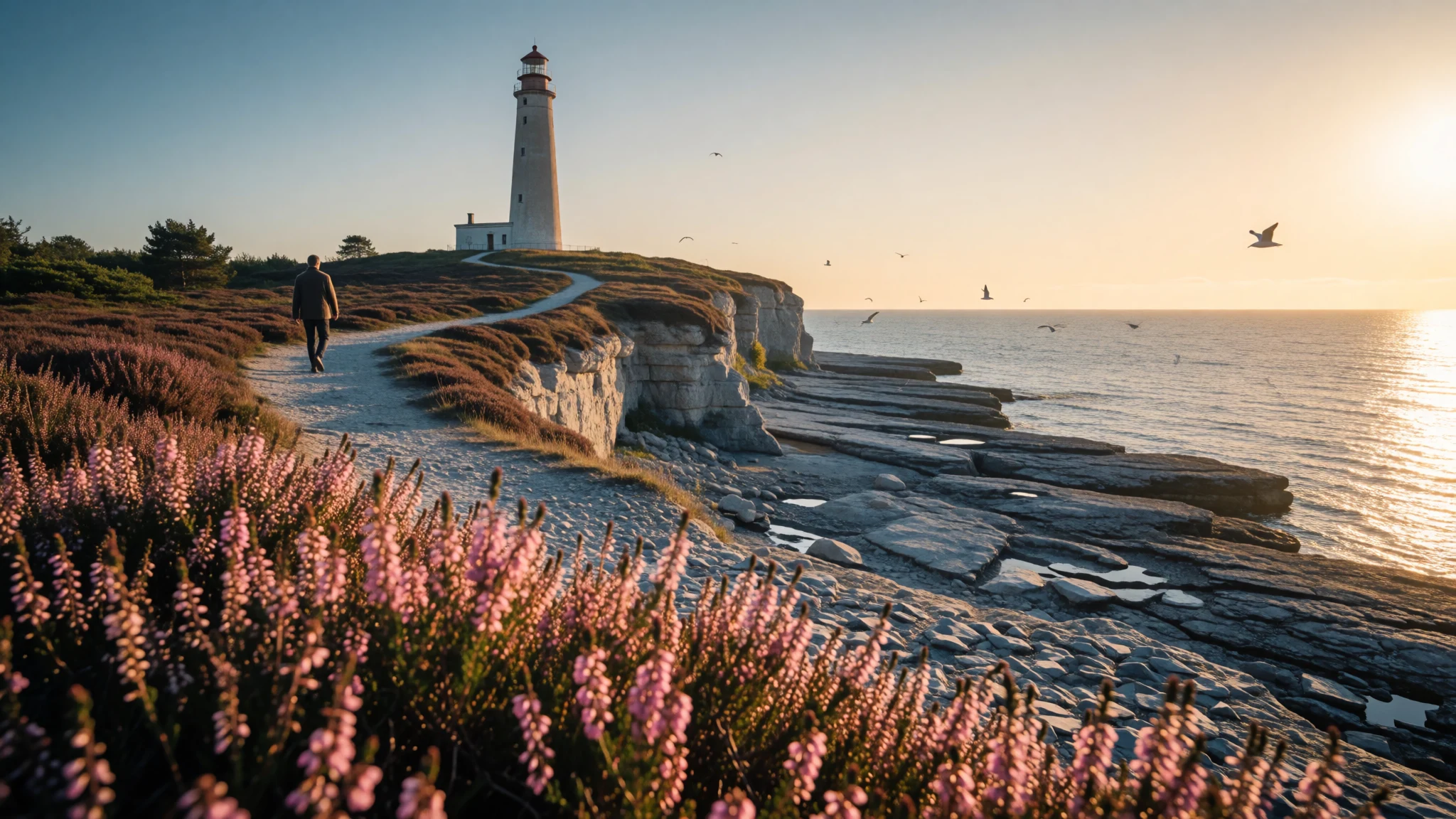
Osmussaar is a windswept Baltic island of lighthouse, chapel ruins and wartime relics, where the silence is the main attraction.
The place
Osmussaar is a low, windswept island at the point where the Gulf of Finland opens into the Baltic Sea, a short boat ride off the Estonian mainland in Lääne County. It is run as a nature reserve, and the people who live there all year round could be counted on one hand. The island is only a few kilometres long and narrower than that across, stretched from north-west to south-east, so a slow walk covers most of it in a day. The ground hardly rises at all. The highest point is a gentle swell of limestone and heath rather than anything a local would call a hill.
Geologically, Osmussaar is a leftover fragment of the Baltic Klint, the limestone escarpment that runs along the northern edge of Estonia before slipping under the sea. That explains the low cliff on the northern shore, the flat stony beaches and the small lakes that were once sea inlets and are now cut off from it. One of these lies beside the ruined chapel and is a good place to watch birds.
Before the Second World War the island supported a real community of Estonian Swedes, who called it Odensholm. Today it feels emptied rather than abandoned. A lighthouse, a viewing tower, old farm foundations, rusting military remains and a lot of sky are what remain. Travellers come for the quiet, the birdlife and the sense of standing at the edge of the Baltic. It suits people who are happy with plain walking and self-sufficiency, because nothing on the island should be counted on to be open.
Its story
Osmussaar was settled by Swedish-speaking Estonians over many centuries, and little is recorded of the island before the later years of that long occupation. Nobody knows exactly when the first families arrived, and some think fishermen and seafarers were using it as far back as the Viking Age. Numbers rose and fell. Local memory says an epidemic of plague once left only a few survivors, yet by the early twentieth century the community had grown to well over a hundred, all of them Swedes apart from the lighthouse keeper and his family.
The lighthouse is the clearest thread through the island's story. A first light was raised on the north coast long before the community disappeared, and a later tower replaced it. Retreating Soviet troops blew that one up, and the tower standing today was finished after the war.
In the First World War the Magdeburg, a German warship, hit rocks off the northern point and was lost, a reminder of how dangerous these shallow, fog-prone waters were for shipping.
The decisive break came in the Second World War. The Soviet authorities declared the island a military base, and the islanders were evacuated to the neighbouring island of Vormsi. They never came back in any numbers. A year later the Red Army held Osmussaar as the last piece of Estonian ground it gave up to the advancing German forces. Concrete, gun emplacements and scattered metal from those years still lie around the island beside the farm ruins of the people who left.
What to see
- Osmussaar lighthouse and cliff — Northern coast
The lighthouse stands on the northern coast, where the limestone drops in a low cliff to the water. It is the island's best-known landmark and a natural starting point. Walk the shore path nearby for views along the cliff edge and across the open sea. Check access with the reserve before climbing anything.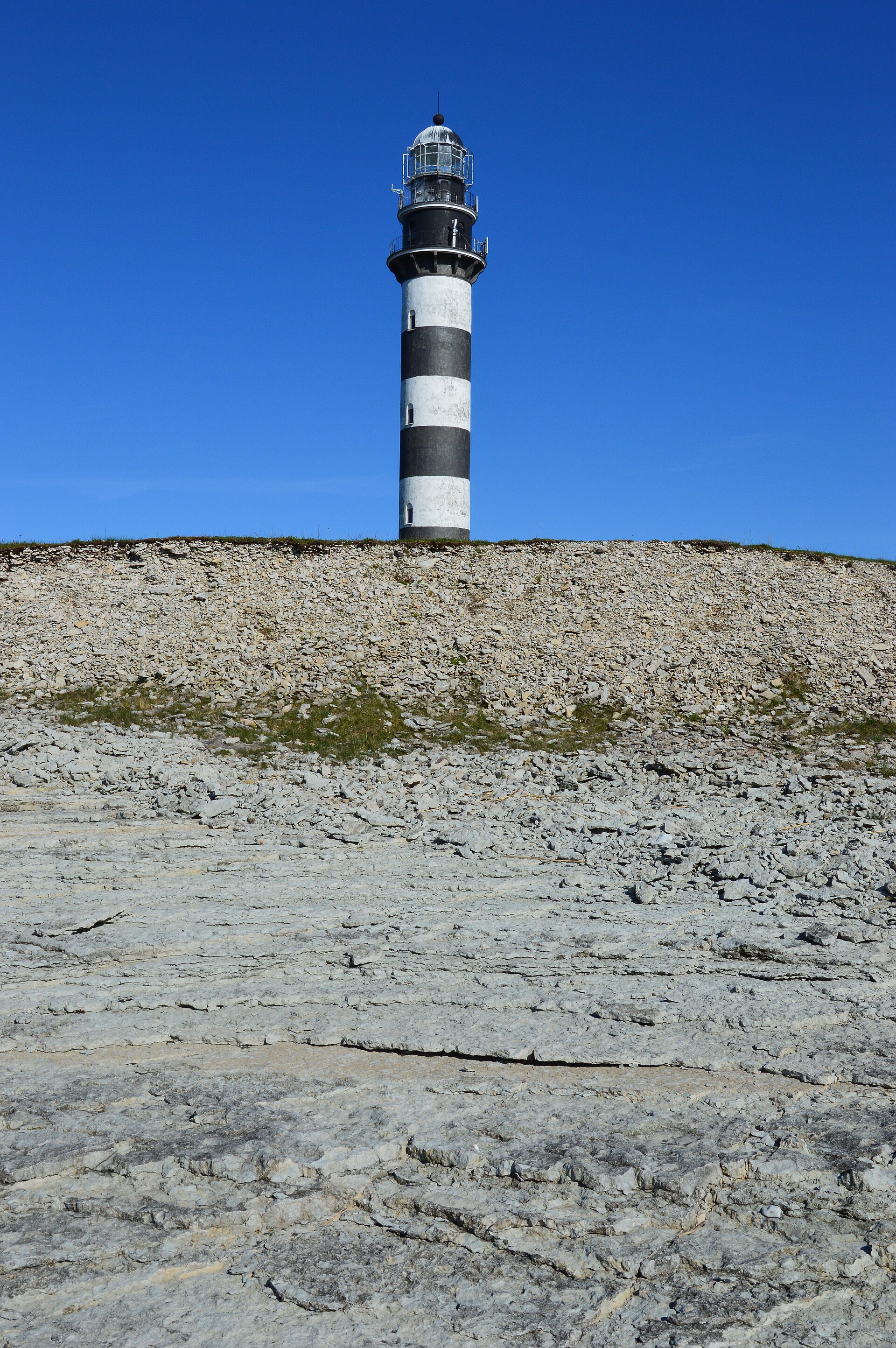
- Chapel ruins and Kappelkärre — Central island
The roofless walls of the old chapel recall the Swedish community that held services here. Close by lies Kappelkärre, a small lake left behind as the land rose from the sea. Reeds, wading birds and a still surface make this one of the calmer corners of the island, well suited to a slow stop.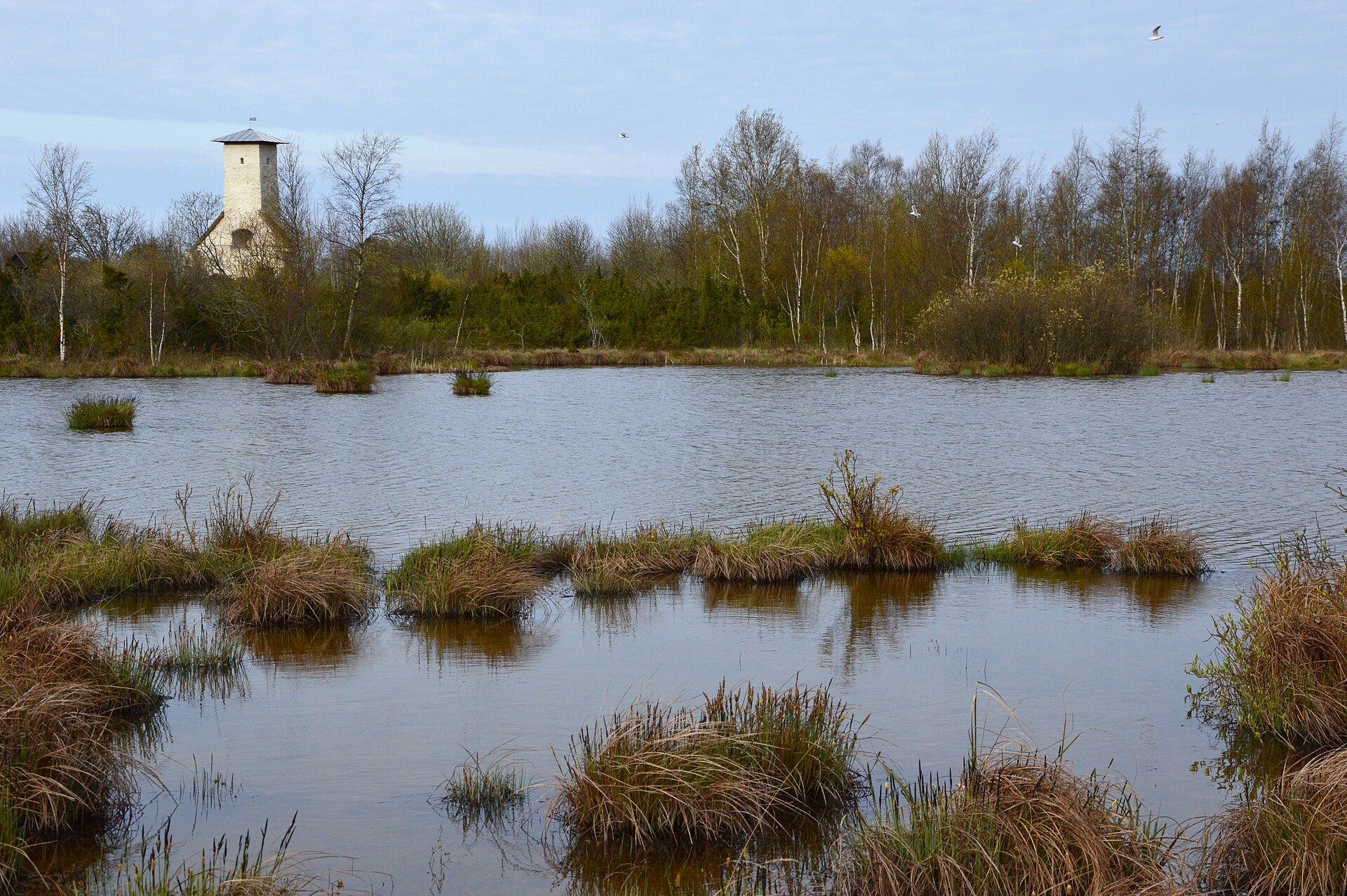
- Remains of the long-range gun — Island interior
Wartime Osmussaar was fortified, and the broken remains of a long-range gun are the most striking trace. Concrete and twisted metal sit among grass and juniper. Treat the area with care: stay on visible paths, do not climb on unstable structures, and leave every fragment where it lies.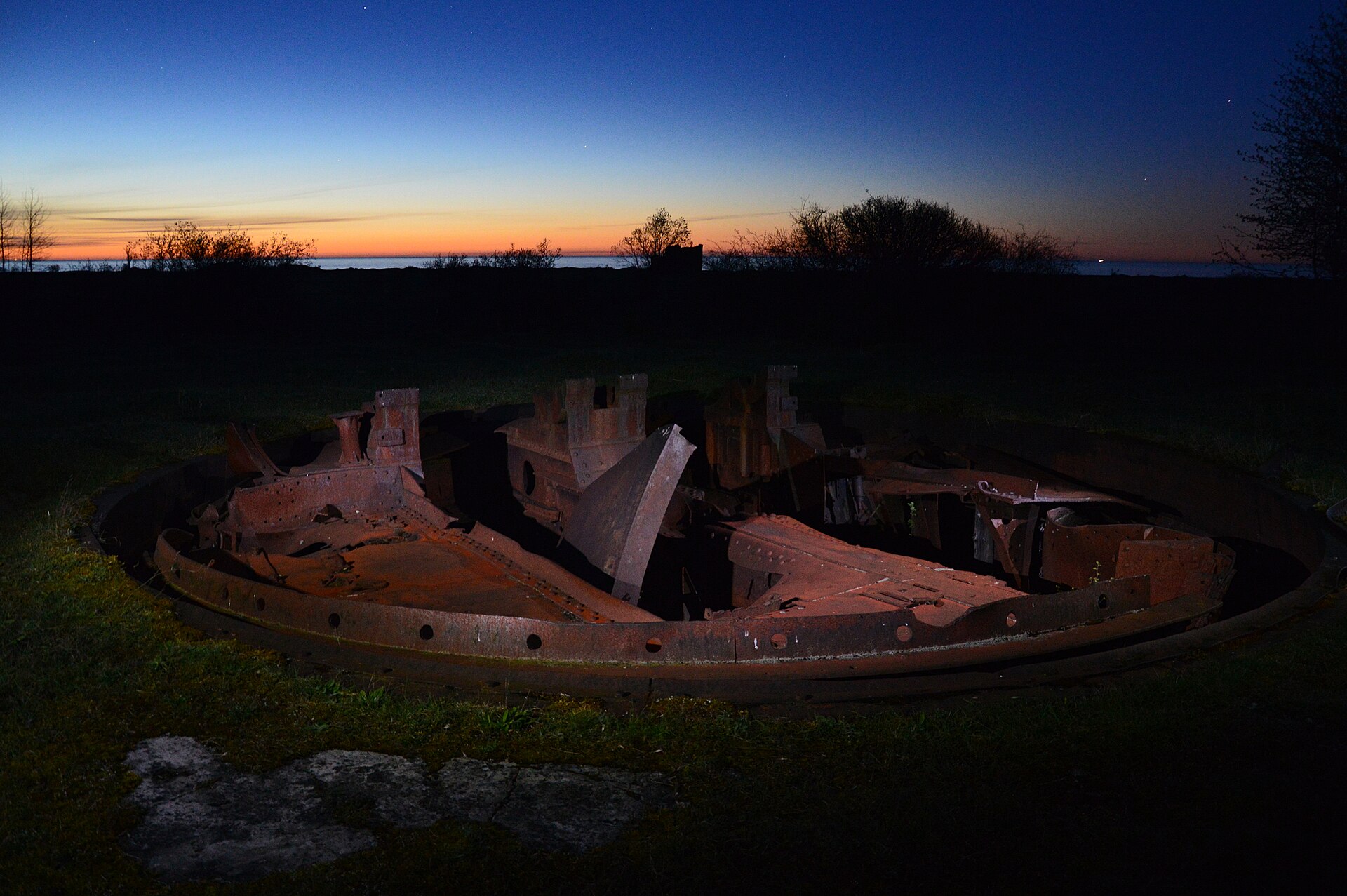
- The viewing tower — Island interior
A wooden viewing tower gives a rare raised view over an island with almost no height of its own. From the top the whole low profile is visible: the heath, the pale shoreline, the lighthouse and the open water in every direction. It is a good place to orient yourself and spot birds.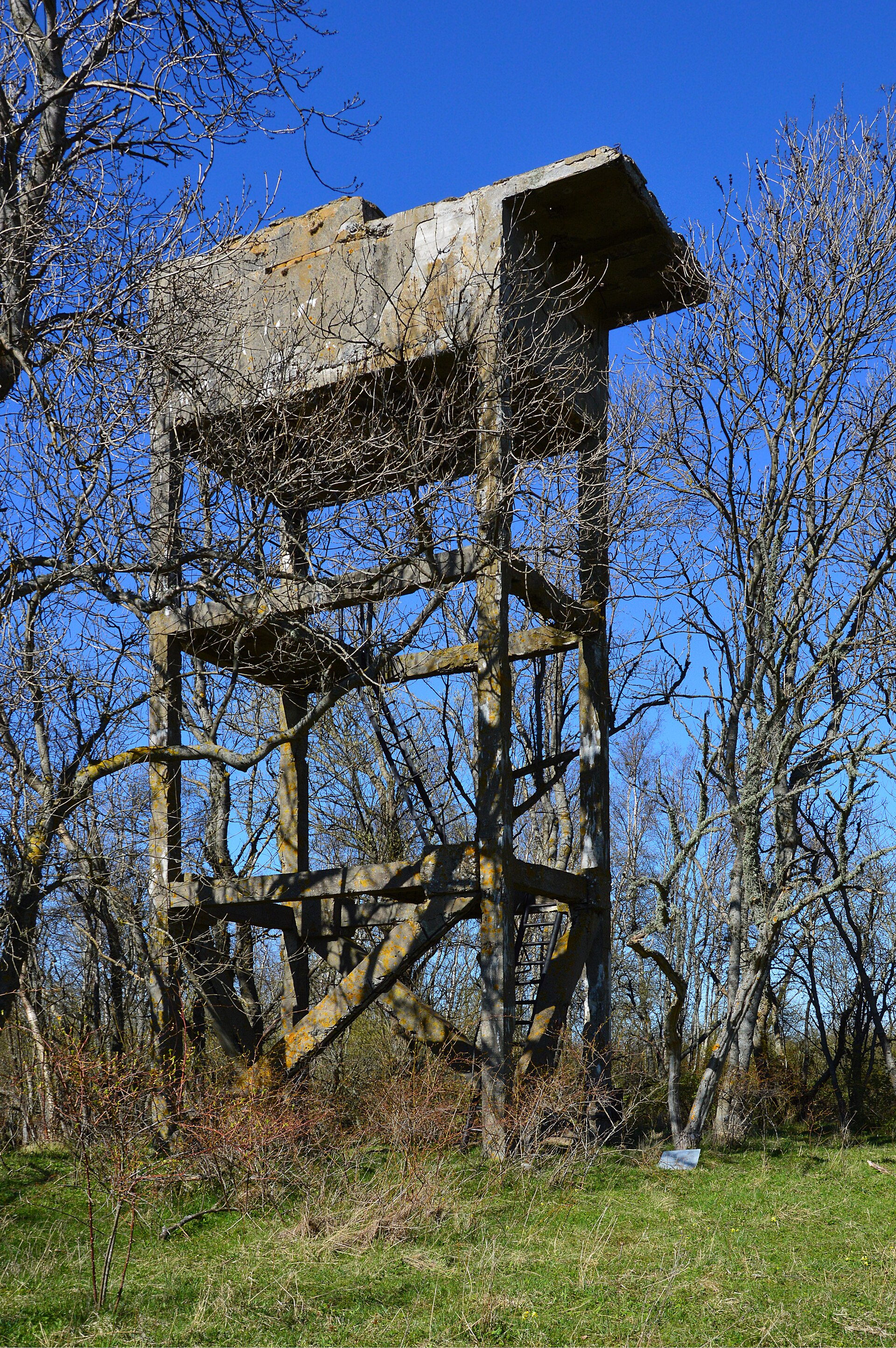
- Waters off the northern point — Northern tip
Offshore from the northern tip lie the waters where the German warship Magdeburg was wrecked in the First World War. There is nothing to visit on land except the view, but standing on the shore here makes the dangers of these shallows easy to understand, especially in poor weather.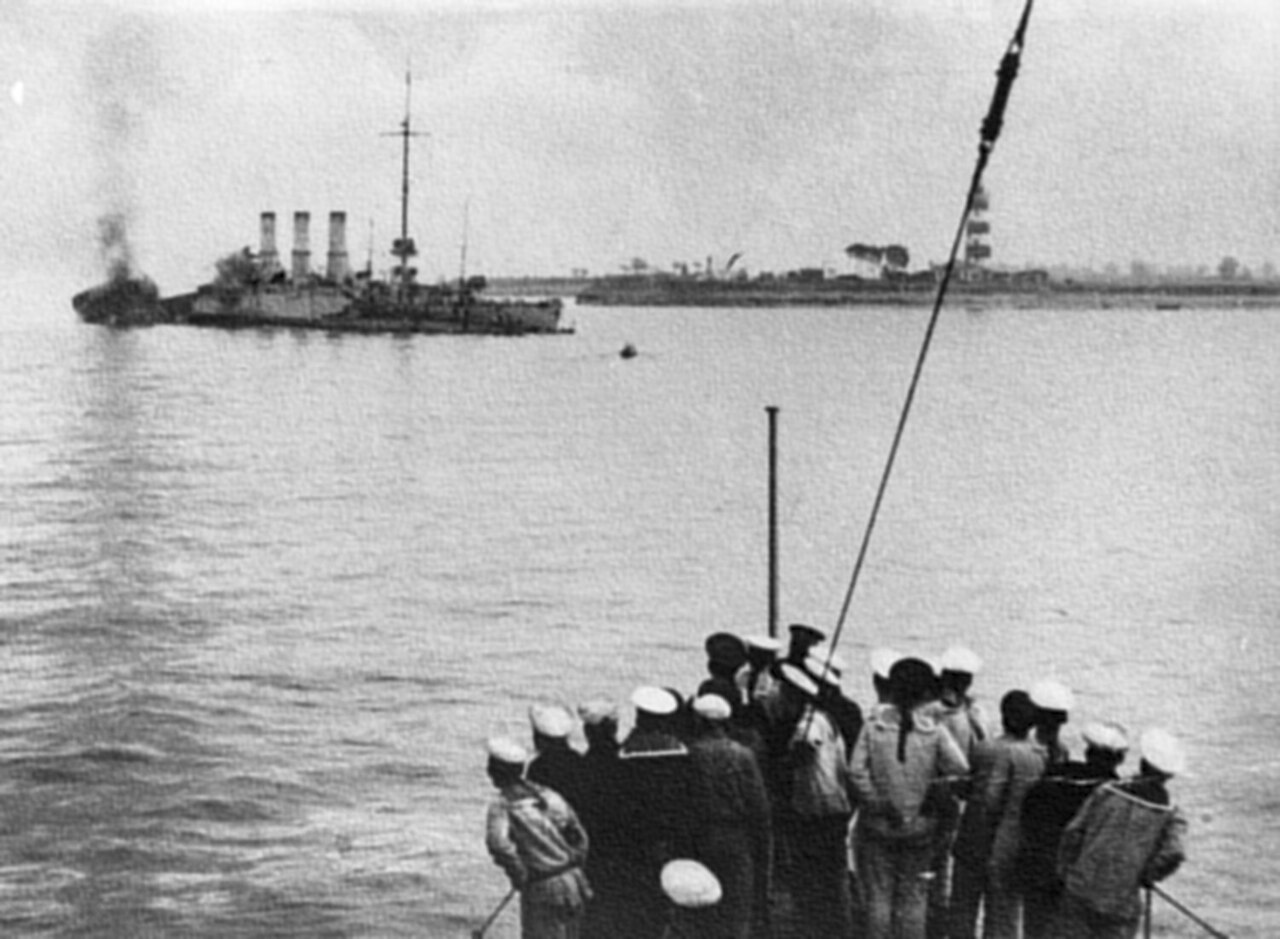
Culture
Osmussaar has almost no living community, so its culture is mostly one of memory. The Estonian Swedes who farmed and fished here for centuries left behind a distinct dialect, a chapel and place names that still appear in Swedish and German as well as Estonian. Anyone interested in the island should think of it as a former village rather than an empty landscape.
On the mainland, Estonian manners are reserved. Newcomers sometimes read this as coldness, but it is simply a habit of not opening up to strangers quickly. Smiling at people you do not know is not the norm and can seem odd, and an automatic bright smile may come across as insincere. Estonians tend to keep a comfortable physical distance, speak quietly, and take a moment to think before answering. A calm, honest conversation is valued far more than a loud or hurried one. The same restraint suits the island, where the few people present usually value privacy and peace.
Being genuine and dependable counts for a lot. If you say you will turn up for a boat or a meeting, turn up. Estonians put weight on responsibility and on doing what you promised, and they notice when visitors do not.
On Osmussaar itself, keep to marked paths and leave the chapel ruins, farm foundations and wartime remains exactly as you find them, taking away all your rubbish, since this is a protected nature reserve and a place of memory.
What to wear
Osmussaar's traditional dress belonged to the Estonian Swedes, whose clothing followed the practical needs of island life: wool for warmth, linen for underlayers, and knitted items such as mittens and stockings against wet and wind. Estonian folk costume more widely uses woven wool, striped skirts, embroidered blouses and decorative shawls, and each region has its own colours and patterns. These outfits are mostly worn now for song festivals, folk dance and national celebrations, not in daily life.
Everyday dress in Estonia is plain, practical and often dark or neutral. People favour good outdoor layers, wool or fleece in the cooler months, and waterproofs, with little emphasis on display. On the coast, nobody is surprised by a woolly hat in summer. There are no formal dress rules for ordinary visits.
For a trip to Osmussaar, plan for weather rather than appearance. Wind is constant and the temperature can change quickly even in summer, so bring a windproof, waterproof jacket, a warm mid-layer and a hat. Walking is over uneven limestone, shingle, damp grass and old ruins, so wear sturdy, waterproof boots or shoes with a good grip, and take socks to change into. In summer, add sunglasses, sun cream and light long sleeves, as there is little shade and a bright sea breeze hides the sun's strength. Mosquitoes and ticks are possible in warm months, so trousers tucked into socks help. Chapel ruins and memorials call for quiet, respectful clothing, though no particular dress code applies.
What to eat
- Verivorst with lingonberry jam — Traditional mainland restaurants and Christmas markets
Verivorst is Estonia's blood sausage, close to British black pudding, and most associated with winter and Christmas. It arrives with sweet-sharp lingonberry jam. Try it at a traditional mainland restaurant or at a seasonal market. - Mulgikapsad — Village eateries and country taverns on the mainland
A slow-cooked sauerkraut stew, often with pork and barley, which is the usual partner for verivorst. It is heavy, sour and warming, and makes sense after a cold, windy day. Look for it on menus in village eateries and country taverns. - Kartulisalat — Mainland supermarkets, delis and home-style cafés
Estonian potato salad, usually dressed with sour cream and mixed with pickles, onion or sausage. It is a regular side dish at family tables and at summer barbecues, and a sensible, filling picnic option if you are carrying food to the island. - Smoked or salted Baltic fish — Harbour stalls and fishing villages on the Lääne coast
Fish has always been central on this coast, and smoked or salted Baltic herring and similar catches are common. Eaten with dark bread and a little dill, they make a simple, portable lunch. Buy from harbour stalls or local fishing villages where possible. - Dark rye bread — Mainland bakeries and village shops
Dense, slightly sour rye bread is the base of many Estonian meals, from breakfast with butter to open sandwiches. It keeps well, so it travels easily in a rucksack. Bakeries and general shops on the mainland sell it fresh.
Plan it
Best time. Late May to August, when daylight is long, the sea is calmest and boats are most likely to run. June and July have the longest days but can still be breezy and cool. Autumn brings storms, short days and cold water, and winter crossings are often not possible at all.
How long. 1–2
Getting there. Fly to Tallinn (TLL), Estonia's main international gateway, then travel by road to the Lääne County coast. The last leg is a boat crossing to the island, which usually has to be arranged in advance. Check current sailings and any landing rules with the reserve administration or local tourist office.
Budget. mid
Tips
- Arrange the boat well ahead and have a fallback day, because weather can delay or cancel crossings
- Carry all food, drinking water and a charged phone, since the island has almost no services
- Bring waterproofs and warm layers even in July, as the wind is constant and exposed
- Take binoculars for birds, and keep to paths in the nature reserve
- Cards may not work on boats or small stalls, so carry some cash
Etiquette
- Stay on marked paths and leave ruins, wartime remains and nesting areas undisturbed
- Take every scrap of rubbish back to the mainland
- Keep voices low and respect the privacy of the few residents
Nearby
Sources
- Wikidata Q648860 (CC0)
- Wikipedia: Osmussaar (CC BY-SA 4.0)
- Wikivoyage: Estonia (CC BY-SA 4.0)
- Osmussaar-vaade tuletornist (Ilme Parik) (CC BY-SA 4.0)
- Bundesarchiv Bild 134-B2501, Kleiner Kreuzer Magdeburg (CC BY-SA 3.0 de)
- Osmussaar Island (Doricono) (CC BY 3.0)
- Kappelkärre ja Osmussaare kabeli varemed (Ivo Kruusamägi) (CC BY-SA 4.0)
- Osmussaare kauglaskekahuri jäänused (Ivo Kruusamägi) (CC BY-SA 4.0)
- Osmussaare vaatetorn (Ivo Kruusamägi) (CC BY-SA 4.0)
- Osmussaar 13 (Aleksandr Abrosimov) (CC BY-SA 3.0 ee)
- Osmussaare tuletorn ja pank (Ivo Kruusamägi) (CC BY-SA 4.0)


