Kuressaare Castle
Kuressaare Castle, Estonia
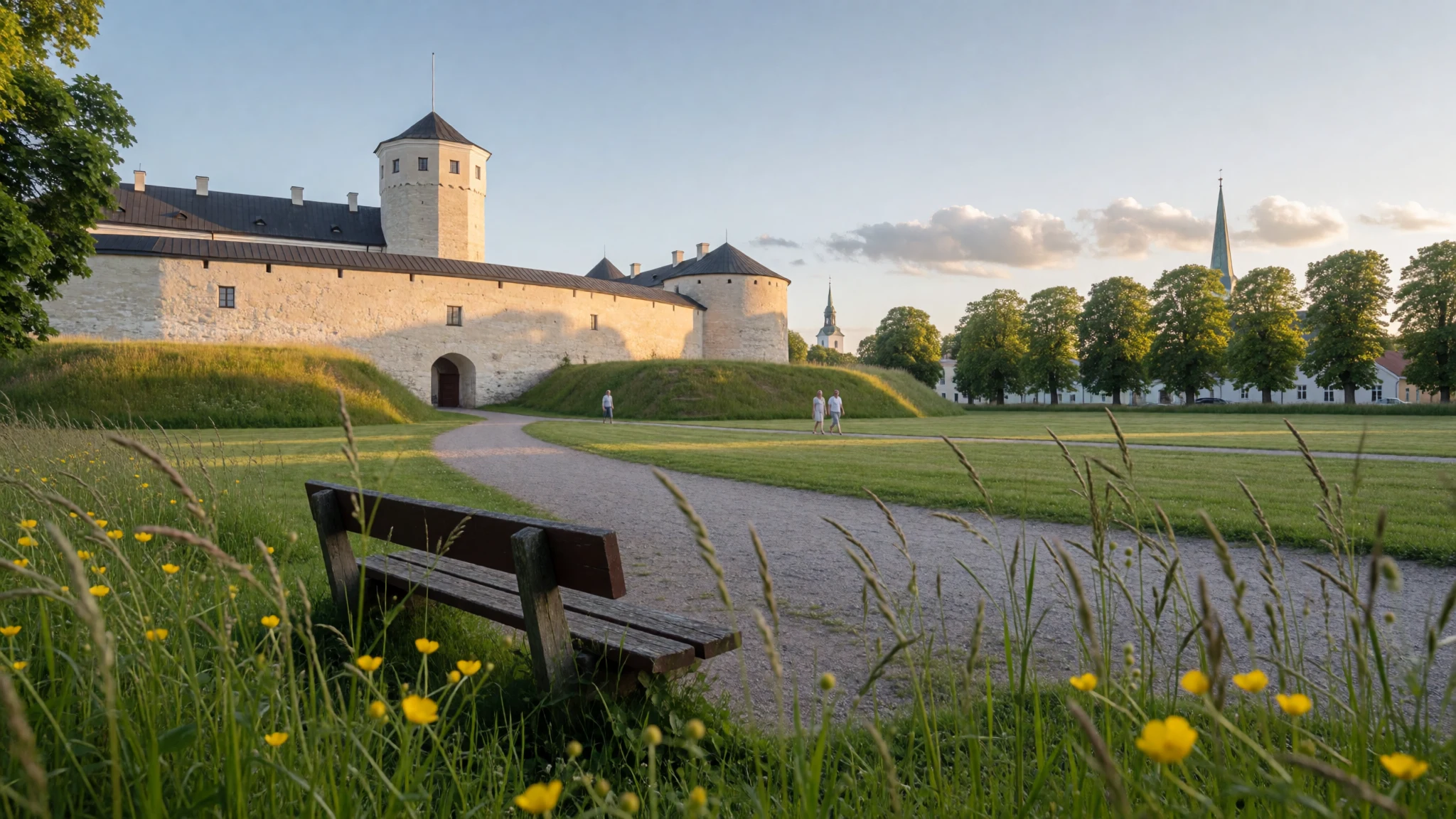
Kuressaare Castle is a bishop's stronghold on Saaremaa island, reworked by successive rulers, where Estonia's layered history can be read in one walk.
The place
Kuressaare Castle stands in Kuressaare, the main town of Saaremaa, an island off western Estonia. Its Estonian name is Kuressaare linnus, and it is also called the Episcopal Castle, a reminder that it was built as a seat for bishops rather than for a king or a noble family. The German name, Schloss Arensburg, survives on older maps and in history books.
The setting shapes the visit. Saaremaa is a low, windy island, and the castle sits at the edge of town with open ground around it, so the approach feels closer to crossing a park than climbing to a fortress. Photographs show a solid block of pale stone with a watchtower rising over the wall and a wide inner court that is calm once the gate is passed. Later earthworks and bastions, added when cannon changed warfare, wrap around the medieval core, so the outline is as much an artillery fortress as a bishop's castle.
Estonia itself helps explain the island. The country speaks a Finnic language, looks north towards the Nordic countries more than south, and was ruled in turn by German, Danish, Swedish, Polish and Russian powers before independence. Saaremaa carries that mix in its buildings and its food. Visitors from India or the UK will find a place that rewards slow walking rather than a checklist. Tourism to Estonia has grown steadily in recent years, but Saaremaa still tends to feel like a destination people choose on purpose, since reaching it takes a ferry or a flight.
Its story
Kuressaare Castle first appears in written records in the late fourteenth century, when the Teutonic Order began building it for the bishops of Ösel-Wieck, known in Estonian as Saare-Lääne. Some accounts say the first version was made of timber. The islanders had resisted attempts to convert them, so the castle was almost certainly one piece of a wider crusader effort to take control of Saaremaa. It remained a bishop's stronghold, and counted among the more important castles of the bishopric, until that church territory was dissolved during the Livonian War.
Ownership then passed from hand to hand. Denmark-Norway seized the island and the castle in the mid-sixteenth century and modernised the defences. A war between Denmark-Norway and Sweden ended in the mid-seventeenth century with the Peace of Brömsebro, and Saaremaa went to Sweden, which went on improving the fortress into the early eighteenth century. The Great Northern War then brought the island and its castle into the Russian Empire.
After that the fortress slowly lost its purpose. As the empire's frontier moved further west, and after later events such as the Finnish War and the Third Partition of Poland, military attention drifted away from Estonia, and Kuressaare no longer mattered strategically. A stronghold that had been rebuilt by every new ruler was left largely wrecked when Russian troops blew up much of it in 1711, and later restorations in 1904–12 and 1968 rebuilt parts of it, yet the walls, bastions and court still record who held the island and what they feared.
What to see
- The castle entrance — Castle approach, Kuressaare
The entrance is where the visit starts, and the photographs show a heavy stone gateway set into thick walls, with the town and open ground behind. It is worth slowing down here to notice how the masonry changes, since medieval work and later repairs meet at the threshold. Check the official site before planning.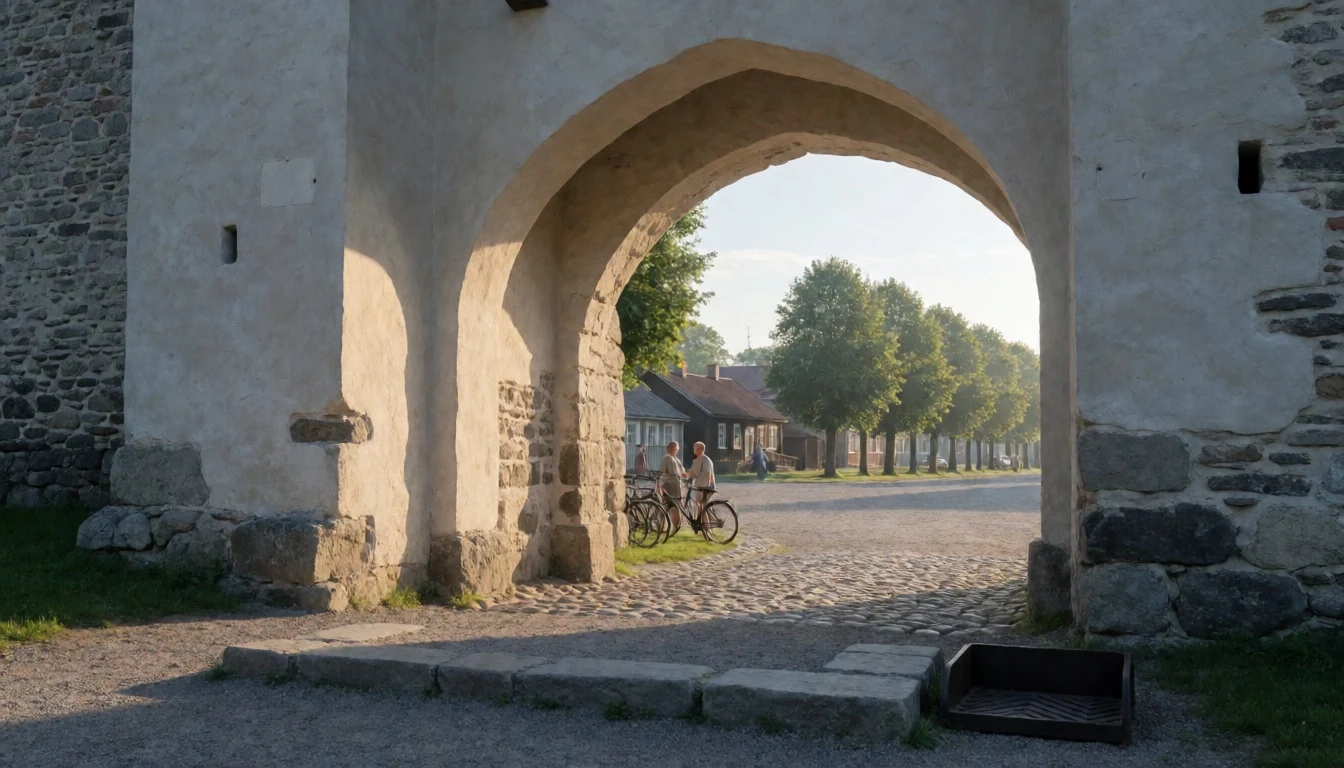
- The inner court — Castle interior
Inside the walls lies a large square court, enclosed on every side by tall stone ranges. It is the best place to feel the scale of the original bishop's house, and in good weather it is easy to sit and look up at the windows, roofs and chimneys. Sound carries oddly here, so voices drop naturally.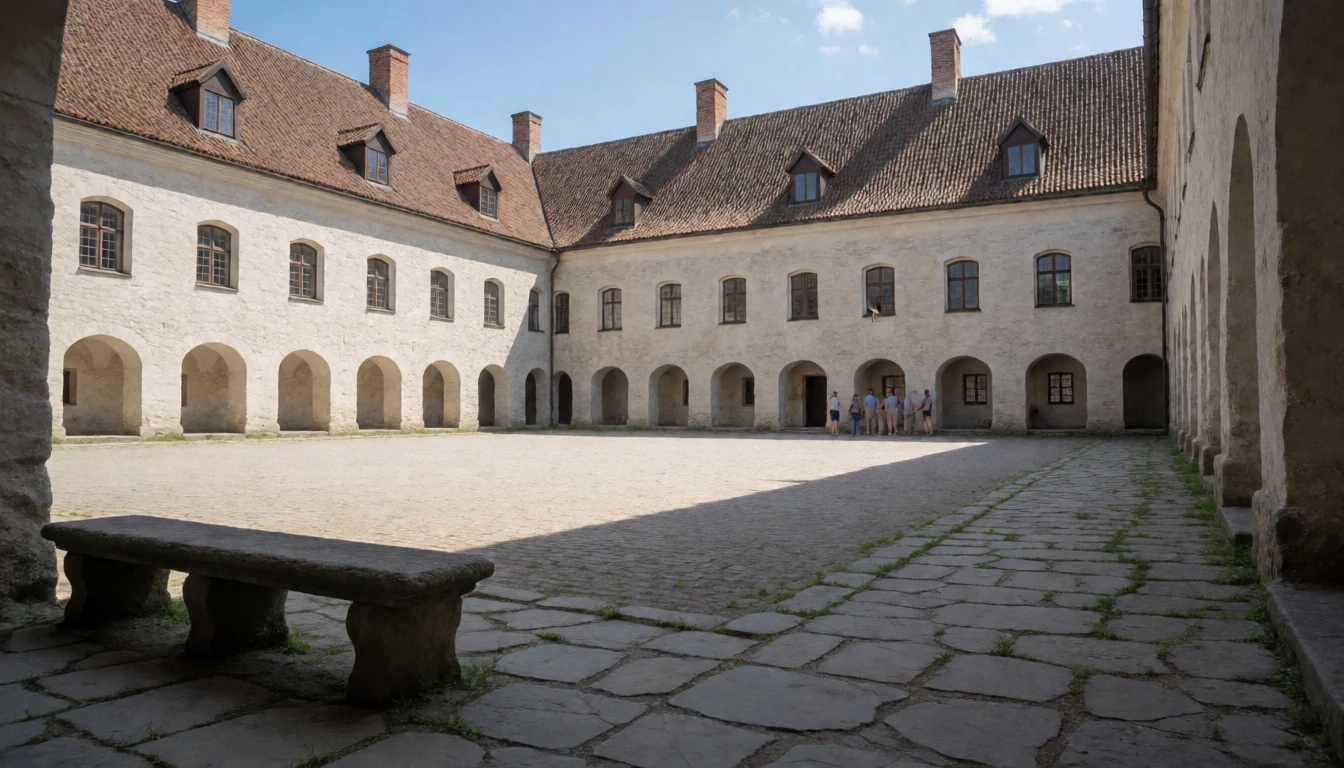
- The watchtower — Castle walls
A watchtower rises above the line of the wall, and from outside it is the shape most easily picked out against the sky. It shows how defence worked on a flat island, where height mattered more than any natural hill. Seen from the grounds, it also gives a useful sense of the castle's outline.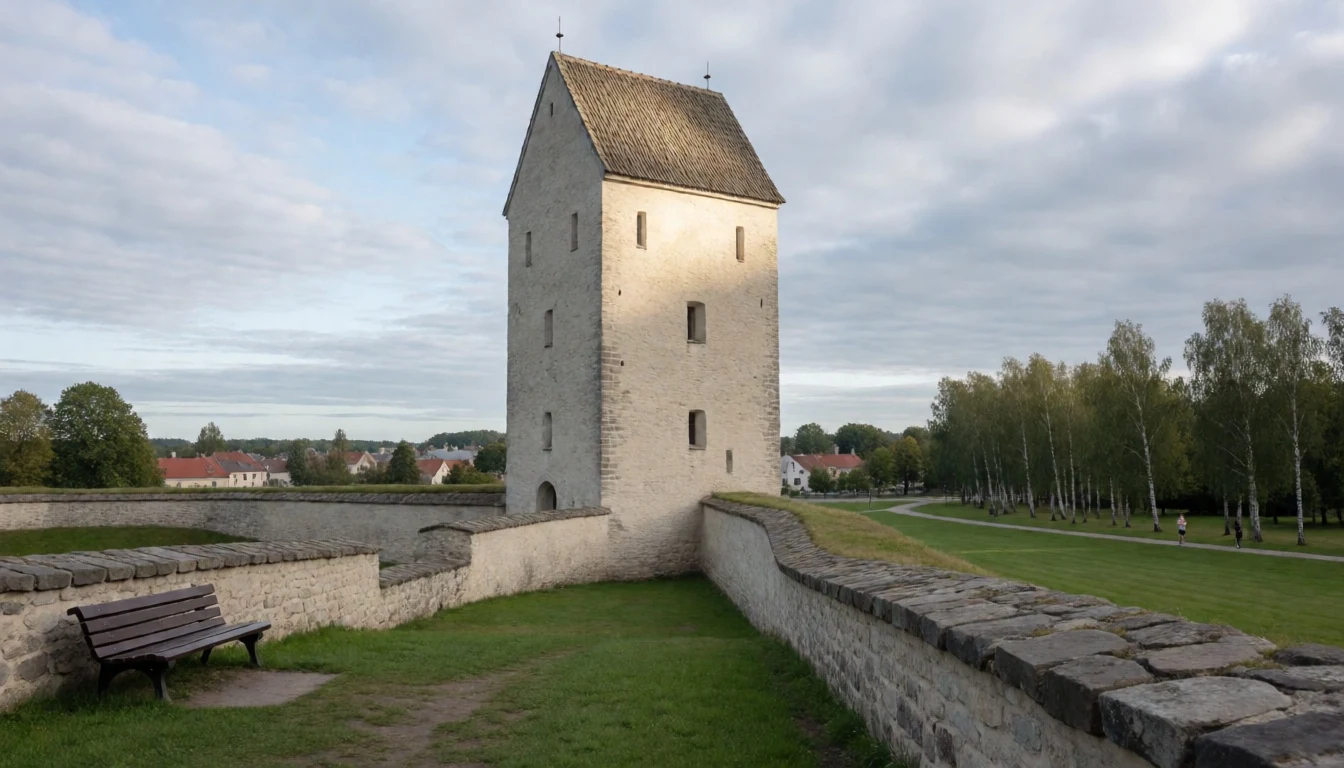
- The north bastion and cannon tower — North side of the fortress
The north bastion belongs to the later, gunpowder phase of the fortress, when earthen and stone defences were built outward to absorb artillery fire. Its cannon tower shows how the medieval castle was wrapped in newer works by Danish, Swedish and Russian rulers. Wear sturdy shoes, since the ground around the ramparts can be uneven.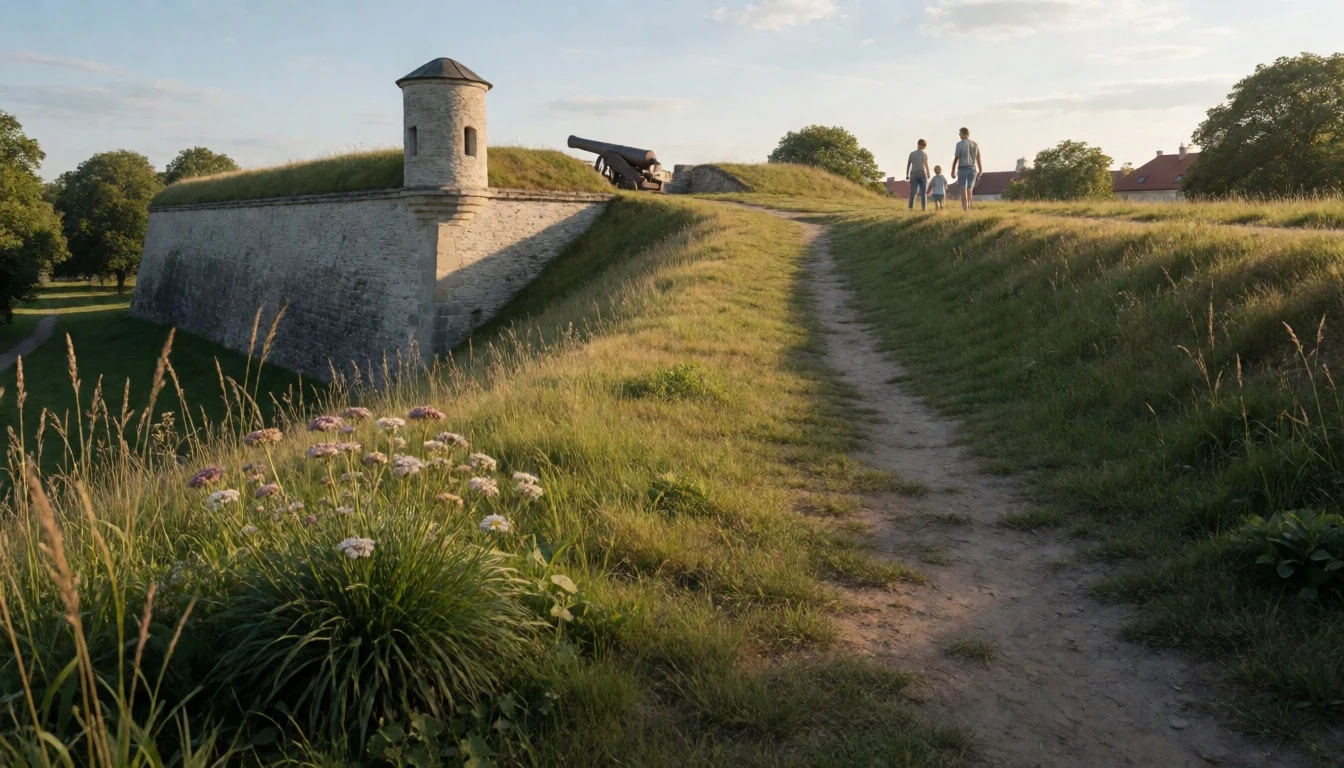
- The castle seen from outside — Grounds around the castle
Walking around the outside gives the clearest view of how the pale stone block sits within its ring of bastions and open ground. Early or late light flatters the walls, and the grounds are easy to circle at a gentle pace. It is a good way to end a visit, with the whole shape in view.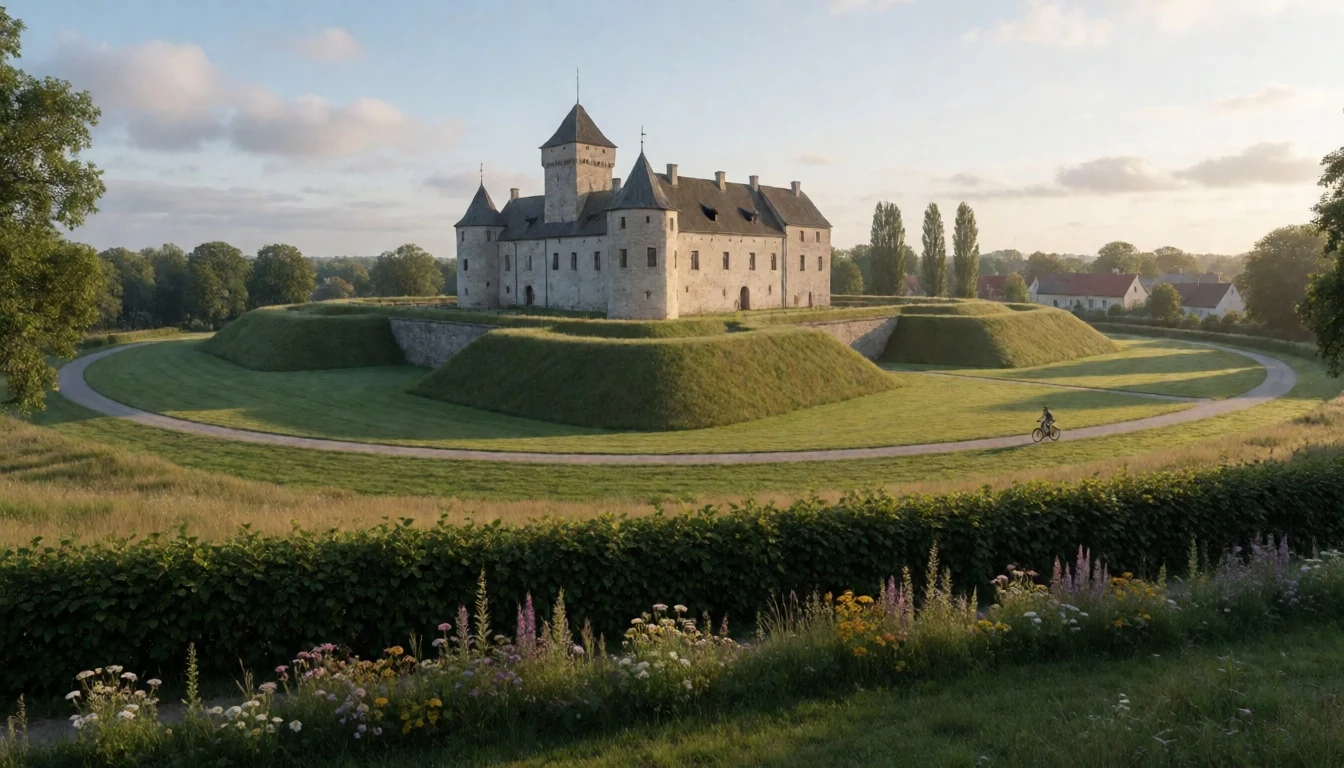
Culture
Kuressaare Castle sits in a country whose manners can look reserved to first-time visitors. Estonians often seem somewhat unwelcoming at first, but this is mostly a matter of habit: people tend not to open up to those they do not know well, and warmth comes with time rather than with a quick greeting.
Smiling is a good example. As in many places across the former Soviet Union, a smile is traditionally kept for friends, and a grin aimed at a stranger may be read as mockery or as a sign that something is wrong with their clothes. An automatic, wide Western smile can come across as insincere. A calm nod and a simple greeting go down better.
Personal space matters too. Estonians tend to keep their distance, and standing too close can make someone uncomfortable. A hug is reserved for old friends meeting after a long gap. Conversation, whether social or in business, is meant to be quiet and decent, and a loud voice is not admired.
The country's history explains some of this reserve. Estonia lived under German, Danish, Swedish, Polish and Russian rule, was occupied in the twentieth century, and regained independence peacefully through the Singing Revolution. Estonians are largely irreligious, so the castle is visited as history rather than as a place of worship. Keep your voice low in the courtyard and on the ramparts, give other visitors and staff plenty of space, and do not mistake a quiet reply for coldness.
What to wear
Kuressaare Castle is in Estonia, where traditional dress is regional and tied to folk culture. The older costumes are made mostly of wool and linen, with striped or checked skirts, white linen blouses, woven belts, brooches and knitted gloves and mittens, and each parish once had its own patterns and colours. Today the costumes appear mainly at song festivals, weddings, folk-dance events and national celebrations, not in daily life.
Everyday clothing in Kuressaare is plain and practical: jeans, knitwear, windproof jackets, rain shells and sturdy shoes. Style leans towards the understated Nordic look, with muted colours and good outerwear, and few people dress up to walk around a castle or town. Local knitwear is a reasonable keepsake, and a wool jumper does real work on a windy island.
Visitors should plan for weather, not formality. Summer days can be mild, but the sea wind and showers mean a light waterproof and a warm layer are sensible even then, and late autumn to early spring is cold and dark enough for a proper coat, hat and gloves. Footwear matters most: the castle has uneven stone, cobbles and grassy ramparts, so closed shoes with grip are better than sandals or smooth soles. There is no special dress code for the castle, though modest, comfortable clothes suit the quiet local mood.
What to eat
- Verivorst with lingonberry jam — Traditional Estonian restaurants and cafés in the town centre
Verivorst is a blood sausage, close to English black pudding, and the nearest thing Estonia has to a national dish. It is a winter and Christmas favourite, usually served with lingonberry jam. Look for it at traditional Estonian restaurants and cafés in Kuressaare's town centre in the colder months.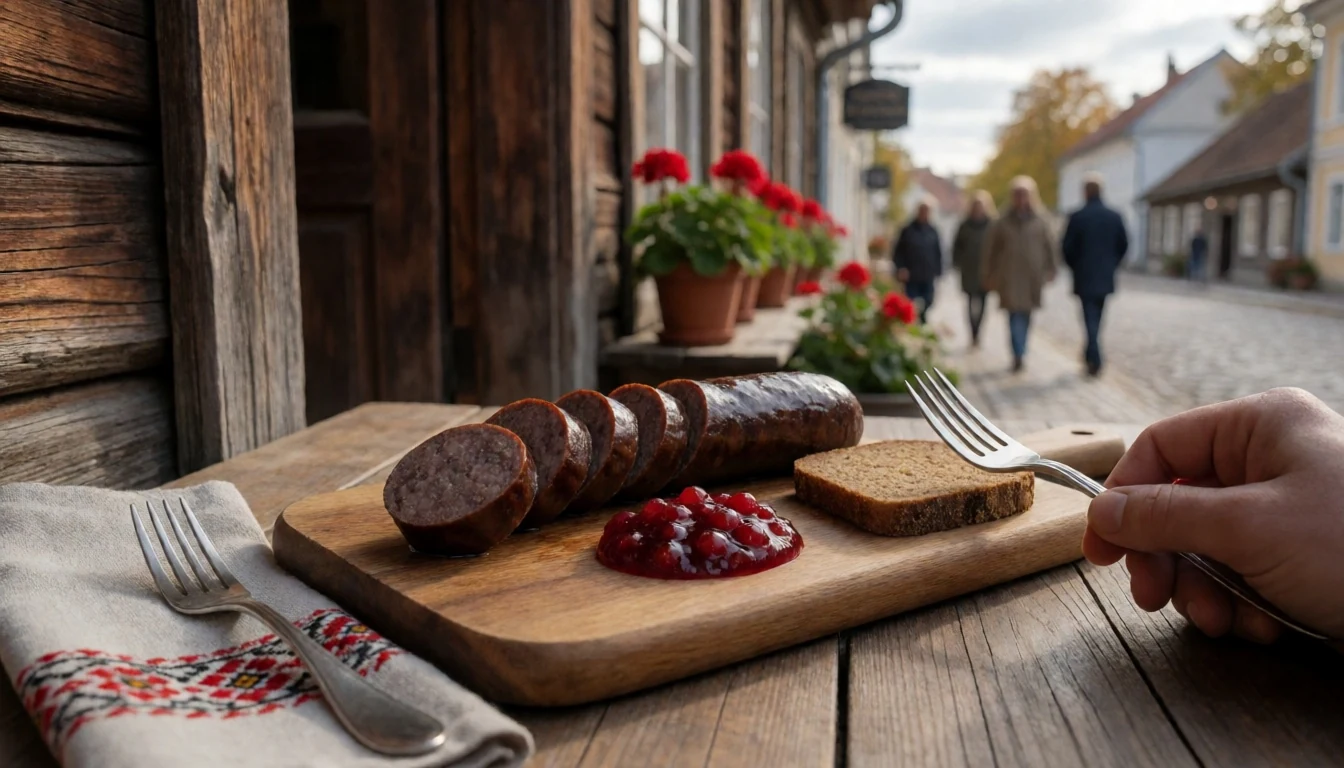
- Mulgikapsad — Home-style Estonian restaurants in Kuressaare
A hearty stew of sauerkraut, often cooked with pork and barley, mulgikapsad is the usual partner to verivorst. It is sour, savoury and filling, built for cold weather. Order it at a restaurant serving home-style Estonian dishes, especially in autumn and winter.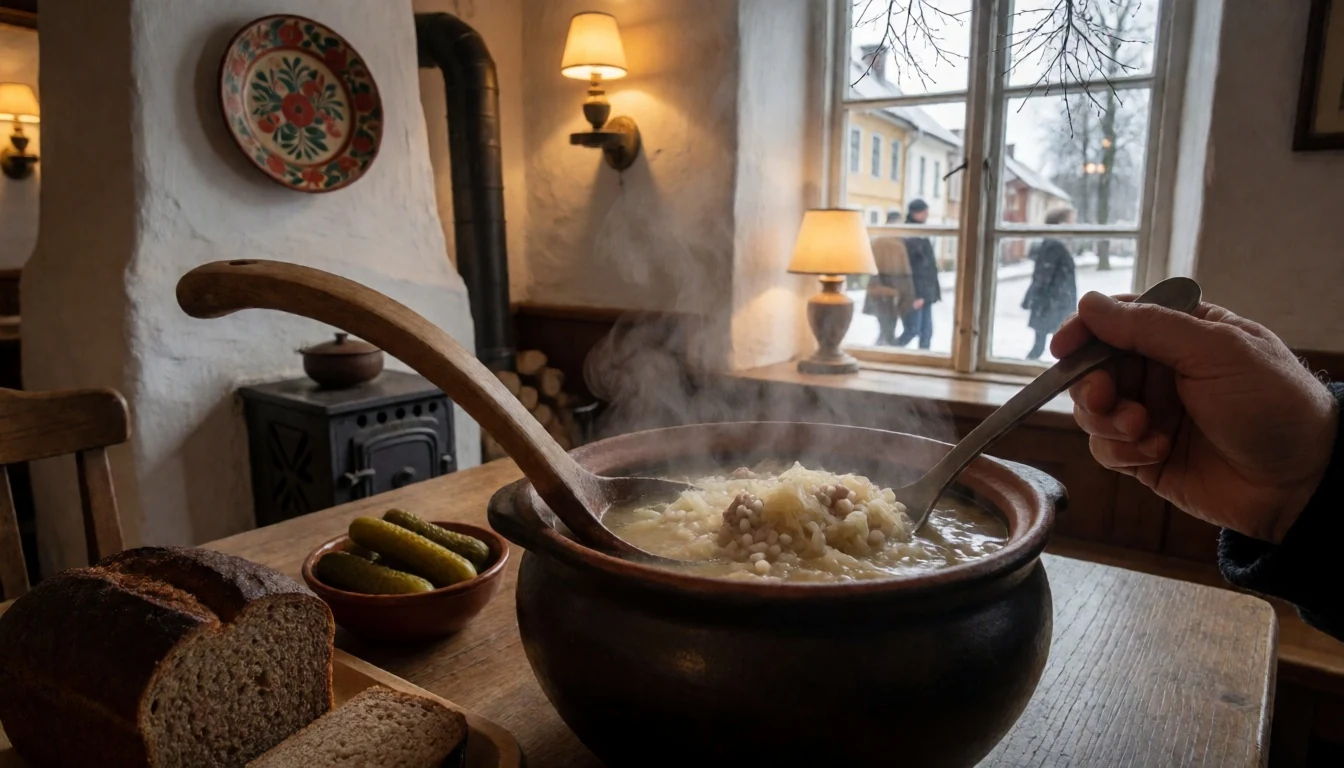
- Kartulisalat — Lunch cafés and market food stalls
Kartulisalat is potato salad, usually dressed with hapukoor, a sour cream with a tangy edge. It shows the Russian influence in Estonian cooking and appears as a side at lunch counters and cafés. It suits a light meal after walking the castle grounds. - Rye bread — Bakeries and shops in Kuressaare town
Dark, dense rye bread is a staple across Estonia and is worth trying plain, with butter or beside fish and sausage. Bakeries and shops in town sell loaves, and many cafés serve it as a side. It keeps well, so it makes an easy edible souvenir. - Smoked and cured fish — Harbour-side eateries and seasonal markets
The sea around Saaremaa makes fish a natural choice, and the wider cuisine leans on fish alongside dairy and potatoes. Smoked, salted or pickled Baltic fish appears on local menus and at seasonal markets. Ask what is local that day and choose the simplest preparation.
Plan it
Best time. July and August bring the warmest days, with highs near 26°C, and long daylight on a northern island, though August is also the wettest month; spring and autumn are quieter but cooler and windier, and winter is cold and dark, which suits only those who want the castle nearly to themselves.
How long. 1–2
Getting there. Fly to Tallinn (TLL), Estonia's main international gateway, then continue to Saaremaa by road and ferry across the water, or by a domestic flight if one is running. Check current ferry, coach and flight timetables before booking, then take a short local walk or ride to the castle in Kuressaare town.
Budget. mid
Tips
- Check the official castle website for opening hours, tickets and events before you travel
- Book ferry crossings and island accommodation early for summer weekends
- Carry a waterproof and a warm layer even in summer, as the island is exposed to wind
- Cards are widely accepted in Estonia, but keep a little cash for small stalls
- Visit the grounds early or late in the day for quieter walking and softer light
Etiquette
- Keep voices low, as Estonians value quiet conversation
- Give people plenty of personal space and do not expect a stranger to smile back
- Do not climb on ramparts or walls where signs ask visitors to stay off
Nearby
Sources
- Wikidata Q1768091 (CC0)
- Wikipedia: Kuressaare Castle (rev 1374749752) (CC BY-SA 4.0)
- Wikivoyage: Estonia (rev 5425489) (CC BY-SA 4.0)
- Photo: Kuressaare linnus õhust, Hiiumaamudeliklubi (CC BY-SA 3.0 ee)
- Photo: Kuressaare Castle, Stefan Hiienurm (CC BY-SA 4.0)
- Photo: Kuressaare linnus, kindluse plaan, Martin Jakobson (Public domain)
- Photo: Põhjabastioni suurtükitorn, Ivo Kruusamägi (CC BY 3.0)
- Photo: Kuressaare linnuse sissepääs, Ivo Kruusamägi (CC BY-SA 3.0 ee)
- Photo: Kuressaare Castle (panoramio 3), Laima Gūtmane (CC BY 3.0)
- Photo: Inner court of Kuressaare castle, RobertRSMN (CC BY 3.0)
- Photo: Kuressaare linnus, vahitorn, Ivo Kruusamägi (CC BY-SA 3.0 ee)


