Hermann Castle
Hermann Castle, Estonia
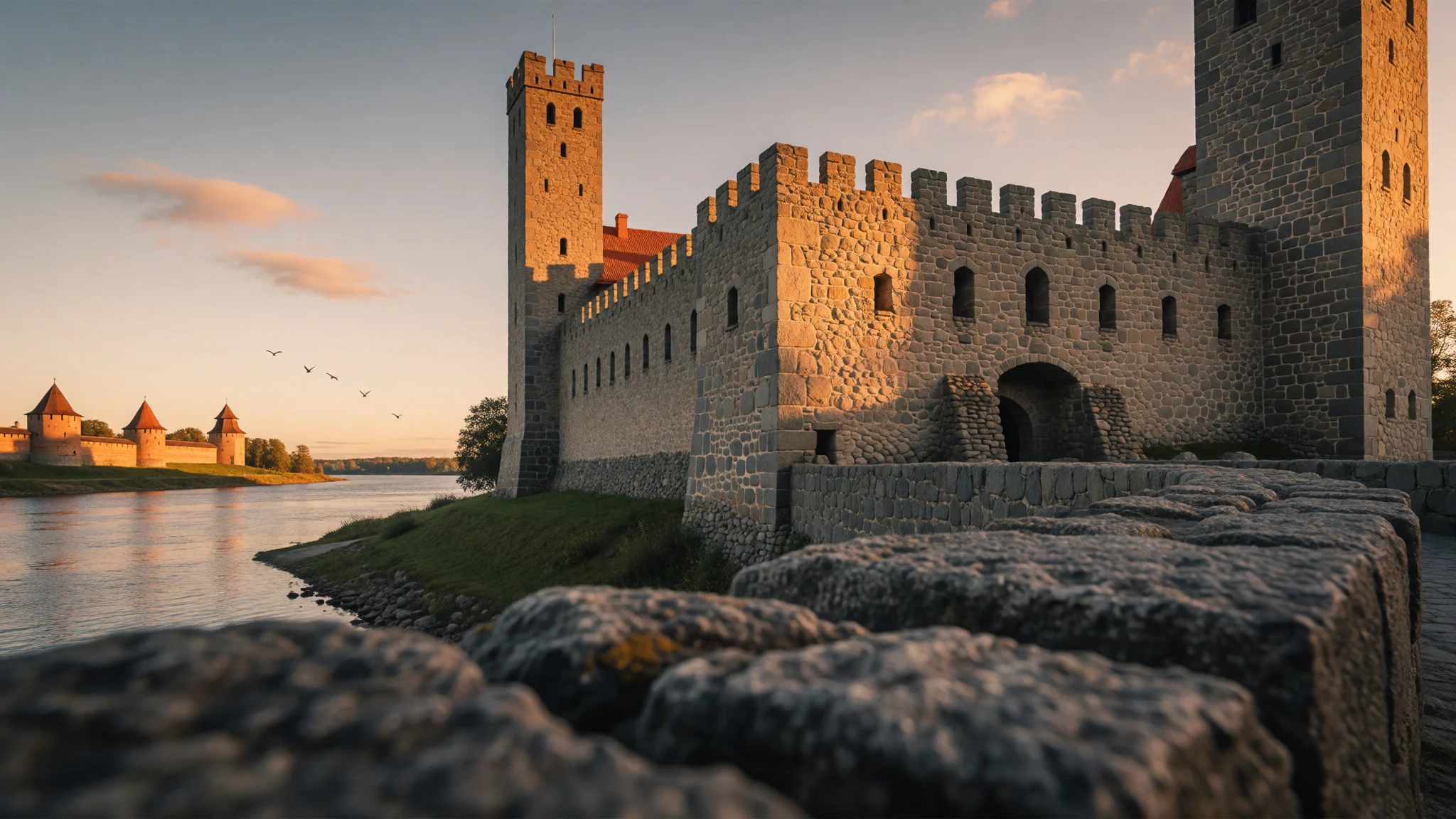
Hermann Castle is a medieval fortress in Narva, once owned by the Teutonic Order, facing a Russian fortress across the border river.
The place
Hermann Castle stands on the Estonian bank of the river in Narva, a city in the far northeast of the country, directly on the border with Russia. On the opposite bank rises the fortress of Ivangorod, and the two strongholds face each other across the water, which makes the whole border landscape easy to read from either side. The castle is a block of stone built around a courtyard, with a tall tower at one corner called Long Hermann (Pikk Hermann). Today it holds a museum, so a visit mixes climbing stairs, passing through thick-walled rooms and stepping out onto upper levels for views over the river and the Russian shore.
Narva is a low-rise, quiet city, and the castle is the clear anchor of its waterfront. It is not a place of crowds: even in summer the grounds tend to feel unhurried, while winter brings cold, dark afternoons that suit the fortress mood but make the stairs and open walls less comfortable. Most travellers reach Narva from Tallinn, Estonia's main international gateway, and treat it as a long day trip or one night on a wider Baltic route.
The castle works best as a way into the region's layered history rather than a sight to tick off. Danish founders, German knights and later rulers all left their mark on the town, and standing beside a fortress that still looks across a live border makes those centuries feel less abstract than they do in many museums.
Its story
Hermann Castle in Narva began as a Danish-era stronghold around 1256, when the surrounding territory belonged to the Danish crown. At that stage the defences were not yet wholly of stone. The fully stone fortifications came at the start of the 14th century, turning a frontier post into a lasting castle.
The decisive change of hands came in August 1346, when the Livonian branch of the Teutonic Order, a military and religious order of German knights, bought the castle. The Order kept it for much of its later history, so the building is generally associated with those knights today.
Narva's position explains why it mattered. A castle at this spot guarded a natural line between the lands to the west and those to the east, and any power that wanted influence in the region had a reason to hold it. That is why the castle's story runs alongside the wider story of Estonia, whose territory passed between German, Danish, Swedish, Polish and Russian rulers over about seven centuries before independence in 1918.
Reading the castle as one chapter in that long contest, rather than as a single founding moment, is the most useful way to understand why a fortress of this kind was built on this particular bank, and why its counterpart stands on the other.
What to see
- Castle courtyard and museum rooms — Narva, inside the castle
Hermann Castle's interior is set out as a museum, and moving through its rooms is the heart of a visit. The thick stone walls and the layout around the courtyard show how a medieval stronghold was organised for defence and daily life. Expect steep stairs and uneven floors, and check the museum's official site before travelling for opening arrangements and current exhibitions.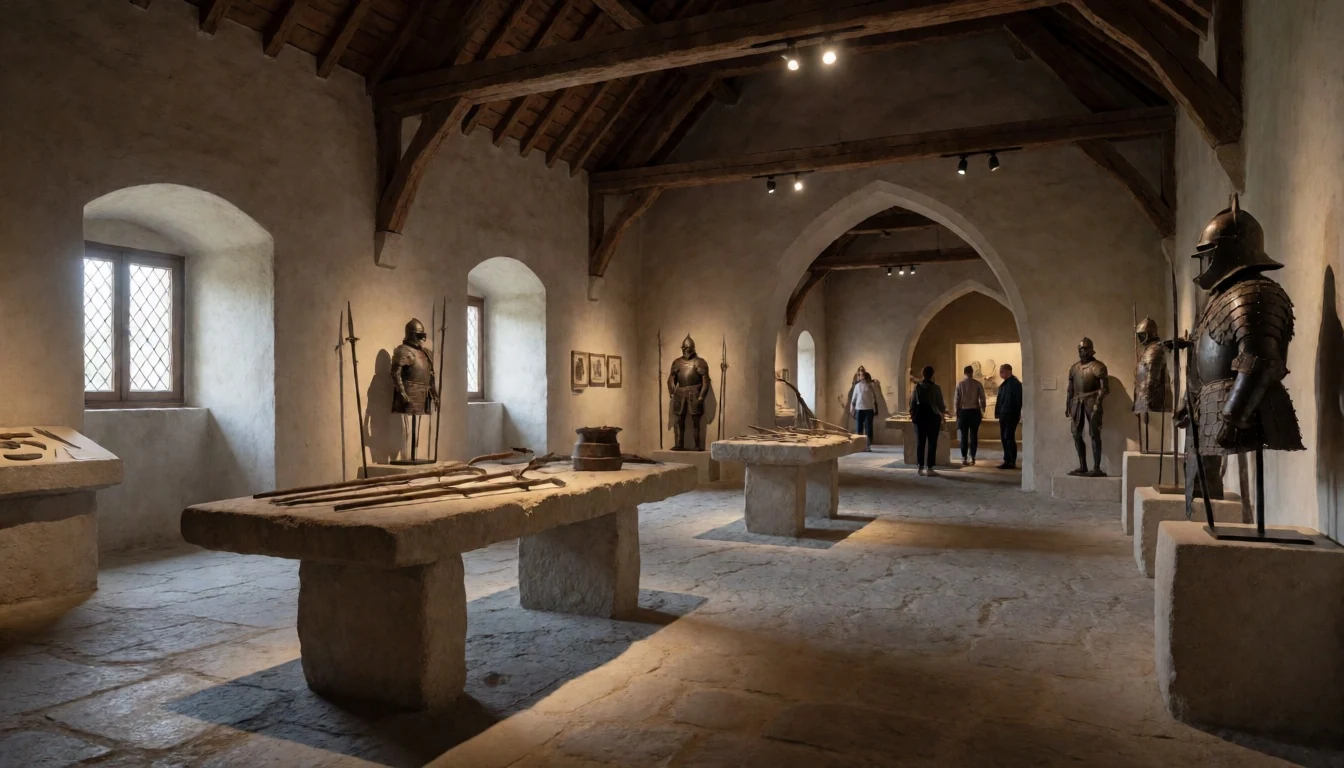
- Long Hermann tower — Narva, castle corner tower
Long Hermann (Pikk Hermann) is the tall tower at the corner of Hermann Castle and the shape most photographs use to identify Narva. From the riverbank it dominates the skyline, and the light is usually kindest in the morning or evening, when the stone warms against the water. Climbing it, where access is open, rewards with wide river views.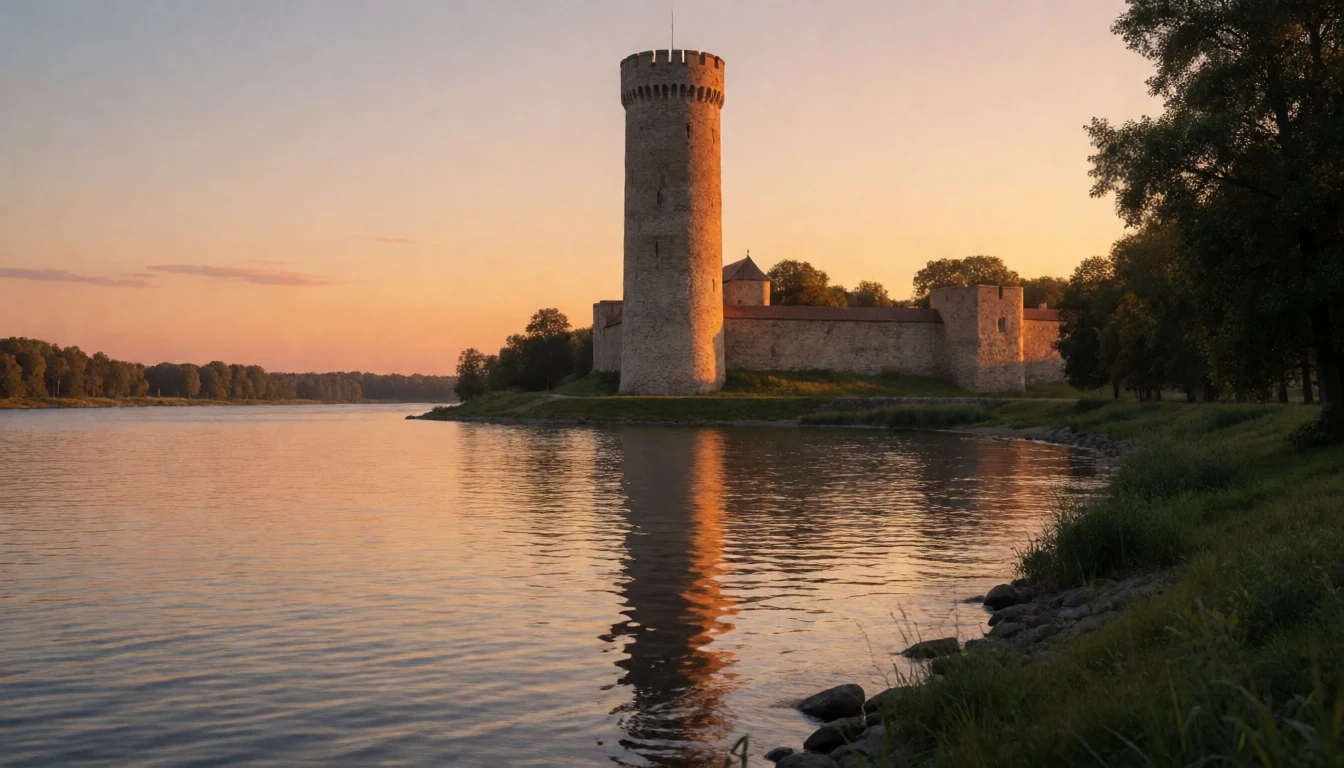
- Ivangorod Fortress across the river — Across the river from Narva
Ivangorod Fortress rises on the Russian bank directly opposite Hermann Castle, and the pairing is what makes Narva distinctive. Most visitors look at it from the Estonian waterfront, where the river is narrow enough to see walls and towers clearly. It is a view, not an excursion: crossing the border is a separate matter needing proper documents.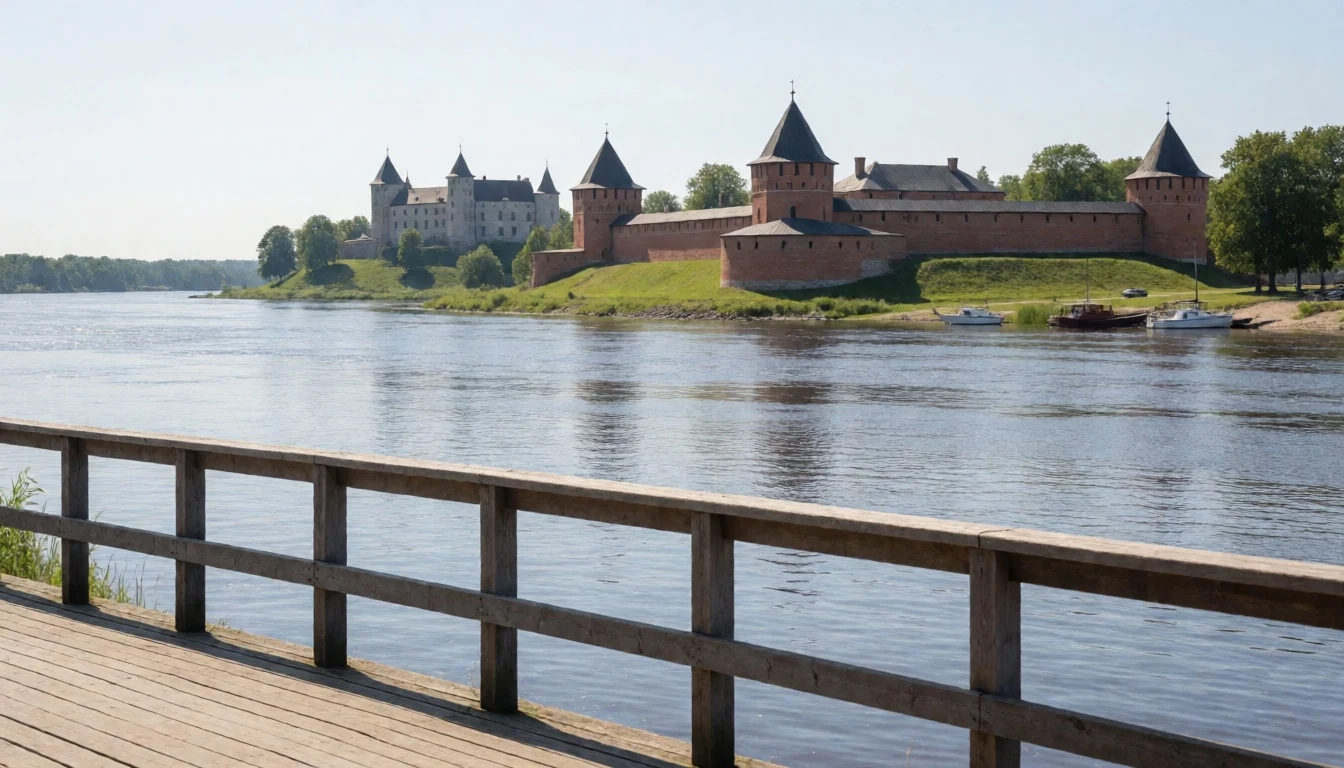
- The castle at night — Narva waterfront
Hermann Castle is lit after dark, and the night view of its walls and tower is worth planning around, especially on summer evenings when daylight lingers and the sky stays pale for hours. The lit stone reads very differently from the daytime view and is easiest to enjoy from the waterfront.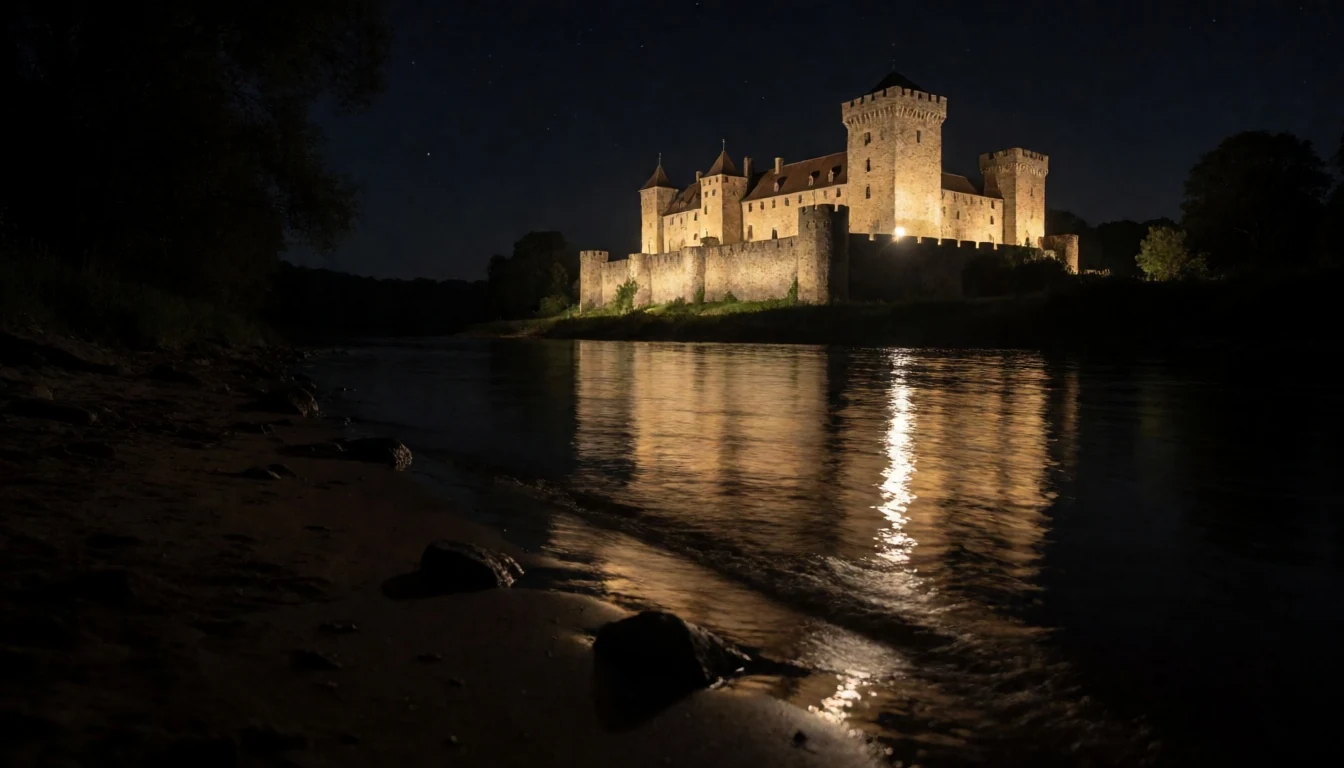
- Narva riverside walk — Narva embankment
The waterfront near Hermann Castle is a short, flat walk beside the river, useful for seeing castle and Ivangorod together and for a pause between museum rooms. Benches and open sightlines make it an easy place to sit with a coffee, though the wind off the water can be sharp outside summer.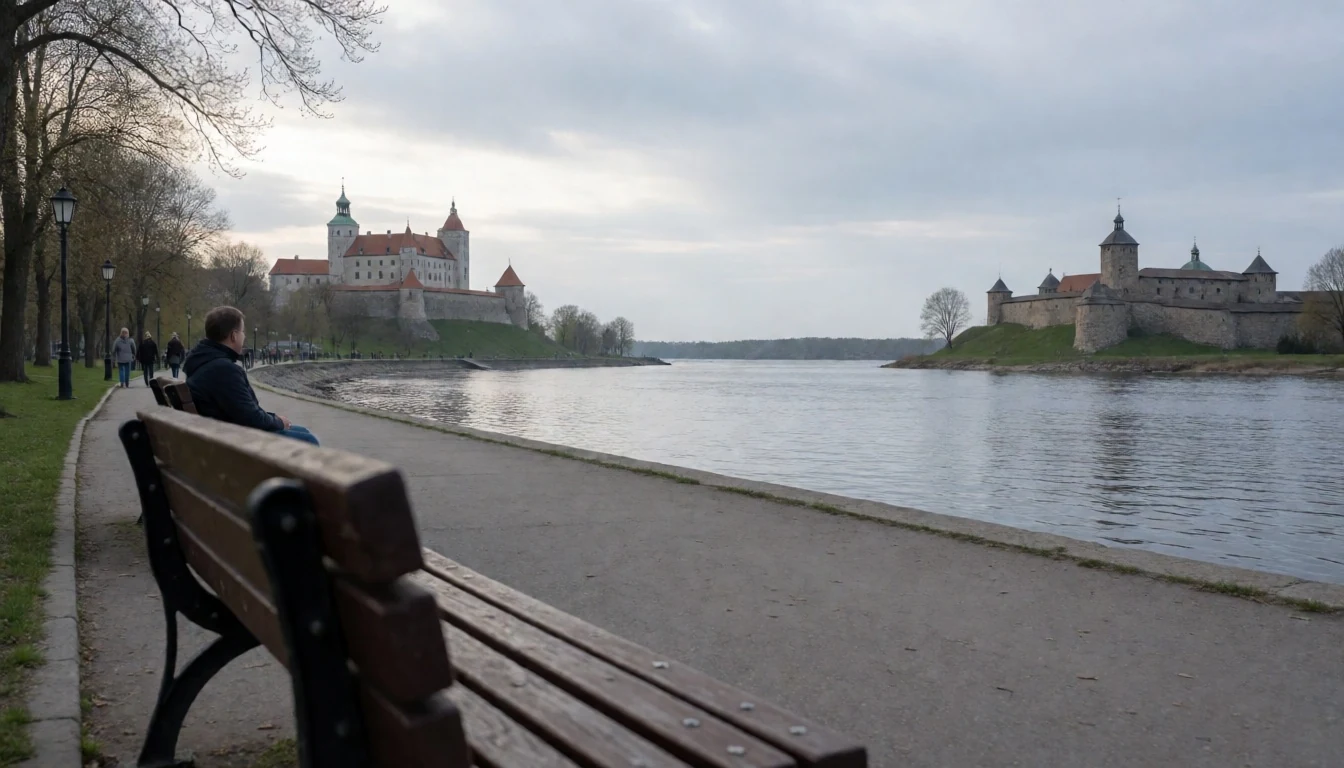
Culture
Visiting Hermann Castle in Narva means meeting Estonian manners, which tend to be reserved on first contact. Estonians often seem cool toward strangers, but this is a matter of habit rather than hostility: people here usually open up slowly and to those they know.
Smiling is traditionally kept for friends, and a broad, automatic grin at a stranger can read as insincere or even puzzling. Physical distance matters too. Standing close to someone you have just met can make them uncomfortable, while a hug is saved for old friends meeting after a long gap.
Conversation is quiet and measured. Estonians often pause before replying, and they expect the same thoughtfulness from others. A silence is not a sign that something has gone wrong. Loud talk, whether in a shop, a café or a museum, does not go down well, and straight, honest dealing counts for more than charm.
Estonia's language is Finnic, unlike the Baltic tongues spoken in neighbouring Latvia and Lithuania, and the country tends to look north to Scandinavia and Finland rather than south to central Europe. In Narva, the border setting adds another layer, so a calm, respectful manner with staff and locals goes a long way.
In the museum rooms keep your voice low, ask before photographing people, and avoid pointing a camera at border posts or guards.
What to wear
Dress around Hermann Castle in Narva is practical first, with a folk tradition that appears mainly on special days. Estonian national costume is made from wool and linen: striped or checked wool skirts, linen blouses, aprons and woven belts for women, and breeches, waistcoats and woollen jackets for men. Knitted mittens and socks with patterned borders are a craft tradition in their own right. Regional variations exist, and the costumes are worn at weddings, folk events and, above all, the Estonian Song Celebration (Laulupidu), first held in 1869 and staged every five years.
Everyday clothing in Narva is modern, plain and dark-leaning: jeans, boots, waterproof jackets and layers that can be added or shed. Smart-casual is normal for an evening meal, and nobody dresses up for a museum visit.
Visitors should plan around weather rather than rules. The castle has stone stairs, uneven floors and exposed walls, so shoes with a good grip are more useful than anything smart. By the river the wind can be cold even in summer, so a light windproof layer is sensible. Winter calls for a hat, gloves, thermal layers and insulated boots. The castle is not a religious site, but covered shoulders and knees are courteous if you step into a church.
What to eat
- Verivorst — Christmas markets and traditional Estonian eateries in Narva or Tallinn
Verivorst is Estonia's blood sausage, close to English black pudding, and the nearest thing the country has to a national dish. It is eaten mainly in winter, especially around Christmas, with lingonberry jam on the side for a sharp, sweet contrast.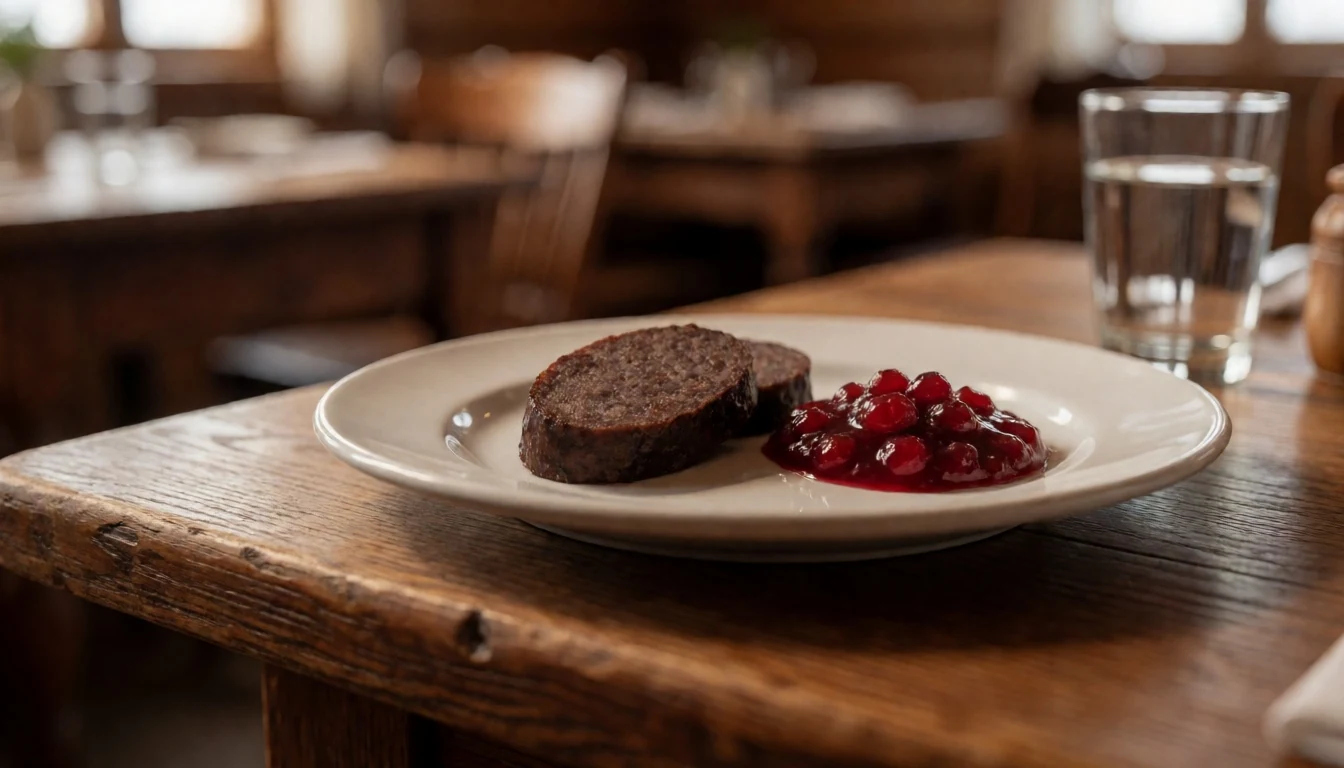
- Mulgikapsad — Traditional Estonian restaurants and home-style canteens
Mulgikapsad is a hearty stew of sauerkraut, usually cooked with pork, and a common partner to verivorst. It is sour, rich and filling, the sort of dish that makes sense after a cold walk along the river.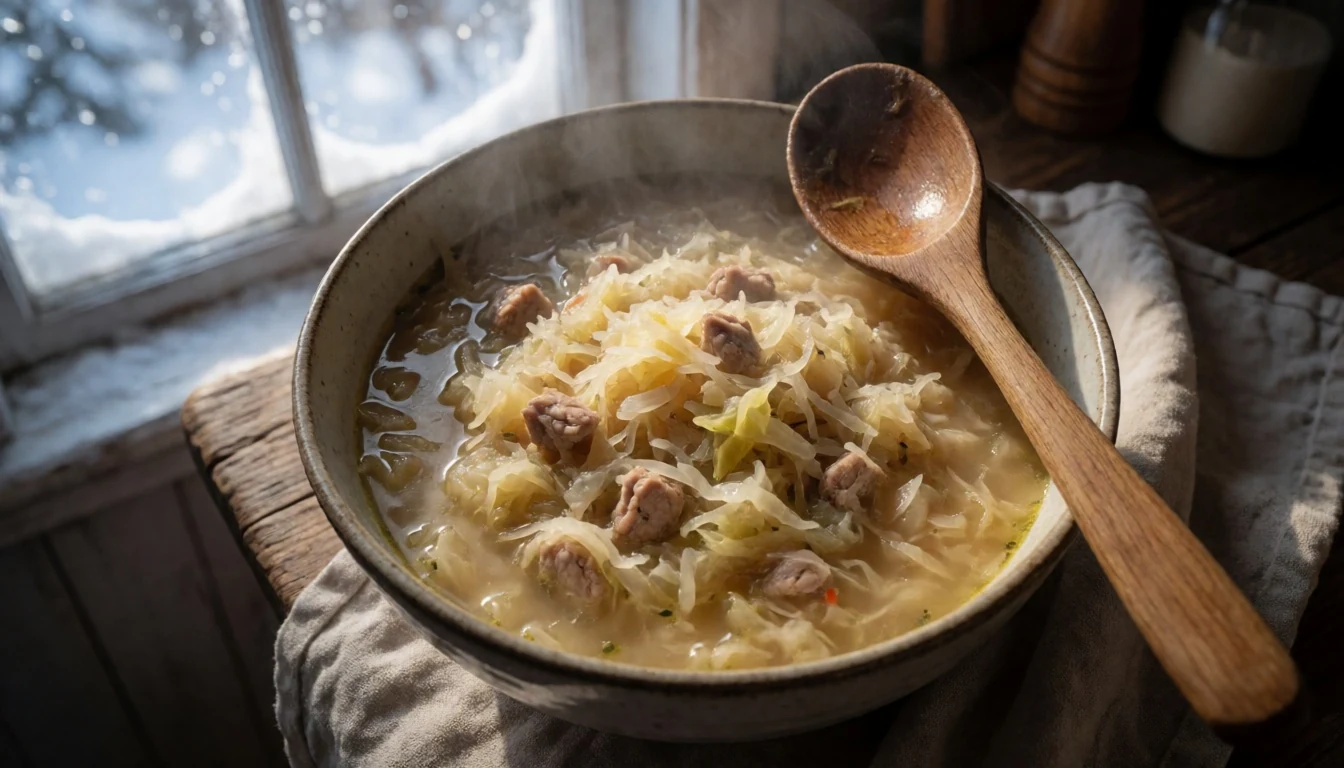
- Kartulisalat — Cafés, canteens and market food stalls
Kartulisalat is Estonian potato salad, creamy and cooling, dressed with hapukoor, a sour cream that also turns up on other salads. It shows the Russian influence on the local table and is a staple side at family gatherings and cafés. - Salted and smoked fish — Market halls and waterfront cafés
Fish has long been part of the Estonian diet alongside dairy, meat and potatoes. Salted or smoked fish, often served with boiled potatoes and herbs, is a simple, honest plate and a natural choice in a river and coast region. - Rye bread (leib) — Local bakeries and supermarkets
Dense dark rye bread is the everyday companion to most Estonian meals. It is sour, chewy and filling, and tastes best fresh, with butter, cheese or fish. A loaf from a local bakery makes a good picnic by the castle walls.
Plan it
Best time. Late May to September, when days are long, the weather is mild and the castle grounds and riverside are pleasant to walk. Winter is cold and dark, with short afternoons, so go prepared if visiting then.
How long. 1
Getting there. Fly into Tallinn Airport (TLL), Estonia's main international gateway, then continue to Narva by bus or road; check current timetables before travelling. The castle stands right by the river and the border crossing.
Budget. mid
Tips
- Check the museum's official site for opening arrangements before you travel, as they vary by season
- Bring a windproof layer even in summer, as the wind off the river can be cold
- Wear shoes with good grip for steep, uneven stone stairs
- Carry your passport or ID, as Narva is on a border and checks can be made
- Carry a card and a little cash for small cafés and market stalls
Etiquette
- Keep your voice low in the museum rooms; Estonians value quiet conversation
- Ask before photographing people, and do not point a camera at border posts or guards
- Do not read a quiet or unsmiling reply as rudeness; it is the local manner
Nearby
Sources
- Wikidata Q660001 (CC0)
- Wikipedia: Hermann Castle (rev 1379174199) (CC BY-SA 4.0)
- Wikivoyage: Estonia (rev 5425489) (CC BY-SA 4.0)
- Photo: Interior of Narva Castle, Zairon (CC BY-SA 4.0)
- Photo: Night view of Narva Castle, Aleksander Kaasik (CC BY-SA 4.0)
- Photo: Ivangorod Fortress opposite the Narva Hermann Castle, Canes (CC BY 3.0)
- Photo: 057-13 Ivangorod-Narva (CC BY-SA 4.0)
- Photo: 057-32 Ivangorod-Narva (CC BY-SA 4.0)
- Photo: 057-33 Ivangorod-Narva (CC BY-SA 4.0)
- Photo: Narva, Hermann Castle and Long Hermann tower, GAlexandrova (CC BY-SA 4.0)
- Photo: Narva, Hermann Castle seen from Ivangorod, GAlexandrova (CC BY-SA 4.0)


