Mu Cang Chai
Mu Cang Chai, Vietnam
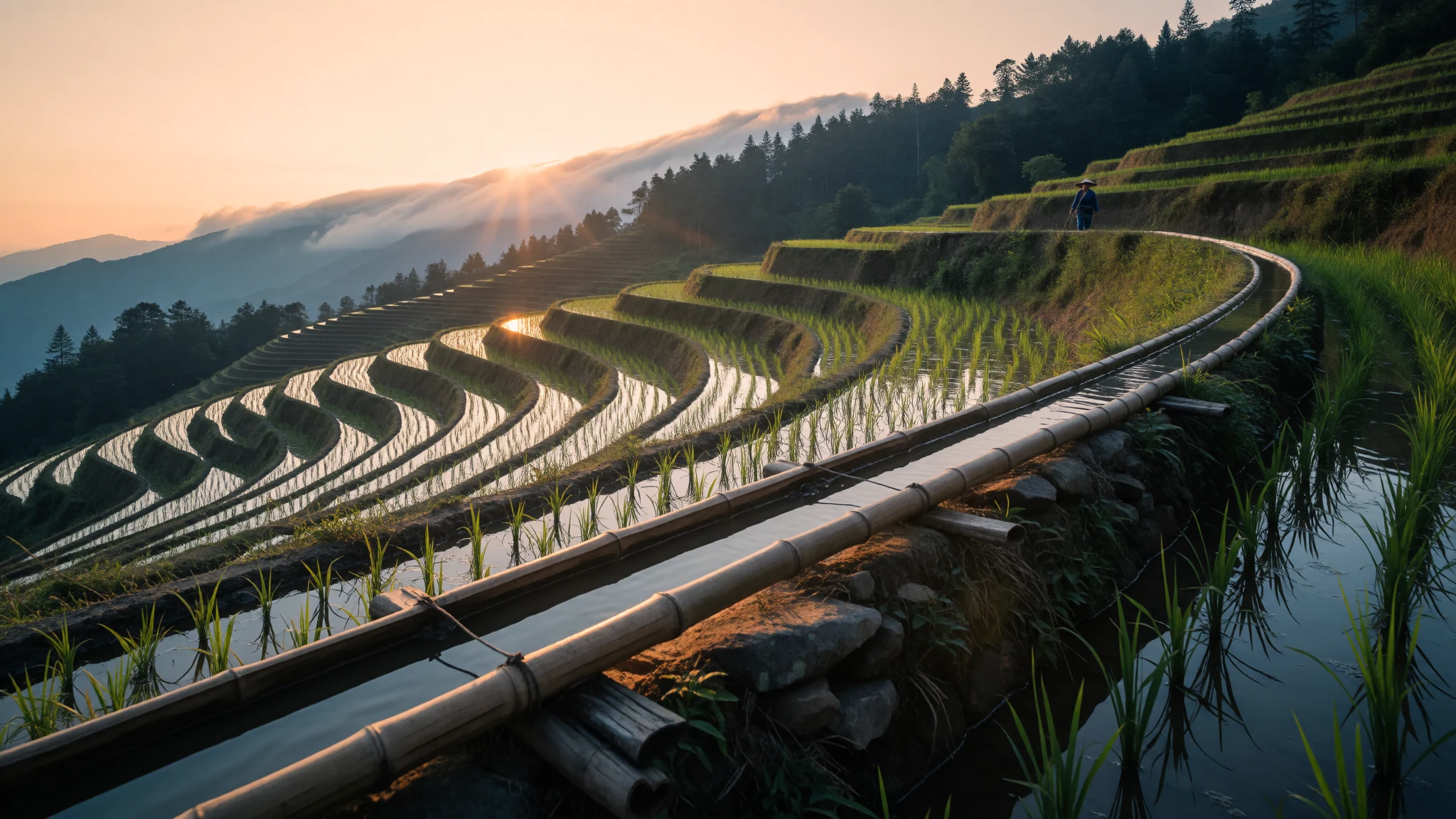
Mu Cang Chai is where Hmong farmers have carved whole mountainsides into rice terraces, best seen flooded in early summer or golden at harvest.
The place
Mu Cang Chai is a mountain district in the north-west of Vietnam, once part of Lao Cai province and now administered from Yen Bai. The district town sits high in the Hoang Lien Son range, and the facts record an elevation of 1,566 m for the district point. Everything here is steep: roads hang on valley walls, villages perch on shoulders of hillside, and the fields run in narrow bands from stream to ridge.
The district has no coast, no railway and no big city. It touches Lao Cai, Son La, Lai Chau and the rest of Yen Bai, and nearly every route in passes over Khau Pha, one of the great mountain passes of the north-west. The pass is more than a road. It is the threshold between the lowland towns and a country of cloud, bamboo and terraces.
The terraces are the reason people come, and they change character through the year. Around late spring the fields are filled with water and the slopes turn into stacked mirrors. Through summer the rice is a deep green. In early autumn it ripens to yellow and the valleys glow. After harvest the hills turn brown and quiet, and mist often sits low for days.
The district is also a working landscape, not a park. Families grow rice here for food, and visitors are guests on land that is farmed, irrigated and maintained by hand. Facilities are simple outside the town, with homestays and small eateries rather than resorts. Mist and rain can hide the view entirely, so a flexible plan helps.
Its story
Mu Cang Chai's terraces answer a plain problem: how to grow wet rice on mountainsides where the ground slopes sharply and water runs away. The Hmong farmers who settled the higher slopes solved it by levelling the land into narrow steps, each one holding a thin sheet of water behind a raised earth bank. The result looks like art from a distance, but it is drainage engineering built up over generations.
Water is the harder half of the job. Streams and small waterfalls high on the mountain feed the system, and where the source lies above the fields, farmers lead it down through channels. Where it lies below, split bamboo is used as a gutter, so that gravity does the carrying. Each terrace fills, then a gate is opened and the water spills into the one beneath. That slow cascade stops any single field from flooding and helps keep the soil from washing away.
The work follows the seasons. Fields are flooded and prepared in late spring, planting follows, and the harvest comes in early autumn, mostly by hand on slopes too tight for machines. The district's roads and tourism are recent additions to this older rhythm, and some families now host guests alongside farming.
That tension is part of the story today. Visitors bring income and attention, but they also trample banks, block narrow roads and crowd the best viewpoints at harvest. The terraces survive because people keep tending them, and a good visit leaves that work undisturbed.
What to see
- Khau Pha Pass — Mountain road on the approach to the district
Khau Pha Pass is the winding mountain road that brings most travellers into Mu Cang Chai, climbing through bends with terraces dropping away on one side. Stop at the pull-outs rather than on the bends. Early morning often means cloud in the valleys below, which can be striking or can hide everything.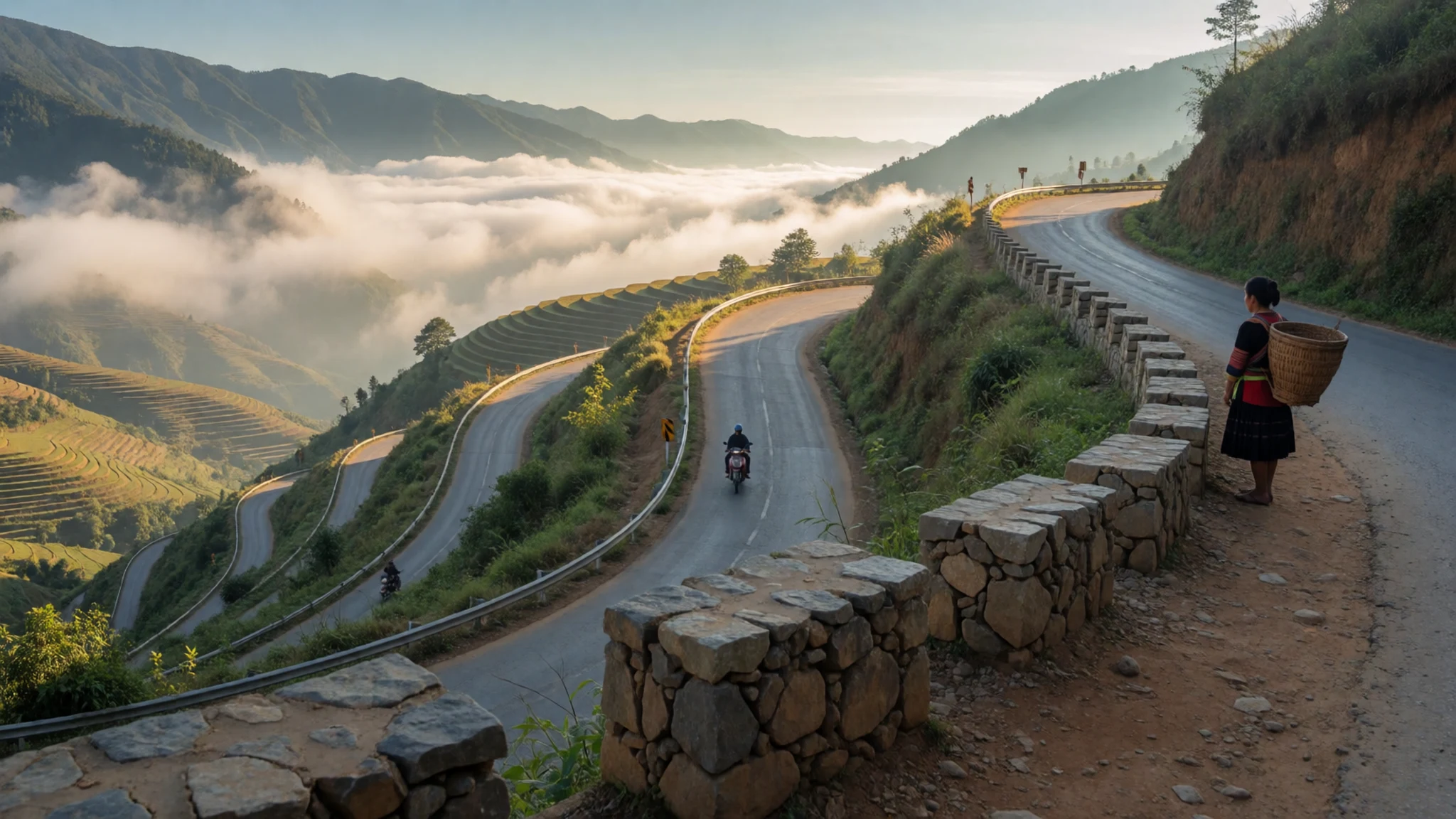
- La Pan Tan — Terrace valley in the district
La Pan Tan is one of the best-known terrace valleys in the district, with fields stepping down a broad hillside to a stream. It gets busy at harvest, so go early or late. Photographers favour it when the fields are flooded, and walking the village tracks gives a quieter view.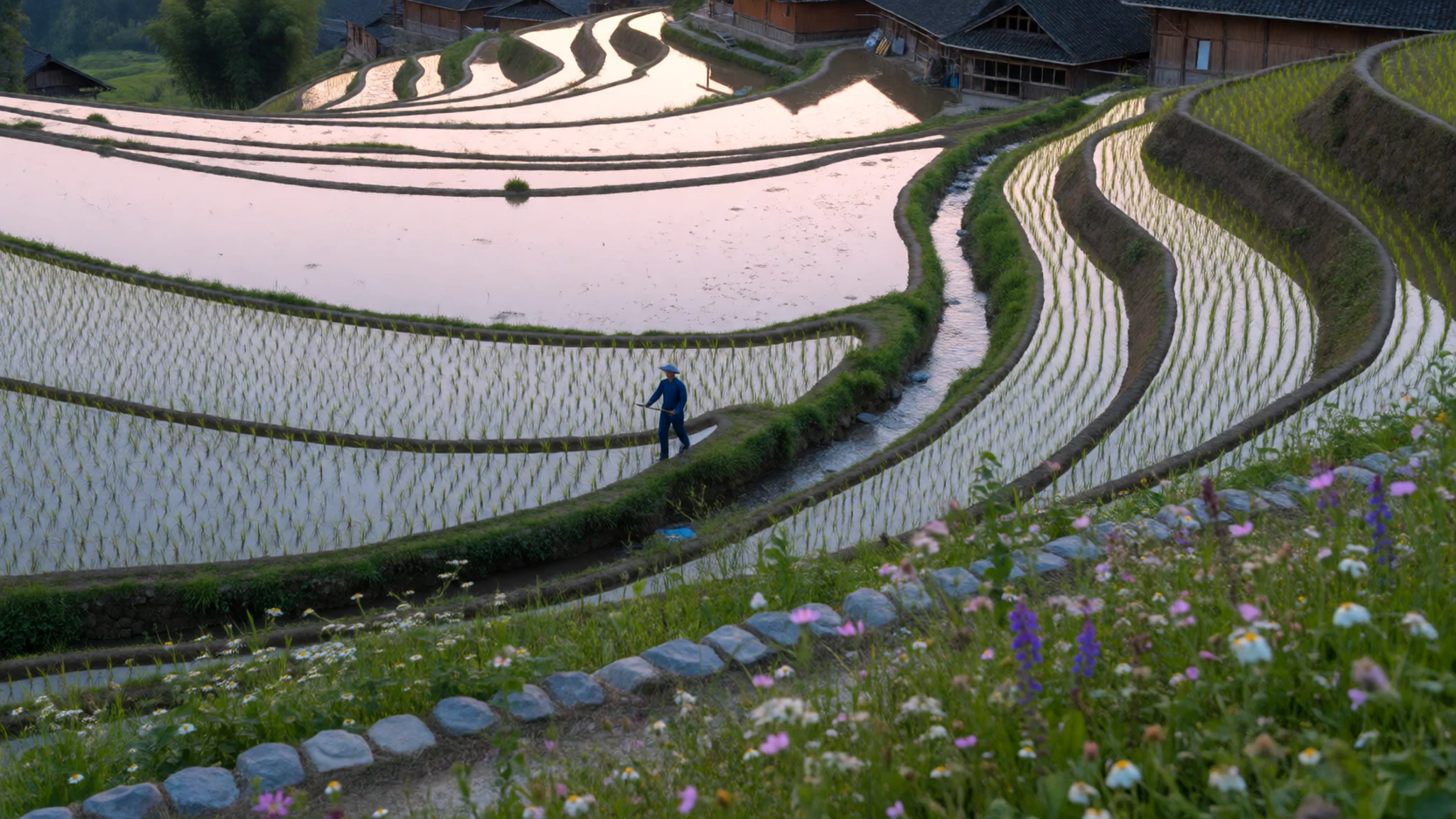
- Lim Mong Valley — Terrace valley in the district
Lim Mong Valley shows the terraces in a tighter, deeper bowl, with fields climbing on both sides of a small valley. It suits slow walking along farm paths. Rain can make the tracks slippery, so decent shoes matter more here than a long lens.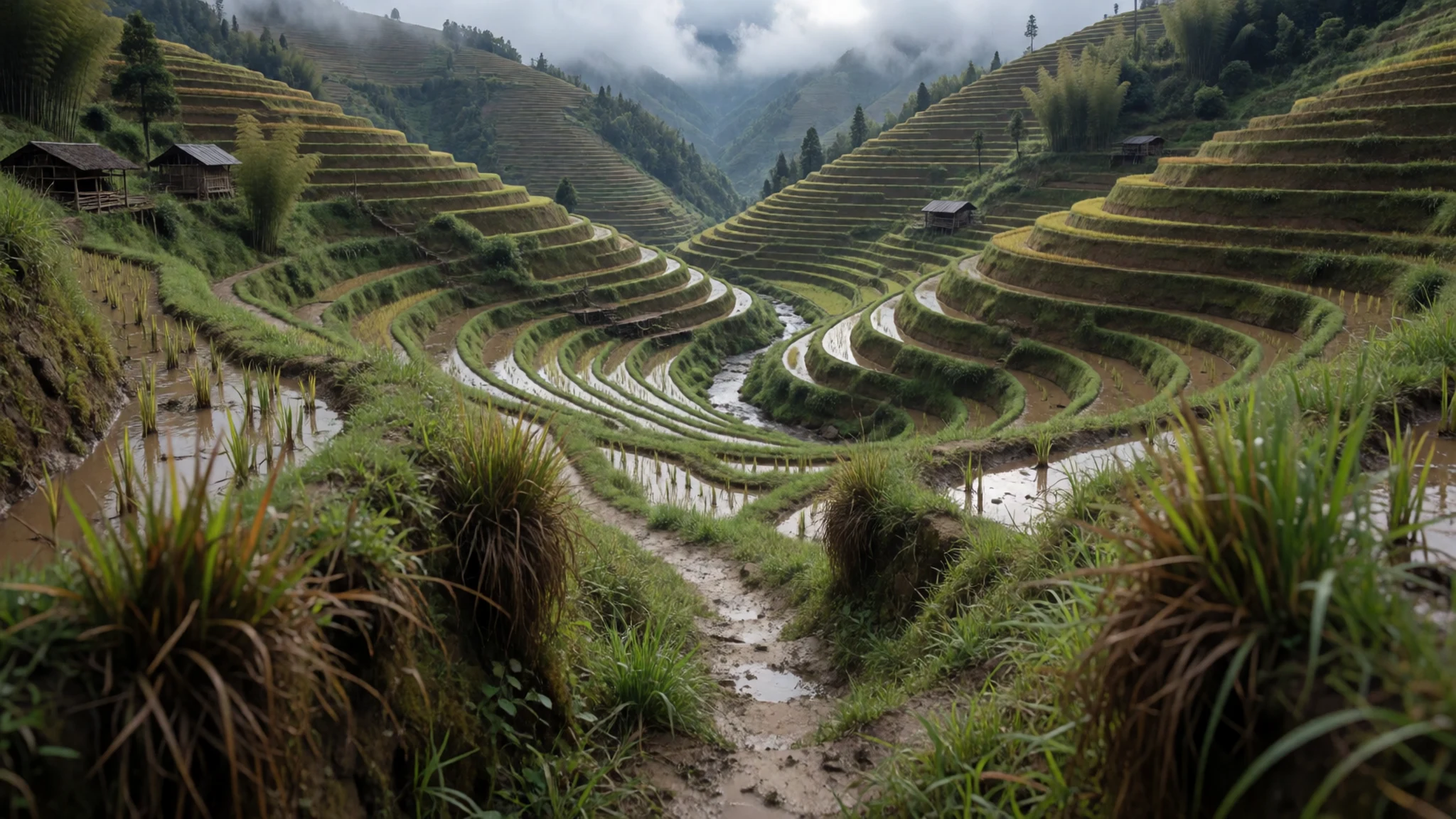
- Che Cu Nha terraces — Commune on the northern side of the district
Che Cu Nha commune has terraces draped over high, steep ground, often with cloud drifting through. It tends to feel quieter than the headline valleys. Allow time for slow driving on narrow roads, and check the weather before committing to a long loop.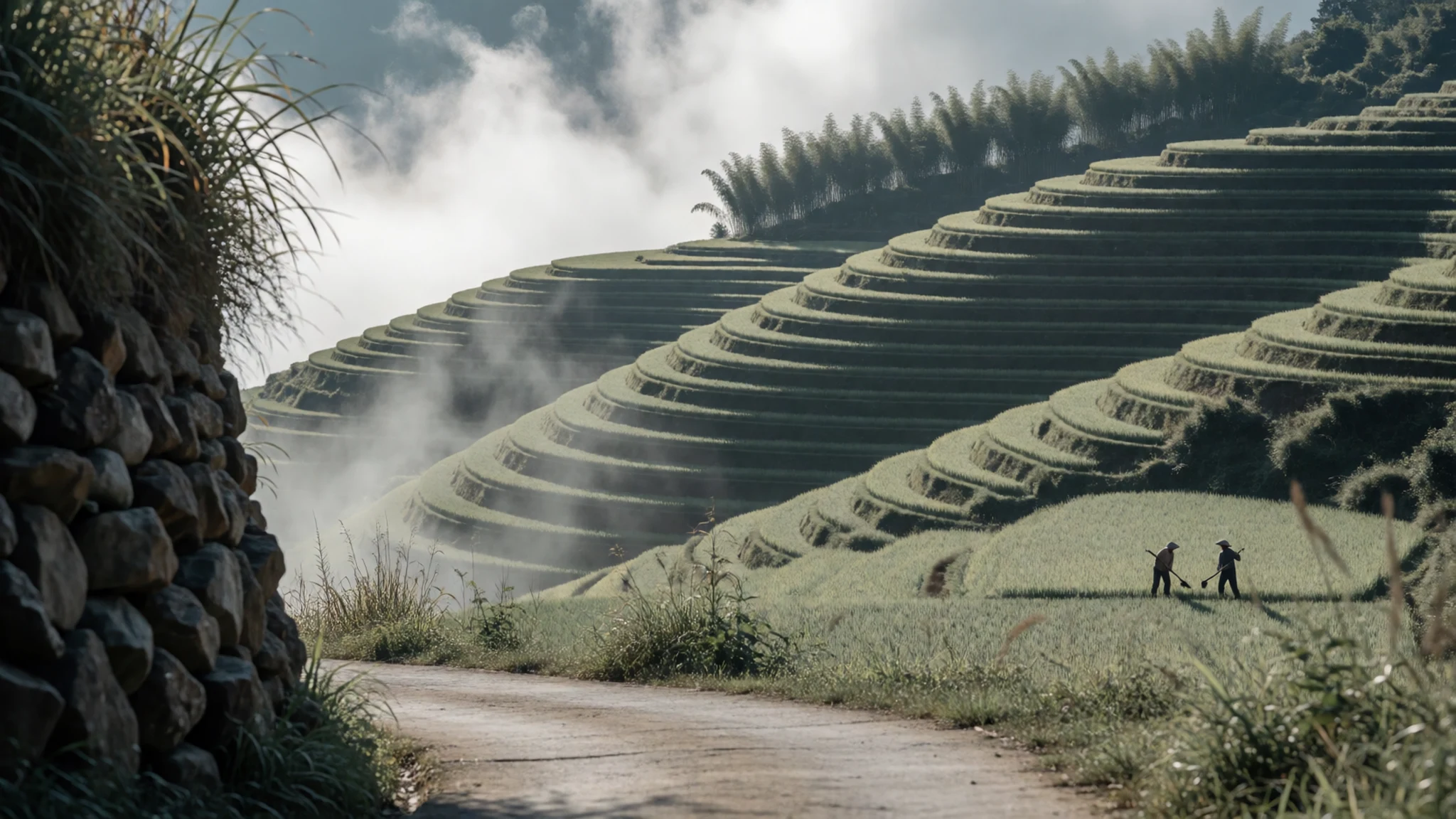
- Mu Cang Chai town — District capital
Mu Cang Chai town is a practical base with simple lodgings, a market and eateries, set among terraced slopes that turn gold in autumn. It is where to buy supplies, arrange a motorbike driver or guide, and ask locally about road conditions before heading into the valleys.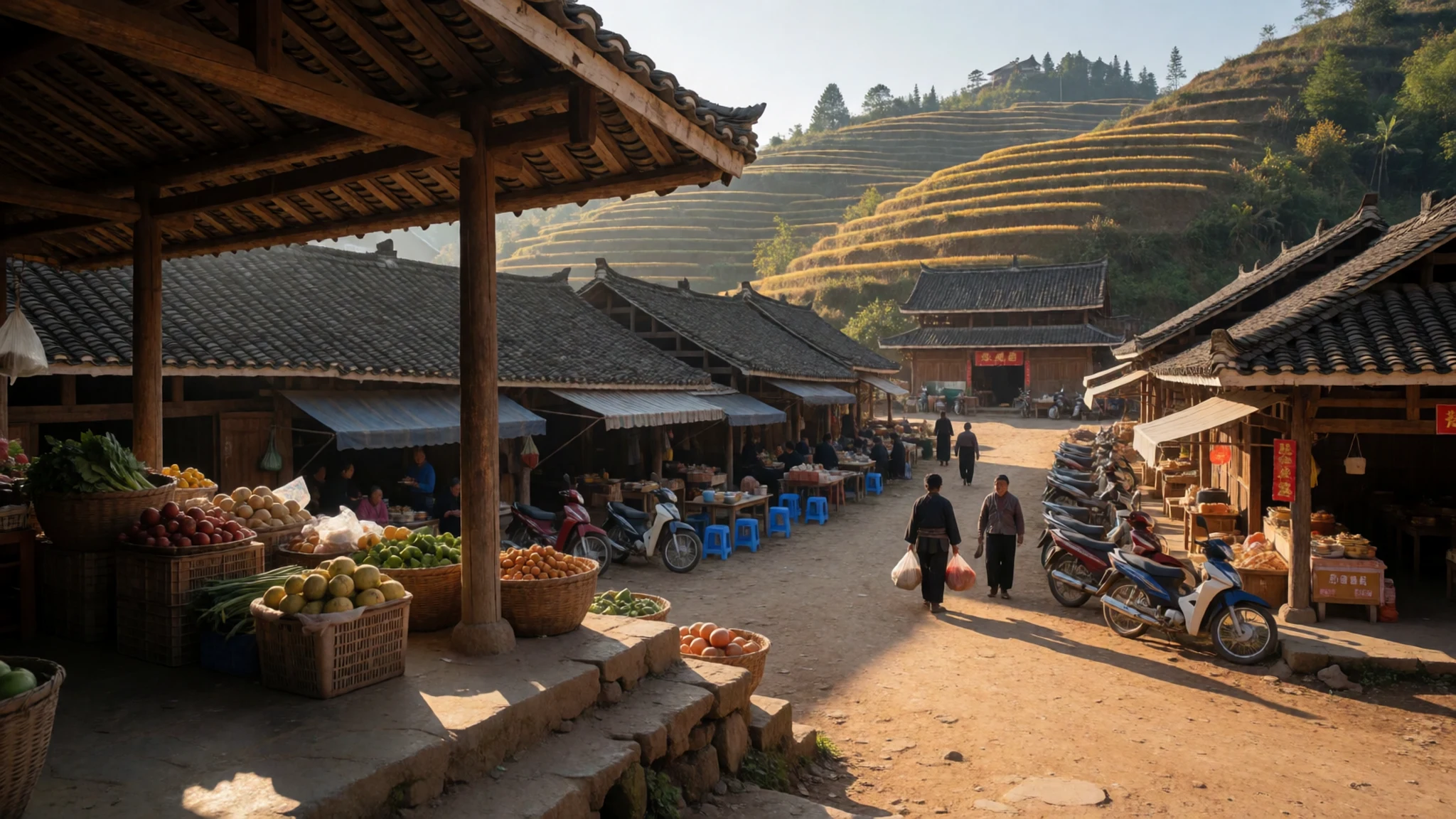
Culture
Mu Cang Chai is home to several highland peoples, with the Hmong working the higher terraces and other groups settled in lower valleys. Village life revolves around the rice calendar, family labour and the seasonal festivals that follow the harvest. Visitors will notice how much work happens on foot, with baskets carried up steep paths and water managed by hand.
Broader Vietnamese custom applies here too. Elders are treated with real deference, and a polite, restrained manner goes a long way. In rural areas, being stared at is common and usually curiosity rather than hostility. Conversations often open with direct questions about age, marriage and children, which are friendly and help people decide how to address you, so it is best to answer good-naturedly.
Many households welcome guests, and homestays are a good way to meet families, though language can be a barrier. A few words of Vietnamese, a smile and patience matter more than perfect phrases. Offers of tea or home-made rice wine are gestures of hospitality, and it is fine to accept a small amount and decline more politely.
Fields here are private property and a family's livelihood. Terrace banks are narrow and easily damaged, and a collapsed edge can mean a lost crop and days of repair work.
Ask before photographing anyone, and stay on the paths rather than walking along terrace banks, which belong to working family fields.
What to wear
Mu Cang Chai's traditional dress is closely tied to the Hmong communities of the high slopes. Textiles are traditionally made from hemp, spun and woven by hand, then dyed deep indigo. Patterns are often made with beeswax resist and finished with bright embroidery, and women's outfits typically include pleated skirts, tunics, sashes and head cloths. Styles and colours differ between groups and villages. Full dress is most often worn at festivals, weddings and the new year holiday, and visitors are likelier to see it at markets and celebrations than in the fields.
Day to day, people dress for the work. Farmers wear practical trousers, long sleeves, rubber boots and conical or soft hats against sun and rain, and fleece or padded jackets in the cold months. Younger people often wear the same jeans, trainers and jackets seen in towns across Vietnam, sometimes with a traditional piece such as an embroidered scarf. Some women sell handmade textiles and small items, which are worth buying directly if you like them.
Visitors should dress for steep, wet and changeable mountain weather. Bring layers, because mornings and evenings can be cold even when the day is warm, plus a light waterproof jacket. Shoes with real grip matter on muddy terrace paths, and sandals are a poor choice. Cover shoulders and knees around villages as a courtesy, and carry a hat and sun protection for exposed viewpoints.
What to eat
- Cơm lam — Roadside stalls and the town market
Cơm lam is sticky rice cooked inside a length of bamboo over charcoal, then peeled open and eaten warm. It is smoky, a little sweet and easy to carry, so it suits a day in the valleys. Look for the bamboo tubes stacked beside grills.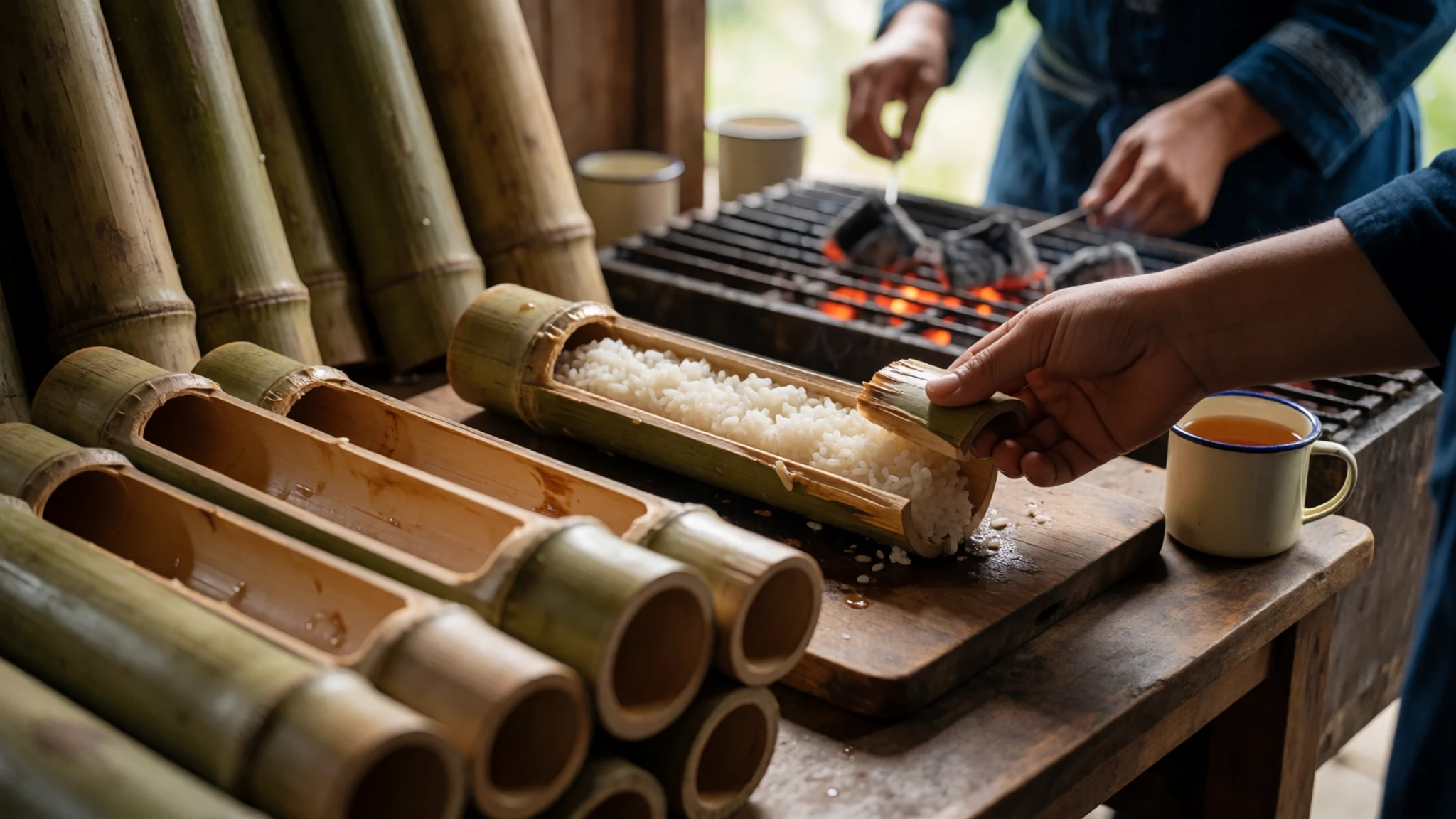
- Xôi (sticky rice) — Morning stalls in the town market
Xôi is steamed glutinous rice, often sold in small portions with salt, sesame or peanuts. It is a filling breakfast before a long drive or walk. Highland rice is central to local life, so tasting it in the place it is grown makes sense.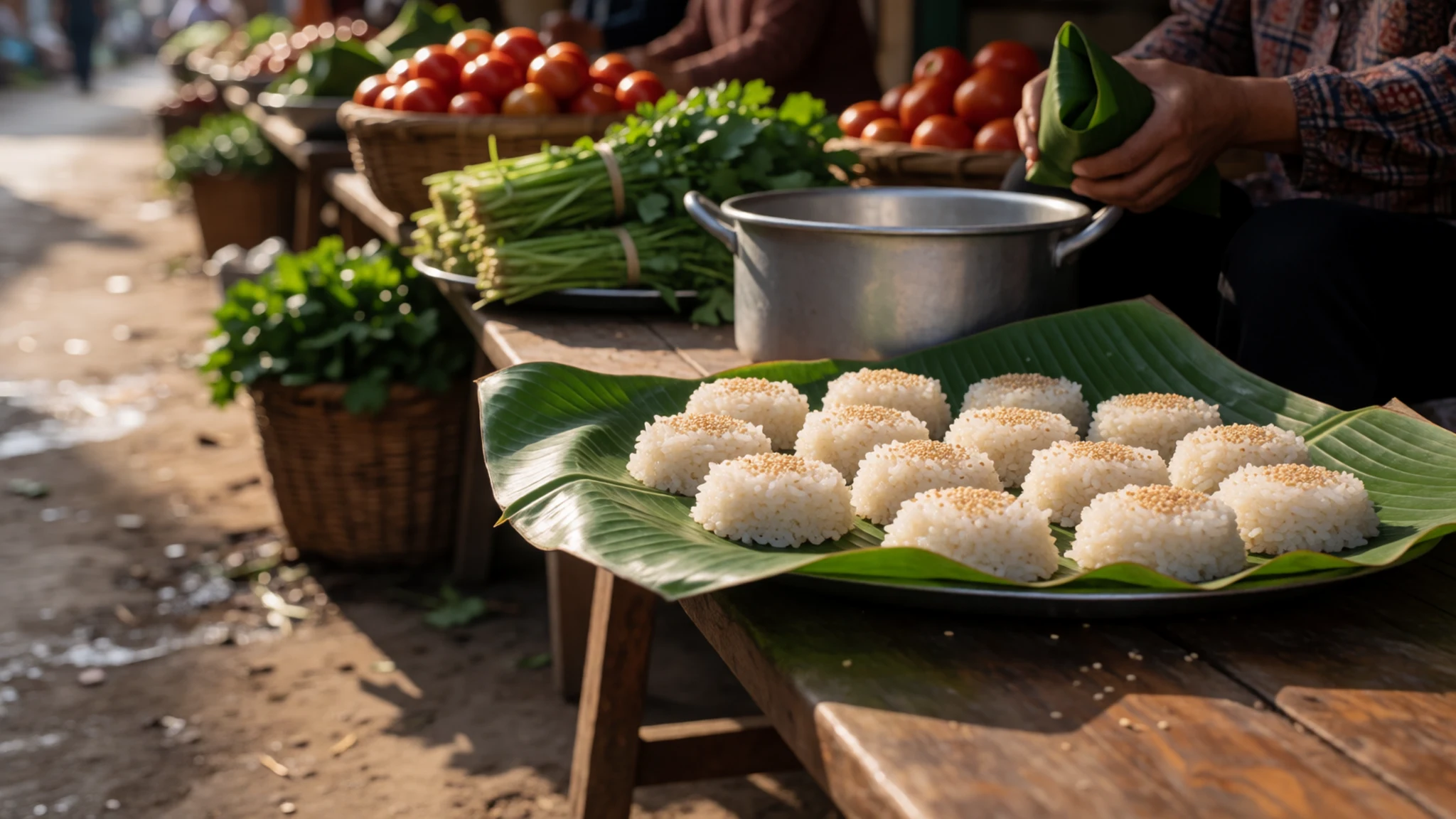
- Grilled hill chicken — Family eateries and homestay kitchens
Free-ranging chickens are a staple of mountain meals and are usually grilled over charcoal or boiled whole with herbs. The meat is firmer and more flavoursome than farm chicken. A homestay kitchen is often the most reliable place to try it. - Stream fish and mountain greens — Homestay meals and small valley restaurants
Meals in the valleys often pair grilled or stewed fish with stir-fried wild or garden greens and plain rice. The cooking is simple and fresh, and northern Vietnamese food tends to be subtle rather than fiery. Ask what is local that day. - Vietnamese iced coffee — Cafés in Mu Cang Chai town
Vietnamese iced coffee is strong, dripped slowly into a glass and sweetened with condensed milk. It is a useful pick-me-up on a cold, misty morning or after a long hairpin drive. Cafés in the town often have terrace views.
Plan it
Best time. Late May and June, when the terraces are flooded and reflect the sky, and late September to early October, when the rice ripens to gold before harvest. Rain and cloud can hide views in summer, and winter is cold and often misty.
How long. 2–3
Getting there. Fly to Hanoi, then travel by road over the mountains to Mu Cang Chai, which is a long day by car or minibus with the final stretch crossing Khau Pha Pass. Direct buses and private drivers run from the lowland towns, so check current options locally before booking.
Budget. low
Tips
- Book lodging well ahead for the harvest weeks, when rooms fill and prices rise
- Start viewpoints early in the morning, before crowds and before cloud builds
- Carry cash for homestays, village stalls and small eateries, as cards are rarely taken
- Check weather and road conditions before setting out, as landslides can close roads after heavy rain
- Bring a rain jacket and warm layer, as altitude makes temperatures drop quickly
Etiquette
- Ask before photographing people, especially children and women in traditional dress
- Do not walk on terrace banks or into fields, as the edges are easily damaged
- Dress modestly in villages and accept hospitality politely
Nearby
Sources
- Wikidata Q10796264 (CC0)
- Wikipedia: Mù Cang Chải district (rev 1384200741) (CC BY-SA 4.0)
- Wikivoyage: Vietnam (rev 5410523) (CC BY-SA 4.0)
- Photo: Khau Pha Pass (Viethavvh) (Public domain)
- Photo: Mu Cang Chai Town (Khoitran1957) (CC BY-SA 4.0)
- Photo: Seal of Mù Cang Chải District (Manh2107) (CC0 1.0)
- Photo: Terraces in Che Cu Nha commune (Doan Tuan danny_pham93) (CC0 1.0)
- Photo: Rice Terraces in La Pan Tan (jihadv) (CC BY 2.5)
- Photo: Mu Cang Chai 01 (Gió Đông) (Public domain)
- Photo: Mu Cang Chai District (Viethavvh) (Public domain)
- Photo: Rice Terraces in Lim Mong Valley (jihadv) (CC BY 2.5)


