Mount Yoshino
Mount Yoshino, Japan
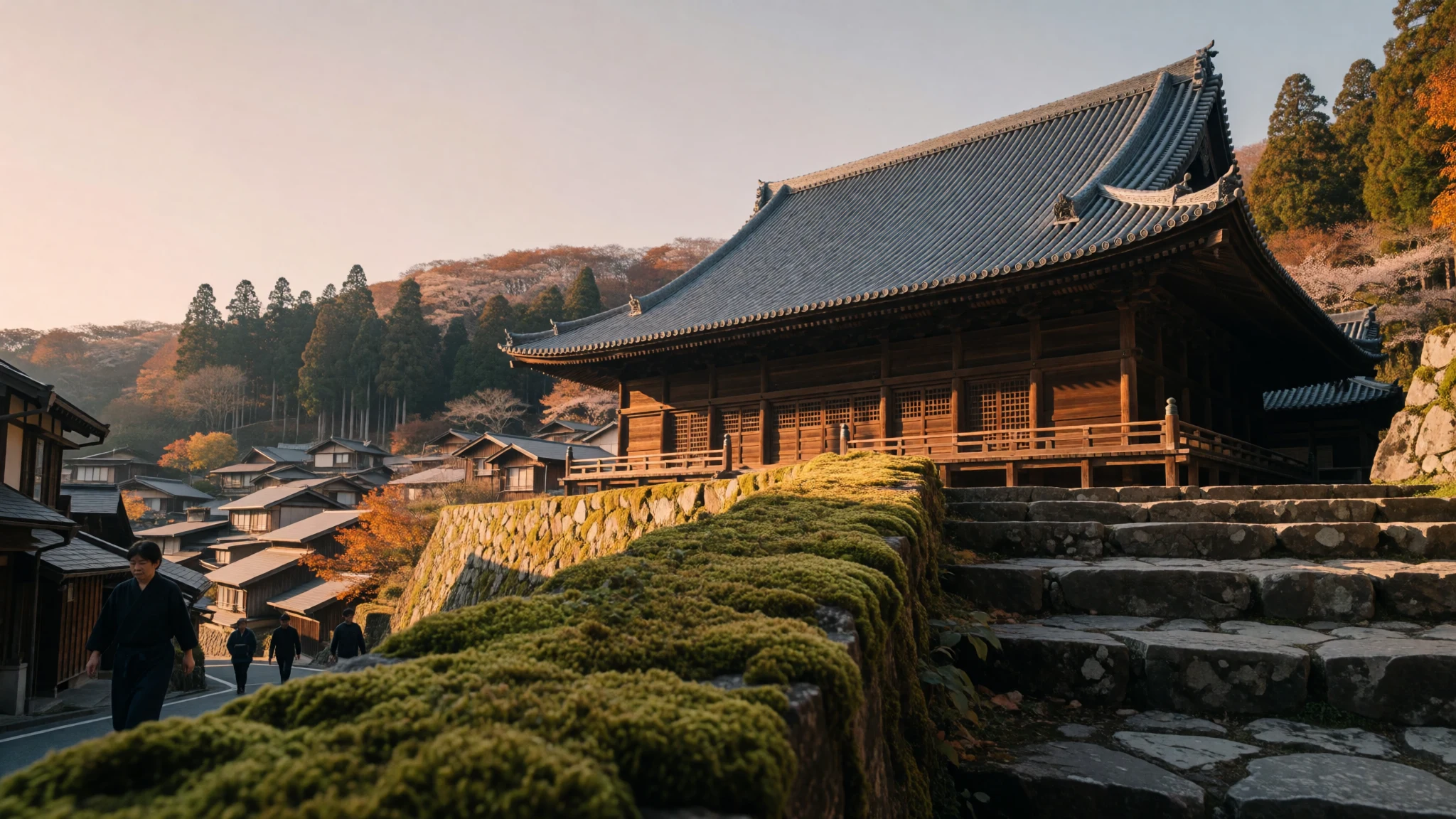
Mount Yoshino is a wooded ridge in Nara where thousands of cherry trees and mountain temples turn April into a slow pink tide.
The place
Mount Yoshino is a long wooded ridge in the town of Yoshino, in central Nara Prefecture, Japan. The name also covers the strip of temples, shrines and inns that runs along its spine. The ridge rises to about 350 metres, so a visit is a steady walk rather than a mountaineering day, though the slopes fall steeply to the Yoshino River valley below. Kinpusen-ji, a large wooden temple, is the religious centre of the district. Further along, small shrines and sub-temples sit among cedar and cherry, and the path continues south towards the Ōmine mountains, long walked by ascetics.
Most people come for the blossom. The trees are planted in successive zones up the hillside, so colour reaches the lower slopes first and creeps upward over a couple of weeks. In that season the single main street fills with day-trippers, food stalls and queues for the train, and the atmosphere is closer to a festival than a quiet hill walk. Outside blossom time the village is calmer, with green summers, russet autumns and cold, often empty winters.
The area lies within Yoshino-Kumano National Park, and several of its temples and shrines belong to the World Heritage listing Sacred Sites and Pilgrimage Routes in the Kii Mountain Range. Anyone expecting wilderness will be surprised. This is a lived-in hill village, with its pilgrimage past visible at every turn.
Its story
Mount Yoshino owes its reputation to two threads that wound together over centuries: mountain religion and the habit of planting trees as offerings. Local tradition says that En no Gyōja, the ascetic regarded as the founder of Shugendō, carved the fierce deity Zaō Gongen here from cherry wood. Pilgrims who followed him began to plant cherry saplings as gifts to the god. Generation after generation, that devotion built a forest of blossom on the slopes, which is why the trees have long been treated as sacred rather than merely pretty.
The ridge also played a part in politics. Its remoteness made it a refuge for the defeated and the pursued. The warrior hero Minamoto no Yoshitsune is said to have hidden here while fleeing his brother, and in a later age of civil strife an emperor set up a rival court in these hills. The warlord Toyotomi Hideyoshi later staged a lavish blossom-viewing party on the mountain with a vast retinue, which helped fix Yoshino in the national imagination as the place for hanami.
Poets kept the image alive. The monk-poet Saigyō lived in a hermitage nearby and wrote about the blossom, and later writers followed. In the modern era the district gained protection as a place of scenic beauty and historic interest, became part of a national park, and finally joined the World Heritage listing for the Kii mountain pilgrimage sites.
What to see
- Kinpusen-ji (金峯山寺) — Central Yoshino ridge
Kinpusen-ji is the main temple of Mount Yoshino. Its main hall, the Zaōdō, is a massive wooden building that towers over the village roofs and is a National Treasure. Inside, the temple keeps the fierce Zaō Gongen images, which are shown only on special occasions. The hall's scale is best judged from the street below.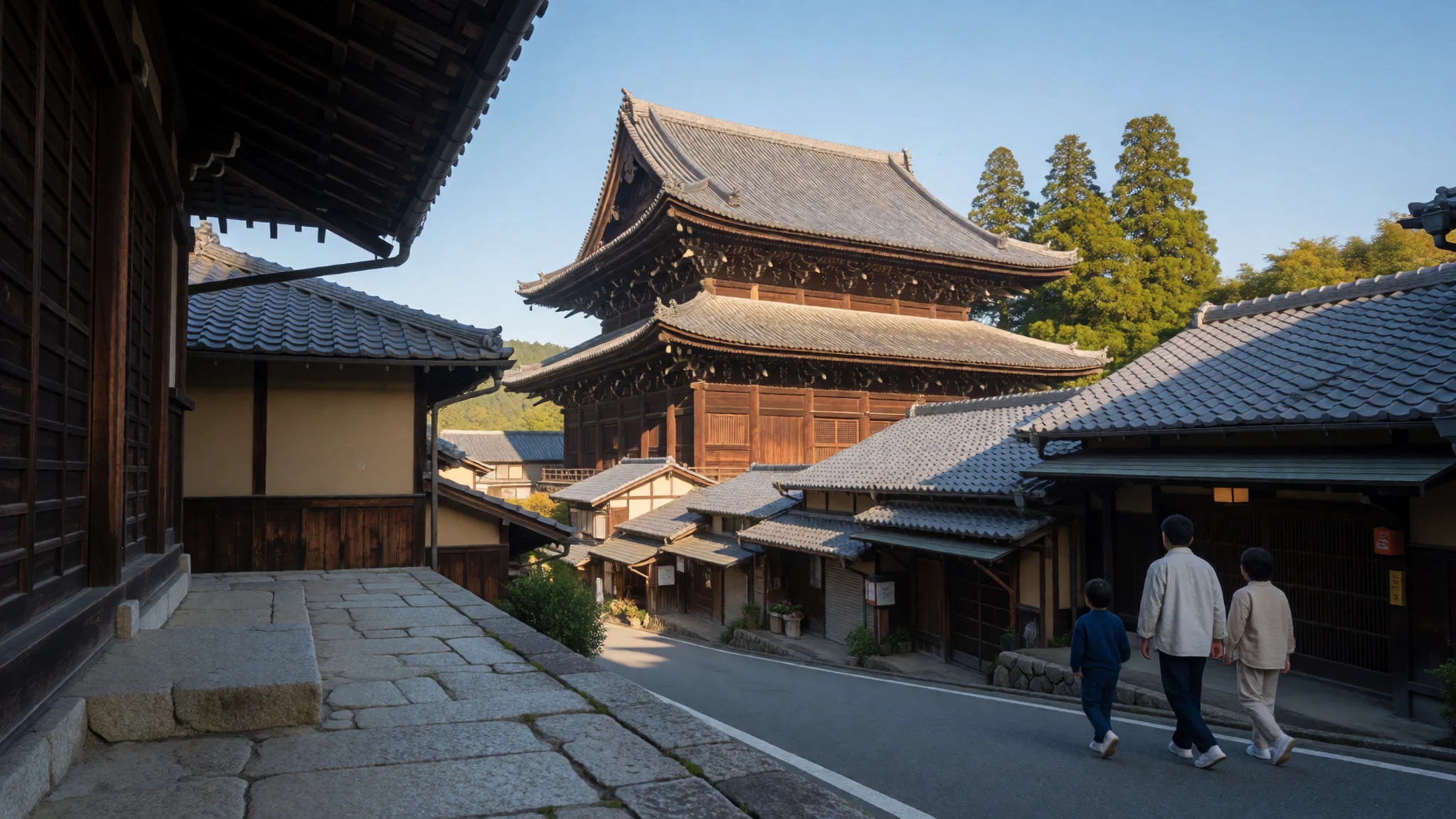
- Yoshimizu Jinja (吉水神社) — Near Kinpusen-ji, upper-middle ridge
Yoshimizu Jinja is a small shrine on the slope just beyond the temple. It was once a monastic lodging, and its rooms are associated with figures from Yoshino's political and military past. The terrace looks across the valley towards the blossoming slopes, making it a quieter vantage point than the main street.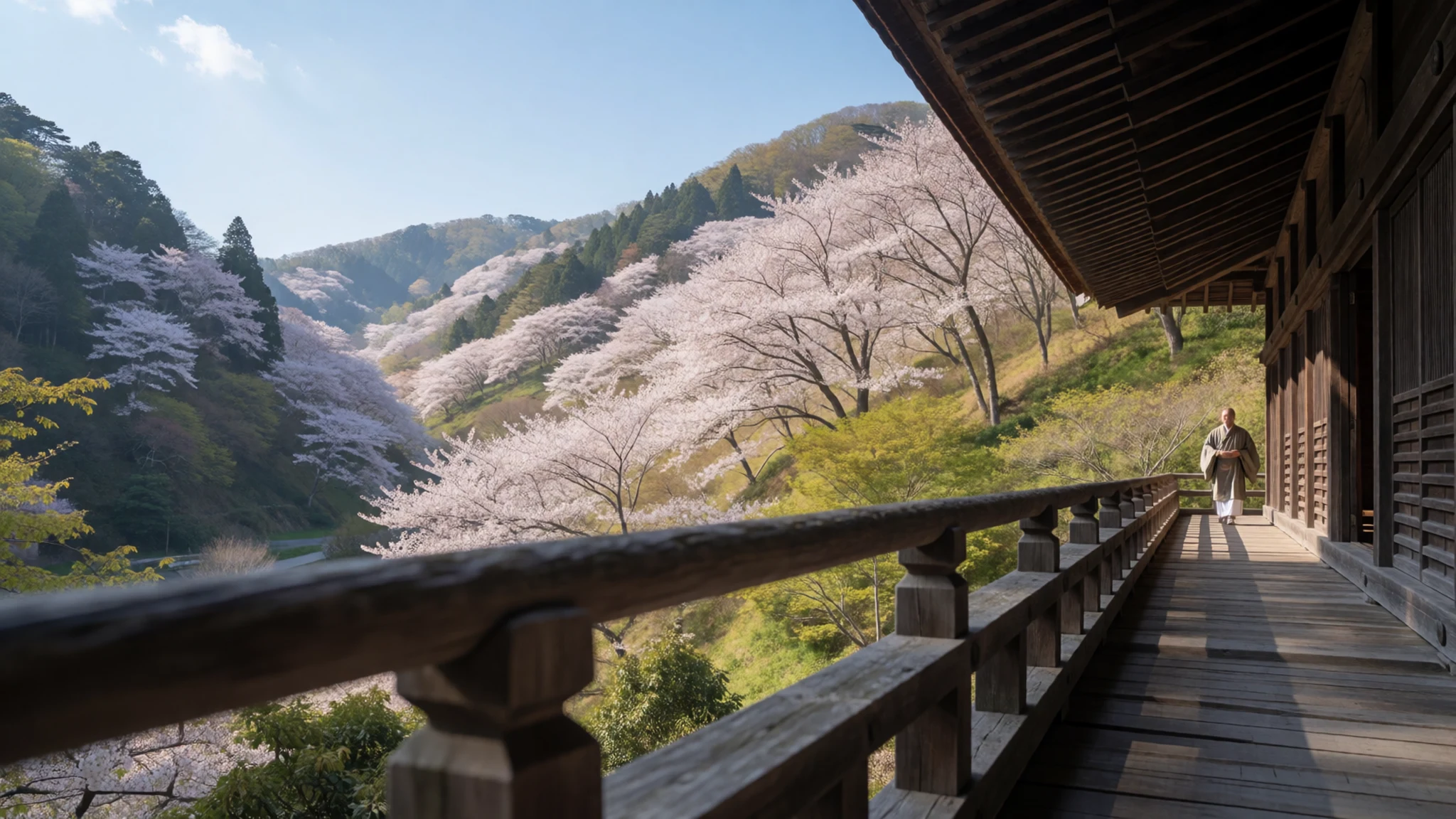
- Nyoirin-ji (如意輪寺) — Lower Yoshino
Nyoirin-ji sits on a spur at the lower end of the village and is reached by a short walk down a side lane. It is far quieter than the temples on the main street. Its grounds have a calm feel, and from its edge the cherry slopes can be seen across the gully.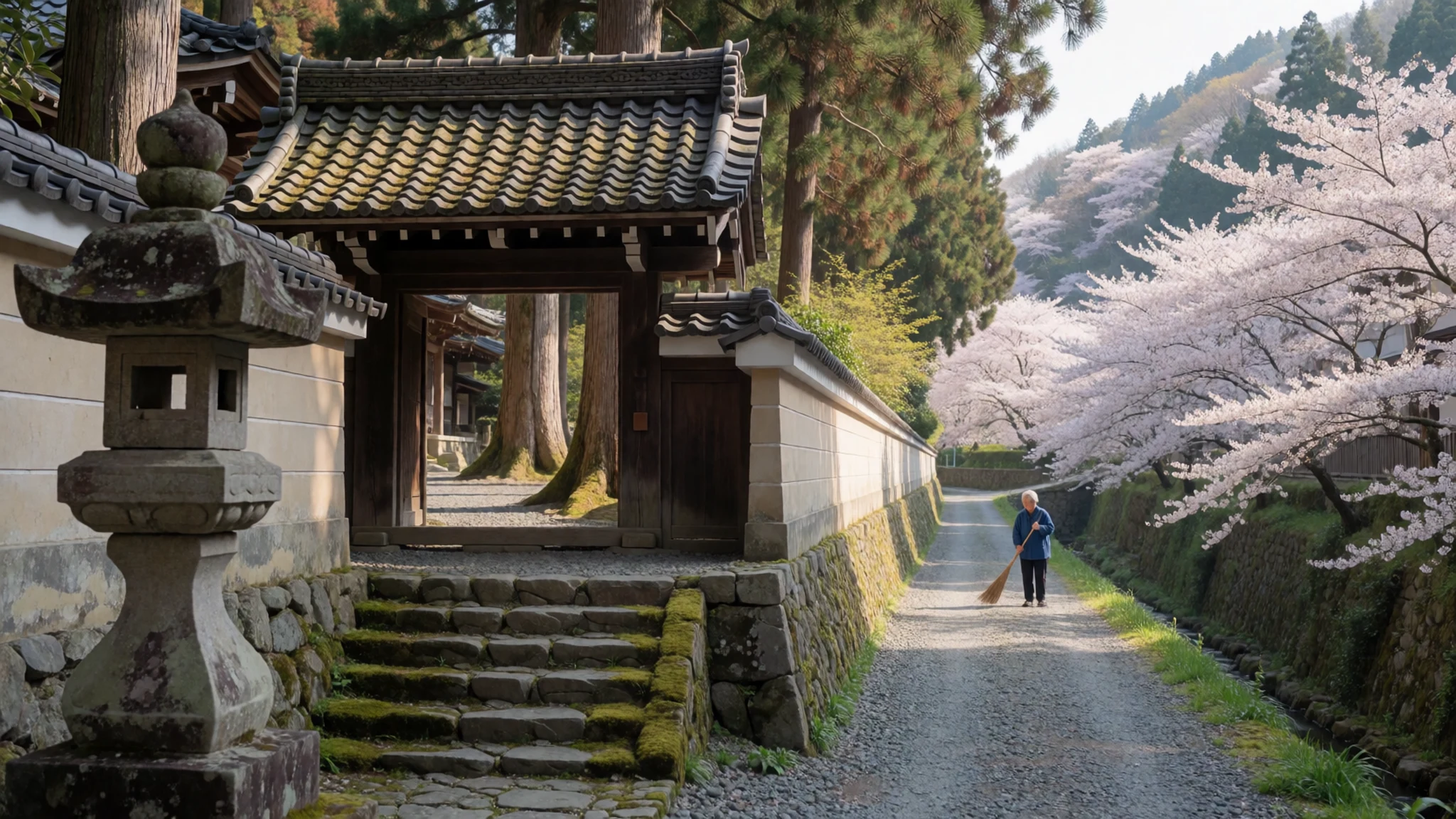
- Yoshino Mimakuri Jinja (吉野水分神社) — Upper Yoshino
Yoshino Mimakuri Jinja is a shrine among cedars higher on the ridge, dedicated to the deities of water. The climb to reach it takes in the middle and upper tree zones, so it works well as a goal for a blossom walk. Expect shade, moss and a hush that the lower street lacks.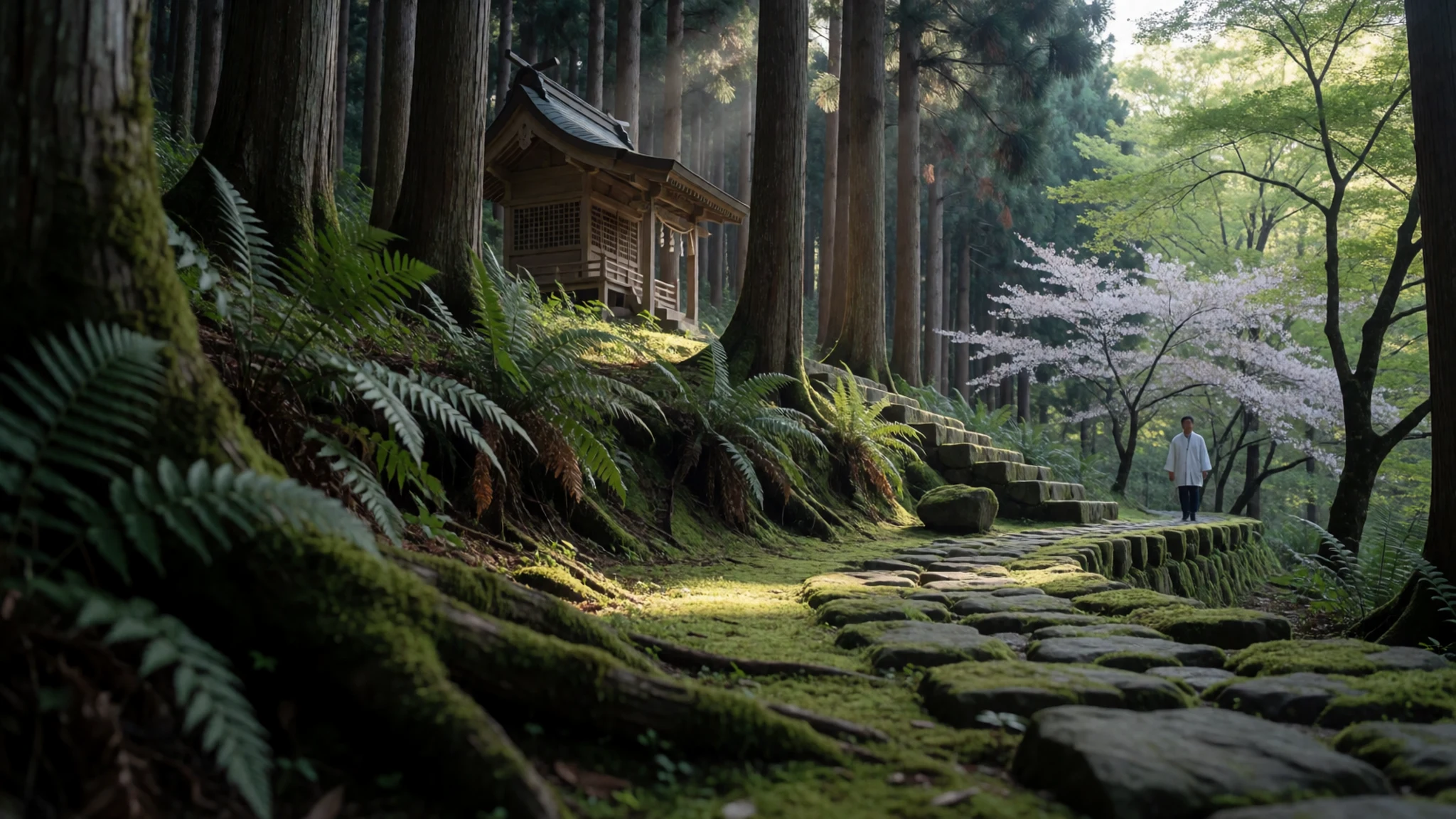
- Kinpu Jinja (金峯神社) — Far upper end of the ridge
Kinpu Jinja stands near the far end of the village road and marks the start of the path into the high mountains. The walk out is long and unhurried, with fewer visitors the further you go. It suits those wanting forest and a sense of the pilgrimage route more than blossom crowds.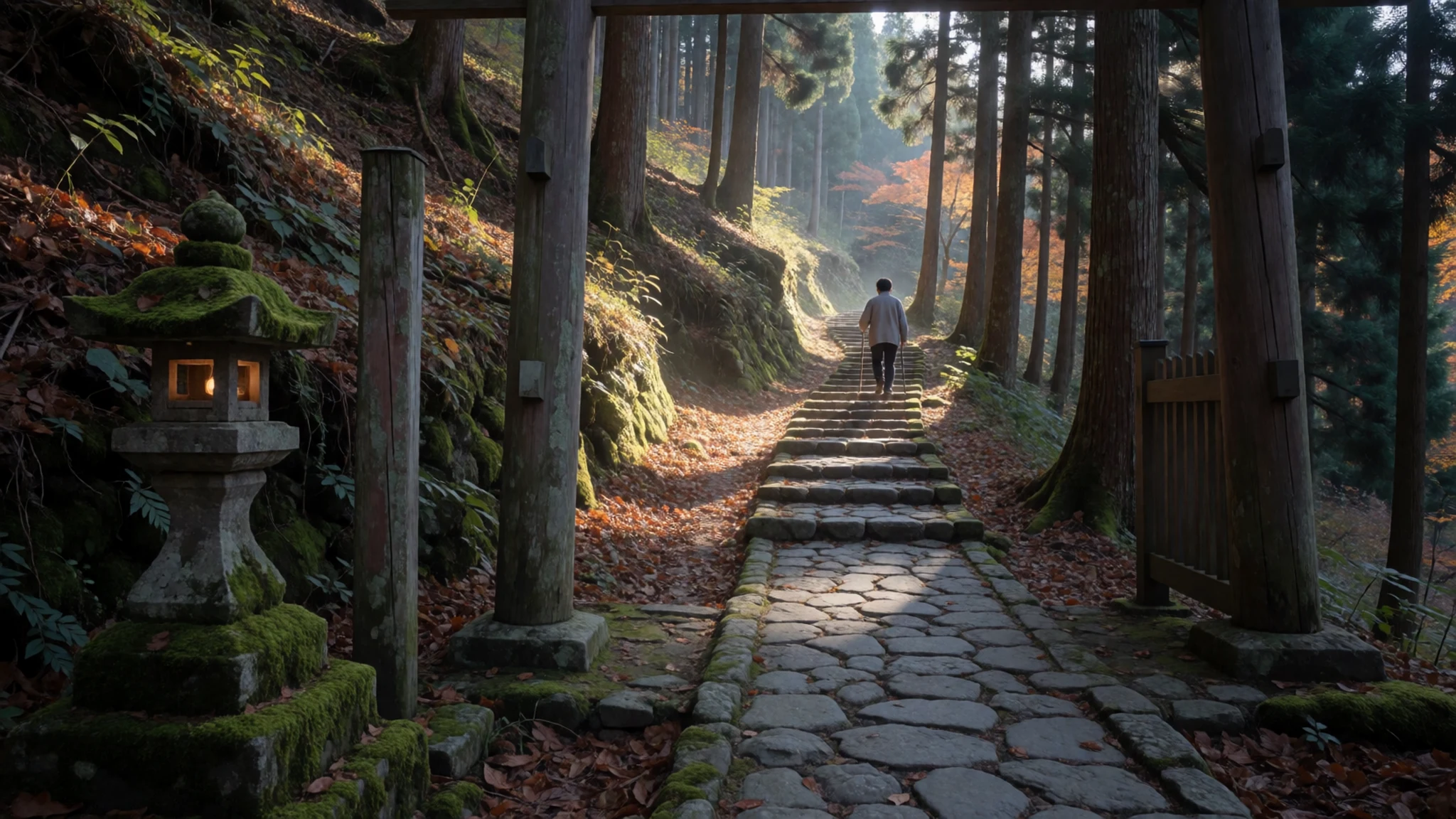
Culture
Mount Yoshino is a working religious landscape, shaped by Shugendō, a mountain tradition that blends Shinto, Buddhism and ascetic practice. Its practitioners, the yamabushi, walk the surrounding peaks as a form of training and devotion, and Zaō Gongen, the fierce guardian deity worshipped at Kinpusen-ji, belongs to this world. Shrines and temples sit side by side on the ridge, and the line between them is often hard to see, a mingling that was normal in Japan for many centuries.
The cherry trees are part of the faith. Planted by pilgrims as offerings, they are tended by the local community, and blossom-viewing here has a long link with poetry and with seasonal rites of renewal. Today the festival mood of hanami, with picnics, food stalls and photography, sits beside genuine worship, and both happen within metres of each other. In the quieter hours, temple bells, chanting and incense are still part of the day.
Villagers rely on the visitor season, but many live and work in the same buildings that tourists admire. Lodging houses, tea shops and temples are often family-run, and courtesy matters. A quiet greeting and a modest pace go a long way, especially on narrow lanes shared with residents and delivery vehicles.
Take off your shoes where the floor steps up at a temple hall, keep your voice low, and look for signs before taking photographs inside any hall or of the worshippers.
What to wear
Mount Yoshino's traditional clothing is tied to its mountain religion more than to any village costume. The yamabushi wear white jackets and loose trousers made of cotton or hemp, with a small black cap tied to the forehead and a conch-shell horn carried for signalling and ritual. Priests at the temples wear robes of silk or blended fabrics in muted colours. For festivals, locals may wear kimono, made of silk for formal occasions, or the lighter cotton yukata in summer.
Day to day, people in Yoshino dress practically for a hill village: fleece or padded jackets in the cool months, sturdy shoes, and rain gear when the weather turns. During blossom season some visitors choose kimono for photographs, often hired in Kyoto or Nara before the trip, though the steep, uneven street makes it awkward.
Visitors should plan for variable weather at altitude. Mornings and evenings in April can be cold even when afternoons are warm, so layers matter. Summer is hot and humid, with light, quick-drying clothes best. Footwear is the main decision: the road and paths involve steady climbing, so comfortable walking shoes that slip on and off easily are ideal, because shoes come off at temple halls. Wear neat socks, cover shoulders and knees at shrines and temples, and carry a light waterproof.
What to eat
- Kuzu sweets (葛) — Tea shops and sweet shops on the main street
Kuzu, a starch from the arrowroot-like kuzu vine, is the local speciality. It appears as soft, mochi-like cakes and as clear, cool jelly, usually served with dark syrup or sweet bean paste. Tea shops along the main street serve these.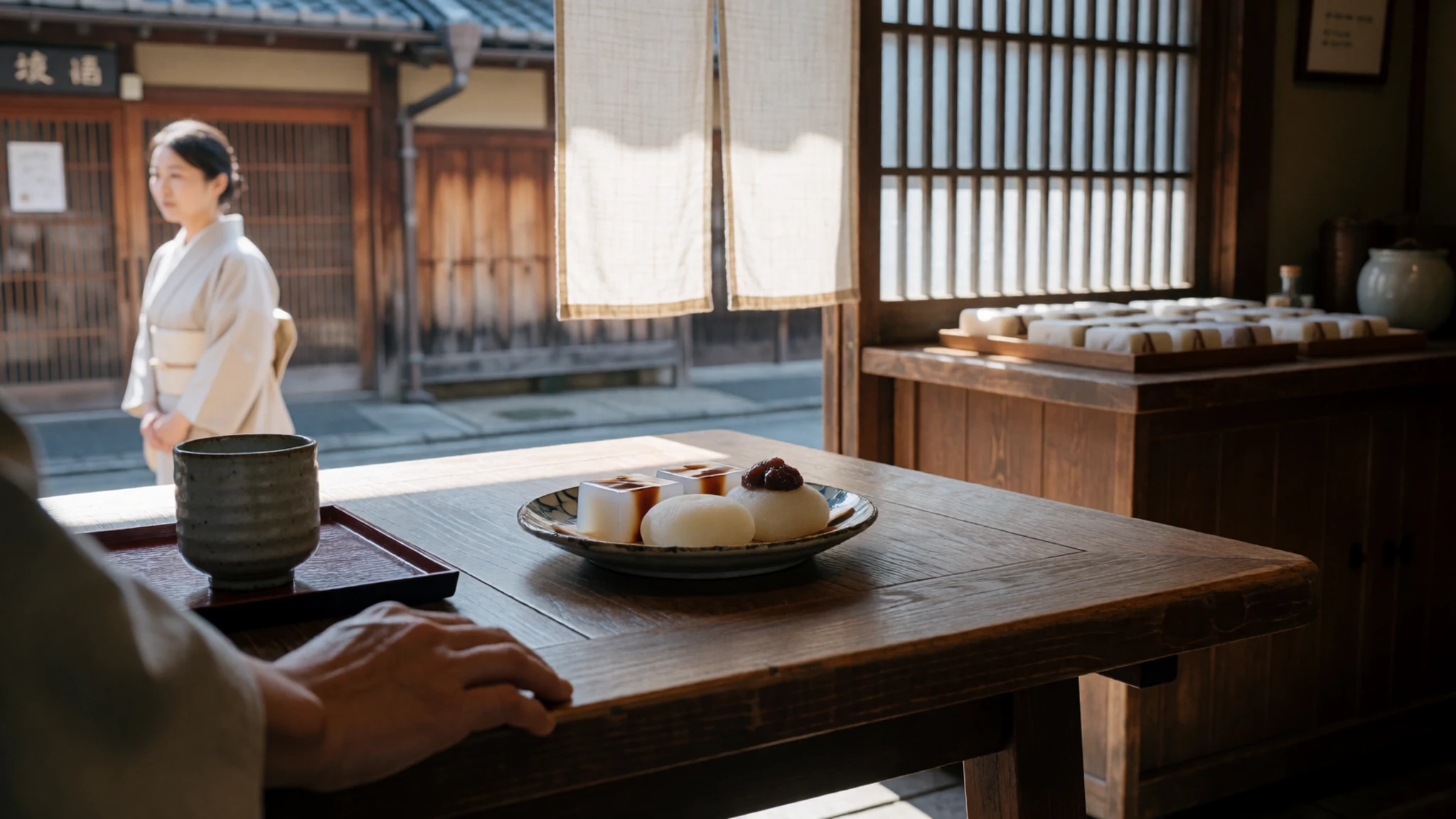
- Persimmon-leaf sushi (kakinoha-zushi) — Restaurants and shops along the village street
Cured mackerel is pressed onto rice, then wrapped in a persimmon leaf, which adds a faint fragrance. It travels well, so it is a sensible picnic lunch for the ridge. The leaf is not eaten.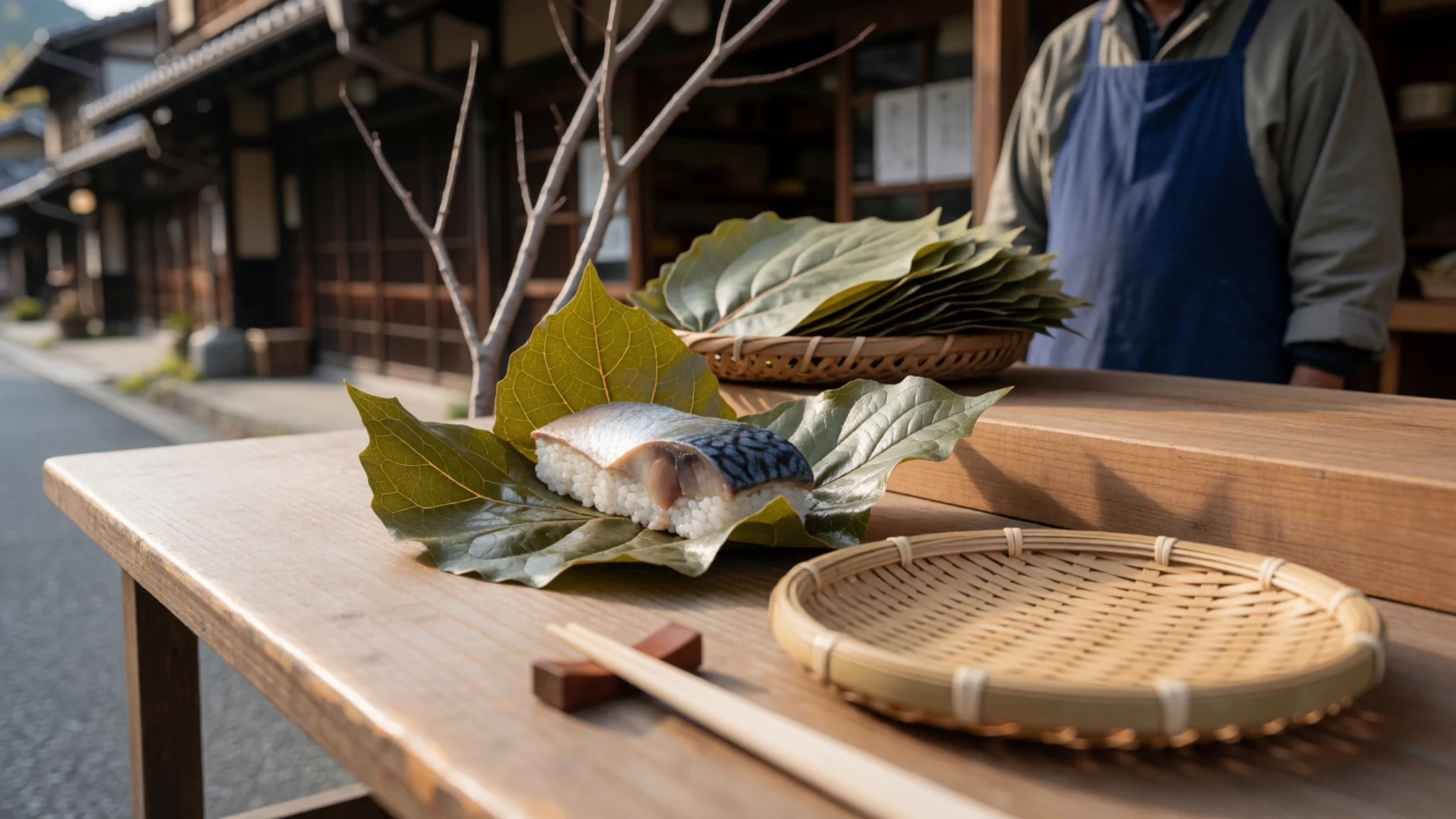
- Oden with konnyaku — Stalls and small eateries on the ridge road
Oden is a warming stew of simmered items in light broth. In Yoshino the konnyaku, a firm, chewy cake made from devil's tongue yam, is the one to try. It is especially welcome on a cool spring day. - Takoyaki — Street stalls in blossom season
Takoyaki are round, crisp-edged batter balls with octopus inside, topped with sauce and bonito flakes. They are a standard festival snack, and blossom season sees many stalls serving them hot from the griddle. - Okonomiyaki — Street stalls in blossom season
Okonomiyaki is a griddled savoury pancake of batter and cabbage, with toppings that vary by stall. It is filling and cheap-and-cheerful food for walkers, though the queues build up at midday during the main blossom days.
Plan it
Best time. Early to mid April for cherry blossom, which opens on the lower slopes first and moves upward over a couple of weeks; the timing shifts with each year's weather, so check the official site. Late October to November has autumn colour and thinner crowds. Summer is hot and humid; winter is cold and quiet, with some stalls closed.
How long. 1–2
Getting there. No direct services run from Osaka's airports. From Kansai, take the airport bus to Yamato-Yagi and change trains, or the Haruka or Airport Rapid to Tennōji and then walk to Osaka Abenobashi. The main route is the Kintetsu line from Osaka Abenobashi, next to Tennōji, to Yoshino, with limited expresses and slower expresses. From Kyoto, change at Kashihara-jingū-mae. From Yoshino station, the village is on the ridge above; check yoshinoyama-sakura.jp and Kintetsu for the current ropeway, bus and train details.
Budget. mid
Tips
- Book lodging well ahead for blossom weeks, as the village is small and fills fast
- Arrive early in the morning to see the main street and temples before day-trippers fill them
- Carry cash for small shops, stalls and shrine offerings, as not every place takes cards
- Bring water and snacks if heading to the upper ridge, where shops are fewer
- Wear layers and good walking shoes, as the ridge is cooler than the valley and the paths are steep
Etiquette
- Remove your shoes where a floor steps up at a temple hall
- Do not block the narrow main street for photographs, and ask before photographing residents
- Keep to marked paths and never pick blossom or break branches
Nearby
Sources
- Wikidata Q1036938 (CC0)
- Wikipedia: Mount Yoshino (rev 1365737871) (CC BY-SA 4.0)
- Wikivoyage: Yoshino (rev 5339964) (CC BY-SA 4.0)
- Photo: Cherry blossoms at Yoshinoyama 02 (Tawashi2006) (CC BY 3.0)
- Photo: Cherry blossoms at Yoshinoyama 01 (Tawashi2006) (CC BY 3.0)
- Photo: Kinpusenji Yoshino Nara (663highland) (CC BY 3.0)
- Photo: Yoshino-yama hills cherry blossom 2018 (Luka Peternel) (CC BY-SA 4.0)
- Photo: 2010/01/07 吉野山子守 (ys1979) (CC BY 3.0)
- Photo: 2010/12/19 丈六平 (ys1979) (CC BY 3.0)
- Photo: 2010/4/28 吉野山 (ys1979) (CC BY 3.0)
- Photo: 2010/4/28 蔵王堂 (ys1979) (CC BY 3.0)


