Mount Longmen
Mount Longmen, People's Republic of China
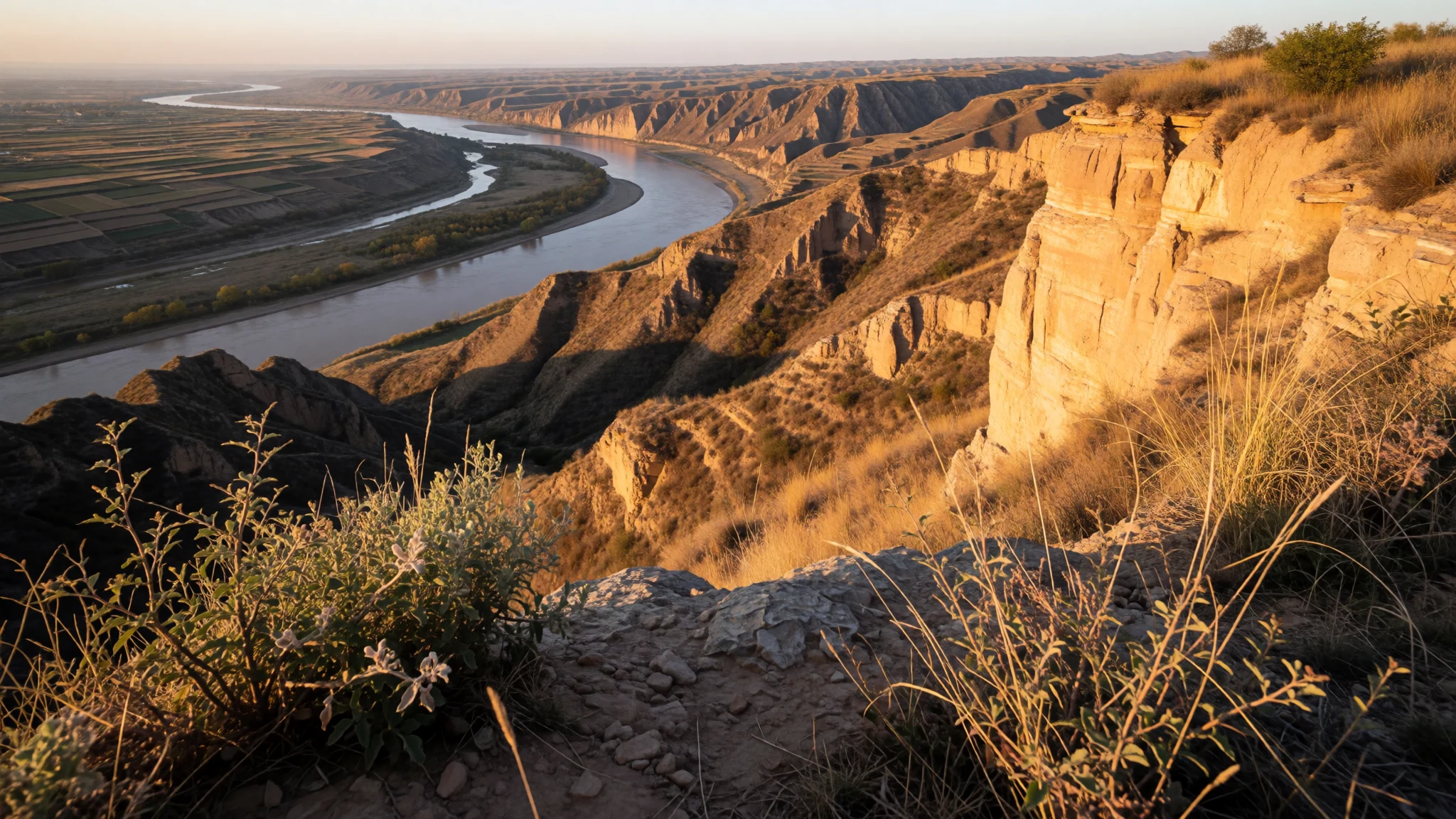
Mount Longmen is where the Yellow River bursts out of the Loess Plateau, a quiet, working landscape of gorge, bridges and ridge.
The place
Mount Longmen (Lóngmén Shān) is a mountain in Shanxi province, northern China, rising to 1,087 m. It is not a famous peak in the tourist sense, and it matters mostly for what it does to the map. To the north and west lies the Loess Plateau, a vast, rugged expanse of wind-laid silt cut into gullies and terraces. At Mount Longmen the Yellow River squeezes through the plateau's southern edge and spills out onto a plain that links the Linfen Basin to the east with the Guanzhong Plain to the south-west.
The mountain also marks the south-western end of the Lüliang Mountains, a range running alongside the river as it flows south. From the river gap it runs north-east in a fairly straight line, then bends slightly eastward, until a ravine called Qīngshí Yù cuts through to the plain and separates it from the rest of the Lüliangs.
The river gap is called Yǔménkǒu (禹门口), 'Yu's doorway'. Three bridges cross the Yellow River here, and with no other crossing nearby upstream or downstream, they carry the dry link between Xiangning County and Hejin in Shanxi and Hancheng in Shaanxi. This is a place of transit, industry and farming rather than a polished park, and a visit rewards patience, a map and some curiosity about how geography shapes a region.
Its story
Mount Longmen's story is told through its river. The name Yǔménkǒu refers to Yu, the legendary flood-tamer of Chinese tradition, who is said to have cut a passage through the mountain so the Yellow River could flow on. Whatever the truth of the myth, the gap is real, and it has long been a natural gateway between the highlands of Shanxi and the plains of Shaanxi. A river that carries so much silt and floods so often was bound to collect legends at its narrowest point.
In modern times the crossing has become practical rather than mythical. The three bridges at Yǔménkǒu form the only dry connection in the area between Shanxi's Xiangning County and Hejin and Shaanxi's Hancheng, which is why they share the name Xiang-Han Yellow River Bridges. Traffic, trade and local life funnel through this one gap.
The mountain also carries a sadder modern chapter. In March and April 2010 the Wangjialing coal mine flood happened here, a reminder that this part of Shanxi sits on coal country and that its landscape has been shaped as much by mining as by water. Visitors who know the story tend to look at the quiet hills differently. Mount Longmen is best understood as a working frontier of geography, myth and industry, not as a scenic postcard.
What to see
- Yǔménkǒu, Yu's Doorway — South-western tip of the mountain, on the Yellow River
Yǔménkǒu (禹门口) is the point where the Yellow River breaks out of the Loess Plateau. It is the natural centrepiece of any visit, with the river narrowing through the gap and the legend of Yu attached to it. Allow time simply to stand and watch the water.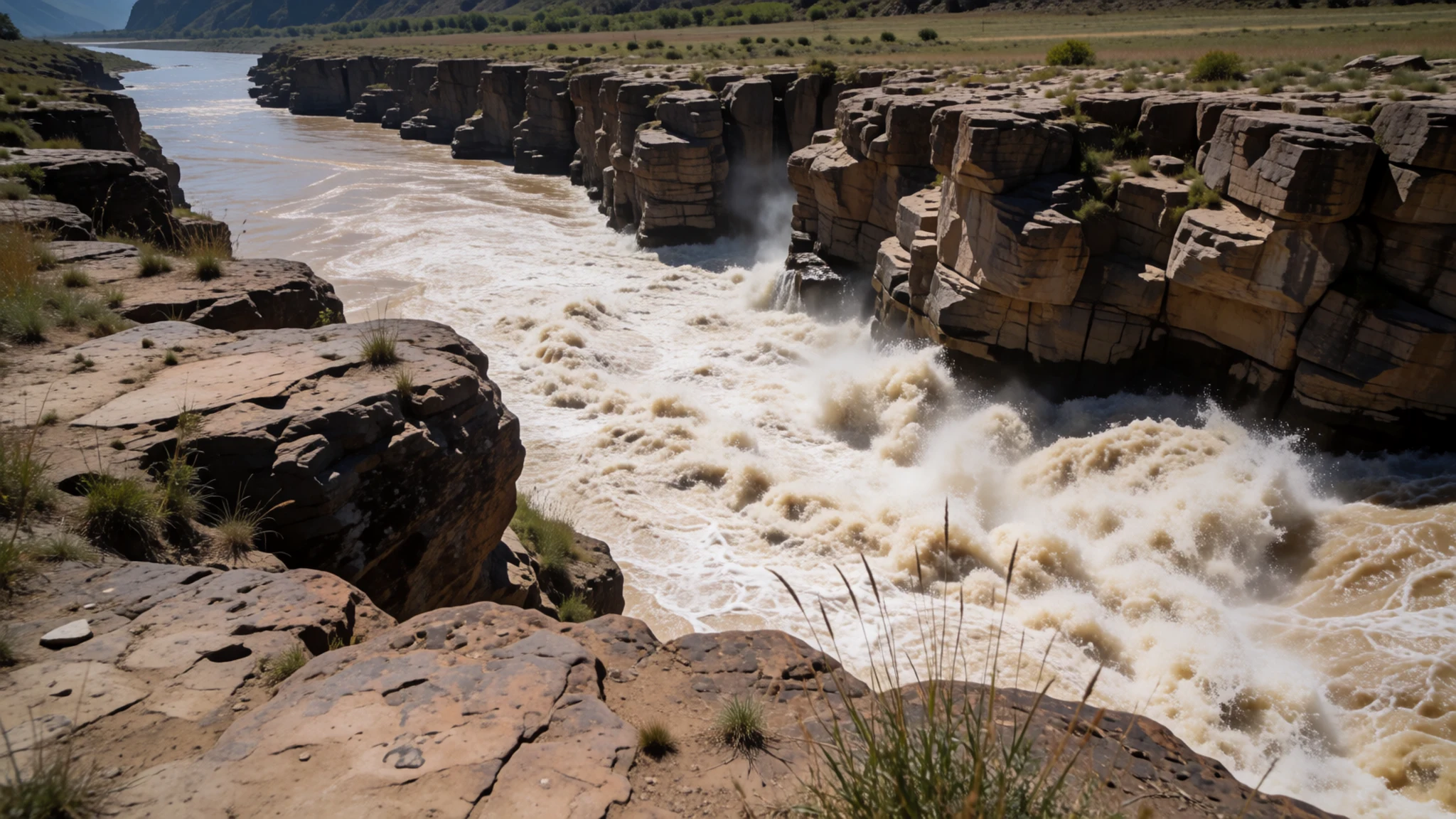
- Xiang-Han Yellow River Bridges — Yǔménkǒu, linking Shanxi and Shaanxi
Three bridges span the Yellow River at the gap and form the only dry crossing in the area. Seen from the bank, they show how road and rail squeeze through the same narrow opening as the river. Care is needed near traffic, and photography near structures may draw questions.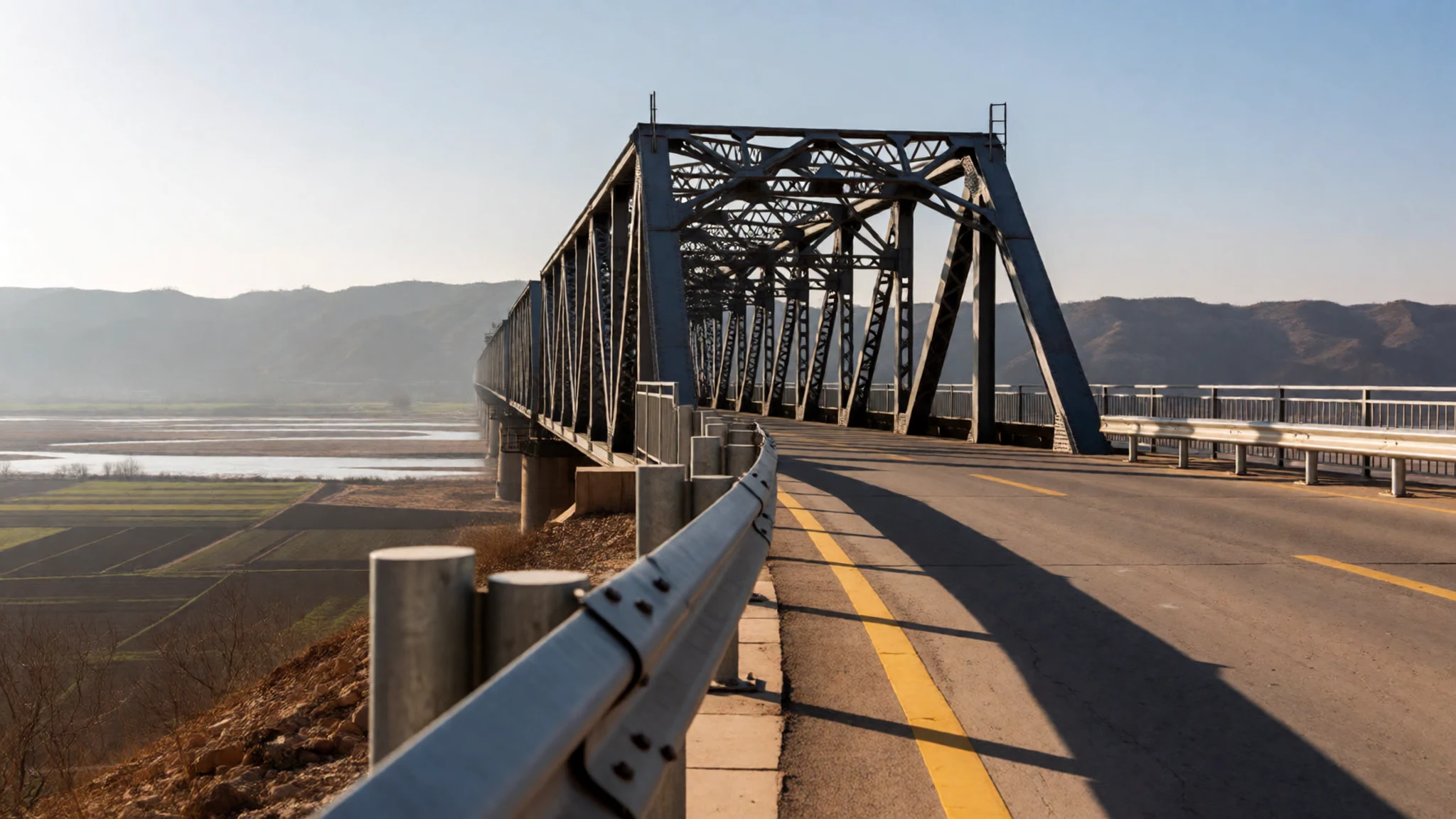
- The Longmen ridge line — Along the mountain, running north-east from Yǔménkǒu
The mountain runs in a straight north-east line before bending slightly east. Even without a formal trail, the ridge is the best way to read the landscape: loess plateau on one side, plain on the other. Ask locally about safe paths, as access varies.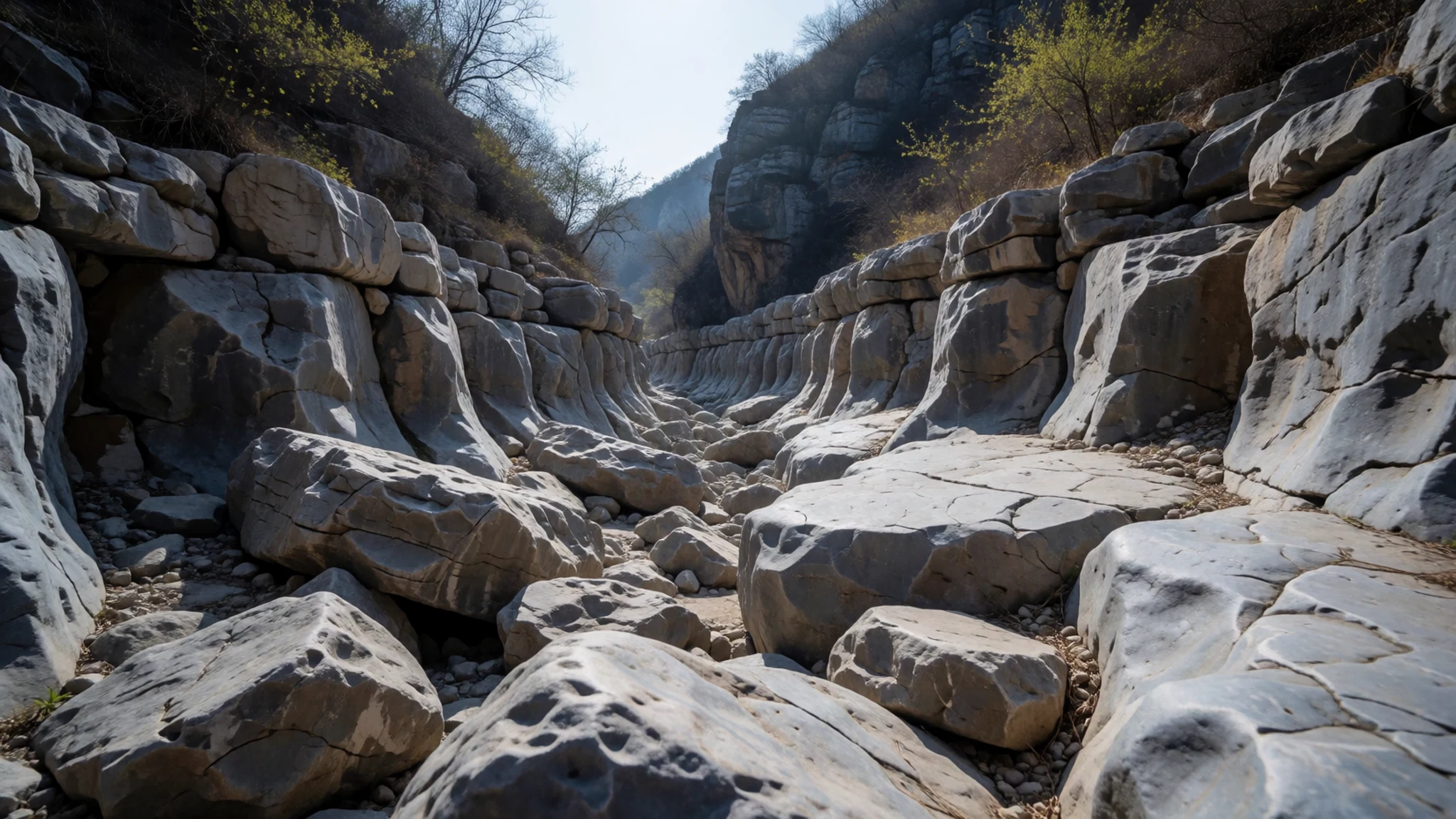
- Qīngshí Yù ravine — North-eastern end of the mountain
At the far end of the mountain, the ravine of Qīngshí Yù breaks through to the plain and separates Longmen from the rest of the Lüliang Mountains. It is a quiet place to appreciate the geology, and worth seeing for the contrast between plateau and lowland.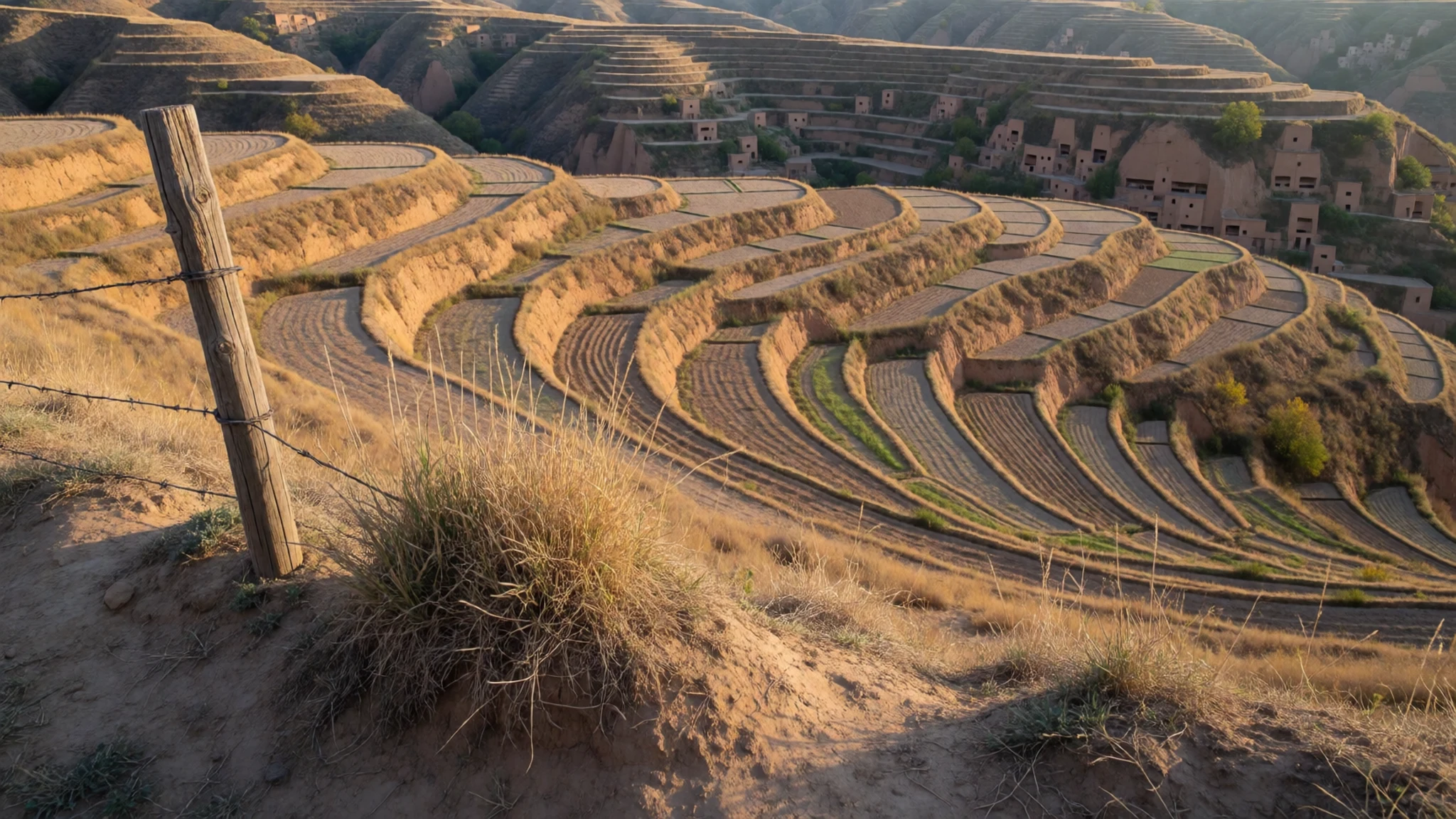
- Loess Plateau edge viewpoints — Northern and western flanks of the mountain
North and west of the mountain, the Loess Plateau spreads out in folded, terraced gullies of fine wind-blown silt. Roadside stops give a clear sense of this landscape, and farm terraces add human scale. Views are clearest on dry, windless days outside the dusty spring.
Culture
Mount Longmen sits in the Yellow River heartland, where the river is part of national memory and the Loess Plateau is often called a cradle of Chinese civilisation. That meaning lingers in the legend of Yu, whose story of taming floods by cutting a channel is told across northern China and attached specifically to this gap.
The culture here is rural and working. Villages in Shanxi and across the river in Shaanxi live by farming, orchards, coal and trade, and the dialects, wheat-based food and cave-style or courtyard houses of the loess country shape daily life. Temple fairs, seasonal festivals and local opera traditions are part of life in both provinces, though what is on in any year depends on the calendar and the village, so ask locally.
The 2010 Wangjialing mine flood is part of the area's modern memory. Mining families are a real presence, and it is a subject to approach with respect rather than curiosity. Visitors may find locals welcoming but unused to foreign tourists, and a few words of Mandarin go a long way.
If you meet villagers or workers near the bridges and the river gap, ask before photographing people, and do not photograph bridge approaches or industrial sites where signs or staff tell you not to.
What to wear
Mount Longmen has no single regional costume of its own, but the loess country of Shanxi and Shaanxi has long been associated with practical dress in cotton and wool. Traditionally, farmers wore padded cotton jackets in winter, plain cotton trousers and white head towels tied against dust and sun. Hand-embroidered shoes, tiger-head children's shoes and cloth hats appear in folk crafts across the Yellow River region, and are most often seen today at festivals, in museums and in craft shops.
Day to day, people now wear what they would in any small Chinese town: jeans or trousers, shirts, fleece jackets and work wear, with sturdy shoes. Miners and construction workers wear hard-wearing overalls, and older residents in villages may still favour dark cotton jackets.
Visitors should dress for the weather and terrain. Winters are cold and dry, summers hot, and spring can bring dust, so layers, a scarf or buff, sunglasses and a hat are useful. Wear closed, grippy shoes or light boots for riverbank paths and rough ground. Modesty norms are relaxed outdoors, but covered shoulders and knees are sensible if you visit a village temple. Carry a light rain jacket in summer, when heavy showers can turn loess tracks slippery.
What to eat
- Knife-cut noodles (daoxiao mian) — Noodle shops in towns on the Shanxi side
Shanxi is known for wheat noodles, and knife-cut noodles are shaved in strips straight into boiling water. They come chewy and thick, usually with a tomato-egg or braised meat topping and a splash of local vinegar. - Shanxi aged vinegar with dumplings — Family eateries and market stalls around Hejin and Xiangning
Vinegar is part of every Shanxi table, and dark aged vinegar is poured over dumplings, noodles and cold dishes. It is mellow and slightly sweet rather than sharp, and a good way to taste the province. - Roujiamo — Street stalls across the river in Shaanxi, near Hancheng
Chopped, slow-braised pork or beef stuffed into a flatbread baked until crisp outside and soft within. It is cheap, filling and eaten with the hands, a classic Shaanxi snack that suits a day by the river. - Liangpi cold noodles — Roadside stalls and small eateries, best in warm months
Cold, springy wheat or rice noodles tossed with chilli oil, vinegar, cucumber and sesame paste. They are refreshing in summer heat and common in Shaanxi, where you will usually find them from market stalls. - Steamed wheat buns (mantou) — Morning markets and breakfast stalls in town centres
Plain, fluffy steamed buns are the everyday staple of the loess country, eaten with pickles, congee or braised dishes. Fresh from the steamer at a morning market, they make a simple and cheap breakfast.
Plan it
Best time. April–May and September–October, when the weather is mild and the plateau is greener or golden with harvest. Summer is hot and can bring heavy rain, winters are cold and dry, and spring can be dusty.
How long. 1–2
Getting there. Check current options before you travel. The area lies near the Shanxi–Shaanxi border, so most visitors come by road from a larger city such as Linfen in Shanxi or Xi'an in Shaanxi, then finish by taxi or local transport to Yǔménkǒu.
Budget. low
Tips
- Hire a driver or taxi for the day, as public transport to the river gap is limited and infrequent.
- Carry cash and a mobile payment option, since small towns may not accept foreign cards.
- Download an offline map and a translation app before leaving a big city.
- Pack water, sun protection and layers, as there is little shade along the river.
- Check local news for road works and weather, as the loess tracks can be hard going after rain.
Etiquette
- Ask before photographing people, and avoid photographing bridge approaches or industrial sites where staff object.
- Treat the 2010 mining disaster as a sensitive subject, and follow local lead in conversation.
Nearby
Sources
- Wikidata Q6921883 (CC0)
- Wikipedia, Mount Longmen (Shanxi), rev 1369574355 (CC BY-SA 4.0)
- Wikivoyage (CC BY-SA 4.0)
- Uwe Dedering, China edcp relief location map (CC BY 3.0)
