Mount Daisen
Mount Daisen, Japan
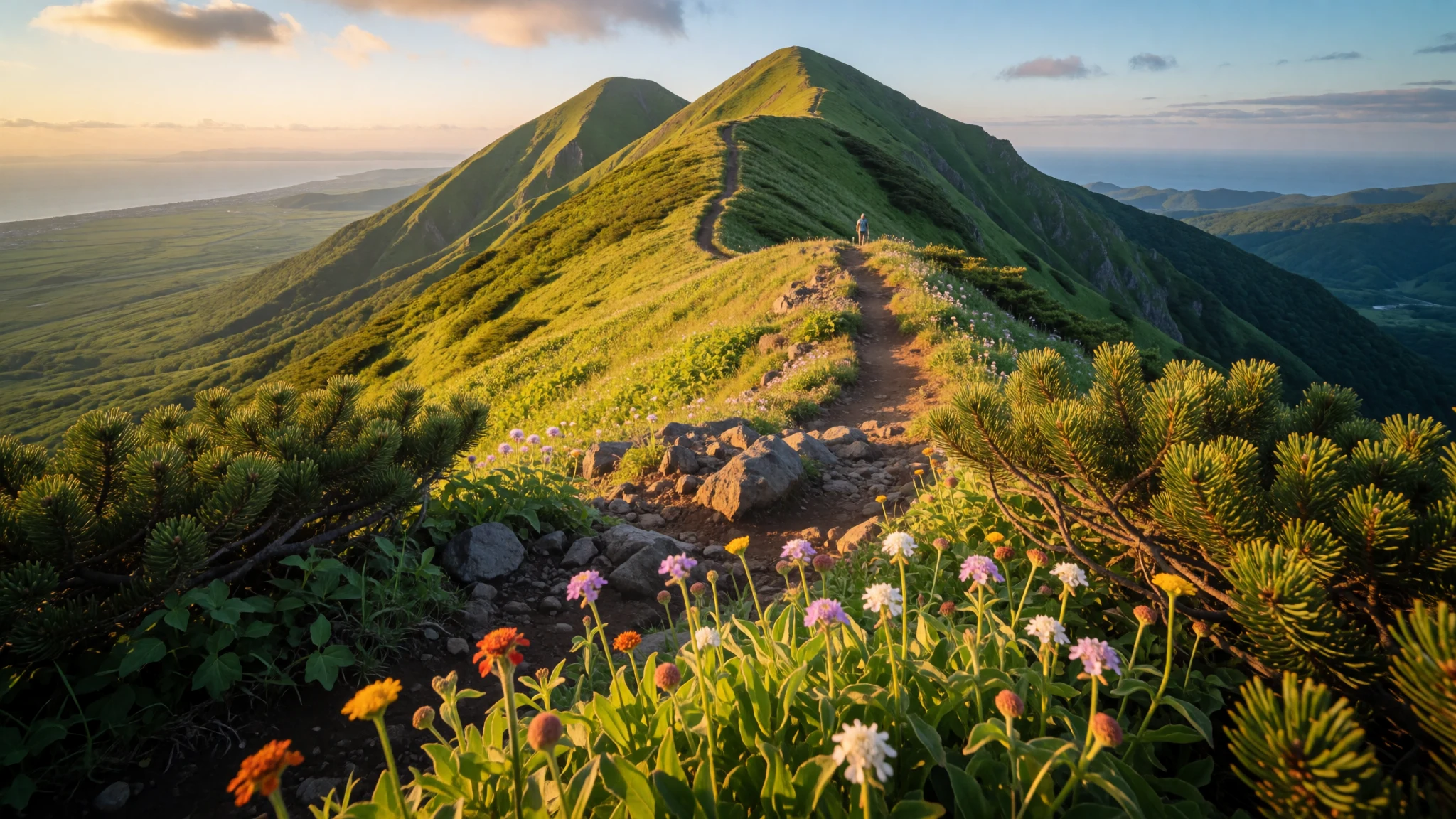
Mount Daisengen is a quiet Hokkaido summit where a long walk ends at a cross marking a hidden chapter of Japanese history.
The place
Mount Daisengen (大千軒岳, Daisengen-dake) rises to 1,072 metres on the Oshima Peninsula, the southern tail of Hokkaido that points towards Honshu across the Tsugaru Strait. It stands between the towns of Matsumae and Kaminokuni, and both claim it as their own. This is not a famous-name peak like Fuji. It tends to draw walkers who already know Hokkaido's quieter hills, and the paths are rarely busy. The mountain is a broad massif rather than a single spike, with an open, plateau-like top and a smaller neighbour, Maesengen, standing beside it. From the coastal towns and farmland below, the summit reads as a long, dark ridge above the sea. The lower slopes are forested and the upper ground more open, and snow lingers late into the year, so the walking season is shorter than the map suggests. Several climbing routes lead to the top, differing in length and steepness, and the local tourist offices are the sensible place to ask which are open and in what condition. There are no cable cars and no summit cafés; the whole effort is on foot. Beyond the scenery, the mountain carries an unusual history. Gold was mined here in the Edo period, and a group of Christians who worked the mine were later put to death on its slopes. A cross near the top now commemorates them, and walkers often pause there before turning back down.
Its story
The history of Mount Daisengen runs through gold and faith. In the Edo period the mountain held a gold mine, and mines needed labour more than they needed questions about belief. From about 1612, Japanese Christians who were under pressure from the Tokugawa shogunate began moving north to Tōhoku and to Ezo, as Hokkaido was then known, where official control was thinner. Some of them found work at the workings on Daisengen. The calm did not last. After the Shimabara Rebellion of 1637 to 1638, the shogunate hardened its attitude, and the ban on Christianity was enforced far more severely across the country. In 1639 the Matsumae clan, the local ruling house, executed 106 Japanese Christians who had been mining gold on the mountain. That episode is why Daisengen is still spoken of as a place of martyrdom, and why a cross stands on the summit area today, put there for the repose of those killed. The mountain has a second, quieter layer of history in surveying. Monuments on and near the summit mark the first triangulation point in Hokkaido, and a commemorative plaque records an anniversary of that work. Together the cross, the surveying markers and the remains of the old mine checkpoint make Daisengen a mountain where the walk is also a short, unforced lesson in how the island was mapped, mined and policed.
What to see
- The summit of Mount Daisengen — Summit, Oshima Peninsula
The top of Mount Daisengen is open, with wide views across the Oshima Peninsula when the weather allows. It is the reward at the end of a long walk, and cloud can arrive quickly, so the view is never guaranteed. Walkers usually rest here before the descent.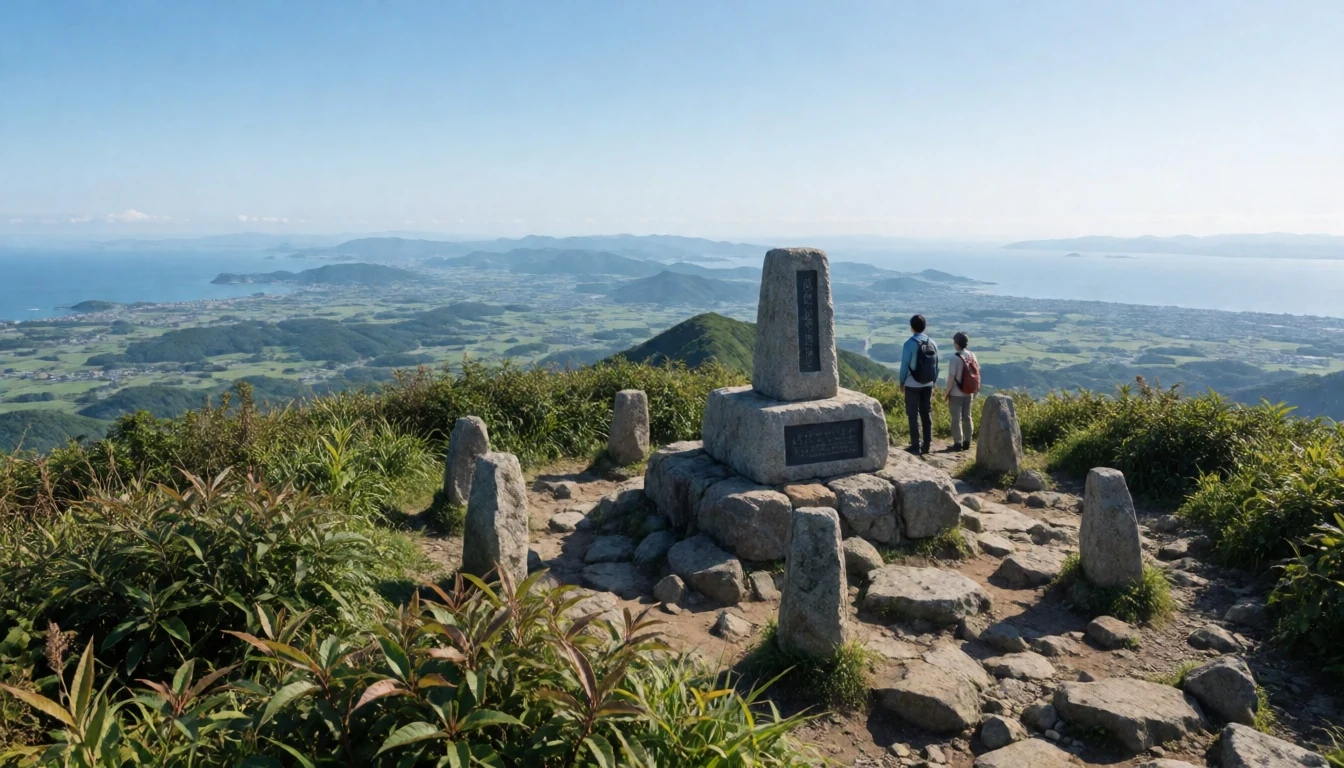
- The memorial cross — Near the summit
A cross near the summit was raised for the repose of the Christians who were executed on the mountain in the Edo period. It is a simple structure, and the setting does most of the work. Most visitors stand quietly for a minute before moving on.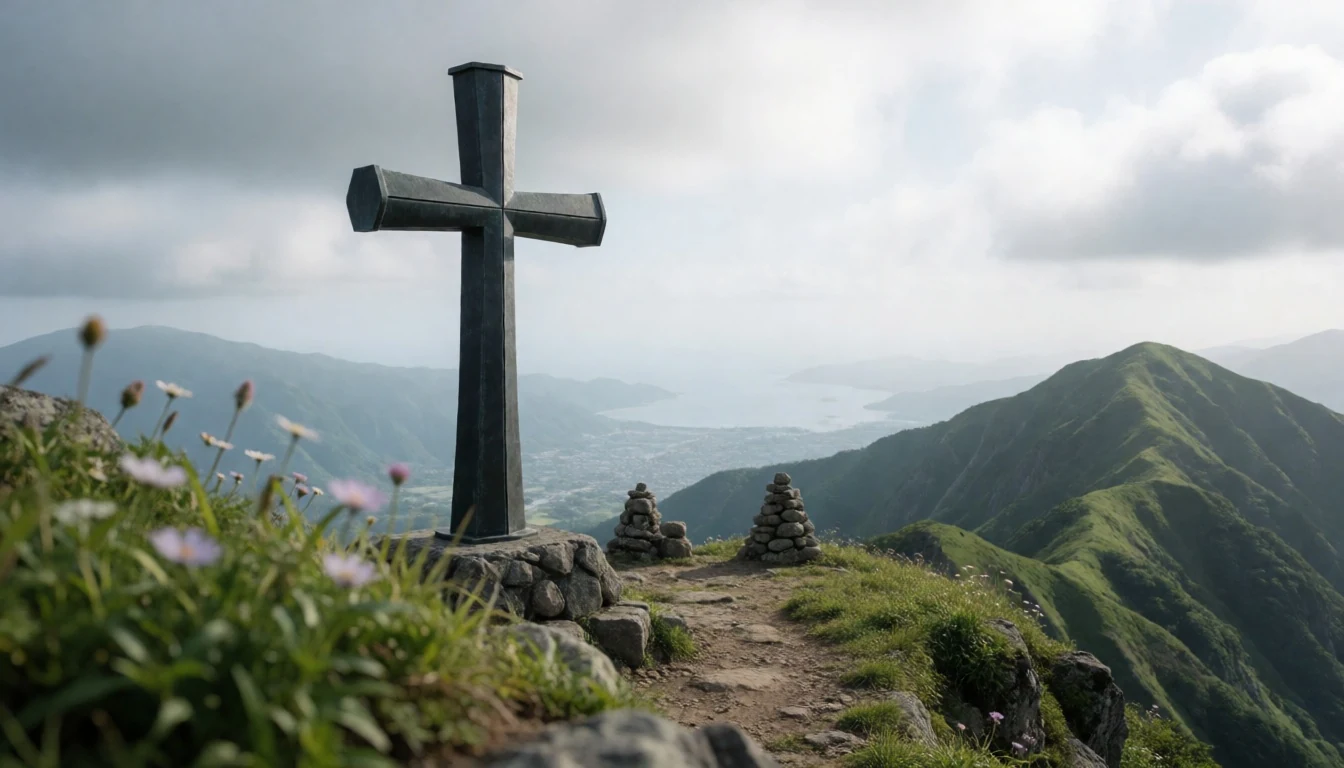
- First triangulation point monument — Summit area
A monument on the mountain marks the first triangulation point set in Hokkaido, used to measure and map the island. A neighbouring plaque commemorates the centenary of that survey. It suits walkers who enjoy the small technical stories hidden in the hills.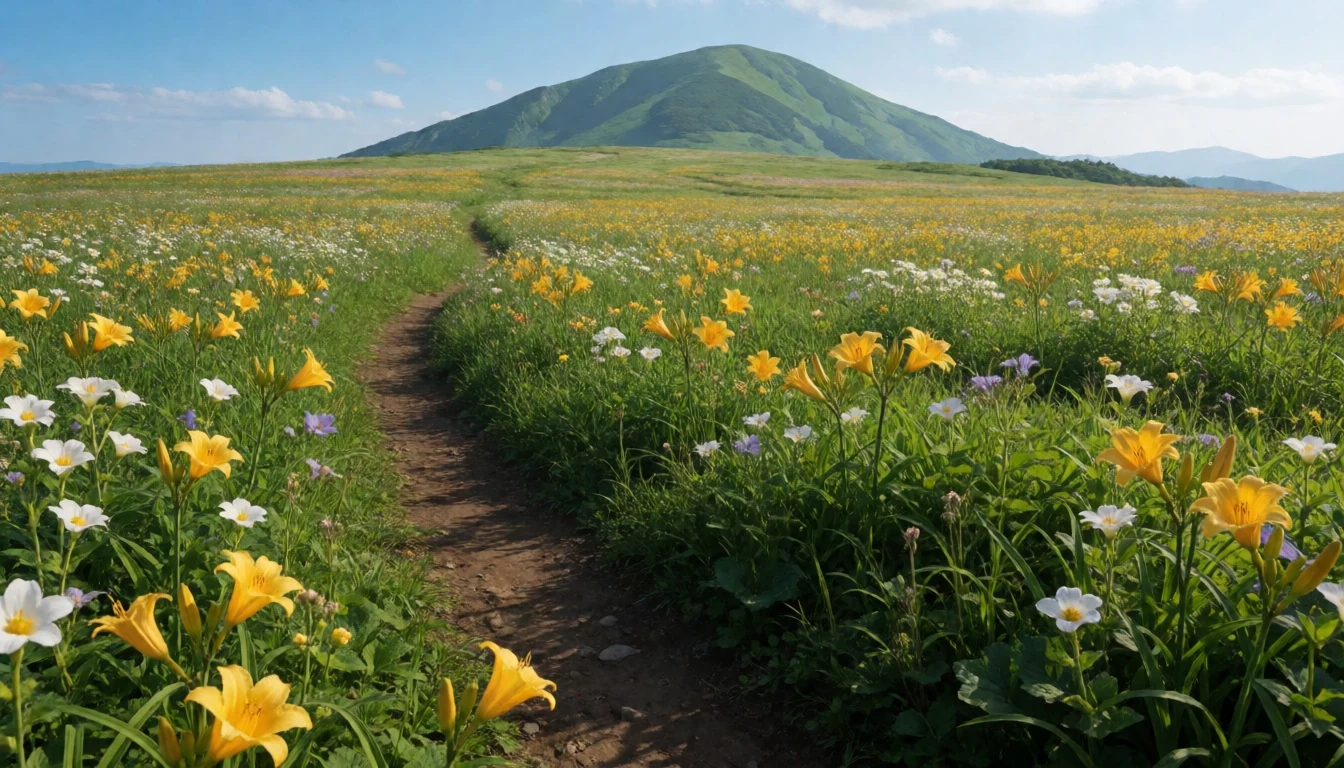
- Kanayama checkpoint ruins — Oshima Peninsula, southern Hokkaido
The remains of the Kanayama checkpoint (金山番所跡) recall the administration of the old gold mine in the Edo period. There is little to see beyond the site itself, but it helps explain why miners and officials were ever on this remote mountain.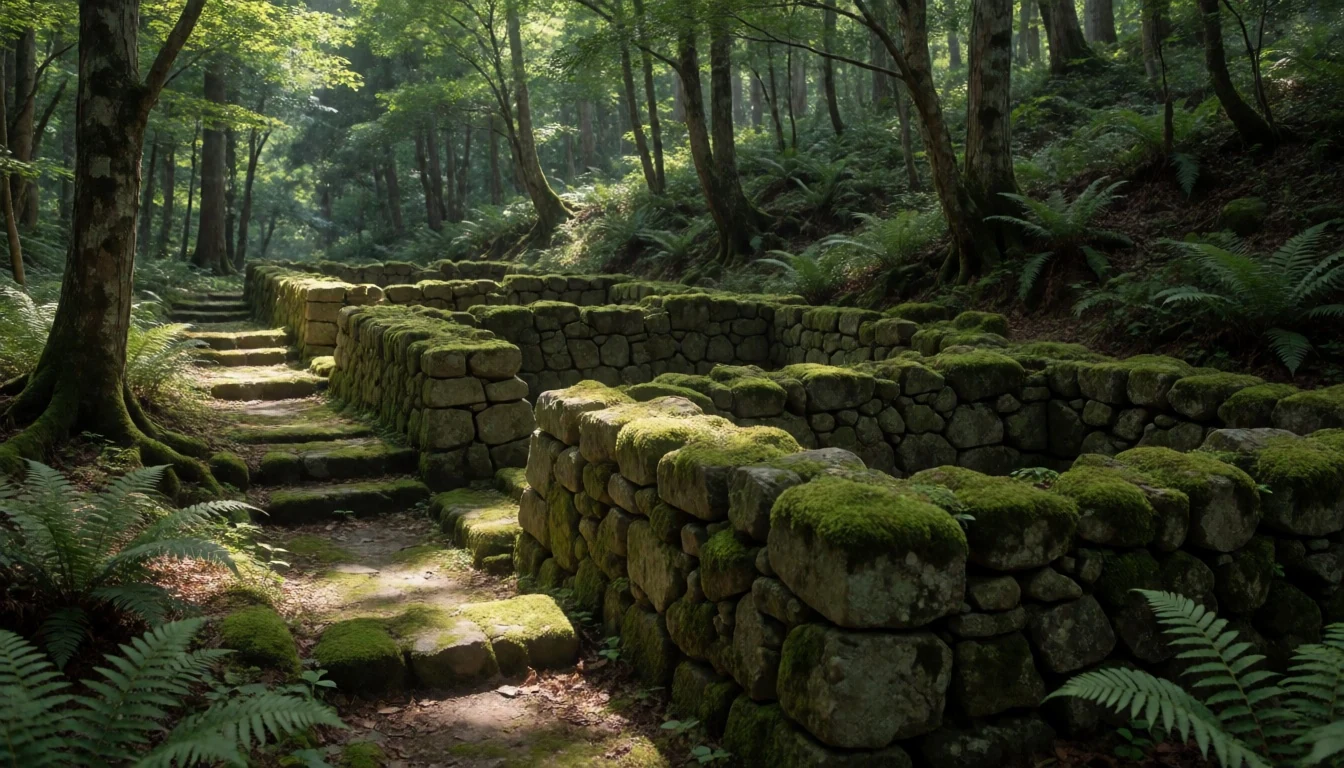
- Sengen plateau from Fukushima — Fukushima town, Hokkaido
From the neighbouring town of Fukushima in Hokkaido, the summit and the Sengen plateau stand clear above the lower hills in summer. It is the easiest way to appreciate the mountain's scale without climbing, and a good spot for photographs from the roadside.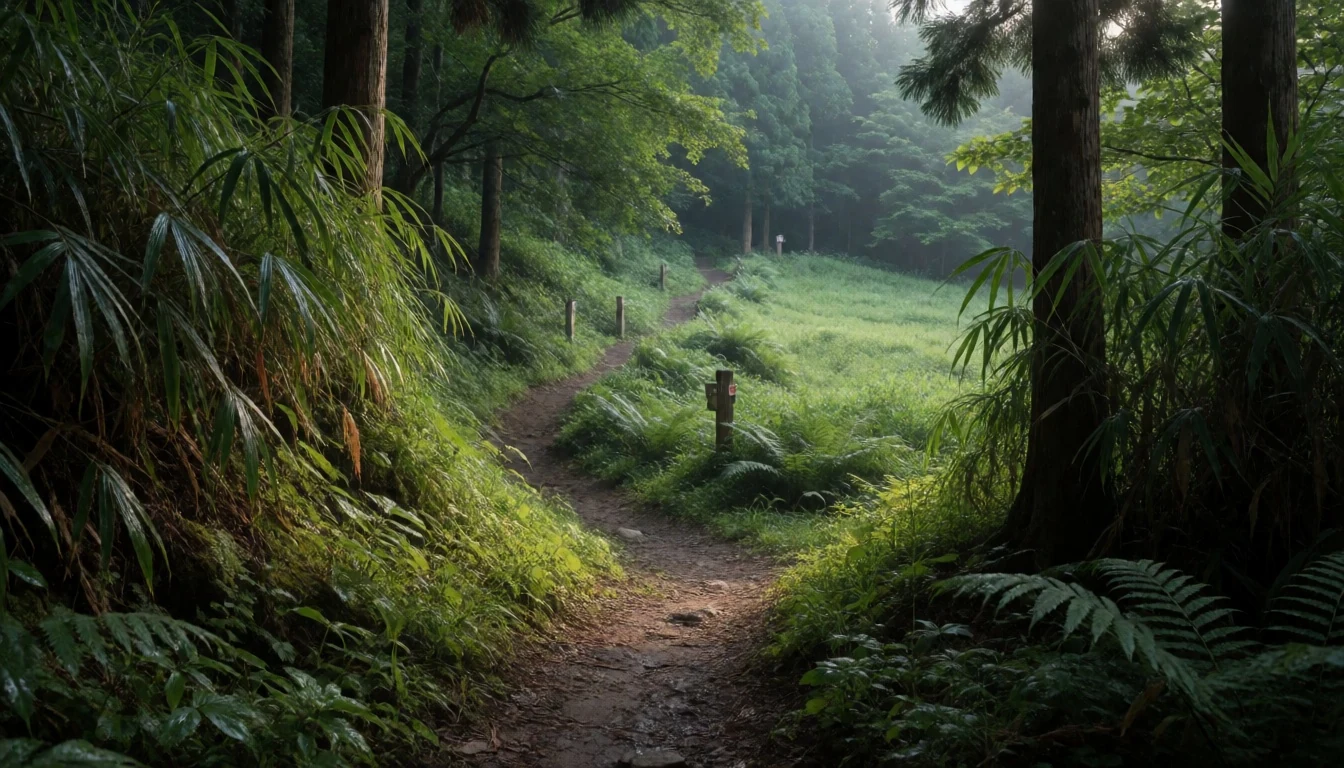
Culture
Mount Daisengen sits in a part of Hokkaido whose culture is layered rather than singular. The island is the homeland of the Ainu, its southern tip was long governed by the Matsumae clan on behalf of the Tokugawa shogunate, and settlers from Honshu arrived in numbers only later. The mountain's best-known story belongs to the Edo period, when Christians who worked its gold mine were executed during the national crackdown on their faith. The cross near the top is a memorial, and many Japanese walkers treat it with the quiet they would show at a grave. Japanese mountain culture adds its own habits. Walkers greet each other on the trail with a short hello, they tend to start early, and most carry their rubbish back down because few paths have bins. Hikers on longer routes often leave details of their plan with a local office or accommodation, so that someone knows where they are, and that is worth copying. The surrounding towns of Matsumae and Kaminokuni have a fishing and farming rhythm, with festivals tied to the sea and the seasons. Conversation with locals is usually easiest with a few Japanese phrases and a translation app, since English is not widely spoken here. At the cross near the summit, keep your voice low, do not touch or move anything left there, and take every scrap of rubbish back down with you.
What to wear
Traditional dress around Mount Daisengen has two strands. The Ainu, Hokkaido's indigenous people, wore robes called attus, woven from elm-bark fibre and decorated with bold embroidered patterns, and these now appear mainly at cultural events and in museums. In the Matsumae and Edo-period settler communities, people wore the kimono familiar from the rest of Japan, in silk for formal occasions and cotton for daily use, with a lighter cotton yukata in summer. Such clothes are mostly seen today at festivals and ceremonies. What people actually wear now is practical. In the coastal towns that means fleeces, work jackets, waterproofs and rubber boots, as farming and fishing remain part of life here. Walkers in the hills wear technical layers, and bright colours are common. A visitor should dress for the mountain rather than the town. Wear sturdy walking boots with good grip, long trousers to protect against brush and insects, a waterproof shell, and a warm layer even in summer, as the weather can turn on the upper slopes. Add a sun hat and sunscreen for open sections, and carry a bear bell, since brown bears live in Hokkaido's hills. There is no special dress code in the towns, but modest, quiet clothing suits a visit to the memorial cross, which is treated as a place of remembrance.
What to eat
- Hakodate squid — Morning market, Hakodate
Squid is a signature of the southern Hokkaido coast, served sashimi-style so fresh that it can still be moving. It is easiest to find in the morning market area of Hakodate, the usual gateway city for the peninsula.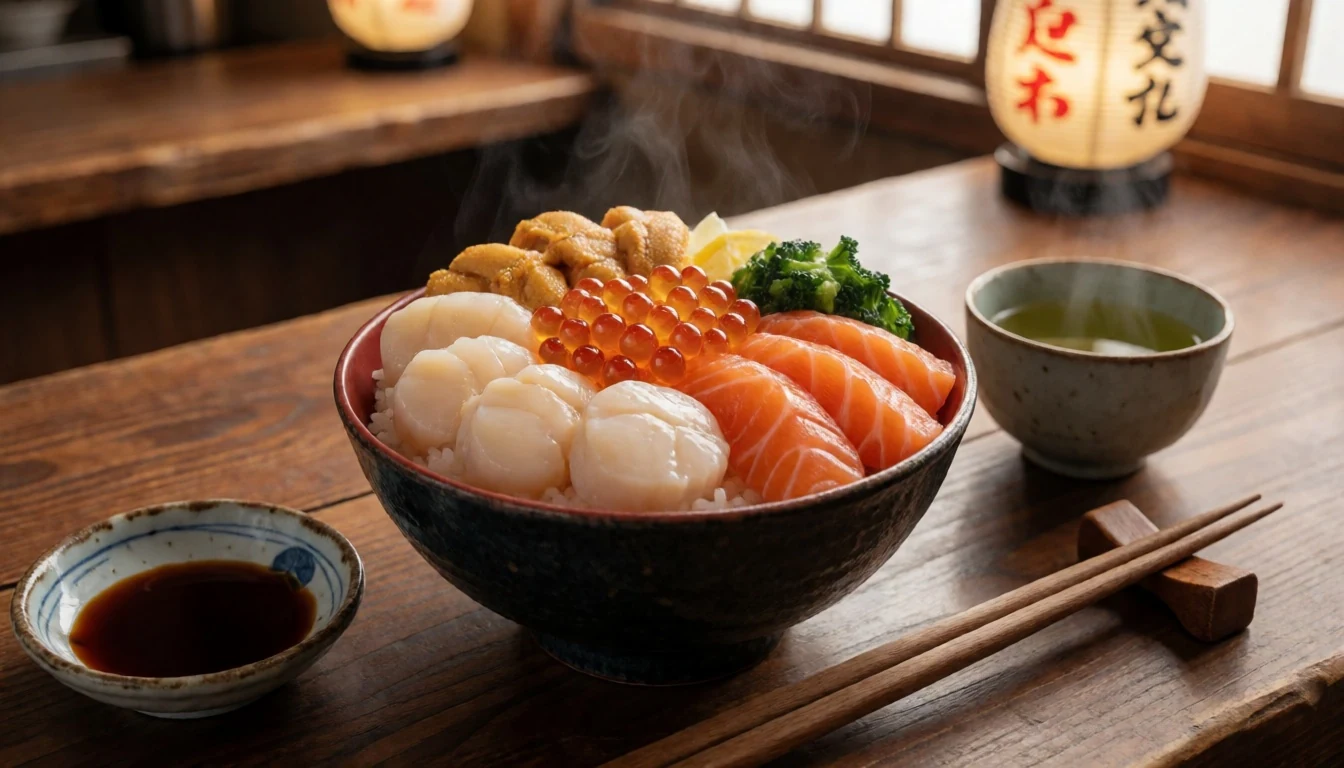
- Sea urchin (uni) — Seafood eateries in Matsumae and Hakodate
Sweet, creamy sea urchin is a seasonal treat in Hokkaido, eaten on rice or alone. Quality varies with the season, so ask locals what is good that week. Fish counters and small seafood eateries in coastal towns are the best places to look.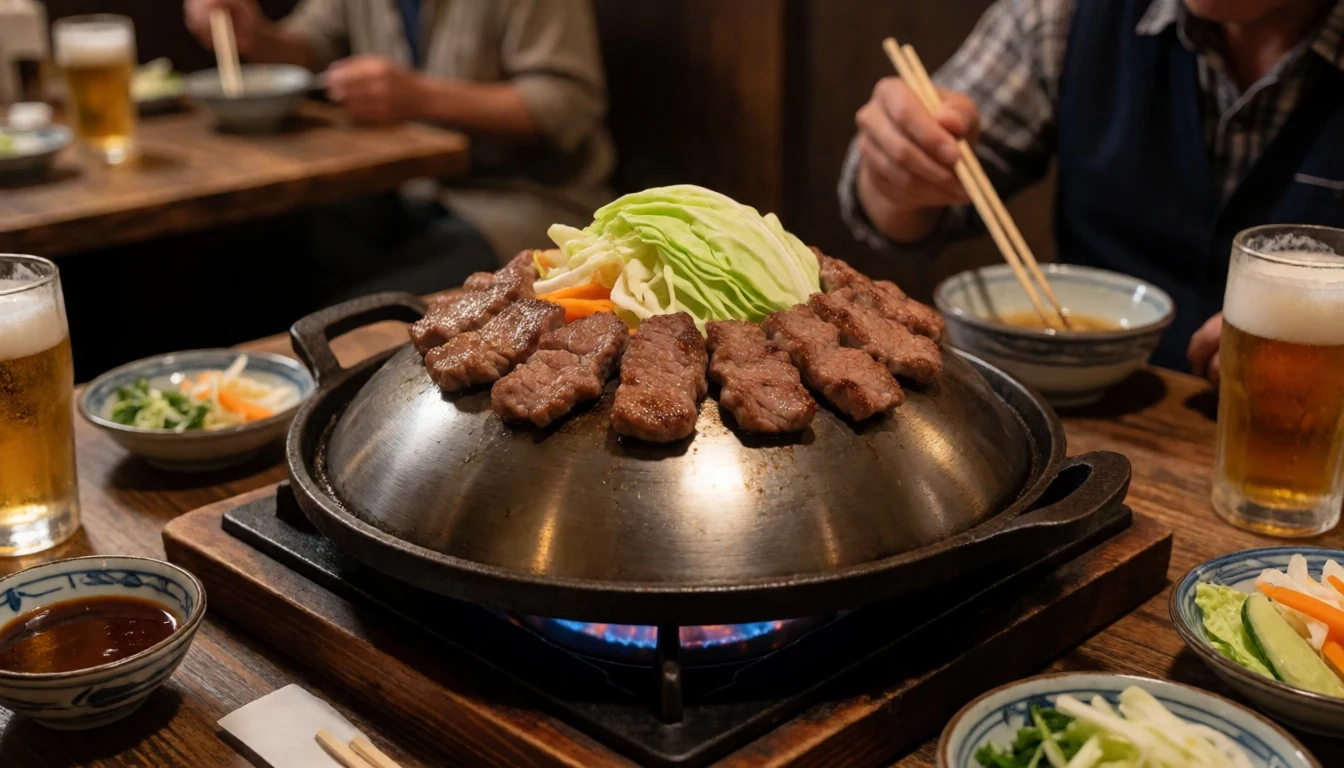
- Matsumae-zuke — Local shops and food stalls in Matsumae
A pickle of kelp, herring roe and dried squid, Matsumae-zuke is a regional speciality named after the castle town near the mountain. It is salty, chewy and good with rice, and is often sold as a gift from local shops. - Jingisukan — Grill houses and izakaya in Hakodate
Grilled mutton or lamb cooked on a domed metal pan with vegetables is a Hokkaido favourite, rich and smoky. After a day on the mountain it is a satisfying meal, and many family-run grill houses serve it. - Salmon and rice — Guesthouses and small local eateries
Grilled or salted salmon with rice and miso soup is a plain, comforting breakfast along the coast. Many guesthouses serve it, and it makes good fuel for an early start on the trail.
Plan it
Best time. July to September is the usual walking window, when the upper slopes are most likely to be free of snow. Snow lingers late into the year on Hokkaido's hills, so check conditions with a local tourist office before setting out, and expect cooler, changeable weather high up even in summer.
How long. 1–2
Getting there. Hakodate Airport or Shin-Hakodate-Hokuto station is the usual gateway to the southern Oshima Peninsula. The last leg towards Kaminokuni or Matsumae is by road, and a hire car is the most practical option, as local buses may be infrequent, so check timetables locally.
Budget. mid
Tips
- Start early, as mountain weather can change quickly and daylight is limited at the edges of the season
- Check route and snow conditions with a local tourist office before you go
- Carry enough water and food, since there are no shops on the trail
- Carry a bear bell and make some noise, as brown bears live in Hokkaido's hills
- Bring cash and fill the fuel tank in town, as small places may not take cards
Etiquette
- Take all rubbish back down with you
- Greet other walkers with a short hello on the trail
- Keep quiet and respectful at the memorial cross
Nearby
Sources
- Wikidata Q11433096 (CC0)
- Wikipedia: Mount Daisengen (rev 1369554951) (CC BY-SA 4.0)
- Wikivoyage: Hokkaido (CC BY-SA 4.0)
- Photo: Mount Dai-Sengen (DrTerraKhan) (CC BY 3.0)
- Photo: Daisengendake01 (Tonori) (CC BY 3.0)
- Photo: View of Mount Daisengen from Fukushima, Hokkaido (YesPretense) (CC BY-SA 4.0)
- Photo: Triangulation point commemorative plaque (YesPretense) (CC BY-SA 4.0)
- Photo: 100th aniversary Monument for the first triangulation point in Hokkaido (DrTerraKhan) (CC BY 3.0)
- Photo: The Cross at Mount Dai-Sengen (DrTerraKhan) (CC BY 3.0)
- Photo: The summit of Mount Dai-Sengen (DrTerraKhan) (CC BY 3.0)
- Photo: 金山番所跡 (Koda6029) (CC BY-SA 4.0)


