Mount Abu
Mount Abu, India
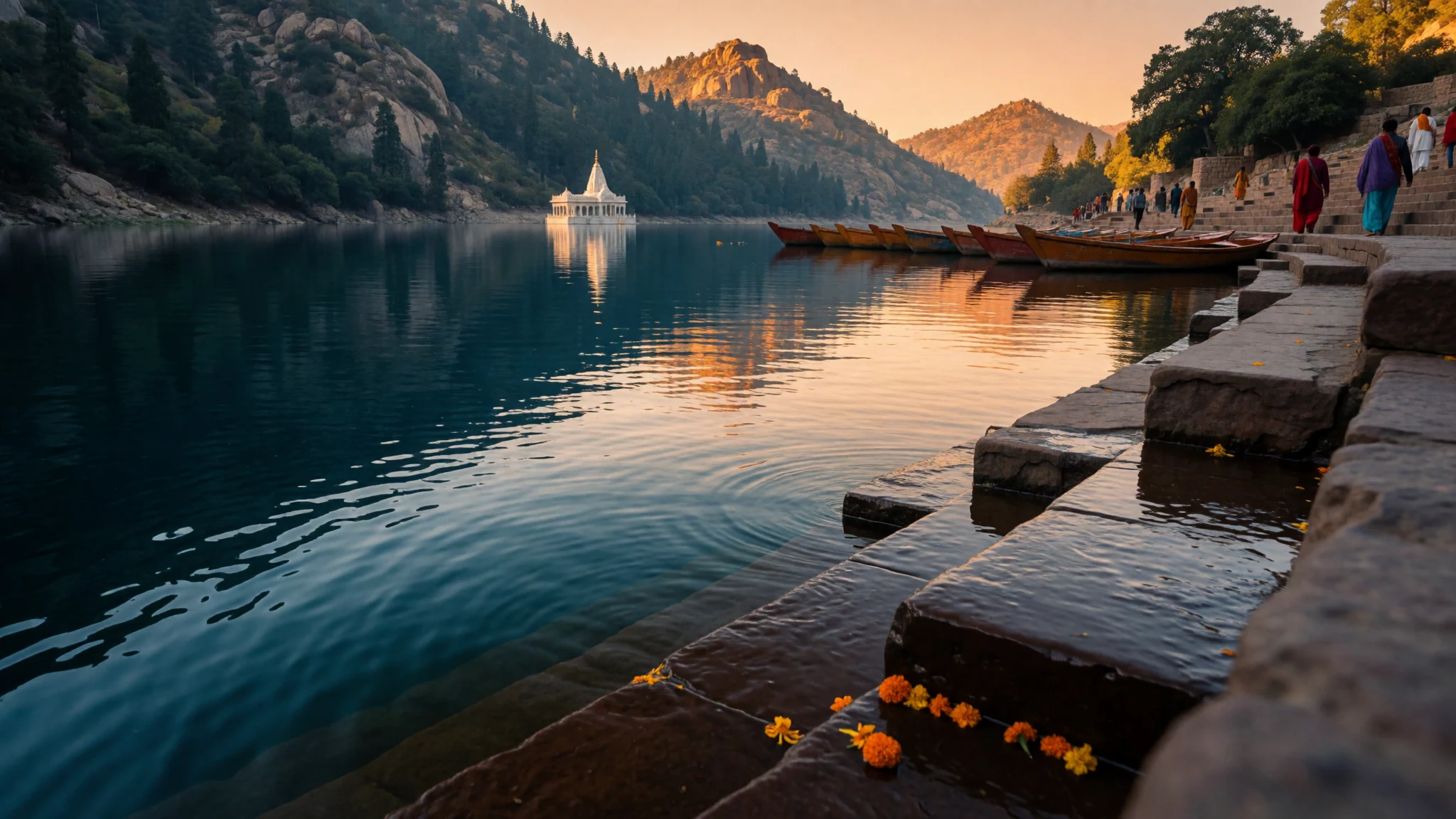
Mount Abu is Rajasthan's cool, green hill retreat, where marble Jain temples, a boating lake and sunset ledges sit within a short drive.
The place
Mount Abu sits on a rocky plateau in Sirohi district, at the southwestern edge of Rajasthan, where the Aravalli hills rise abruptly out of dry plains. The town stands at 1,220 m and has about 23,000 residents, a figure that swells in holiday months when families from Rajasthan and Gujarat come up to escape the heat. That role as a cool retreat is old, and it shapes the town: lakeside promenades, a busy main market, viewpoints with names like Sunset and Honeymoon, and a great many guesthouses.
The hills hold more water than the country around them. Streams, a lake, patches of evergreen forest and a heavy monsoon give the plateau a greenness that looks improbable to anyone who has just come up from the plains. Mornings after rain are misty, evenings turn cool, and in the wet months the whole hill smells of damp earth and leaf mould.
Faith runs through the place as well. Hindu shrines, Jain temples, a large Brahma Kumaris centre and small ashrams lie within a short drive of each other, so a single day can include a marble temple, a boat on the lake and a sunset from a rocky ledge.
An honest note on crowds: weekends, festivals and school holidays bring queues of vehicles on the climbing road, packed viewpoints and higher room rates. Midweek outside peak season the town is calmer, prices ease, and the forest paths feel properly quiet.
Its story
Mount Abu carries an old name, Arbuda, and the Puranas call the surrounding forest Arbudaranya; 'Abu' is a shortened form. Two stories explain the name. In one, a serpent called Arbuda saved Nandi, the bull of Shiva, on this very mountain. In another, the sage Vasishtha withdrew to its southern spur after a quarrel with the sage Vishvamitra, and later performed a fire sacrifice at the summit. A young warrior is said to have risen from that fire-altar as the first of the Agnivansha, the fire-born lineages.
The human record is easier to date. Rao Lumba of the Deora Chauhan line took the mountain in 1311 and moved his capital down to Chandravati on the plains. After Chandravati was destroyed in 1405, Rao Shasmal made Sirohi his seat instead. Much later the British leased the hill from the Maharaja of Sirohi to use as a cool administrative base, and a municipality was set up in 1864.
Temple building continued through all of this. The white marble Dilwara Jain temples date to the medieval period, with Vimal Shah recorded as the builder and Vastupala as the designer. Achalgarh's fort and shrines belong to a later medieval phase, under rulers from Mewar.
The hills are also tied to the great teachers Atri and Vasishtha, named in inscriptions. One scholarly theory even suggests that 'land of the gurus' wore down over time into Gurjara, the root of Gujarat. That is an argument among historians, not a settled fact.
What to see
- Dilwara Jain Temples — East of Mount Abu town
The Dilwara temples, a short drive from Mount Abu town, are Jain shrines in white marble, carved so finely that ceilings and pillars look like lace. Allow unhurried time. Entry rules on photography, leather and dress are strict and change, so check the official site before going.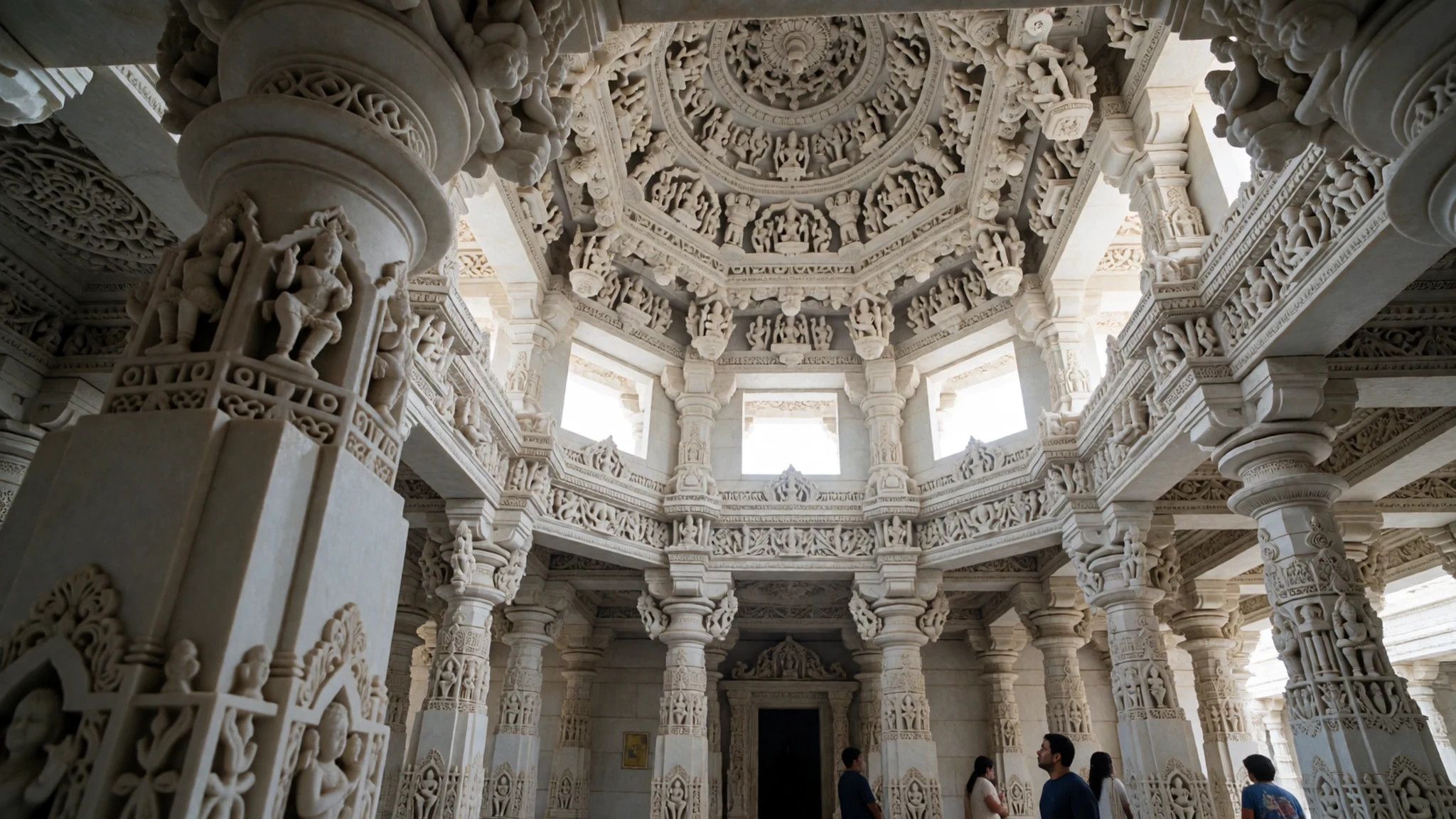
- Nakki Lake — Town centre
Nakki Lake is the town's social centre, a lake ringed by hills with a walkway round its edge and paddle and row boats for hire. Legend says gods dug it out with their nails, nakh in Hindi. Come early or at dusk, when the light is soft and the crowds thinner.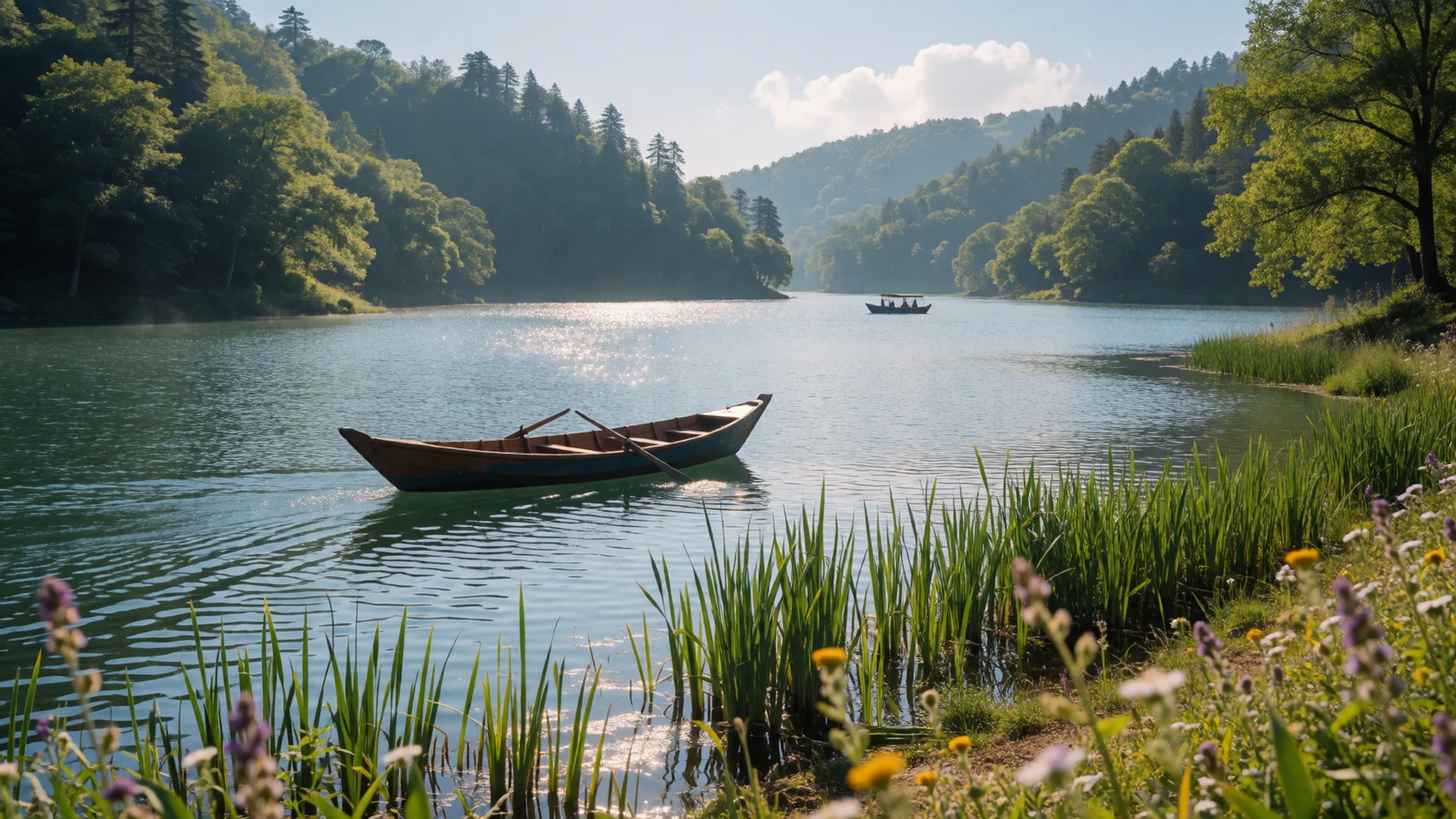
- Achalgarh Fort and temples — North-east of the town
Achalgarh is a fortified hill site built in the medieval period by Rana Kumbha of Mewar. Within and around it stand the Achaleshwar Mahadev Temple, a Shiva shrine, and Jain temples including the Kantinath Temple. Ramparts and the surrounding hills make it a good half-day outing.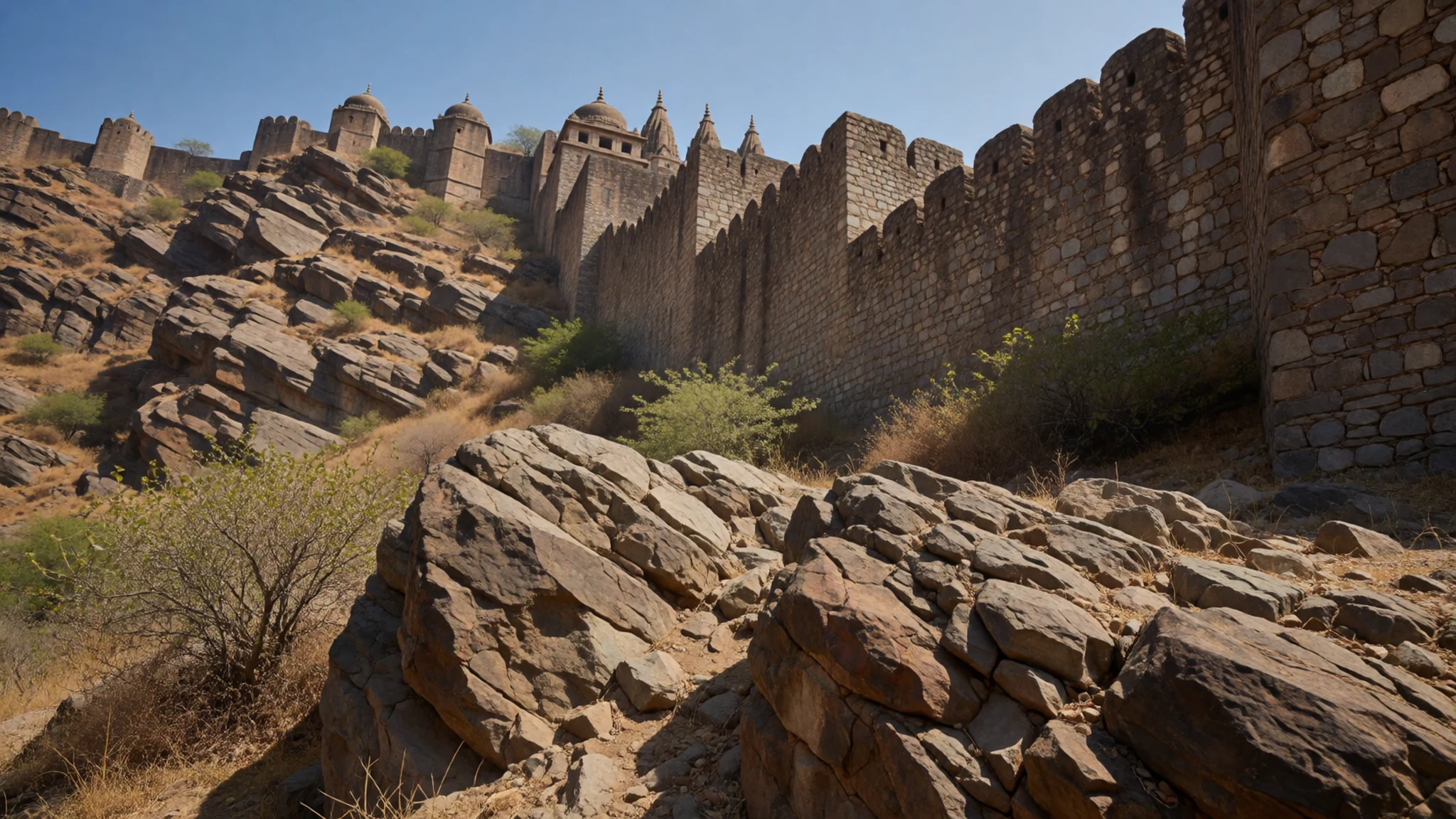
- Guru Shikhar — North-east of the town
Guru Shikhar is the high point of the Aravalli range, at 1,722 m, reached by road with a final climb on steps. A small shrine to Dattatreya sits on top. Views stretch over the plateau and the plains beyond, best on a clear morning before haze and cloud gather.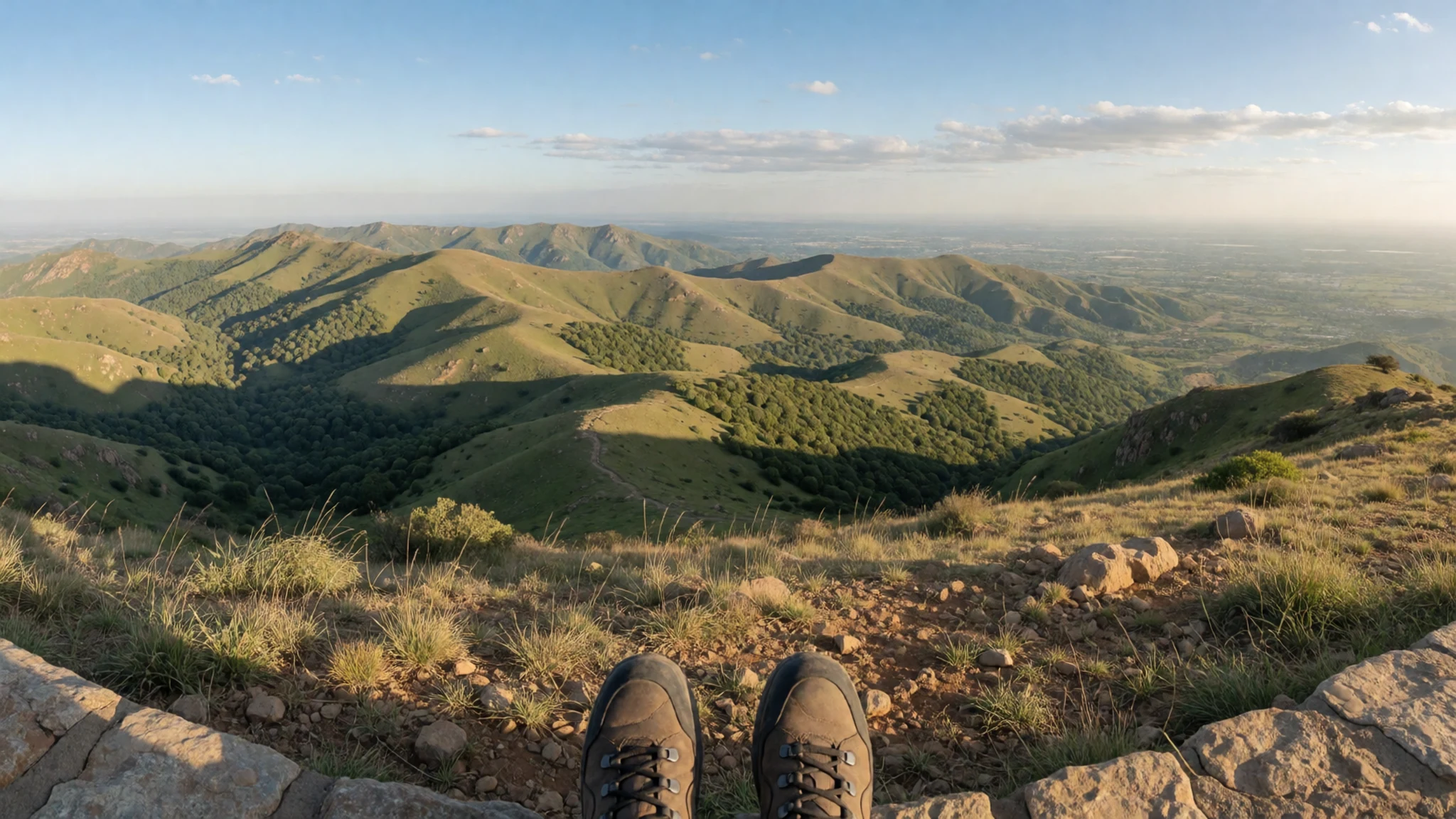
- Adhar Devi Temple — Just outside Mount Abu town
Adhar Devi, also called Arbuda Devi, is a goddess shrine cut into solid rock on the hillside. Reaching it means climbing a long flight of steps, which is easier in the cool of early morning. Pilgrims arrive in numbers during festival periods, so expect queues then.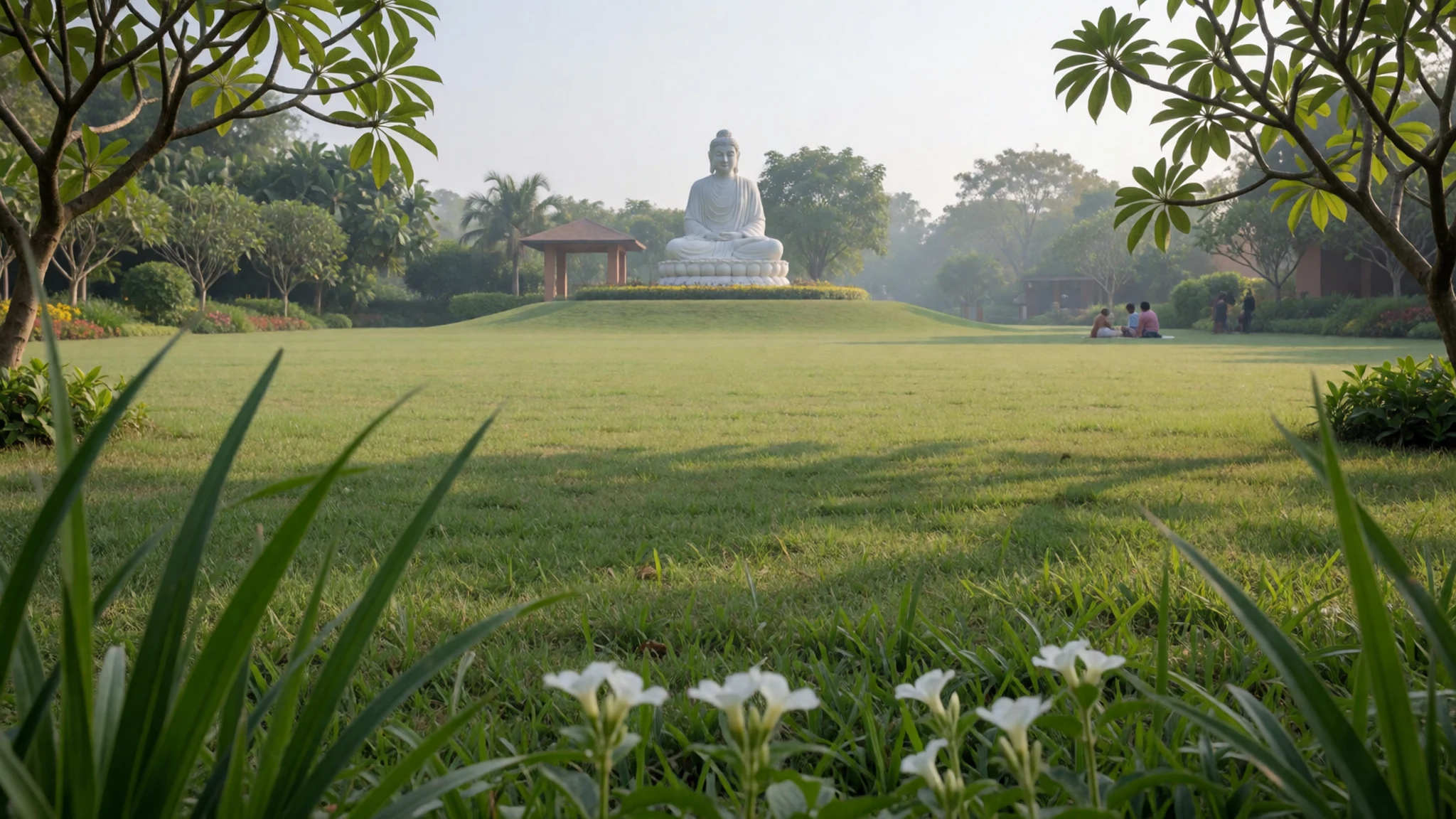
- Brahma Kumaris centre — Foot of the hill, near town
Mount Abu is the world headquarters of the Brahma Kumaris, a spiritual movement that runs meditation courses and exhibitions here. Visitors are welcomed to its halls and gardens, and the organisation is open about wanting to share its ideas on peace. Dress modestly and treat it as a place of quiet.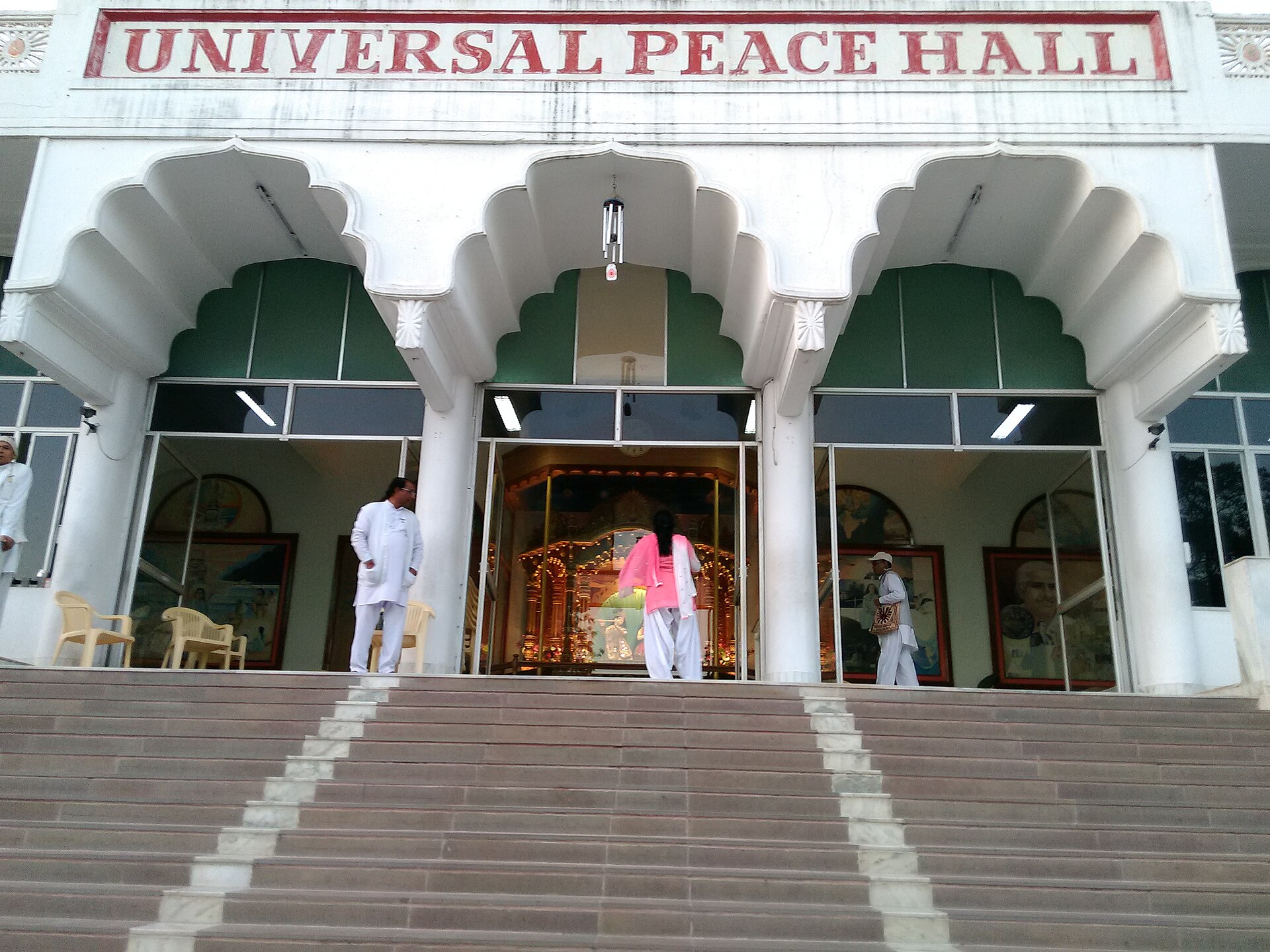
Culture
Mount Abu is shared ground between Hindu and Jain traditions, with a smaller presence of the Brahma Kumaris, and daily life on the plateau follows the rhythm of temple bells, morning prayers and festival calendars. Pilgrims arrive from Rajasthan and Gujarat throughout the year, and the town's visitors are as often devotees as holidaymakers.
Jain practice shapes the Dilwara temples in particular. Jainism's central principle of non-violence explains why such places often discourage leather, and why vegetarian food dominates in the surrounding eateries. Hindu shrines such as Adhar Devi and Achaleshwar Mahadev see offerings of flowers, coconuts and lamps, with priests leading rituals at set times.
A Winter Festival is held on the hill, bringing music, folk performance and craft stalls to the town. Dates change from year to year, so confirm them with the official tourism site, http://www.mountabu.net.in/, before planning around it.
The pace in Mount Abu is relaxed. Shopkeepers in the main market bargain over handicrafts and marble items, ponywalas and boat operators quote prices to be negotiated, and conversation is usually in Hindi, Rajasthani, Gujarati or English. Families, newly married couples and school groups share the lakeside paths, and the mood is friendly rather than formal.
At Dilwara and other Jain temples, remove shoes, leave leather items and follow the staff's instructions on photography, and cover shoulders and knees.
What to wear
Traditional dress in this part of Rajasthan is colourful and made for heat. Women wear the ghagra-choli with an odhni, a long scarf, often in bandhani, the tie-dyed cotton and silk of the region, or in leheriya, with its diagonal wave stripes. Men wear dhoti-kurta or kurta-pyjama, sometimes topped with a safa, a bright turban, at weddings and festivals. Gujarati neighbours add mirror-work embroidery to blouses and shawls.
Day to day, locals wear what suits the hills and the season: cotton salwar kameez and sarees for women, shirts and trousers for men, and jerseys, shawls and woollen caps on cold winter mornings. Younger people in the town dress as they would in any Indian city, in jeans, T-shirts and kurtas. Pilgrims often arrive in fresh, simple clothes for temple visits.
For a visitor, layers work best. Winter days are mild but nights and early mornings can be properly cold, so bring a fleece or shawl. In the monsoon a light rain jacket and quick-drying clothes are more useful than an umbrella on windy ledges. Shoes with a decent grip matter for temple steps, forest paths and wet stone.
Temples expect covered shoulders and knees for everyone, and shoes come off at the door, so slip-ons save time. Carry a scarf, which doubles as warmth and as a head covering. Skip leather belts and bags at Jain sites.
What to eat
- Dal-baati-churma — Rajasthani eateries in the main market
Rajasthan's signature plate: baked wheat balls broken into lentil dal, served with ghee and a sweet crumbled churma. It is filling and rich, best at a midday meal. Look for it at Rajasthani eateries around the main market.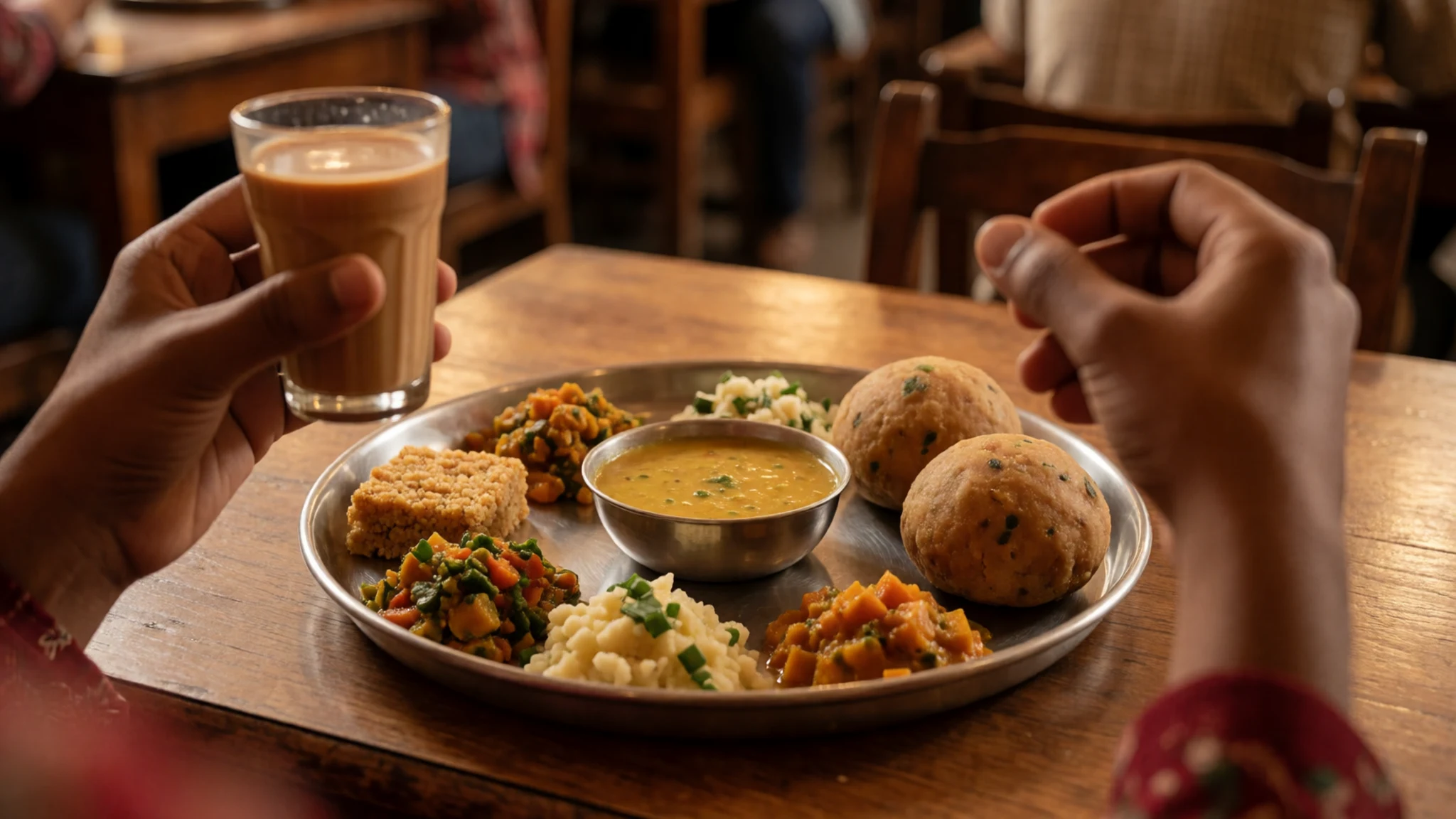
- Gujarati thali — Vegetarian thali restaurants near the market and lake
With so many Gujarati visitors, a thali is easy to find: small bowls of vegetables, dal, kadhi, rotis, rice and a sweet, refilled until you stop. Flavours lean mildly sweet. It suits a group meal after a day of temples.
- Kachori and mirchi vada — Busy snack stalls around the main market
Fried snacks beloved across Rajasthan: crisp kachori filled with spiced lentils, and chilli fritters in gram-flour batter. They suit a quick breakfast or tea-time stop. Choose busy stalls with fresh oil, as roadside hygiene varies. - Masala chai — Tea stalls near viewpoints and the lake
Milky, sweet and heavy with ginger or cardamom, chai is the hill's daily fuel, and it tastes better on a cool evening. Tea stalls cluster near viewpoints and bus stops, and a glass is a good excuse to sit and watch the town. - Ice cream — Shops around Nakki Lake
Ice cream shops line the area near Nakki Lake, and a cone or cup while walking the lakeside path is a family ritual here. Flavours range from plain milk and kulfi-style to fruit and nuts, and queues grow in the evenings.
Plan it
Best time. September to November, once the monsoon ends and the hills are lush and green, and February to March, when days are mild and clear. July and August bring very heavy rain and mist. Summers are hot, though cooler than the plains, and winter nights can drop close to freezing.
How long. 2–3
Getting there. Trains stop at Abu Road, in the plains below, on the line between Ahmedabad and Marwar Junction, with onward links towards Jaipur, Delhi and Jodhpur. From the station, autos, taxis and buses make the climb to the hill, roughly 25 km. Buses also run from Udaipur, Jaipur, Jodhpur, Ahmedabad and Vadodara.
Budget. mid
Tips
- Reach Abu Road before evening, because transport up the hill thins out after dark
- Book rooms well ahead for weekends, festivals and school holidays, when the town fills and prices rise
- Visit Dilwara and viewpoints in the morning, before tour groups and haze
- Carry some cash for stalls, boat rides and small shrines, and drink bottled or filtered water
- Check temple timings and entry rules on the official site, http://www.mountabu.net.in/
Etiquette
- Remove shoes and leave leather items outside Jain temples
- Cover shoulders and knees at all shrines
- Ask before photographing worshippers or inside temples
Nearby
Sources
- Wikidata Q695221 (CC0)
- Wikipedia: Abu Raj (rev 1384707079) (CC BY-SA 4.0)
- Wikivoyage: Mount Abu (rev 5242013) (CC BY-SA 4.0)
- Nakki Lake, Mount Abu, Rajasthan — Sanyam Bahga (CC BY 3.0)
- Nakki-See in Mount Abu — Andreas Kleemann (CC BY-SA 3.0 de)
- Location map of India — Uwe Dedering (CC BY 3.0)
- View from Shooting Point, Mount Abu — Dympies (CC0 1.0)
- Parshvanatha Temple at Dilwara — Pratyk321 (CC BY-SA 4.0)
- Kalpavruksha page in Jain Temple — Coolgama (CC BY-SA 4.0)
- The Sacred Nakki Lake — Koshy Koshy (CC BY 2.5)
- Brahma Kumari foundation Head Quarter at Mount Abu — Susant purohit (CC BY-SA 4.0)


