Moc Chau
Moc Chau, Vietnam
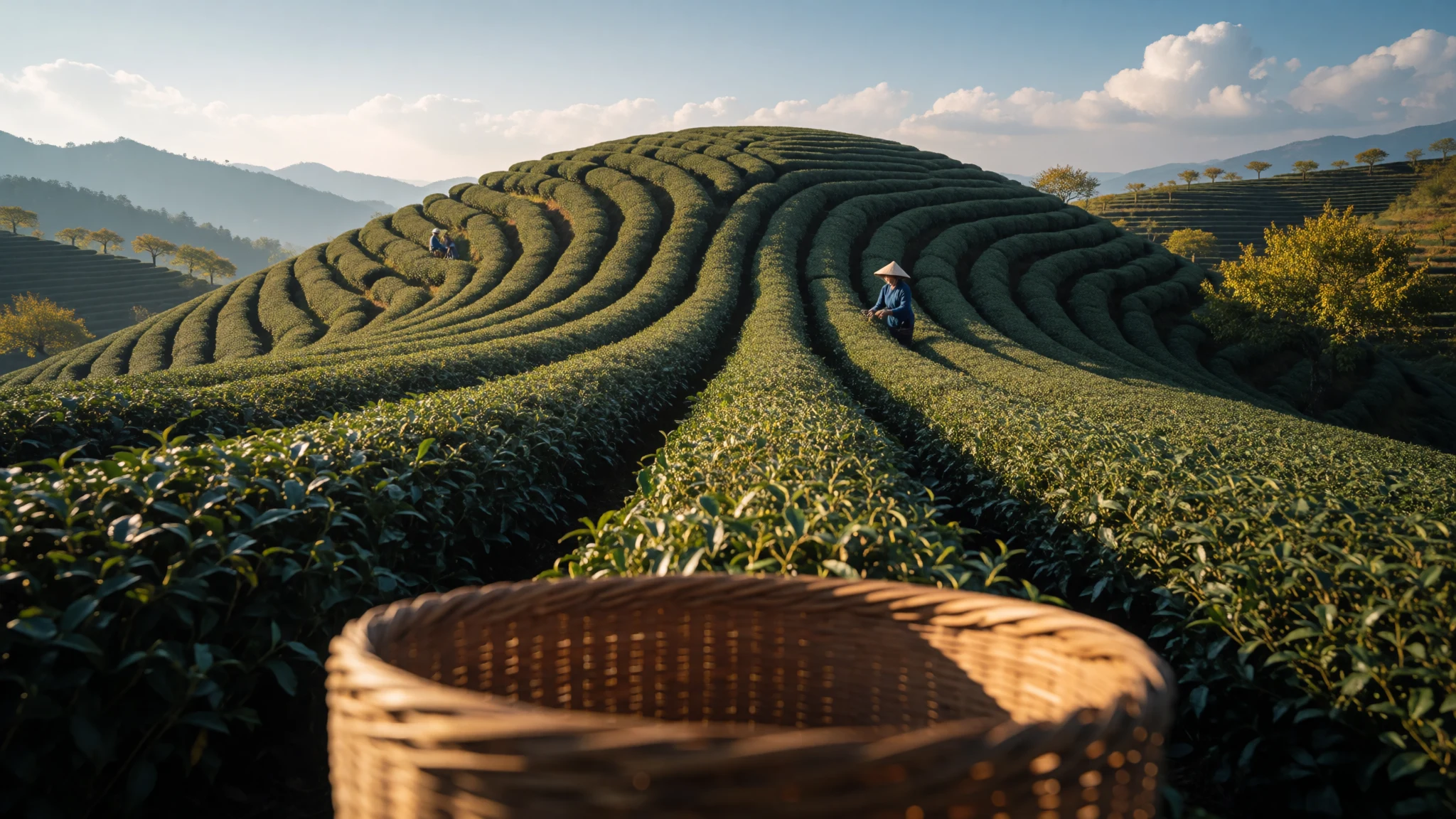
Moc Chau is a cool, green Northwest plateau of tea rows, plum valleys and Tai villages, within reach of Hanoi by road.
The place
Mộc Châu is a highland town in Sơn La province, in the Northwest of Vietnam, roughly 200 km from Hanoi by road. It sits on a plateau averaging a little over 1,050 m above sea level, and that single fact explains most of what a visitor notices first: cool air, fog in winter, and rolling tea rows where lowland Vietnam would have paddy. The town lies between the Da River to the north-east and the Ma River to the south-west, and local descriptions credit the two valleys with acting like natural air conditioning. The climate is subtropical highland, with mild summers that rarely turn uncomfortably hot and winters that bring thick fog and nights cold enough for a proper jacket. That makes Moc Chau a popular break when the lowlands are sticky. Farming shapes the place. Tea, plums, strawberries and dairy all do well on the plateau, and Mộc Châu milk is a local point of pride. The population is mixed, with Black and White Tai, Mường and Hmong households living in villages scattered among the hills. The administrative map has shifted in recent years, so signs, apps and drivers may use slightly different names for wards and communes. The town itself is functional rather than pretty. The appeal lies in the surrounding countryside: viewpoints over the reservoir, pine woods, limestone valleys and slow lanes between plantations. Weekends bring Vietnamese day-trippers and the busiest roads; midweek is calmer.
Its story
Moc Chau has carried several names and several owners. The Vietnamese name comes from Mường Mỗi in the Black Tai language, a term the Tai used for the Xá peoples, who were the earlier inhabitants of the land. After being pushed out, these groups are said to have become the Mường, who still live in the neighbouring hills. During the Lý and Trần dynasties the area counted as the southern part of Đà Giang province in the Vietnamese realm, though in practice it stayed independent, ruled by local leaders; Trịnh Giốc Mật is the best-remembered of them. For a long stretch the strip running from Mộc Châu towards Mai Châu had no official name and no single ruler. By the end of the Early Lê dynasty it was divided: Mộc Châu belonged to Black Tai chiefs, Mai Châu to White Tai ones, and a few villages in the far south were attached to the Xam Neua area of the Phuan kingdom. That patchwork lasted until the Nguyễn dynasty weakened under French pressure. Under French rule the Mộc Châu chiefly clans were recognised with limited autonomy inside a Tai federation, and were allowed their own flags and guards. The French also noted the plateau's cool climate, and the later growth of tea and dairy farming here fits that long pattern of outsiders valuing the highlands. Today the history survives mostly in village life, Tai epics and festivals rather than in monuments.
What to see
- Tea plantations and the heart-shaped tea hill — Tea plateau, south-west of the town
The tea estates around Moc Chau are working commercial plantations, planted in sweeping rows across the plateau and growing Shan Tuyết, Bát Tiên and imported oolong varieties. A heart-shaped hill is the favourite photo stop and fills up at weekends. Early morning is best, when mist still sits in the rows and pickers are at work.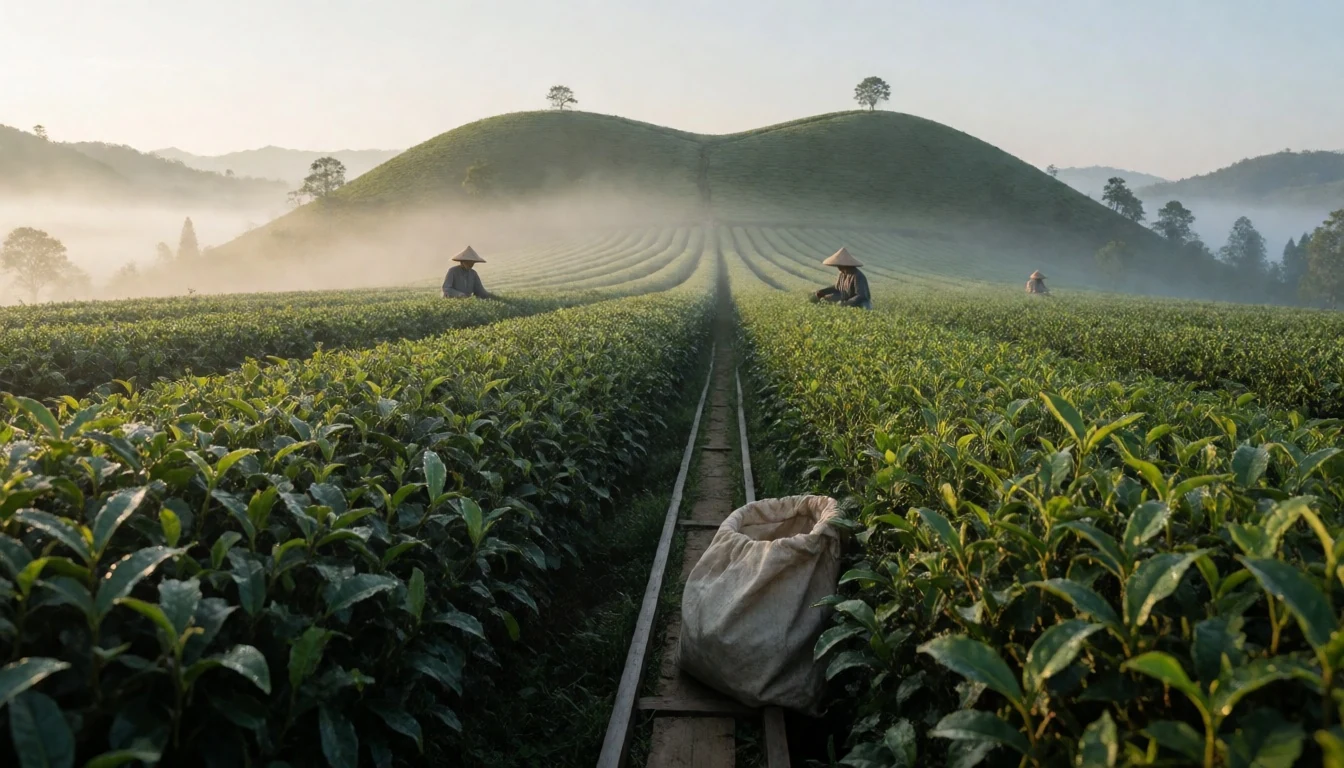
- Na Ka and Mu Nau plum valleys — Plum valleys north-west of the town
These limestone valleys are planted with Moc Chau's local plum variety. From late January to mid-February the slopes turn white with blossom, and roads and viewpoints get crowded around the Lunar New Year period. Outside blossom time they are quiet orchards, pleasant to walk through, with fruit stalls appearing in season.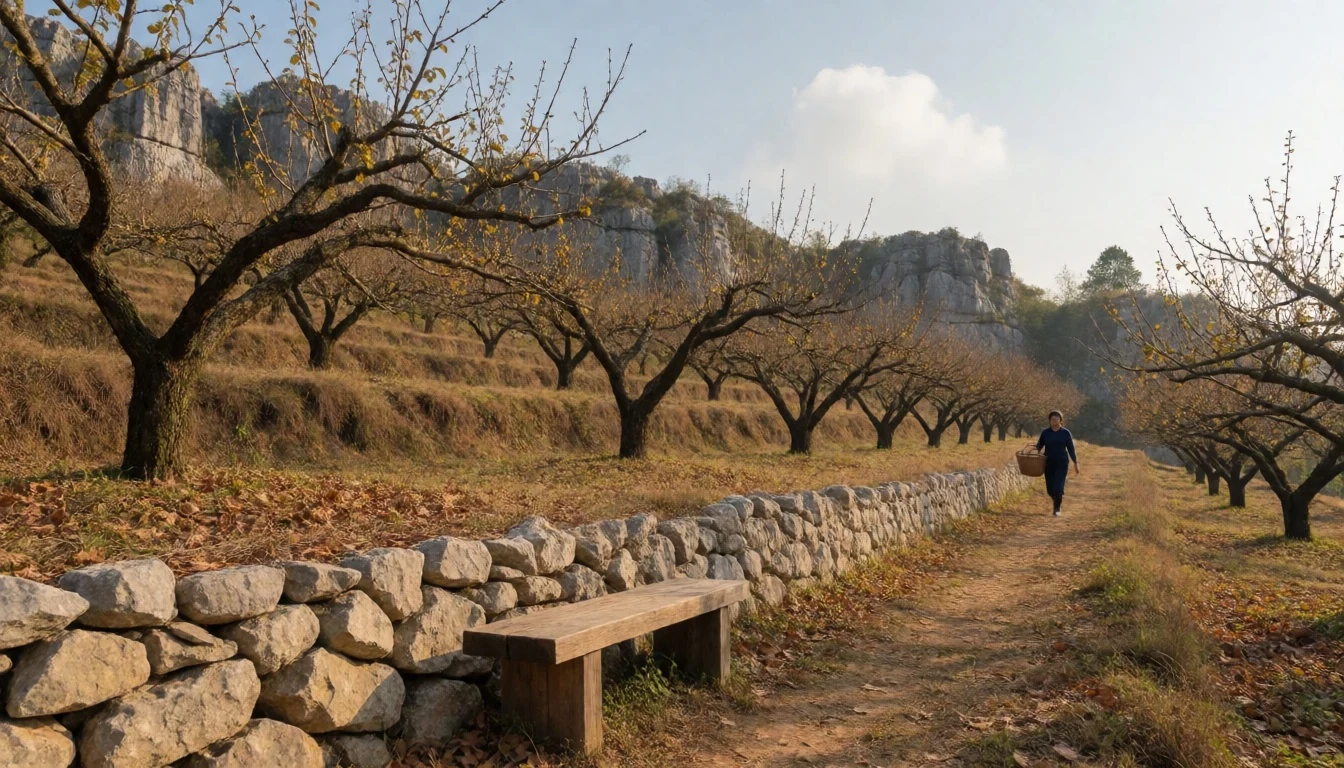
- Dải Yếm waterfall — Hills south-west of the town
Fed by the Bó Cô Lăm and Bó He streams, this waterfall drops over a long staircase of moss-covered limestone tiers. It runs strongest in the rainy season, from May to September, and thins out in the dry months. Paths and steps are slippery after rain, so shoes with grip matter more than a camera.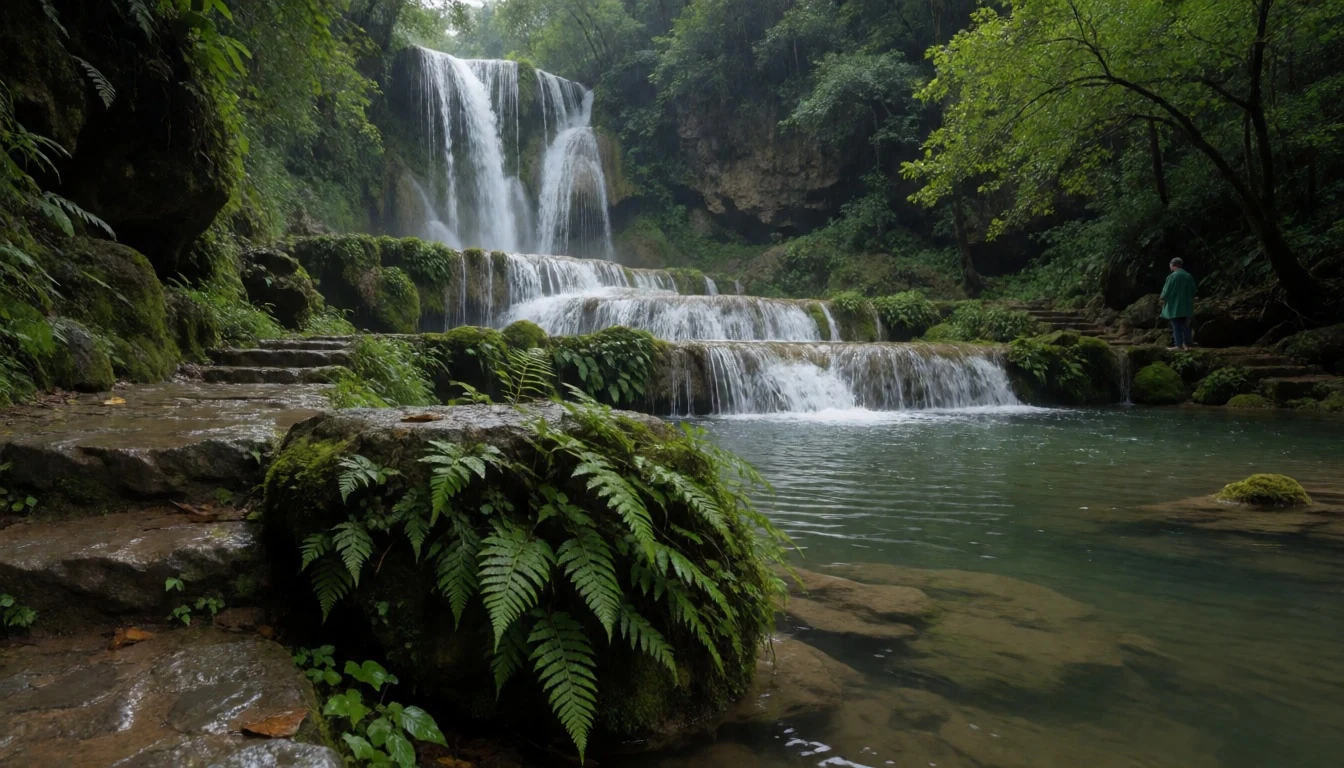
- Bản Áng pine forest — Bản Áng, near the tea plateau
A natural pine wood wraps around a pair of freshwater lakes here, with shaded paths that suit a slow walk or a bicycle ride. Nearby farms grow strawberries under cover and welcome visitors in season. It is cooler under the trees than on the open tea hills, and easier on a hot afternoon.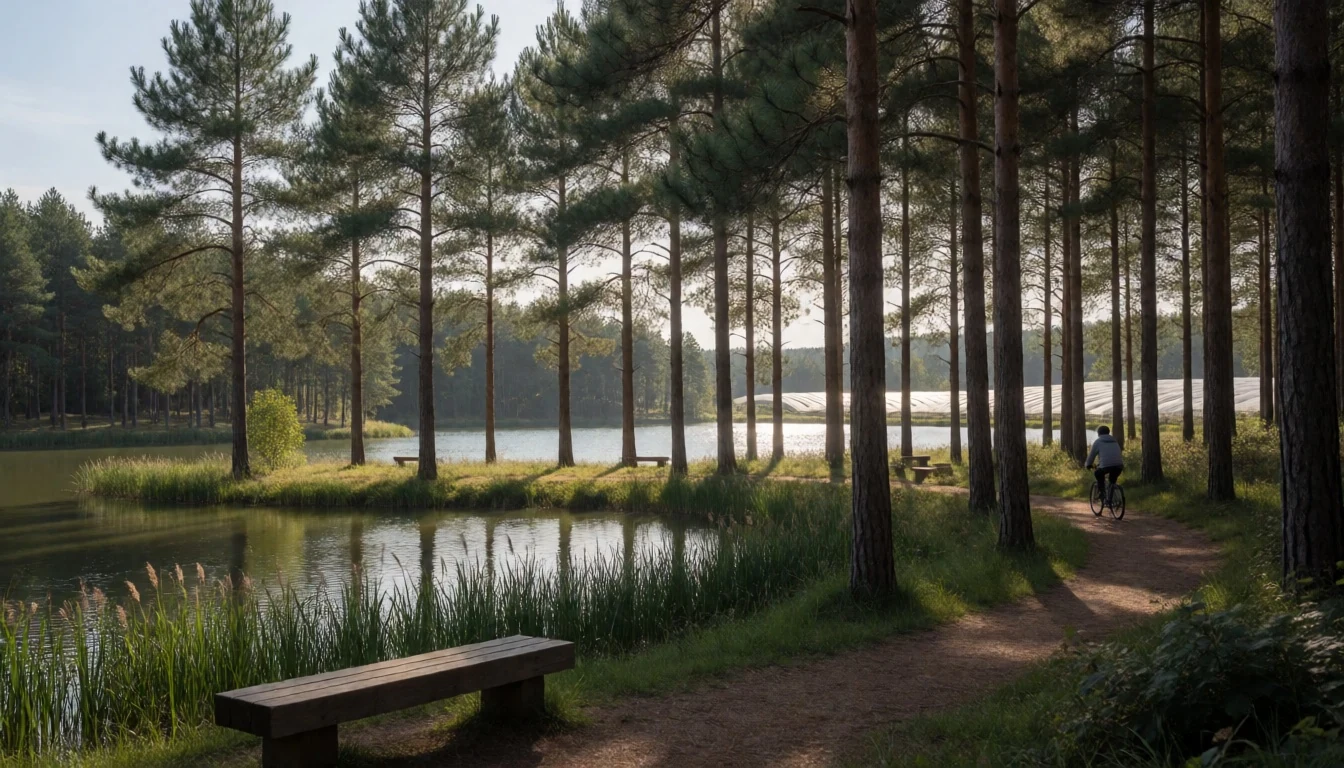
- Pha Luông peak — Southern edge of the district, near the Laos border
This limestone mountain rises to 2,000 m near the Vietnam–Laos border and appears in Quang Dũng's poem Tây Tiến, which many Vietnamese learn at school. Trekking here is a serious day out: weather changes fast, so go with a local guide, start early and carry water and a rain layer.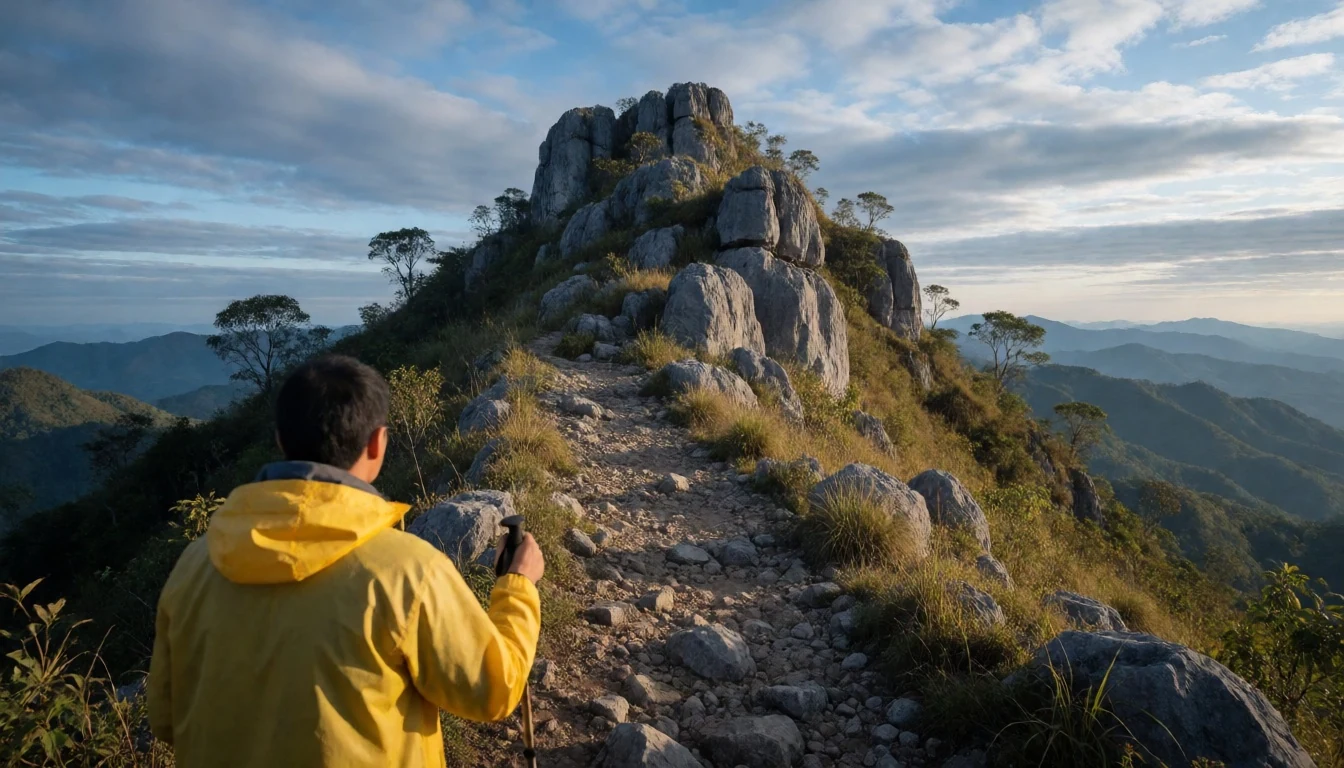
Culture
Moc Chau's cultural life is mainly Tai, with Mường and Hmong neighbours. Black Tai and White Tai communities have long lived in the district, and the area's name appears in Tai epics such as Táy pú xớc and Quắm tố mướng. A local legend explains the old border between the Tai and the Xá peoples through a horse race: the Tai entered a newborn foal, won, and pushed the Xá back towards Hòa Bình. Grass horse racing is still held as an annual festival at Lunar New Year, a lively time to be in the district, though accommodation and roads get busy. Village houses, traditionally on stilts, are built around the family hearth, where guests are fed and offered rice spirit. Music, bamboo dancing and weaving remain part of community gatherings, and homestays in Tai villages are a good way to see them in a natural setting rather than a staged show. Beyond the villages, the town's modern identity rests on tea, milk and tourism, and the Vietnamese weekend crowd is as much a part of the atmosphere as the minorities the brochures advertise. Hosts appreciate small talk and a willingness to eat what is offered, even if only a taste. Ask before photographing people, especially women in traditional dress and children at village homes, and take your shoes off at a stilt-house doorway if the family does.
What to wear
Moc Chau's traditional dress belongs mainly to the Tai and Hmong communities. Black Tai women wear a close-fitting blouse, the áo cỏm, often with silver buttons, over a long dark skirt, and a patterned scarf called the khăn piêu is worn on the head at festivals and weddings. The textiles are cotton and hemp, woven or dyed at home, with indigo as a staple colour. Hmong clothing uses hemp, indigo dye and embroidered or batik-style panels, with colours and patterns varying by group. These outfits come out for Lunar New Year, weddings, markets and performances. In daily life, people wear what is practical for farm work and cool weather: jeans, fleeces, rubber boots in the tea rows and conical hats in the sun. Young people in town dress like young people in Hanoi. Visitors should pack layers whatever the season. Evenings are cool all year and winter nights are cold, with fog and damp, so bring a proper jacket, a warm hat and thin gloves for the colder months. For summer, light long sleeves and a rain jacket cover sun and showers. Wear shoes with grip for waterfalls, tea paths and slippery red mud. There is no strict dress code, but cover shoulders and knees in villages and at any temple or shrine, and avoid dressing up in borrowed ethnic costume unless a host invites it.
What to eat
- Pa pỉnh tộp (grilled folded fish) — Restaurants serving Northwest Tai dishes around the town and tea plateau
Stream fish is slit along the back, packed with herbs, spring onion, dill, chilli and crushed mác khén pepper, then folded in a bamboo clamp and grilled over charcoal. The skin turns crisp and the flesh smells of smoke and pepper. A signature of Tai cooking in the Northwest.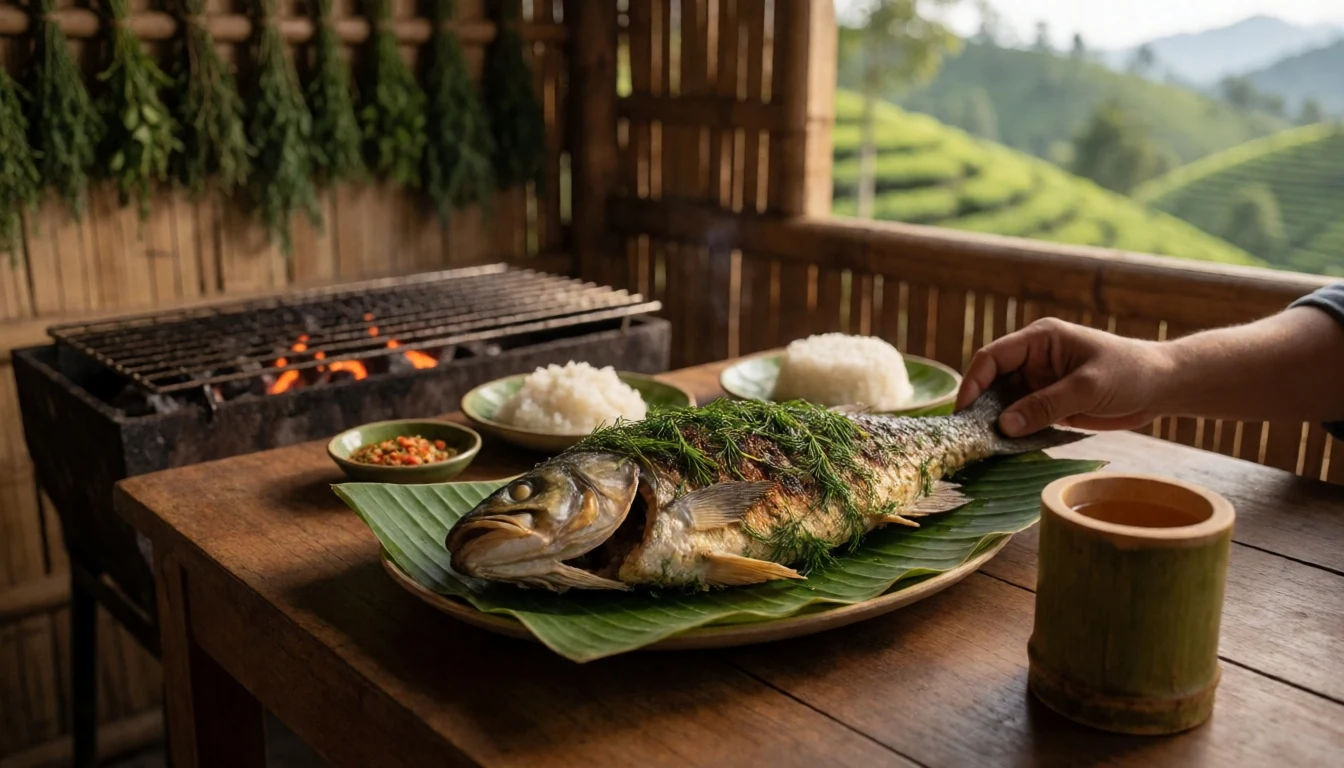
- Smoked buffalo meat — Local Tai restaurants and the weekend evening market at Bản Vặt
Buffalo meat is dried until it keeps a reddish centre, then grilled over charcoal or steamed, pounded into shreds and dipped in a spicy chẳm chéo sauce. It is chewy, smoky and best shared as a starter, with sticky rice and a drink alongside.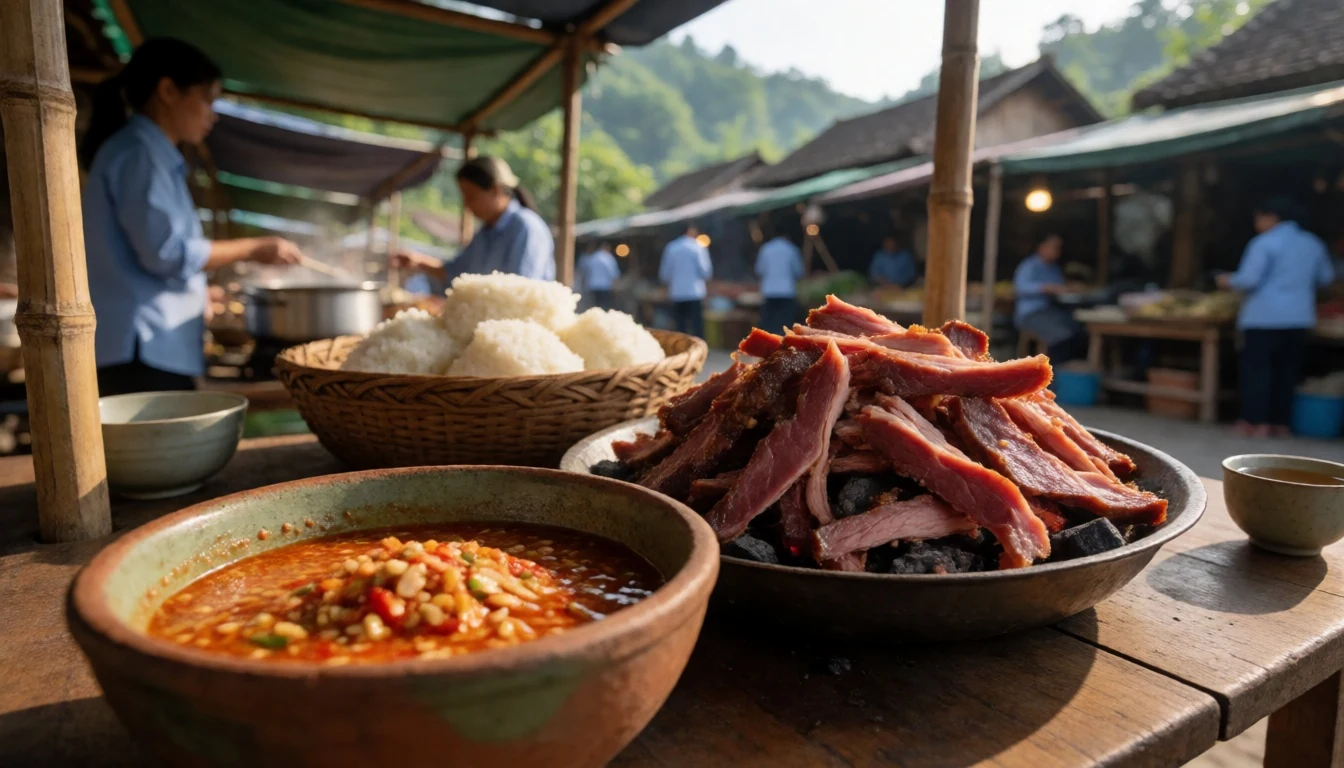
- Bamboo-tube sticky rice — Roadside stalls and markets along the main routes
Upland glutinous rice is soaked in spring water, packed into young bamboo and sealed with banana leaf. The tubes are roasted around charcoal until the bamboo chars. Crack one open for rice that is fragrant, slightly smoky and often eaten with salt or sesame. - Mộc Châu milk and yoghurt — Dairy shops and cafés around the town
The plateau's dairy farms supply fresh milk and yoghurt that are well known across the north. Yoghurt is often served cold, sometimes with a little sweetness, and is a welcome snack after a long walk. Milk tea and milk-based drinks also appear on menus. - Mộc Châu plums — Fruit stalls in the plum valleys and the town market
The local plum is eaten fresh when in season, and also appears dried, pickled or as wine and syrup. Flavours range from sharp to sweet. Packed fruit makes an easy souvenir, but check what is seasonal before you plan around a particular product.
Plan it
Best time. February–March for plum blossom and fresh green tea hills, and October–November for clear, cool days. December to February is cold with heavy fog, and the rainy season runs from June to August, when roads can be affected by landslides.
How long. 2–3
Getting there. Fly to Hanoi, then continue by road: the main highway west via Mai Châu reaches Mộc Châu, about 200 km, in roughly half a day of steady driving. Buses and hired cars with drivers serve the route; ask your accommodation about current services. Within the district a motorbike or hired car makes the scattered sights easier to reach.
Budget. low
Tips
- Visit tea hills and viewpoints early in the morning, before the weekend day-trippers arrive
- In winter, drive only in daylight and take extra care on fog-bound mountain passes
- In the rainy season, check road conditions before heading along steep highways
- Carry cash for stalls and village markets, and wear layers for cool evenings
- Book homestays and rooms well ahead for the blossom weeks and Lunar New Year
Etiquette
- Ask before photographing people or entering a village home
- Take off shoes at a stilt-house door if your host does
- Take rubbish with you from viewpoints, waterfalls and tea paths
Nearby
Sources
- Wikidata Q6887452 (CC0)
- Wikipedia: Mộc Châu (town) (CC BY-SA 4.0)
- Wikivoyage: Moc Chau (CC BY-SA 4.0)
- Photo: View from the Moc Chau Plateau to the Hoa Binh Reservoir (Bradstokes) (CC BY 3.0)
- Photo: Seal of Mộc Châu Town (Manh2107) (CC0 1.0)
- Photo: Moc Chau (ToanNguyen) (CC0 1.0)
- Photo: Mộc Châu District, Vietnam (Linh Pham linharex) (CC0 1.0)


