Mihintale
Mihintale, Sri Lanka
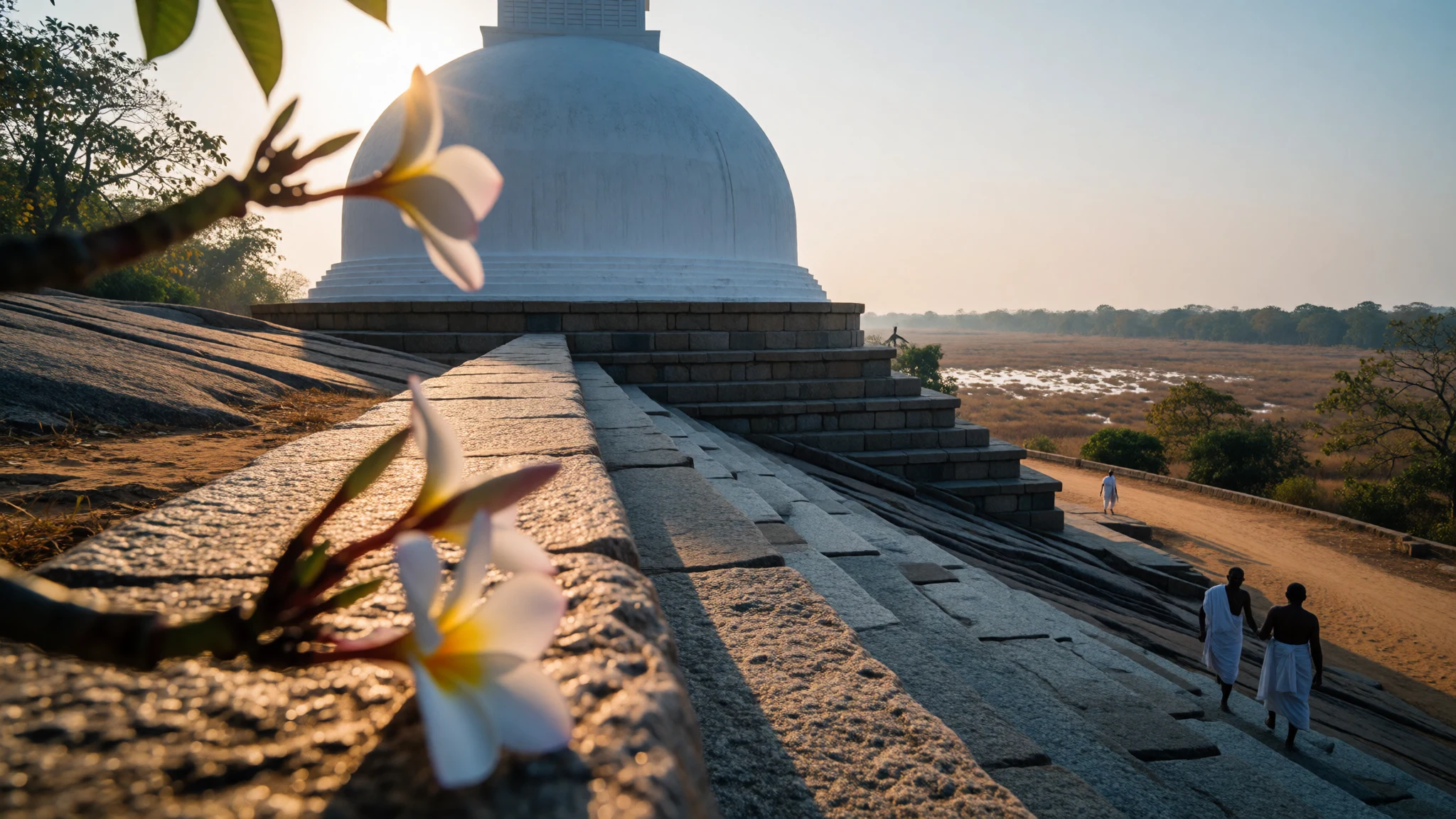
Mihintale is the hill where Sri Lankans say Buddhism arrived on the island, reached by long granite steps and rewarded with ruins, caves and wide views.
The place
Mihintale is a cluster of rocky hills in Sri Lanka's north central plain, about 12.5 km east of the ancient city of Anuradhapura and close to the road that runs on towards Trincomalee. The main peak rises to roughly 300 m, which does not sound much, but it stands alone above flat, scrubby, tank-dotted country, so the view from the top is long and open. Wikidata simply classes it as a mountain; in practice it is a hill monastery, a pilgrimage site and an archaeological park all at once.
The visit is a climb through layers. Broad stone stairways lead up through frangipani trees to terraces holding ruined monastery buildings, a hospital site, refectory remains and several stupas. Higher up are boulders with cave shelters, and at the summit a white-domed stupa that catches the sun for miles. Pilgrims move up in a steady, unhurried stream, and monkeys and temple dogs watch from the walls.
The site feels calmer than many of Sri Lanka's headline sights. Most days it is quiet enough to hear birdsong between groups. The exception is the full-moon festival in June, when the hill fills with families in white. The dry zone is hot for much of the year, and the stone gives that heat straight back, so timing the climb matters more than anything else here. Most visitors pair Mihintale with Anuradhapura on the same trip, but it deserves its own unhurried morning.
Its story
Mihintale is tied in Sri Lankan memory to the arrival of Buddhism. The island's old chronicles, the Dipavamsa and the Mahavamsa, say that the monk Mahinda travelled from India and met King Devanampiyatissa here on the full-moon day of Poson, the month that falls in June. The meeting is remembered as the moment the king first heard the teachings. Every year pilgrims mark it by visiting both Anuradhapura and this hill.
Mahinda is described as a son of the Indian emperor Ashoka. Ashoka is said to have turned away from war after seeing the suffering it caused, and to have sent his own son to carry a message of peace to a friendly neighbour. The name Mahinda became Mihindu in Sinhala, and Mihintale means the plateau of Mihindu.
A well-loved version of the tale has the king out hunting a deer on the slopes. A voice calls his name and tells him to stop, and the monk steps out to speak with him. Whether read as history or legend, it explains why the place is treated with such reverence.
After the king's conversion, the hill grew into a monastic centre. Tradition credits him with a vihara and 68 caves for resident monks, and over time more monasteries and their supporting buildings spread across the slopes. Stone stairways were laid from early on to make the ascent possible. The ruins visitors walk past today are the remains of that long monastic life.
What to see
- The granite stairways — Base of the hill
The climb begins at the foot of the hill with wide, shallow granite steps, shaded in places by frangipani trees. They were built to let monks and pilgrims ascend in comfort, and they still serve that purpose. Pausing on the landings is part of the experience, as are the ruined terraces just off the route.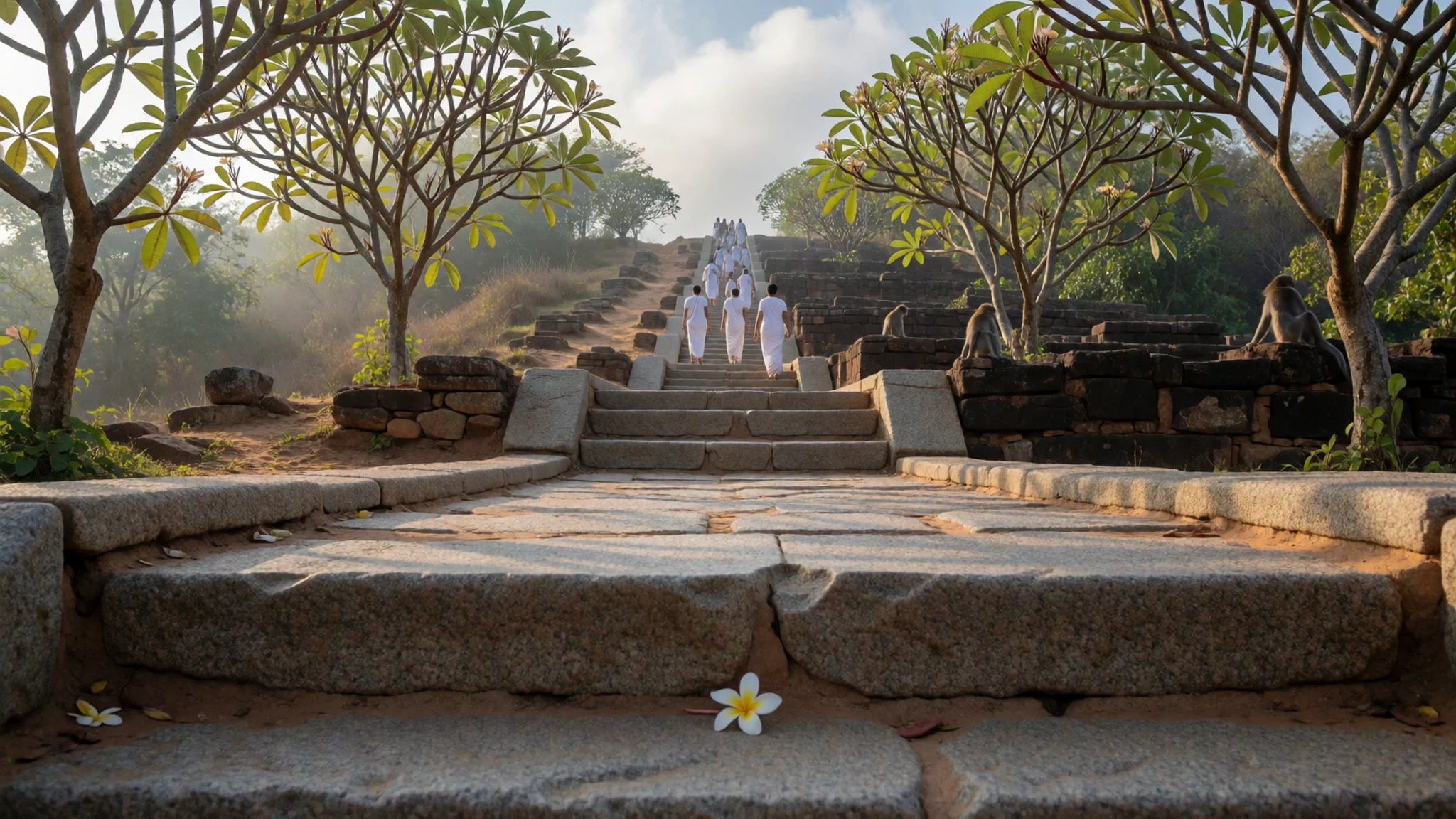
- Kantaka Chetiya — Middle terraces
This ruined stupa sits on a terrace partway up the hill and dates to the ancient monastic period. The interest is in the detail: carved stone panels around its base, and traces of painted decoration on the frontispiece. Wooded slopes behind give the site a quiet, enclosed feel compared with the open summit.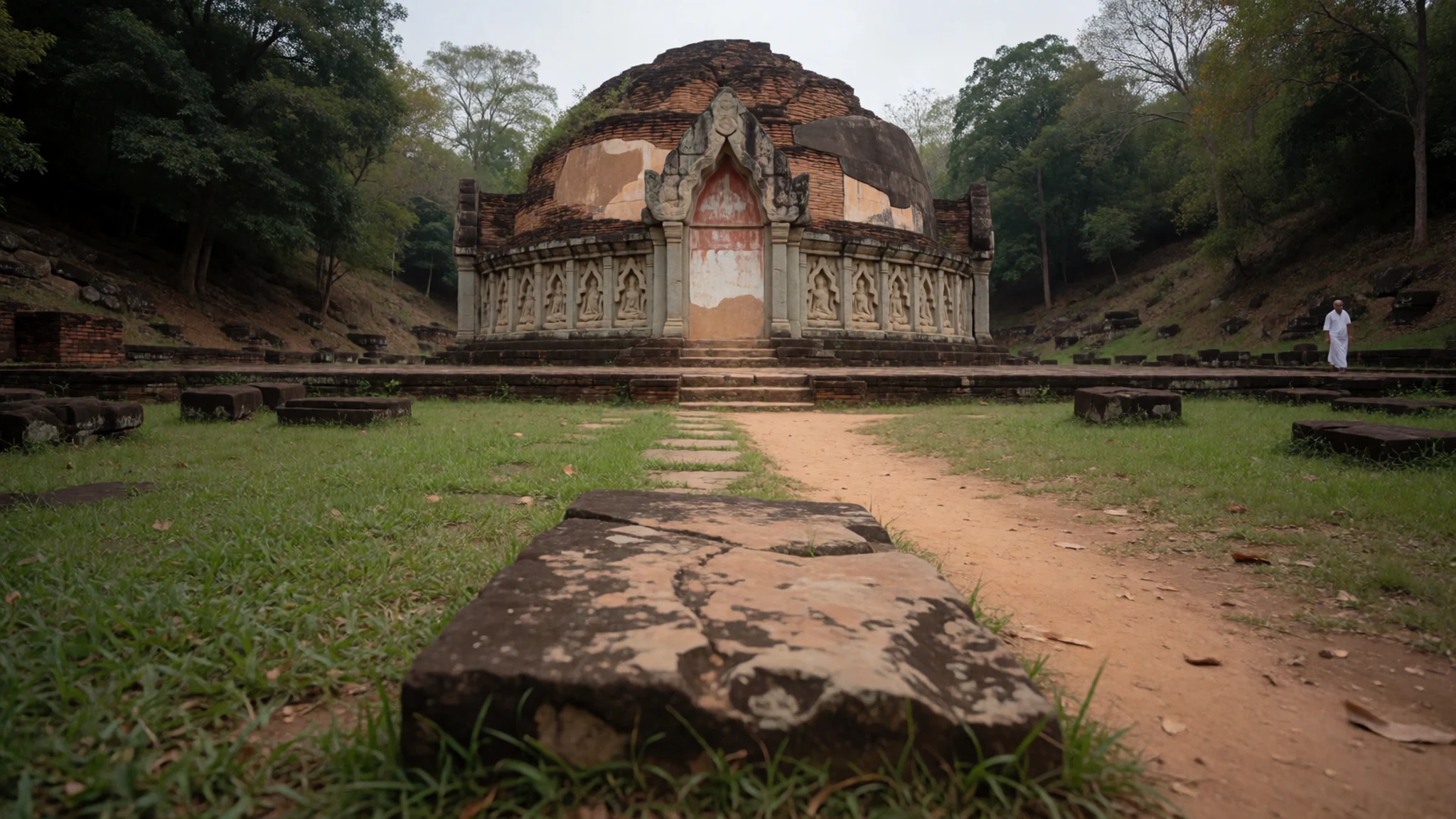
- Ambasthala Dagoba — Upper hill
A white stupa stands near the spot where Mahinda is said to have met the king. A statue and a broad platform sit in front, and pilgrims bring flowers and sit in silence. It is the most visited religious focus on the hill, and often the one where the early morning light is best.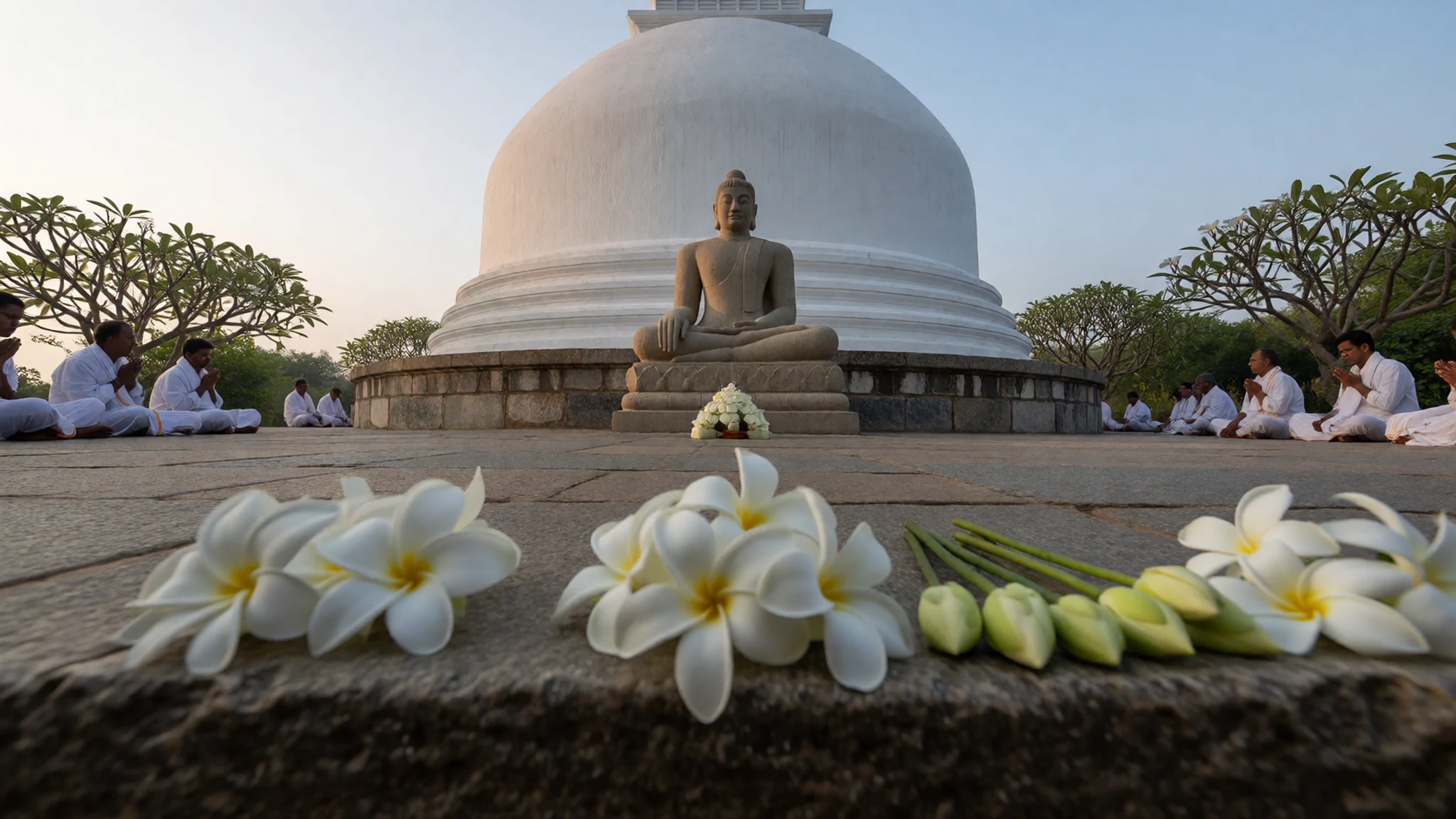
- Aradhana Gala (Mahinda's Rock) — Summit ridge
A bare granite outcrop reached by a short, steep stairway, traditionally the spot where Mahinda alighted. The rock offers one of the clearest views across the plain, with the stupas of Anuradhapura visible on a clear day. Take care on the steps; they are narrow and can be slippery.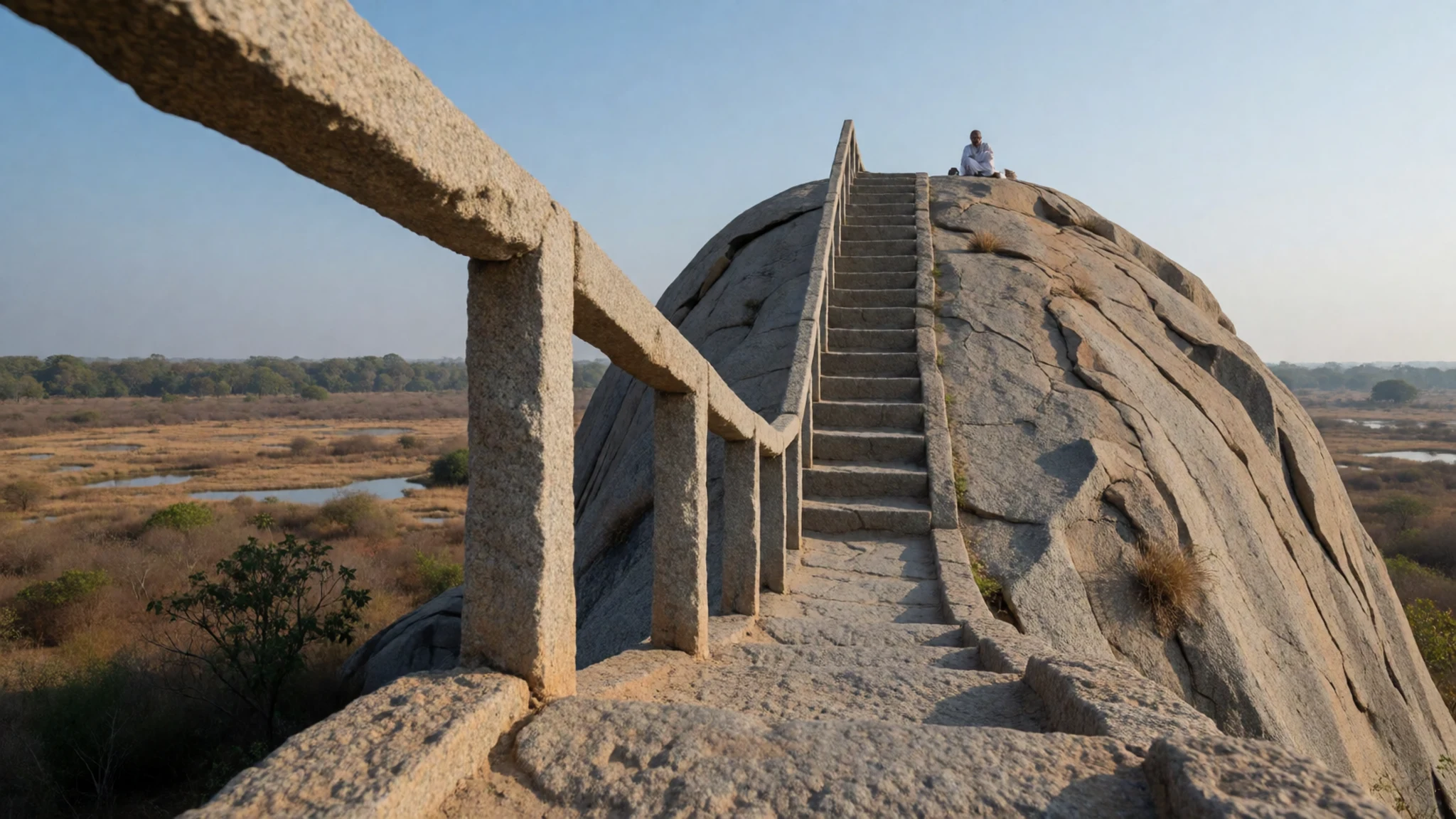
- Cave shelters and inscribed slabs — Terraces and cave area
Rock overhangs once used as monks' dwellings carry early inscriptions, and nearby stand granite slabs recording rules for the monastery issued under King Mahinda IV. Reading them is difficult without a guide, but their presence shows how organised monastic life here once was.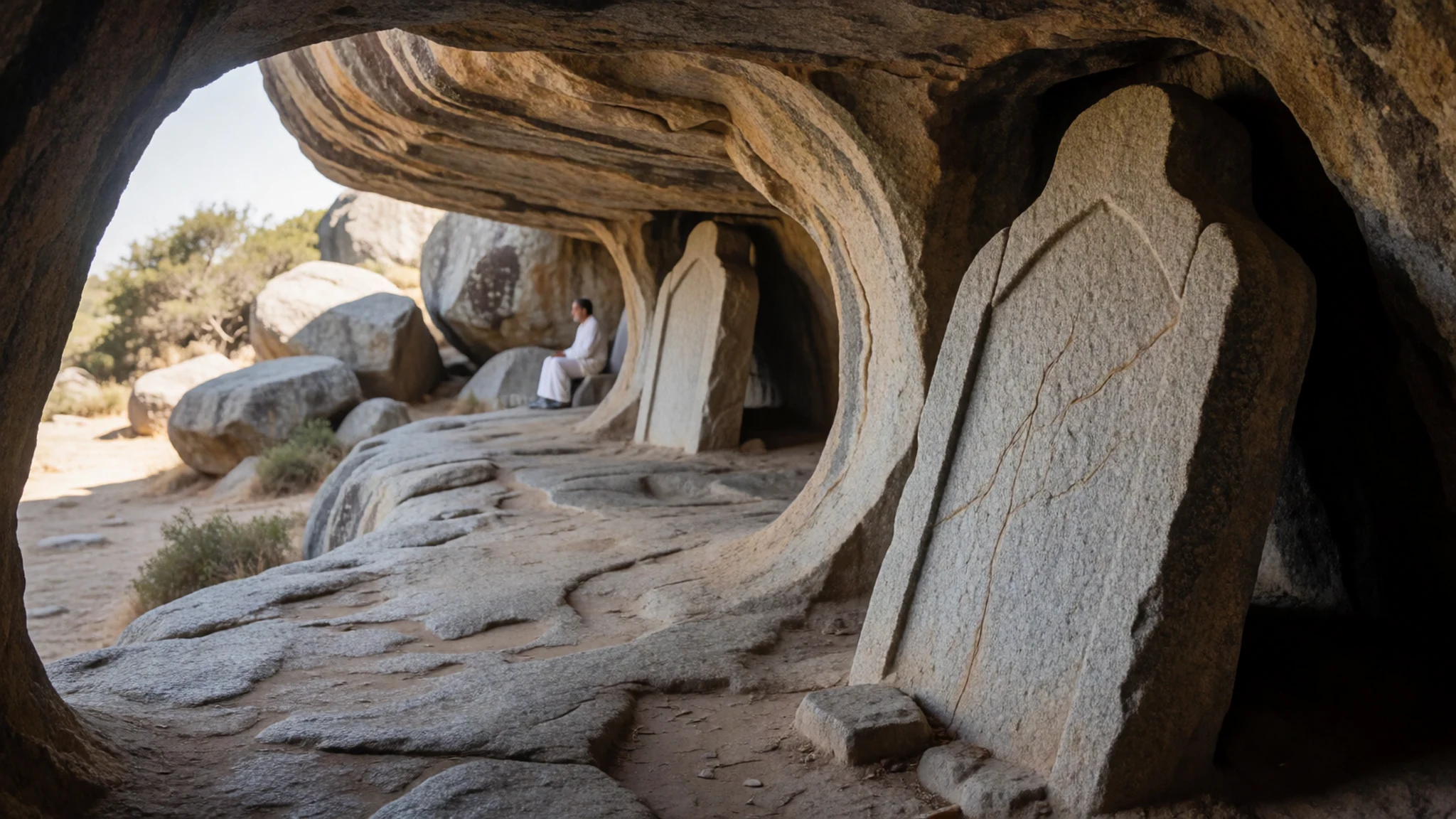
Culture
Mihintale is a living Theravada Buddhist place, and the culture here is one of quiet devotion rather than spectacle. Pilgrims climb with offerings of lotus, jasmine and frangipani, often dressed in white, and lay them at stupas and Bodhi trees. Many walk in silence or murmur chants as they go.
The hill's importance comes from its place in the island's religious memory. For Sri Lankan Buddhists it is where the faith was first taught, so a visit can feel closer to a homecoming than sightseeing. The full-moon day of Poson in June is the high point of the calendar, when whole families make the journey together and the terraces fill with lamps and the sound of recitation.
The ruins add another layer. Old monastery foundations, a hospital site and cave shelters show how ordinary monastic routines once ran, and local guides will point out features that are easy to miss alone. Monks still live and practise in the area, so there is a steady background of ordinary life alongside the pilgrimage.
Visitors are welcome, and most people are glad to explain what they are doing if asked politely. Noise and loud conversation are the usual way to cause offence, along with behaviour that treats sacred things as a backdrop. Quiet curiosity is always appreciated.
Remove shoes and hats before stepping onto the sacred terraces, cover your shoulders and knees, and never pose with your back to a Buddha statue.
What to wear
Mihintale sits in the Sinhala Buddhist heartland, where traditional dress is still part of religious and family occasions. Men may wear the sarama, a wrapped cotton sarong, often with a white shirt or the longer national dress. Women wear the saree, including the Kandyan osariya style, with its pleated fall and frilled blouse, usually in cotton or silk. Handloom cotton and batik are common, and white is the colour for temple visits and Poson.
In daily life most people wear ordinary modern clothes: trousers or shorts for boys and men, simple dresses, salwar-style outfits or sarees for women, and plenty of cotton shirts. Rubber sandals are the usual footwear. Near the hill, pilgrims in white stand out clearly from everyone else.
For visitors the sensible approach is to dress for both heat and respect. Light, loose, breathable clothes work best in the dry-zone sun. Shoulders and knees should be covered, so long skirts or trousers and a shirt with sleeves are better than vests and short shorts. Pale colours are suitable, and white is appreciated at festival times.
Footwear needs thought. Shoes must come off at the sacred areas, and the granite can become painfully hot by late morning. Sandals that slip off easily make this simpler, and thin socks help where allowed. A hat, sunglasses and a scarf for shade are useful on the climb, though hats must be removed at shrines. Bring a small bag for carrying shoes.
What to eat
- Rice and curry — Small local eateries along the Anuradhapura road
The everyday meal of Sri Lanka: rice with several small curries, usually dhal, a vegetable, perhaps fish or chicken, and a coconut sambol. It is filling, mildly to fiercely spicy, and easy to find, particularly at midday.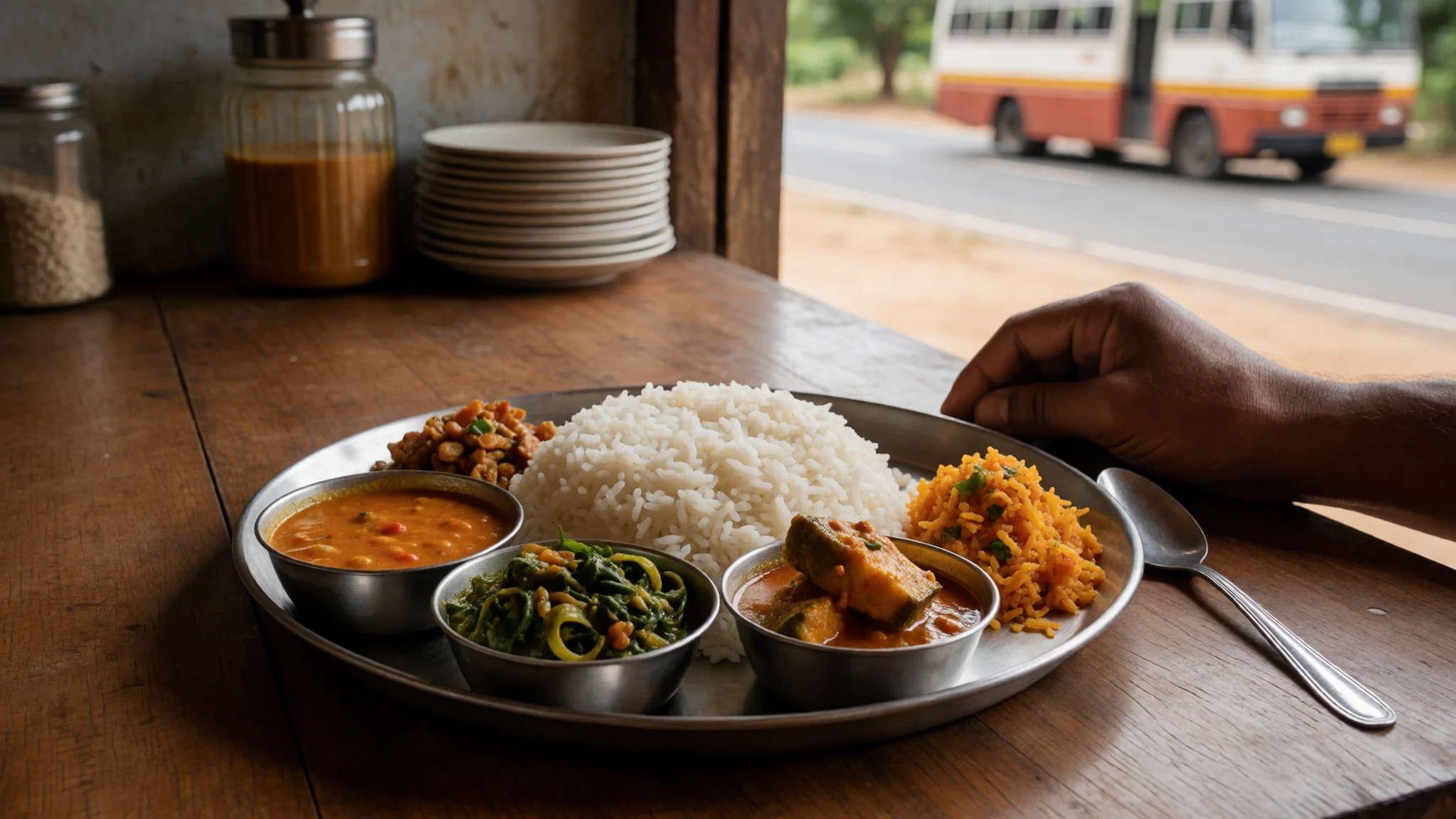
- Kiribath — Breakfast stalls and family homes, especially around Poson
Milk rice cooked with coconut milk and cut into diamonds, traditionally eaten on festival and special mornings. It is often served with lunu miris, a spicy onion relish that balances the richness.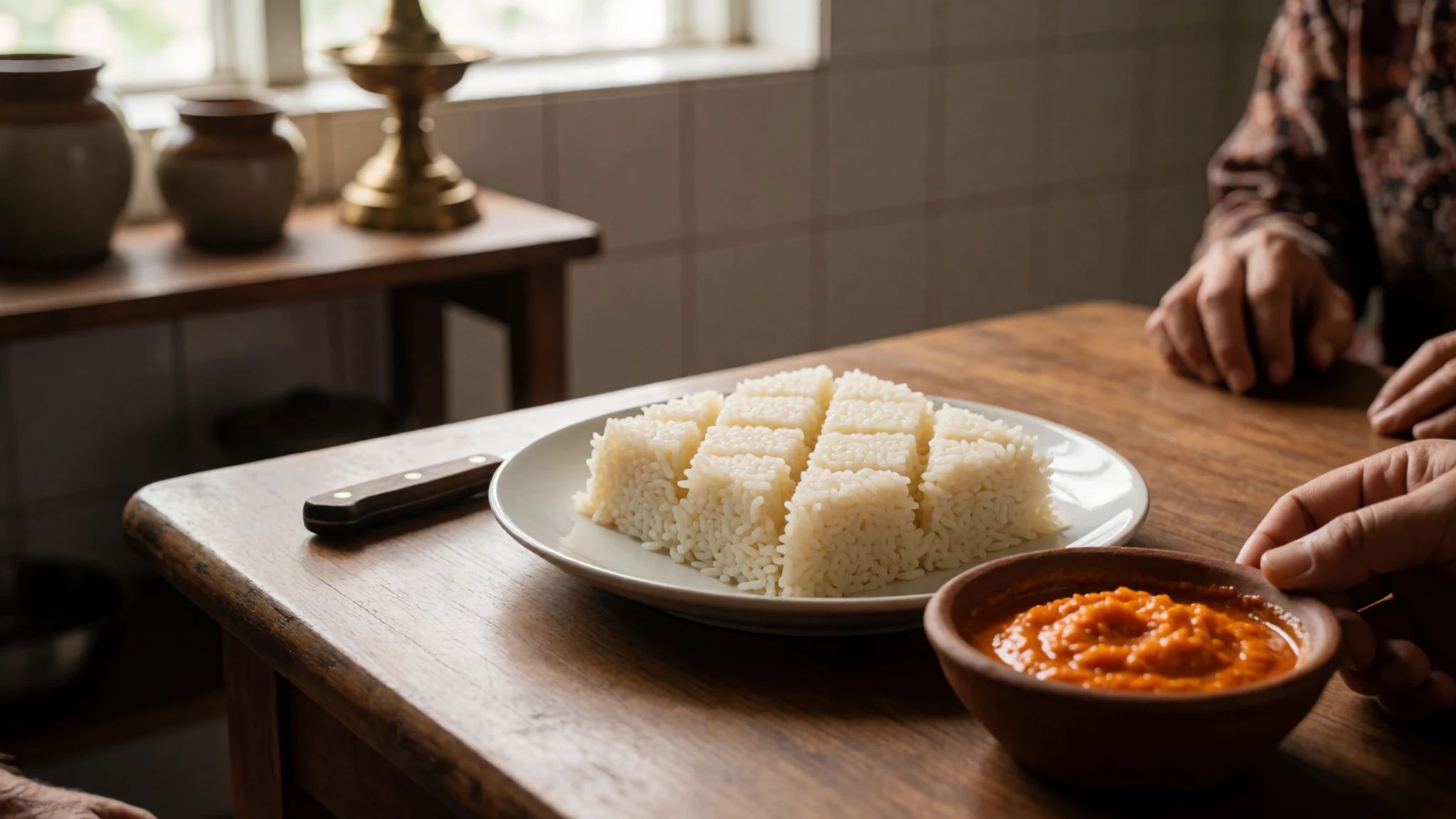
- Hoppers (appa) — Roadside eateries in Anuradhapura town
Bowl-shaped, crisp-edged pancakes made from fermented rice batter and coconut milk, often with an egg baked in the middle. They are a breakfast and evening staple, eaten with sambol or curry. - Kottu roti — Evening street food stalls in Anuradhapura
Chopped flatbread stir-fried on a griddle with vegetables, egg or meat and spices. The rhythmic clatter of the blades is easy to hear from the street. It is filling, inexpensive and usually eaten in the evening. - King coconut (thambili) — Roadside stands near the foot of the hill
A bright orange coconut sold fresh, with the top sliced off and a straw added. The water is sweet and cooling, and it makes a good reward after the climb down in the heat.
Plan it
Best time. January to March is generally drier and a little cooler, which makes the climb easier. June brings the Poson full-moon festival, with atmosphere but heavy crowds. The dry zone is hot for much of the year, and the north-east monsoon brings rain from around October.
How long. 1
Getting there. Fly to Bandaranaike International Airport near Colombo, then continue by road or rail to Anuradhapura. Mihintale is about 12.5 km east of the city, reachable by local bus or tuk-tuk. Check current schedules with the operator.
Budget. low
Tips
- Climb early in the morning, before the stone heats up
- Carry water and a hat, and wear shoes that slip off easily
- Check the official ticketing arrangements locally before arriving, and carry cash for small purchases
- Avoid the full-moon day of Poson unless you want the festival crowds
- Consider hiring a local guide to read the inscriptions and ruins
Etiquette
- Remove shoes and hats at sacred areas
- Cover shoulders and knees
- Speak quietly and never pose with your back to a Buddha statue
Nearby
Sources
- Wikidata Q1478212 (CC0)
- Wikipedia: Mihintale (rev 1383431538) (CC BY-SA 4.0)
- Mihintale - Stupa Ambasthala i Buda, Lohen11 (CC BY 4.0)
- Mihintale Rock, Dennis Sylvester Hurd (CC0 1.0)
- Inscriptions, Mihintale, Prof Ranga Sai (CC BY-SA 4.0)
- Kantaka Chetiya Vahalkada (CC BY 3.0)
- Frescos at Kantaka Cetiya, Prof Ranga Sai (CC BY-SA 4.0)
- Mihintale4, J. Ollé (CC BY 3.0)
- Mihintale Slab Inscriptions, Triedros (CC BY-SA 4.0)
- MIHINTALE 5, Lospiettos (CC BY 3.0)
- Wikivoyage (CC BY-SA 4.0)


