Meknes
Meknes, Morocco
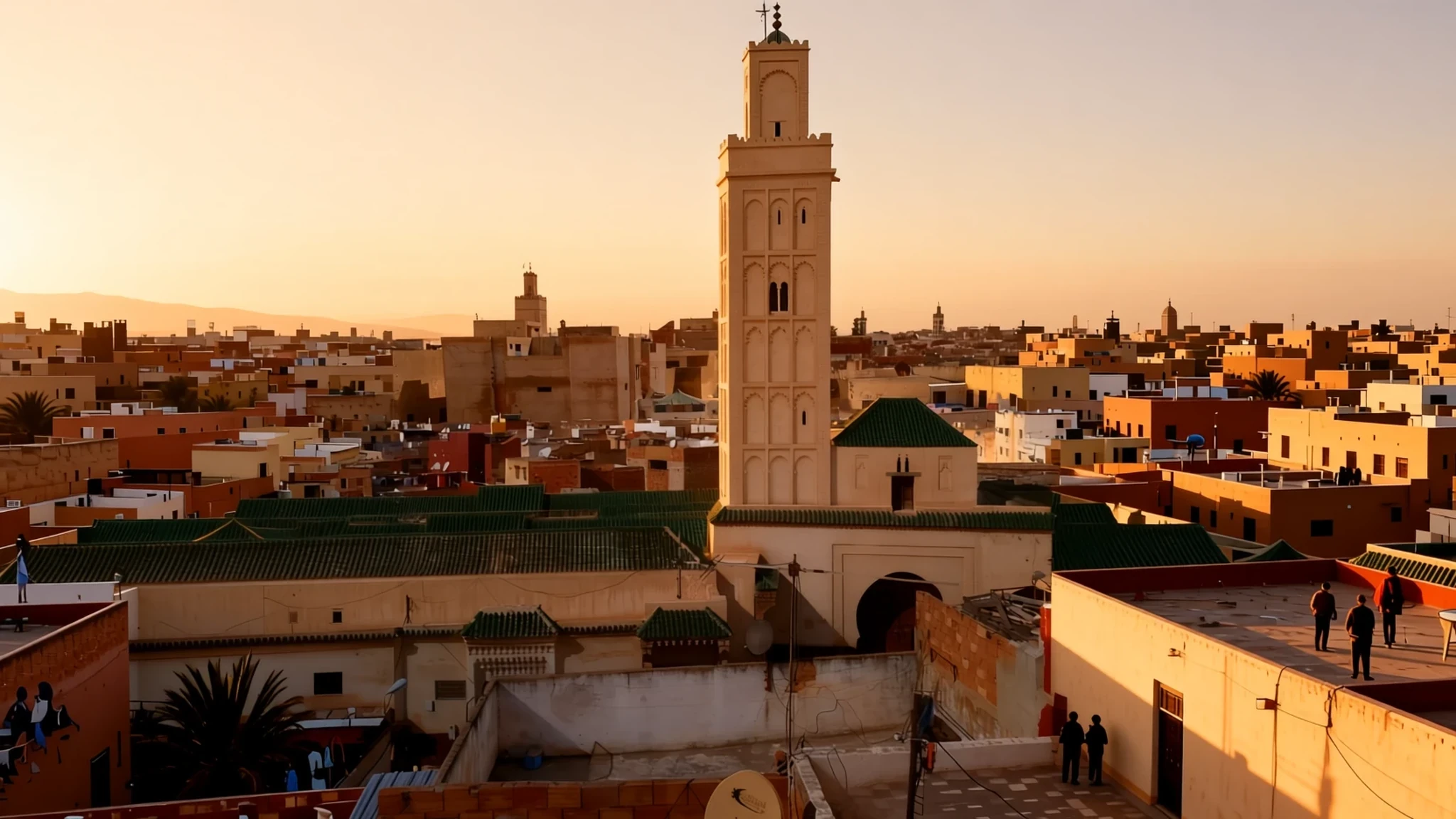
Meknes is Morocco's quieter imperial city, where a sultan's giant gates, stables and walls can be explored without the Fez crowds.
The place
Meknes sits in northern central Morocco at an elevation of 535 m, in the region of Fez-Meknes. It is one of the country's four imperial cities, and the facts record a population of about 551,000, which makes it a working regional centre rather than a museum. Two parts of town matter to a visitor. The old medina, with its walls and gates, lies on one side of a valley; the ville nouvelle, laid out with wide roads, cafés and snack bars, lies on the other. The two are close enough to walk between, though many people take a short taxi ride.
The position helps explain the city's importance. Cedar forests and the hills of the Middle Atlas rise to the south and south-east, towards Ifrane and Azrou. Fez is a short way east, while Rabat and Casablanca lie to the west, so Meknes is an easy stop on the main line across the country.
The climate is Mediterranean with continental touches: cool winters, and hot days from June to September. Afternoons usually run 10–14 °C warmer than the nights. That swing matters when packing, because evenings in spring and autumn can feel chilly after a warm day.
The mood is calmer than in Fez or Marrakech. Touts are fewer, the medina is workaday, and the main square, Lahdim, is a place for tea and watching families pass. Meknes rewards slow walking, and a visit works best as a base for two or three unhurried days.
Its story
Meknes began as a cluster of small, unfortified villages settled by a Berber tribe, the Miknasa, around the 10th century. The name comes from them. Nearby lay Volubilis, the Roman-era town that had been an early urban centre in Morocco long before.
In the 11th century the Almoravids built a fortified settlement just south of those villages, known as Tagrart. That fortress became the core of today's old medina. The Nejjarine Mosque is often said to be the city's oldest, and the Grand Mosque is believed to have Almoravid origins too.
The Almohads then besieged the fortress and destroyed the city. Early in the 1200s, the Almohad ruler Muhammad al-Nasir restored the town, rebuilding its ramparts and its main mosque. It enjoyed a period of prosperity until the Marinids seized it in 1244.
The great transformation came under Sultan Ismail, who ruled from 1672 to 1727. Son of the founder of the Alaouite dynasty, he made Meknes his capital and built an enormous palace complex, long fortifications and monumental gates. Much of what visitors walk past today, from the walls to the granaries, comes from his reign. When the court later moved away, the city settled back into the quieter, provincial life that still gives it its character.
What to see
- Bab Mansour — Medina, facing Lahdim Square
Bab Mansour is the grandest of the city's many gates and the one most people photograph first. Its tall arch, tilework and carved stone face the medina's main square. Visit in early morning light, when the stonework glows and the square is quiet, then pause for a coffee opposite.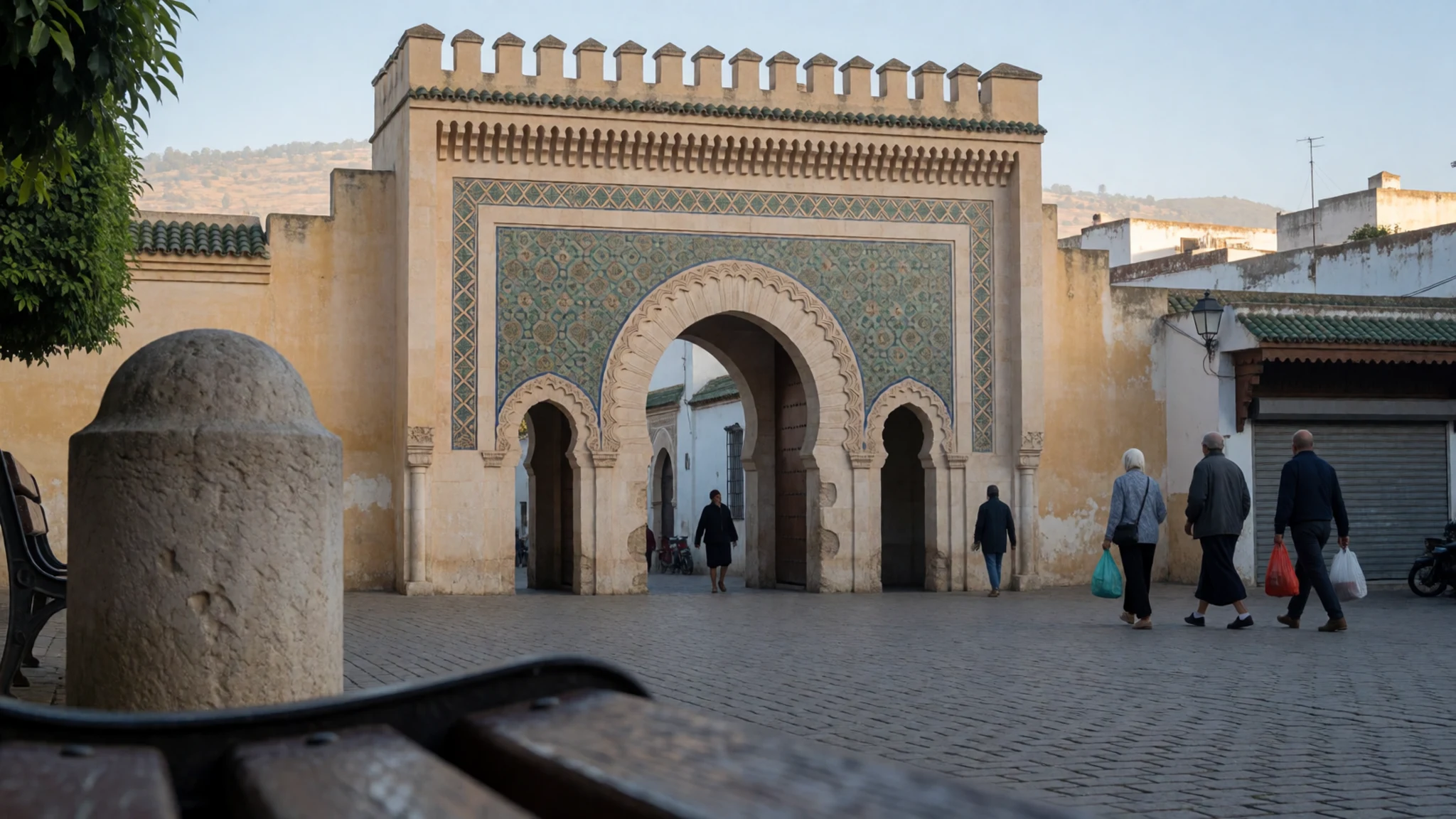
- Lahdim Square — Medina
Lahdim Square is the medina's main open space, redone with fresh brickwork. It is less boisterous than Marrakech's famous square, but a few cafés and snack stalls around the edge make it a good place to sit, watch the evening crowds drift past and plan the next day.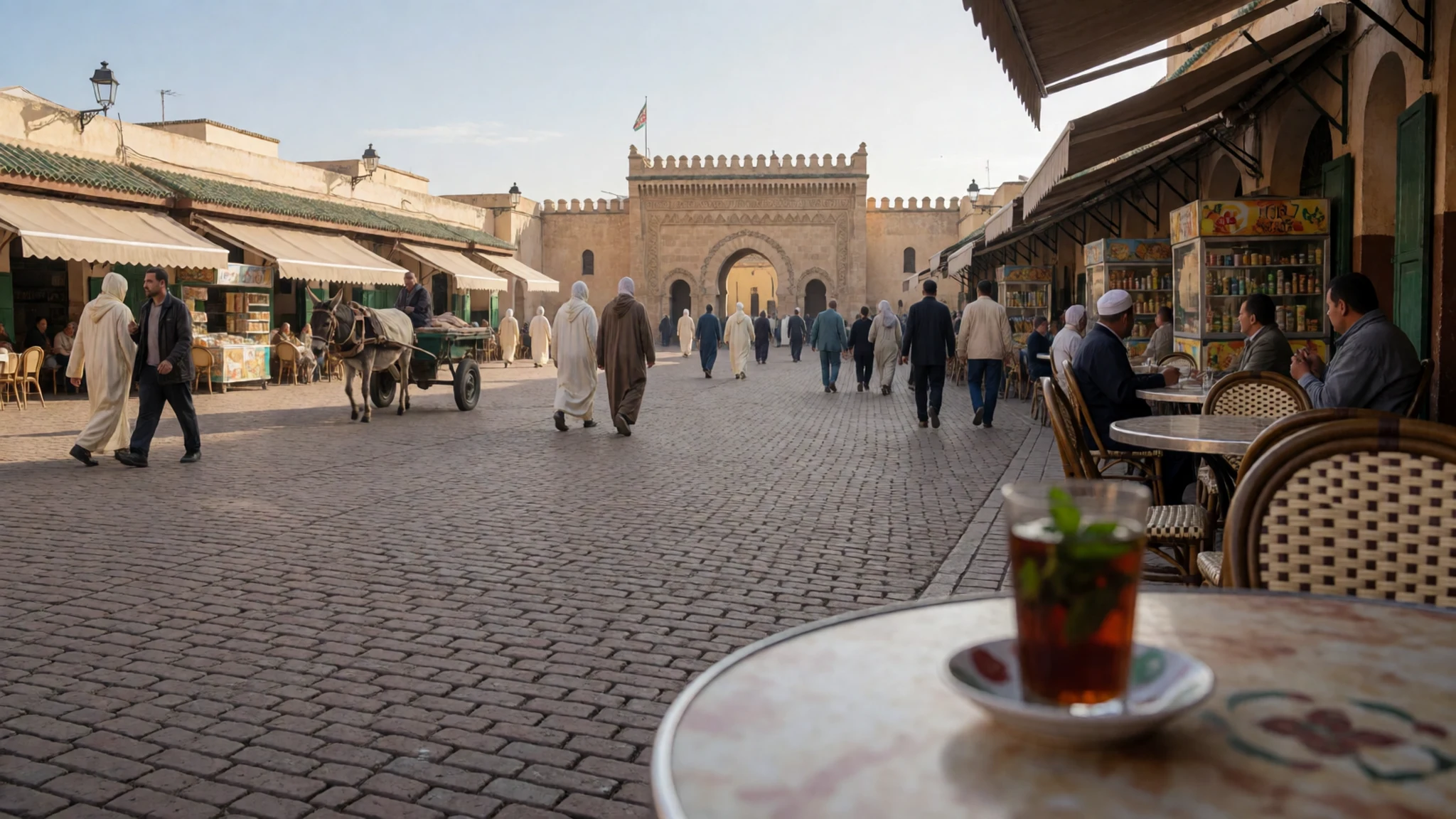
- Heri es-Souani — South of the medina, by the Agdal Basin
Heri es-Souani preserves enormous granaries and stables from Moulay Ismail's time, and gives a real sense of the scale of his ambitions. Vaulted halls and thick walls stand beside the large Agdal Basin, where you can sit quietly and imagine the horses and stores the palace once needed.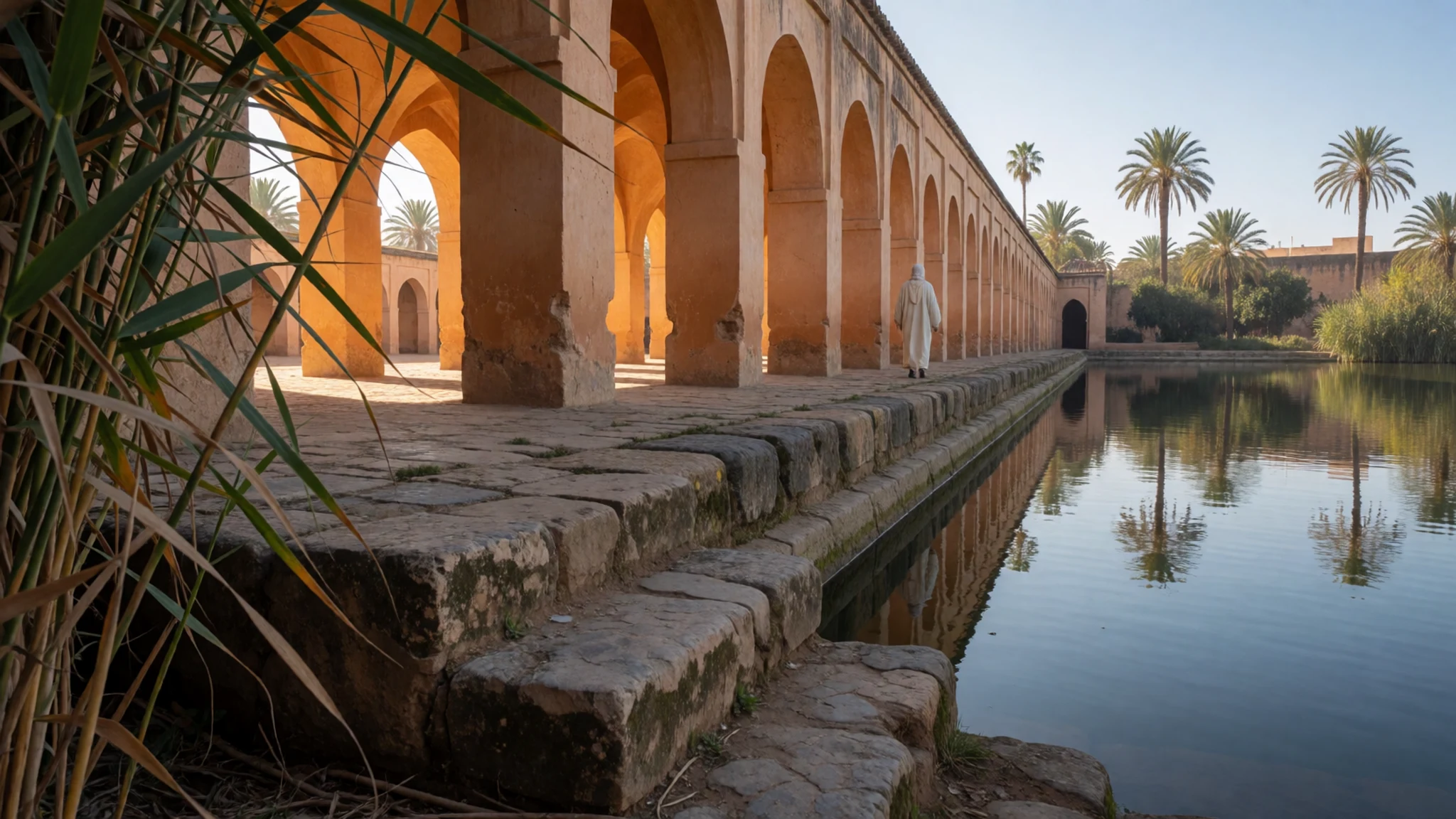
- Medersa Bou Inania — Medina
Medersa Bou Inania is a former Qur'anic school with carved wood, plasterwork and tiles around a calm courtyard. Visitors can explore all the floors, including the roof, which gives a fine view across the medina. Go early for quiet rooms and good light for photographs.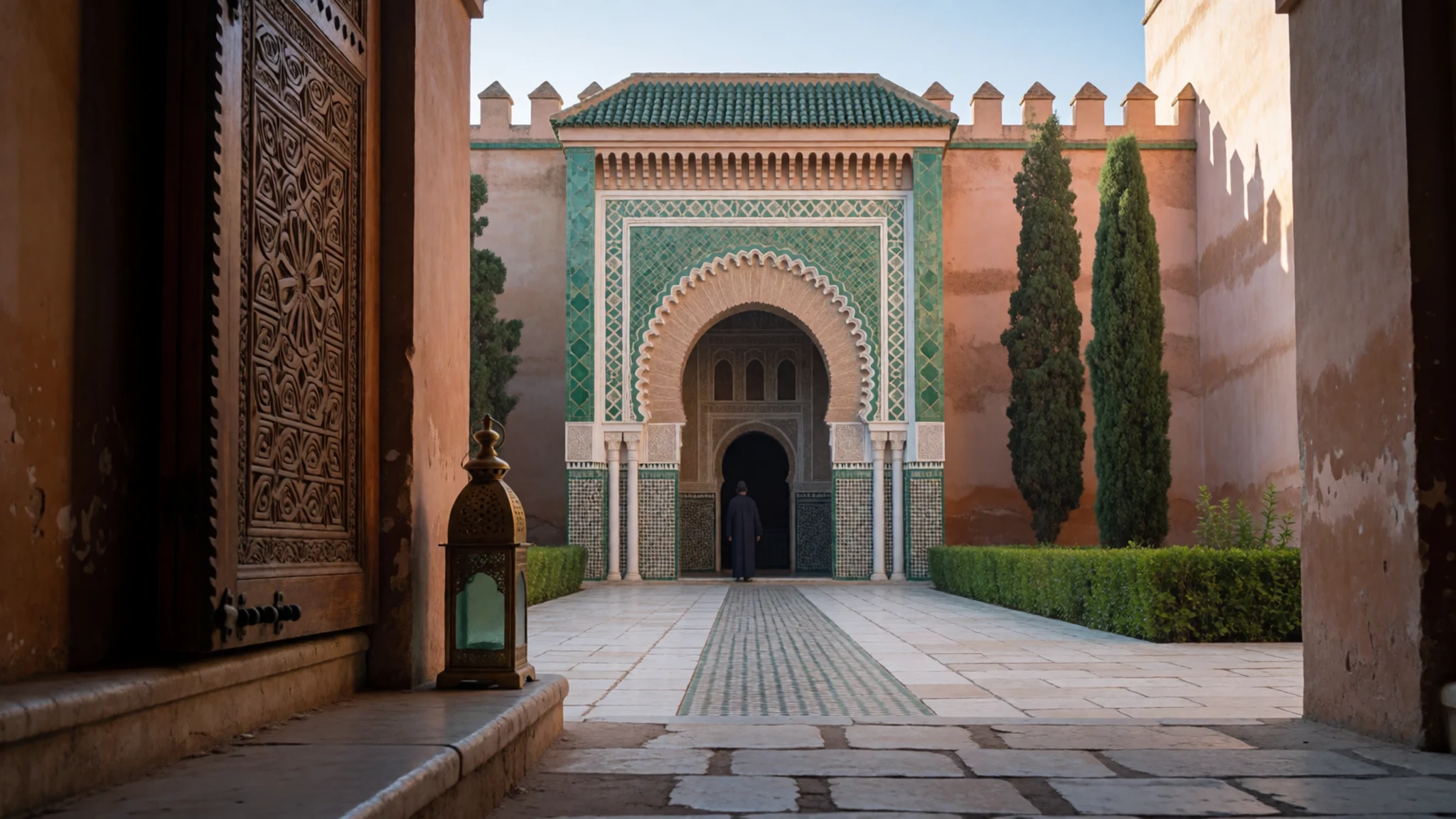
- Mausoleum of Moulay Ismail — Former imperial palace area
The mausoleum of Moulay Ismail lies on the south-west side of the former Dar al-Kebira Palace, between the inner and outer perimeter walls. It is a working place of respect for the sultan who shaped the city, with courtyards and decoration worth the visit. Dress modestly and keep voices low.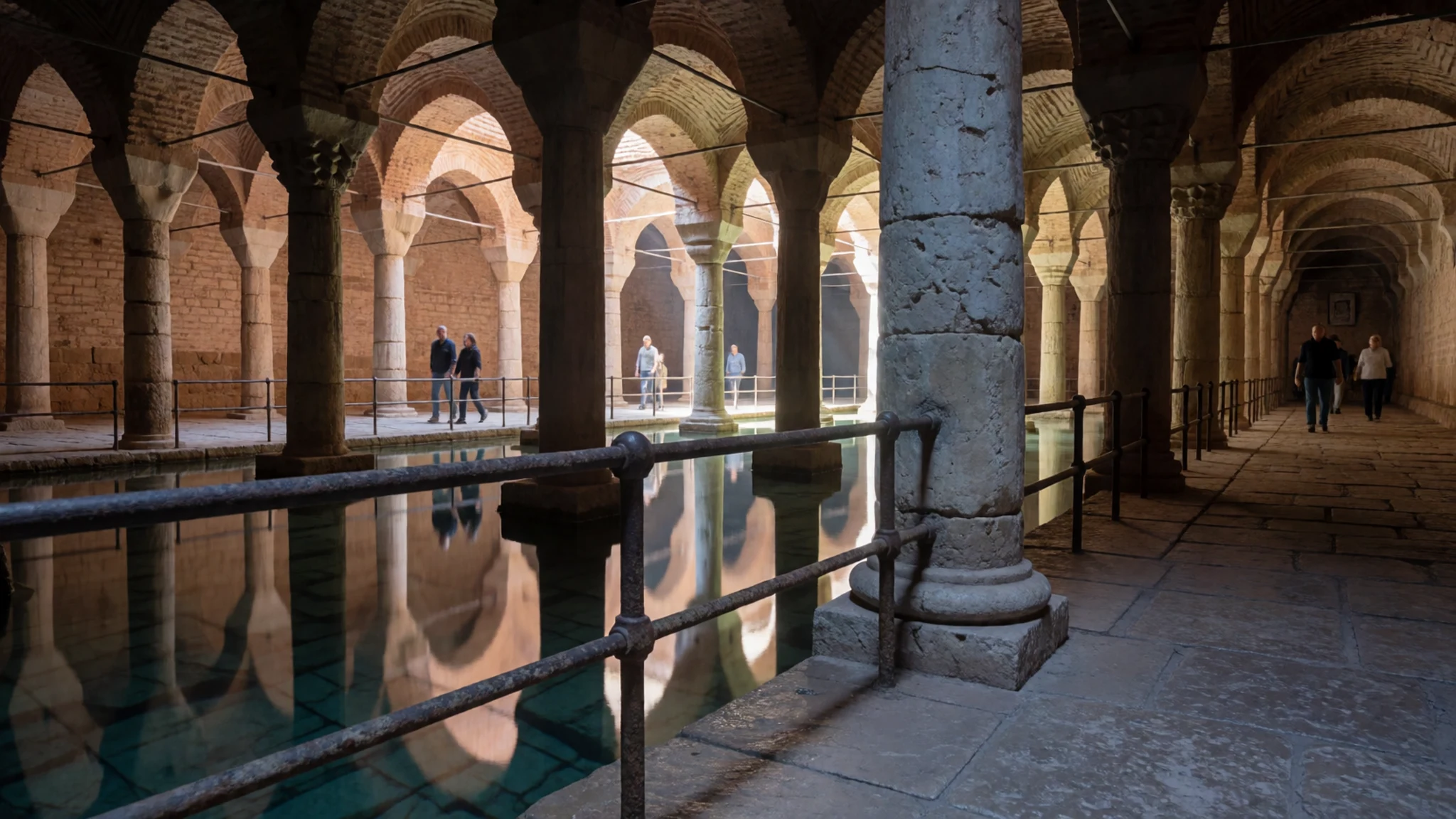
- Prison Kara — Imperial city
Prison Kara is a huge underground space where Moulay Ismail is said to have held prisoners. Stories about it are partly legend, but the vast, dim chambers are striking in themselves. It is cool inside on a hot afternoon; bring a small torch and watch your footing on uneven ground.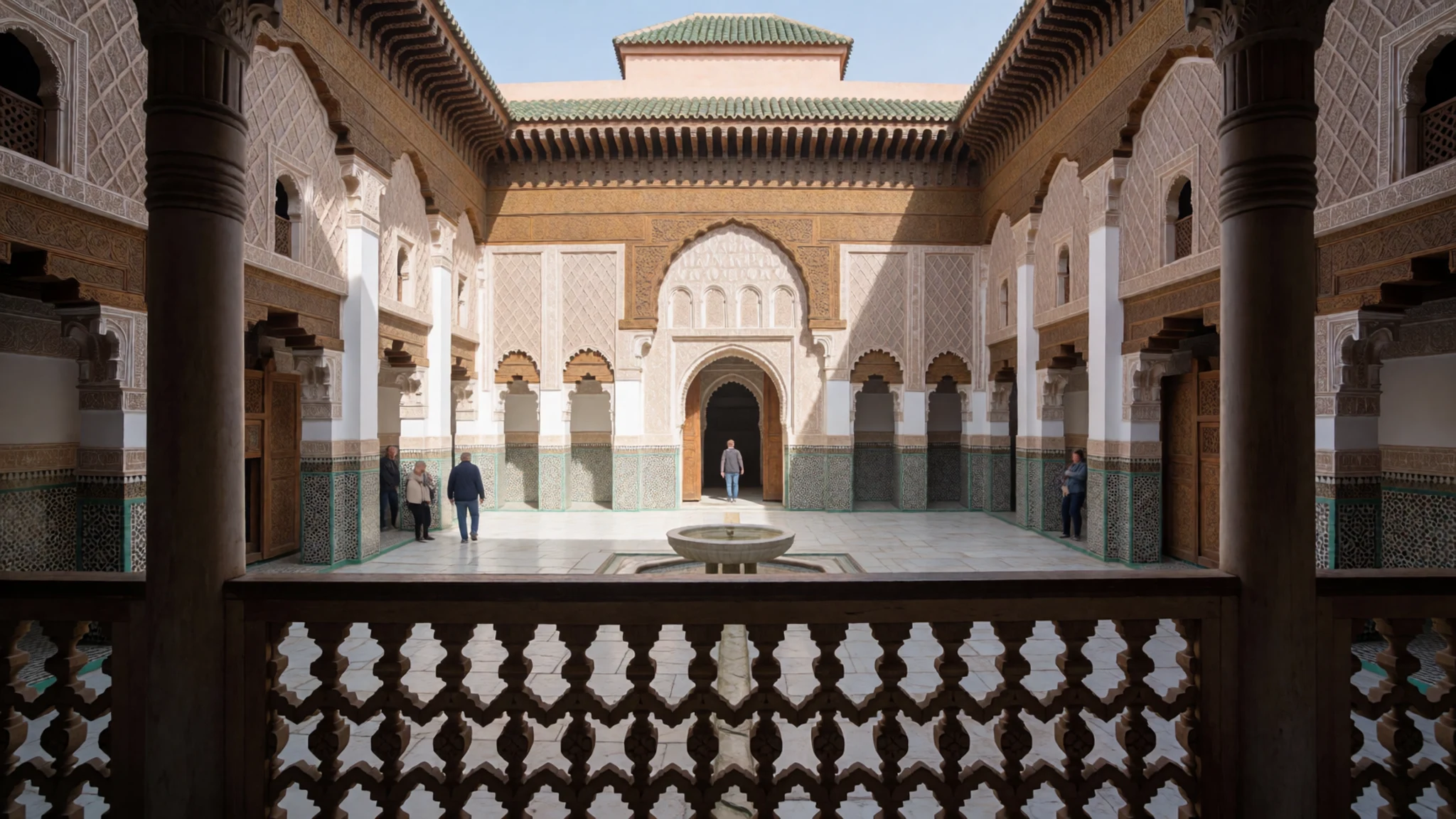
Culture
Meknes carries the stamp of one ruler more than most Moroccan cities. Moulay Ismail's reign gave it its gates, walls and royal buildings, and local pride in that imperial past is easy to sense. Yet daily life is more modest: families gather in the squares after sunset, shopkeepers close for Friday prayers, and the city is less used to tourists than Fez.
The city belongs to the wider Moroccan tradition of hospitality, where tea is offered as a courtesy and conversation often starts with a long exchange of greetings. Arabic and Moroccan Arabic are heard everywhere, with French widely understood in shops, cafés and on signs. Berber heritage runs deep here, starting with the Miknasa tribe that gave the city its name, and it shows in names, music and village markets in the surrounding hills.
Religion shapes the rhythm of the day. Calls to prayer carry across the medina, and during Ramadan eating places keep different hours, with a lively mood after sunset. Many mosques and the mausoleum are places of worship first and sights second, so quiet and respect matter.
Café culture is strong, especially in the ville nouvelle, where men and women both sit out with mint tea or coffee. Bargaining in the souks is expected but should stay good-humoured; a smile and patience go further than pressure.
Ask before photographing people, and in religious places dress modestly and follow any signs about where non-Muslims may enter.
What to wear
Traditional Moroccan dress in Meknes follows the national pattern. Men wear the djellaba, a hooded ankle-length robe of wool or cotton, often with leather babouche slippers; women wear djellabas too, along with the kaftan for celebrations and weddings, in silk, brocade or embroidered fabrics. The tarbouche or a light scarf sometimes completes the look on formal occasions, and heavier wool is common in winter.
On an ordinary day in the city, most people wear a mix of the two. Young people in the ville nouvelle favour jeans, trainers and shirts, while older residents and many women choose a djellaba for the market or Friday prayers. Headscarves are common but not universal, and styles vary widely.
Visitors should dress for the climate and for respect. Summers from June to September are hot, so light, loose cotton or linen that covers shoulders and knees is both comfortable and polite. Winters are cool and evenings can be sharp, so bring a warm layer and a light waterproof. Women do not need to cover their hair, but a scarf is handy for the mausoleum and any mosque area. Shorts and sleeveless tops are fine in a hotel pool but draw attention in the medina.
Footwear matters more than people expect. Medina lanes are cobbled, uneven and sometimes wet, so wear closed, flat, comfortable shoes that slip off easily for places where shoes are removed.
What to eat
- Harira — Local eateries in the medina and ville nouvelle
Harira is a thick tomato soup with lentils, chickpeas and herbs, eaten especially at sunset during Ramadan but available year-round. It is filling, cheap and a good first order. Look for it at local eateries in the medina and along Rue Antsirape.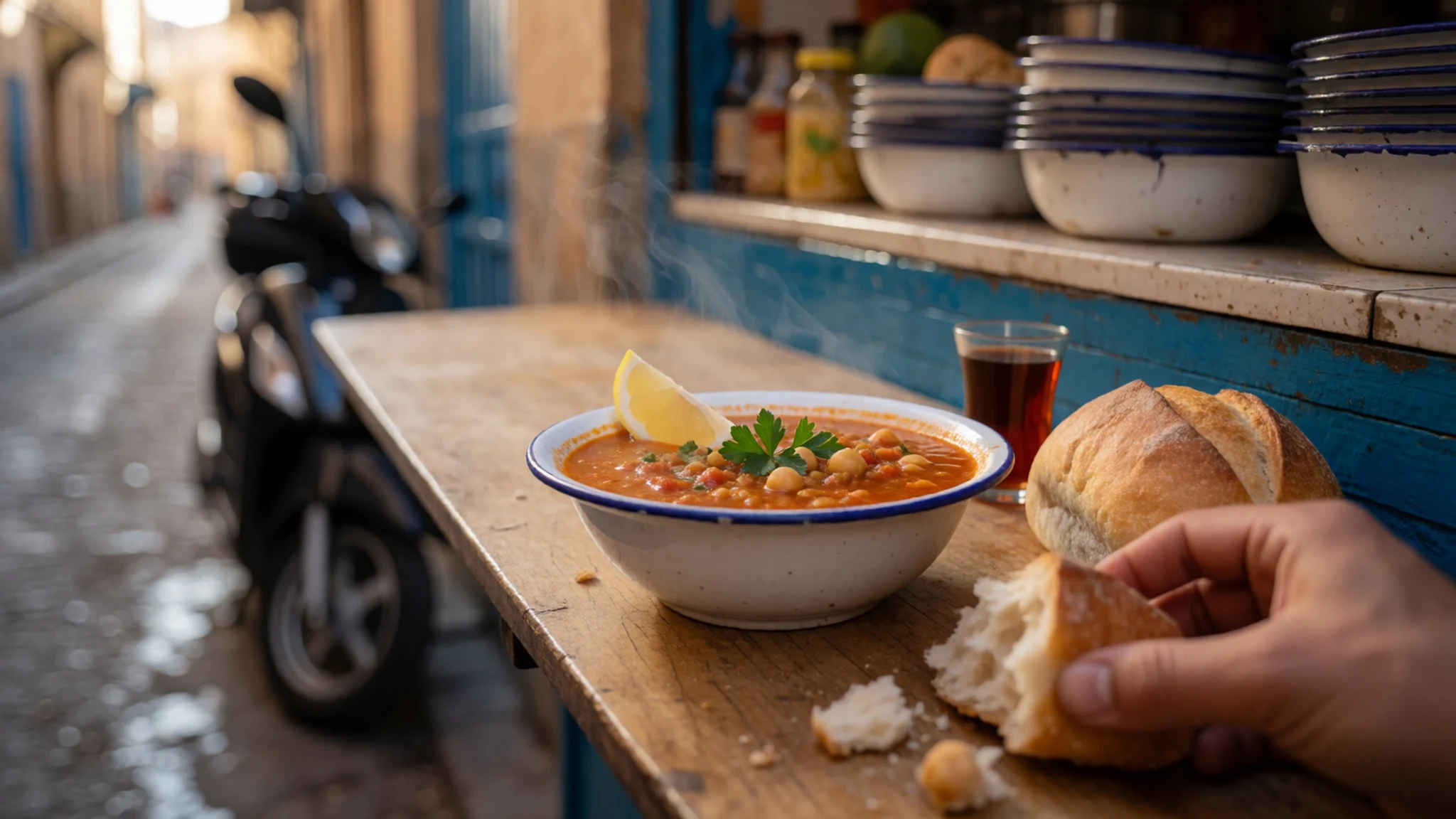
- Ma'aqouda — Popular Meknassi restaurants and snack counters
Ma'aqouda is a local potato fritter, often tucked into bread with hot sauce, and a favourite snack of Meknes. It is crisp outside and soft within, simple and good value. Try it at the small counters and popular local restaurants near the medina.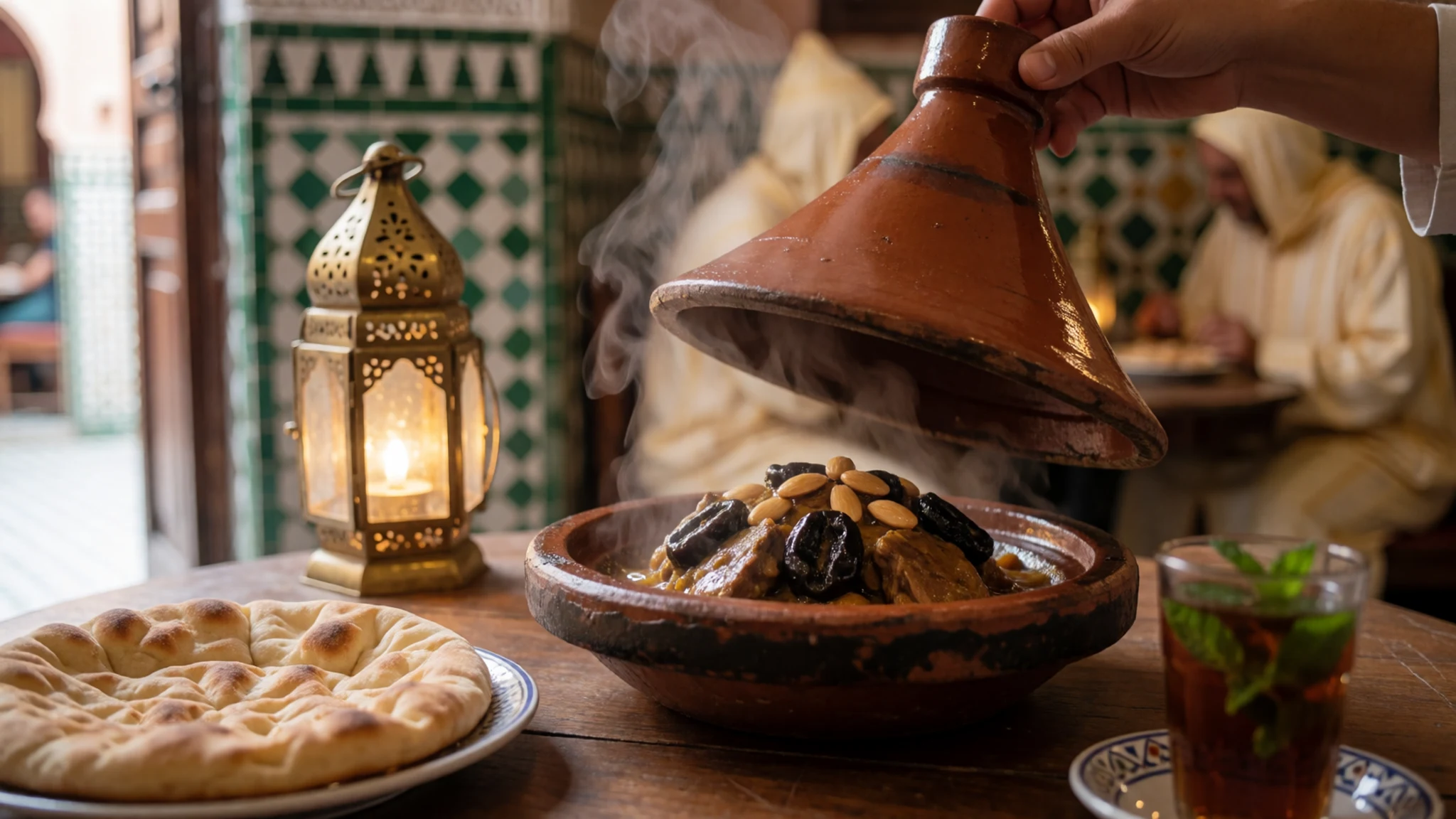
- Tagine — Restaurants along Rue Antsirape, ville nouvelle
Tagine is slow-cooked meat or vegetables, named after the conical clay pot it simmers in. Expect combinations such as chicken with olives and preserved lemon. It is served in family restaurants and eateries throughout the ville nouvelle. - Couscous — Local restaurants, especially on Fridays
Couscous, steamed semolina topped with vegetables and meat, is the traditional Friday meal in Morocco. Some restaurants serve it only that day, so ask ahead. A shared plate in a modest local place is the best way to try it. - Rotisserie chicken — Snack bars on Rue Antsirape
Rotisserie chicken is the everyday fast meal, roasted on spits and served with bread and chips. It is quick, cheap and reliable when you are tired from walking. Look for the busy grills and snack bars lining the main road in the new town. - Olives and pickles — Market near Bab Mansour, medina
The market by Bab Mansour is known for fresh produce, with heaps of olives in many varieties, pickles and sweets. Buy a small bag to taste as you walk, and ask the seller for recommendations on what is in season.
Plan it
Best time. March to May and October to November, when days are warm and evenings cool. Summer from June to September is hot, and winters are cool, so pack a layer.
How long. 2–3
Getting there. Meknes is on the Fès–Rabat railway line with two stations; the smaller Meknès-Amir Abdelkader station in the new town is closer to the medina. Fes is about 40 minutes by train, and Rabat a little over two hours. Buses and grand taxis also run from most Moroccan cities; check the ONCF website for current times.
Budget. low
Tips
- Visit the gates and the mausoleum early, before the afternoon heat
- Carry some cash for small cafés, snack stalls and taxis
- Check train times on the ONCF website before travelling
- Carry a bottle of water and a light torch for underground sights
- Combine Meknes with Fez or the Roman site of Volubilis nearby
Etiquette
- Dress modestly when visiting the mausoleum or mosques
- Ask before photographing people, especially women
- Agree a taxi fare before setting off if there is no meter
Nearby
Sources
- Wikidata Q178663 (CC0)
- Wikipedia: Meknes (rev 1383449906) (CC BY-SA 4.0)
- Wikivoyage: Meknes (rev 5410932) (CC BY-SA 4.0)
- Photo: Meknes, Morocco (Bernard Gagnon) (CC BY-SA 1.0)
- Photo: Bab Mansour in Meknes (Moleskine) (CC BY 4.0)
- Photo: Bab El Khemis (10saiss) (CC BY-SA 4.0)
- Photo: The Swani Cistern (10saiss) (CC BY-SA 4.0)
- Photo: Medina, Meknes (Ben Bender) (CC BY 3.0)
- Photo: Mausolée de Mulai Ismail (Pedro) (CC BY 2.5)
- Photo: Coat of arms of Meknes (Visma) (CC BY-SA 4.0)
- Photo: Inscription libyque (Dorieo) (CC BY 3.0)


