Mapu'a Vaea
Mapu'a Vaea, Tonga
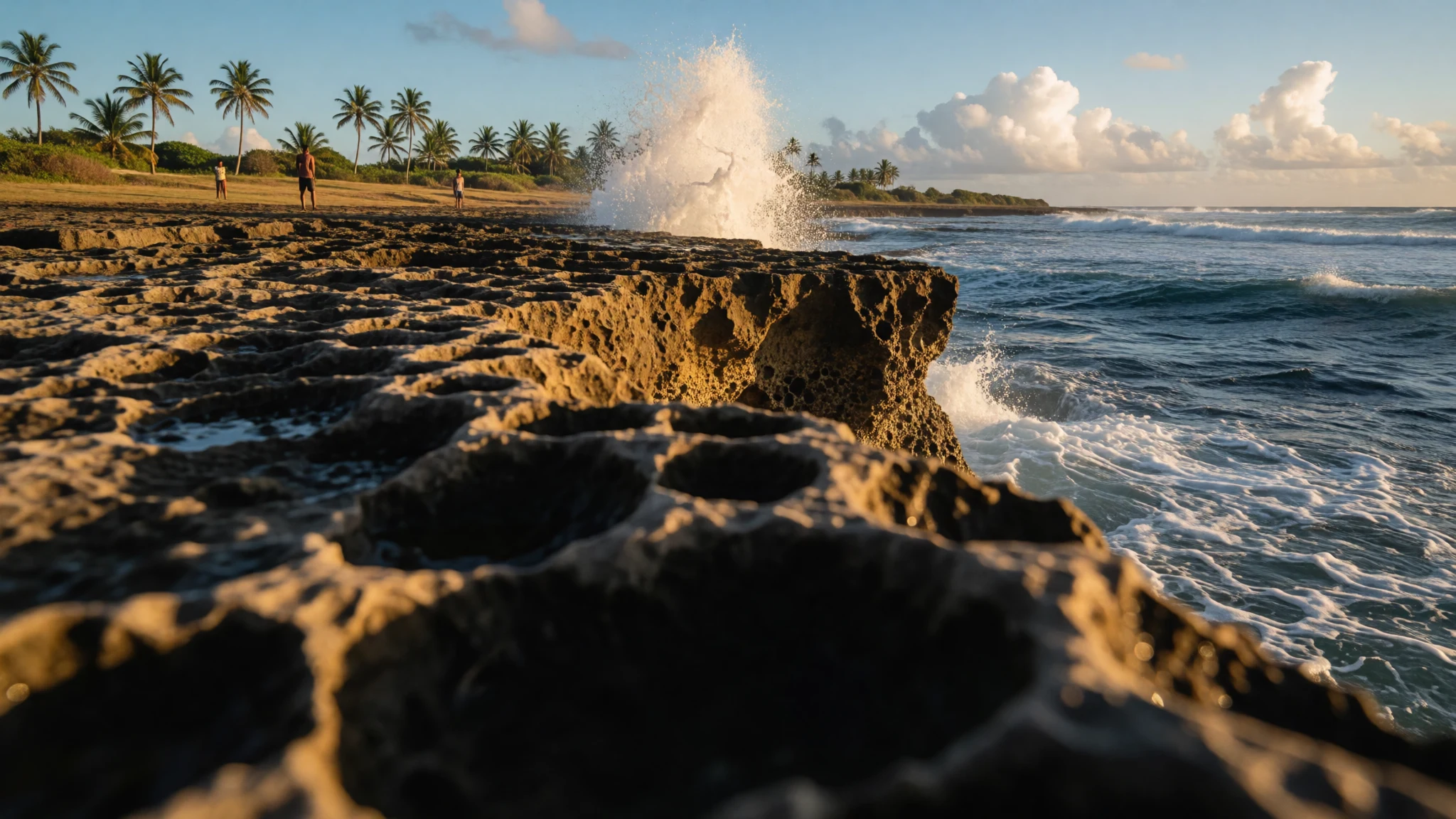
Mapu'a Vaea is where Pacific swells punch through the Tongatapu shoreline and throw spray skyward, a free spectacle on a flat, quiet island.
The place
Mapu'a Vaea sits on the southern coast of Tongatapu, the main island of the Kingdom of Tonga, close to the village of Houma. The island is low and flat, mostly farmland, coconut groves and small villages, and the shore here is a rim of weathered coral limestone cut by the ocean into ledges, pits and narrow vents. Waves roll in from the open Pacific, slam into the base of the rock and push water up through those vents. The result is a row of spouts that fire off at different moments, so the whole stretch seems to breathe. On rough days the spray drifts over the grass behind the cliff edge, and the noise carries well before the water comes into view. On calm days the show shrinks to soft puffs and hissing. The setting is open and exposed, with little shade, a strong sea wind and a horizon that is simply ocean. The site is a standard stop on tours around Tongatapu, usually combined with villages, churches and other coastal viewpoints, and it is also easy to reach by hired car or taxi from the capital, Nuku'alofa. Photographers like it for the way light catches the droplets, especially in the morning and late afternoon. It is a short visit rather than a full day, but the setting rewards slowing down and watching how the sea behaves.
Its story
The story of Mapu'a Vaea begins with geology and ends with chiefs. Tongatapu is built largely of raised coral, and over a very long span the sea has worked at its southern edge, hollowing channels beneath the rock until waves could force themselves upward through the roof. What looks like a single event is really the same simple process repeated along the shoreline, each opening with its own rhythm depending on the size and angle of the swell. Local tradition adds a second layer. The place is tied to chiefly lineages, and that link is the reason Tongans regard it as more than a scenic stop. Tonga has a long-standing system of hereditary chiefs, and landmarks associated with them carry respect that a plain viewpoint would not. Visitors should treat the name as a clue to that history rather than a label: the details of which chiefs, and which tales, are best heard from a local guide or from people in nearby Houma, not from a signboard. Over recent decades the blowholes have also become a fixture of island tourism, praised in travel writing as one of the notable natural features of the country. That popularity has not changed the basic experience, which still depends on the sea. The same stretch can look dramatic on one day and almost dormant on the next.
What to see
- The main blowhole line — Coast near Houma, southern Tongatapu
The core attraction is the row of vents along the clifftop, where jets rise and fall in uneven sequence. Stand back from the edge, watch for a few minutes, and the pattern becomes clear. Larger swells send spray well above the rock, so the display is best on a breezy day.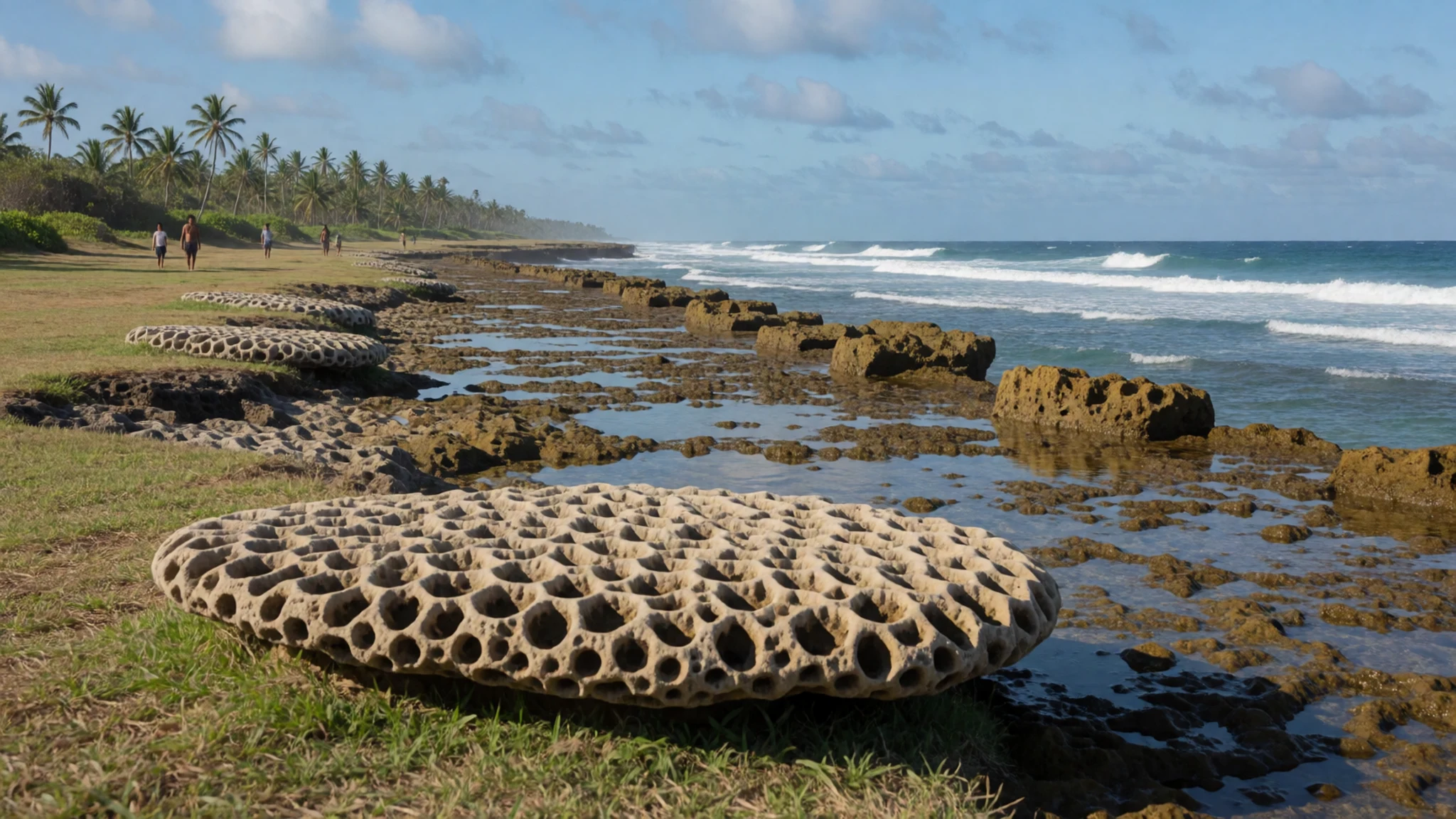
- The coral limestone shelf — Shoreline around Mapu'a Vaea
Look down at the ground as well as the sea. The rock is pitted, sharp and sculpted by centuries of spray, with channels that show how the vents formed. It is a good place to see raised coral up close, though footing is uneven and slippery near the edge.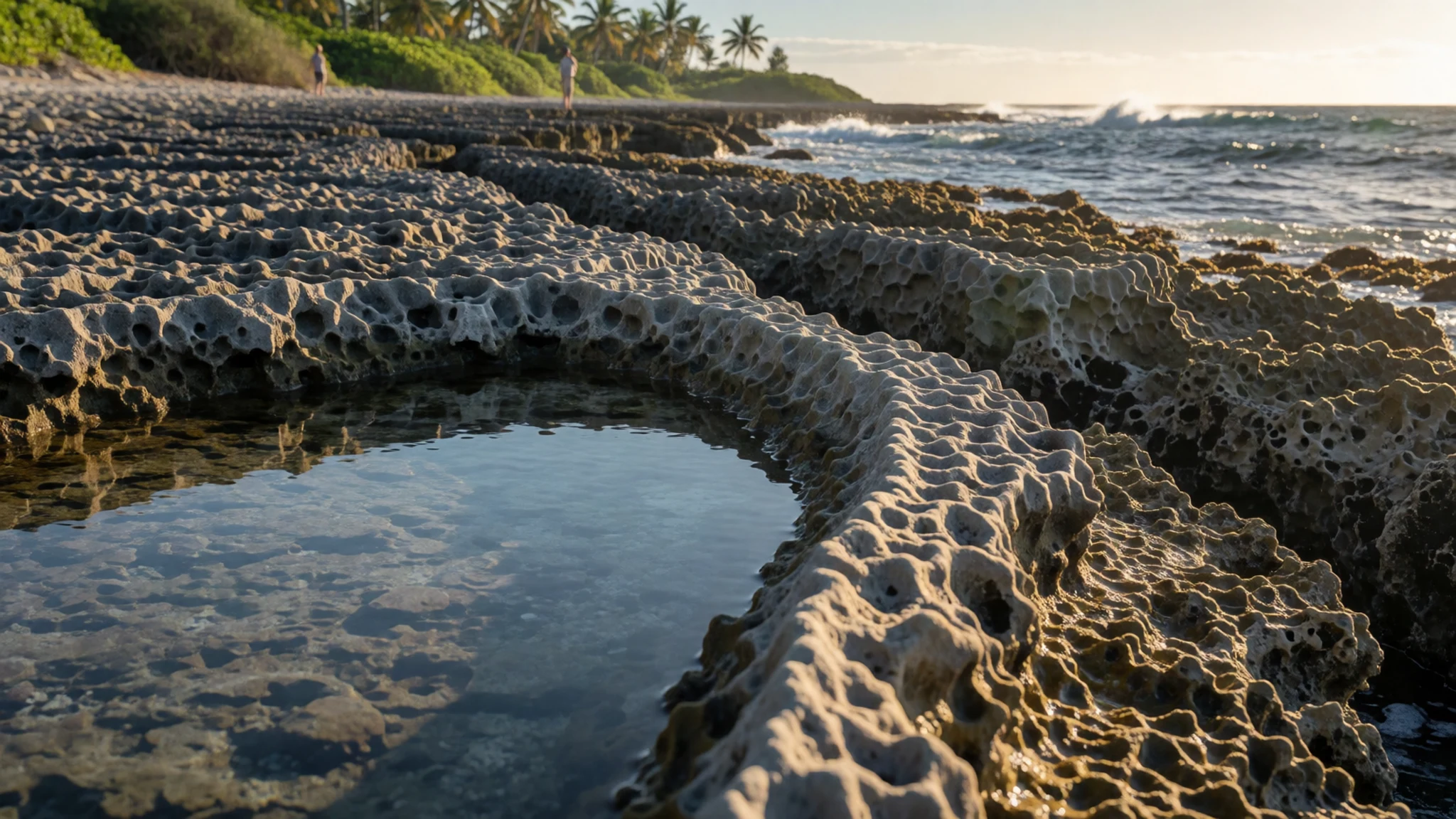
- Houma village — Houma, Tongatapu
The nearby village gives context that the viewpoint cannot. Houses, gardens, pigs, church spires and the daily rhythm of a Tongan settlement show what the blowholes mean to the community. Walk or drive through slowly, greet people, and ask before photographing anyone.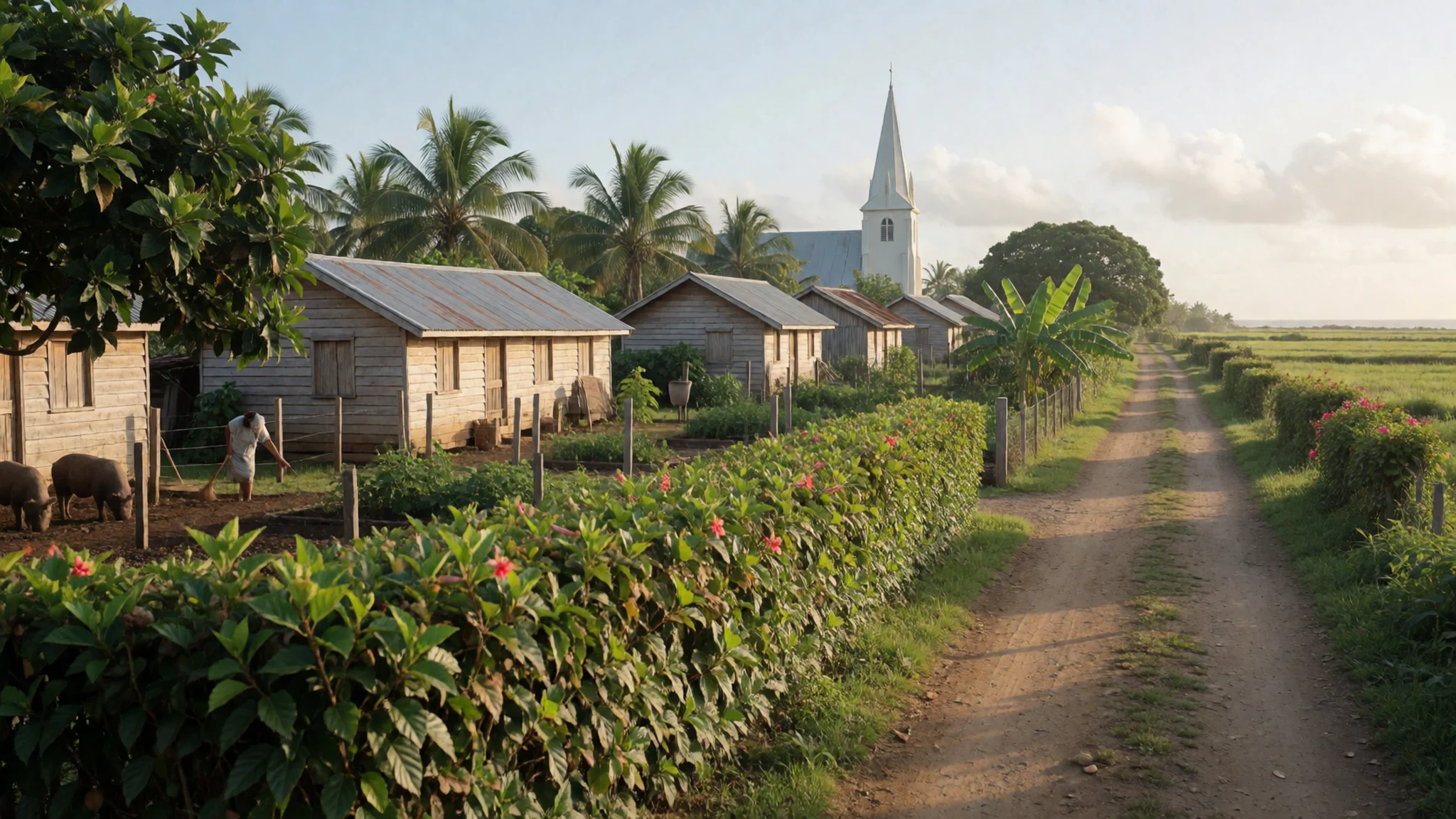
- Nuku'alofa waterfront — Nuku'alofa, northern Tongatapu
Most visitors base themselves in the capital, and its seafront is a gentle companion to the wild south coast. The harbour, the old buildings and the market streets give a sense of Tonga's pace, and the town is where tours and taxis to the blowholes usually begin.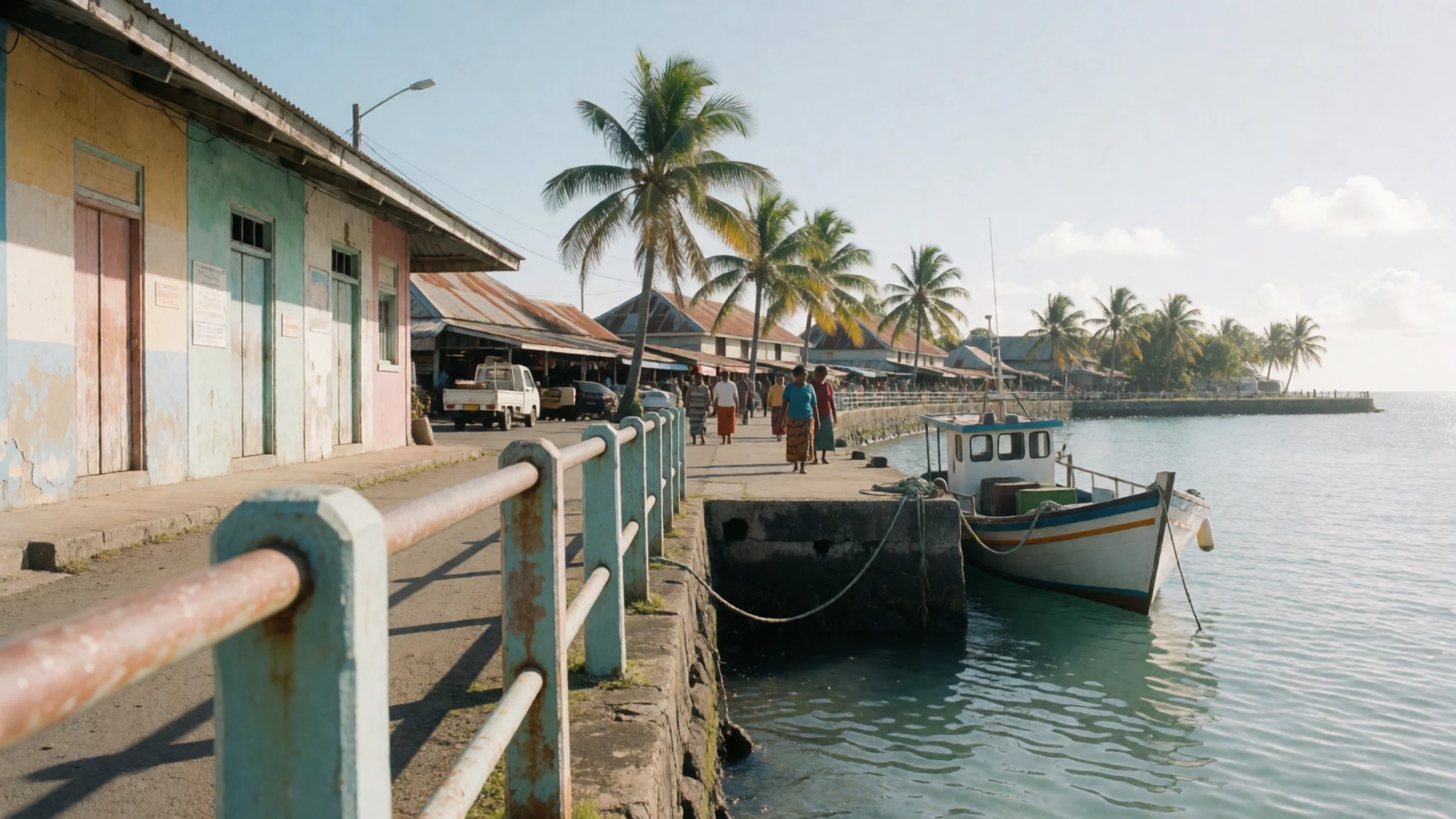
- Island circuit by road — Tongatapu island roads
A loop around Tongatapu links the blowholes with other coastal and cultural stops. The roads are flat and straightforward, which makes a half-day drive realistic. Go early to avoid heat, and stop where the sea or the villages look interesting rather than rushing between sites.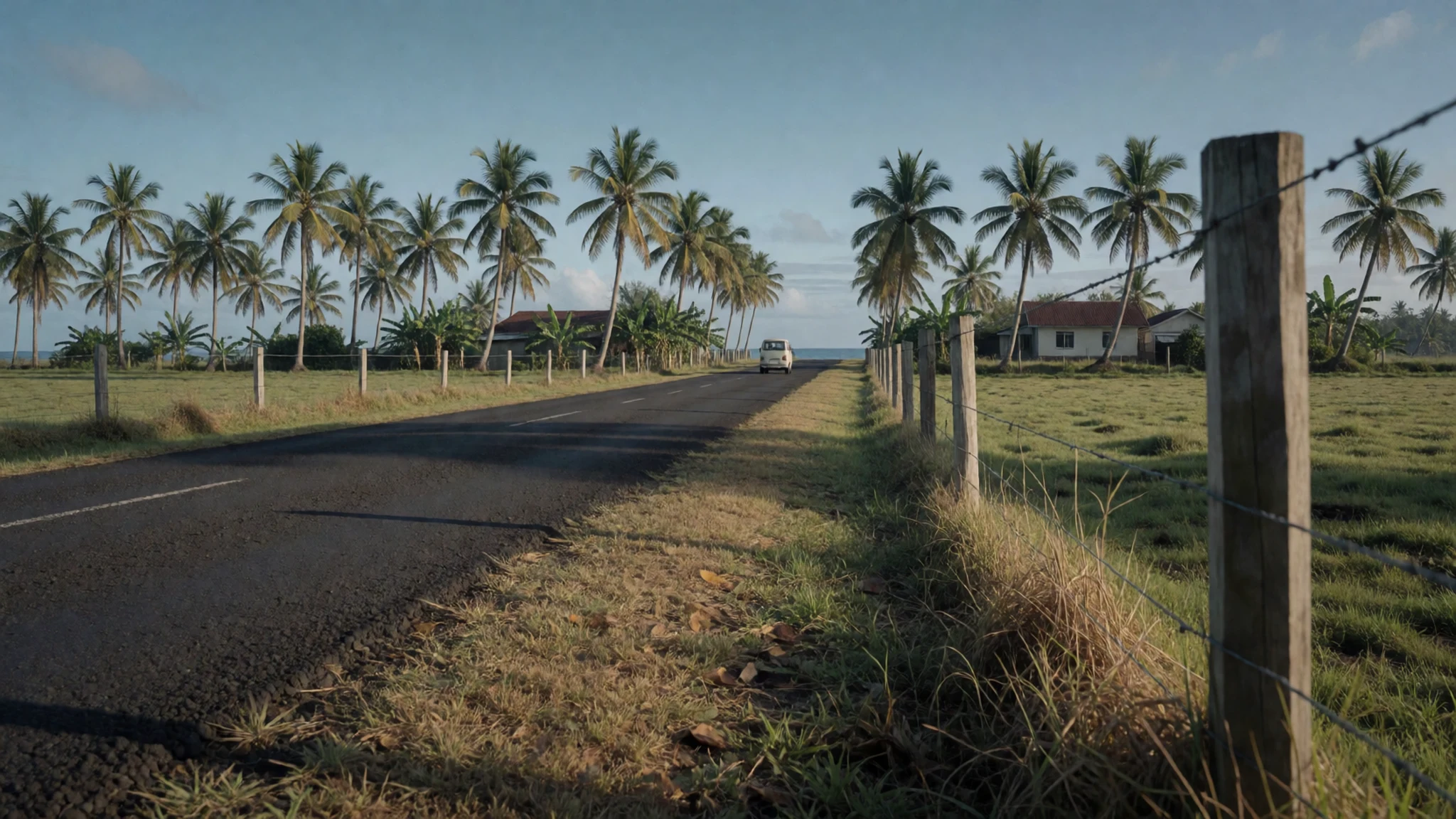
Culture
Mapu'a Vaea matters to Tongans because of its association with local chiefs, and that gives the site a weight beyond its looks. Tonga is a kingdom with a strong tradition of rank, family obligation and church life, and landmarks tied to chiefly history are spoken about with care. Most people on Tongatapu are Christian, and Sunday is set aside for worship and rest. Shops are mostly closed, villages are quiet, and tours may not run, so the day suits a slow morning rather than sightseeing. Respect, known locally as faka'apa'apa, shapes everyday behaviour: lowering your voice around elders, accepting hospitality graciously, and not treating a village as a stage set. Tongan hospitality is real, and a greeting and a smile usually open conversations. The blowholes themselves are a public viewpoint, but they sit beside land and communities with their own claims on it, so local guidance on where to stand and park is worth following. Photography is welcome of the scenery. People are a different matter, and a polite request first is the norm. Children often gather around visitors and may sell small crafts; a friendly answer costs nothing. Tell a guide or villager if you are unsure what is appropriate. Keep back from the wet edge, because waves here can surge without warning, and ask permission before photographing people or entering village land.
What to wear
Tongan dress around Mapu'a Vaea's home island of Tongatapu is built on the ta'ovala, a woven mat wrapped around the waist over a tupenu, the wraparound skirt worn by men and women. Mats are plaited from pandanus leaf, and the finest old ones are treasured heirlooms. Women may add a kiekie, a decorative waist band of fibre strands. Ngatu, the patterned bark cloth made from paper mulberry, appears at weddings, funerals and gift exchanges. Mat dress is expected at church, royal occasions and funerals, and many office workers and schoolchildren wear a tupenu on weekdays. Day to day, people dress for the heat: T-shirts, shorts, cotton dresses and rubber sandals, with the wrapped skirt still common in villages. Sunday morning is for church, so smart, covered clothes are normal. Visitors should pack light cotton that covers shoulders and knees for village walks and any church visit, and keep swimwear for the beach or a resort pool. At the blowholes the rock is sharp, uneven coral limestone, often wet with spray, so closed shoes with grip suit better than flip-flops. A hat, sunscreen and a light rain layer are sensible, and a lens cloth helps because salt mist settles on cameras and glasses.
What to eat
- Lu pulu — Sunday family meals, village food stalls and Nuku'alofa market
Taro leaves wrapped around corned beef, onion and coconut cream, then baked in an earth oven or cooked until soft. It is rich, salty and deeply Tongan, a staple at feasts and Sunday meals. Look for it at family gatherings and village food stalls.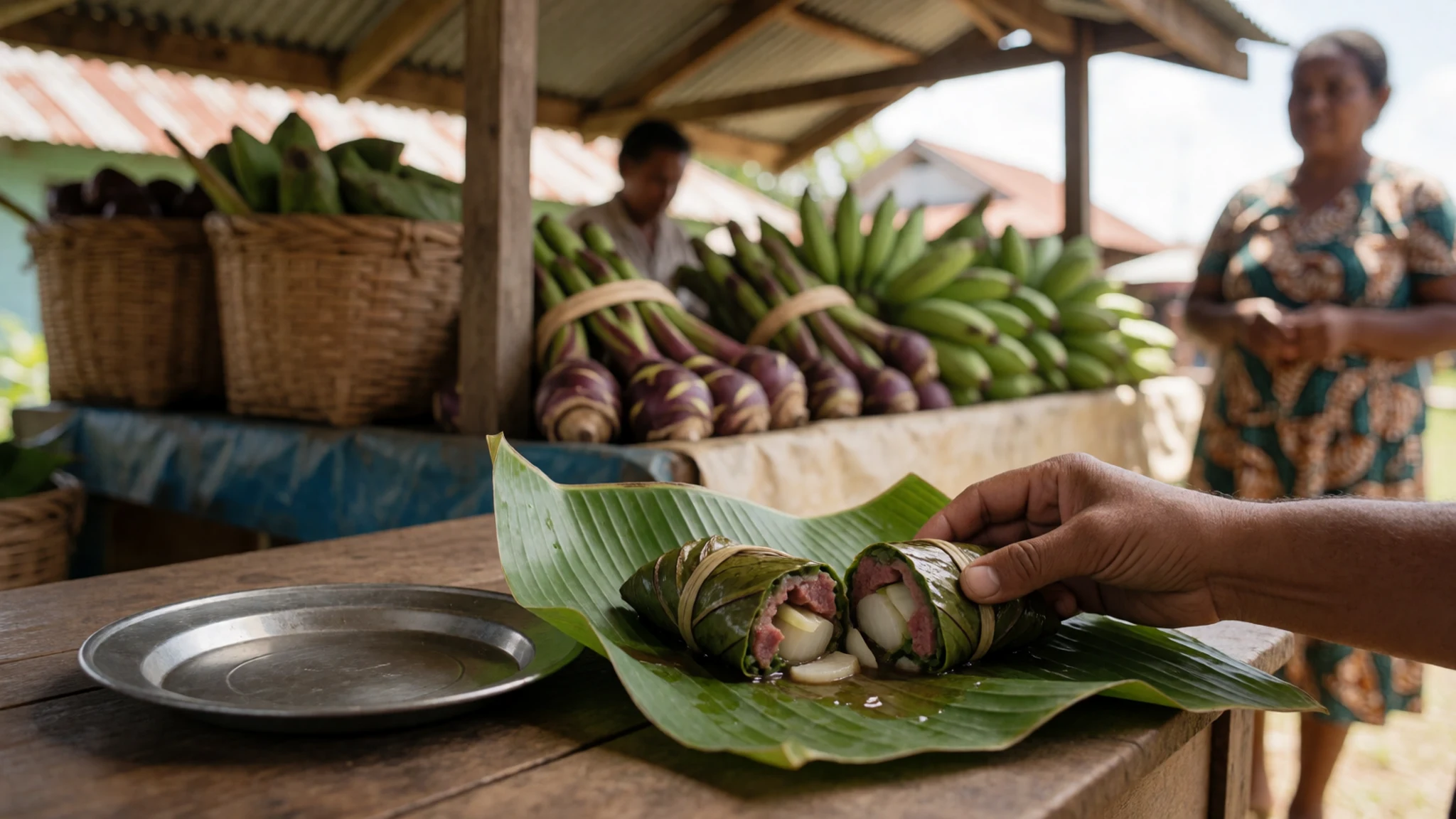
- 'Ota 'ika — Nuku'alofa waterfront eateries and the fish market
Raw fish cured in lime or lemon juice and finished with coconut cream, often with cucumber, tomato and onion. It tastes bright, cool and clean, a good answer to the heat. Freshness matters, so choose busy places that handle fish well.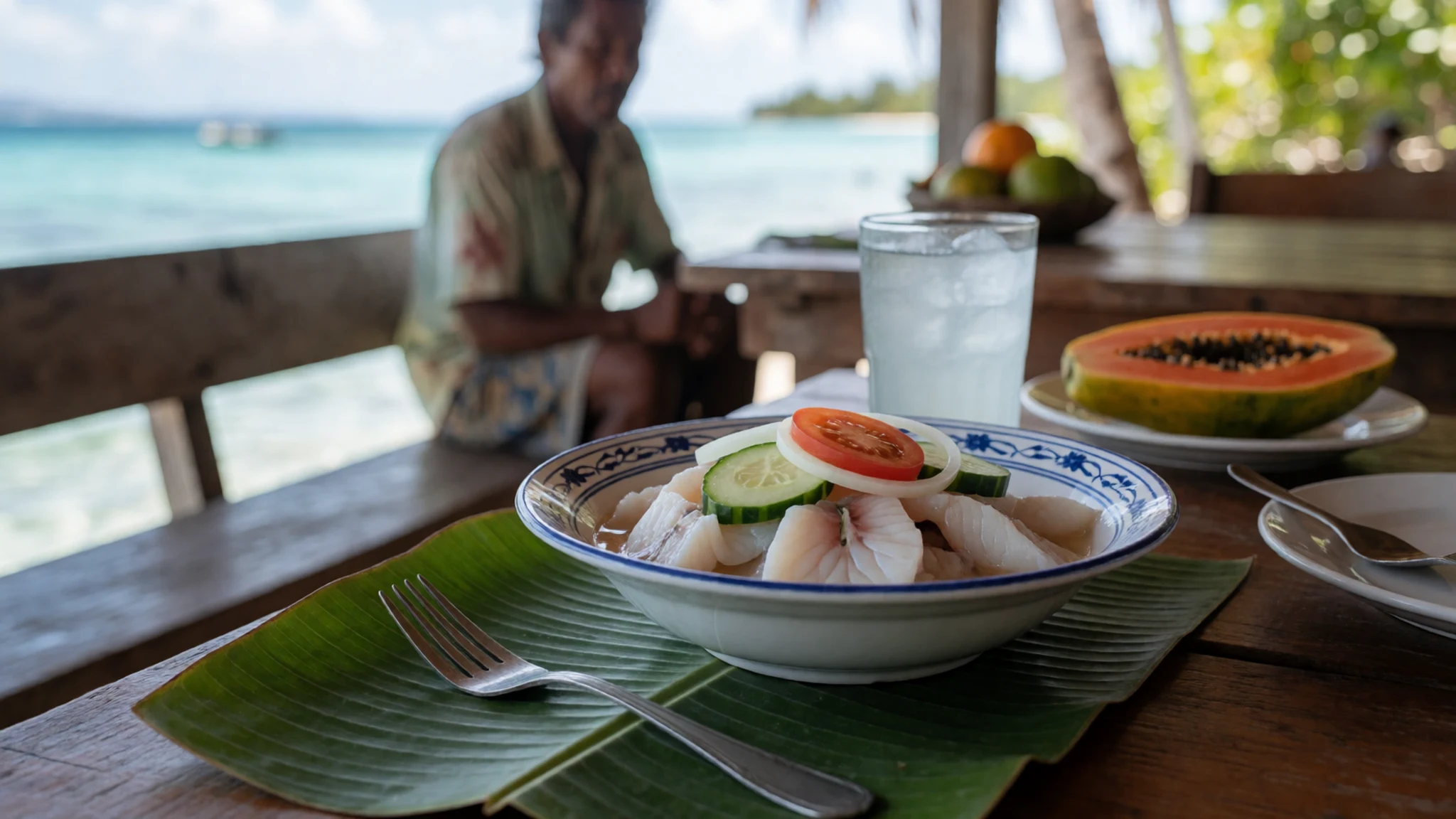
- Umu roast — Village feasts and resort cultural evenings
Pork, chicken, root vegetables and wrapped parcels cooked in an underground oven heated with stones. The slow, smoky flavour is central to celebrations and big church days. Visitors often meet umu food at feasts arranged through guesthouses or cultural evenings. - Fresh tropical fruit — Talamahu Market in Nuku'alofa and roadside stalls
Papaya, bananas, pineapple, watermelon and coconuts are sold in season and make an easy breakfast or snack. Coconut water is a cheap, cold way to cope with exposed viewpoints. Buy from roadside sellers and carry a little small change. - Otai — Cafés and markets around Nuku'alofa
A chilled drink of crushed fruit, often watermelon or mango, mixed with coconut milk and sometimes grated coconut. It is sweet, creamy and refreshing after a windy coastal walk. Home cooks and small cafés make it, and the recipe changes with the fruit available.
Plan it
Best time. May to October is the cooler, drier part of the year in Tonga, which suits a coastal visit with little shade. The blowholes depend on swell, not season, so bigger waves can come on windy days in any month. November to April is hotter, more humid and wetter, with a cyclone risk.
How long. 1–2
Getting there. Fly to Tongatapu's international airport at Fua'amotu, then travel by taxi, hire car or tour to Nuku'alofa. From the capital, the blowholes near Houma are a short drive along flat coastal roads.
Budget. low
Tips
- Go on a windy or swelly day for bigger spray, and ask a local about sea conditions
- Visit in the morning, when the light is good and the heat is lower
- Bring sun protection, water and a hat because there is little shade
- Carry some cash for small purchases, since stalls and village sellers may not take cards
- Check Sunday opening and tour times in advance, as many services pause
Etiquette
- Dress modestly in villages and keep swimwear for beaches
- Ask before photographing people, and treat nearby land with respect
- Keep well back from the wet edge, as waves can surge suddenly
Nearby
Sources
- Wikidata Q6754225 (CC0)
- Wikipedia — Mapu a Vaea (rev 1380730007) (CC BY-SA 4.0)
- Wikivoyage — Tongatapu (CC BY-SA 4.0)