Fonuafoʻou
Fonuafoʻou, Tonga
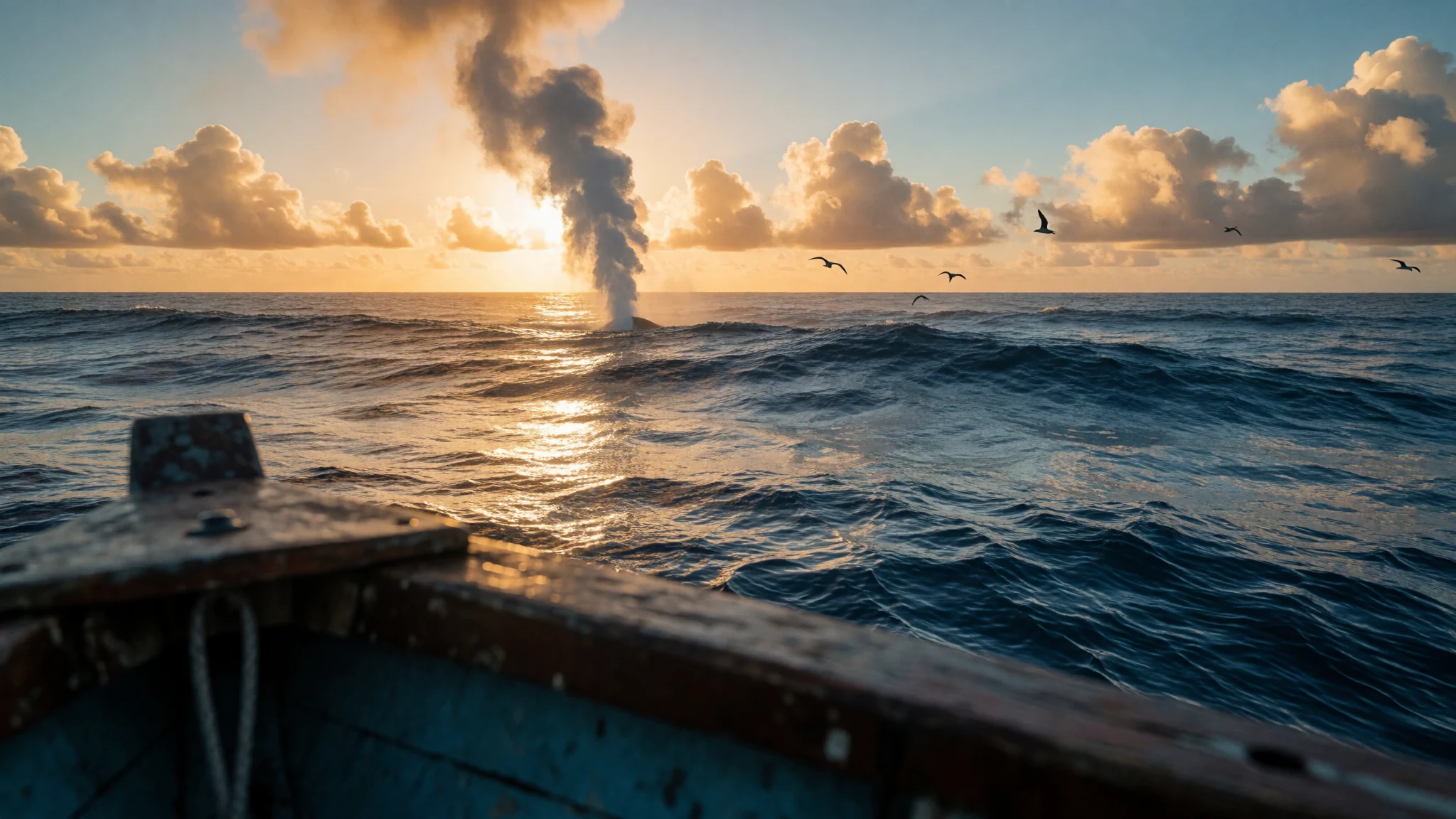
Fonuafoʻou is a Tongan volcano that has built an island, lost it and started again, and its story is told best by boat.
The place
Fonuafoʻou, meaning "new land" in Tongan, is a volcano in the western part of the Haʻapai group in Tonga. Much of its life has been spent underwater, and today its crater rim lies about 17 metres below the surface, so there is no beach, no landing and no village. What a boat finds is open Pacific, and sometimes discoloured or disturbed water where the vent sits. British mariners knew it as Falcon Island, and the older name still turns up on charts and in books. The volcano is best understood as a piece of geology that occasionally behaves like a country: it has built an island, lost it, and begun again more than once. Around it, Haʻapai is a spread of low coral islands where only some are lived on, reached by small planes and boats, and far quieter than the capital, Nukuʻalofa, on the main island of Tongatapu. Tonga as a whole has about 100,000 people, most of them on Tongatapu, and life follows church, family and the seasons rather than the clock. Sunday is a day of rest, with shops closed and the villages hushed. Visitors who come for Fonuafoʻou are usually after the idea of it more than a sight: a place on the edge of the Ring of Fire where the sea floor is still being built. Anyone hoping to see it should treat it as a boat trip arranged locally, not a destination with facilities, and should expect the weather to decide.
Its story
Fonuafoʻou entered European records in 1867, when the crew of HMS Falcon noted it as a coral reef, nothing more than a hazard on the chart. In 1885 the volcano erupted, throwing out molten lava, and three days later an island stood where the reef had been. The British named it Falcon Island, after the ship, while Tongans knew the place as the new land. That was only the start. Further eruptions through the following decades added material and consolidated the island, until by 1949 it was about six kilometres across and 145 metres high, a real landmass that could be marked on a map. Its loose volcanic ash and cinder were never going to last in open ocean. In 1949 another eruption blew the island apart and the remains collapsed beneath the waves, leaving only shallows. Activity has been recorded since, but the volcano has not built a lasting island again, and the summit now sits about 17 metres under the sea. The pattern is familiar to volcanologists: a young cone grows quickly, waves and collapse strip it, and the cycle repeats. For Tonga, with a number of undersea volcanoes around its islands, Fonuafoʻou is a reminder that the map of the kingdom is not entirely fixed.
What to see
- The Fonuafoʻou crater — Western Haʻapai, open sea
The volcano itself is the sight, though it is now a submerged cone about 17 metres down rather than an island. An old photograph of the crater, taken through a breach in its southeast rim with a plume rising, shows how it looked when it stood above the waves. Trips go by boat from Haʻapai, and conditions decide whether they run.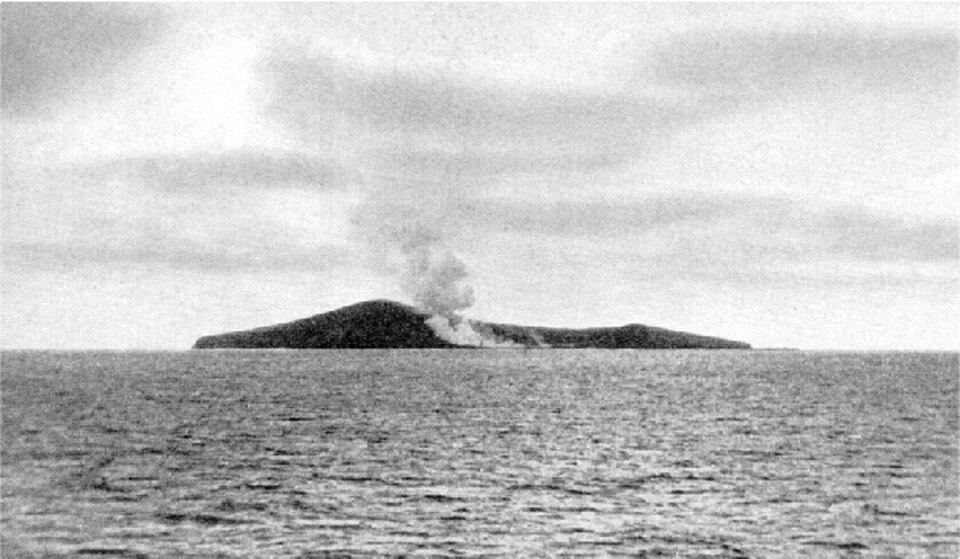
- Haʻapai islands — Lifuka, Haʻapai
Haʻapai, the island group around the volcano, is a scatter of low coral islands, with only some lived in all year. It is where the mutiny on the Bounty took place, and the pace is slow: villages, white beaches, reef and very few visitors. Lifuka has the small airport and is the usual base. - Tongatapu blowholes and tombs — South coast and Nukuʻalofa, Tongatapu
Tongatapu, the main island and home to most Tongans, is flat coral country with ancient stone tombs and coastal blowholes where the sea spouts through the rock. Nukuʻalofa, the capital on the north coast, is relaxed and makes a practical first stop. Beaches here are good for snorkelling, though sharp coral calls for footwear. - ʻEua rainforest and cliffs — ʻEua island
ʻEua, a short hop east-southeast of Tongatapu, is geologically unrelated to the coral islands around it, being much older. Dramatic cliffs fall along its east coast, and Tonga's largest tropical rainforest offers trekking. The western beaches are gentler. Guest houses are few and small, so plan ahead. - Vavaʻu whale waters — Neiafu, Vavaʻu
Vavaʻu, the northern group, is a maze of raised limestone and coral islands with very clear water and a sheltered harbour at Neiafu that draws visiting yachts. From June to November humpback whales arrive, and organised tours run to see them. Diving, kayaking and walks on the main island fill the other days.
Culture
Tonga's culture rests on humility, hospitality and respect for seniors, with Christianity woven through daily life. Church services, hymn singing and Sunday rest shape the week, and although no denomination is the state's, a local form of Christianity carries similar weight. Family and village ties matter more than most visitors expect, and the capital's mix of European and Polynesian habits thins out quickly beyond it. Tonga is a kingdom that kept its crown through the colonial era and later joined the Commonwealth, and many Tongans still love and revere the royal family, even as younger people debate more accountability. Around Fonuafoʻou, living with volcanoes and earthquakes is part of the background, and the name "new land" says something about how islands are thought of: as things that arrive and leave. A feast with dancing, offered by tour companies on several nights of the week, is an easy way to meet the culture, as is a Sunday service if a local invites you. Tongans are relaxed hosts and generous with time, and it helps to match that unhurried pace. On Sundays, keep noise and public activity low, cover shoulders and knees in villages and near churches, and ask before photographing people.
What to wear
Traditional Tongan dress is built on woven and beaten materials. The tupenu is a wrapped skirt worn by men and women, and over it goes the taʻovala, a mat of woven pandanus tied at the waist as a sign of respect, plain for everyday formality and finer for important occasions. Ngatu, tapa cloth beaten from mulberry bark and printed in brown and black patterns, is given at weddings and funerals and used as ceremonial wrapping. Kiekie, a decorated woven waist ornament, is worn by women on festive days. Most of this appears at church, at royal events, at school and in government offices, where the taʻovala is standard. Everyday wear is lighter: T-shirts, shorts, cotton dresses and lavalava wraps, often with rubber sandals. On Sundays people turn out in their best, often in white. Visitors should dress modestly, with shoulders and knees covered away from the beach and nothing revealing in villages or towns; walking around topless has led to arrests. Light cotton and linen suit the humid heat, while a hat and sun protection matter on the water. Reef shoes or sandals with a firm sole guard against sharp coral, and a light rain jacket helps on boat trips.
What to eat
- ʻOta ʻika — Tourist feasts on Tongatapu and in Vavaʻu, and stalls near harbours
Raw fish marinated in lime juice and finished with coconut cream, often with onion and tomato. It is fresh, sharp and cool, and a good match for hot days. Look for it at feasts, market stalls and village meals near the harbour. - Lu — Sunday family tables, church gatherings and organised feasts
Parcels of taro leaves holding corned beef or other meat with coconut cream, baked slowly until soft. Rich and earthy, it is a Sunday staple and a fixture at feasts, and the leaves are as good as the filling. - Umu feast — Feasts arranged through tour companies on Tongatapu and in Vavaʻu
Food cooked in an earth oven over hot stones, with pork, fish, root crops and lu. The cooking is slow, and the spread arrives together on long tables. Tour companies run feasts with dancing on several nights of the week. - ʻUfi and taro — Village meals and the produce market in Nukuʻalofa
Root crops boiled or baked and served beside nearly every meal. ʻUfi, the yam, is dense and slightly sweet, while taro is softer and milder. They fill the plate where rice or bread would elsewhere. - Kava — Village kava circles and evening gatherings in Nukuʻalofa, with a local host
A drink made from the pounded root of the kava plant, mixed with water and shared from a bowl. It numbs the tongue slightly and tastes earthy rather than sweet. It is tied to ceremony and sociable evenings, and one try, in small sips, is plenty.
Plan it
Best time. June to October is the usual choice: humpback whales visit Vavaʻu from June to November, and the drier, cooler months suit boat trips and walking. The wet season is hotter and more humid, with a risk of storms and cyclones.
How long. 3–4
Getting there. Fuaʻamotu Airport (TBU) on Tongatapu, about half an hour from Nukuʻalofa, takes international flights from Auckland, Sydney and Fiji, with frequency varying by season. From there, take a domestic flight or boat to Lifuka Island Airport (HPA) in Haʻapai, then a local boat towards the volcano. UK citizens can land in Tonga and receive a complimentary 30-day entry permit upon their first night stay, provided they show a proof of their departure journey. Indian travellers should not assume this applies to their nationality; they must make independent contact with Tonga immigration and verify the rules that currently govern their entry before they make final booking commitments.
Budget. mid
Tips
- Book any boat trip towards the volcano locally and early, as weather and sea state decide whether it runs
- Carry cash for small islands and village shops, where cards are less likely to work
- Wear sturdy sandals or reef shoes on beaches and reefs, as coral is sharp
- Take drinking water and sun protection on every boat trip
- Plan around Sunday, when most commerce and entertainment stops
Etiquette
- Dress modestly in villages and near churches, with shoulders and knees covered
- Show respect to elders and ask before photographing people
- Keep Sundays quiet and low-key, and join a church service only if invited
Nearby
Sources
- Wikidata Q1435916 (CC0)
- Wikipedia: Fonuafoʻou (rev 1355660195) (CC BY-SA 4.0)
- Wikivoyage: Tonga (rev 5422801) (CC BY-SA 4.0)
- Photo: The active crater of Fonuafoʻou, James Allan Thomson (Public domain)
- Photo: ASTER satellite image of Falcon Island, NASA/JPL ASTER Volcano Archive (Public domain)
- Photo: Falcon Island or Fonuafoʻou, Tonga (Public domain)


Wildlife
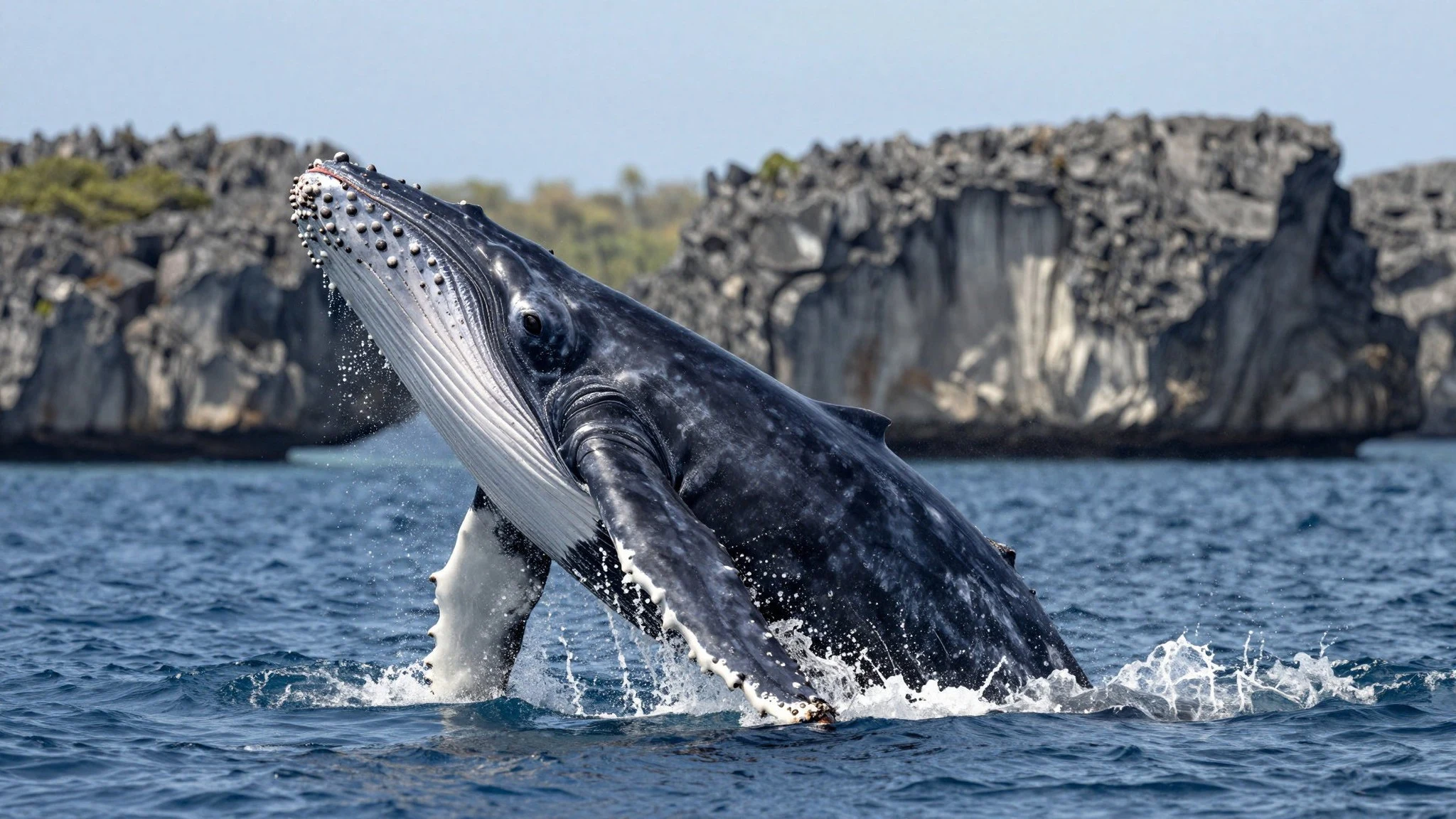
- Humpback whale (animal)
The humpback is a giant whale with very long flippers and bumpy knobs on its head, and it loves to leap clear of the water. Visitors can look for it from June to November, when the whales arrive. Organised tours run to see them, so the best way to watch is to join one and let the crew take you out. The males are singers too, performing long, complex songs that make these gentle giants all the more memorable.