Ha'amonga 'a Maui
Ha'amonga 'a Maui, Tonga
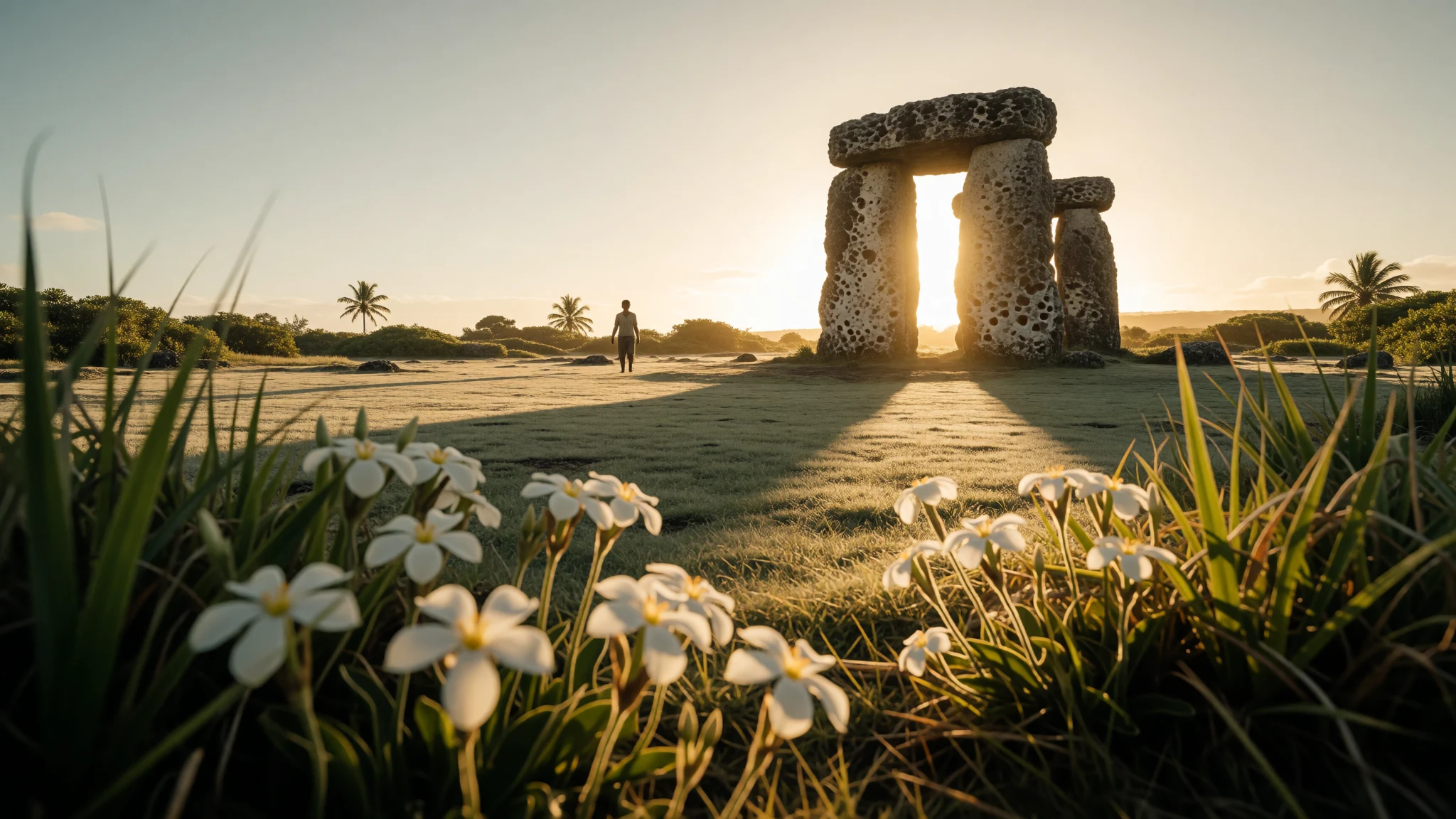
Tonga's great stone gateway, raised for a king's two sons, stands quietly in a village on Tongatapu and rewards an unhurried visit.
The place
Ha'amonga 'a Maui stands in the village of Niutōua, in the Heketā area on the eastern side of Tongatapu. The monument is a trilithon, a form of construction in which two upright blocks of coral limestone carry a third slab laid across their tops. The result is a simple frame, open at the bottom, that looks deliberate from every angle. Each upright is extremely heavy, and the lintel rests in deep notches cut into the top of each stone, so the joins still look more carefully engineered than anything else on the grass around them. Its nickname, the Stonehenge of the Pacific, is common in guidebooks, and the comparison holds for scale and for the sense of a planned arrangement, though the two monuments were made in very different ways and for different purposes. Beside the trilithon stands a stone seat, the ʻEsi maka faakinanga, which is worth finding before you leave the main site. The surroundings are open, grassy and quiet, with few crowds at most times of year. Because the monument and its land are a protected national park, the site is kept as a place to walk around and look at, not as a working space. Plan for heat and sun, since there is little shade.
Its story
Ha'amonga 'a Maui is tied in local tradition to the folk hero Maui, who is said to have carried its enormous stones from ʻUvea in a giant canoe, because ordinary people could not have moved them. Historians take a more grounded view. They date the monument to around 1200, during the reign of Tuʻitātui, the eleventh Tuʻi Tonga, or King of Tonga, and his high chief Loʻau. Most scholars think it was built as a gateway to Heketā, the royal compound, which gave the approach a formal entrance. The two upright stones are read as representing the king's two sons, while the lintel laid across them stands for the bond between the brothers. Some people also believe the monument was set to point towards pulotu, the place of the gods in older Tongan belief, which would make it more than a ceremonial doorway. Its surroundings were given protected status as a national park in 1972, which helped keep the site intact for later visitors and researchers. Much of what is known comes from oral history, so the story remains partly legend and partly evidence, and visitors are free to weigh the two.
What to see
- The trilithon — Niutōua village, Heketā, eastern Tongatapu
The monument itself is the reason to come. Two upright coral limestone stones rise to the height of a tall tree, carrying a lintel across their tops. Walk slowly around it, because the view from the front shows the lintel's balance, while the side shows how the joins were cut. Early photographs in the archive show the same basic shape, so the stones have changed little in the last century.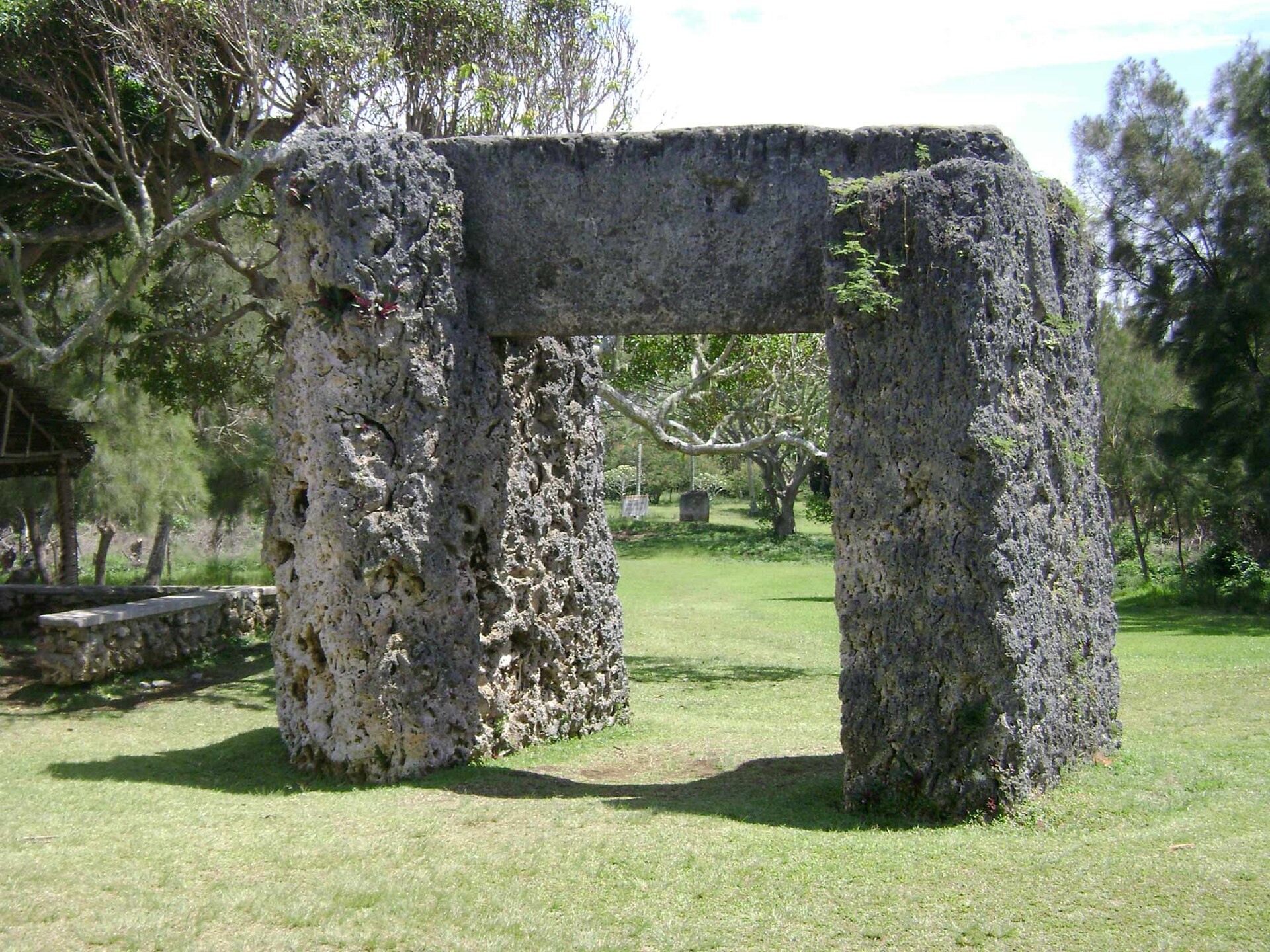
- The stone seat — Beside the trilithon, Niutōua
The ʻEsi maka faakinanga stands near the trilithon and is the other main feature of the site. Its backrest faces outwards, so a seated ruler could guard his back while keeping an eye on the ground in front. Look at the angle of the seat and imagine the long stick once held in hand. It is a useful reminder that the monument was a working place of authority, not only a decorative gateway.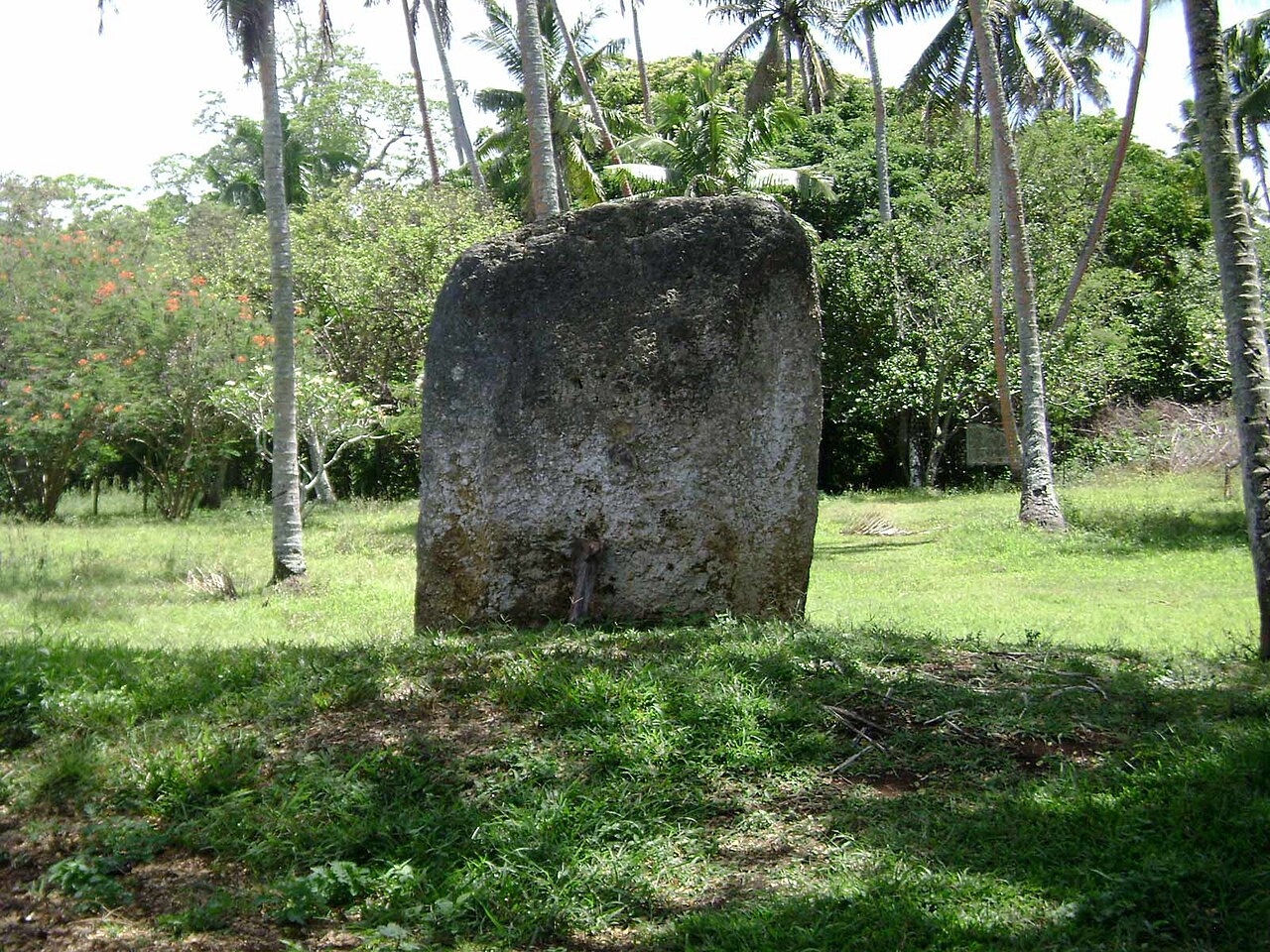
- The old photographs — Records of the site, shown in local museums and archives
Nineteenth-century photographs of the stones, taken from the front and from the side, show the monument as it looked long before the national park was declared. Comparing them with the site today gives a clear sense of how little the structure has moved. The images are useful if you want to see the trilithon from the same angles as early visitors did.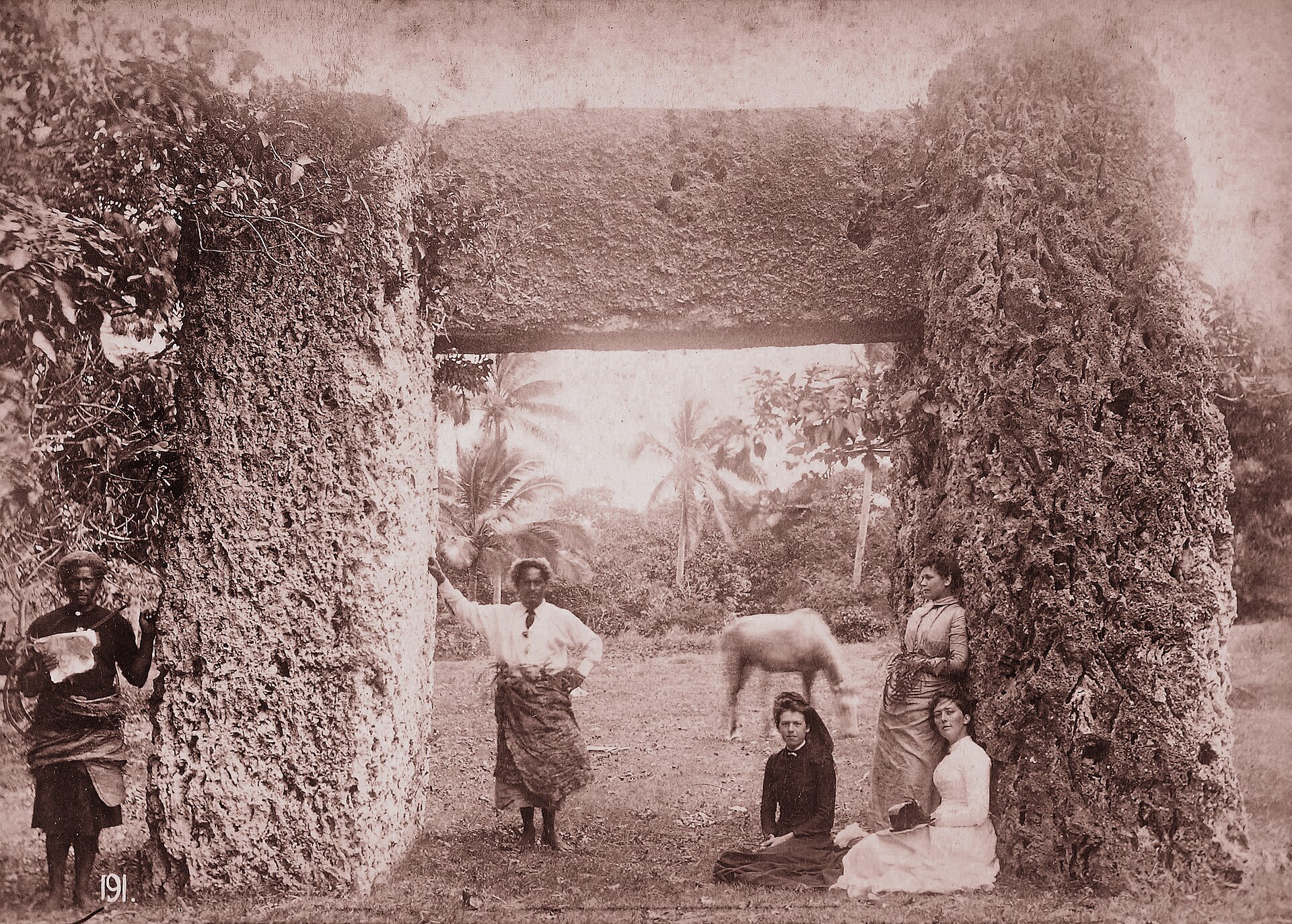
- The approach and the old gateway — Heketā, eastern Tongatapu
Old drawings show an ancient gateway near Tongatapu that resembles the trilithon in form. Walking the approach to the monument helps explain why the stones were placed where they are, facing a path that once led to the royal compound. The route is simple to follow on foot from the car park, and the ground is generally level, though it can be muddy after rain.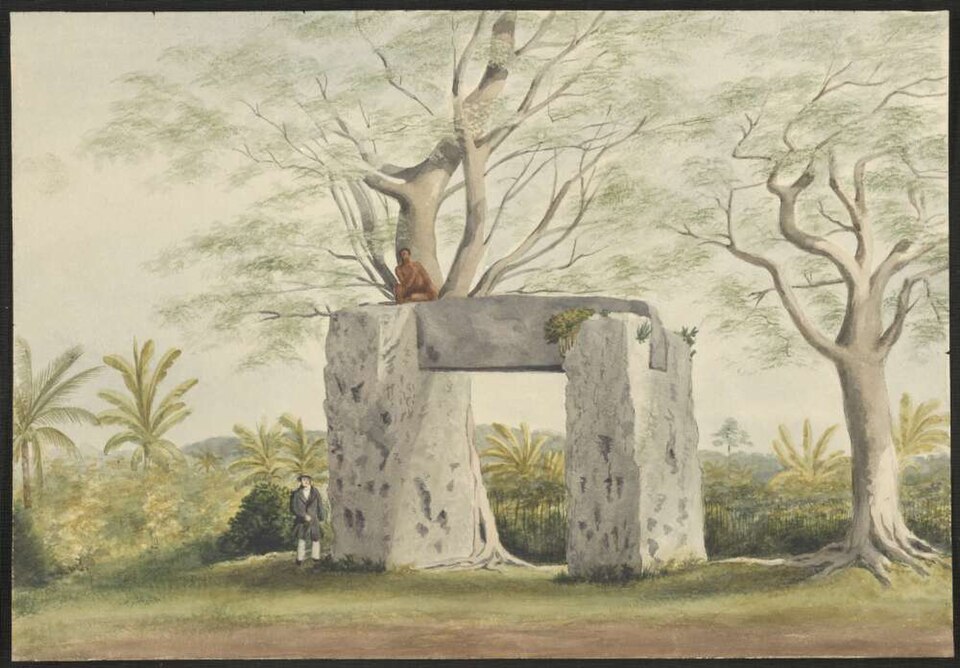
- The wider landscape — Eastern Tongatapu, around the national park
The park is open country, with low vegetation and wide views across the flat eastern part of the island. Few people stay long, so the quiet is part of the appeal. Bring water, a hat and a light layer for the wind, and allow time to sit near the stones rather than rushing through a checklist of photographs.
Culture
Ha'amonga 'a Maui sits within a community where Christian faith and family ties shape daily life, and Sundays are observed with particular care. Tongan society is organised around rank, respect for elders and the extended family, and these habits carry over into how visitors are expected to behave at a historic site. The monument is also a protected national park, so the rules are both cultural and legal. People in Tonga generally dress modestly in public, and visitors who cover shoulders and knees show respect without fuss. Photographs of the stones are welcome, but it is polite to ask before photographing local people, especially elders or families nearby. Do not climb on the trilithon or sit on the stone seat, and keep to the paths and grass that the park maintains.
What to wear
At Ha'amonga 'a Maui, what you wear matters more for modesty and sun than for style. Traditional Tongan dress centres on the ta'ovala, a fine woven mat, usually made from pandanus leaves, that is tied around the waist over a wraparound cloth called the tupenu. Men and women both wear it on formal occasions such as funerals, church events and royal gatherings, and the mats can be finely plaited and decorated. Barkcloth, known as ngatu, is another traditional textile, beaten from the inner bark of the paper mulberry and printed with patterns. Today most people wear ordinary Western clothes, with the ta'ovala reserved for ceremonies and Sunday church. For a visit, choose a light, loose skirt or trousers and a short-sleeved top that covers the shoulders, which suits both the heat and the expectations of a Tongan site. Wear closed shoes, since the grass and rough coral ground can be uneven, and bring a hat and sunglasses for the open terrain.
What to eat
- Lu pulu — Family eateries and village feasts across Tongatapu
Lu pulu is a Tongan staple made from taro leaves cooked slowly in coconut cream, often with corned beef or chicken. The leaves are rich and soft, and the dish is served at family meals and gatherings. You will find it at small home-style eateries and at feasts, where it is laid out with other dishes on banana leaves.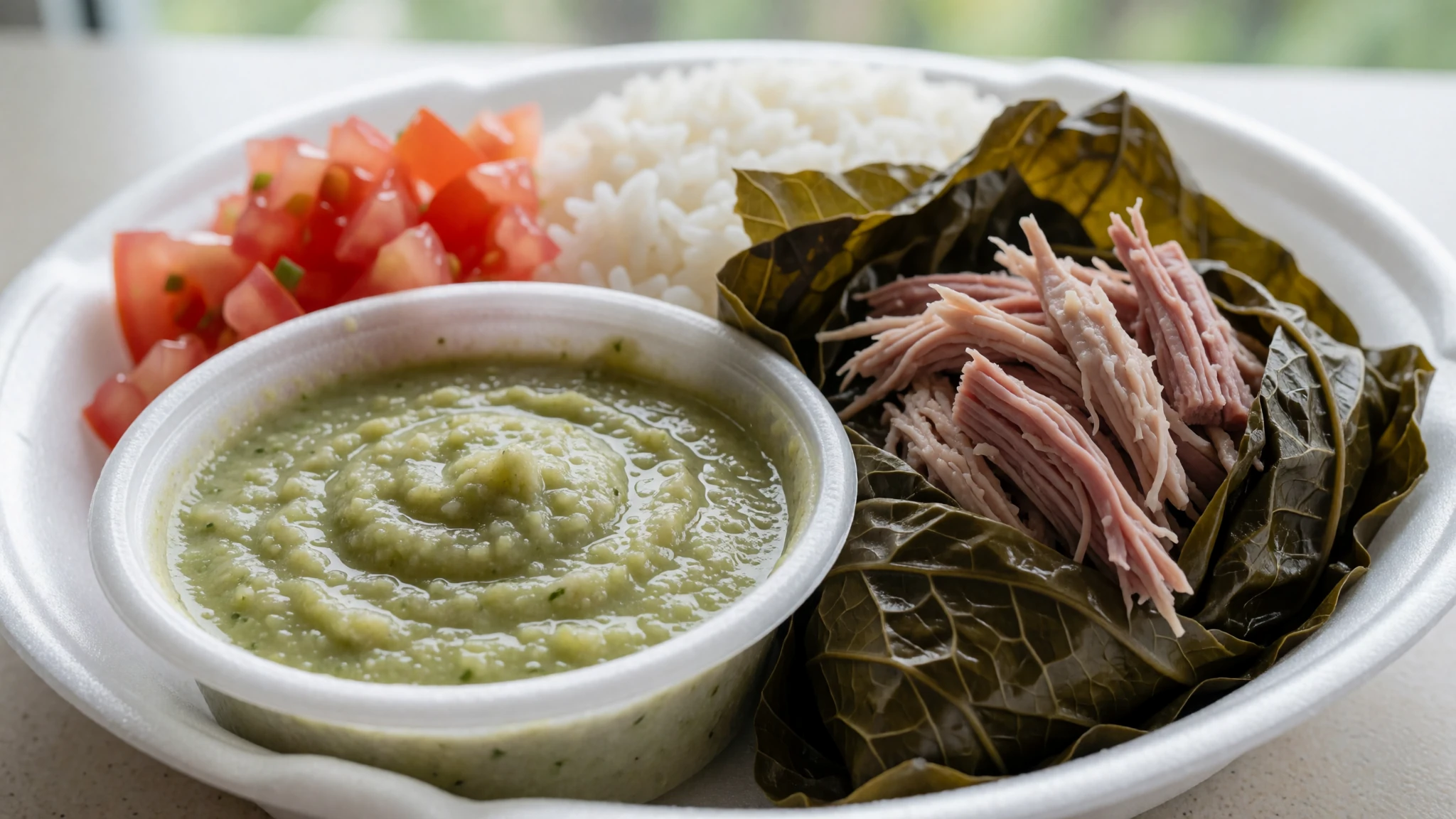
- Ota ika — Seafront eateries and the morning fish stalls of the main town
Ota ika is raw fish, usually tuna or another firm reef fish, marinated in lime or lemon juice and mixed with coconut cream, onion and chilli. It is light and sharp, a good choice in the heat. Look for it at seafront eateries and at the fish stalls of the morning market in the main town of Tongatapu.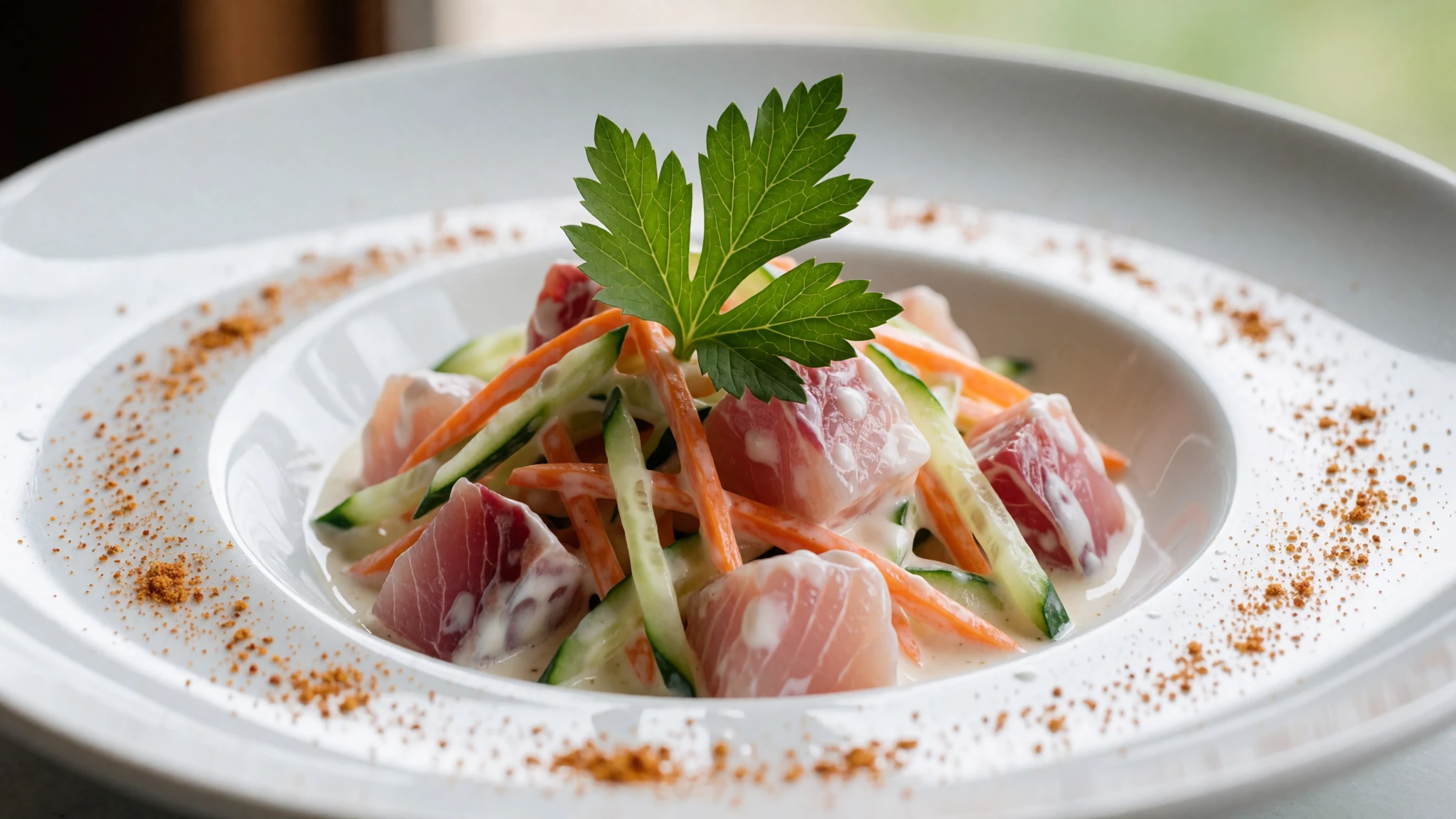
- Umu-cooked root vegetables — Village eateries and community feasts, especially at weekends
The umu is the traditional earth oven, in which food is wrapped in leaves and cooked on hot stones buried under the ground. Sweet potato, yam, taro and breadfruit come out tender and smoky, often with chicken or pork. Umu feasts are common at weddings and church events, and some village eateries keep an umu going on weekends. - Kava — Village kava circles and kava bars in the main town
Kava is a mildly sedative drink made from the root of the pepper plant, mixed with water and strained through cloth. It is served in a ceremonial circle, with the most senior person served first. Visitors are often welcome to try it at village gatherings or at a kava bar in the main town, where the drink is taken calmly and conversation is part of the ritual.
Plan it
Best time. May to October is the drier and cooler season, which suits a visit to an open, shade-free site. January to April is the hottest and wettest stretch, with heavy rain and humidity, so plan for mud and heavy sun if you go then.
How long. 1
Getting there. Fua'amotu International Airport, near the main town of Tongatapu, then a taxi or hired car across the island to Niutōua; allow time for the road, which is slow in places.
Budget. low
Tips
- Hire a car or book a driver for the day, because public transport to the site is limited
- Go early in the morning for cooler temperatures and softer light for photographs
- Carry water and sun protection, since there is little shade at the monument
- Bring cash in Tongan pa'anga for small purchases and drinks, as card payment may not be accepted in villages
- Check opening arrangements and any park fee with the official tourism office before you travel
Etiquette
- Do not climb on the stones or sit on the stone seat
- Dress modestly, covering shoulders and knees
- Ask before photographing local people
Nearby
Sources
- Wikidata Q1433433 (CC0)
- Wikipedia, Ha'amonga 'a Maui (rev 1364441268) (CC BY-SA 4.0)
- Wikivoyage, Tonga (CC BY-SA 4.0)
- Ha'amonga 'a Maui (Tauʻolunga), via Wikimedia Commons (CC BY-SA 2.0)
- Maka faakinanga (Tauʻolunga), via Wikimedia Commons (CC BY-SA 1.0)
- Front view of Remarkable Stones, Mua, Tonga, c1880 to 1889, via Wikimedia Commons (Public domain)
- Side view of Remarkable Stone, Mua, Tonga, c1880 to 1889, via Wikimedia Commons (Public domain)
- Ha'amonga 'a Maui (Sarah Kelemen), via Wikimedia Commons (CC BY 2.5)
- Ha'amonga 'a Maui (Tony Bowden), via Wikimedia Commons (CC BY-SA 2.0)
- Remains of an ancient gateway near Kolonya, Tongataho, 1853, by James Gay Sawkins, via Wikimedia Commons (Public domain)


