Nukuʻalofa
Nukuʻalofa, Tonga
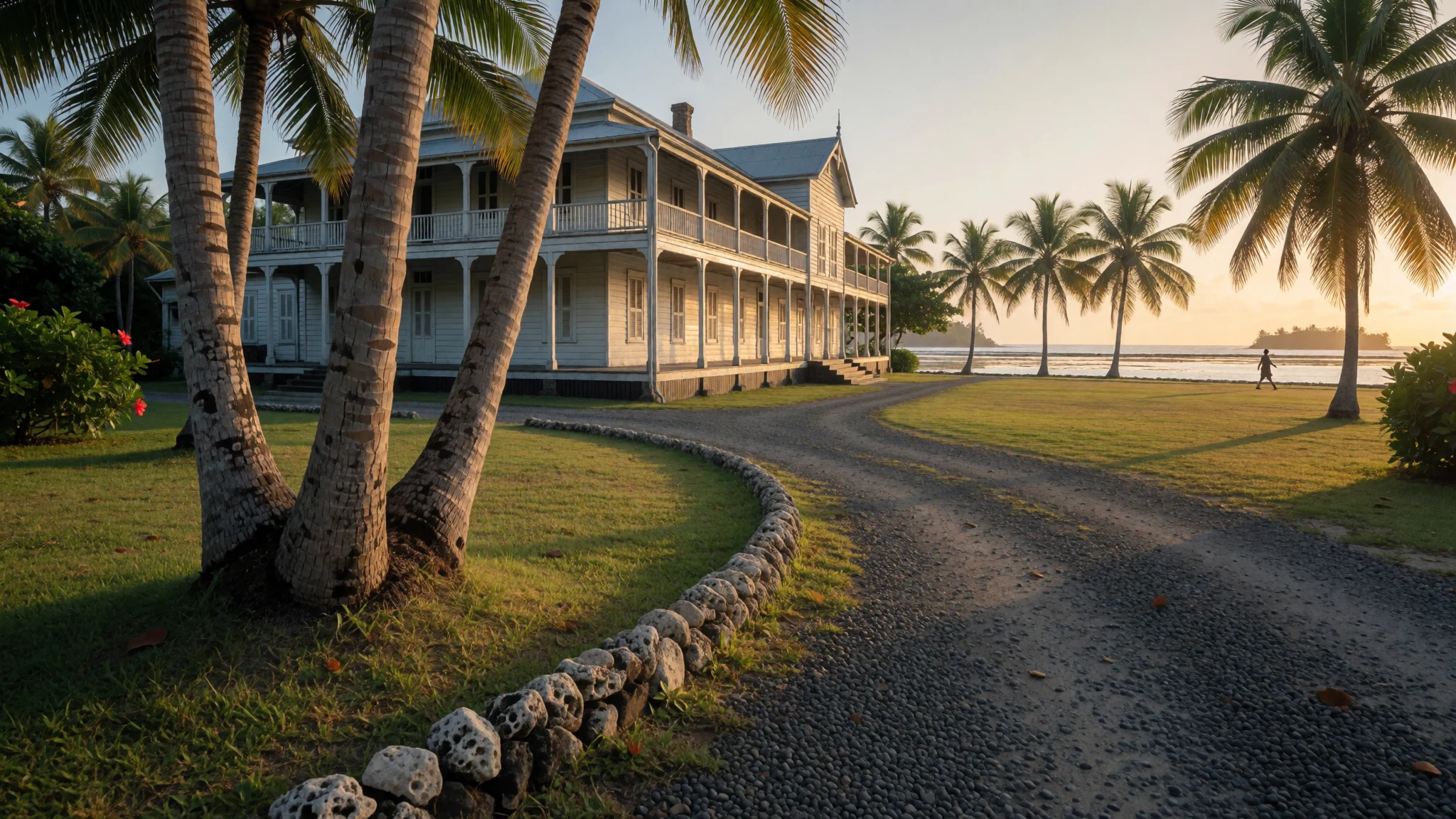
Nukuʻalofa is a small, unhurried Pacific capital where a wooden palace, a busy market and Sunday hymns make a gentle base for exploring Tongatapu.
The place
Nukuʻalofa is the capital of Tonga, a low town on the north coast of Tongatapu, the main island of the country's southern group. It sits at an elevation of just 3 metres, and everything about it feels close to the water: a harbour with small islets offshore, a seafront road, and reef beyond. A little over twenty-three thousand people live here, which makes it a small capital by most standards, and the pace matches. Mornings start early with market stalls and traffic, afternoons slow in the heat, and on Sundays almost everything stops.
The centre is compact and flat. Government buildings, a wooden royal palace, a market, banks, a few cafés and the main bus stand lie within a short walk of one another. Beyond the centre, suburbs of low houses and gardens spread along the shore and inland, and the island's roads carry buses and shared taxis out to villages, beaches and old royal sites. Tongatapu is coral rather than volcanic, so the land is level and the soil pale, with palms, banana plants and vegetable plots everywhere.
It is worth being honest about what to expect. Nukuʻalofa is a working capital rather than a resort. Most of the island's historic and scenic places lie outside it, yet most of the accommodation is in town, so it works best as a base for day trips rather than a destination for a week of sights. Travellers who like markets, conversation and slow days tend to enjoy it; anyone wanting nightlife or polished tourism will find little. The climate is humid and tropical, the trade winds are steady, and cyclones are a real part of life, which shapes how buildings are made and how people plan their year.
Its story
Nukuʻalofa appears in European records from the late eighteenth century, though Tongans had lived around its bay long before any foreign ship anchored there. Wikidata gives 1795 as its founding date. In 1777 the British captain James Cook sheltered in the bay, protected by the Tongatapu shore and two small islets, and drew the first chart of it. He stayed in the eastern part of what is now the town and travelled by canoe to Muʻa, where the leading man Paulaho and other chiefs lived. Cook never wrote the name Nukuʻalofa, but his map fits the bay exactly.
The first written appearance of the name came slightly later. George Vason, an English missionary with the London Missionary Society, reached Tonga in 1797 and described his ship being surrounded by islanders who paddled out from neighbouring islands. His book of 1810 spells the place 'Noogollefa' and the islet of Pangaimotu as something close to 'Bonghy-Moddoo'. That was not carelessness: Tongan had no agreed written alphabet then, and one was settled only in the 1820s, so every visitor spelled what he heard.
Another early account came from William Mariner, adopted son of the chief Fīnau ʻUlukālala. He lived in Tonga from 1806 to 1810 and published his experiences in 1817. Between them, Cook, Vason and Mariner gave the outside world its first picture of the area. Over the following decades the bay grew into the seat of the monarchy and government, and the wooden palace built in 1867 still stands as a marker of that shift. The town today is small, but its history ties it closely to older centres such as Muʻa, a short ride to the east.
What to see
- Royal Palace — Seafront, central Nukuʻalofa
The white wooden Royal Palace stands on the seafront lawns and is the official residence of the King. It was built in 1867. Visitors generally view it from the gate and the road rather than going inside. The timber is weathered, so the effect is more faded colonial villa than fortress. Go in the cool of early morning for photographs and a walk along the shore.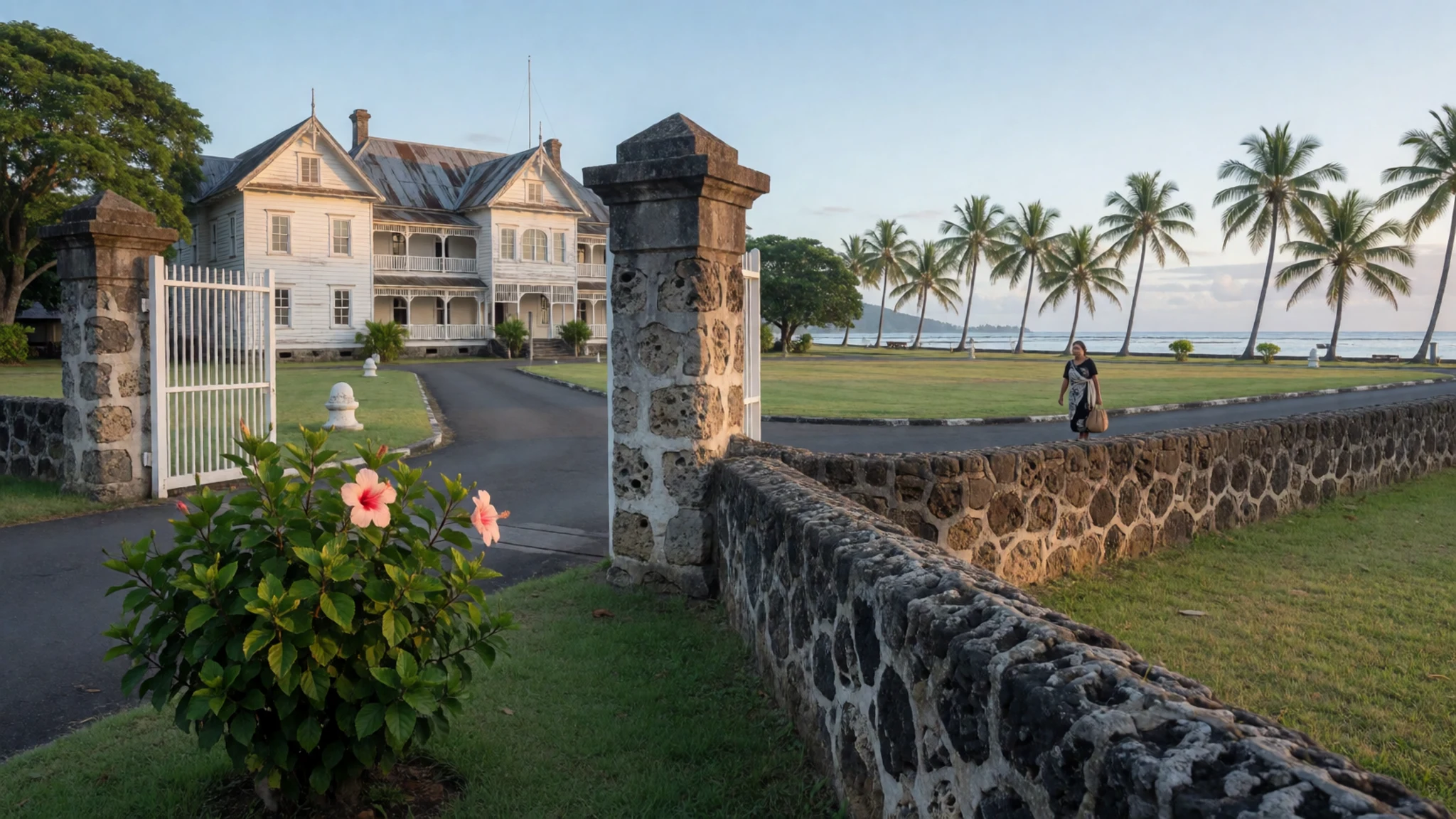
- Talamahu Market — Central Nukuʻalofa
Talamahu Market is the town's everyday centre: stalls of root crops, fruit, fish and flowers, with handicrafts such as woven mats and baskets in one section. It is a good place to see what Tongans actually eat and to talk to growers from the island's villages. Go early, before the heat builds, and carry small notes.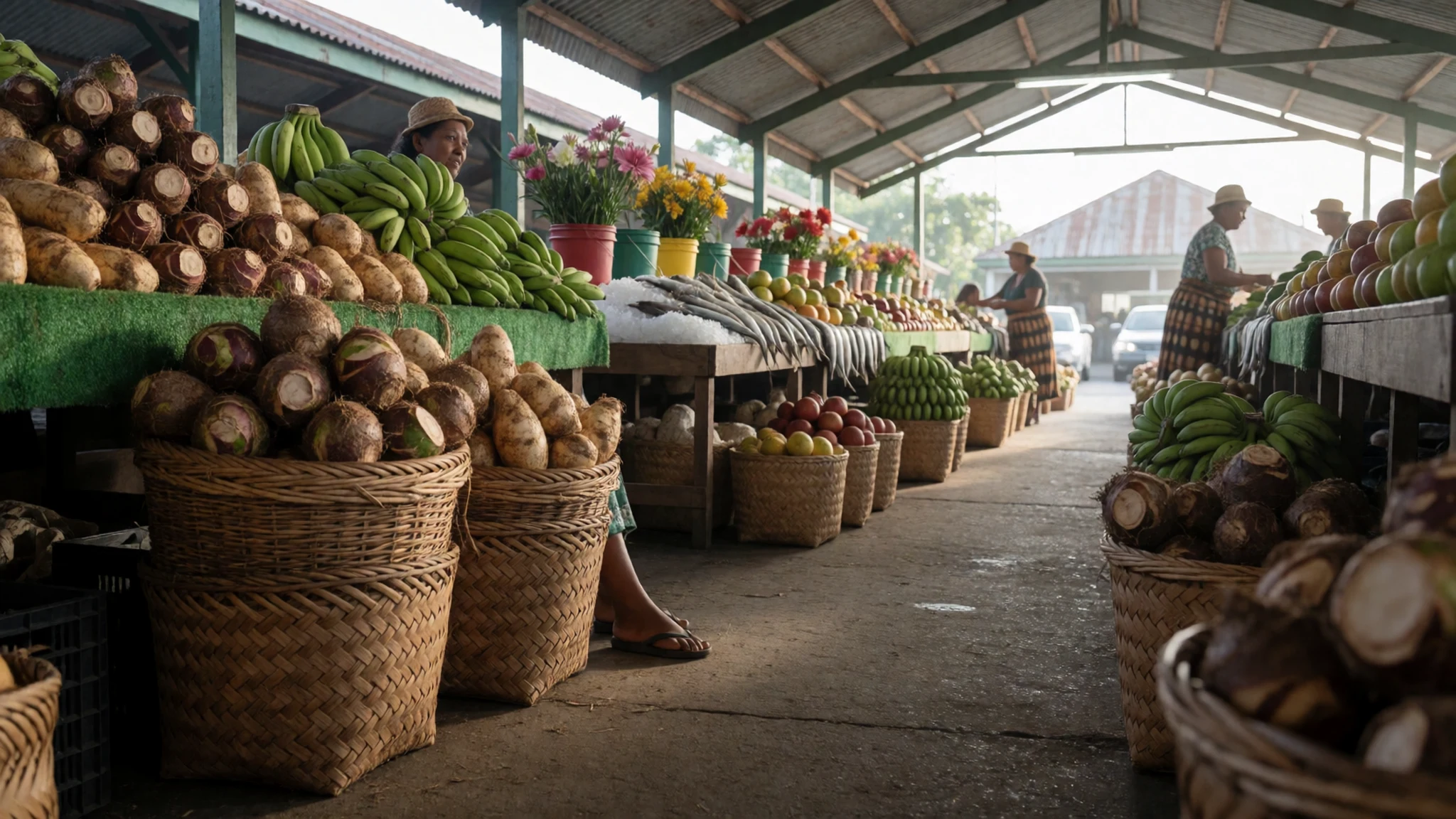
- Tonga National Museum — Central Nukuʻalofa
The Tonga National Museum stands close to the palace and holds objects tied to the kingdom's history. It opened in 1998, closed for years when funds ran out, and was reopened by the Queen in 2020. Opening arrangements can change, so check locally before planning around it. It suits a rainy hour or a short introduction to the islands' story.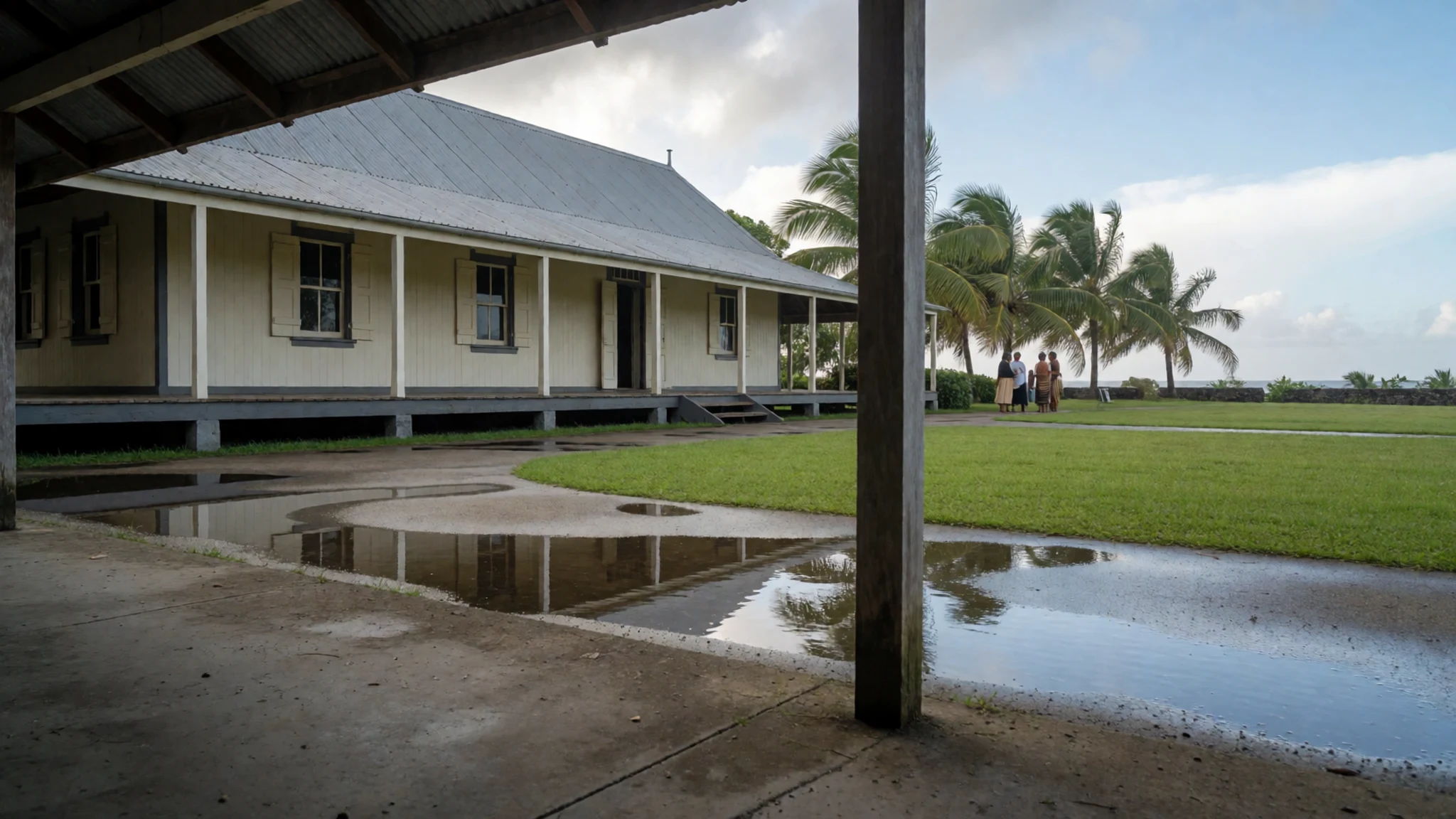
- Muʻa and the Royal Tombs of Lapaha — Muʻa, east of Nukuʻalofa
Muʻa, on the eastern edge of the lagoon, was for centuries the home of the Tuʻi Tonga line of kings. The Ancient Royal Tombs of Lapaha are terraced mounds that recall the bases of pyramids, built over several centuries. Little signage explains them, so read up first. It is an easy bus or taxi ride east of town.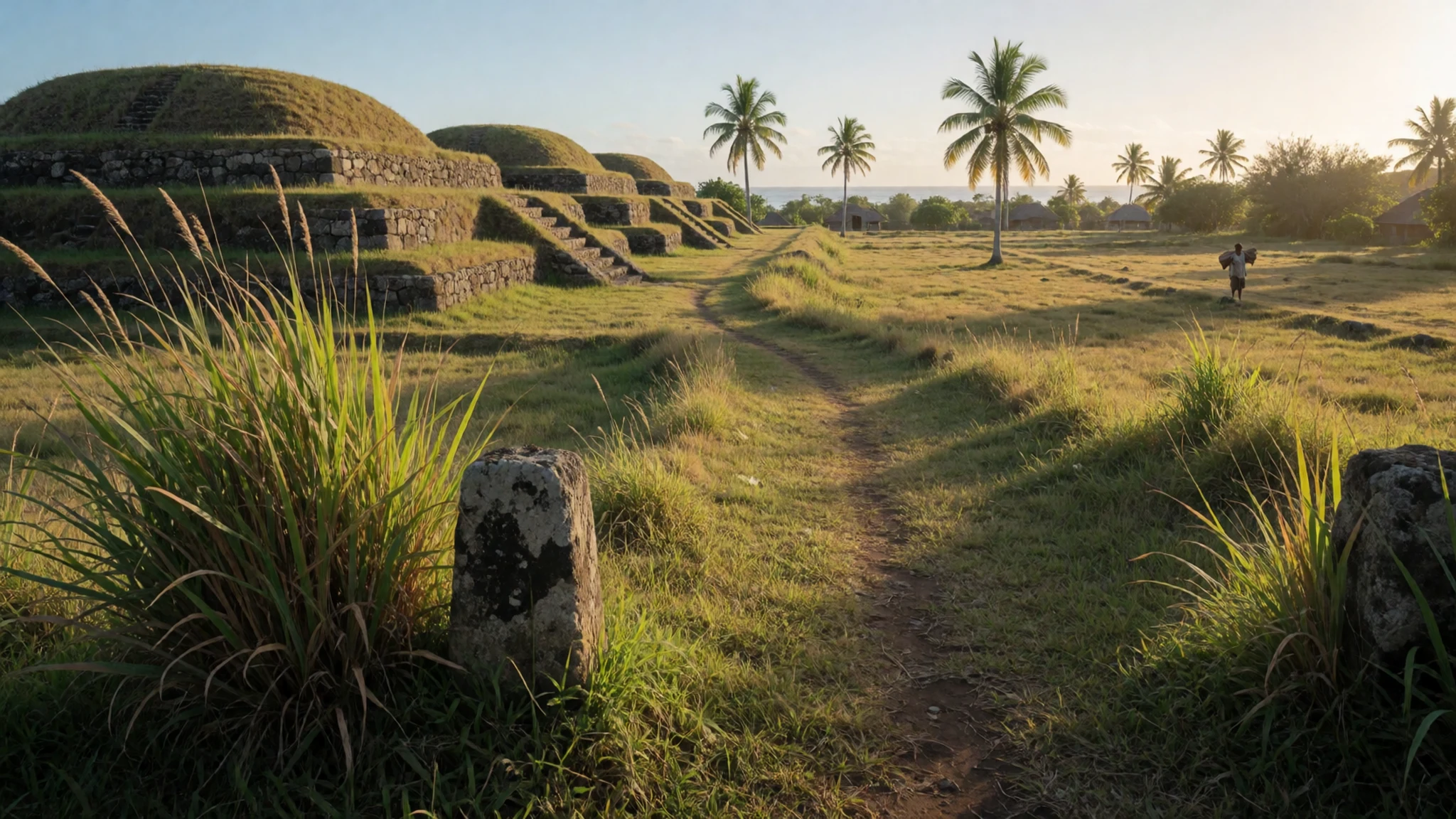
- Haʻamonga ʻa Maui — North-east Tongatapu
Haʻamonga ʻa Maui is a trilithon, two upright coral limestone blocks bridged by a third, in the north-east of Tongatapu. The name means 'Maui's burden', after the Polynesian god said in legend to have fished up the islands. It needs a car or taxi, and combines well with Muʻa in a single day.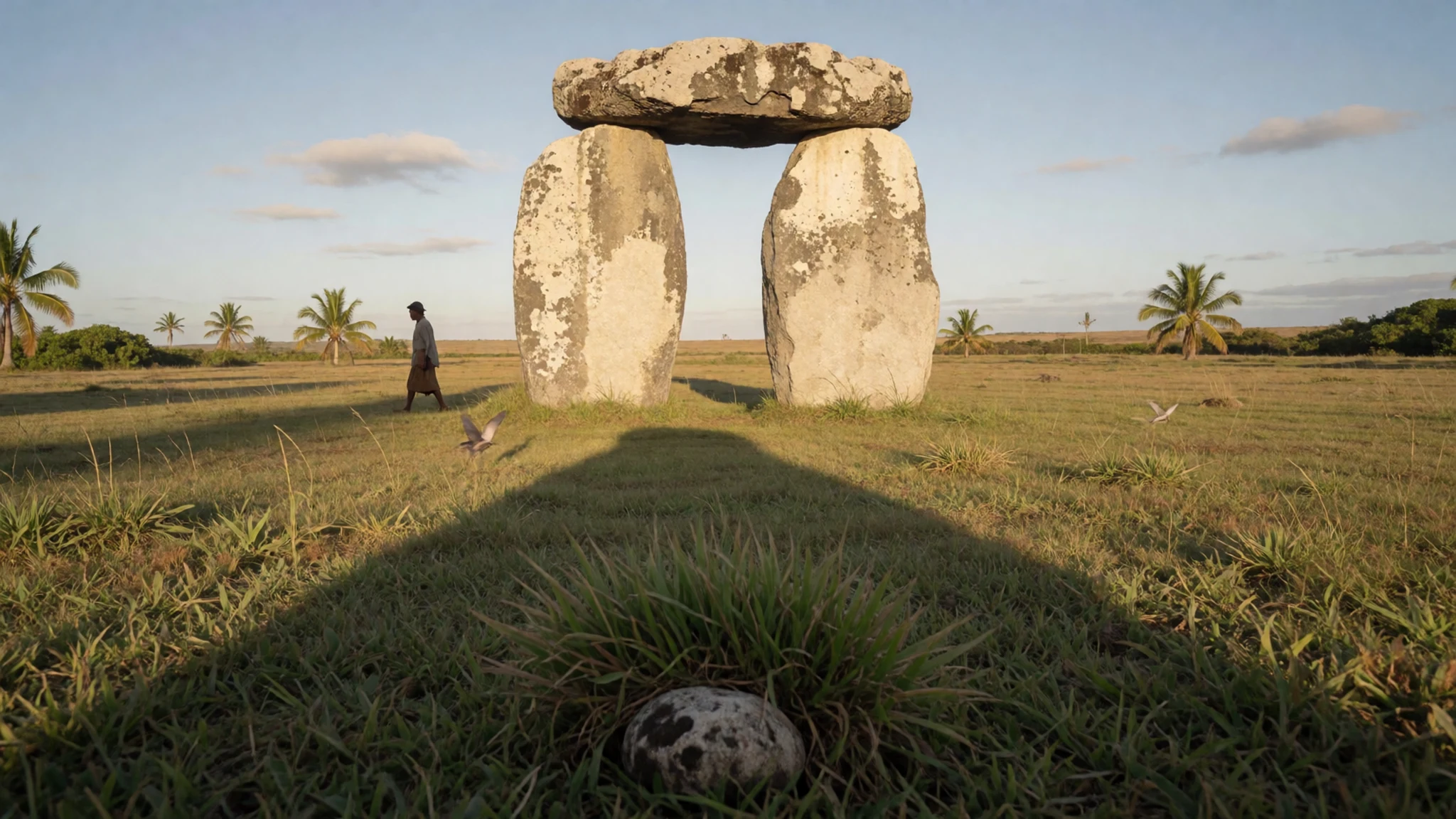
- Captain Cook Landing Site — Eastern shore of the bay
The Captain Cook Landing Site is a landmark on the shore where Cook is recorded as coming ashore in Tonga. The monument is modest; the interest lies in the view of the sheltered water that held his ships. Pair it with Muʻa, since both lie to the east, and bring water and a hat for the open ground.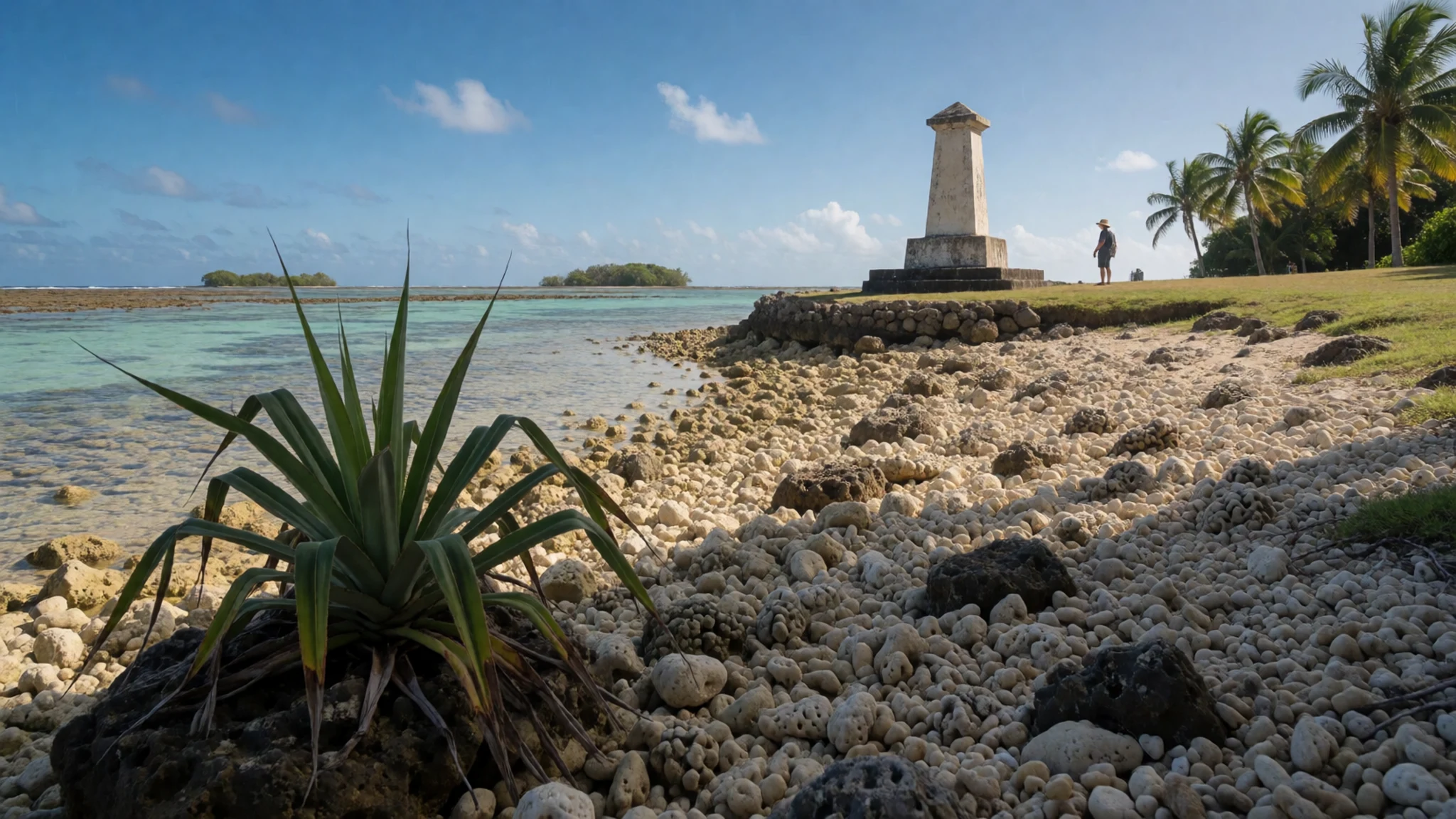
Culture
Nukuʻalofa is the seat of a Polynesian monarchy, and that shapes daily life more than any building does. The royal family and noble titles remain central to how Tongan society is organised, and respect for rank, elders and family runs through manners, speech and ceremony. Church is equally central. Several denominations have large congregations, and Sunday is a day of worship, family meals and rest: shops close, work stops, and singing from services carries through the streets. Visitors who attend a service are usually welcomed, and the choral singing stays in the memory of many.
Kava, a mildly numbing drink made from a pounded root, is shared at formal gatherings and in evening circles, and it comes with its own order of seating and serving. Gifts of food, woven mats and barkcloth mark weddings, funerals and birthdays, and these textiles carry family value rather than being mere decoration. Hospitality is generous, and a refused invitation can feel awkward, though a polite explanation is understood.
Public displays of affection are uncommon, and modest conduct is expected in villages as well as in town. Cyclones, drought and rising seas make weather a shared worry that people discuss openly. On Sundays, keep swimming and noisy activity away from public view, and cover your shoulders and knees if you attend a church service.
What to wear
Traditional dress in Nukuʻalofa centres on woven and beaten textiles. Men and women wear a tupenu, a wraparound skirt, and for formal occasions a taʻovala, a mat of pandanus leaf tied around the waist over it. Women may add a kiekie, a decorative waistband of fibre strands. Ngatu, barkcloth made from the paper mulberry and painted with patterns, is used for gifts and ceremonies. Fine mats are treasured heirlooms. These garments appear at church, funerals, weddings, school and government functions and royal events, with black worn in mourning.
Day to day, people dress for heat and for church: cotton shirts, tupenu or knee-length skirts, and dresses in bright prints. Office workers and students often wear the taʻovala as part of a uniform. Rubber sandals are everyday footwear, with shoes saved for formal occasions. Evenings are casual, and shorts are common among younger people.
Visitors should pack light cotton or linen in breathable layers, plus a hat, sun protection and a thin rain jacket for showers. Cover shoulders and knees in town, and wear a skirt or long trousers for church. Swimwear belongs on the beach or the boat, not the street. Sandals suit most paths, though closed shoes help on rough coral tracks.
What to eat
- ʻOta ika — Local Tongan restaurants and the market area
Raw fish marinated in lime juice and mixed with coconut cream, often with chopped vegetables. It is cool, sharp and rich, and suits the hot weather. Order it at local restaurants serving Tongan dishes, or look for it from stalls near the harbour and market.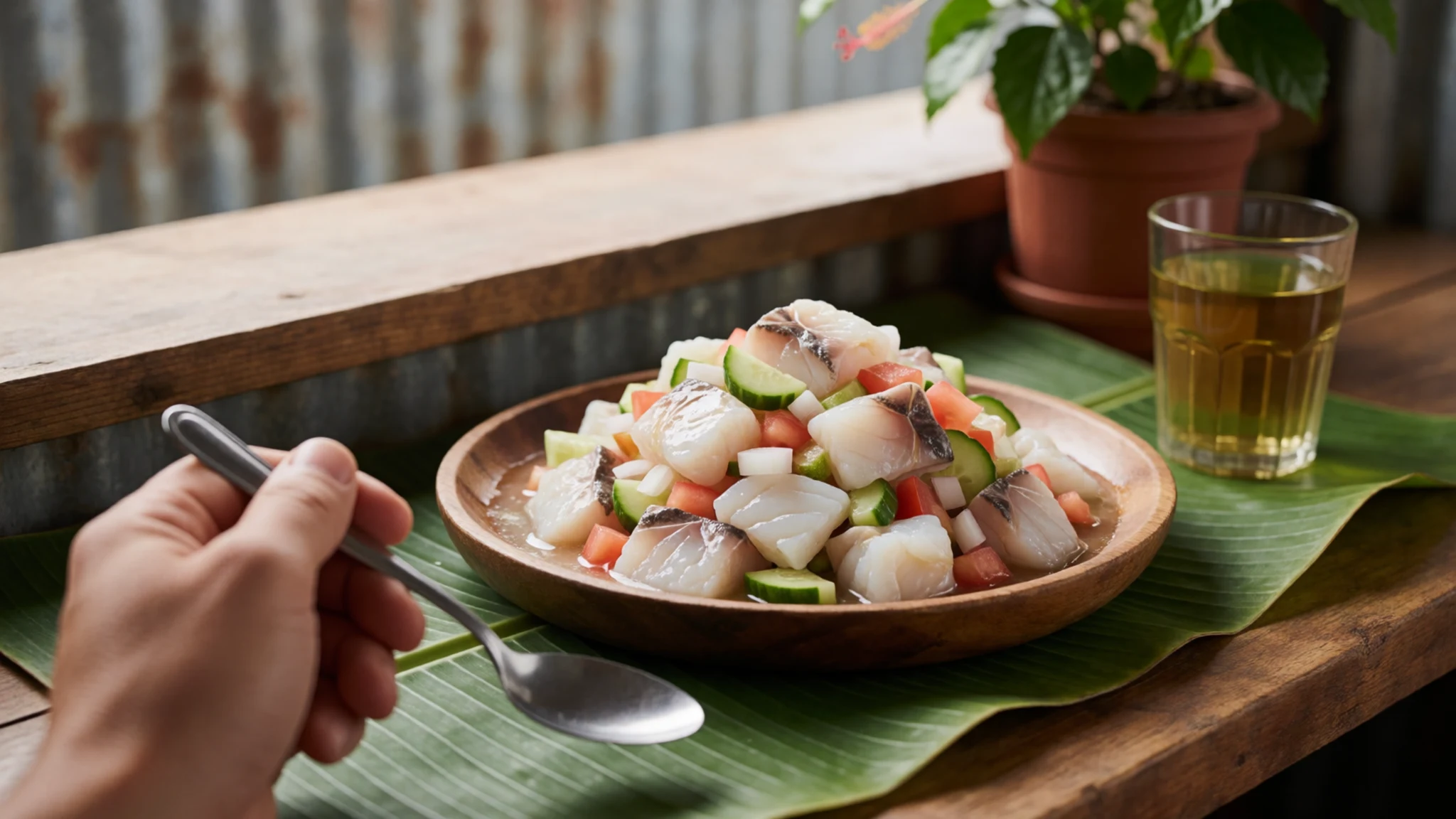
- Lu — Everyday Tongan eateries
Taro leaves wrapped around coconut cream and often a filling of meat or fish, then baked or steamed until soft. It is earthy, creamy and filling. Look for it at everyday Tongan eateries and, if invited, at family Sunday meals.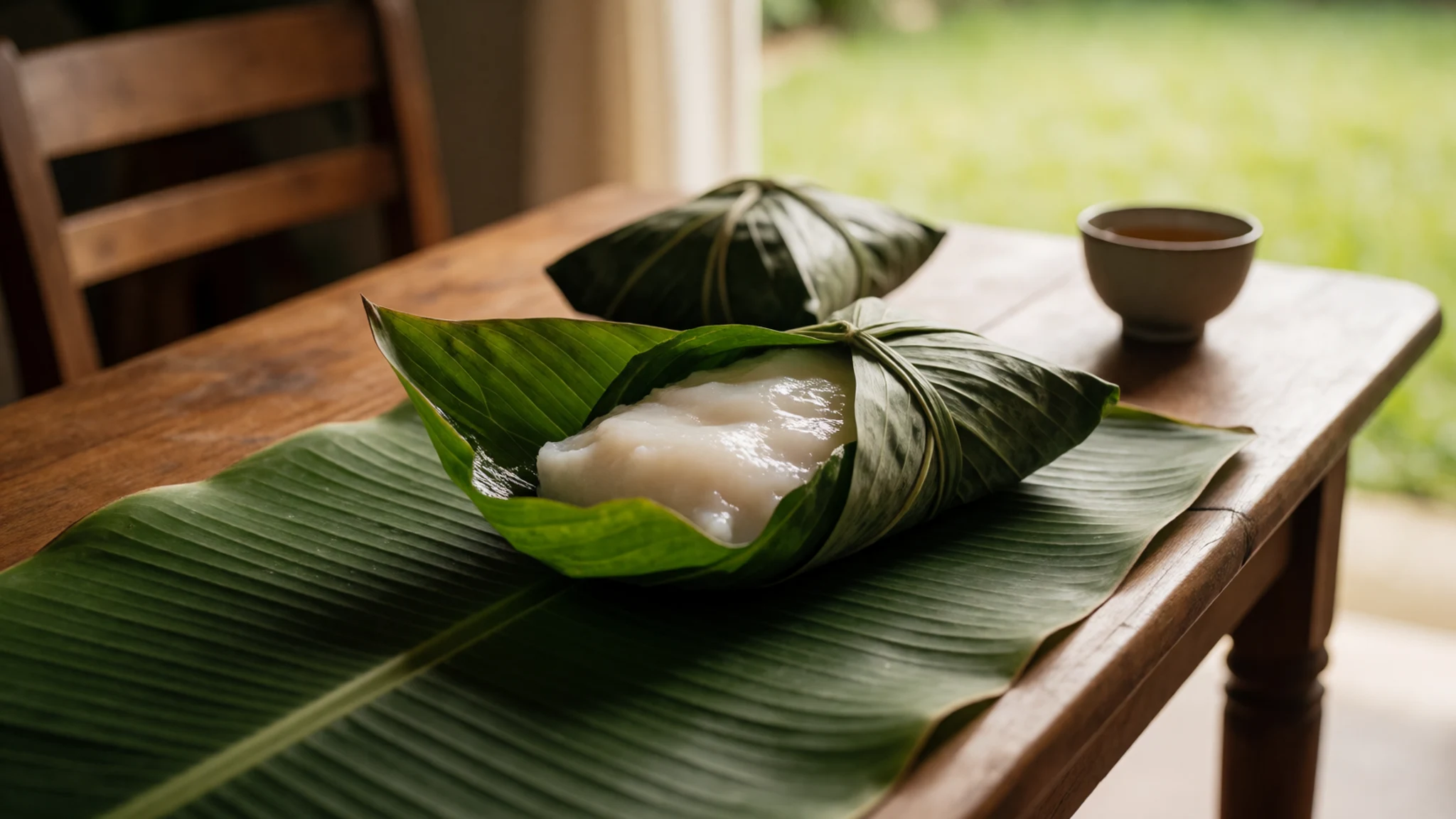
- Fried fish with sweet potato — Local Tongan restaurants in town
A plain, filling plate of fried fish fillet served with sweet potato or other root crops. It is affordable and straightforward, and a good way to taste island staples without ceremony. Find it at local Tongan restaurants around the town. - Umu feast — Family gatherings, guesthouses and cultural evenings
Food cooked in an earth oven heated with stones: pork, chicken, root crops and lu. It is mainly served at family and church gatherings, especially on Sundays, though some guesthouses and cultural evenings offer it to visitors. Ask locally and book ahead. - Fresh coconut and tropical fruit — Talamahu Market
Drinking coconuts, bananas, papaya and other fruit are piled on stalls inside Talamahu Market, next to root crops such as taro and cassava. Buy early in the morning when stock is fresh, bring small notes, and ask which fruit is in season. - Café breakfast — Cafés near the town centre
Cafés in the centre serve coffee, tea and cooked breakfasts, and visitors and residents mix there. Vanilla French toast and milkshakes are popular. It is an easy first stop for a map, a plan for the day and local advice about buses.
Plan it
Best time. June to October is the cooler stretch, with average temperatures near 21 °C in June and July against about 25 °C in January and February. Rain falls in every month, a little over 1,700 mm in a year, and cyclones are not rare, so check forecasts if travelling in the warmer, wetter months.
How long. 2–3
Getting there. Fuaʻamotu International Airport serves Tongatapu, with flights from Auckland, Sydney, and Nadi and Suva in Fiji; airlines and frequencies change, so check current schedules. Taxis meet arriving flights for the last leg into Nukuʻalofa; agree the fare before getting in.
Budget. mid
Tips
- Do your sightseeing outside town on a weekday, as Sunday transport and opening are very limited
- Use local buses or a hired car for Muʻa, Haʻamonga ʻa Maui and the coast
- Carry cash in small notes for markets, buses and roadside sellers
- Take water, a hat and sun protection, as the trade winds hide how strong the sun is
- Check weather warnings if travelling in the warmer months, when cyclones are possible
Etiquette
- Dress modestly in town and cover shoulders and knees for church
- Keep Sundays quiet and avoid public swimming or noisy activity
- Ask before photographing people, ceremonies or private land
Nearby
Sources
- Wikidata Q38834 (CC0)
- Wikipedia: Nukuʻalofa (CC BY-SA 4.0)
- Wikivoyage: Nukuʻalofa (CC BY-SA 4.0)
- Photo: Royal Palace, Nuku'alofa (Uhooep) (CC BY-SA 4.0)
- Photo: Prime minister's office in Nukuʻalofa (Pilgrim81) (Public domain)
- Photo: Nuku'alofa, Tonga (Arne Müseler) (CC BY-SA 3.0 de)
- Photo: Nukualofa, Tonga, 1887 (Archives New Zealand) (CC BY-SA 2.0)
- Photo: Talamahu market in Nukuʻalofa (Tauʻolunga) (CC BY-SA 2.0)
- Photo: Fuaʻamotu International Airport entrance (PetterLundkvist) (CC BY 3.0)
- Photo: Nuku'alofa, Tonga 5 (Arne Müseler) (CC BY-SA 3.0 de)
- Photo: Nuku'alofa, Tonga banner (Arne Müseler) (CC BY-SA 3.0 de)


